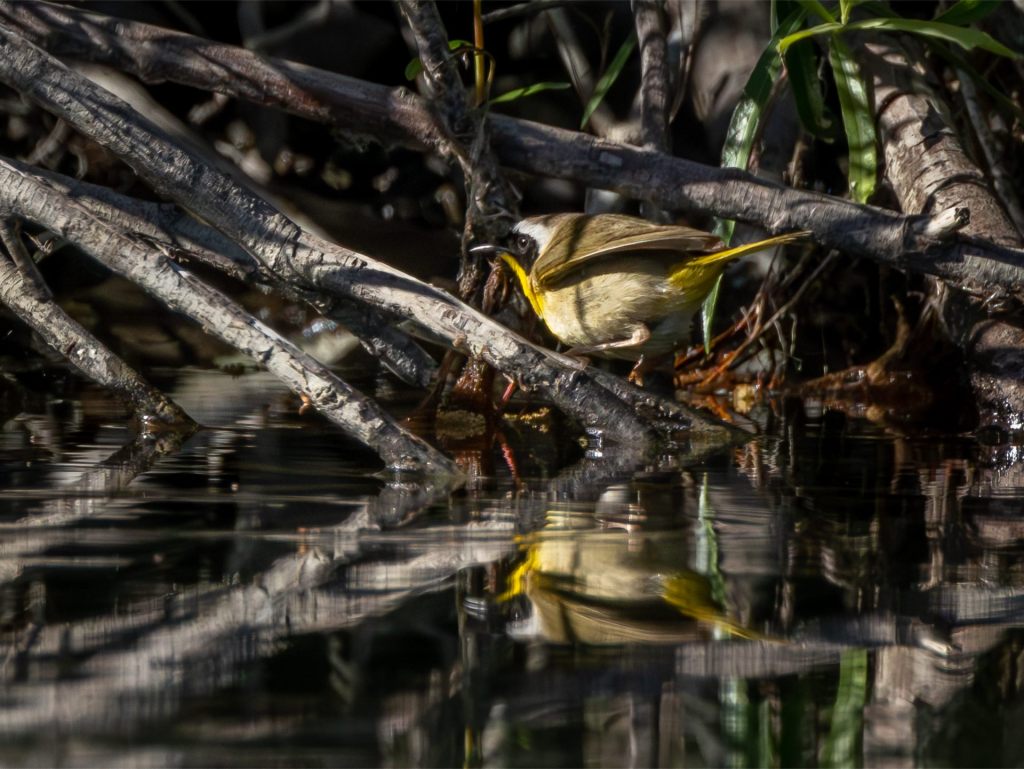
Warblers can be notoriously hard to see. They are tiny and manically active, and most of them inhabit treetops as they go about finding their favorite insect food.
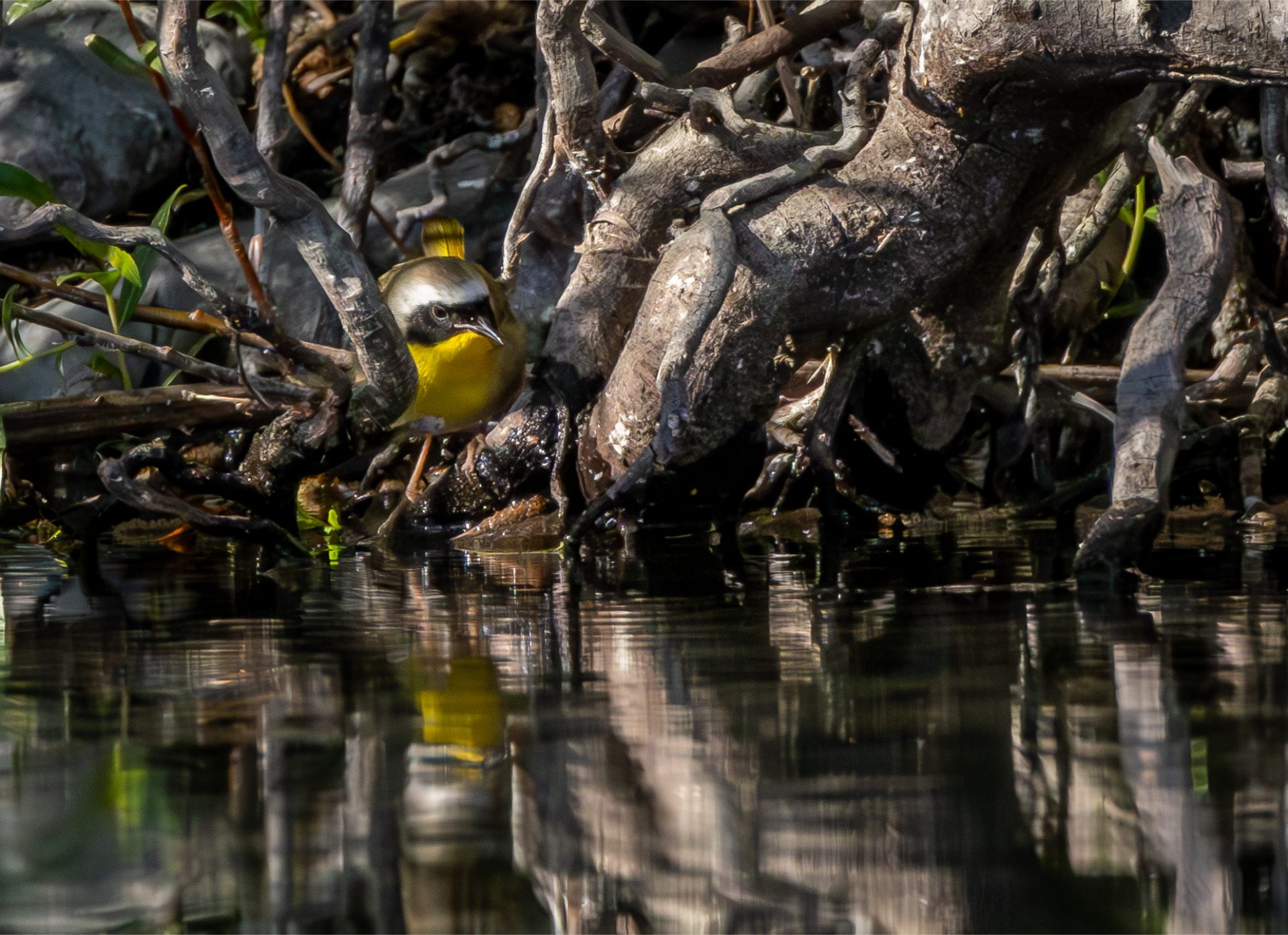
“Warbler neck” is a well known affliction of birdwatchers who get aches and pains from pointing their binoculars virtually straight up in an effort to catch a nano-second peek at one of the brightly colored feathered jewels.
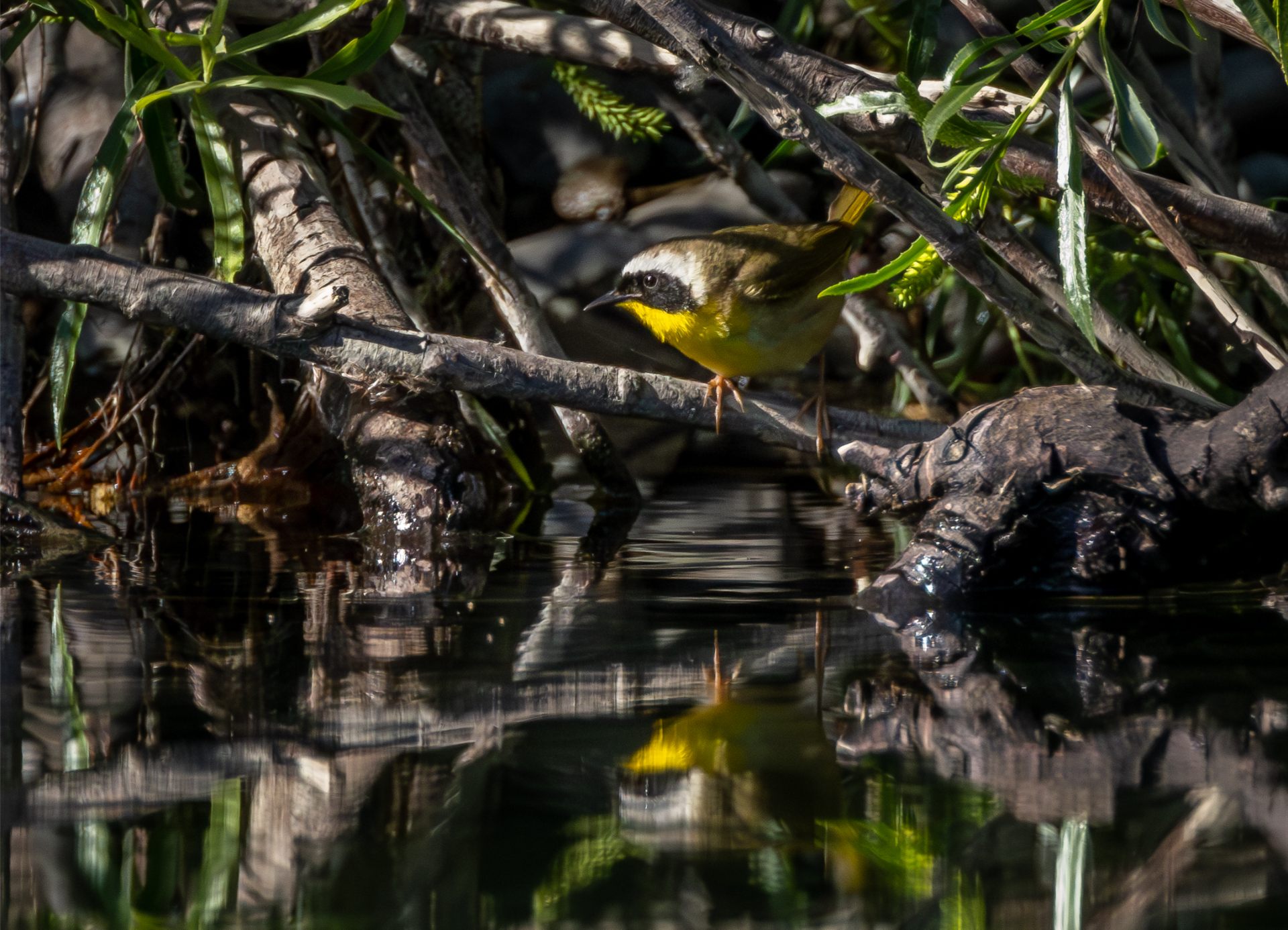
Most of the colorful, wow-provoking warblers spend their summers in the eastern half of North America. Of the warblers we do get on the left side of the map, one of the easier ones to see, because it makes its living close to the ground, especially near water, is the Common Yellowthroat.
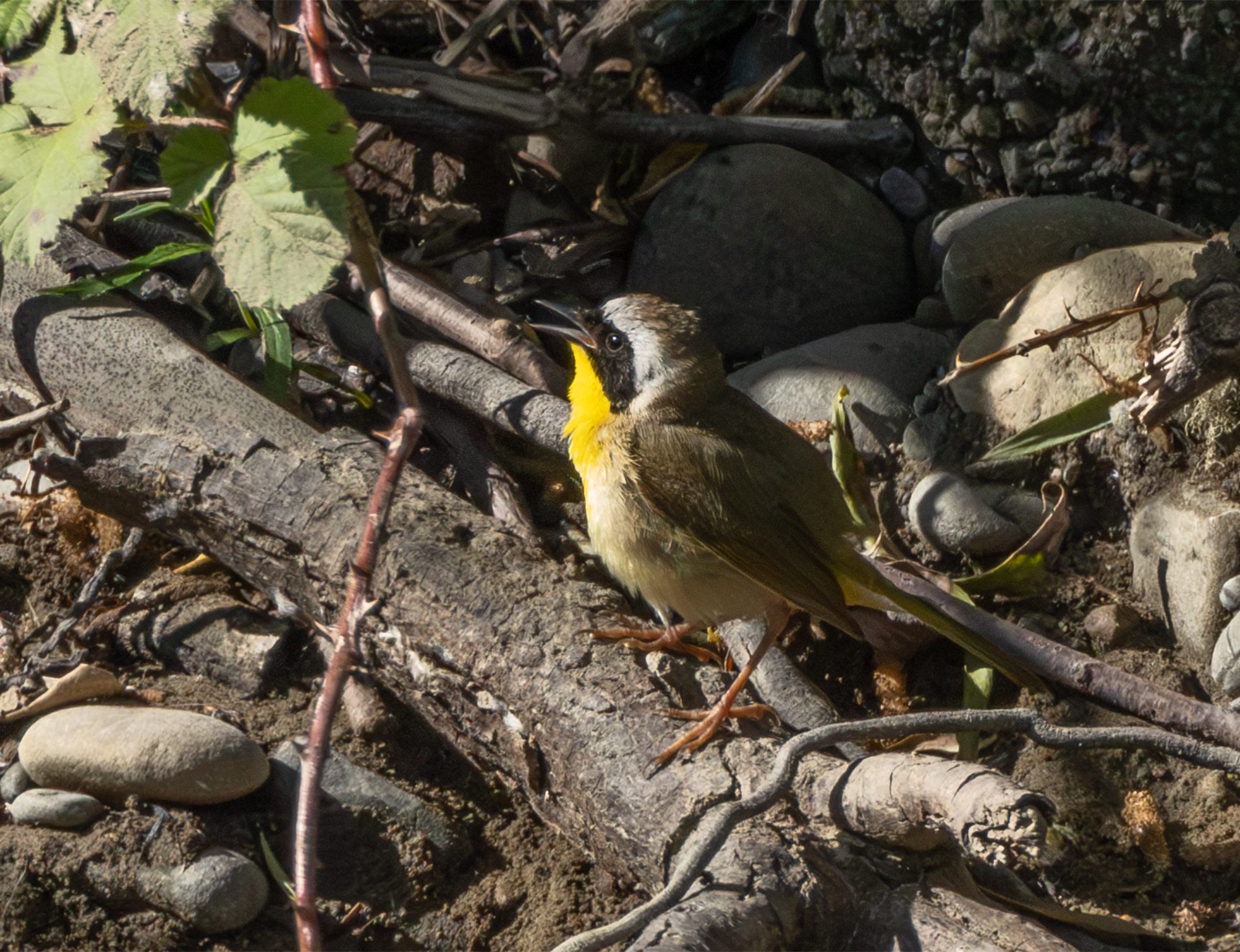
You might hear his lilting triplet “witchety-witchety-witchety” song, and if you’re lucky he will pop out from deep in the brush and you’ll see the striking black mask of the male, framed by a thin white border above, and bright yellow throat below.
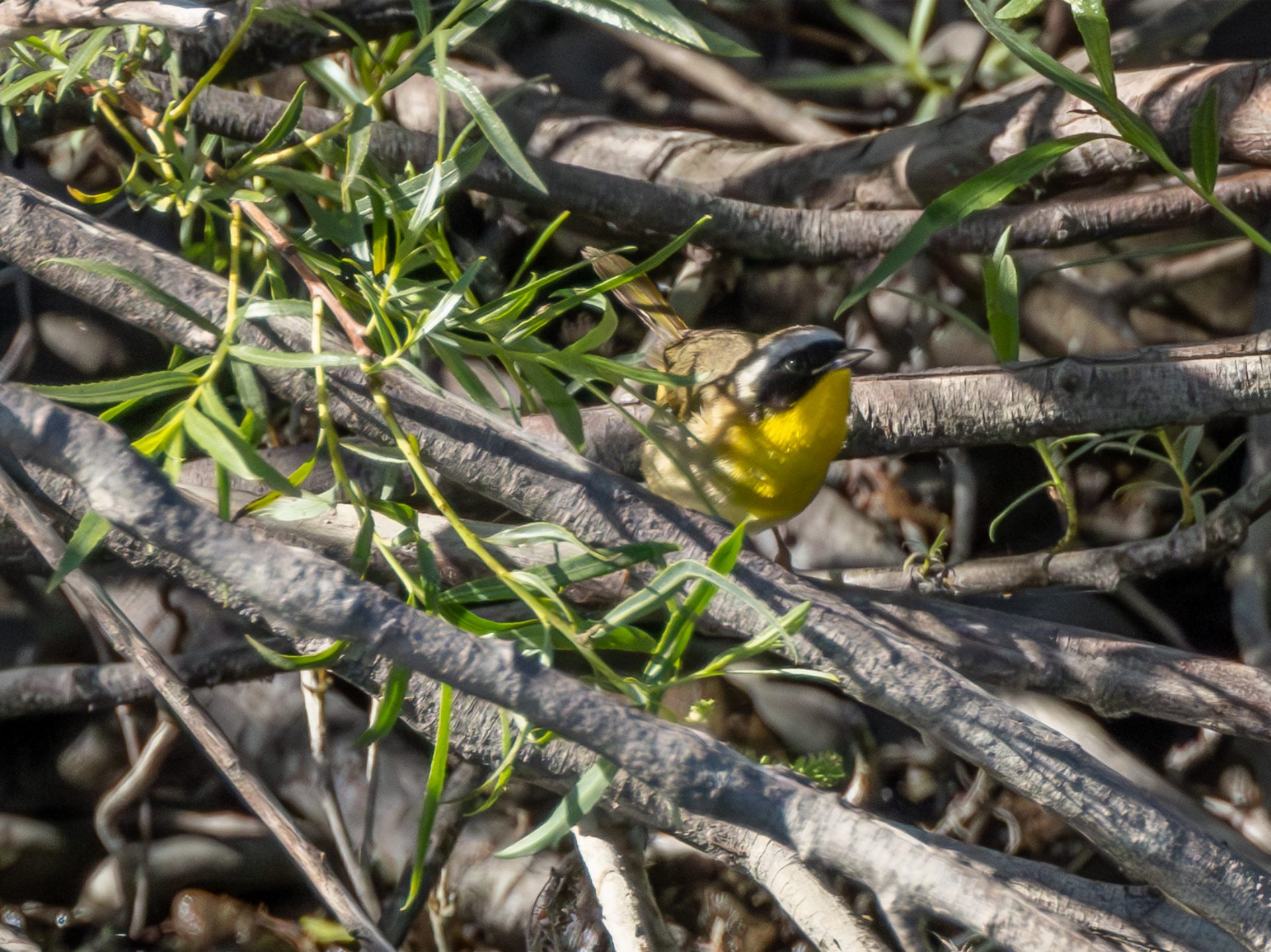
The other day, I spotted a Yellowthroat making its way along the edge of the river, poaching tiny insects from the leaves and branches just above the water, and occasionally even grabbing a floating bug morsel from the water’s surface.
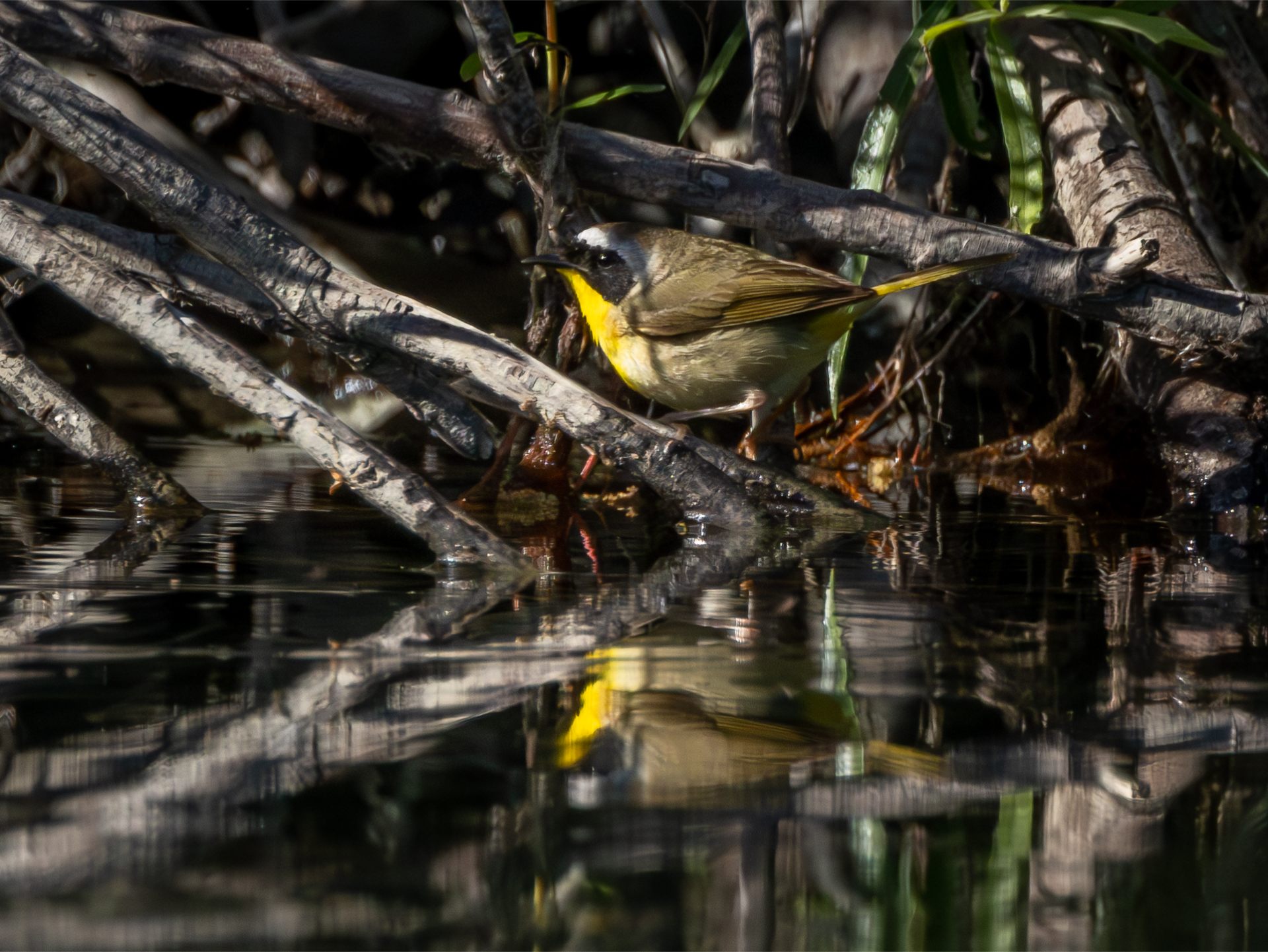
Yellowthroats are among the last to migrate south in the late summer to early fall, so keep your eyes and ears open and catch this wee bandit in the act.



 Free Range Photography
Leave a comment