
Ranging from the tiny Eurasian least weasel, weighing in at less than a pound, up to the massive sea otter, who can tip the scales at 99 pounds, the mustelid family is a diverse group of carnivores (mostly) who share the traits of a long tubular body, short legs, and a flexible spine that allows them to move almost like liquid through their land-(or water-) scape.
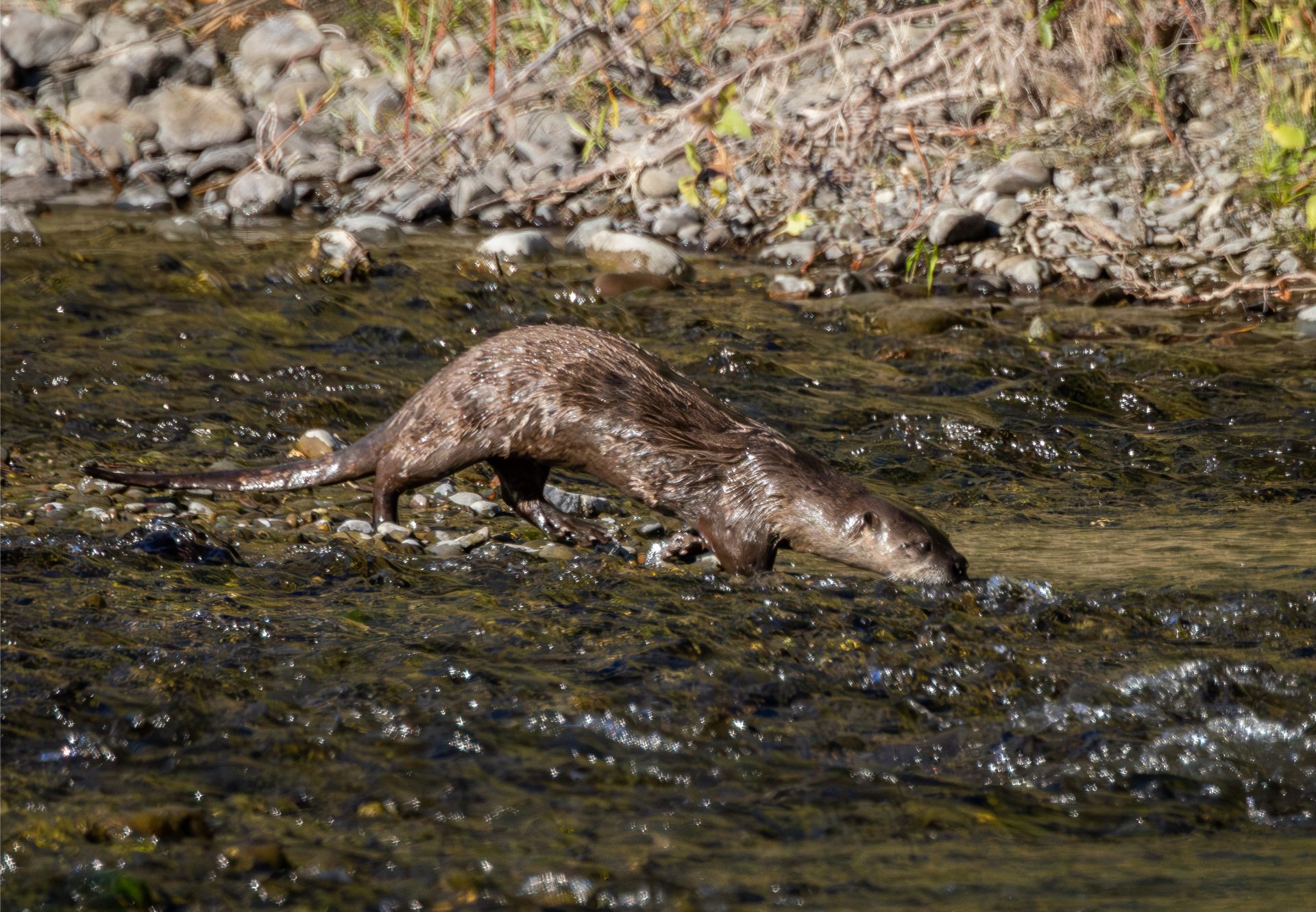
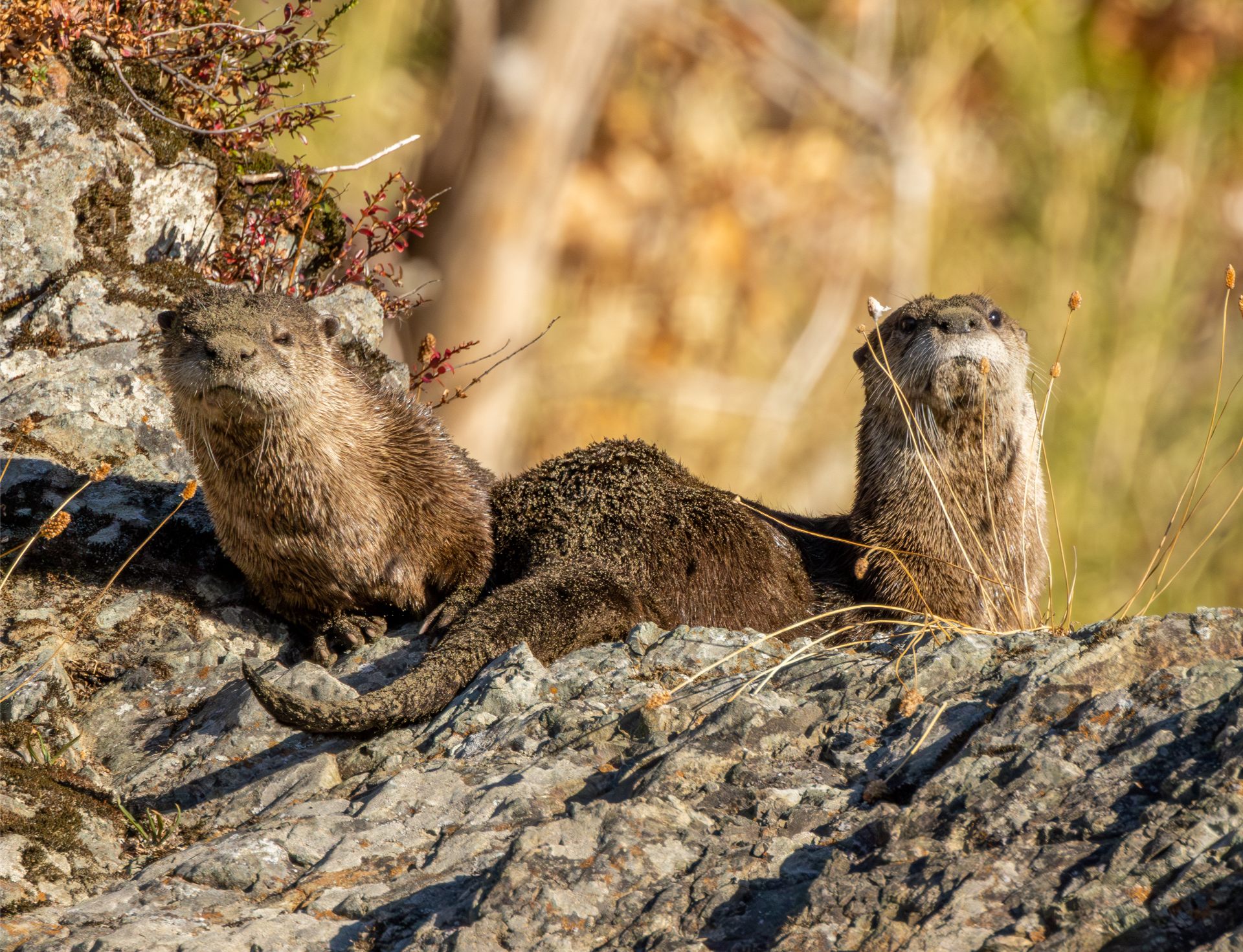
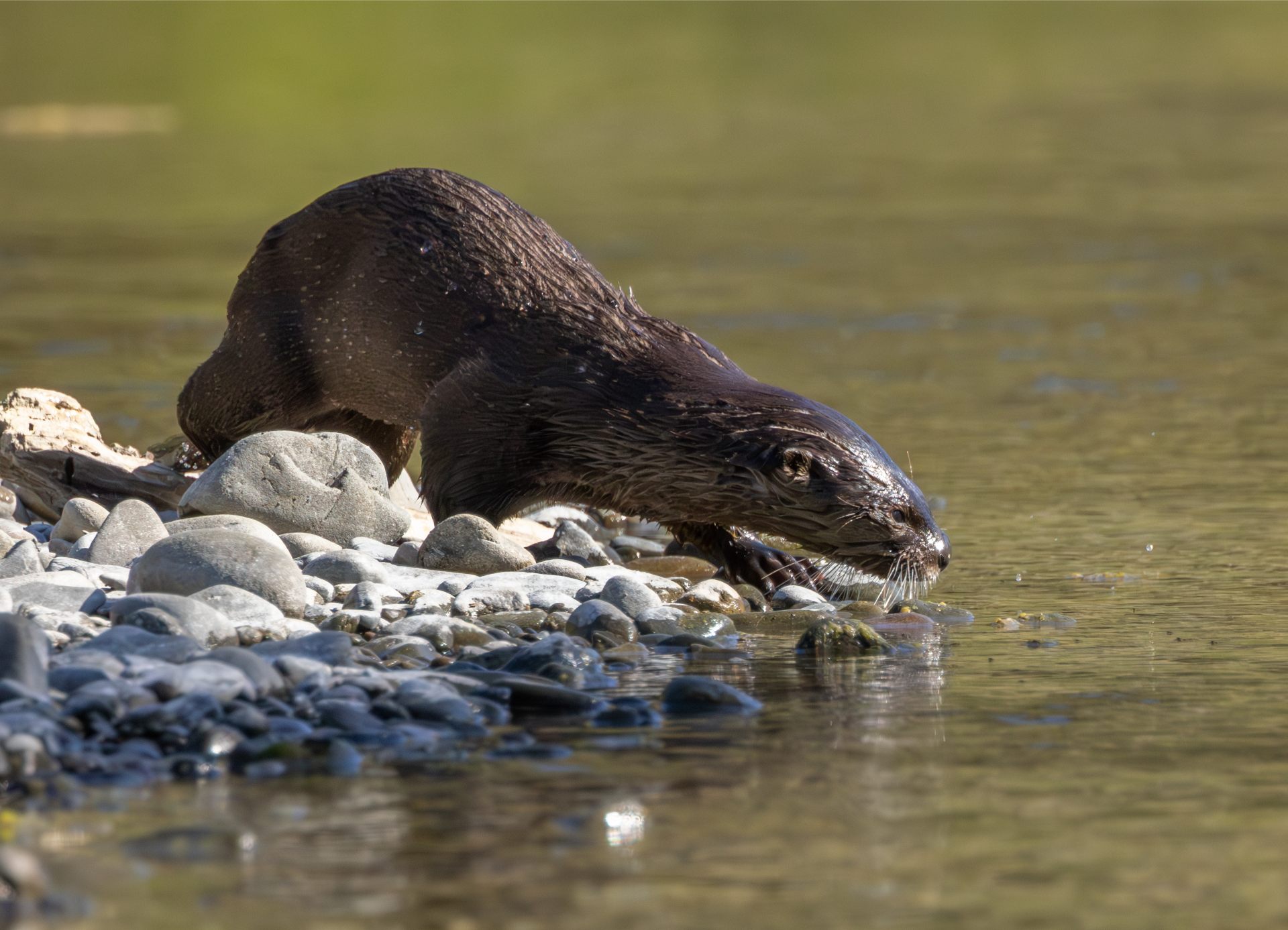
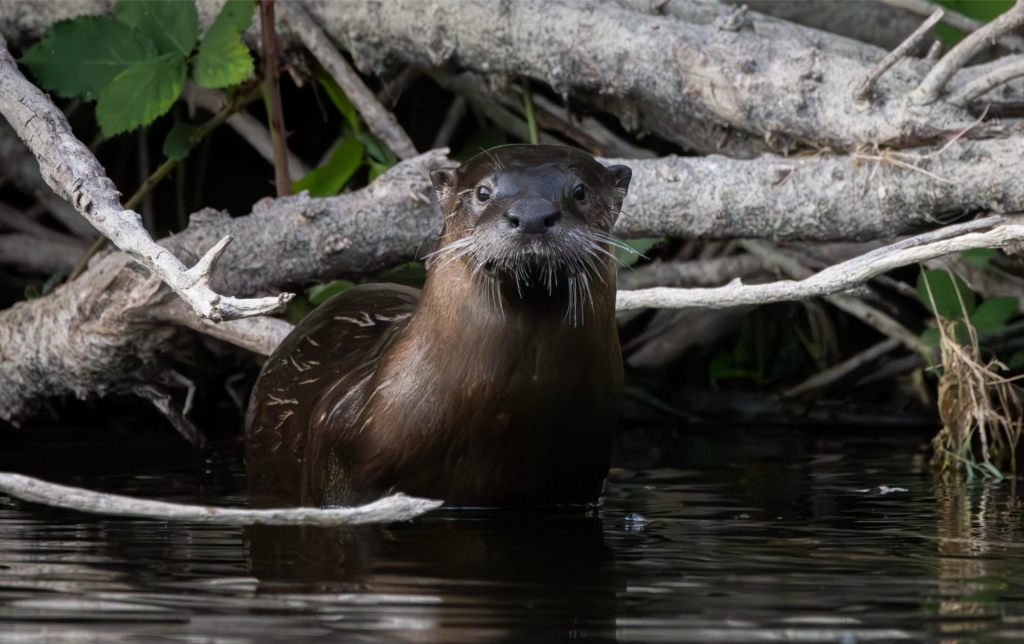
The two mustelids we see most often on the South Fork of the Eel are the Northern River Otter and the American Mink. I never know when I’m going to see one of these creatures, so it’s always a thrill when one shows up. Most of the time they are just moving past, otters at a more leisurely pace than mink who seem to always be in a hurry, but every once in a while I get to observe some interesting behavior.
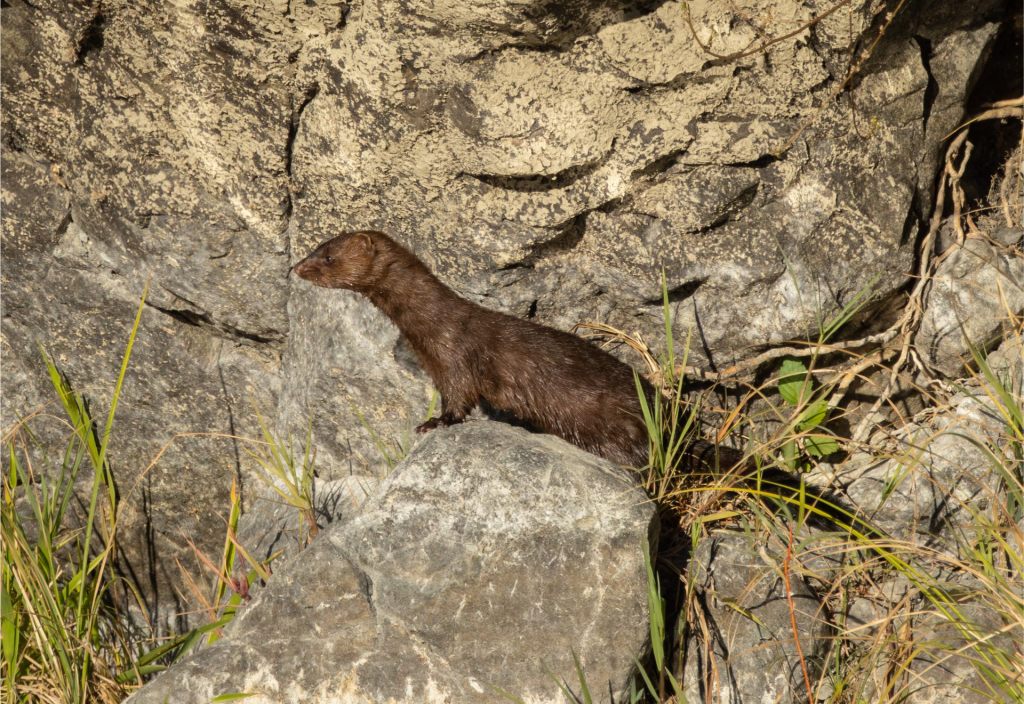
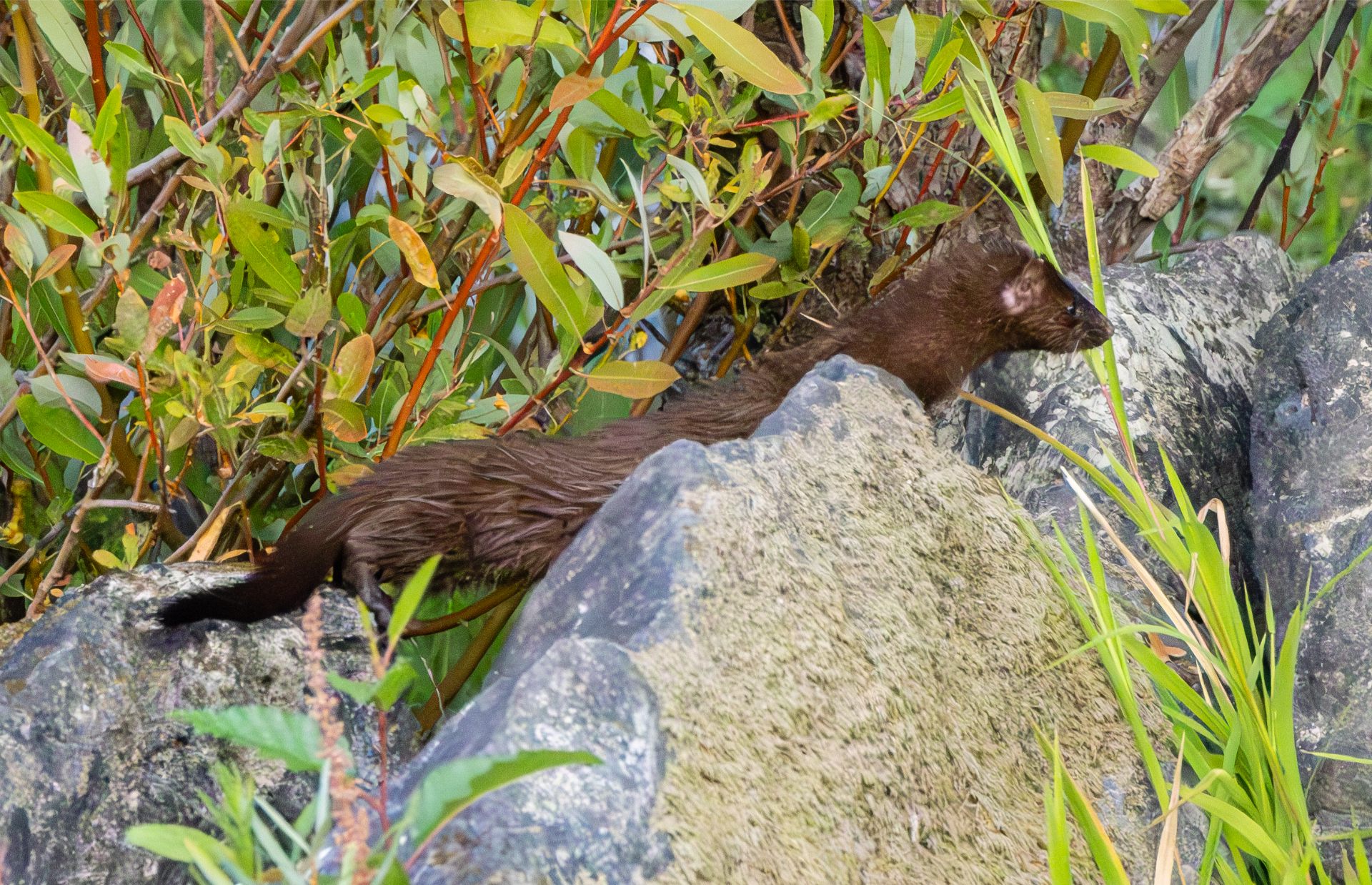
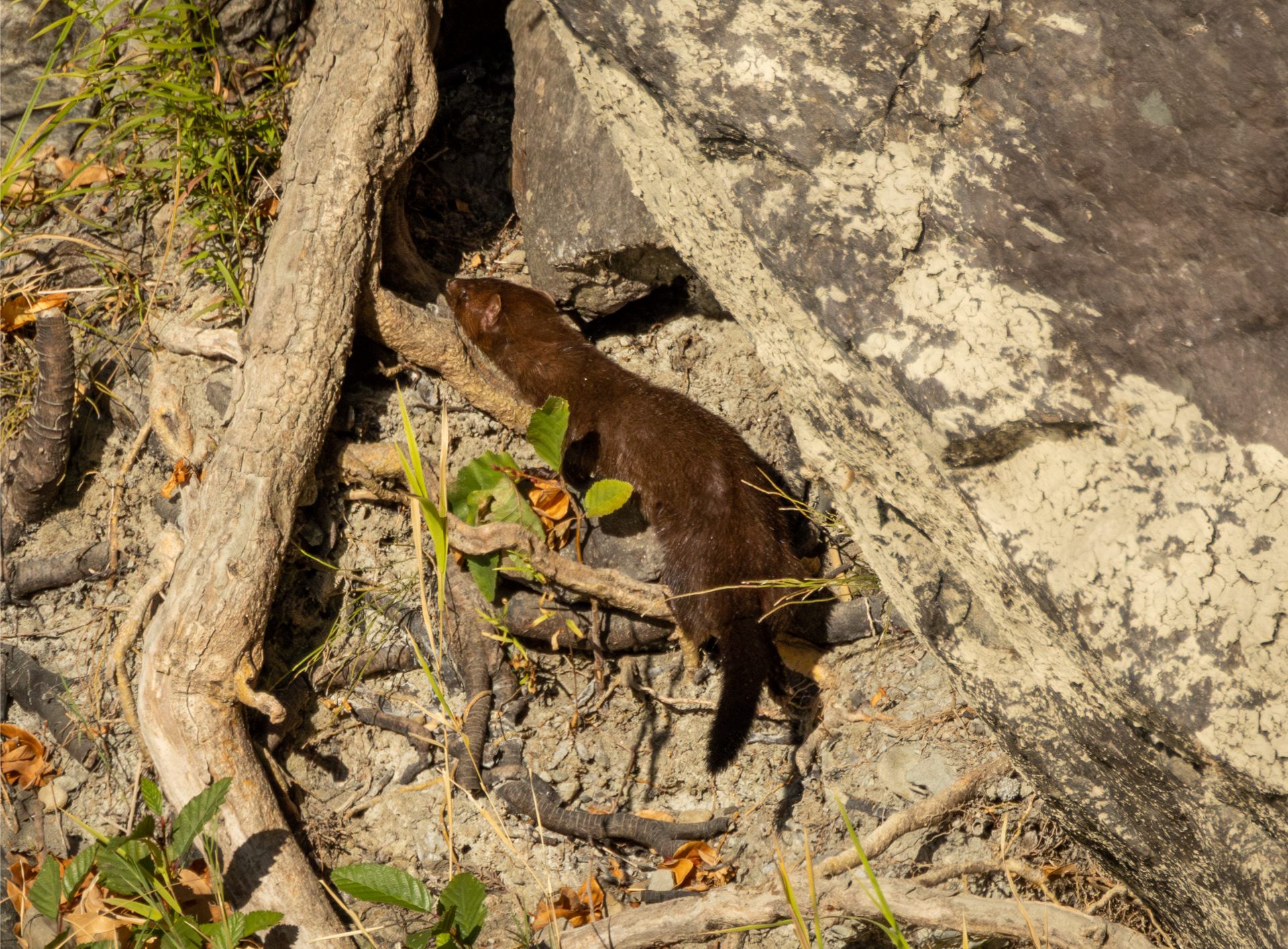
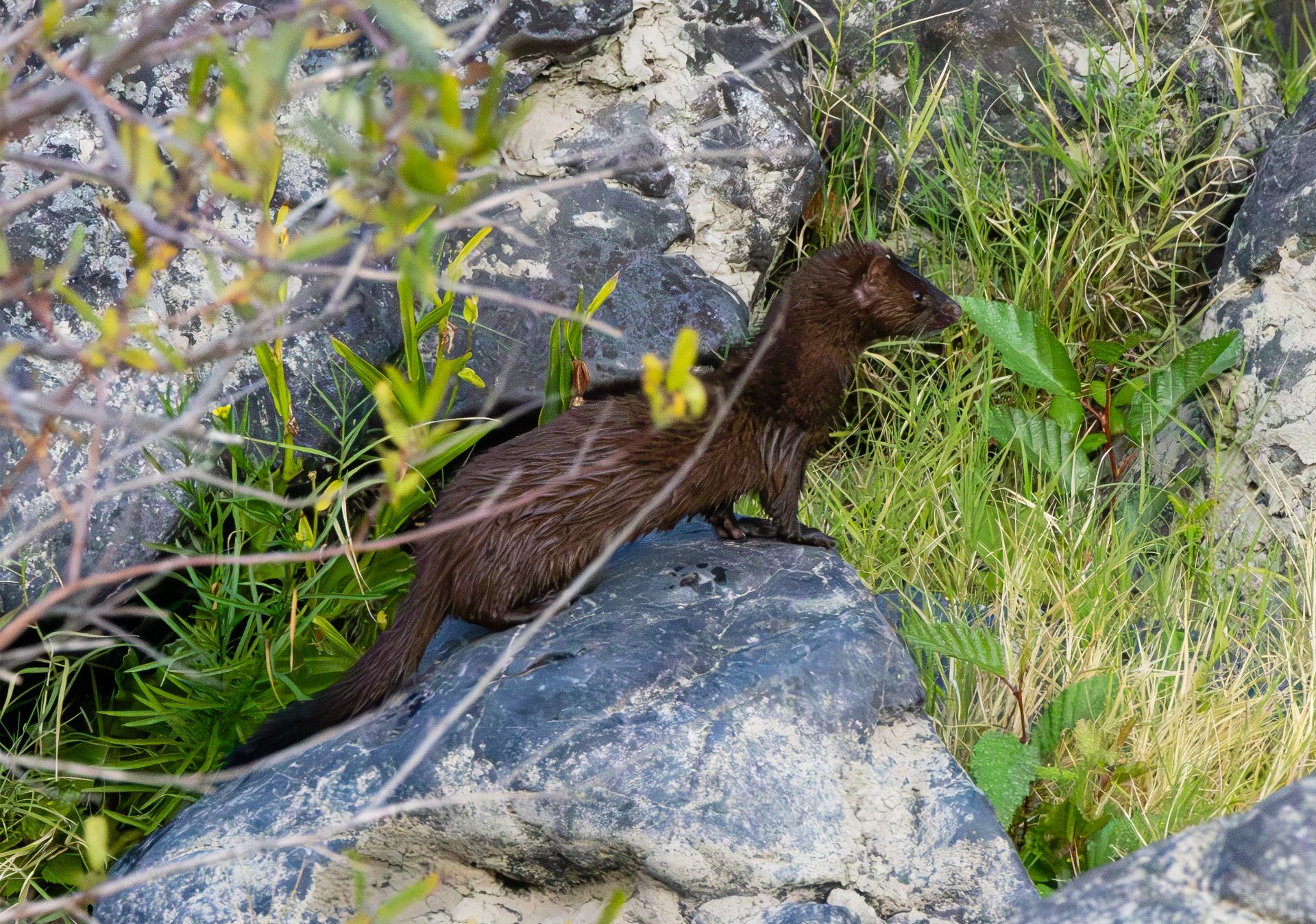
Mink tend to be out of the water a bit more than otters, although they do feed on aquatic creatures. It was a first for me to see a mink catch and consume a frog a couple weeks ago.
Otters are not very choosy about what passes for a meal. I have seen them catch and eat fish, lamprey, and crayfish in the water, but I have also seen them grab young ducklings off the water’s surface as mom frantically tried to get her downy flightless young out of danger (I can’t bear to watch, much less try to snap a picture when I see that scene unfolding).
The other day I watched an otter approach a large group of Common Mergansers resting on a rocky bar in the middle of the river. Before the ducks noticed it, the otter slipped deep under water, maybe ten yards upstream, emerging suddenly at one end of the bar, startling the ducks. The birds got flustered but didn’t seem to feel threatened as they simply relocated to the nearest bank of the river, quacking and flapping a commentary as they splashed across the shallow water.
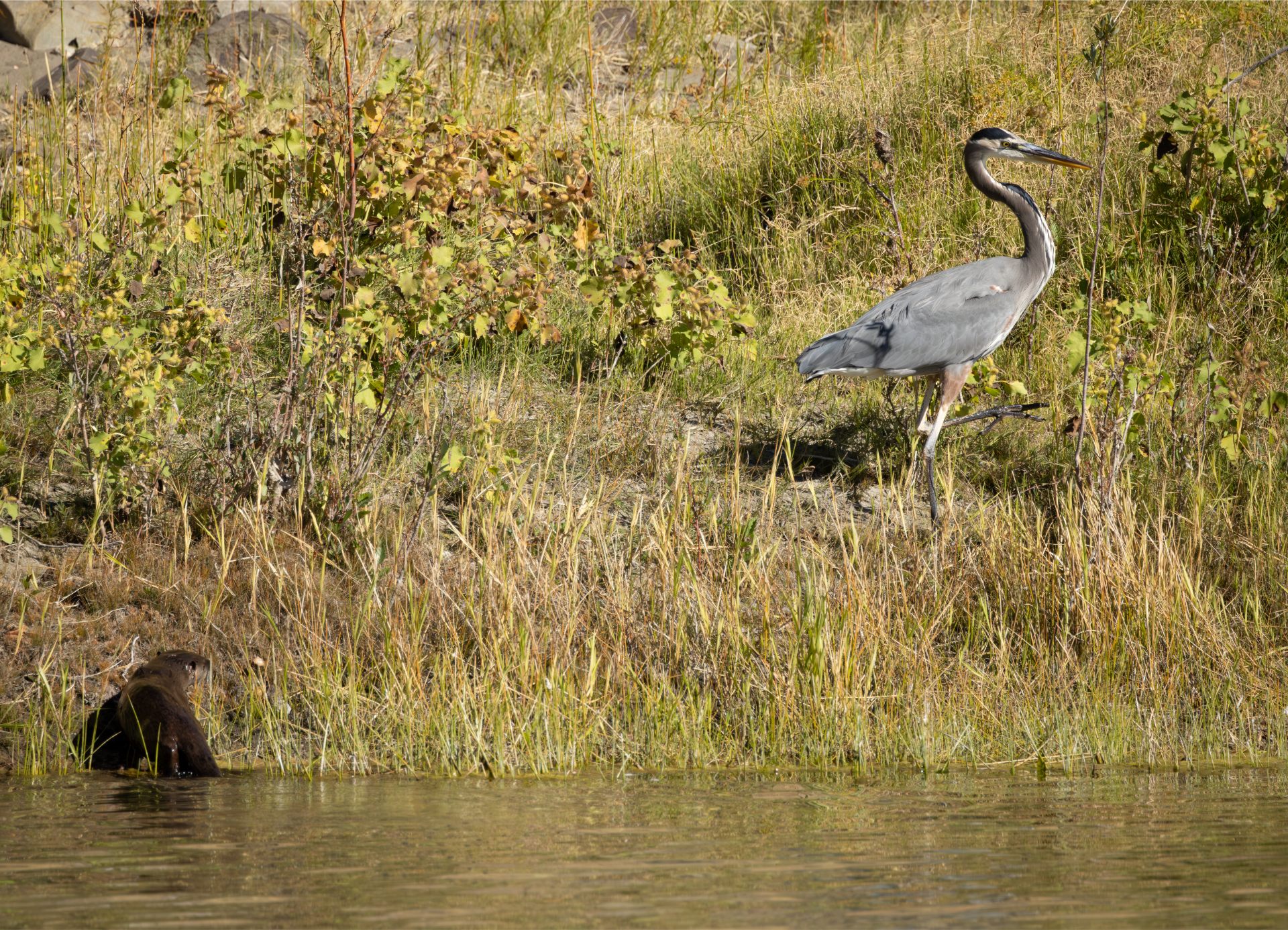
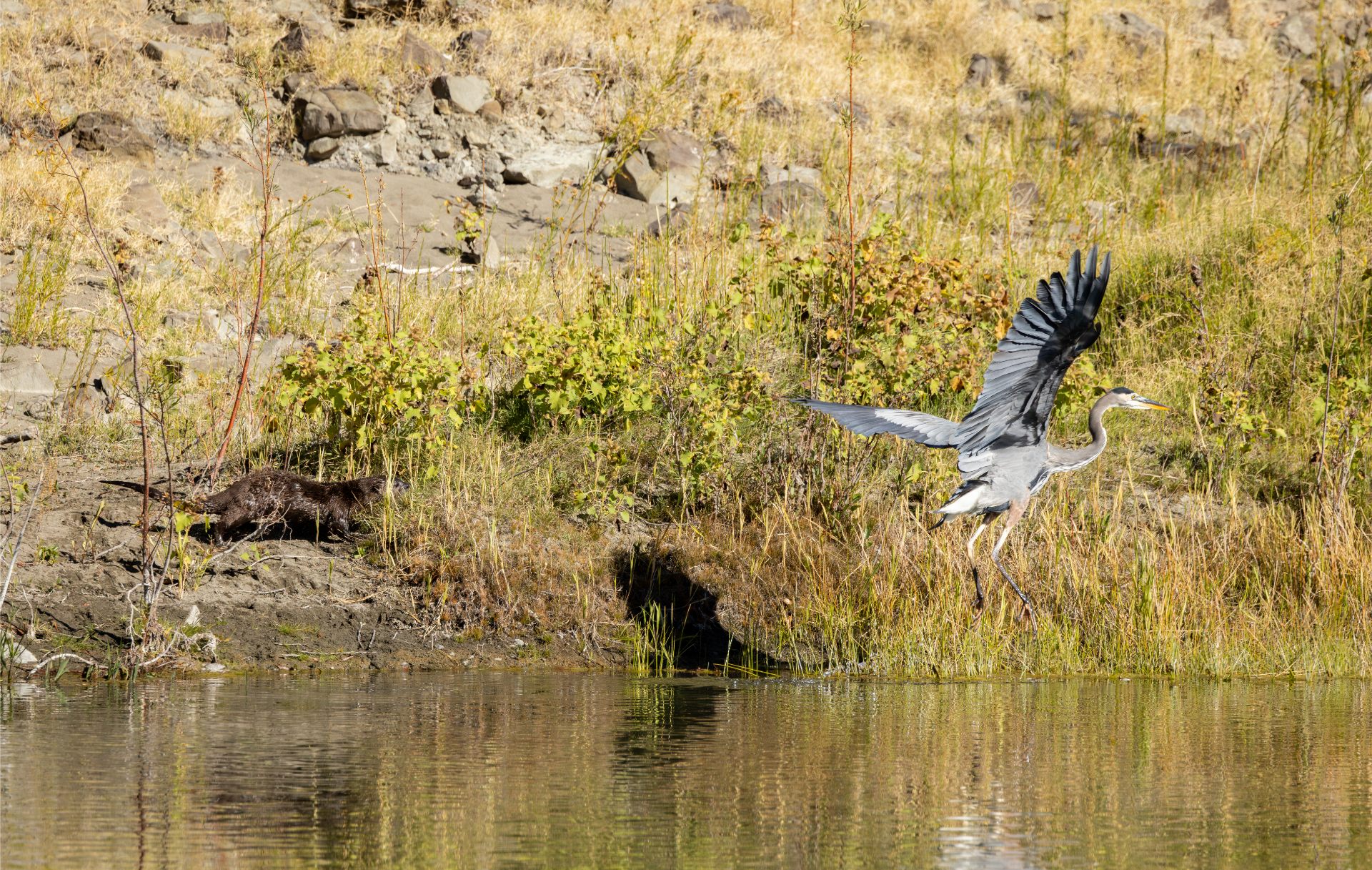
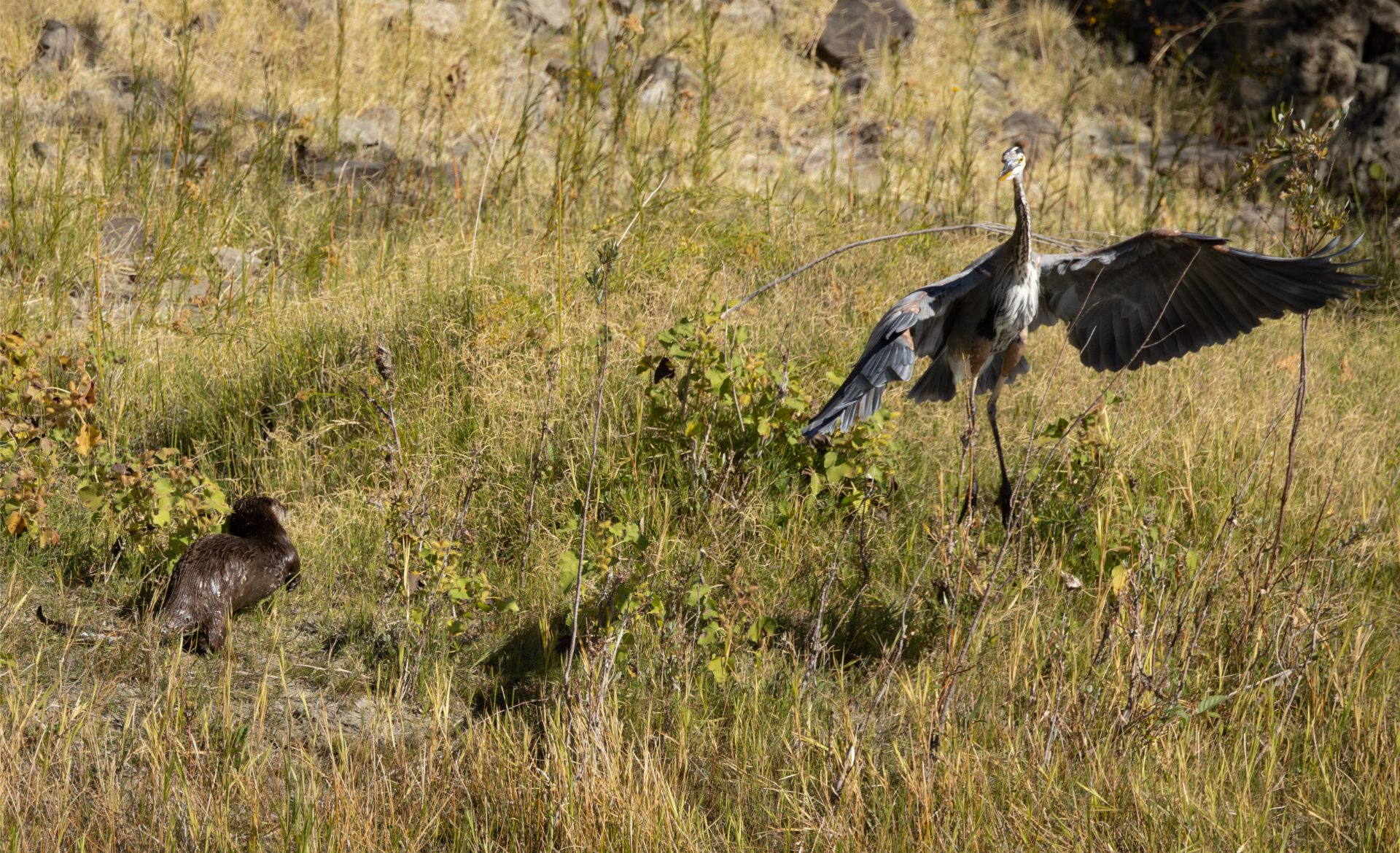
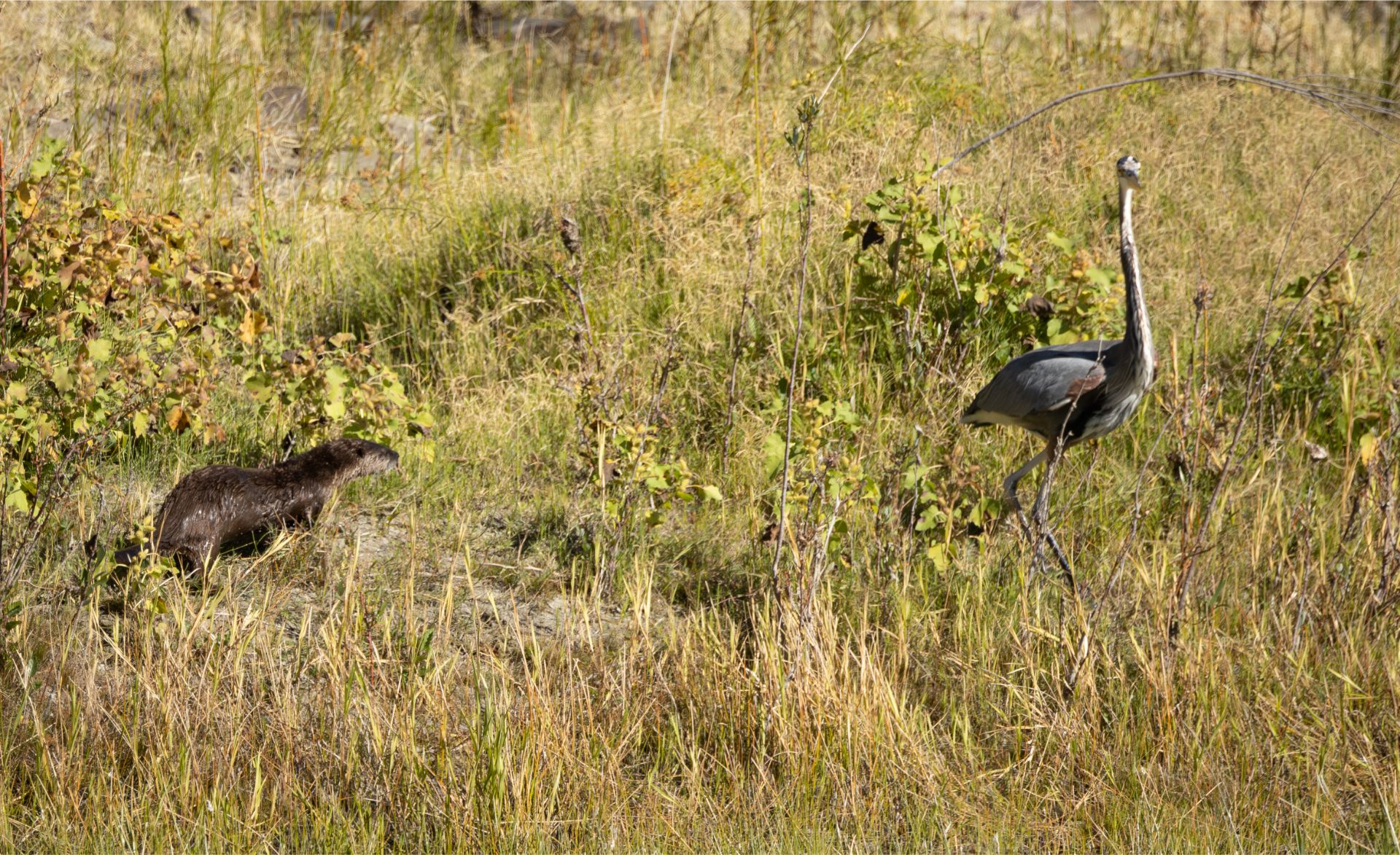
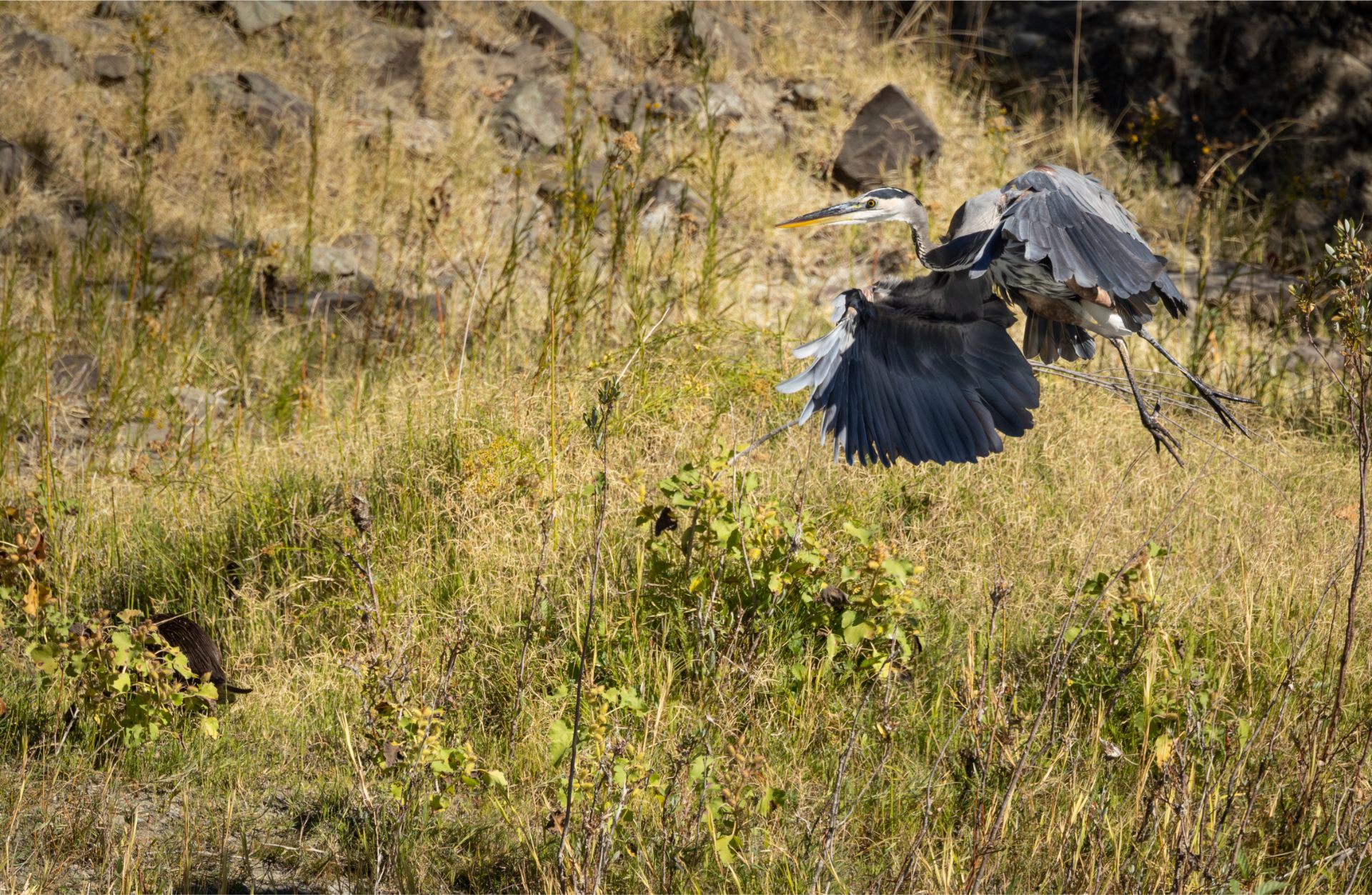
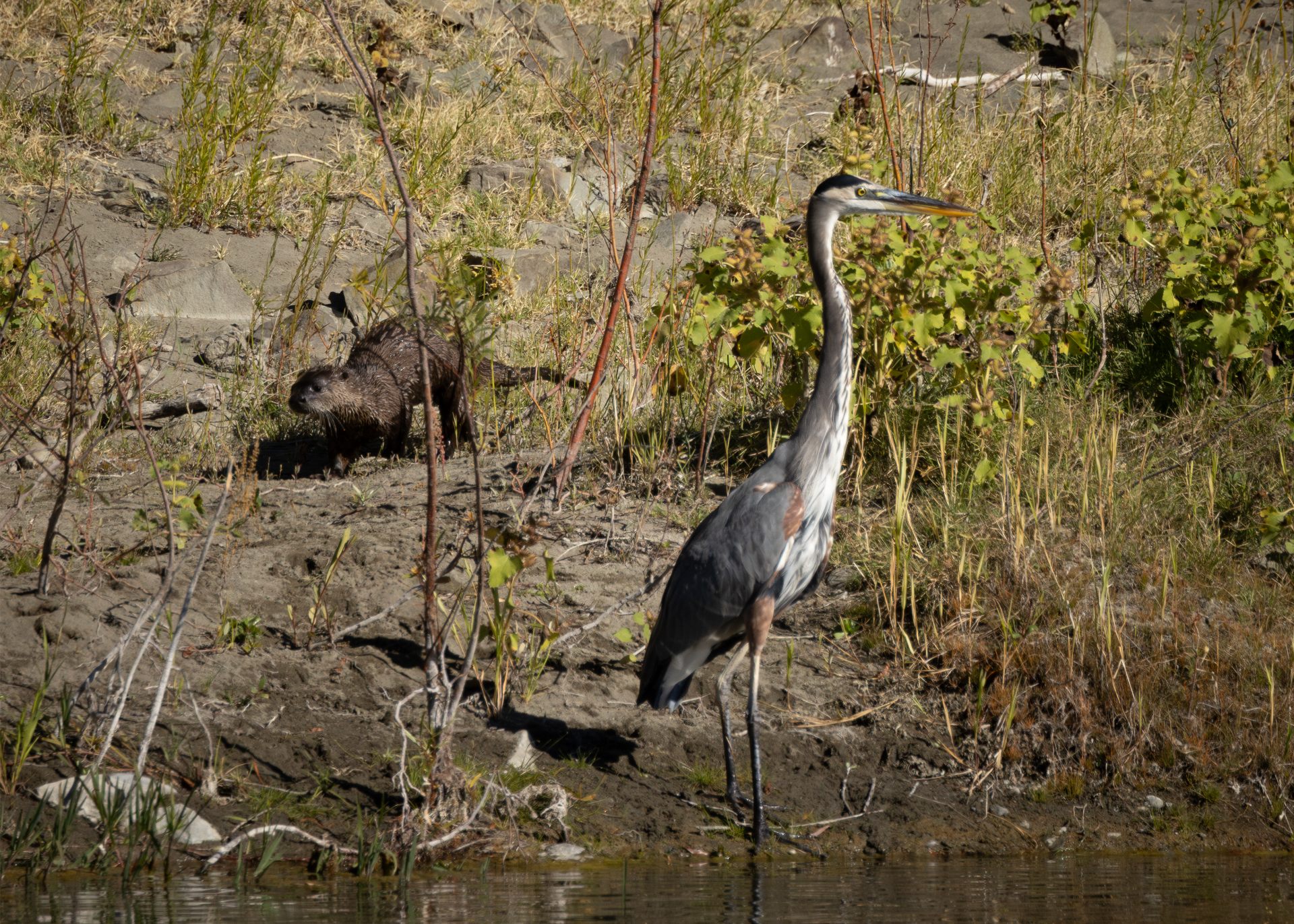
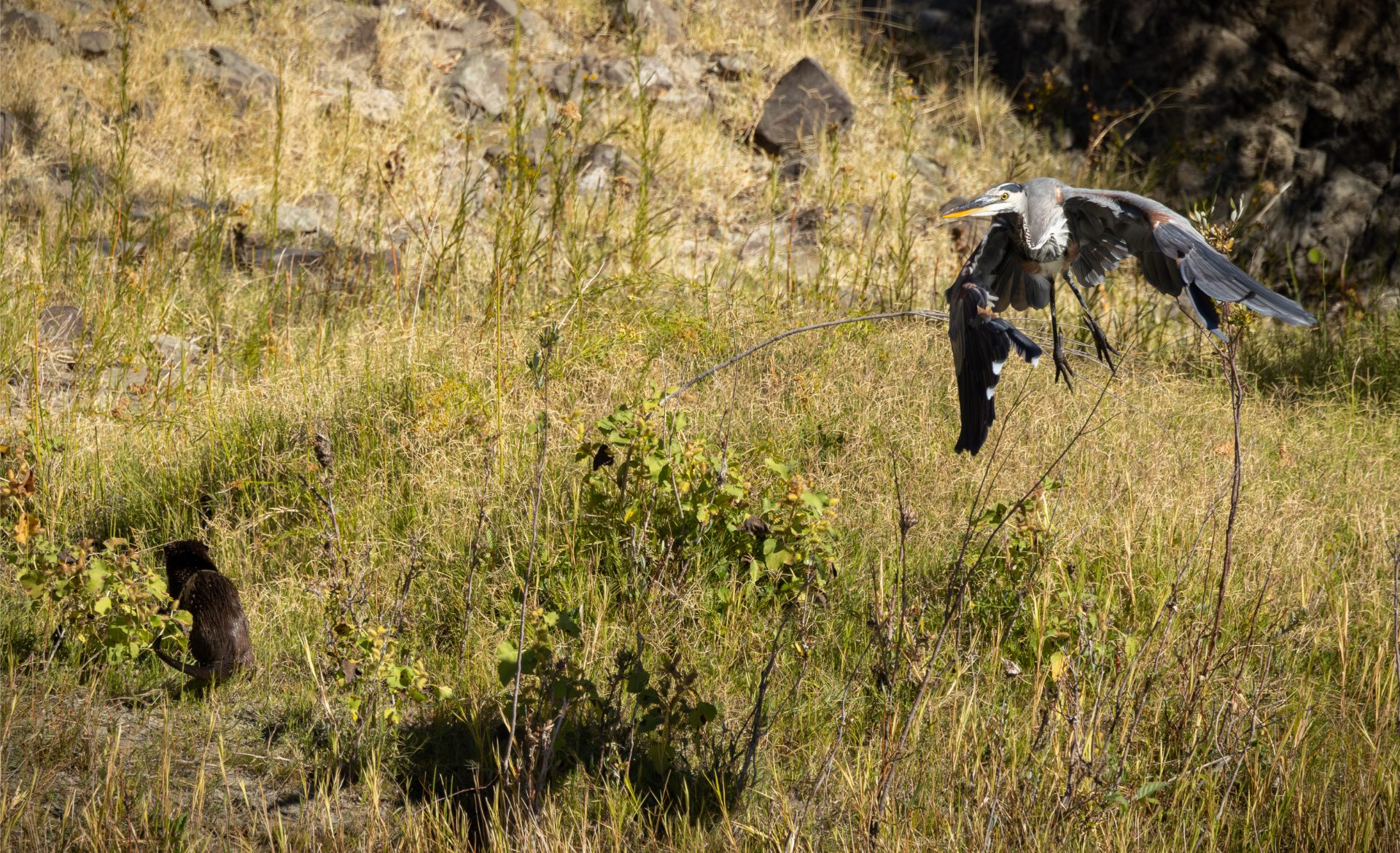
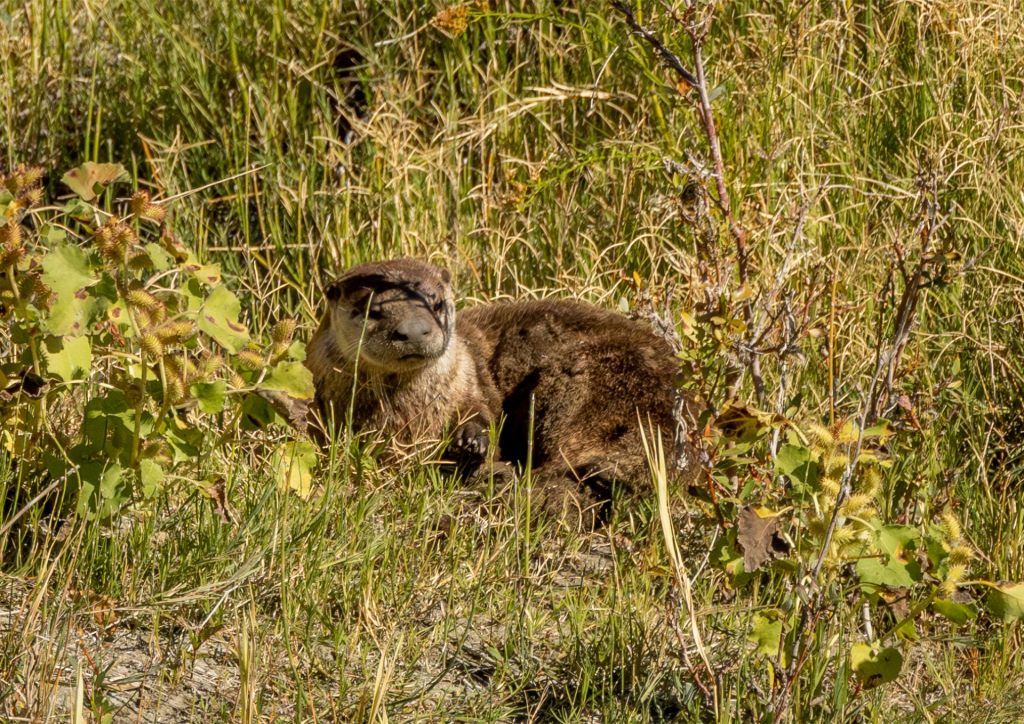
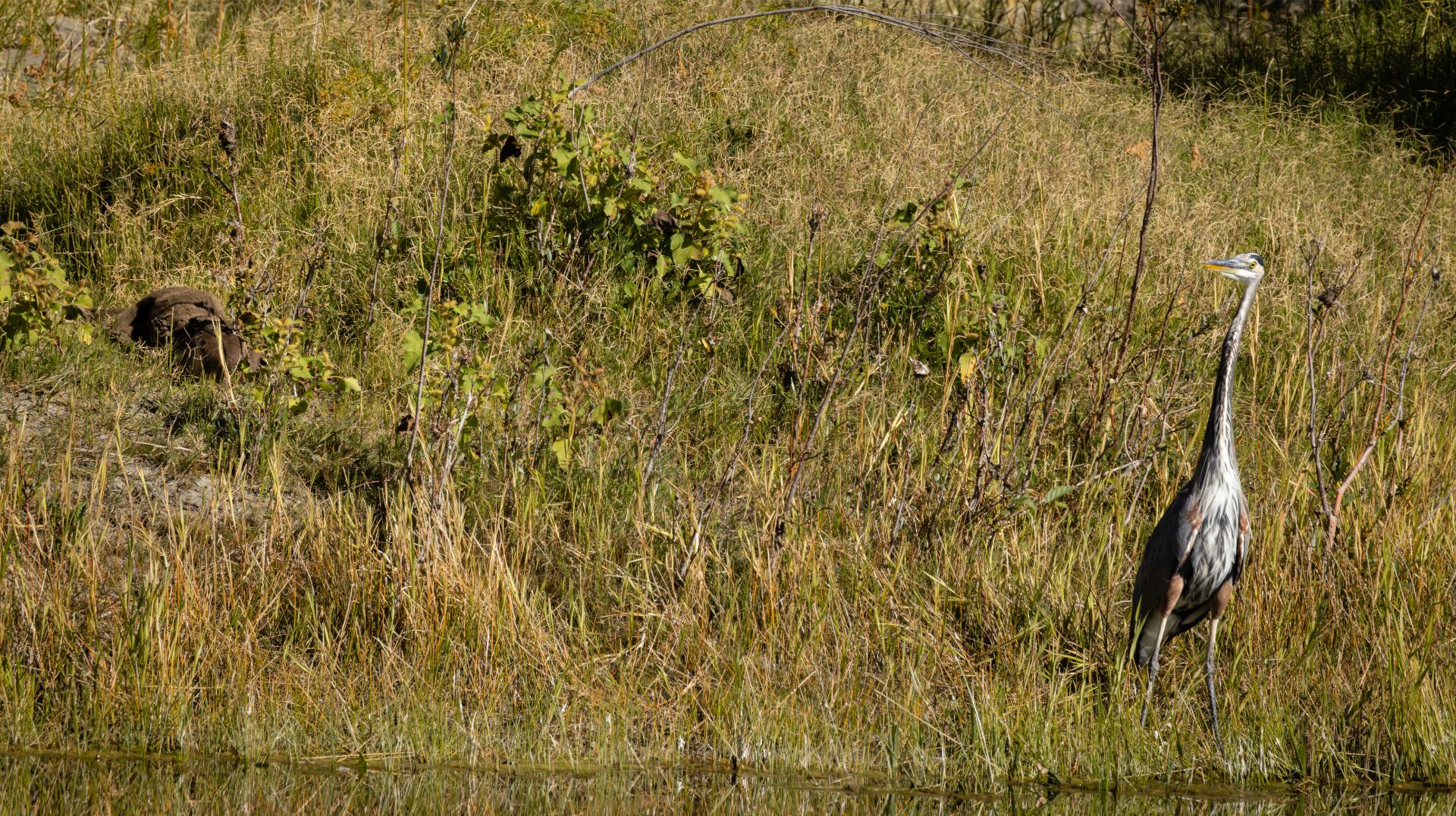
Realizing the ducks were not worth the effort, the otter turned its attention to the other side of the river where a young Great Blue Heron stood. The heron had been busy fishing, and as a juvenile I wondered whether it had ever even seen an otter before as it just watched the ducks being harassed but showed no alarm itself.
Again, the otter slipped into the water and dove deep enough that there were no surface ripples to give away its presence. It emerged a few yards upstream from where the heron stood, and what followed was a hilarious sizing up, each creature seemingly unsure of what to make of the other.


2 responses to “Mustelid Catch-up”
I love watching these guys on your videos!
LikeLiked by 1 person
Thanks Deb!
LikeLike