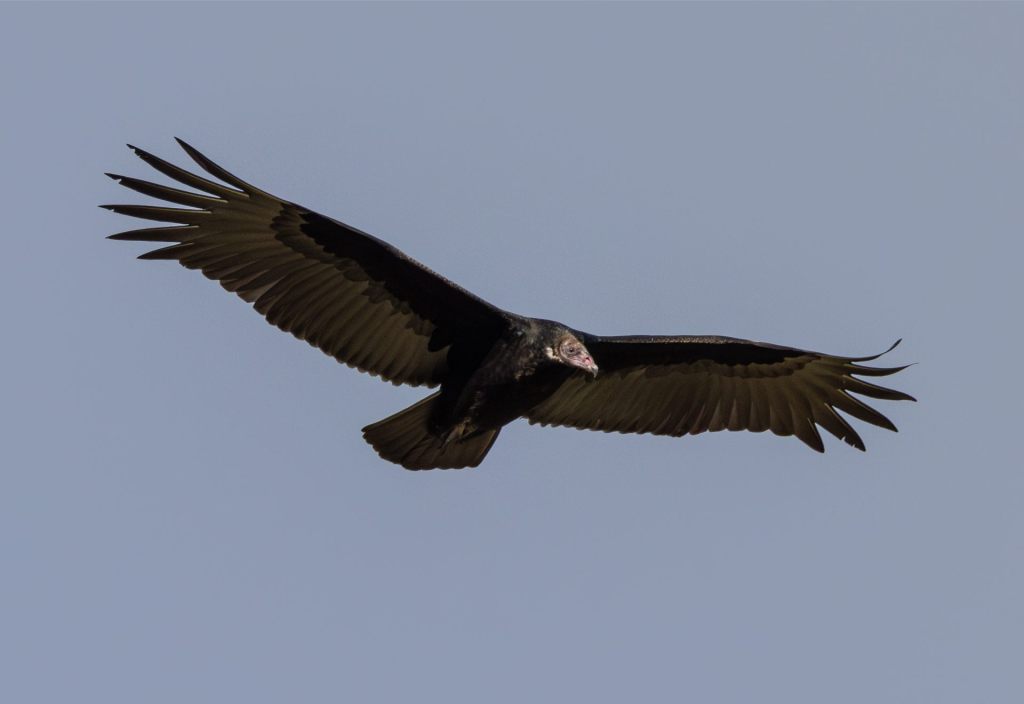
It’s fall migration time and many of the local Turkey Vultures are making their way south for the winter. When I was a kid, many decades ago, the local Turkey Vultures cleared out completely every fall and I learned that seeing the first ones reappearing in late winter was one of the first welcome signs of spring.
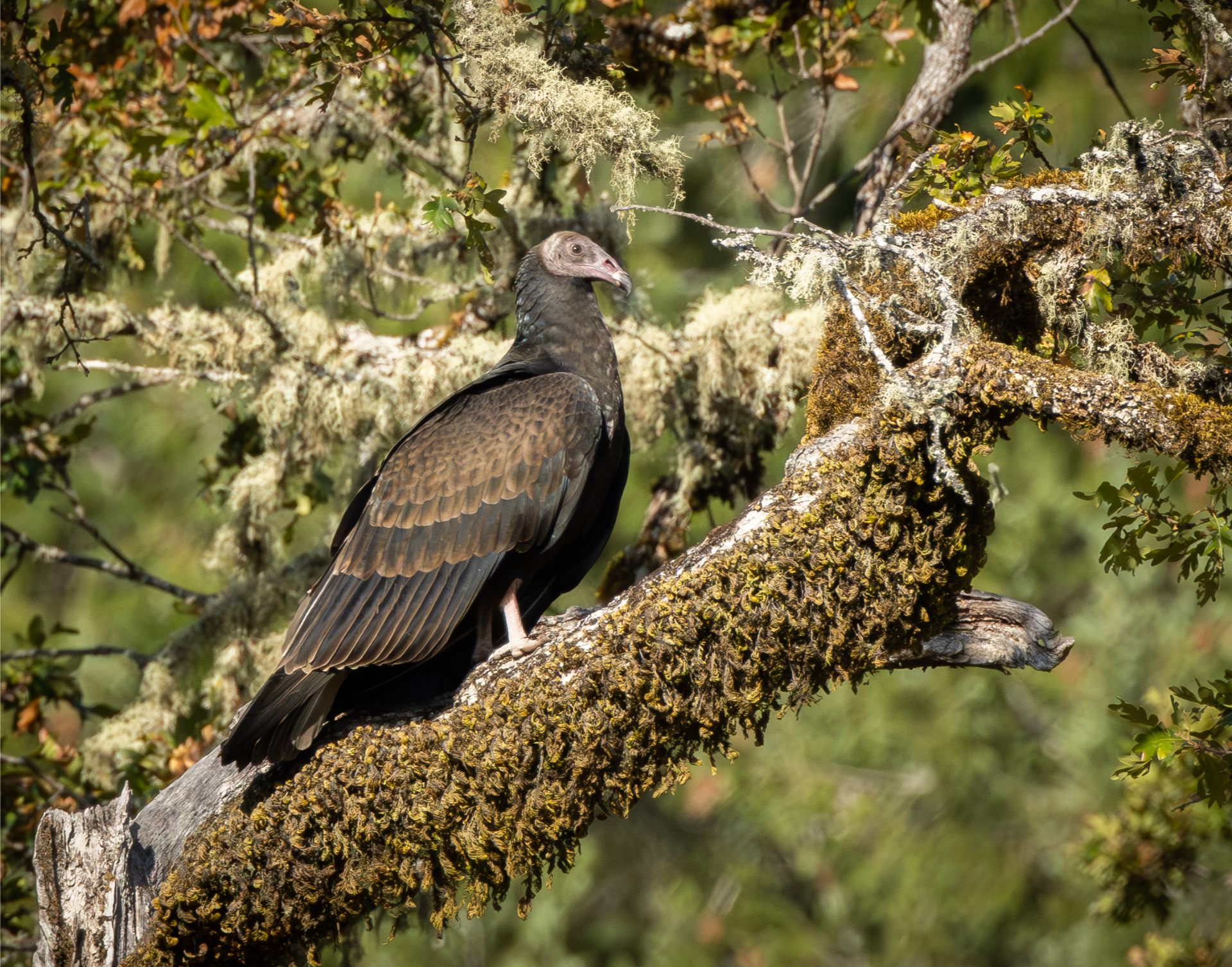
Now, however, and for about the last 20 years or so, as climate change has affected the habits of these gentle giants, quite a few Turkey Vultures (TVs as some affectionately call them) stick around in Southern Humboldt County all winter.
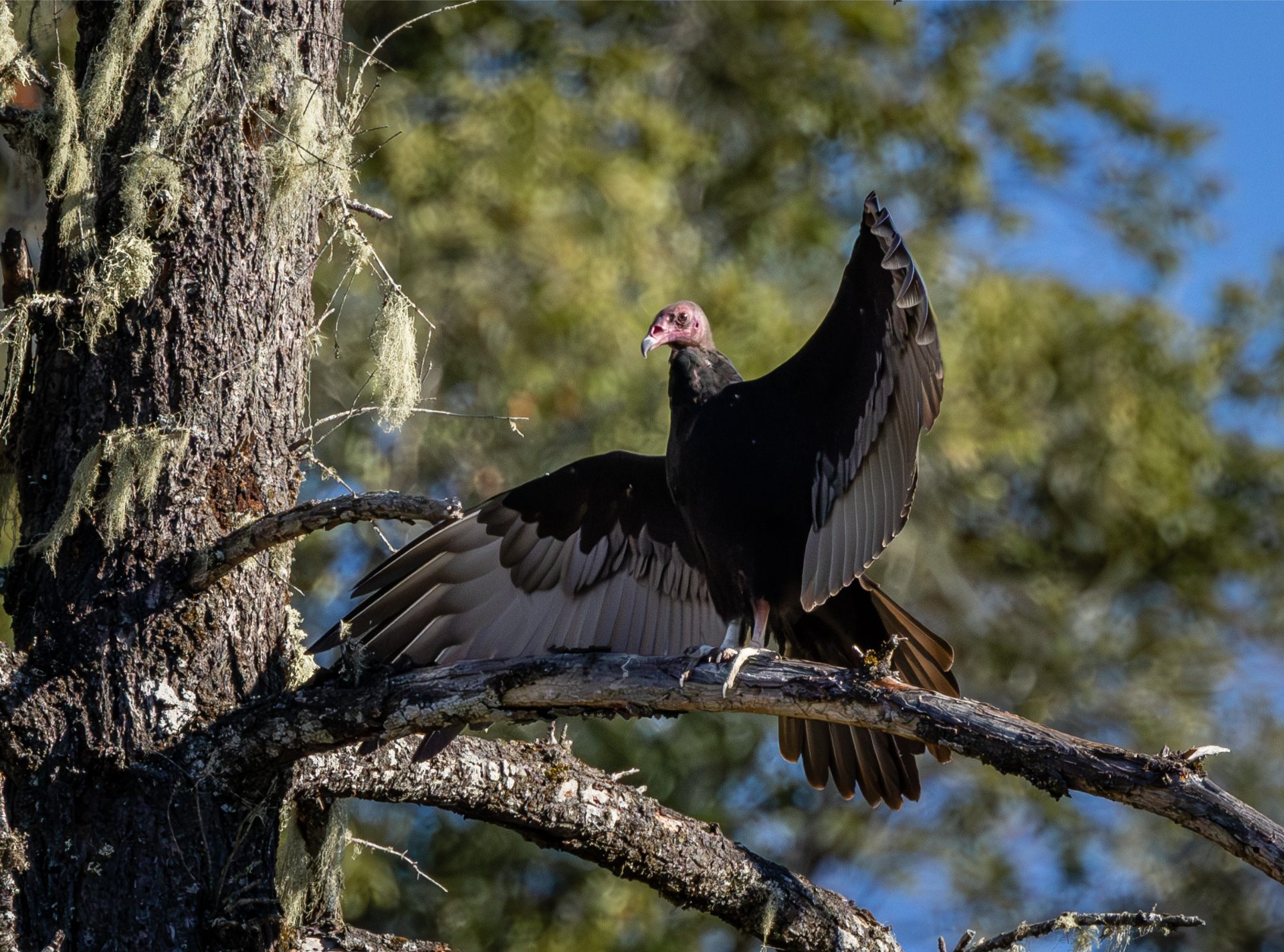
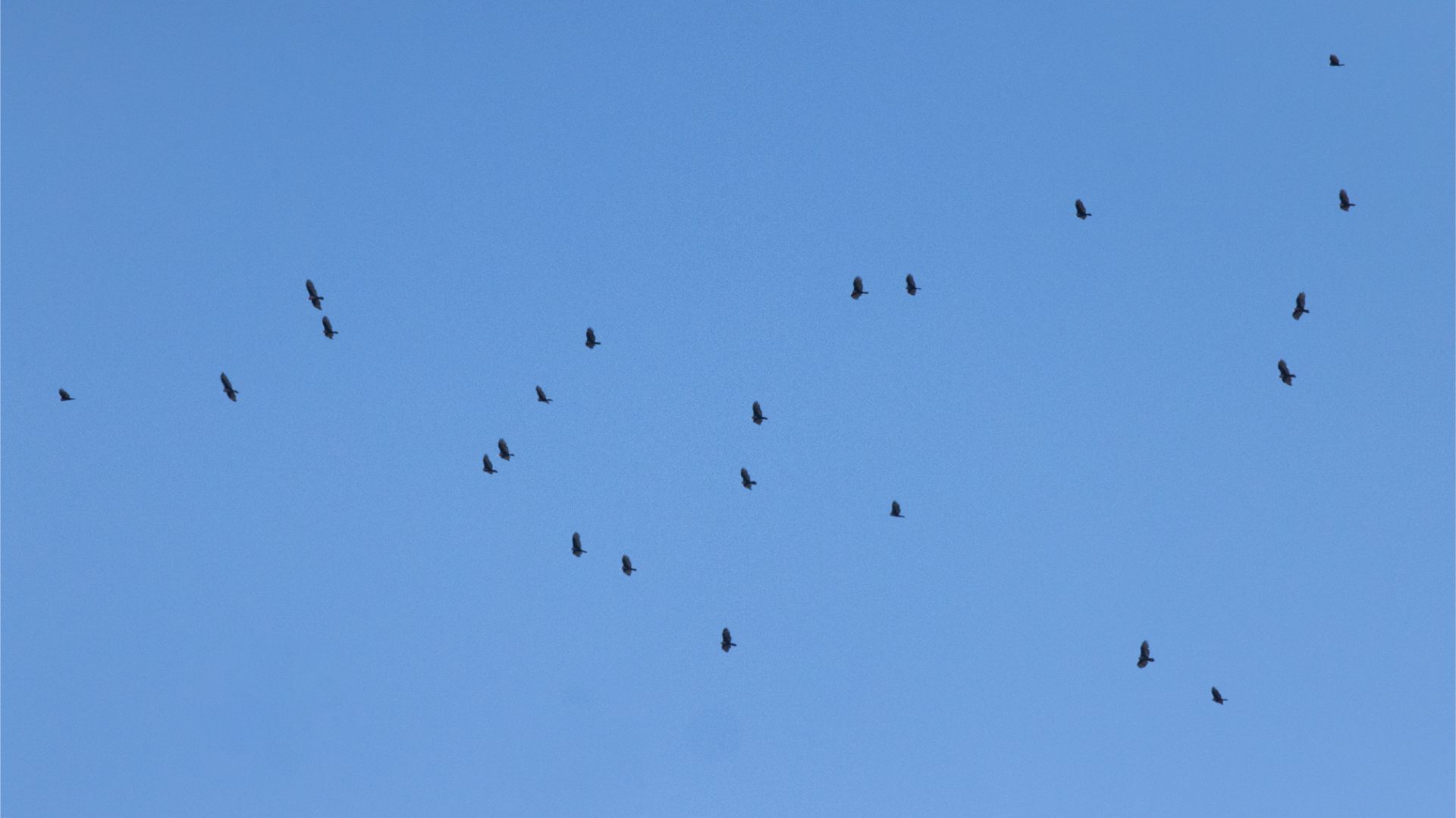
So it was quite a treat to see a large group of perhaps 60 or more gather in the sky, circling higher and higher in what’s called a “kettle” until finally some kind of group decision was made to move on and away they went, slowly disappearing from view towards the south.
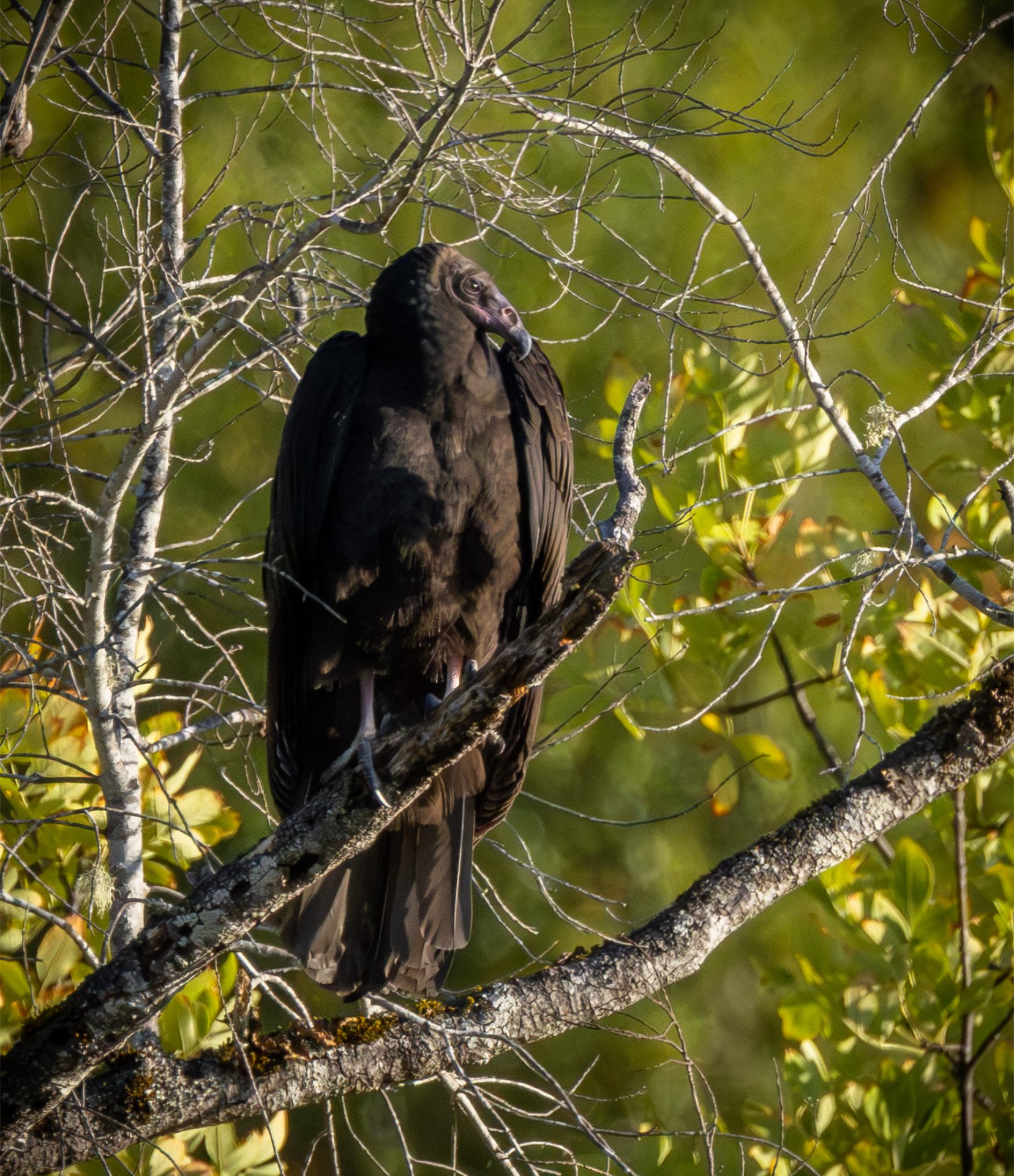
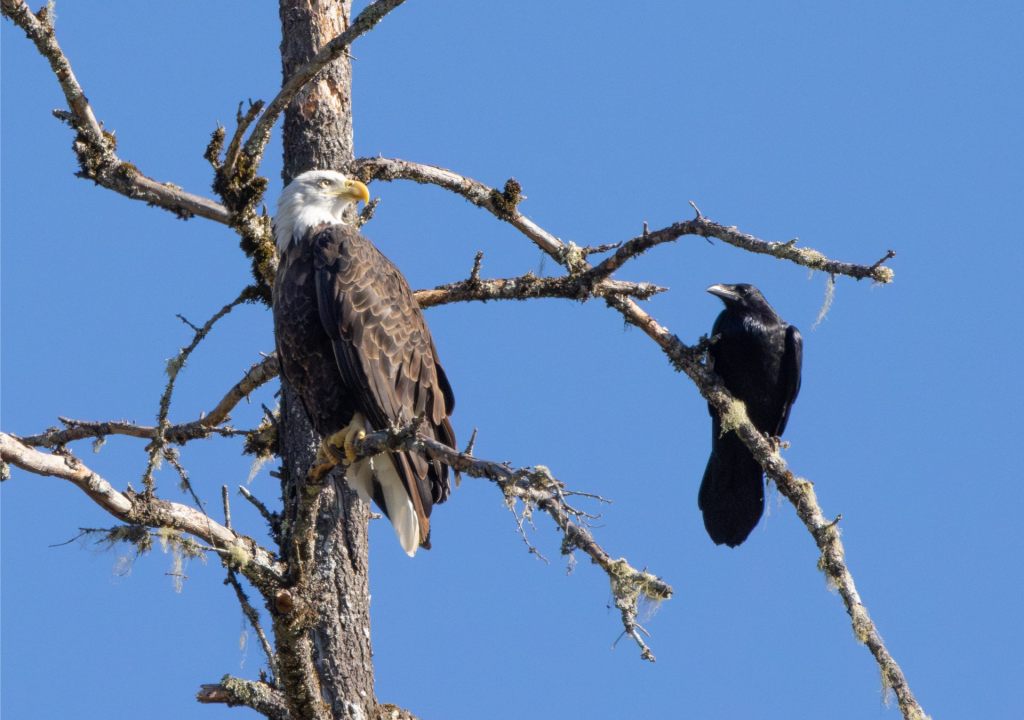
The other morning, as I headed out at first light, I spotted a huge group of TVs roosting in a bare tree way up high on a hilltop a bit downstream of my usual river hangout. I counted close to forty clustered on the bare branches, accompanied by a few Ravens.
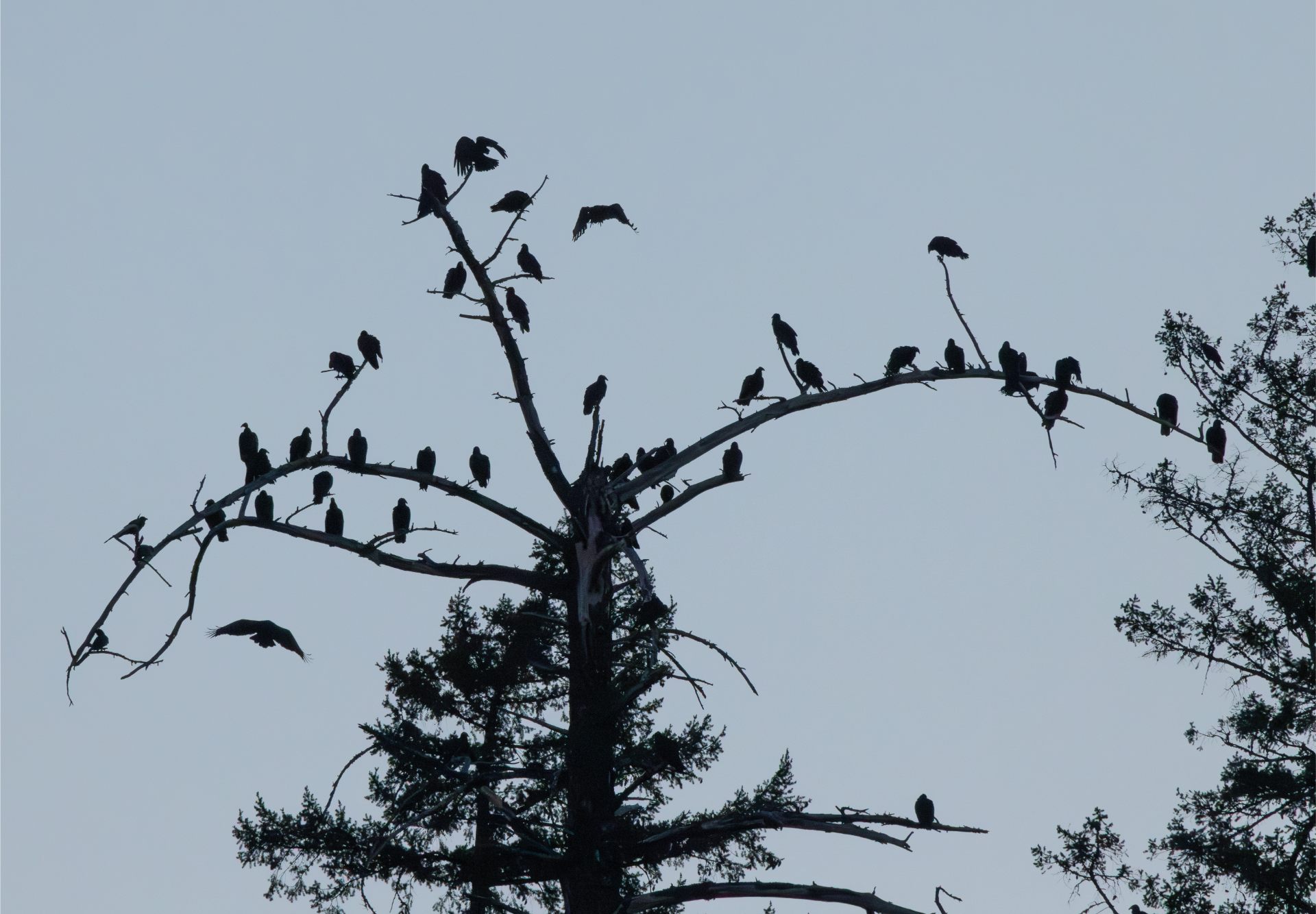
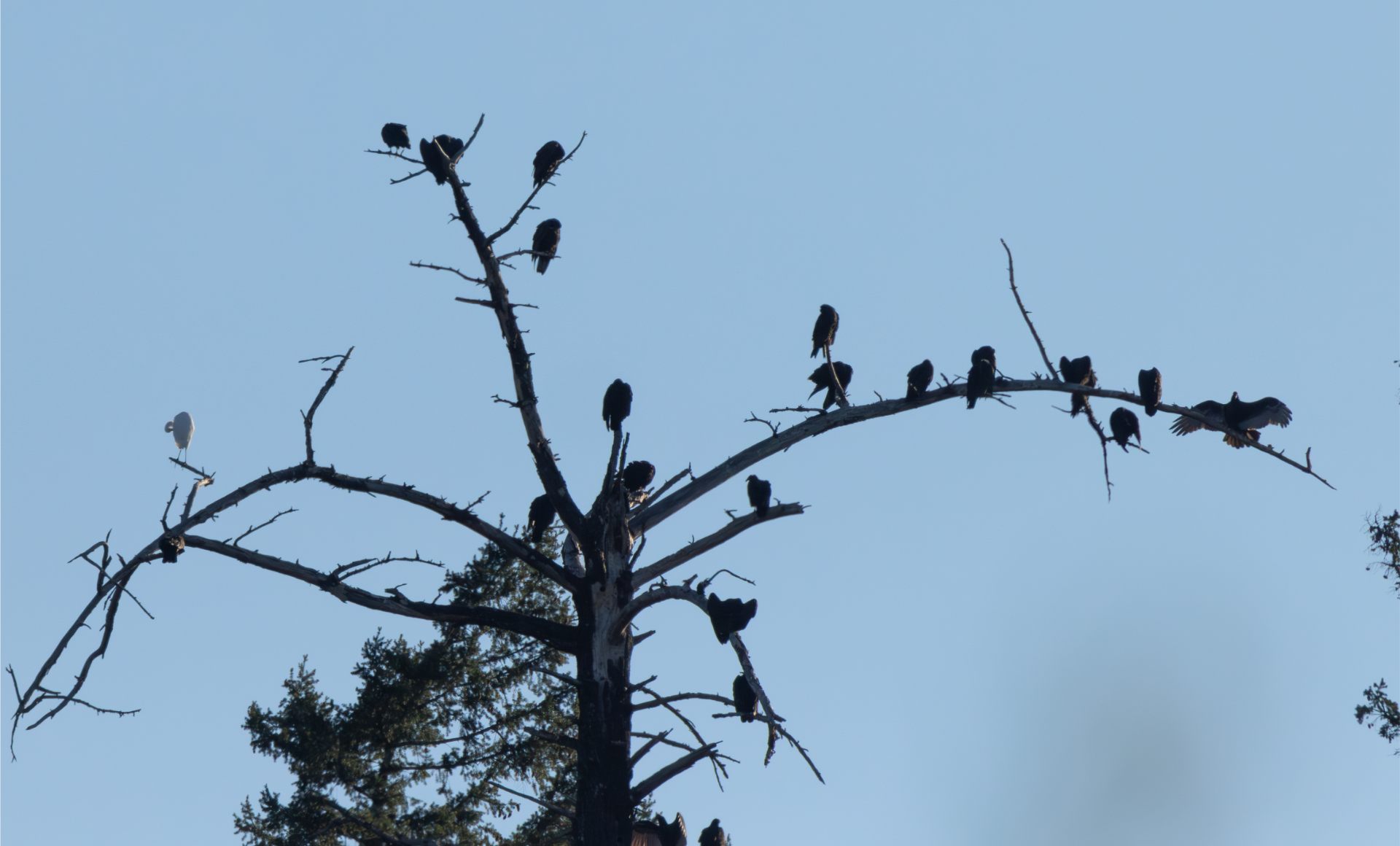
Little by little, as the sun rose and warmed the air as well as the birds, the vultures began to leave their roost and take to the sky. More and more TVs joined the kettle and I estimated at least 60 were slowly swirling upwards, riding the column of warm air rising from the ground as the sun’s heat produced the thermal draft.
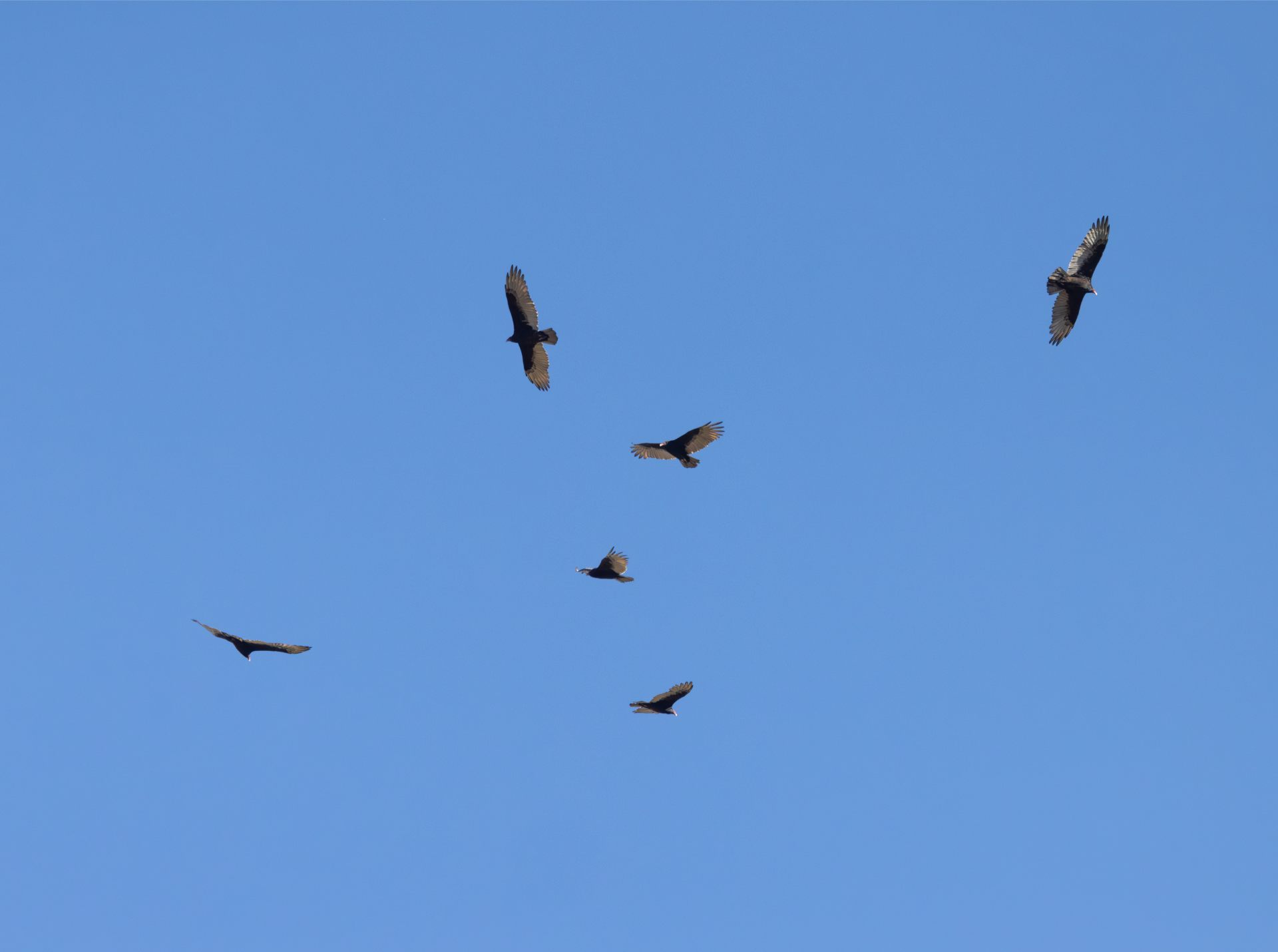
Known as “thermal soaring”, TVs and other large migrating birds use this energy conserving method, minimizing the need to ever flap their wings. Thermals provide the lift and when enough altitude has been gained, the birds simply soar effortlessly in the direction they’re headed, coasting slowly back down toward the earth over many miles as they gradually lose altitude until the next thermals they encounter can lift them up again repeating the process.
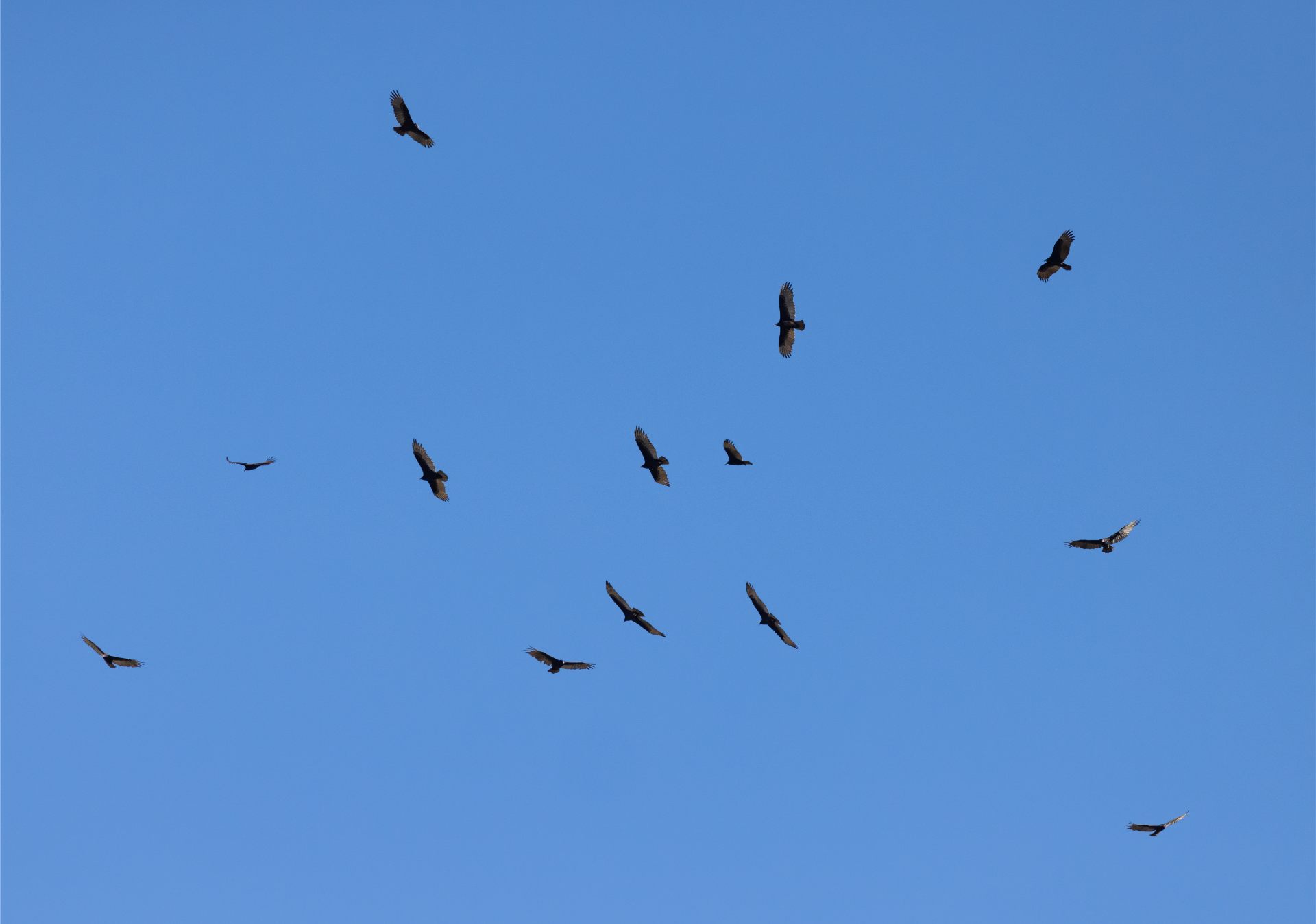
The birds can cover up to 200 miles in a day in this fashion. Depending on where they live and breed in North America TVs might migrate anywhere from a few hundred miles to several thousand miles, some of them going deep into South America.
While I’m happy to have a few TVs hang around Southern Humboldt all winter, it was a special thrill to watch them gather and make their way south on this fall morning. I wondered how far they had already come and how much longer of a journey lay in front of them.