When the Student Is Ready, the Teacher Will Appear

Early this morning several Turkey Vultures sat in the brush just outside the fence that borders my backyard. I could see them through my bedroom window which looks out toward the river. They must have been attracted by the deathlike smell of the corpse flower that was blooming and sending its foul odor into the atmosphere. After an hour or so they left, perhaps finally realizing they had been fooled by the bizarre plant. Seeing their rich brown plumage and bright pink heads put a smile on my face. They are infrequent yard visitors, and it’s a treat to get this close of a look.
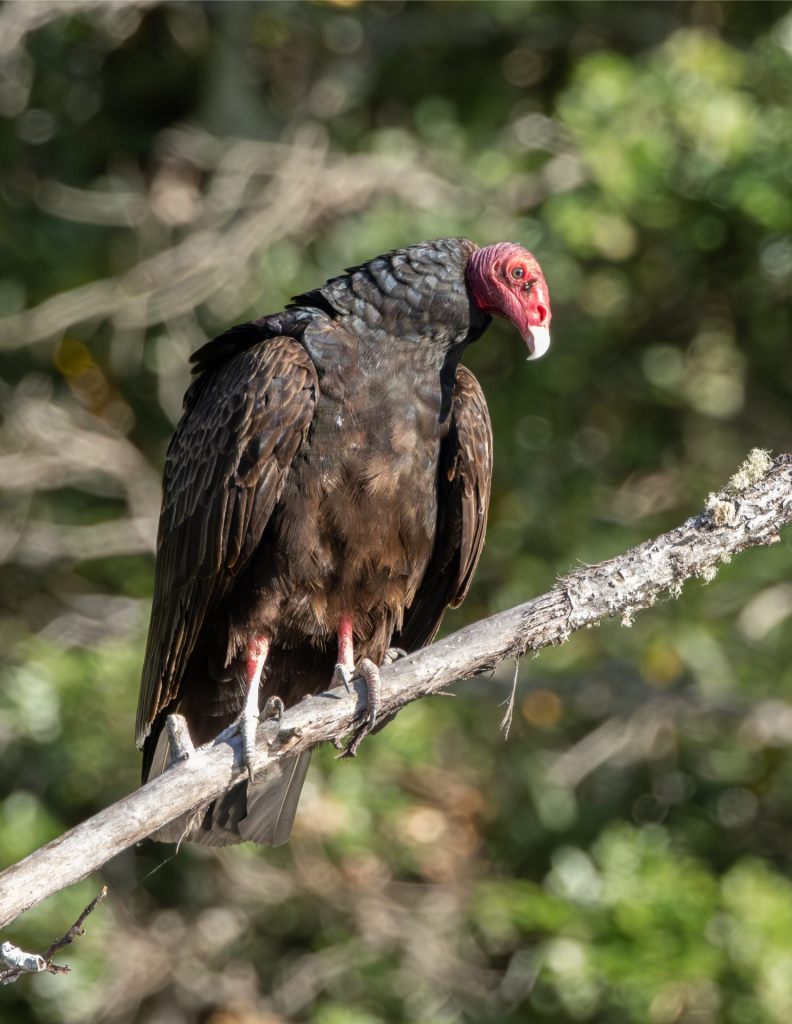
Turkey Vulture

When the first Band-tailed pigeons of the spring arrived later in the morning, I hurried out with a large bucket of seed for them. Most flew off at my approach, but one stood on the platform feeder, about eye height to me and did not fly away. Garnet red eye, elegant white collar above an iridescent ruff, rich purply-slate-colored body, bright yellow bill and feet make this such a handsome creature. If Band-tailed Pigeons were a car, it would be a 1950’s two-tone Cadillac. I could have reached out and touched it, but was honestly a bit relieved when it did fly away as I lifted the bucket to dump its contents onto the platform. A bird that trusting of humans might be sick. Soon the feeder was covered with hungry pigeons.
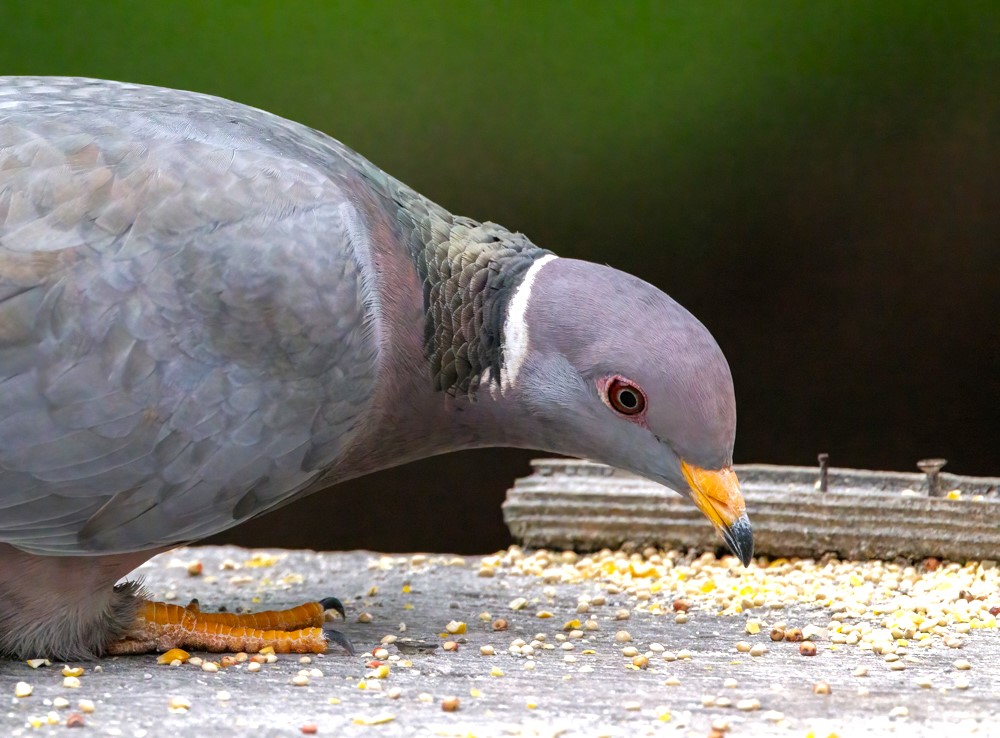
Not much later the platform filled with voraciously hungry sparrows, White-Crowneds, White-throateds, Golden-crowneds. They’ve been around all winter, but there is more urgency in their feeding now as they prepare to travel great distances to their northern breeding grounds. Some of these could be migrants who started their journey south of here and are fueling up en route.
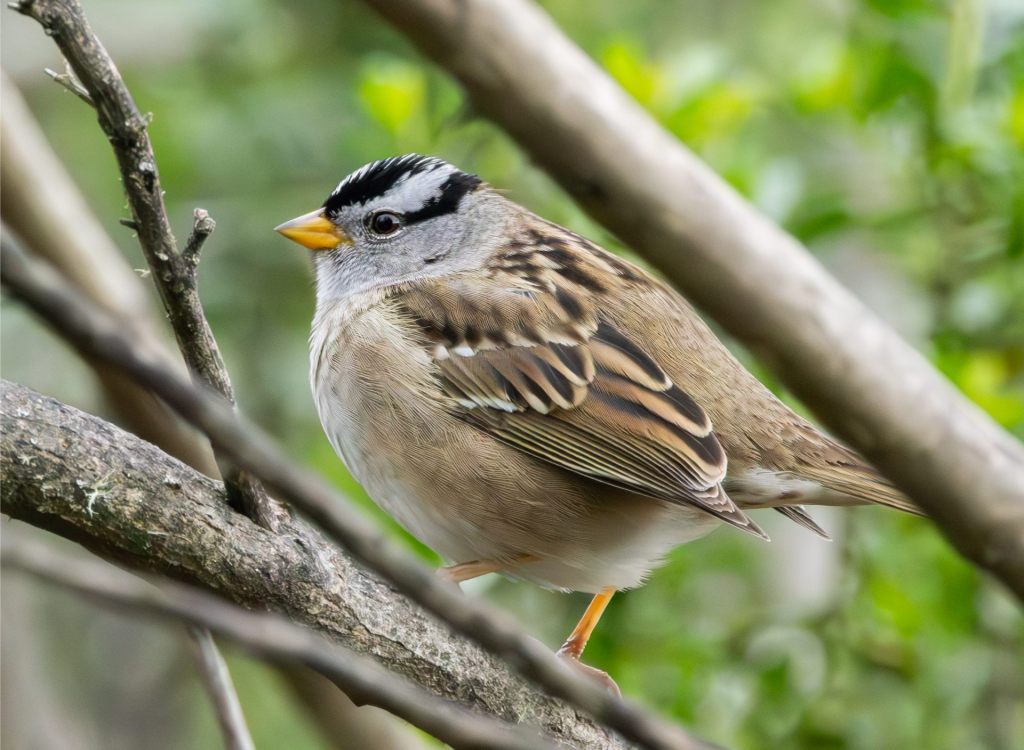
White-crowned Sparrows leave my yard in late spring for points north to breed. Some White-crowneds live year round and breed on the coast. They can be heard singing all around Humboldt Bay in the spring.

Later, in the early afternoon, the first Osprey of the season appeared, seen out the same window and circled around high over the river, staring down into the water in search of a meal, occasionally hovering as if about to dive. It stayed around for quite a while, its graceful wings and loud calls stirring decades of memories, yet as brand new as is each spring.
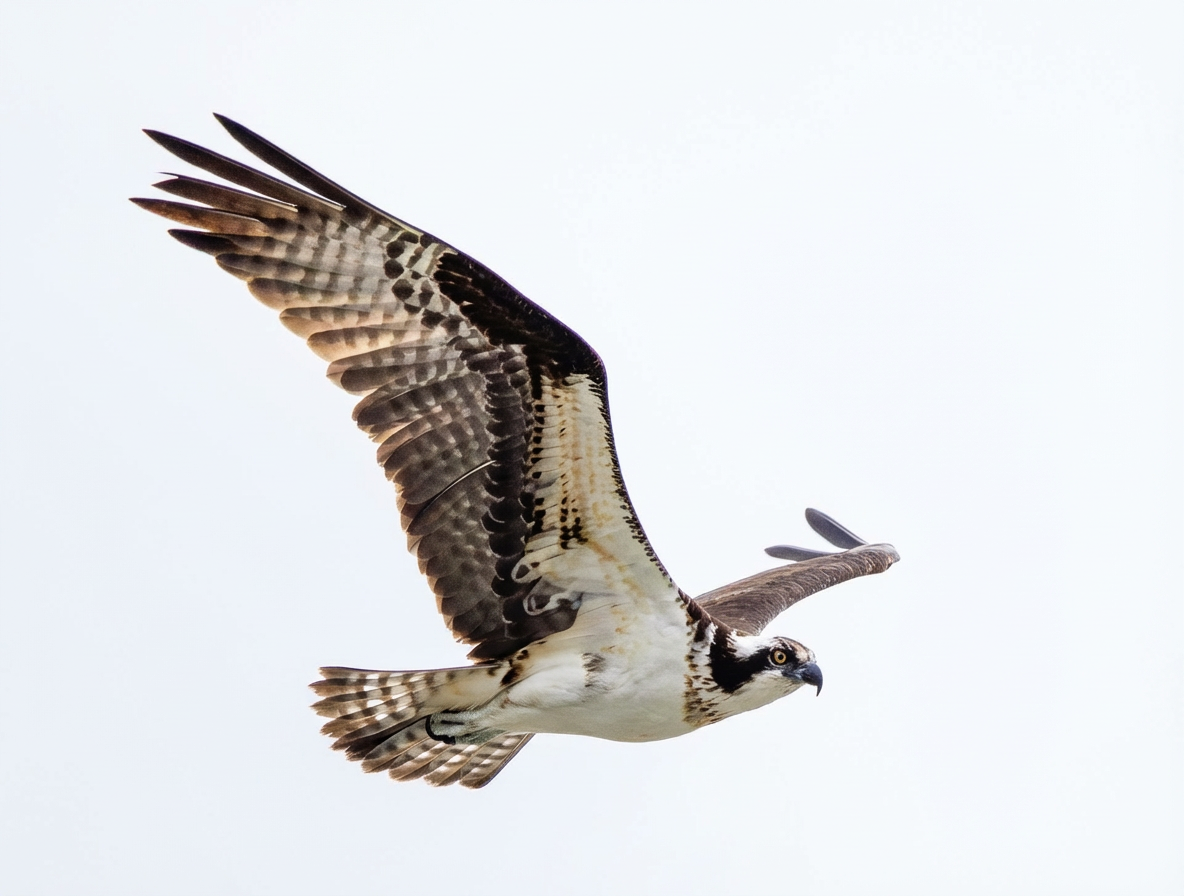
Osprey

It seemed a meaningless coincidence that a friend recommended Amy Tan’s “Backyard Bird Chronicles” a couple months ago when I found myself sidelined by a hand and wrist injury that made using my camera painful. Other circumstances made my frequent visits to the river in search of birds temporarily impossible. But as I read Tan’s delightful and deceptively simple book I soon realized how ready I was for its teachings. Tan’s enjoyment of birds is contagiously engaging. She loves whatever appears in her yard and is fascinated by the activities of the mostly common birds. In fact, it seems her passion is for studying behavior and ecology, so it’s the day in, day out accounting that is necessary to satisfy her curiosity and that she shares so enthusiastically.
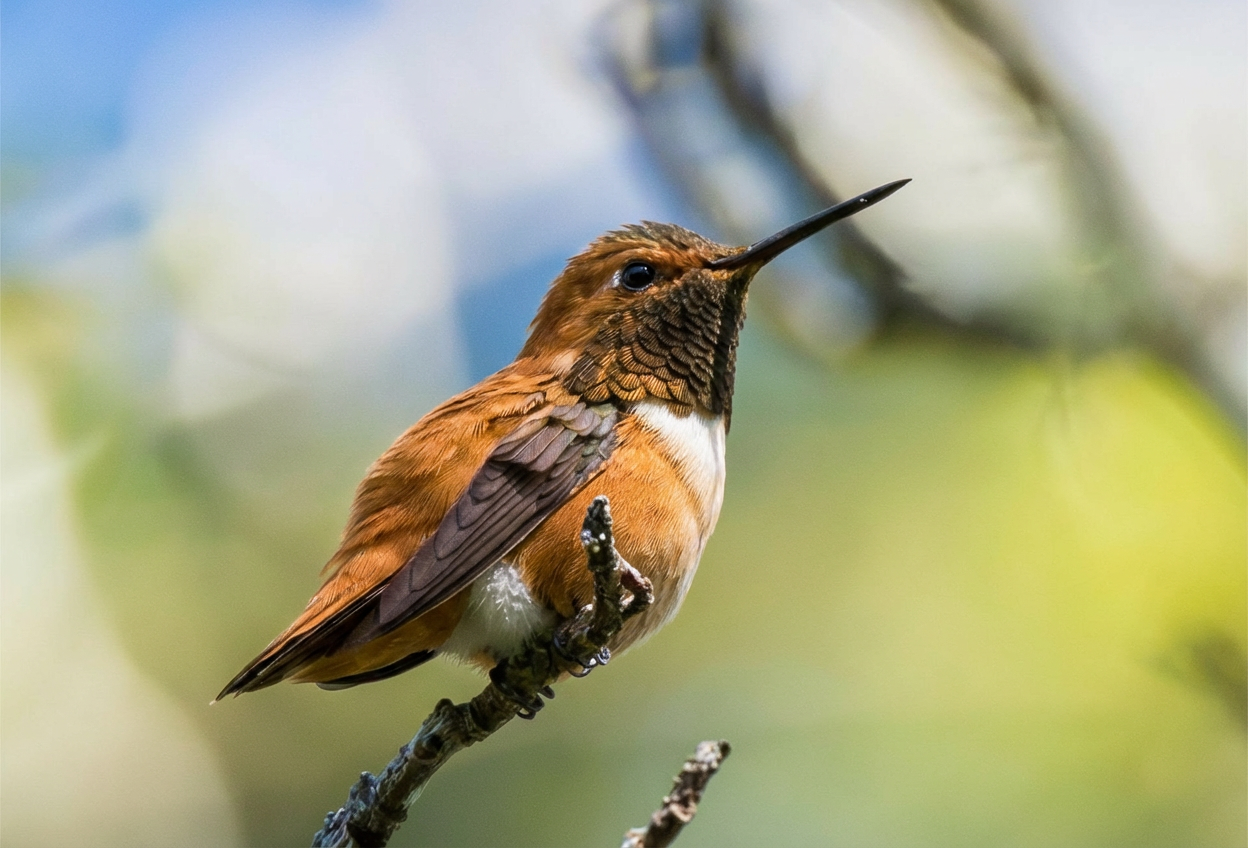
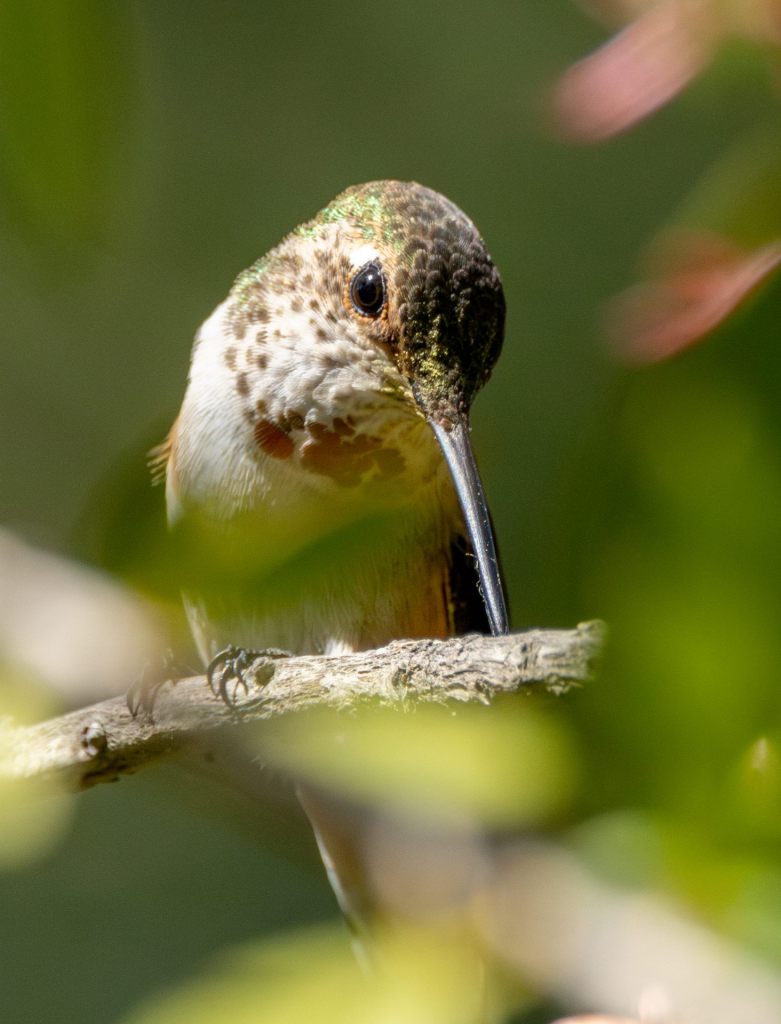
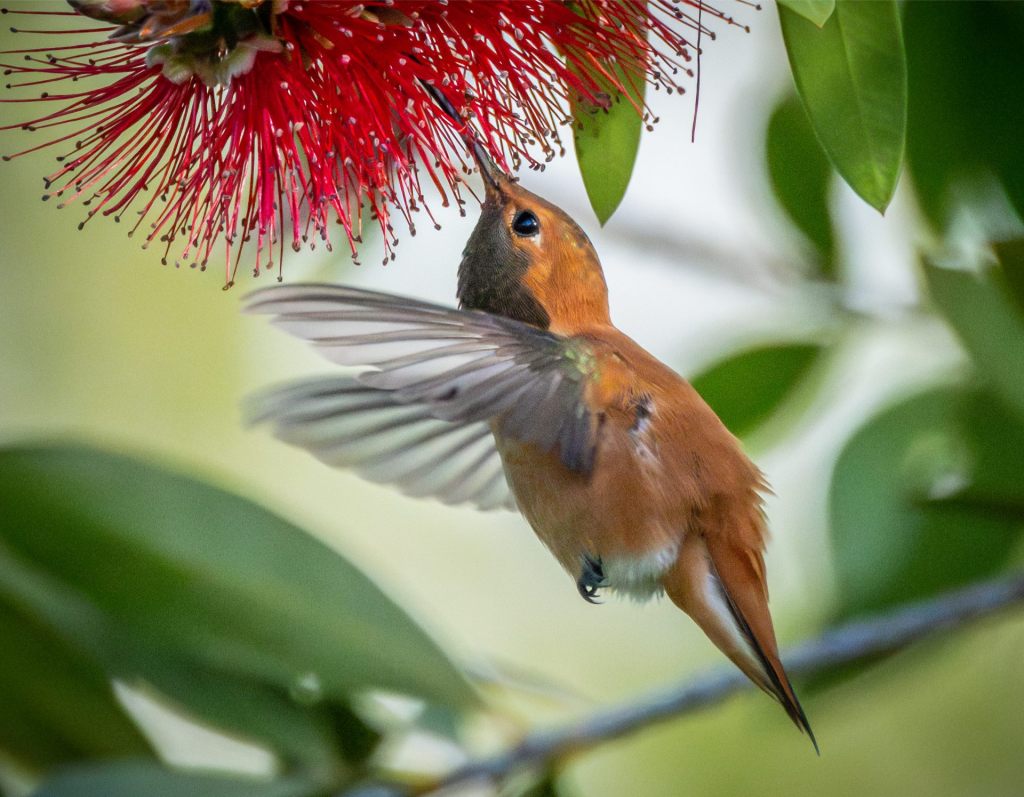
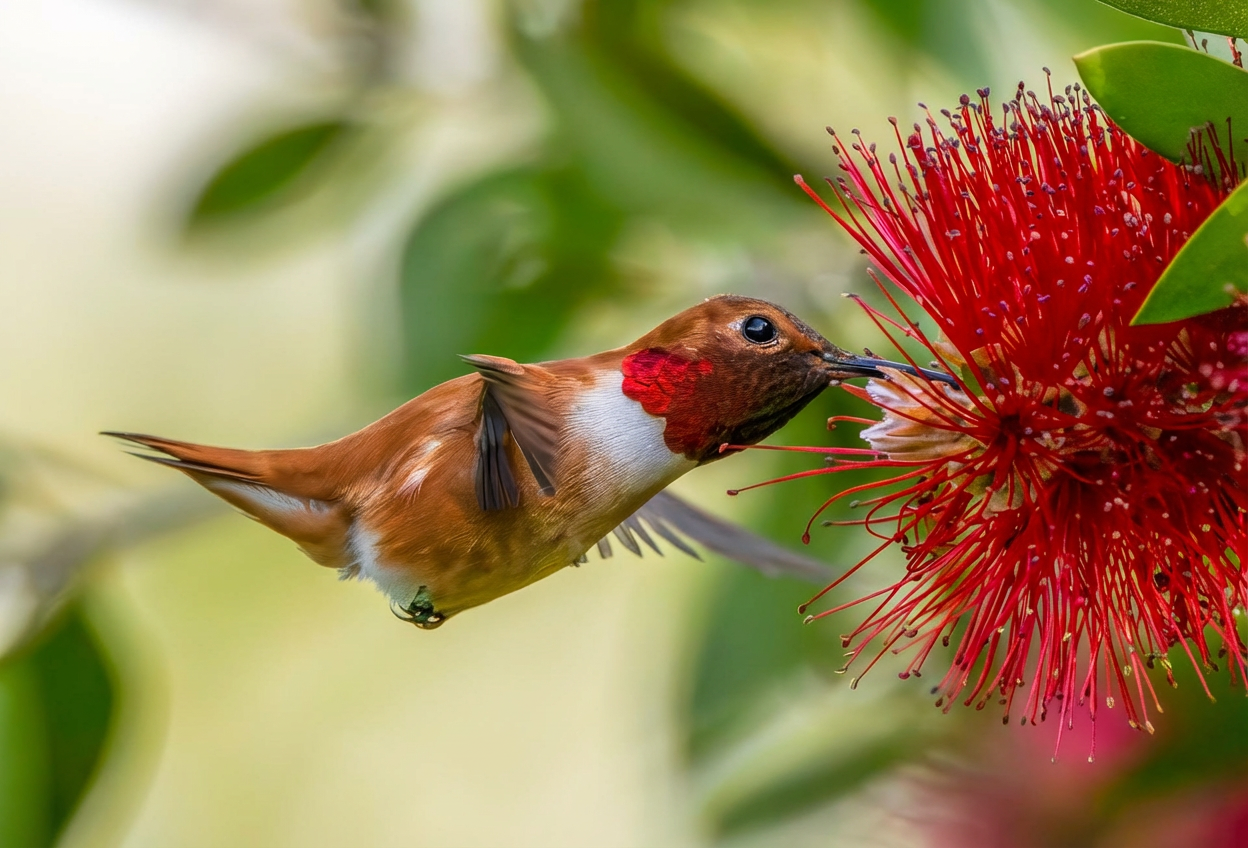
Male Rufous Hummingbird. Of the western hummers this species ranges the farthest north to breed, all the way to southern Alaska in some cases.
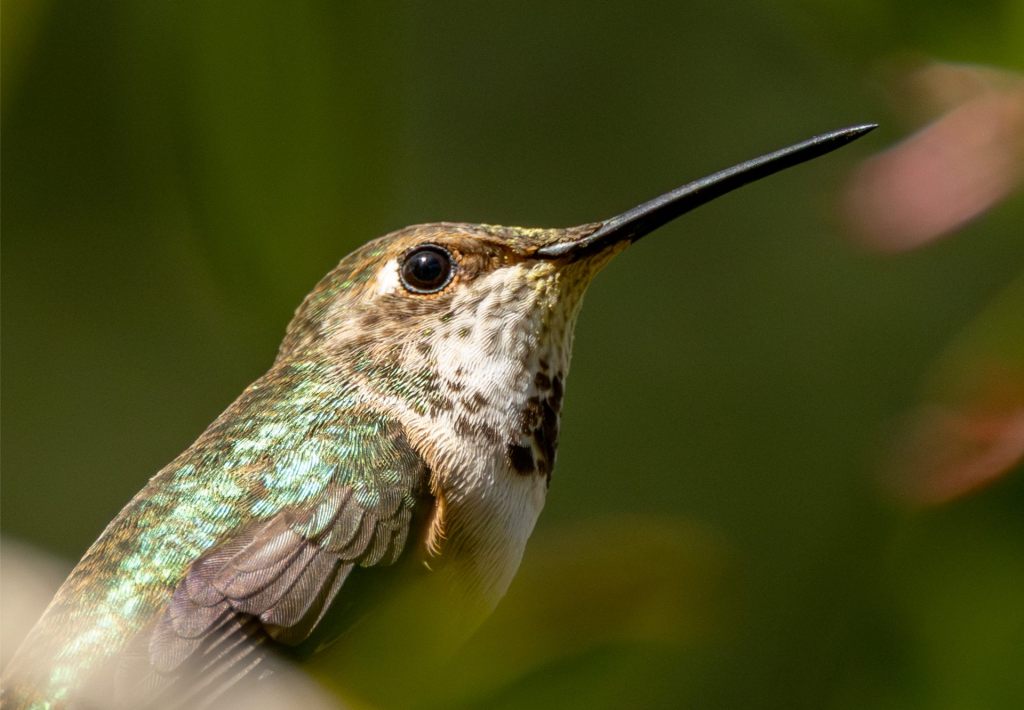
Female Rufous, or possibly Allen’s Hummingbird
Somewhere I read that ultra high speed photography was invented to freeze a hummingbird’s wing beats. This was shot at 1/4000th of a second and the wings are still a little blurry. Male Rufous Hummingbird. Their wings beat 80 times per second.
Female Allen’s or Rufous Hummingbird. For a short time each spring both of the orange hummers are in the yard. The Allen’s stay and raise their families here, while the Rufous pass through on their way northern breeding territory.
Male Rufous Hummingbird

When I frequent the several spots I take my camera to and wait to see what happens, I like to think I have a similar appetite to Tan’s for observing whatever shows up, relishing appearances and happenings I recognize like old friends.
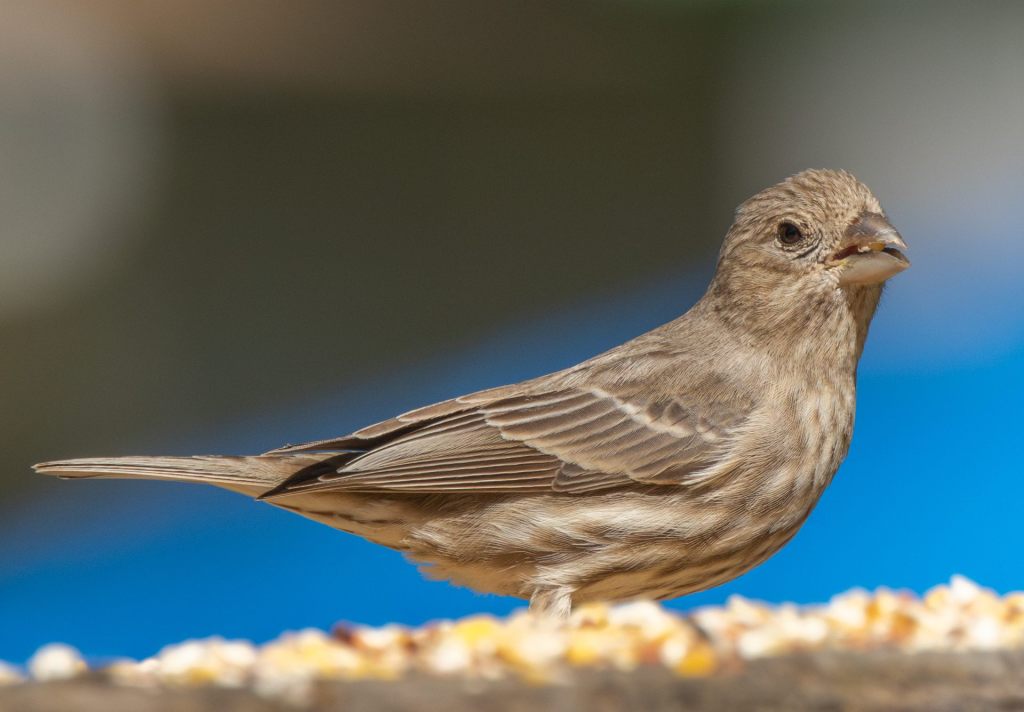
Female House Finch. I used to think it was kind of like cheating to take pictures of birds at the feeder. It can be a point of pride and even correctness for bird photographers to do nothing artificial to capture their images. Circumstances can make certain boundaries blur or even disappear.

I wonder if we (we being all god’s creatures) are hard-wired to be intuitive phenologists, but we humans have bungled up that wiring with electric lights and forced-air furnaces and trucked-in food. Survival in the natural world depends on knowing the timings of things, so maybe those of us who are fascinated by watching birds (or any other wonder of nature: there are weather geeks and fish freaks as well as bird nerds) are rediscovering that necessary and driven ability to observe and study the world around us. Maybe we remember in some way what it meant to belong.
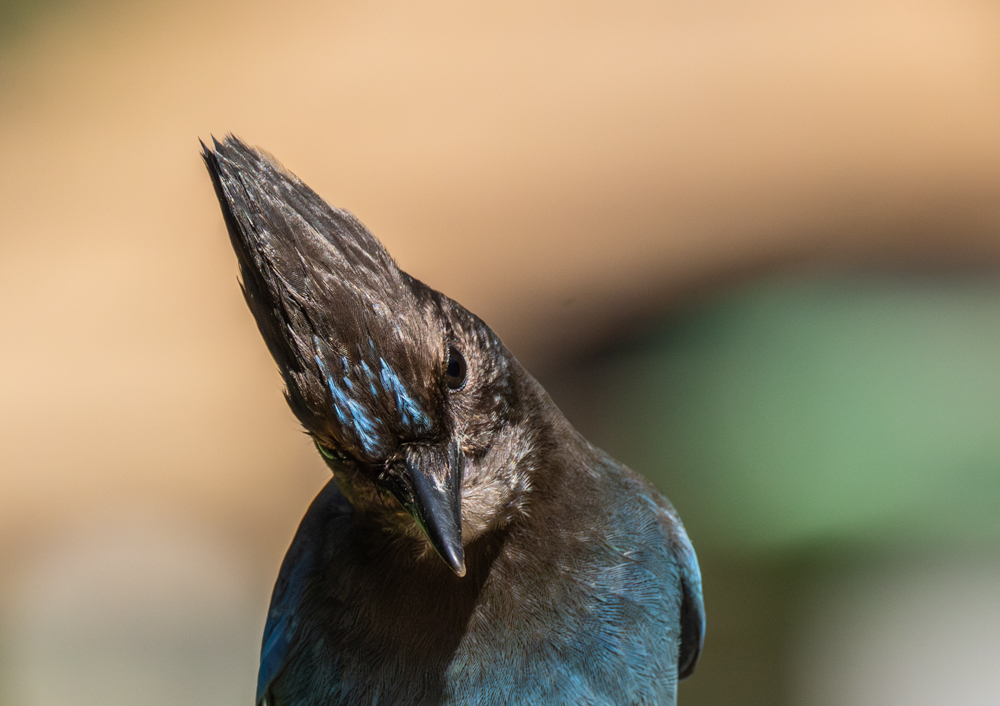
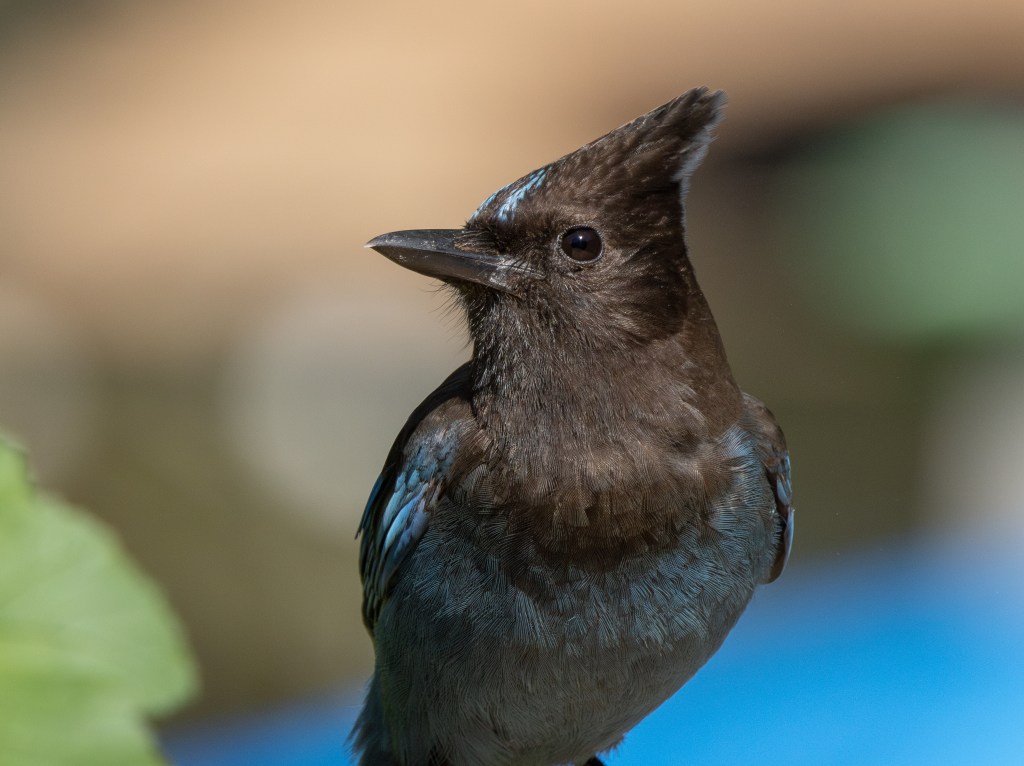
Steller’s Jay. This one had been trying to drive off all the other feeder birds with its rather convincing imitations of the calls of Red-shouldered and Red-tailed Hawks.

While out of commission from my usual meanderings to my “spots” I have been making an art form out of self-pity, whining about all I can’t do. But Tan’s book shook some sense into me and I picked up my camera (hand a bit unsteady, but willing) and positioned myself out in the yard to watch the action. Sparrows, Juncos, Jays, Hummingbirds, and at least a dozen more species were seen or heard. I remembered this place in my heart, as Thoreau said, as the heaven under our feet.
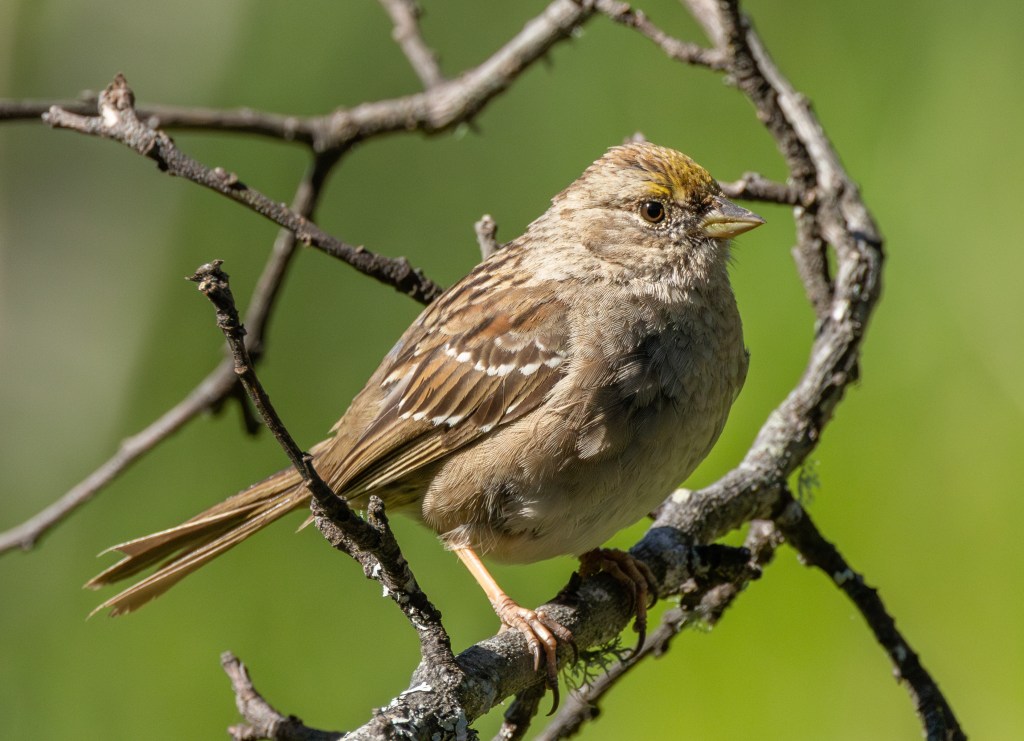
Immature Golden-crowned Sparrow. This young bird has made it here from its far north breeding grounds and is getting ready to make that journey again, back in the other direction.
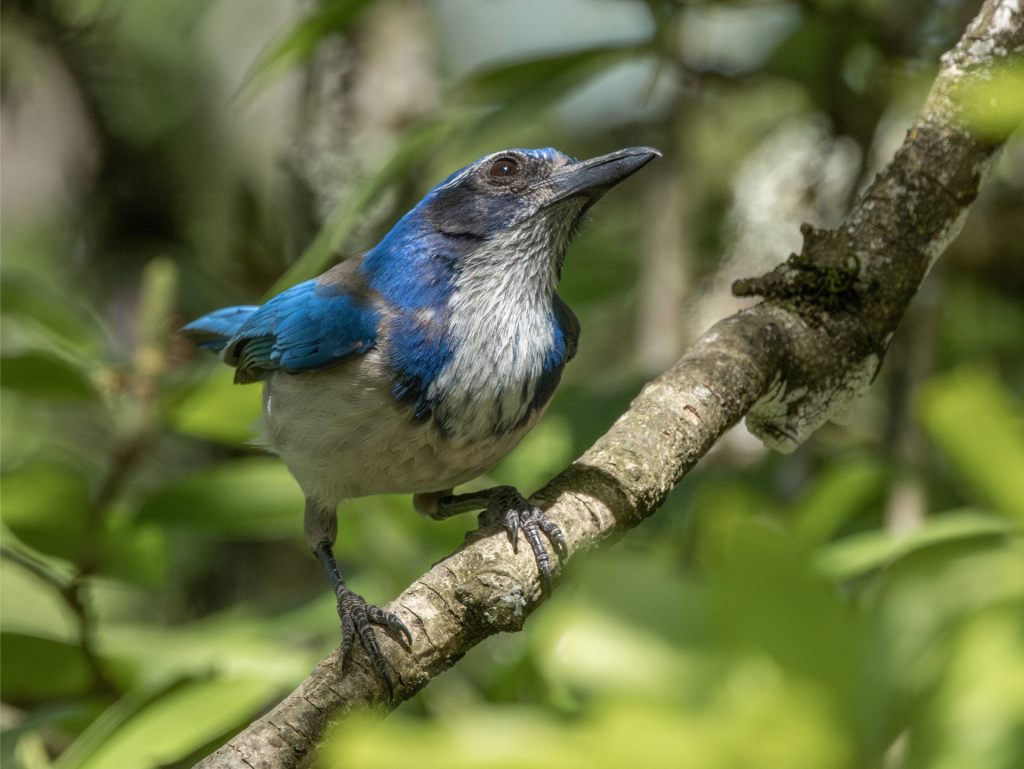
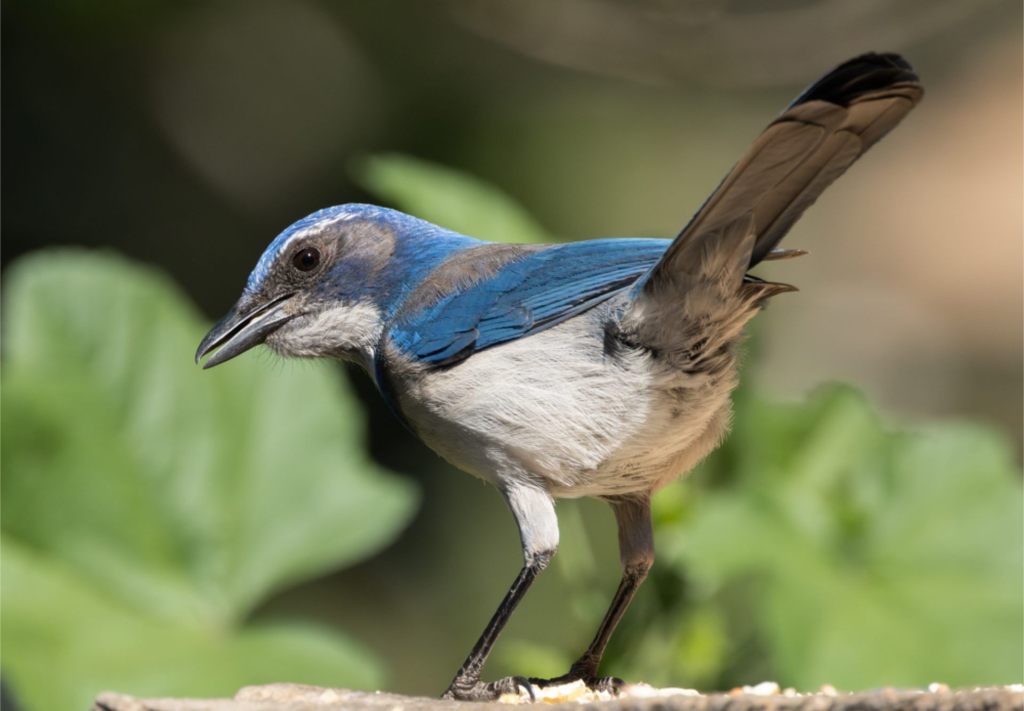
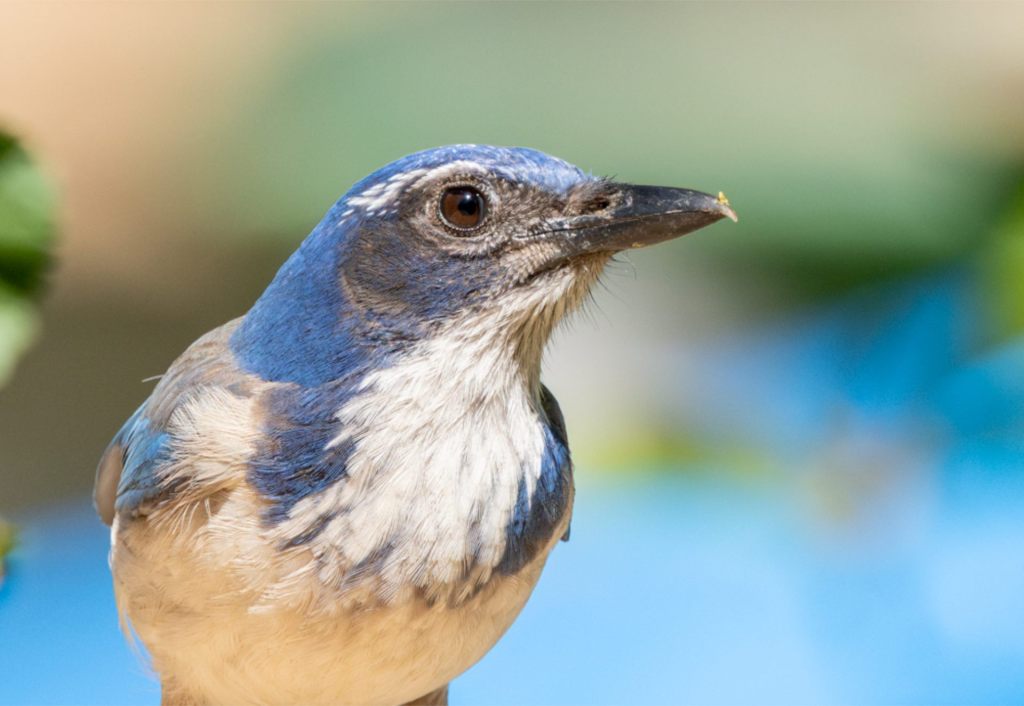
California Scrub Jays are year round residents locally, and in my yard.
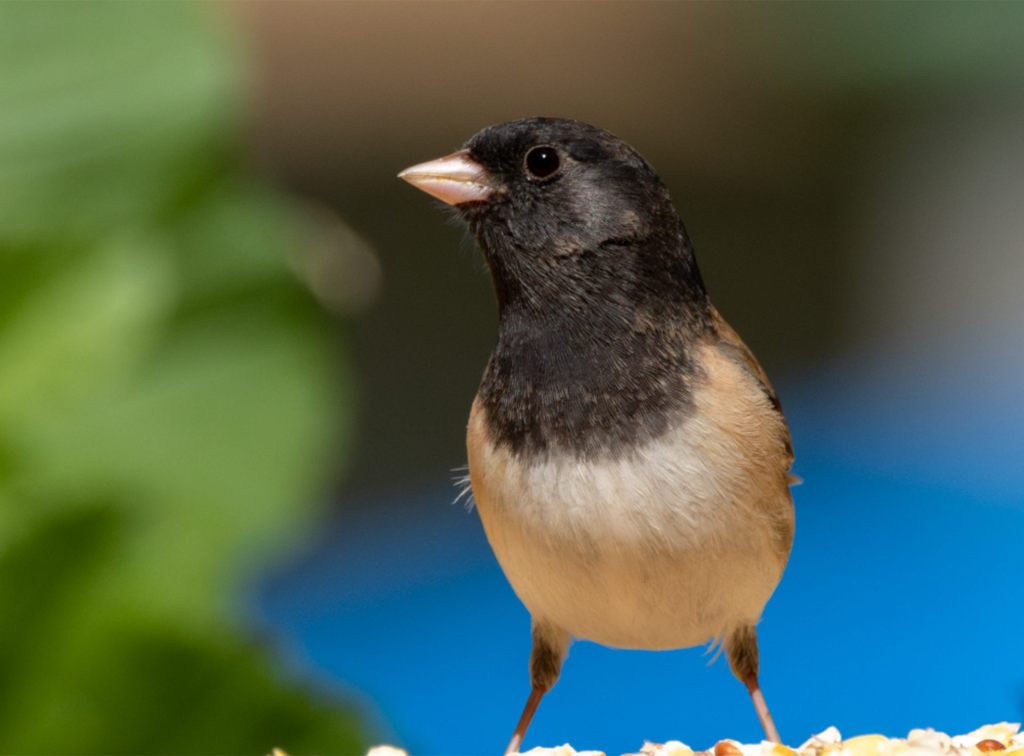
Dark-eyed Junco, a year-round visitor to the feeders. This is likely a male, with his dark black hood. Females’ hoods are a dark gray.
Scrub Jays, while a bit less loud than their cousin Steller’s, tend to dominate them at the feeders.
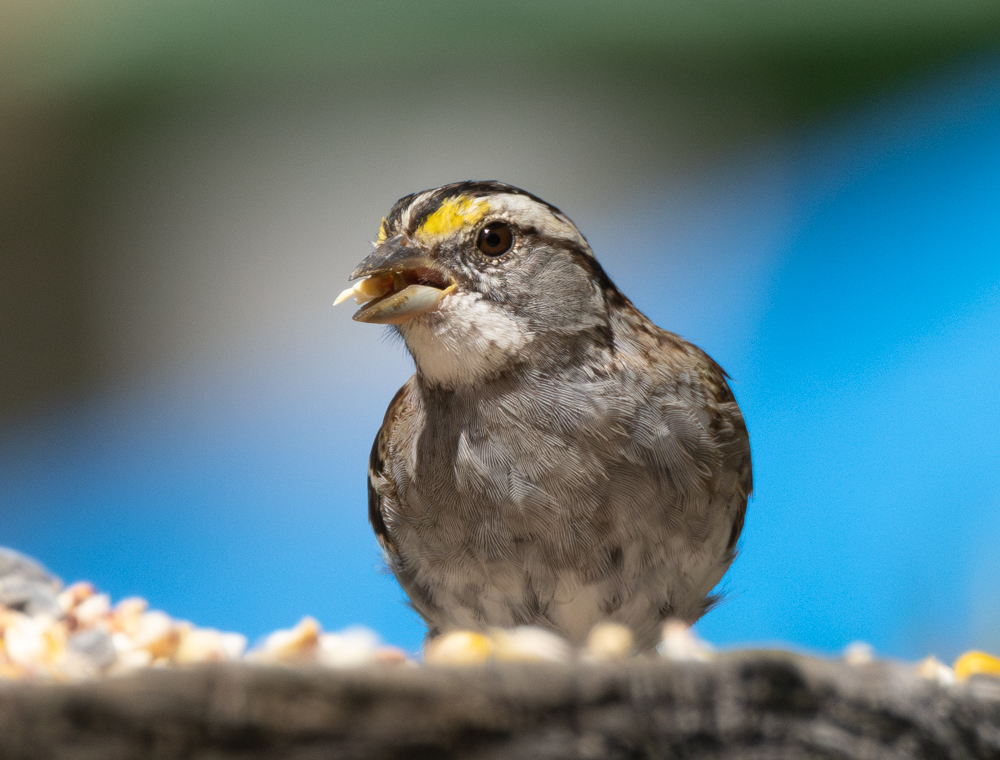
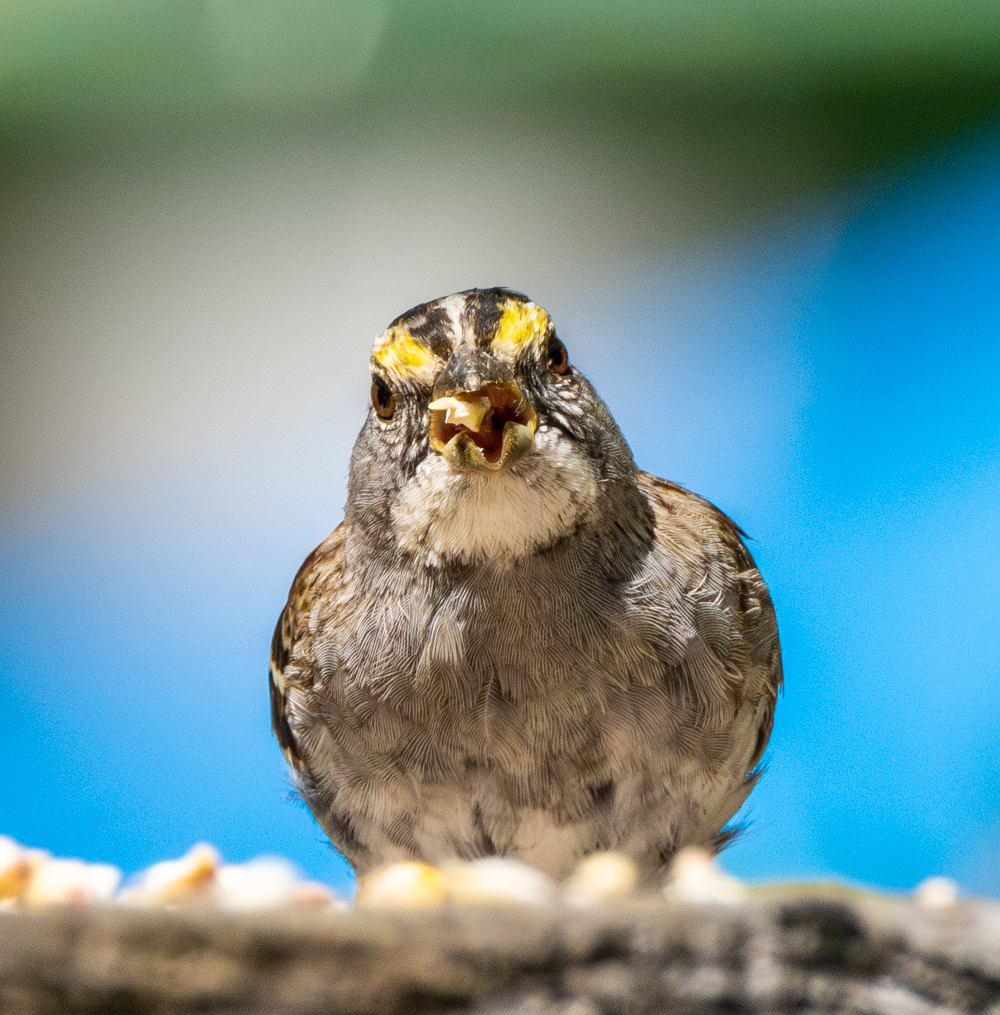
White-throated Sparrow munching on a seed. These sparrows are getting ready to migrate north to breed.
Steller’s Jay. Their southwestern counterparts have white eyebrows instead of blue.
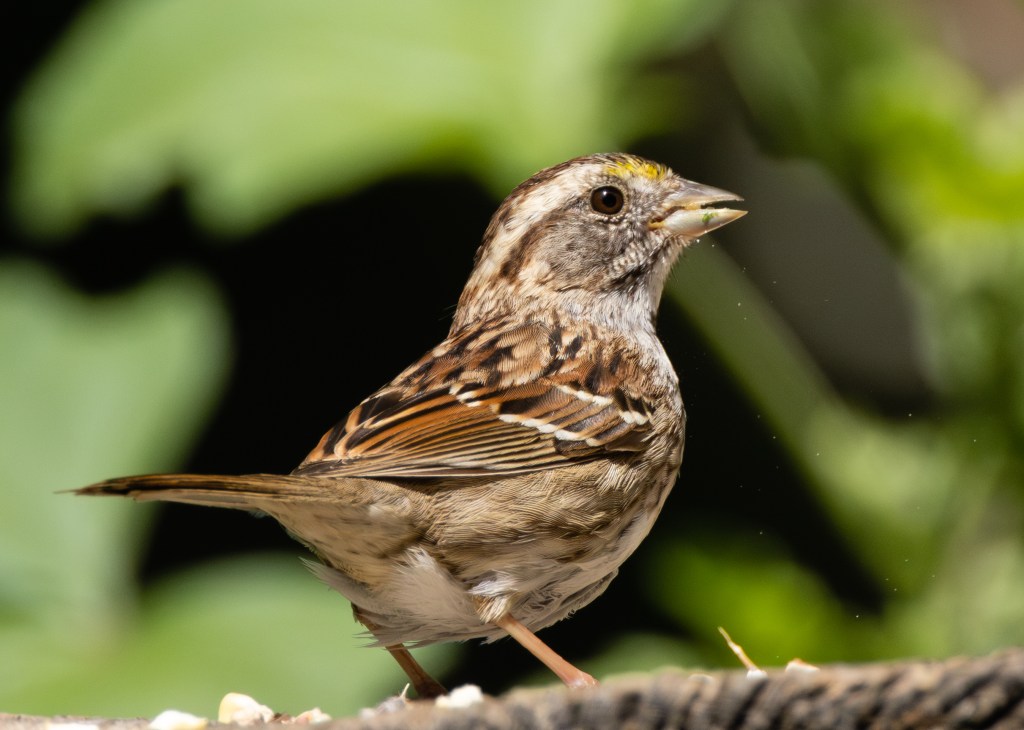
This is likely a first year White-throated Sparrow. This species is normally uncommon in the west, but this past winter there have been quite a few coming to the feeders.
Scrub Jay looking around to make sure any competition for food is not allowed onto the seed platform.

15 responses to “When the Student Is Ready, the Teacher Will Appear”

  1. latskojerry Avatar

    So good to have you and your photos back! Thank you.

    Like

  2. Martin Avatar
    Martin

    thanks for your posts – I always enjoy your photography, your writing and your thoughts . I remember you and your family from soccer days ( I coached under 8 ( I believe) and under 10 …can’t remember if I did under 12s , but parents started to become too intense 😅: ) I think I remember you also coached .

    anyway thanks for the book recommendation. Hope your wrist feels better…perhaps a tripod setup with easy maneuverability and an easy remote button ? You know better than I what’s possible- but wishing you luck in continuing your photography ( for selfish reasons as I enjoy always : ) ✌️❤️

    🕉️✨☮️💜☯️

    Like

    1. Ann Constantino Avatar
      Ann Constantino

      Thanks so much for the kind words. I did coach the little ones way back when, and then 26 years at the high school. Now I’m enjoying just being a fan.

      Like

  3. Kym Kemp Avatar

    Beautiful photos and even more for me, beautiful writing. Thank you. A lovely start to my day.

    Like

    1. Ann Constantino Avatar
      Ann Constantino

      Thanks Kym.

      Like

  4. jovial538e415333 Avatar
    jovial538e415333

    Lovely descriptions of all those backyard birds we take for granted so much of the time 😊.

    Chestine

    Like

    1. Ann Constantino Avatar
      Ann Constantino

      Thanks Chestine. A good lesson for me for sure. I will miss the sparrows when they leave.

      Like

  5. ransleyfran Avatar
    ransleyfran

    I am glad to see you’re back. Your photos remind me how patient one must be in these circumstances…to be motionless until the creature we’re seeking is no longer alarmed or terribly concerned about our presence.

    I love birds of all sorts, and other wildlife too.

    About vultures…I had a friend when I lived in Lake County. She was a taxidermist and mounted museum-quality birds. Hunters brought her game birds to mount, and kids sometimes brought her songbirds they’d found.

    I raised semi-wild game chickens, my choice because of their hardiness, longevity, foraging ability, mothering skills and sensitivity to predators. They also tend to be bright colored. So when I had an old hen die, or a rooster needed butchering, I’d take it to Chris. After years of doing my own “processing” I was happy to have someone else do the deed, and return half the meat in return for the bright feathers that could be used as fly fishing ties as well as in mounting a whole specimen.

    Chris had a couple of friendly buzzards that hung around in the blue oaks near the house, waiting for entrails. When anyone would show up with a bird, dead or alive, they seemed to know there was a possibility of a handout, and would fly in to their favorite perches, watching us closely.

    Also I had friends who lived way out in the mountains. They found an injured buzzard and brought her home. She had a broken wing that never quite healed correctly, and she wasn’t able to fly again. They named her “Queenie” and kept her in yard and she had an old chicken coop to go in at night. She got leftovers from the table, and they’d even stop and pick up roadkill for her. I don’t know how many years she lived, but she had a pretty decent life as a pet.

    I used to sometimes help my neighbor, a widowed cattle rancher. She’d ask me if I’d go out in the hills looking for a missing cow. Sometimes the buzzards overhead tell you where to look.

    Keep up your fabulous work!

    Like

    1. Ann Constantino Avatar
      Ann Constantino

      Oh wow, I would love to have a pet vulture. I love watching them. They seem to have a docile, gentle nature. Thanks for the great story.

      Like

  6. maryannmachi Avatar
    maryannmachi

    Hi Ann, Corpse flower? Is it one someone planted? Just curious as not from these parts. Thanks, Mary Ann

    Like

    1. Ann Constantino Avatar
      Ann Constantino

      I’m not sure where it came from. We do smell it every year, but prefer not to get too close. It’s in the flood plain, so maybe it floated here? I’m not even sure that what it’s called, but we have always called it corpse flower. I think it’s a bulb.

      Like

  7. Linda S Avatar
    Linda S

    Fine assortment of the area’s spring birds.

    Like

    1. Ann Constantino Avatar
      Ann Constantino

      Thank you!

      Like

  8. Tom Avatar
    Tom

    We have a crow pair that have had babies here for the last three years and are preparing again. Aside what they find in the yard we feed them peanuts and A “crow bread”that Robin makes that is full of seeds. Papa has let me be within a few feet of him.

    Like

    1. Ann Constantino Avatar
      Ann Constantino

      That is so cool, to have the trust of the crow papa. Do they ever bring you gifts?

      Like

Leave a reply to Ann Constantino Cancel reply

Welcome to Free Range Photography, a photo-journal of encounters with birds and wildlife, mostly in Humboldt County, California.

Connect