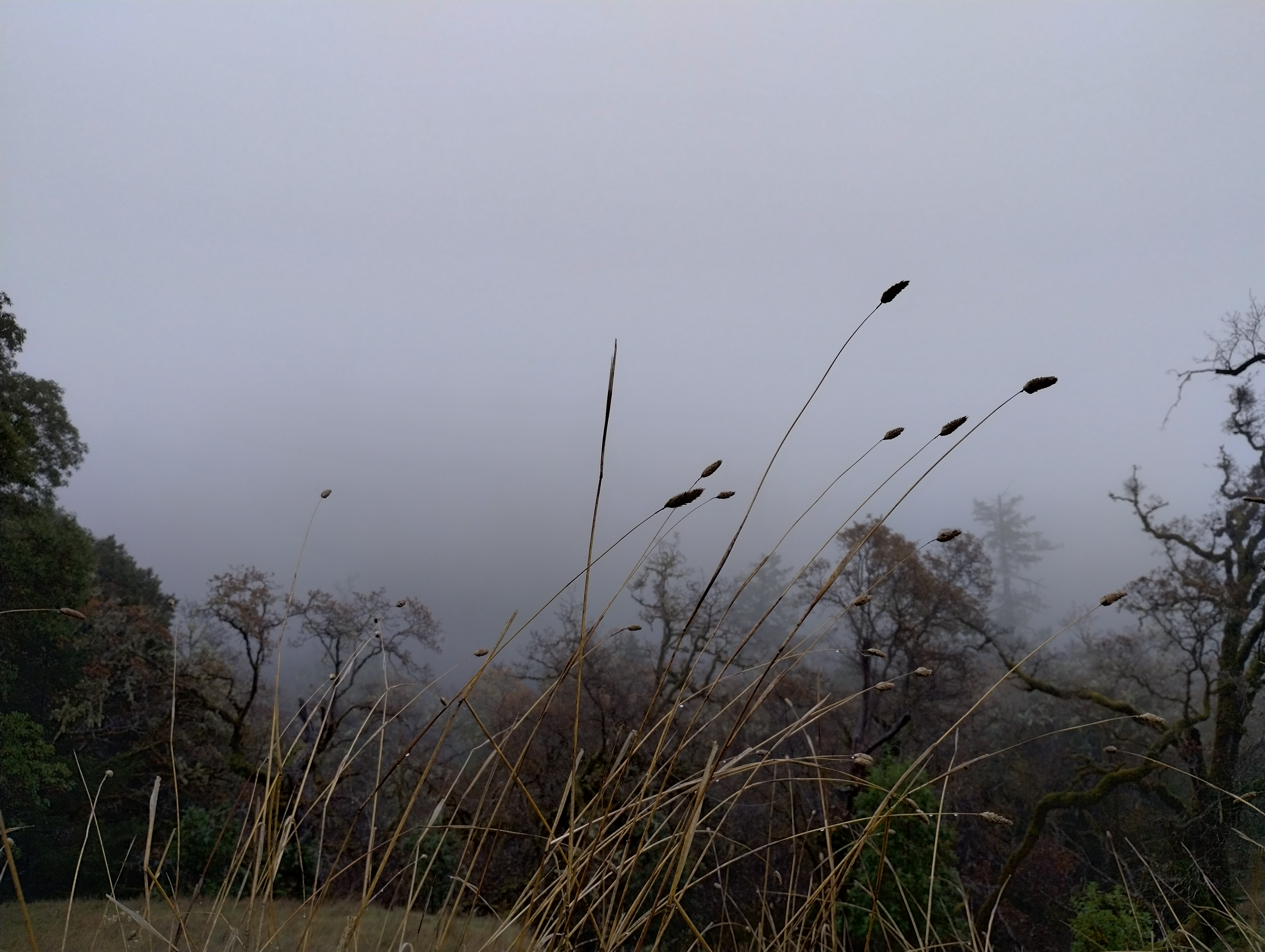
Despite the daily download of cruelty and division, despite the seasonal blues, despite grief for young and old lost to the community, and despite the dense fog every morning at the river and enshrouding Humboldt Bay, moments of encounter with nature provide a spark. A reminder of homo sapiens’ insignificant rank in the grand scale of creation is the ultimate solace.
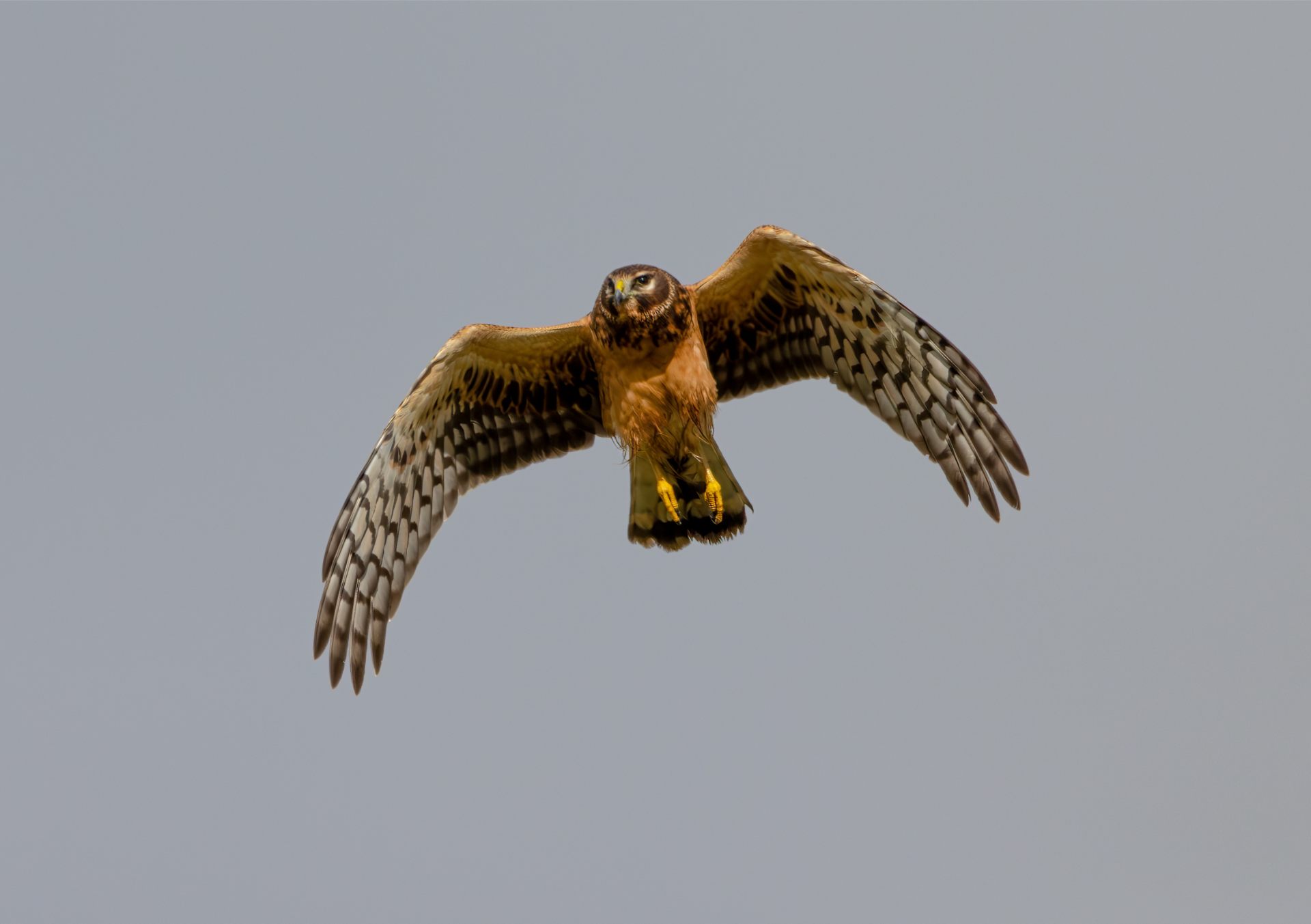
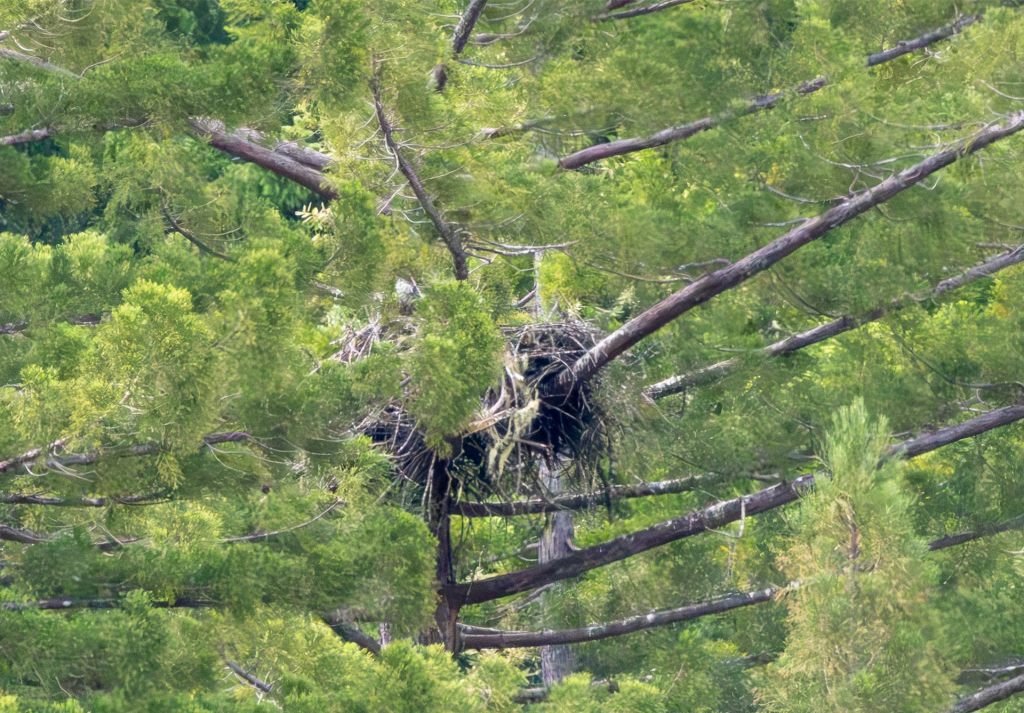
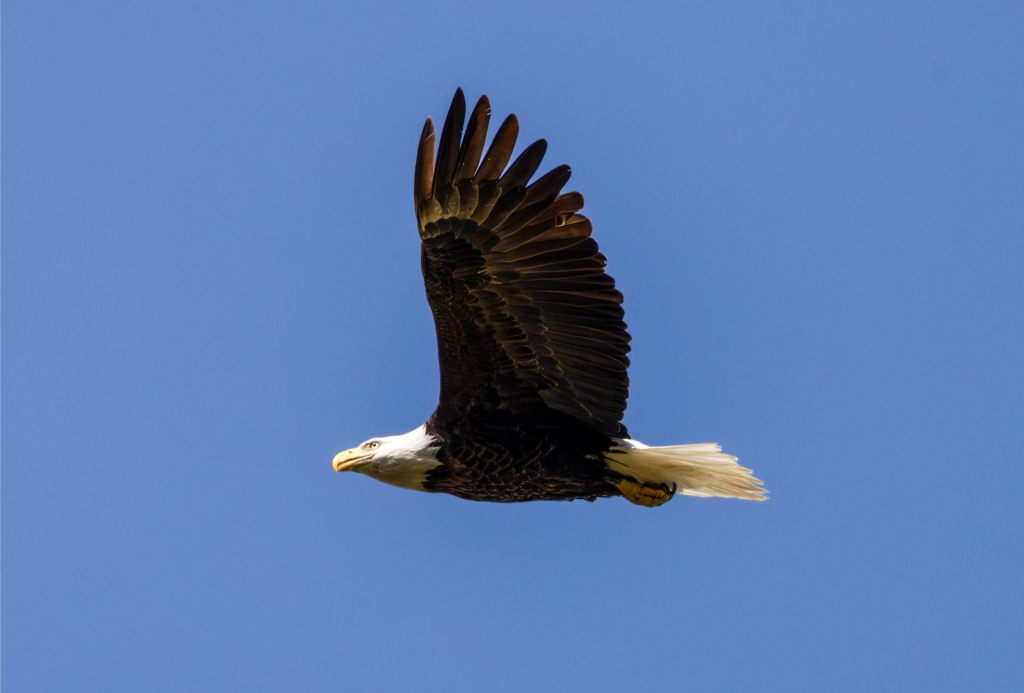
Looking toward the nest. On Thanksgiving Day I made my traditional first visit of the new season to the Benbow Bald Eagle nest. The valley was socked in and the nest was invisible. The sounds of two singing eagles reassured me that the cycle would begin again.A young Northern Harrier lifting off from its perch on a fence post as the sun finally began to break throughin Benbow.
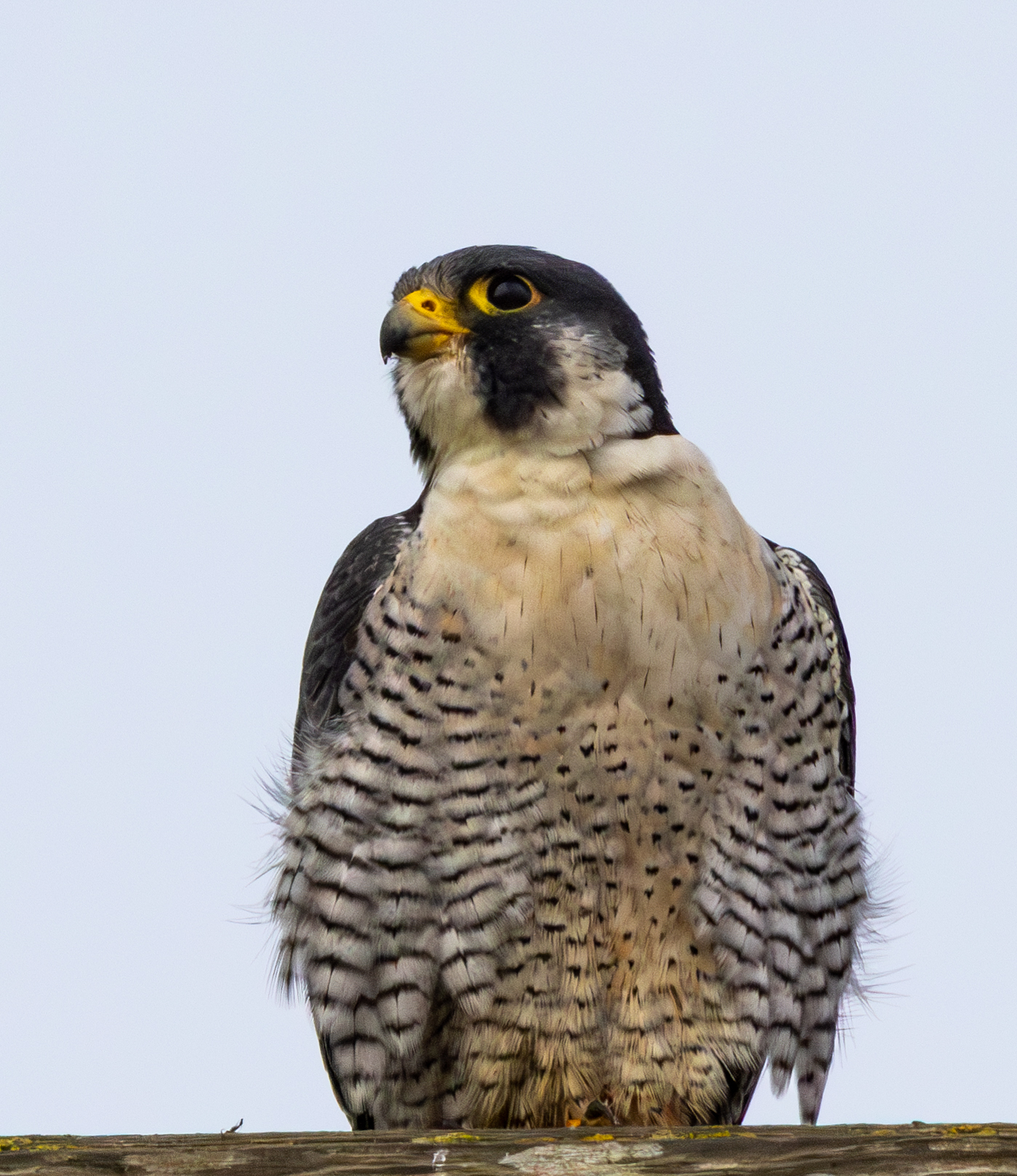
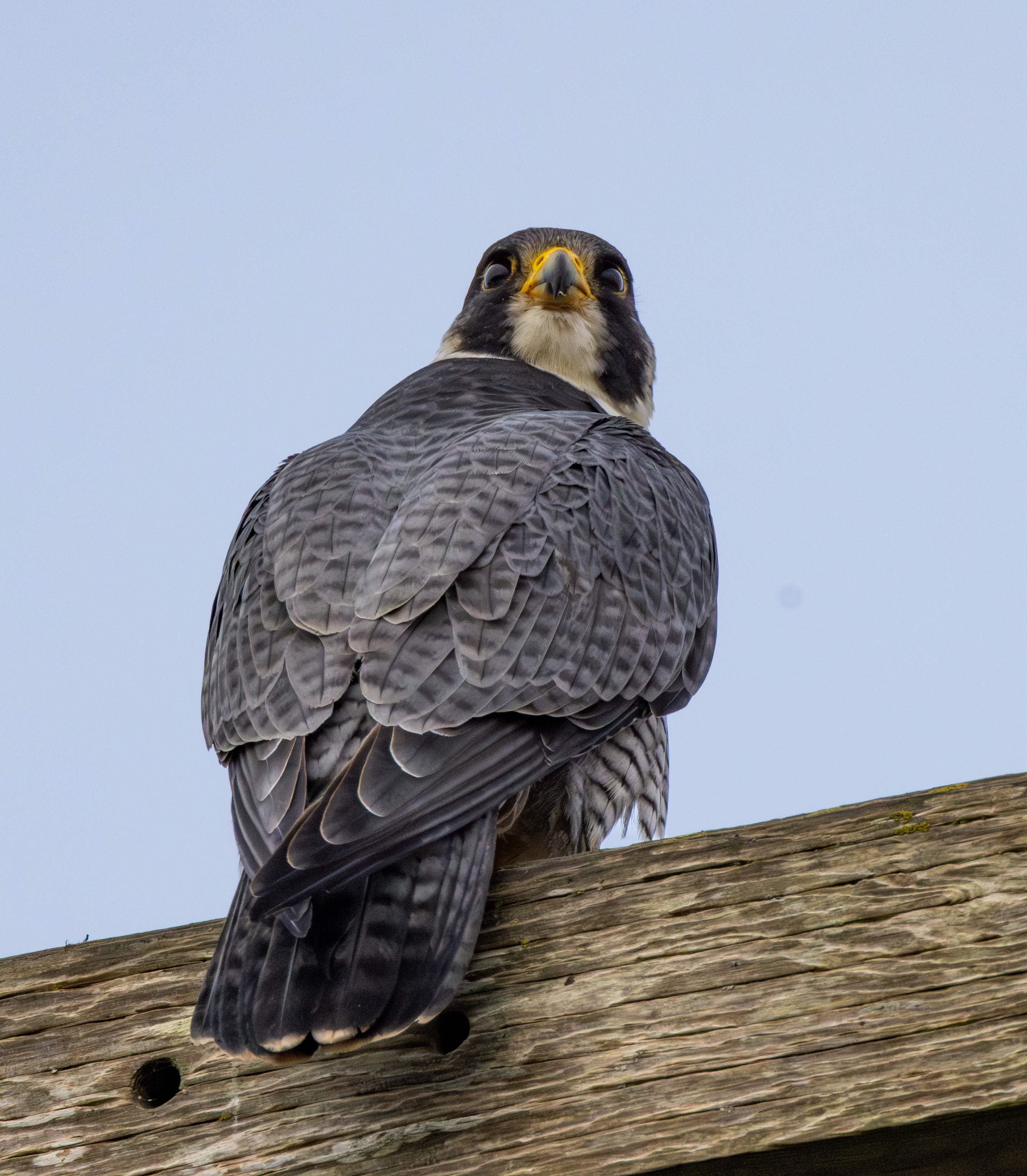
Humboldt Bay on a foggy afternoon revealed a number of birds: Ducks here for the winter, Egrets fishing in murky water, and a Peregrine Falcon whose tolerance of my presence was a memorable gift.
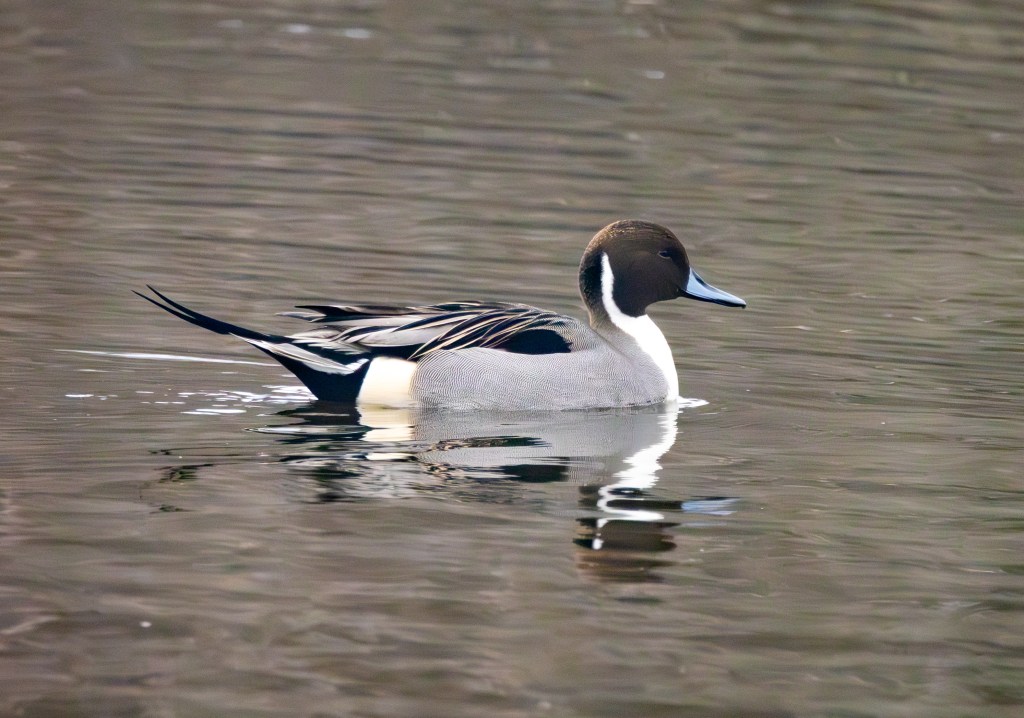
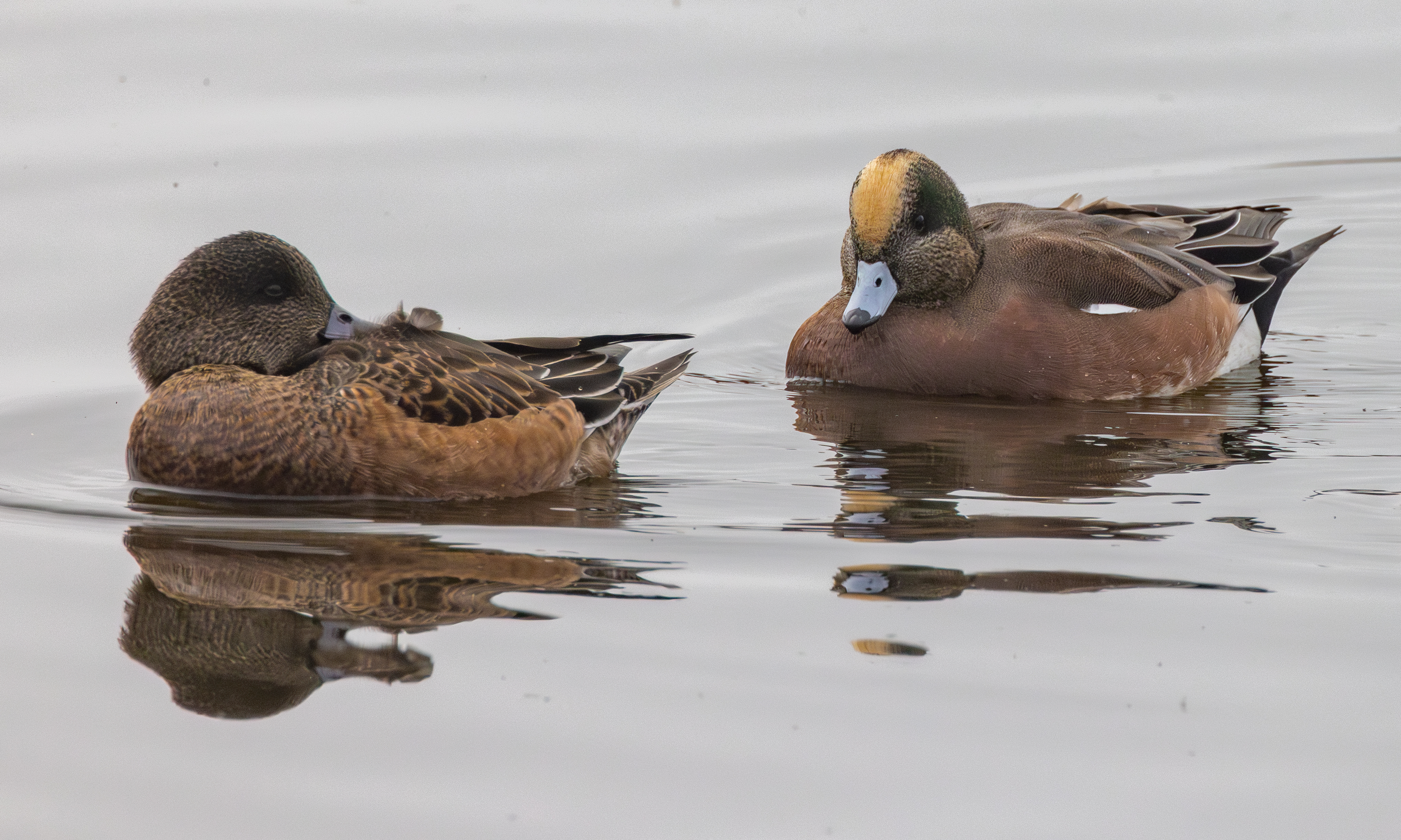
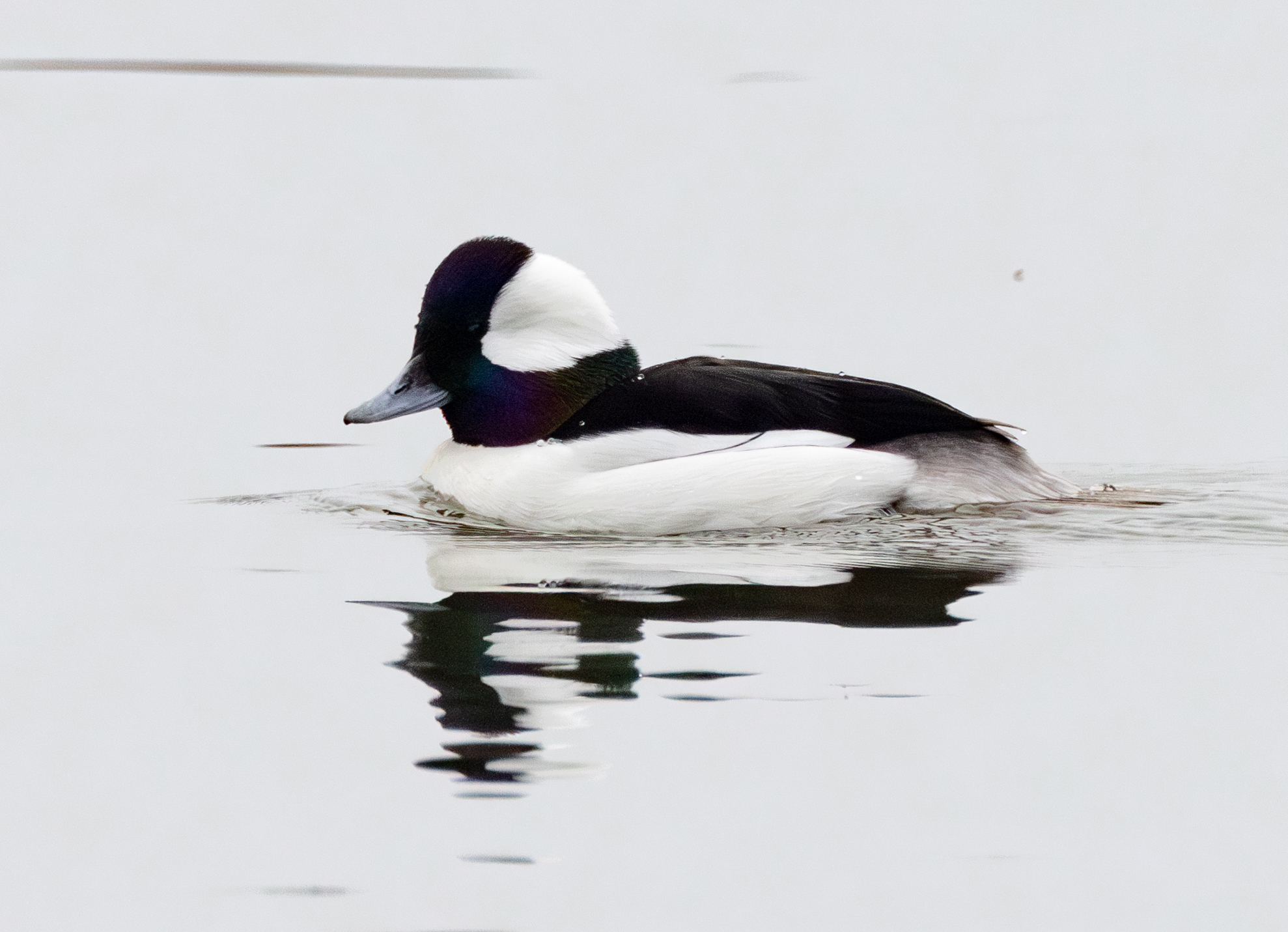
Arguably the most handsome of the winter visitors, the Northern Pintail breeds in the north.Asnoozing Gadwall and American Wigeonare two other species who make Humboldt their winter homeMale Bufflehead, whose trademark facial iridescence is muted by the fog, still boasts some eye-catching contrast.
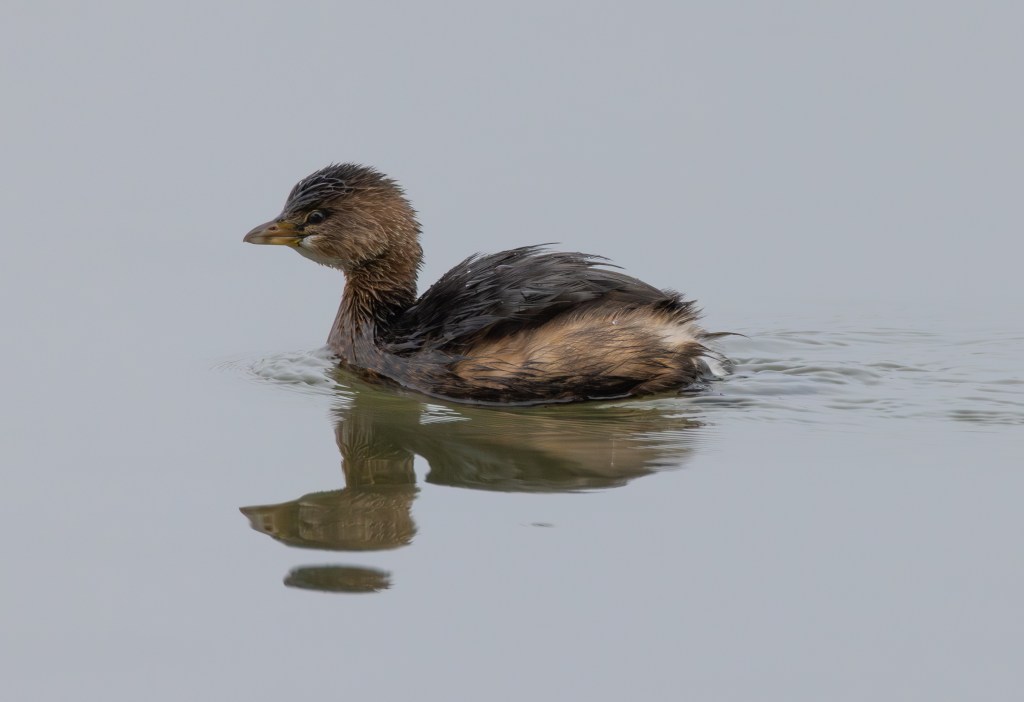
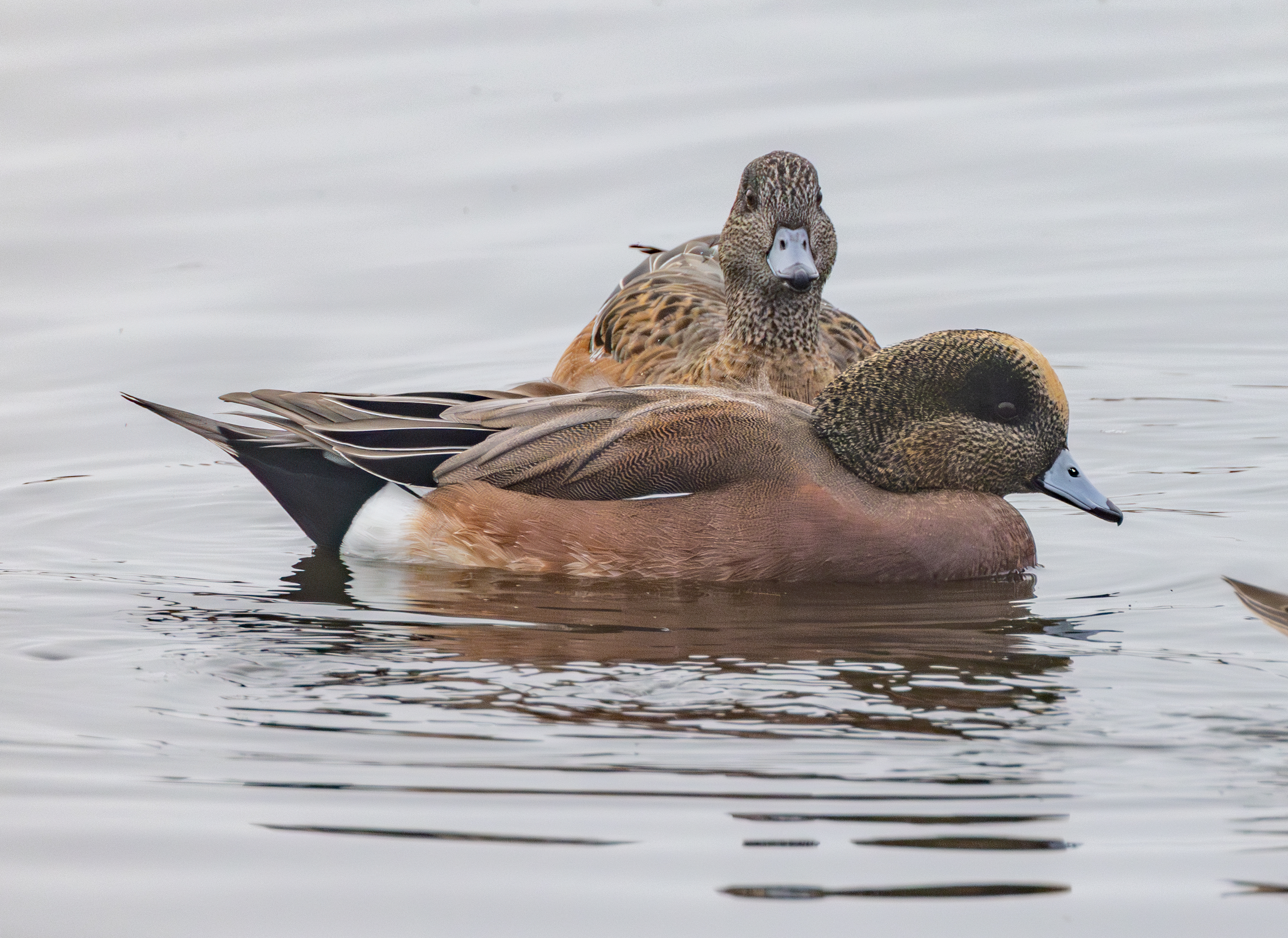
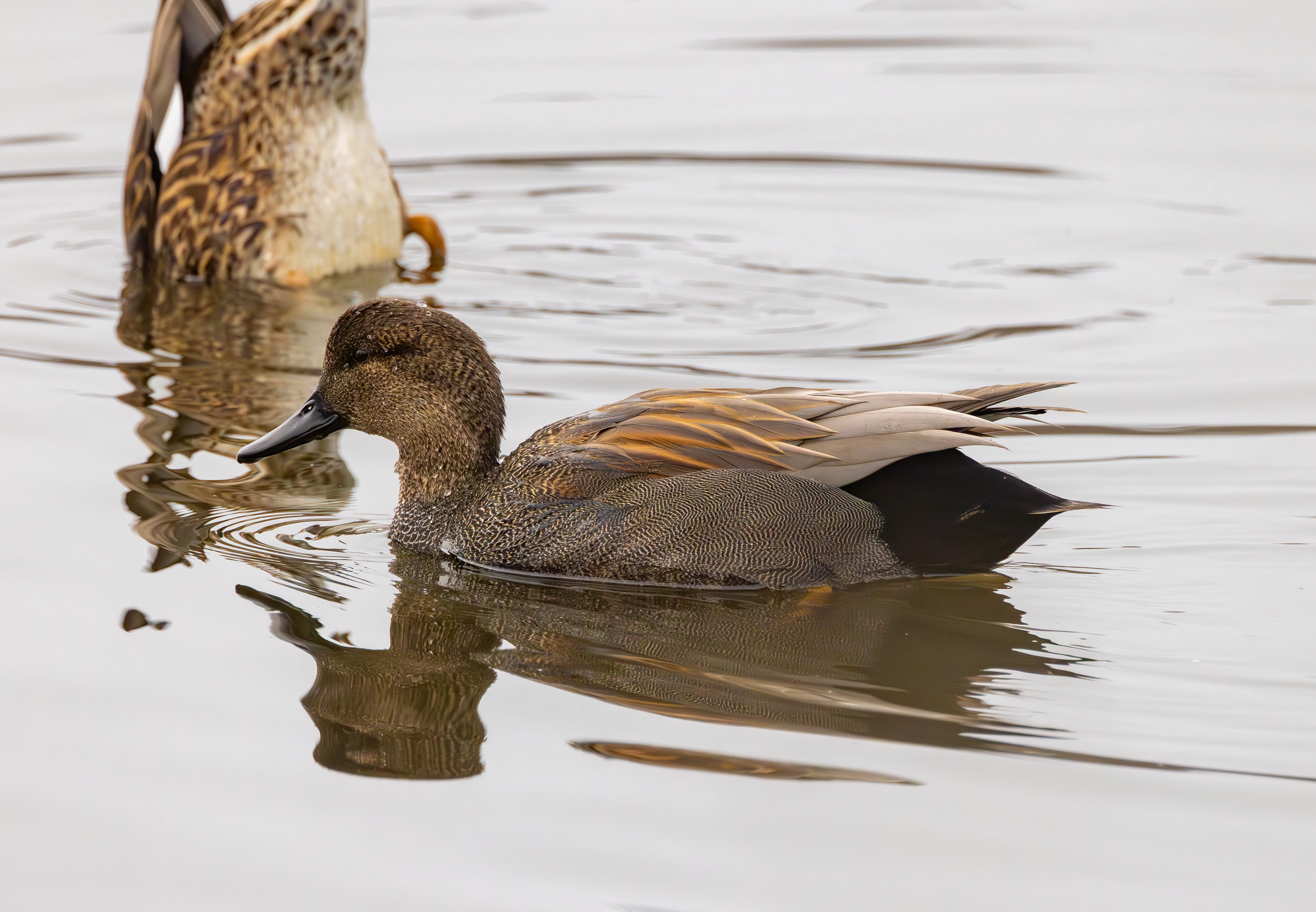
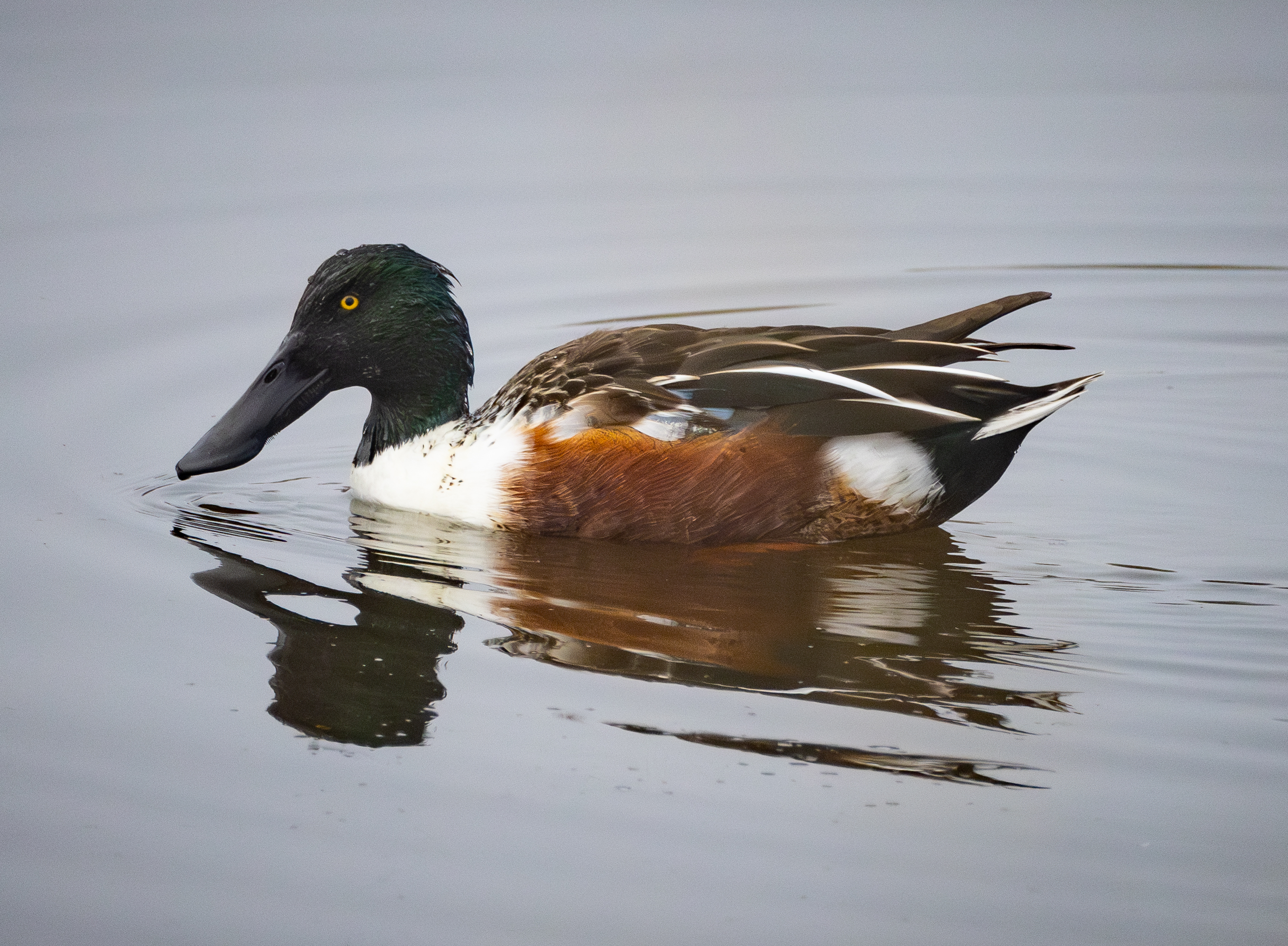
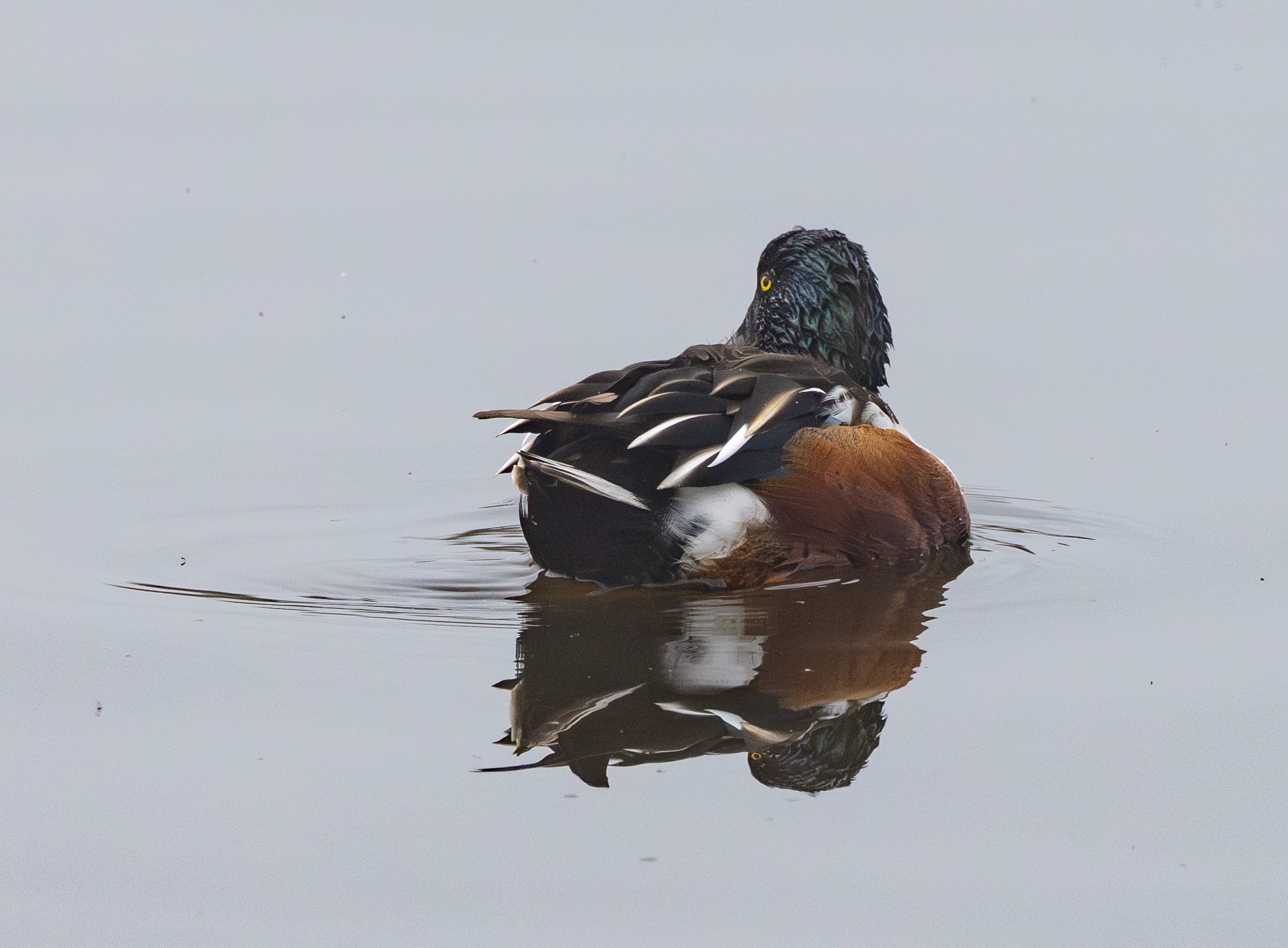
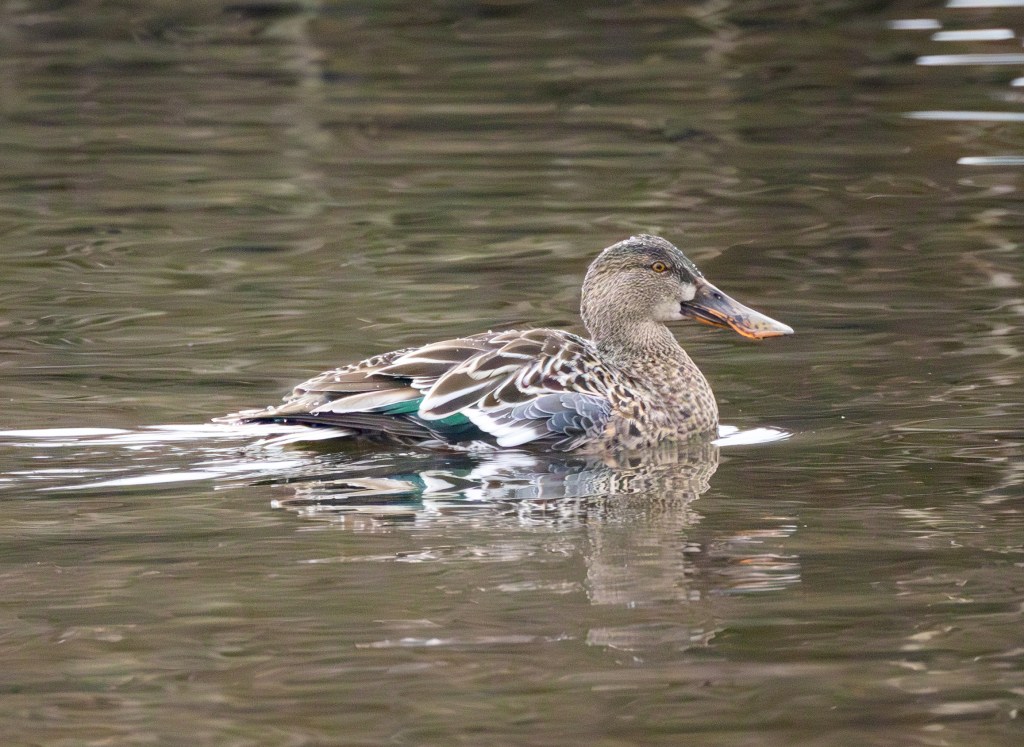
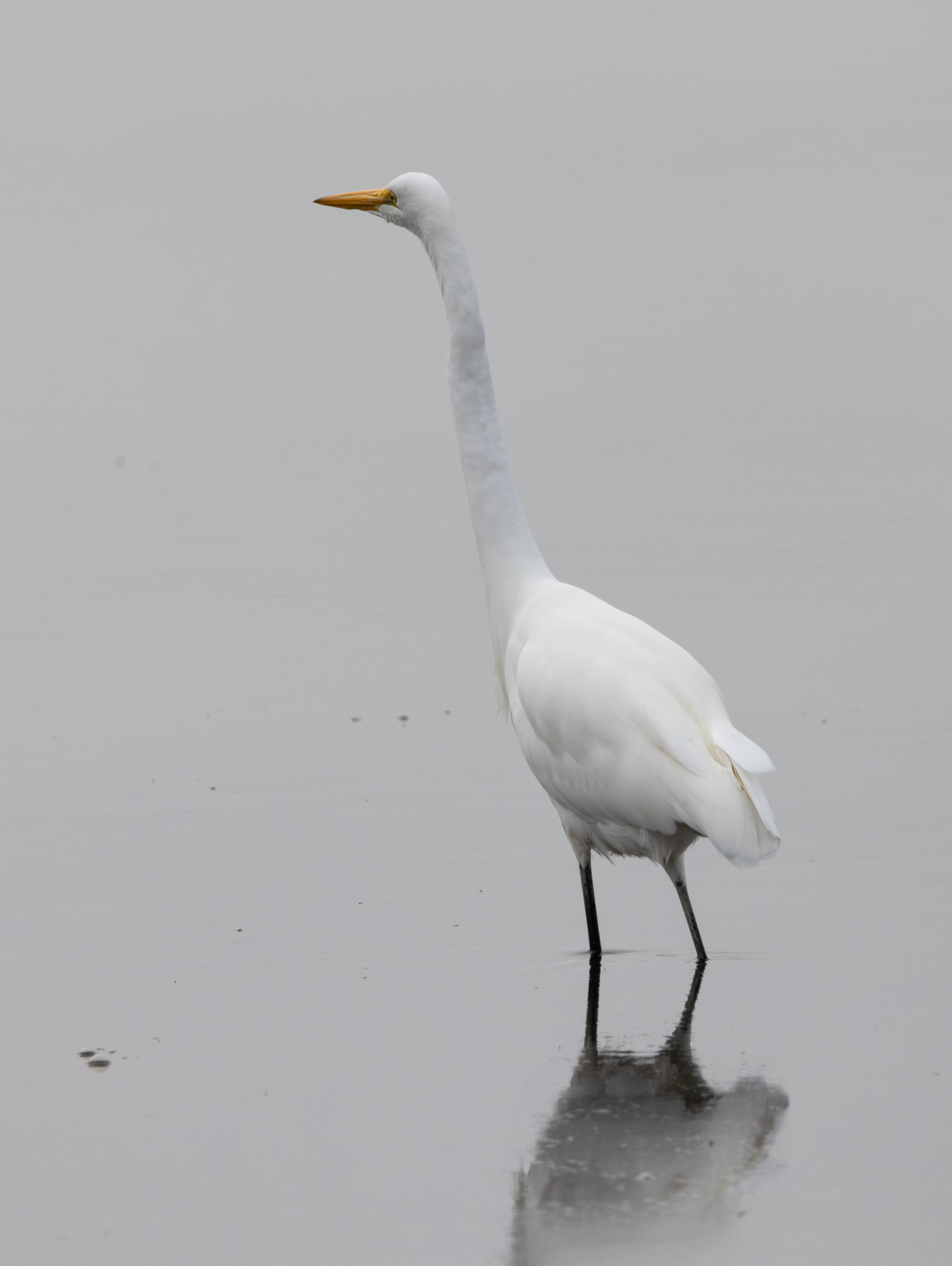
This Bufflehead took a break from diving for lunch to thoroughly primp and preen.Not a duck, this Pied-billed Grebe is a small but proficient hunter.Male (front) and female Wigeons can always be told by their blue-gray bills when dense fog mutes their other colors.From a distance the Gadwall appears dull and monochromatic, but a closer look reveals subtle patterning on the feathers you could get lost in.The Northern Shoveler is equipped with a huge bill within which a baleen-like structure is used to filter food out of watery scoops.Northern Shoveler rear view, eye reflected in the water.The color of this Shoveler’s eyes might make this an immature male, although I’ve read that some females have light eyes.Great Egret all but disappears in the fog in Arcata.
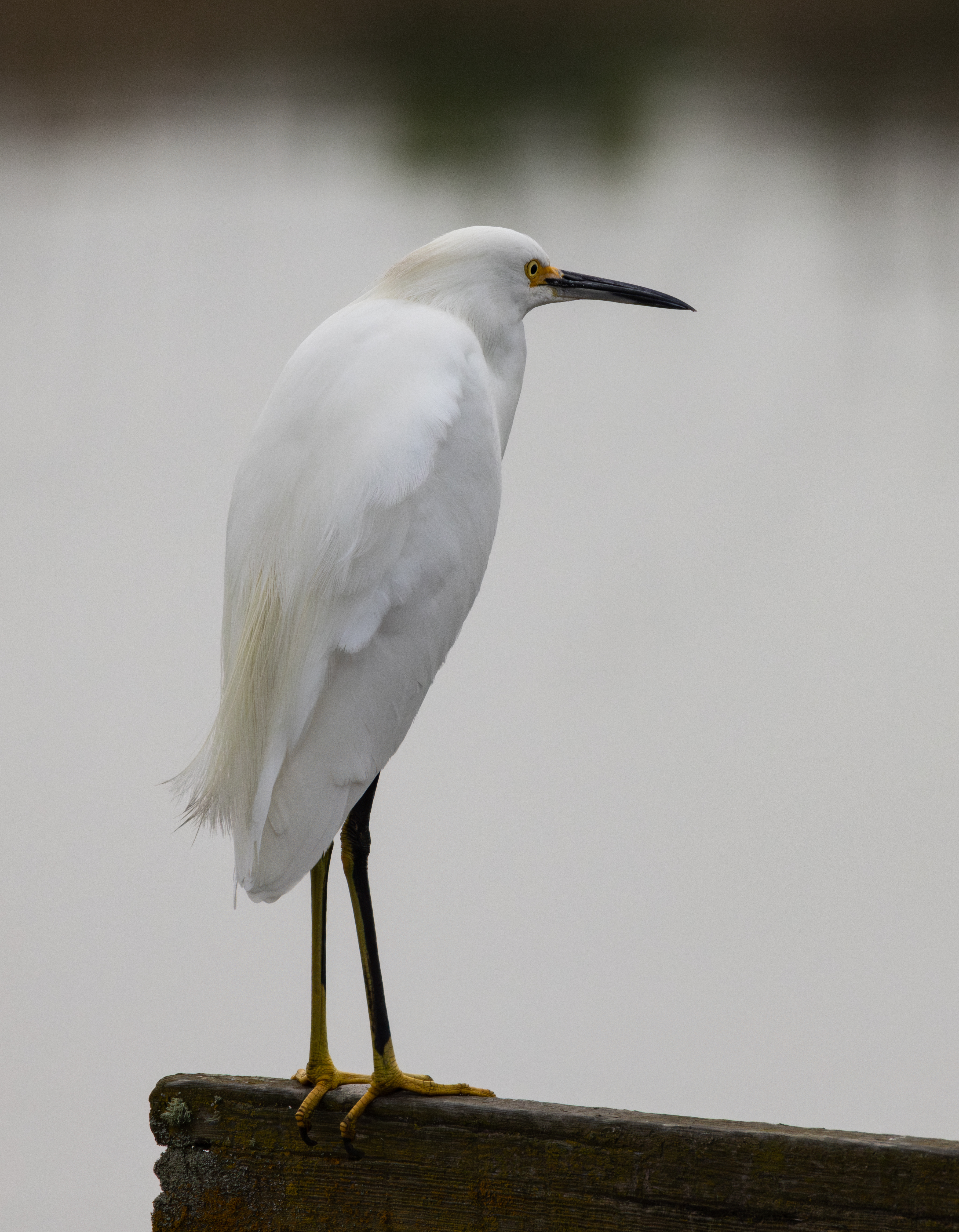
Great Egret catching tiny fish in ArcataThe smaller Snowy Egret is told from its cousin Great Egret by its bright yellow feet and black bill.
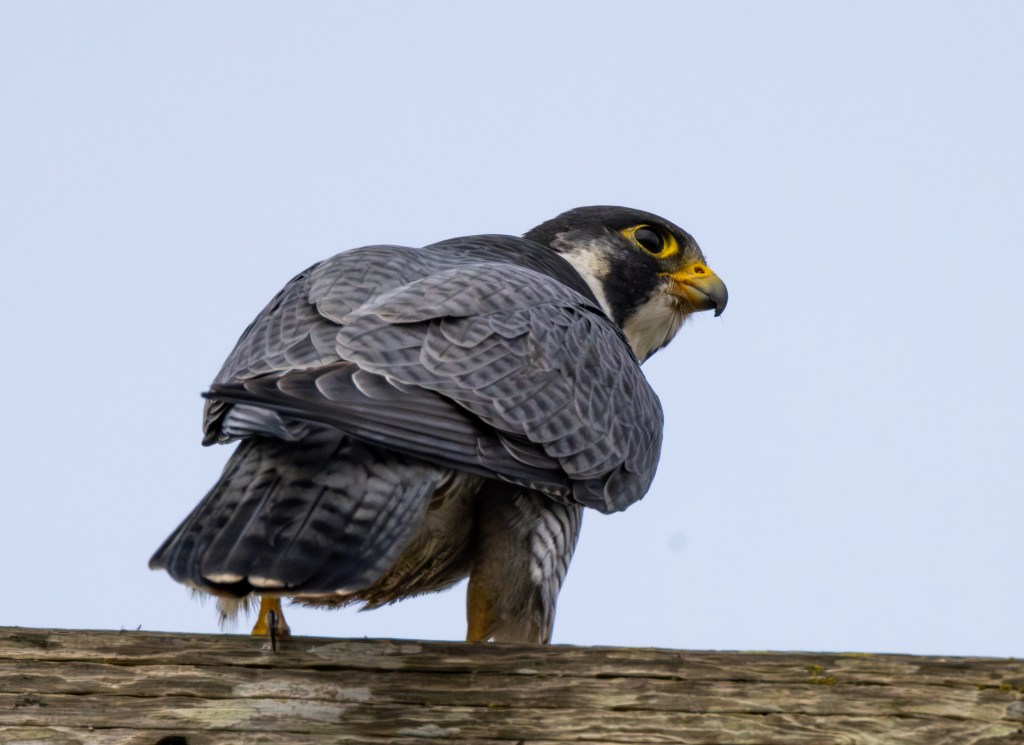
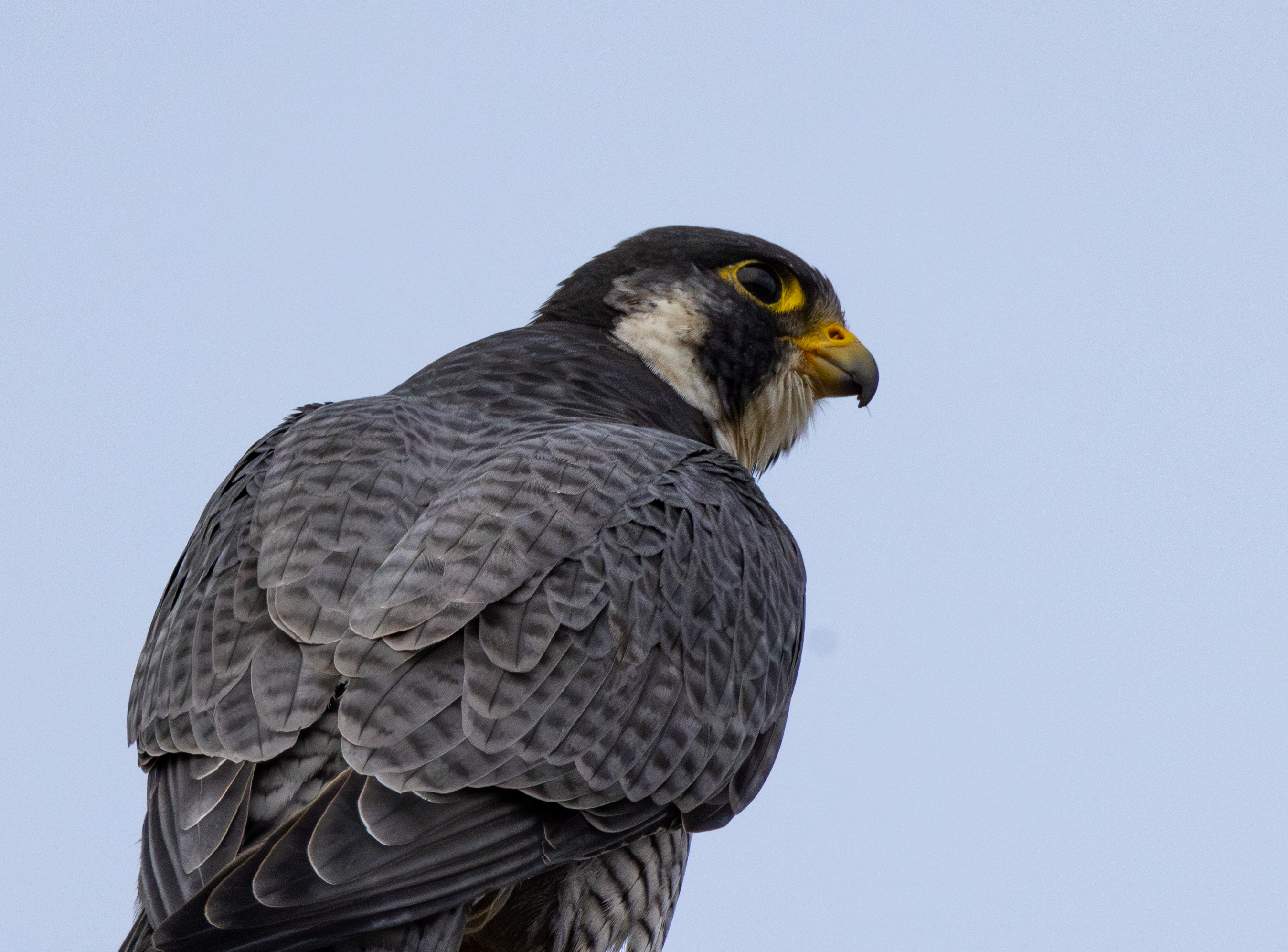
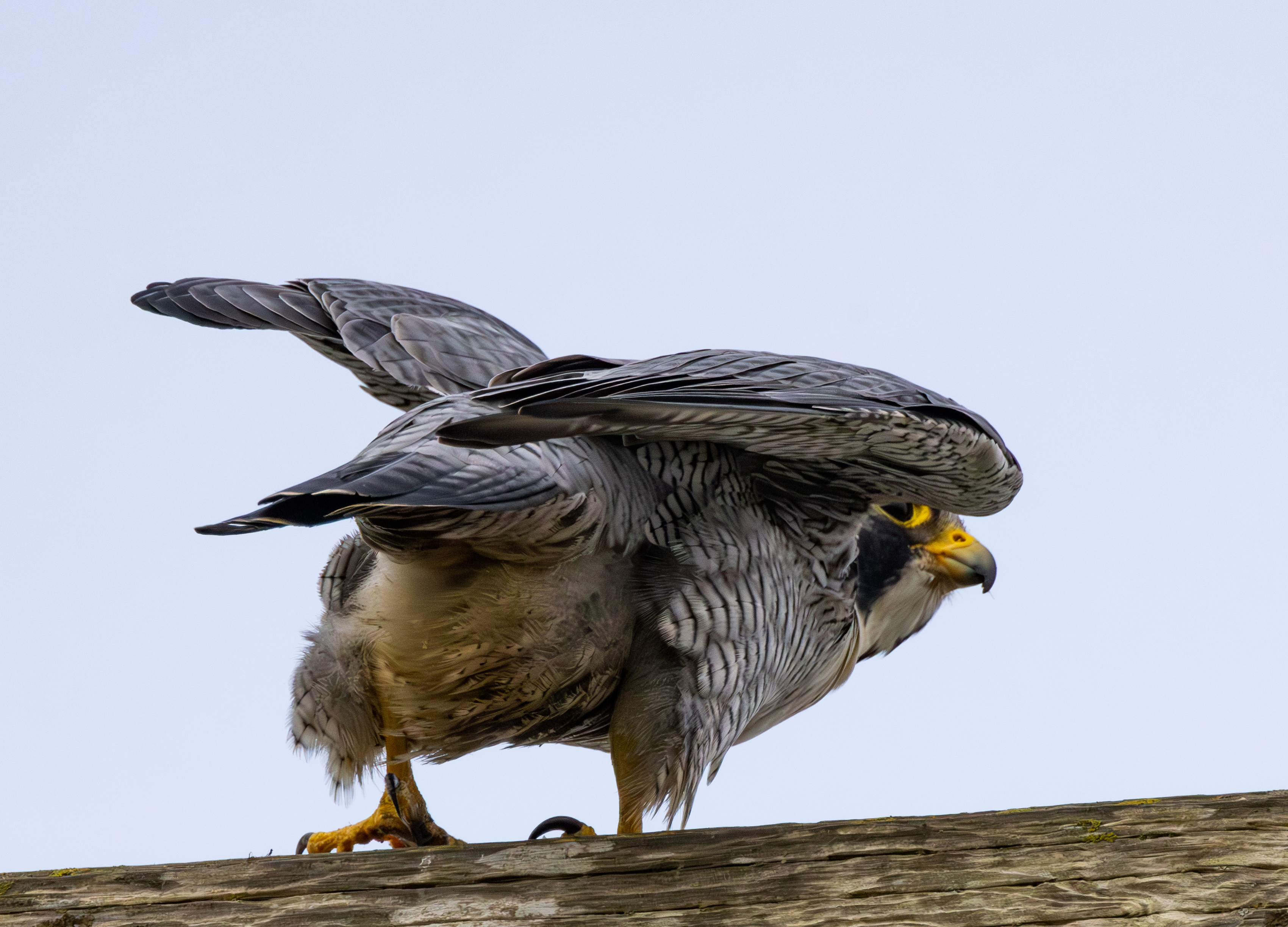
This Peregrine Falcon was teed up in Arcata for quite a while and let me creep pretty close for a long look.
Peregrine Falcons famously exceed 100 miles per hour when pursuing prey.The blue-grayish feathers on the back of the Peregrine make this one an adult. Falcons are more closely related to parrots than they are to hawks and eagles and diverged from a common ancestor over 40 million years ago. Preparing to lift off
On Bear River Ridge we were above the fog for a few moments here and there. One of the best spots in Humboldt from which to leave civilization behind, the ridge always turns up something interesting.
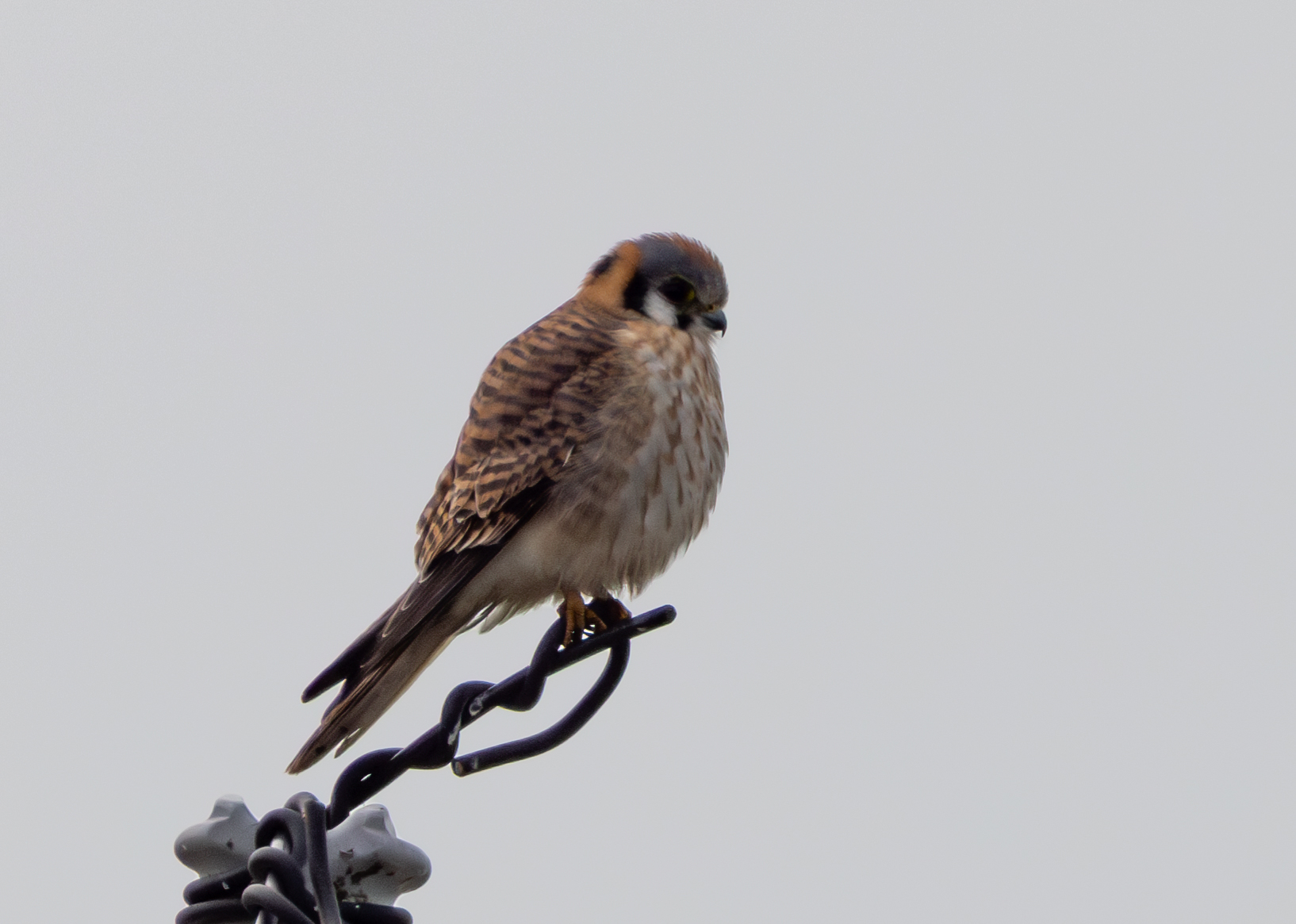
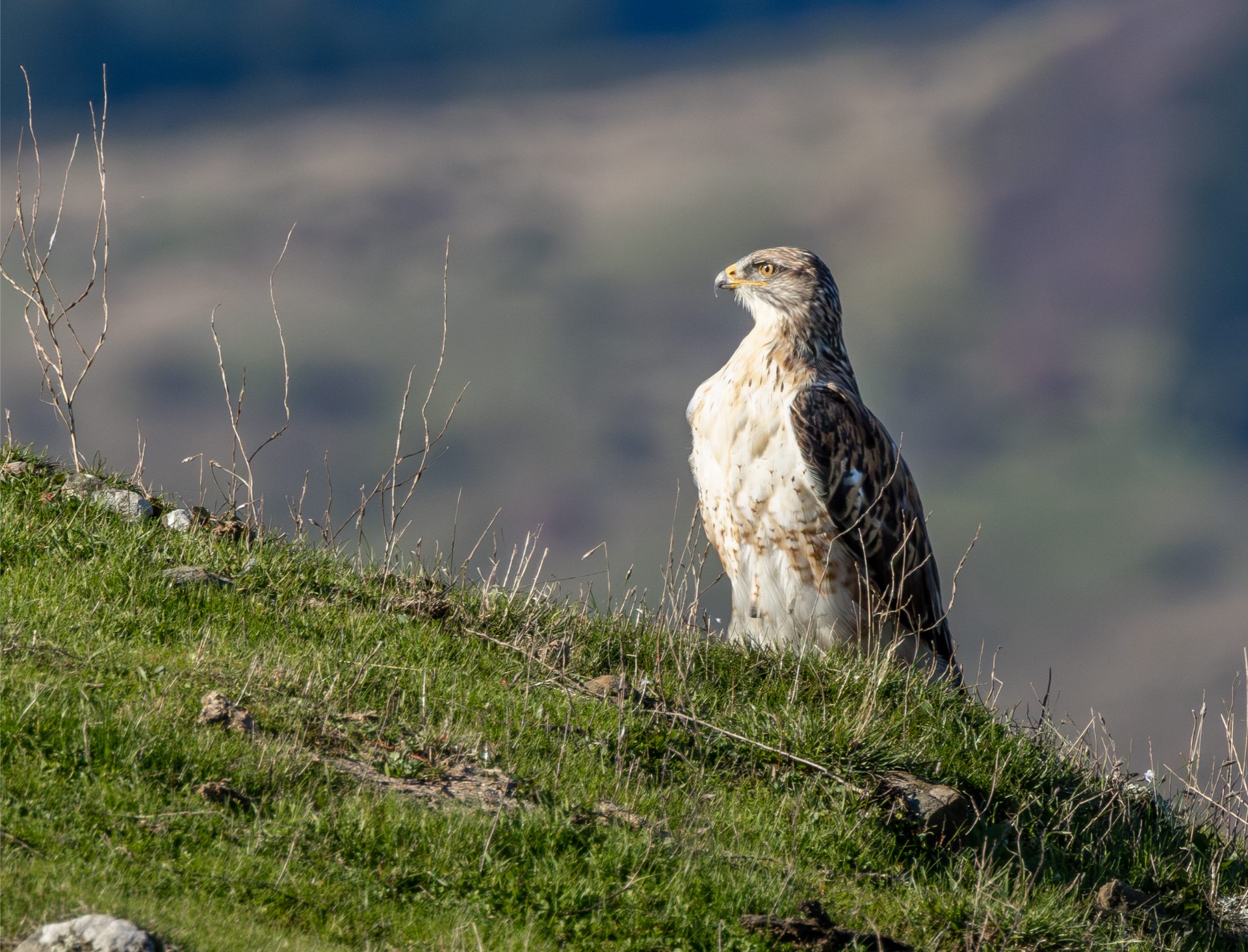
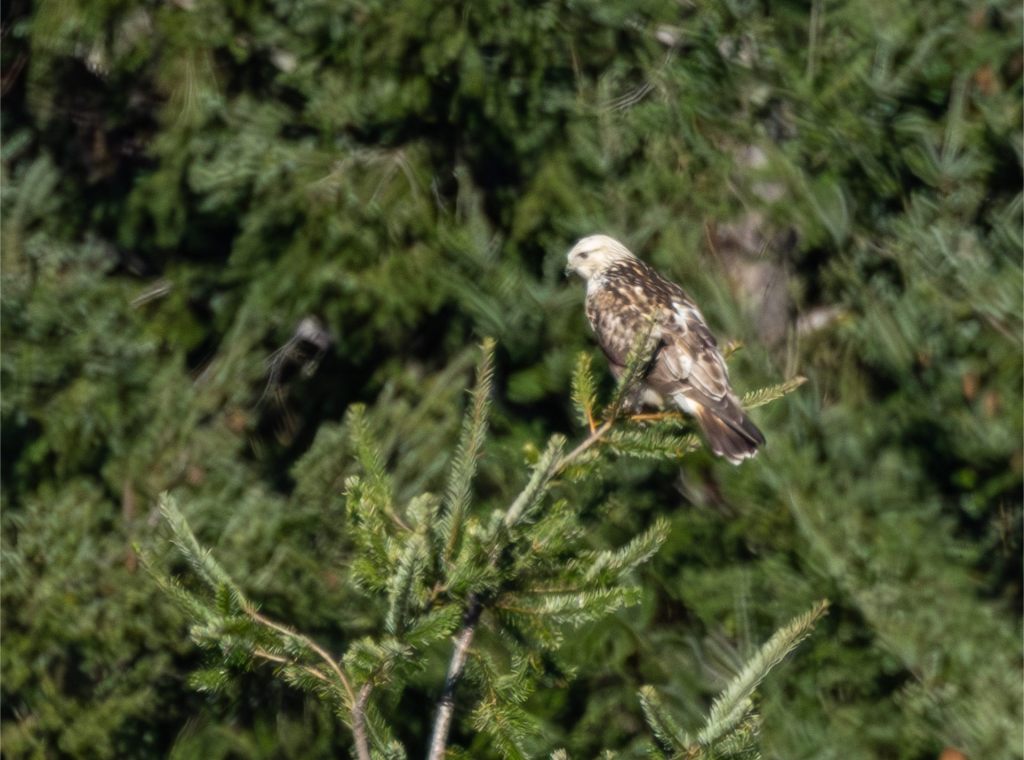
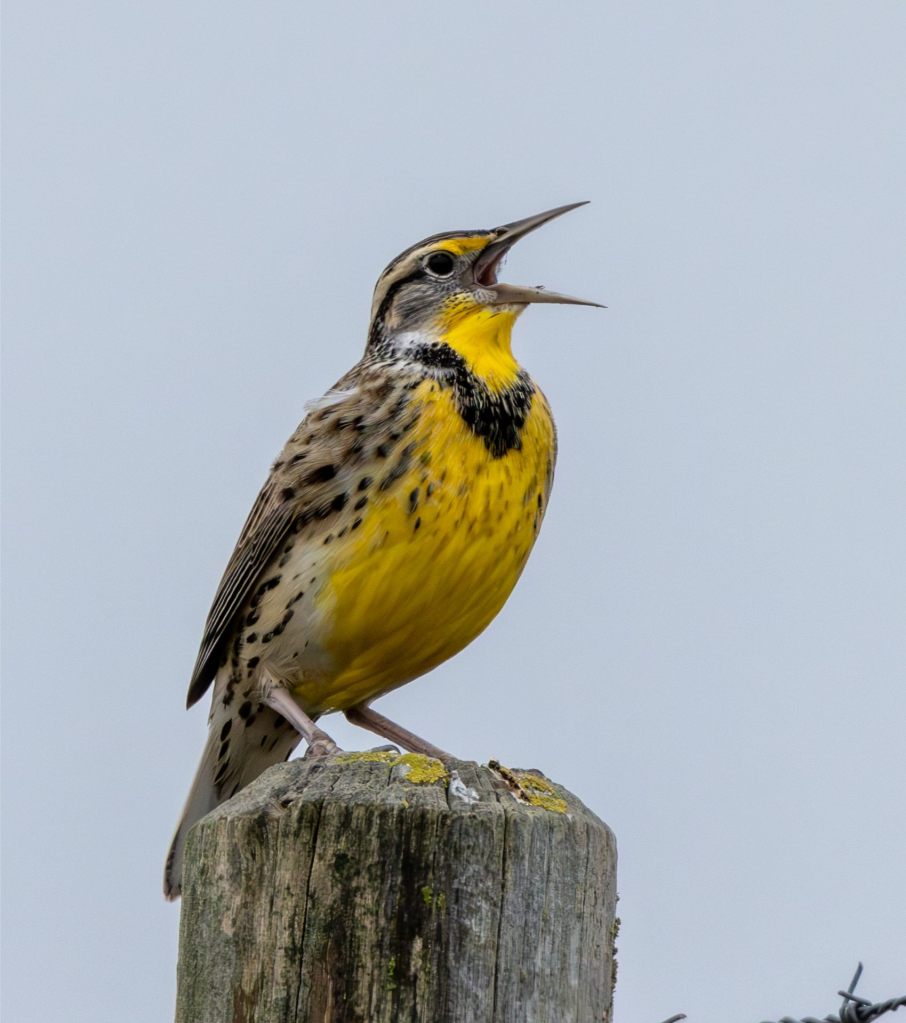
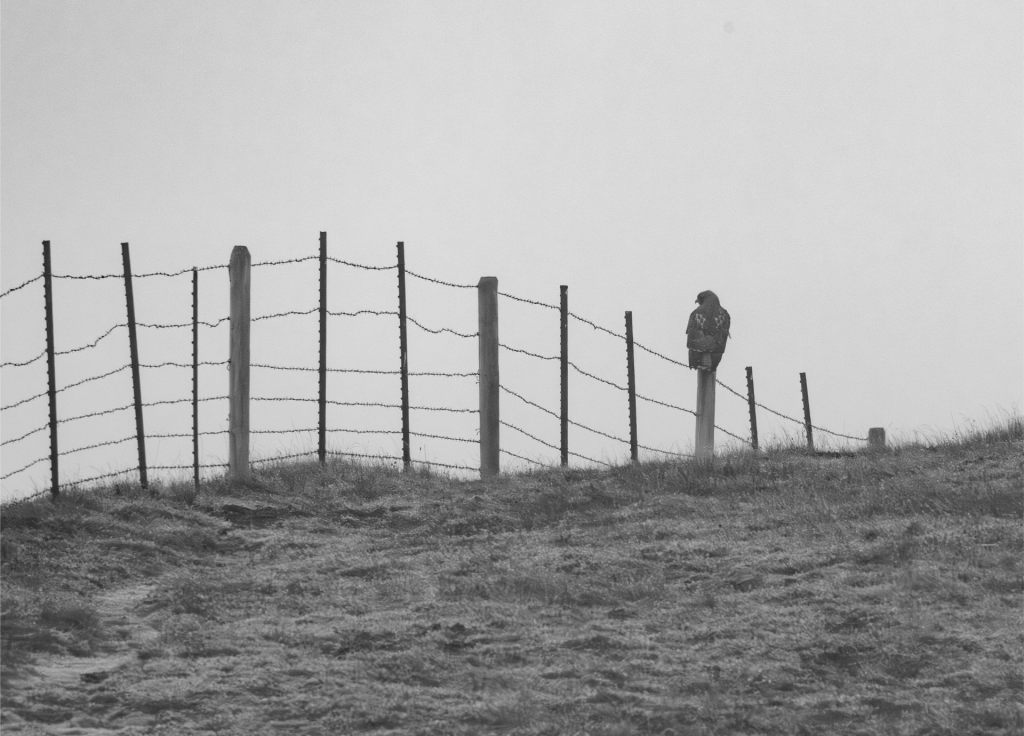
Our tiniest Falcon, the American Kestrel looks more like a delicate water color painting than a fierce hunter. This one is a female.Ferruginous Hawk catching some warming rays of sun.Rough-legged Hawks can be seen up on the ridge and along the road that winds down into the Bear River valley. By the time we spotted this one, harsh sun spoiled the photo, but not the countenance of this beautiful bird.Heard and seen all over the ridge, the Western Meadowlark is a clever ventriloquist.Red-tailed Hawk waiting for the fog to break up.
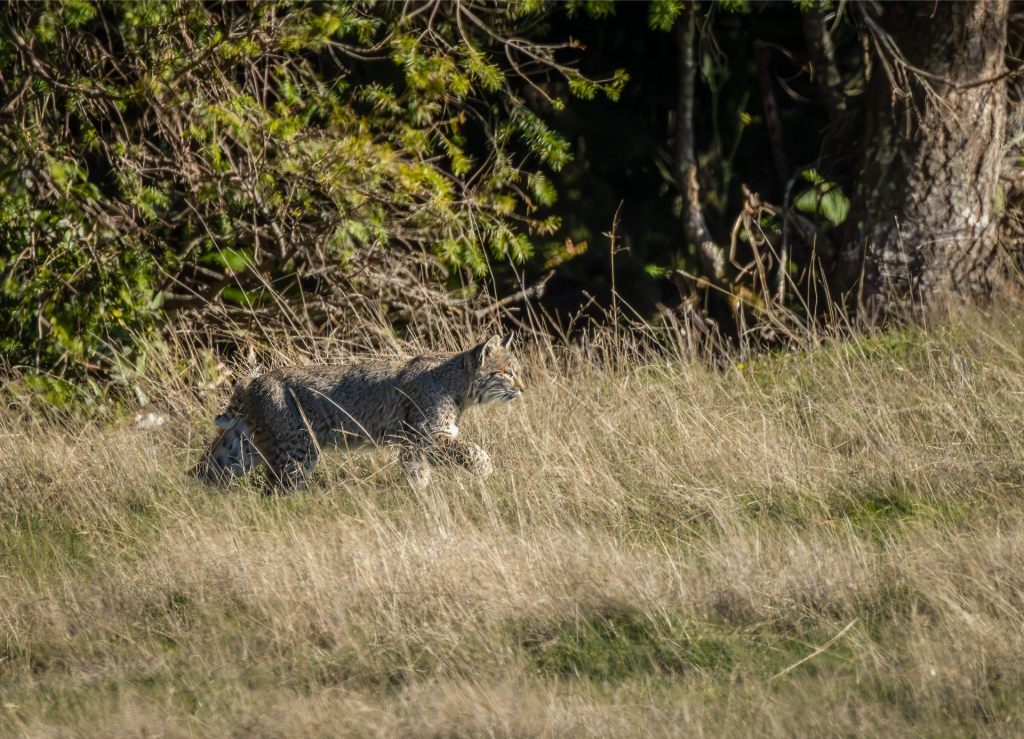
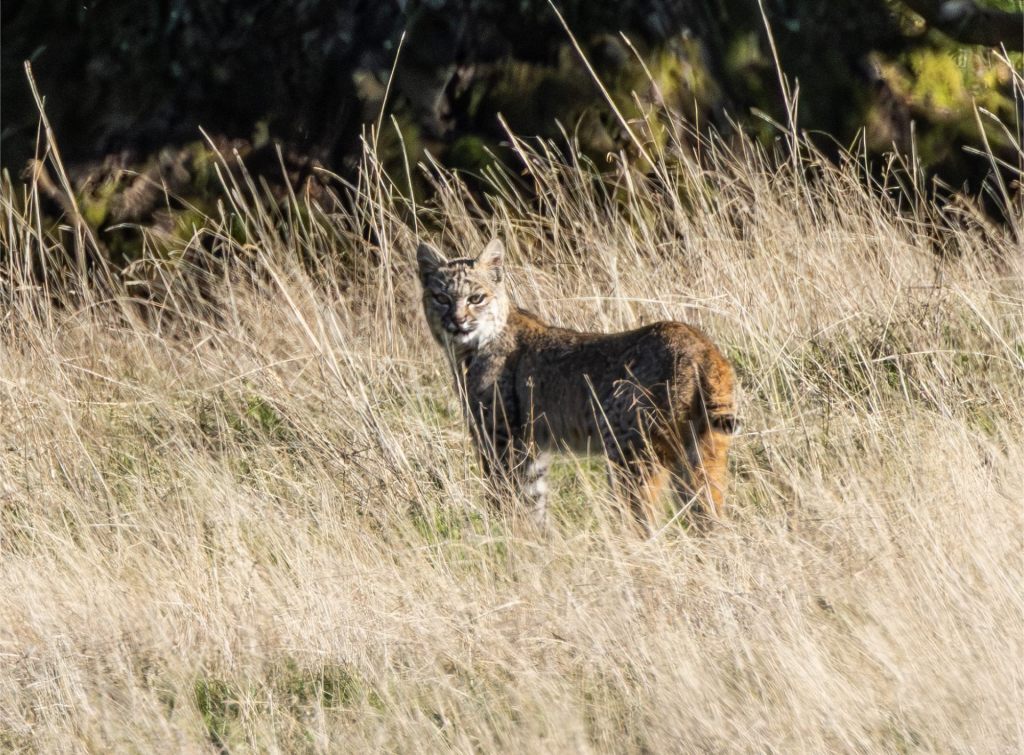
I had just been thinking that it had been awhile since seeing a Bobcat up on the ridge when this one appeared.
Back at the river, the first run of Salmon made their way past, starting in late October. This video shows a couple fish swimming through shallow riffles and then a large group waiting in a deep hole for water more conducive to the journey, mostly under cover of a rain swollen South Fork of the Eel.
A few other creatures made appearances at the river.
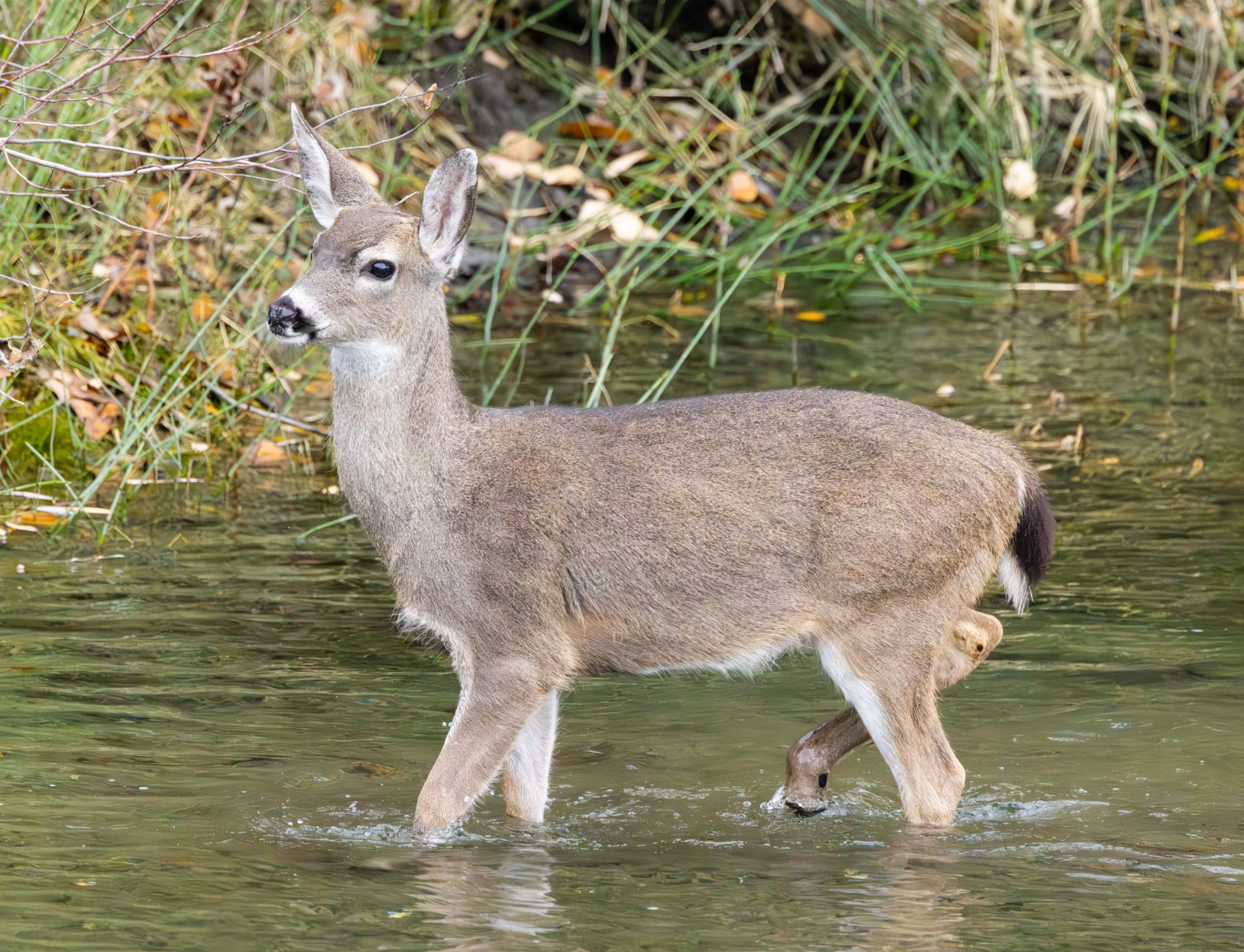
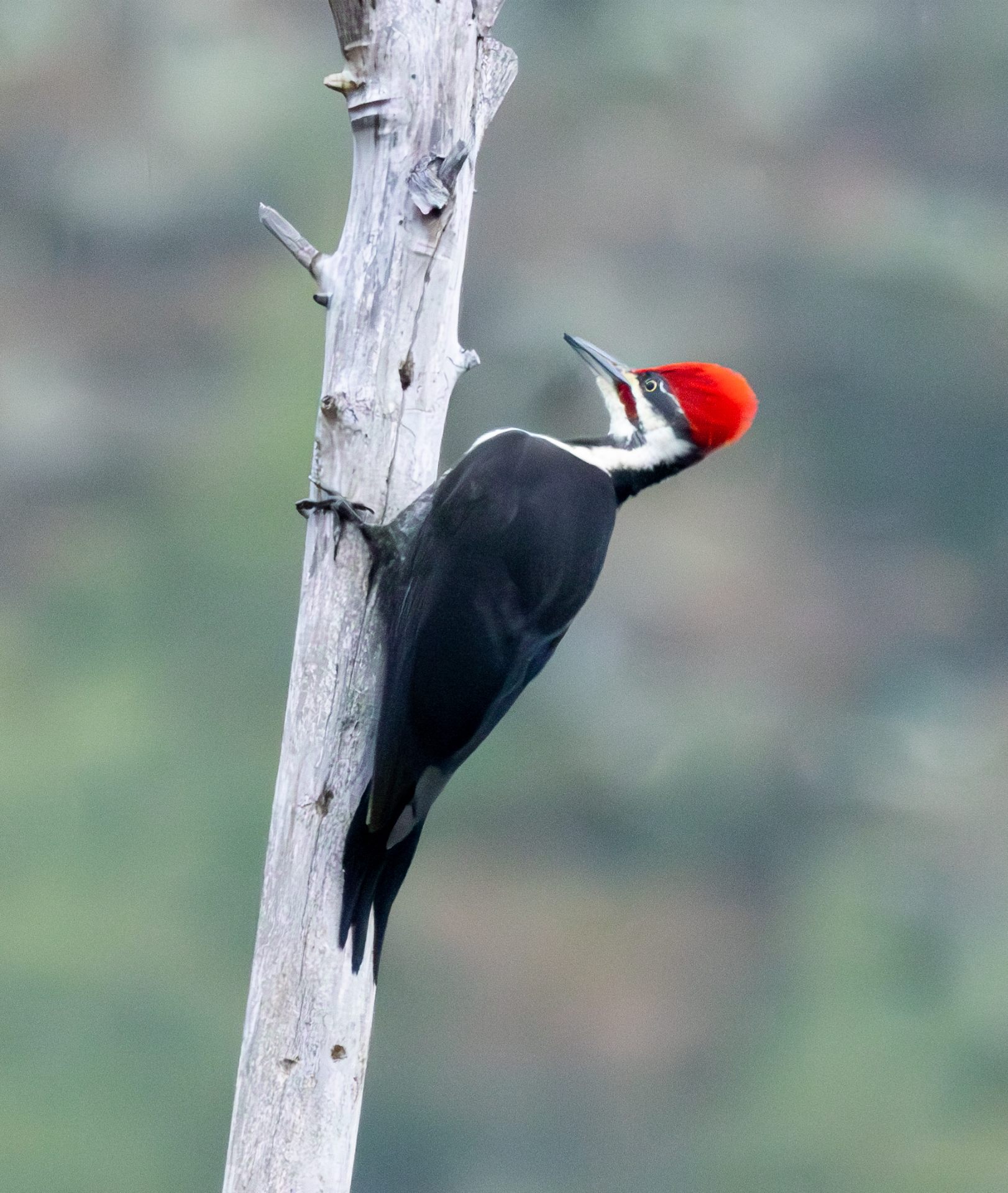
Black-tailed Deer making its way across the river.Pileated Woodpecker. This one is a male, told by his red streak under the eye.
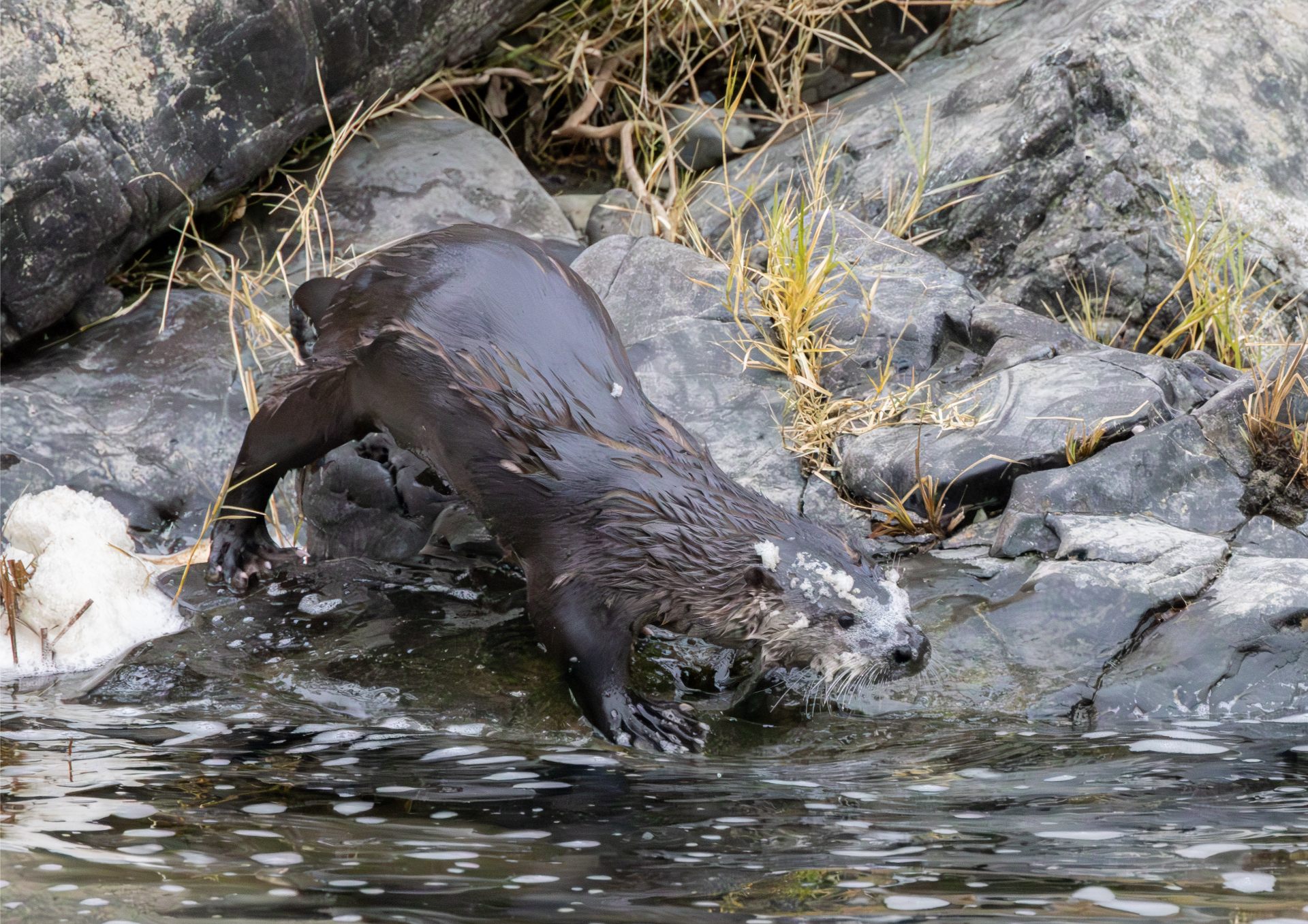
Lone Northern River Otter making her way upstream. Here she has emerged from the water with a foamy substance on her face. This stuff gathers in nooks and crannies at the edge of the water. I haven’t found anyone who can explain to me where this stuff comes from, but when I worked for the State parks years ago we noticed it forming on the surfaces of paved roadsright after the first rain of the season. We called it “first rain foam” and always suspected it had something to do with petroleum.
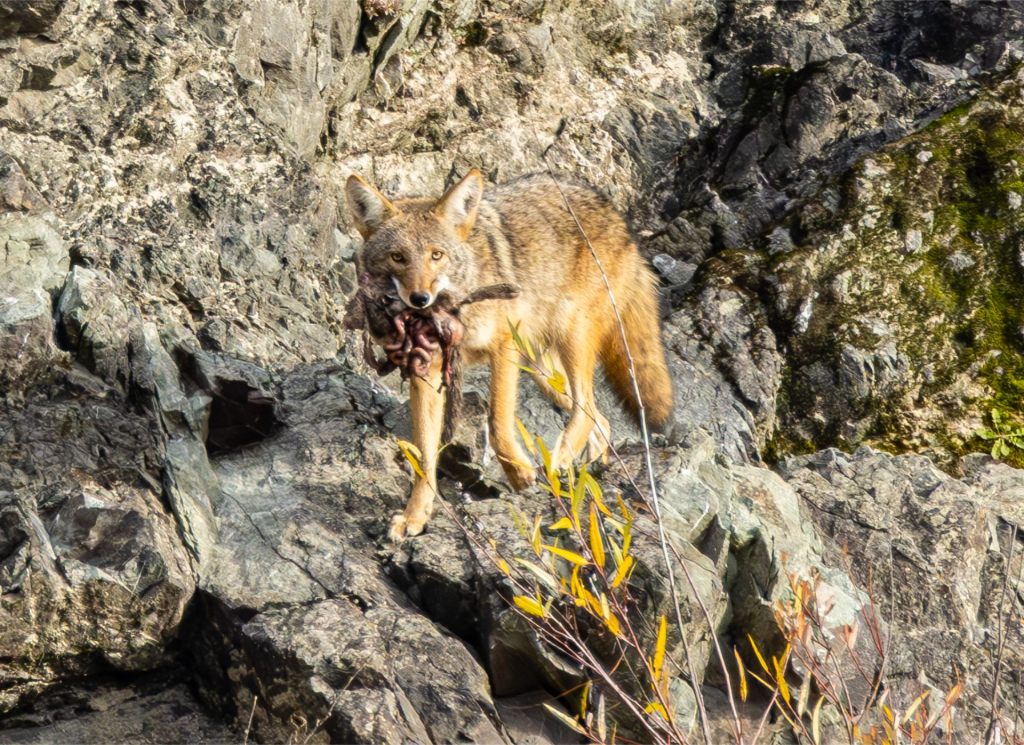
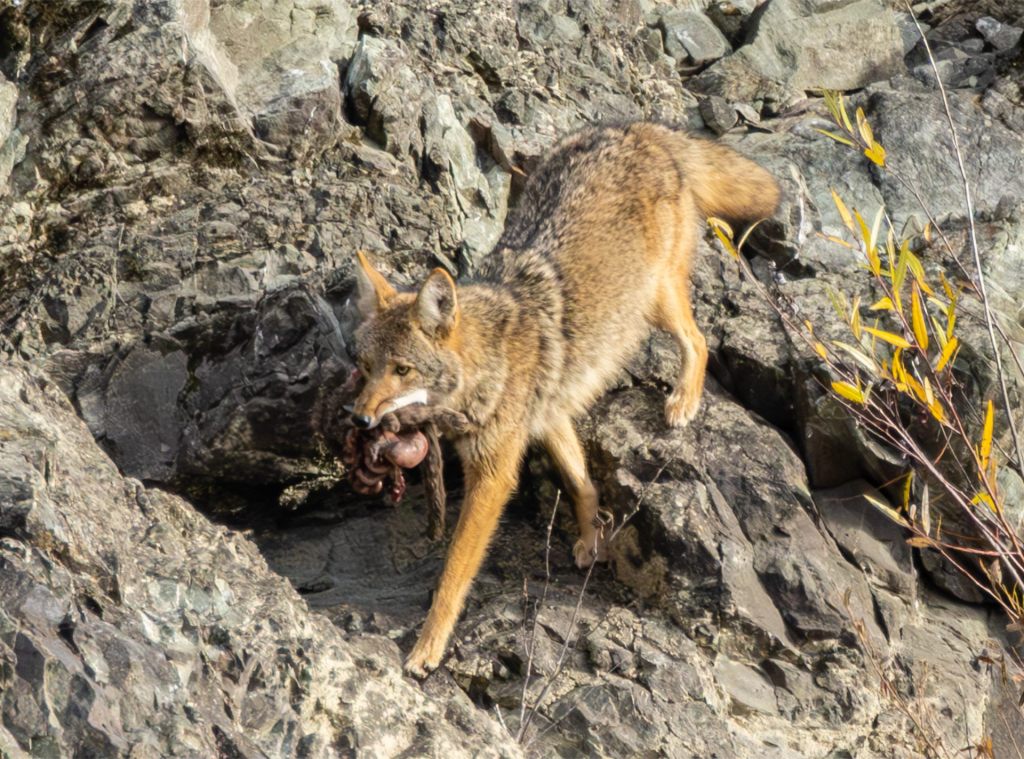
Finally, I’ll share images that some may find disturbing, so skip them if a house cat being carried off by a Coyote would be upsetting to you. It serves as a reminder that it’s safest for them to keep pet cats indoors or confined to securely enclosed outside spaces. It’s better for songbirds, too. Domestic cats kill over 2 billion birds every year.
This Coyote was seen carrying the remains of a house cat along the river before disappearing into a forested area.
Coyote with house cat prey, possibly feral, possibly road kill, impossible to know.
The days will soon be getting longer. With the turning of the seasons, inevitable change keeps us in the game, curiosity and eagerness for what comes next is reborn as the fog shifts in patches and swirls and reveals connection our bones never doubted.



 Free Range Photography
Leave a comment