Both the American Mink and the Northern River Otter are “mustelids”, members of what’s commonly called the weasel family. The family is full of carnivorous creatures ranging in size from the tiny Least Weasel, weighing in at about 1 ounce, to the Sea Otter who tops out at about 99 pounds.
American MinkNorthern River Otter
It’s been a slow summer for the weasels we usually see on the South Fork of the Eel. The high waters of the past few years have rearranged some of the favorite fishing and denning spots, and human encroachment is always a wild card with hard-to-measure effects. So I was pleasantly surprised to see both a Mink and an Otter on one overcast morning last week.
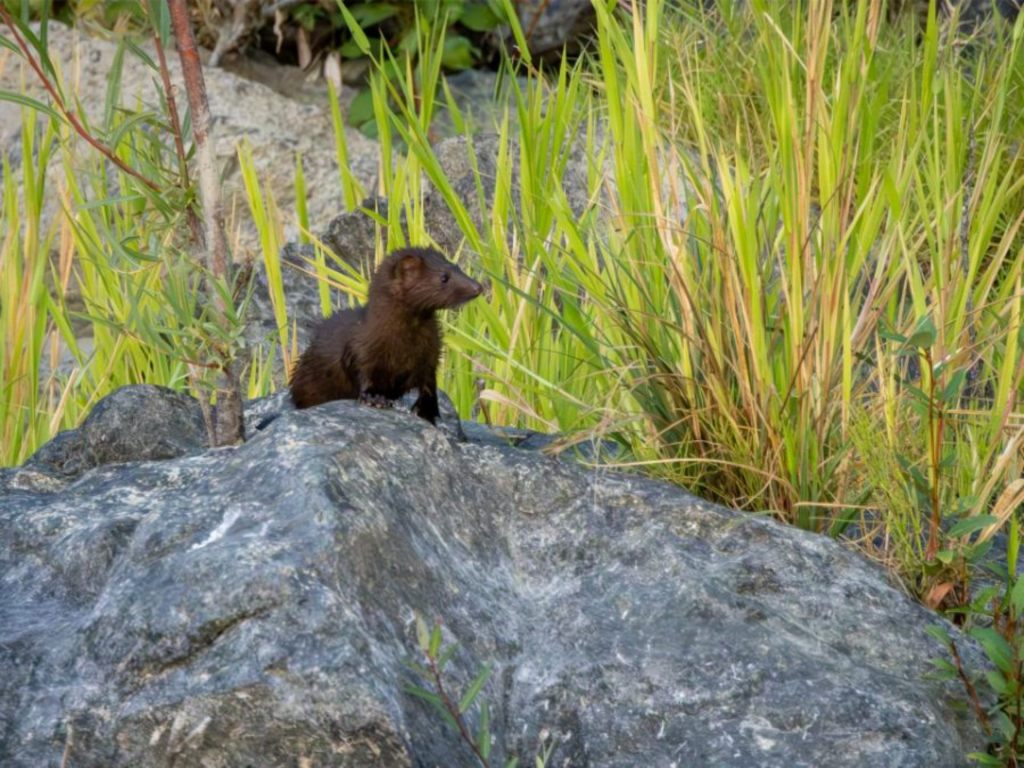
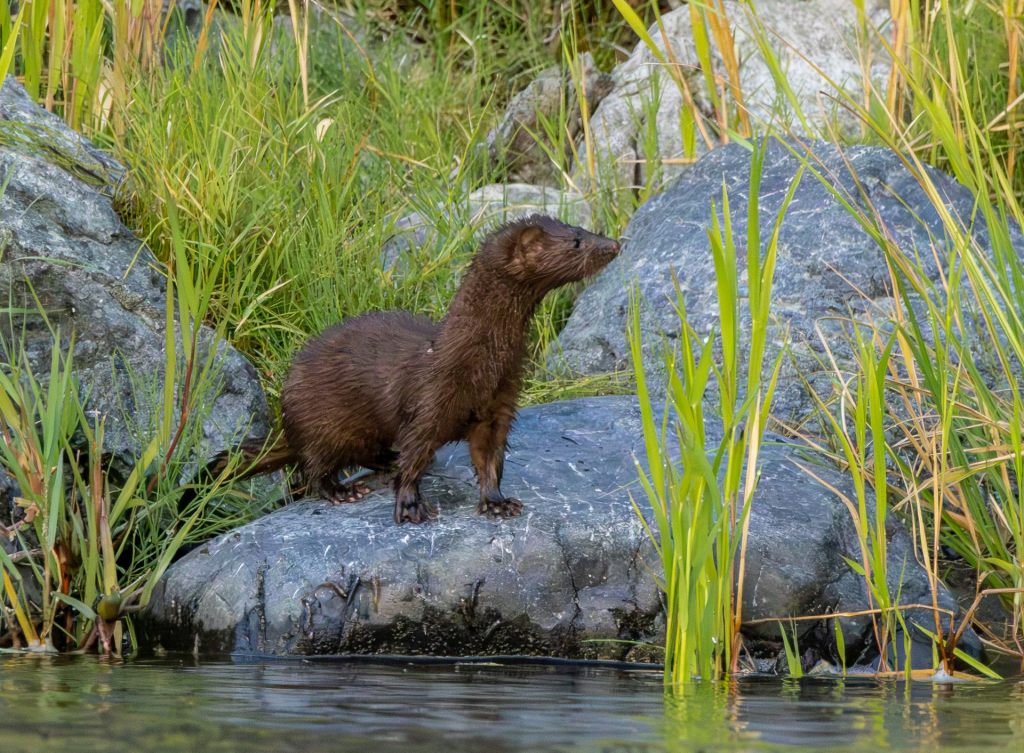
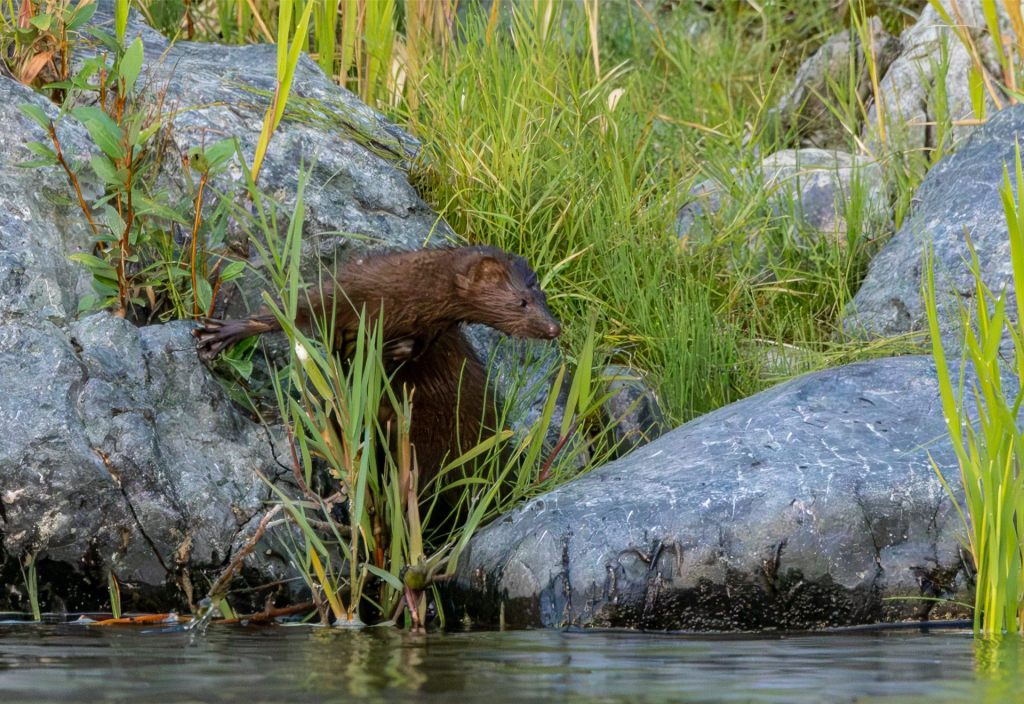
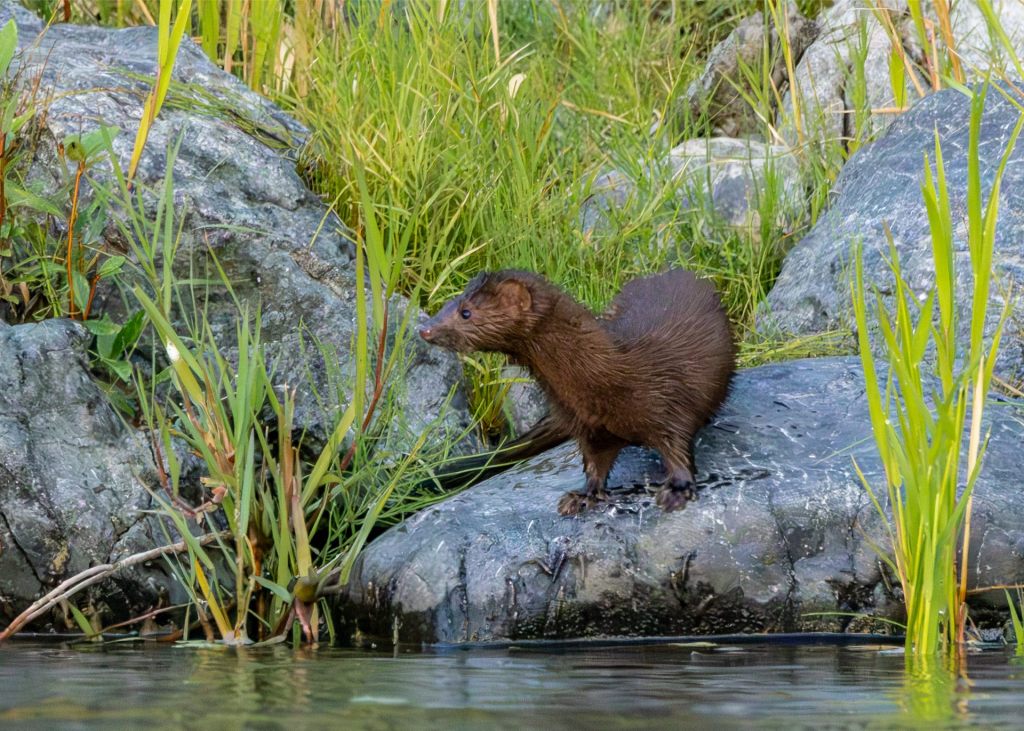
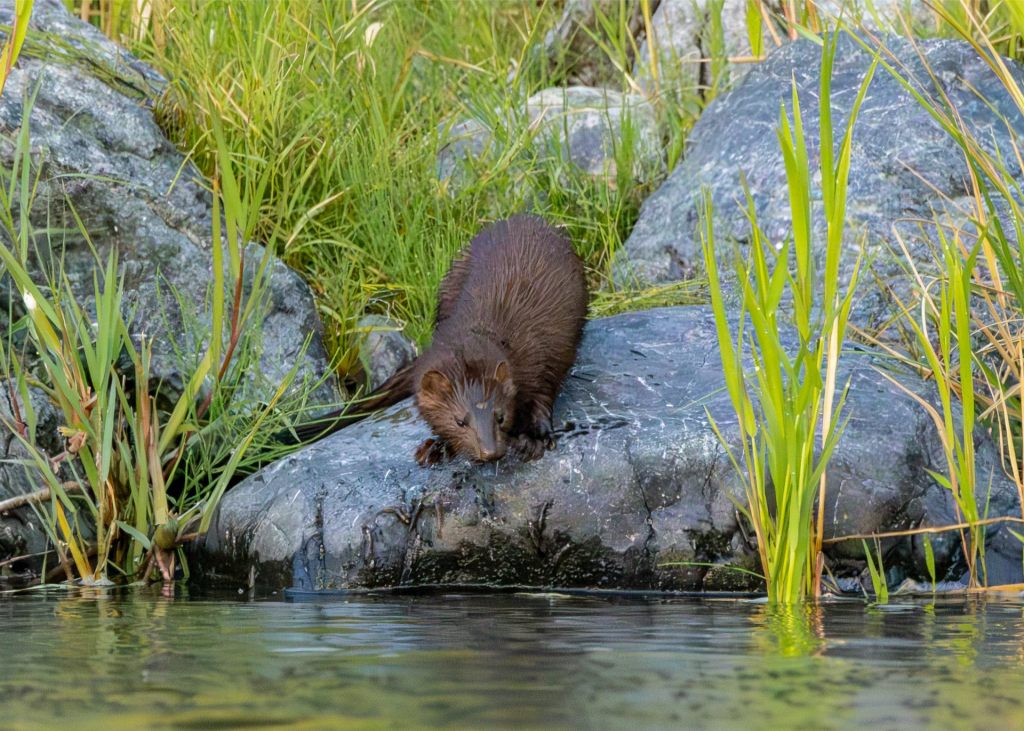
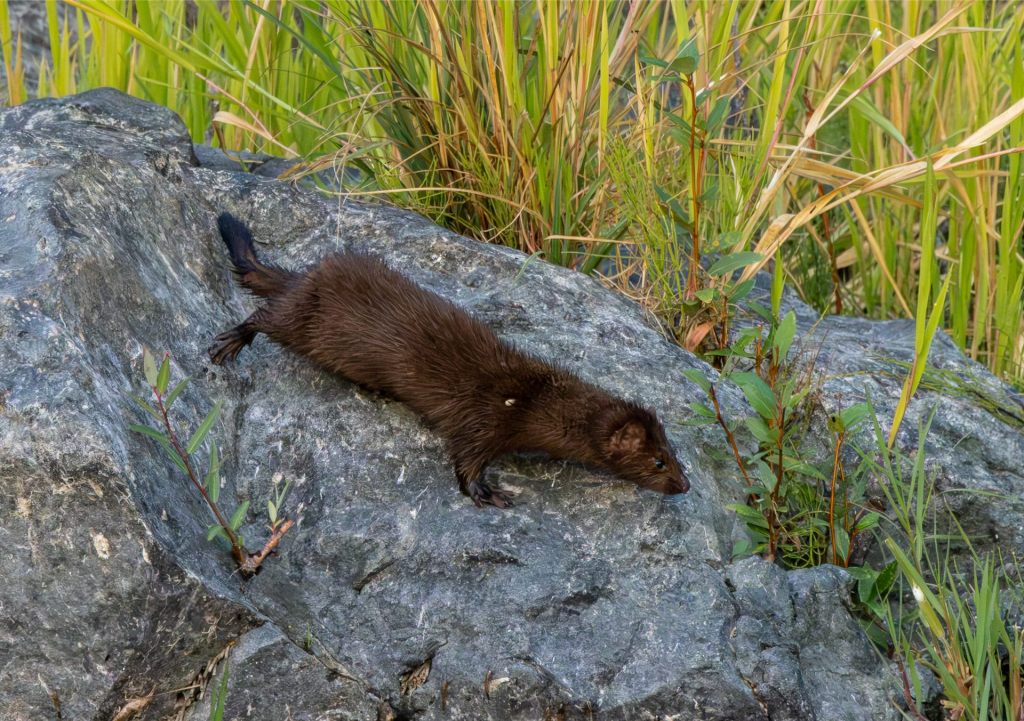
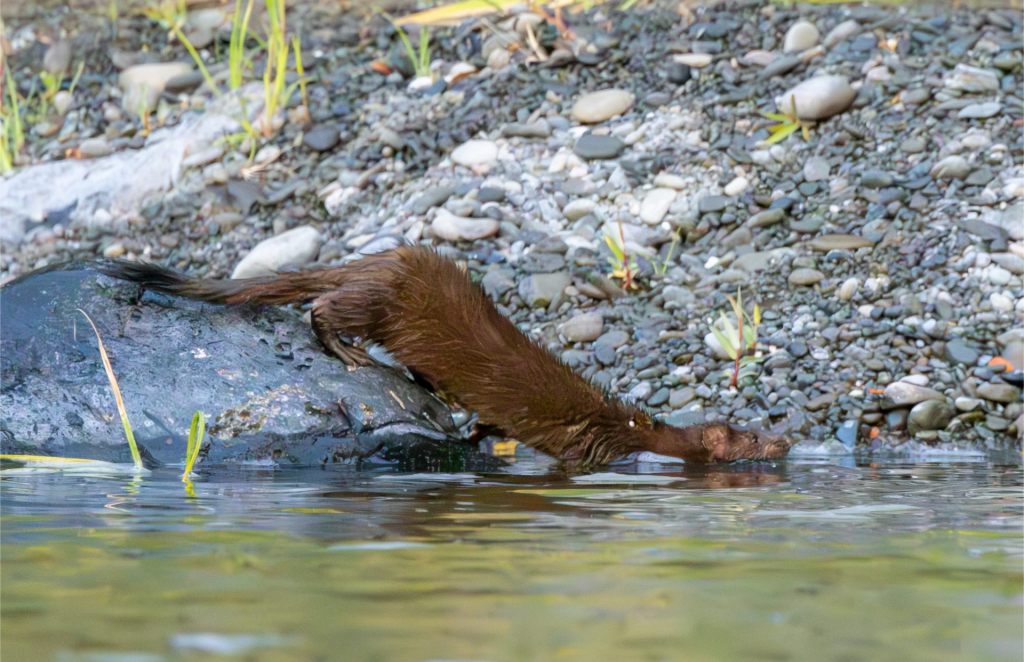
The American Mink ranges from about 12-20 inches long, with an extra 5-9 inches of tail, and weighs 2-5 pounds.
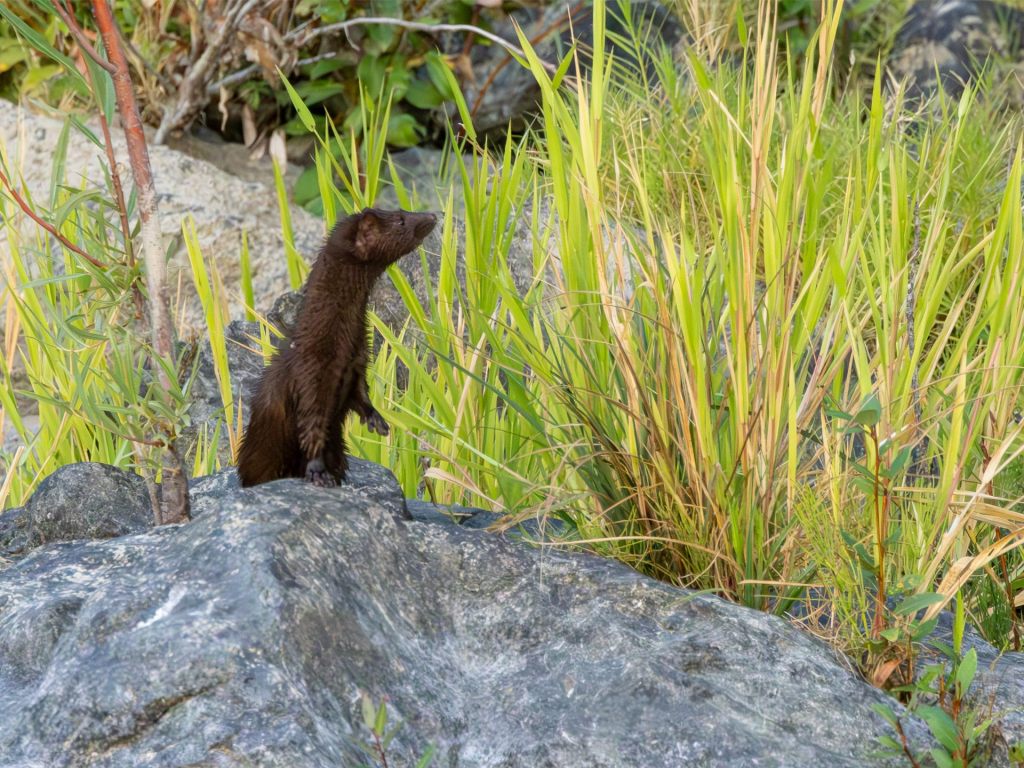
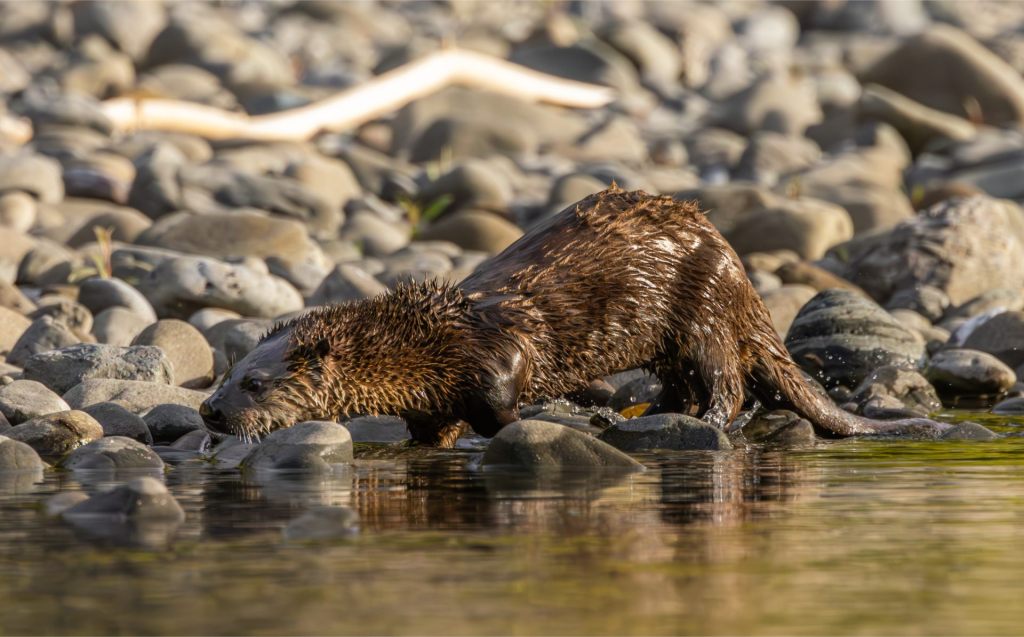
Whenever I see a mink, I know I have to move fast if I want to get any photos or video, because they seem to always be in a hurry. However, on this dark morning, this particular mink was taking its time as it made its way downstream and gave me some nice long looks.
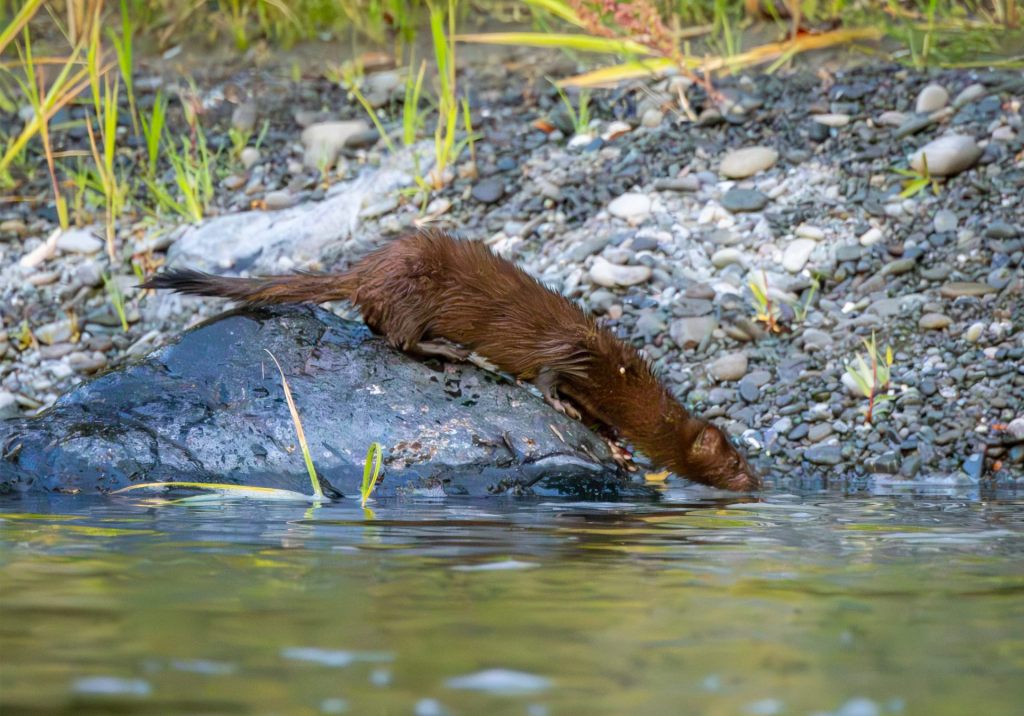
I wondered what had the mink’s attention here. I have seen one very unfriendly encounter between a mink and an otter, and have also seen both fox and coyote near this spot, two predators that would enjoy a mink meal.Scrambling between the boulders at the water’s edge, mink are so quick and agile.Ever vigilantReady to jump in the water at any sign of danger, cautious mink differ from otters, who always act like they own the place and are far less likely to be hunted here.Heading for the water.Mink and Otters are both adept at swimming and diving and get much of their diet from the water. However, the mink’s preference for traveling by land and the otter’s for traveling in the water are shown by their differing tails. The mink’s thinner and shorter tail is less effective at steering its body through the waterthan the otter’s longer and more muscled tail.
After the mink disappeared into some tall grass and moved away from the water’s edge I never caught sight of it again.
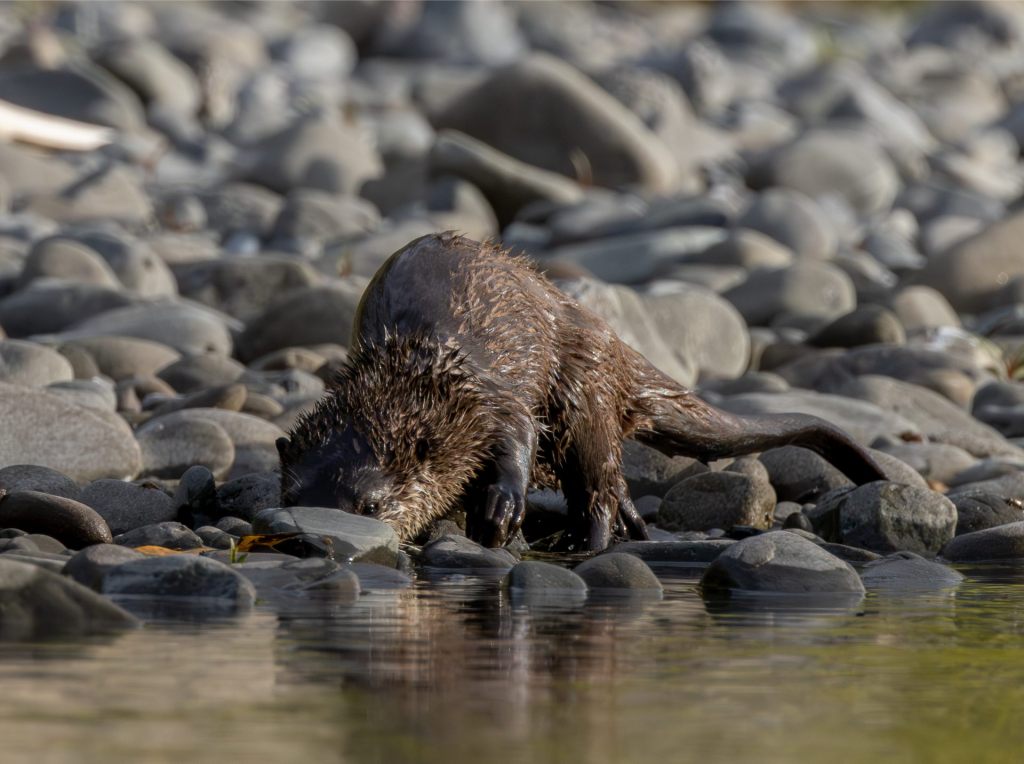
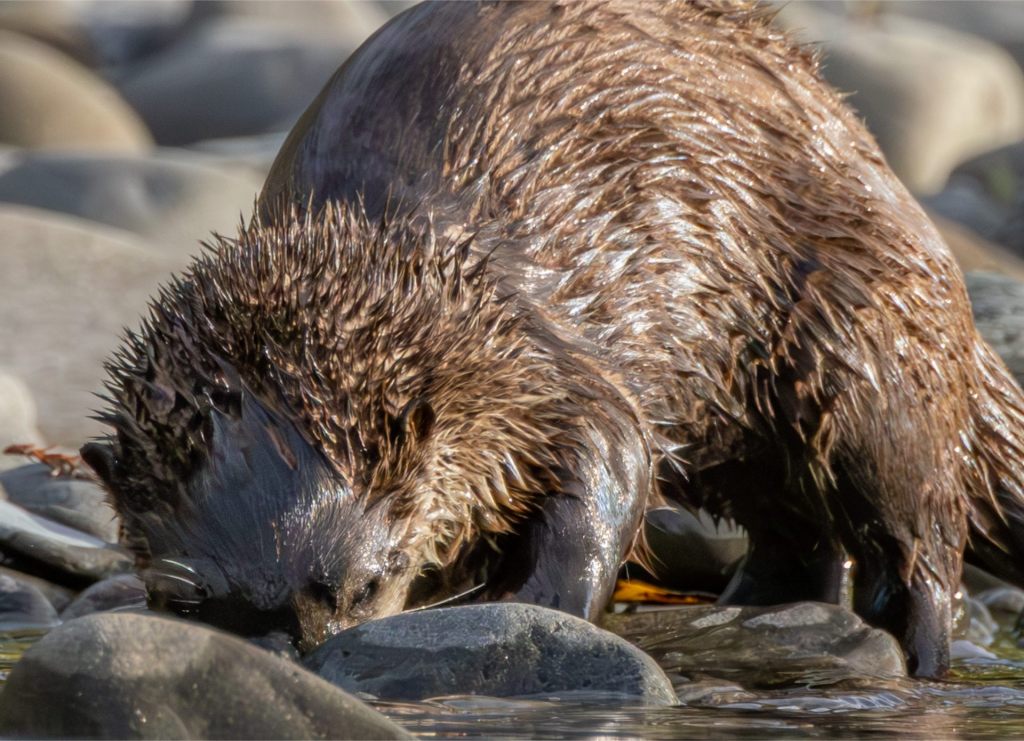
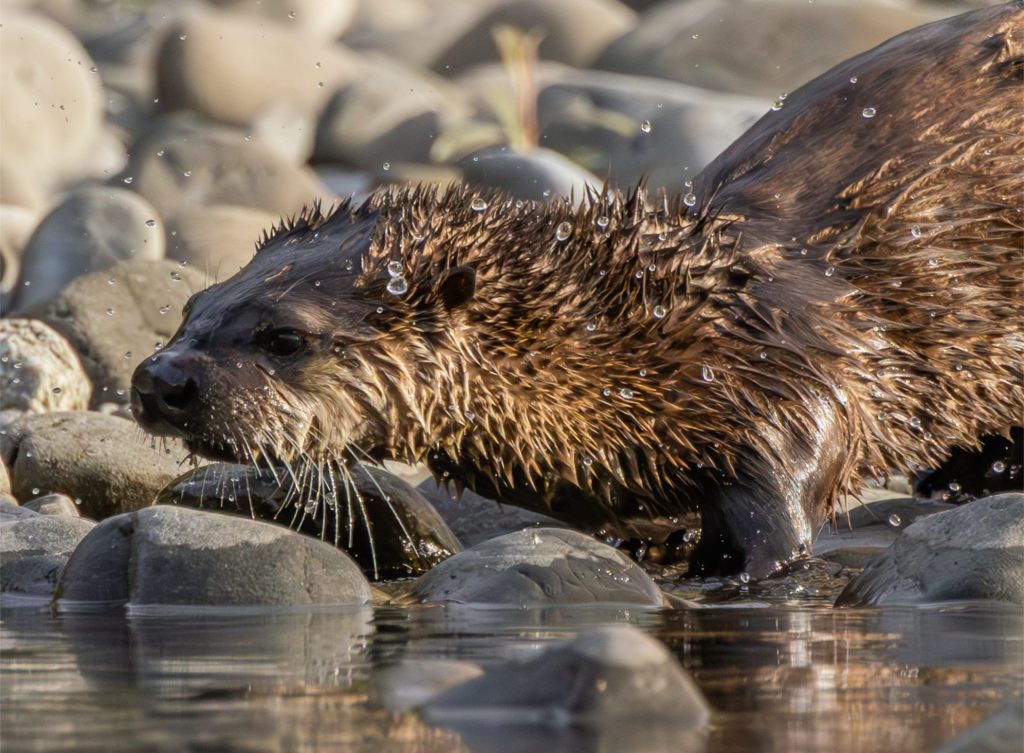
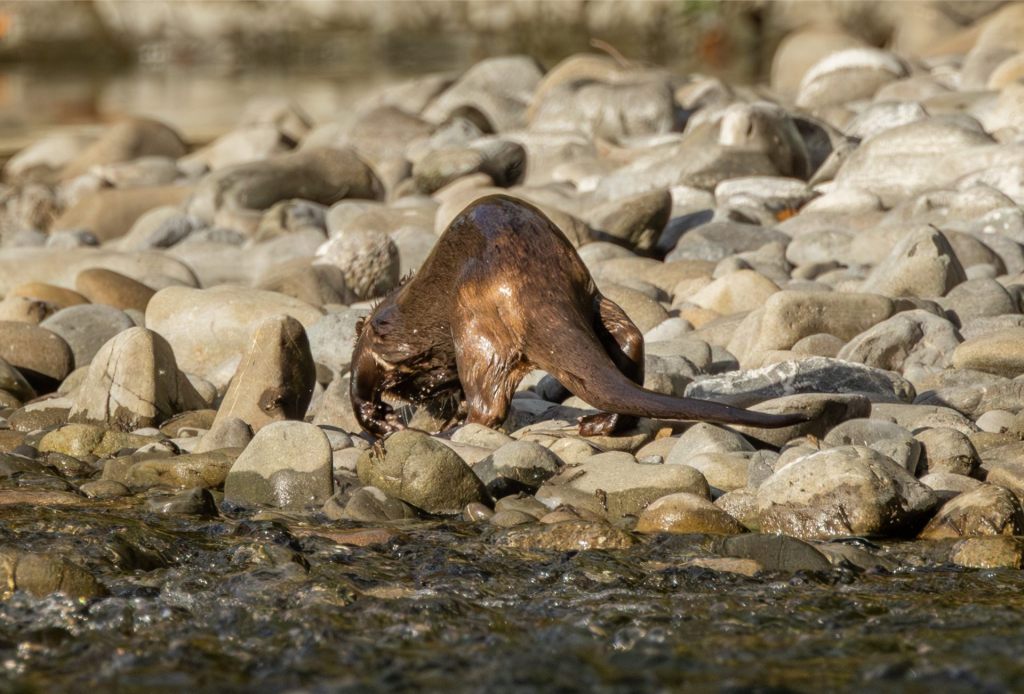
About a half hour later an otter appeared about 50 yards downstream from where the mink had been. It was like some kind of weasel role reversal was going on because while the mink uncharacteristically hung around for a while, the otter, usually seen going about its business at a more leisurely pace, showed itself very briefly, at first foraging for edible goodies buried beneath rocks right at the river’s edge, and then hurrying upstream as if late for an appointment.
Otter using its powerful snout to turn over rocks and find prey.Using snout and front paws to find snacks.Munching on preyOtters have a similar overall shape–long body, short legs–to minks, but are much larger, at up to 4 feet long with tail, and weighing up to 30 pounds.Northern River Otter starting to hurry upstream. The long and powerful tail is used to maneuver adroitly in the water in pursuit of aquatic prey.While otters move more efficiently in the water, the overland route was chosen here to avoid the riffles that would have slowed it down as it moved quickly upstream.



 Free Range Photography
Leave a reply to Ann Constantino Cancel reply