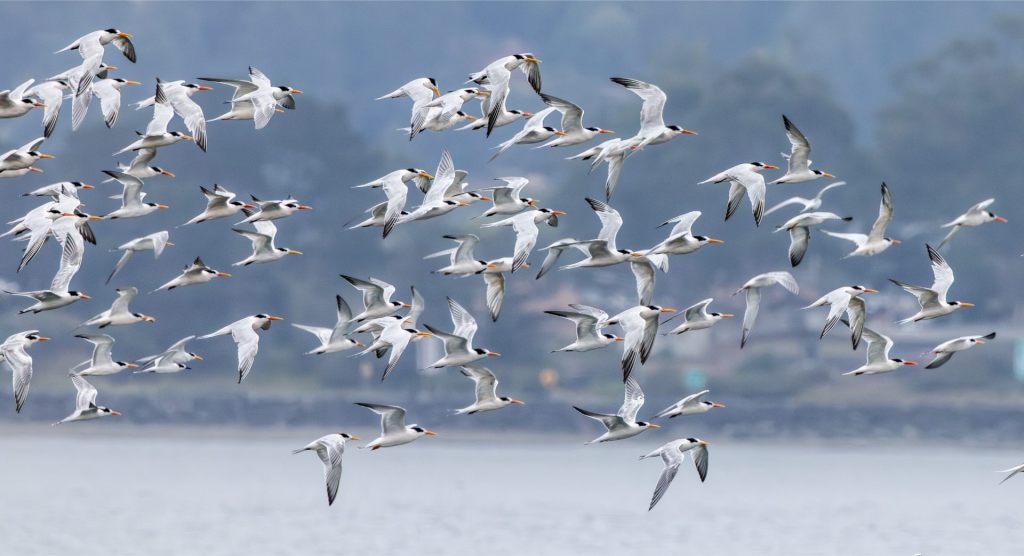
Tern, tern, tern.
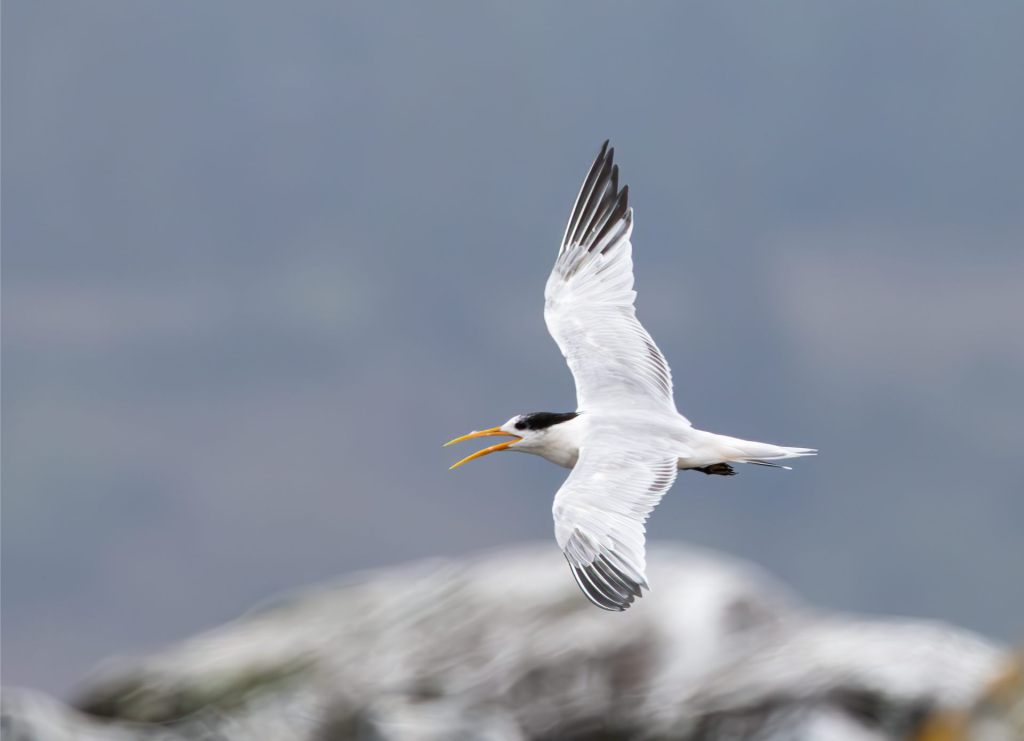
It is the season of terns on Humboldt Bay. These species of birds are in the same family as gulls, but you can see the difference in an instant. Gulls are heavy and slow, terns are so light and agile they have an almost insect-like weightlessness as they twist and turn on long pointy wings. Gulls are opportunistic feeders and often scavengers and have learned to make their living at landfills and dumps where birders hold their noses in search of rarities. Terns are plunge divers (most of them anyway) for small fish prey and would never be so at ease among humans as to strut into a seaside convenience store to nab a bag of chips.
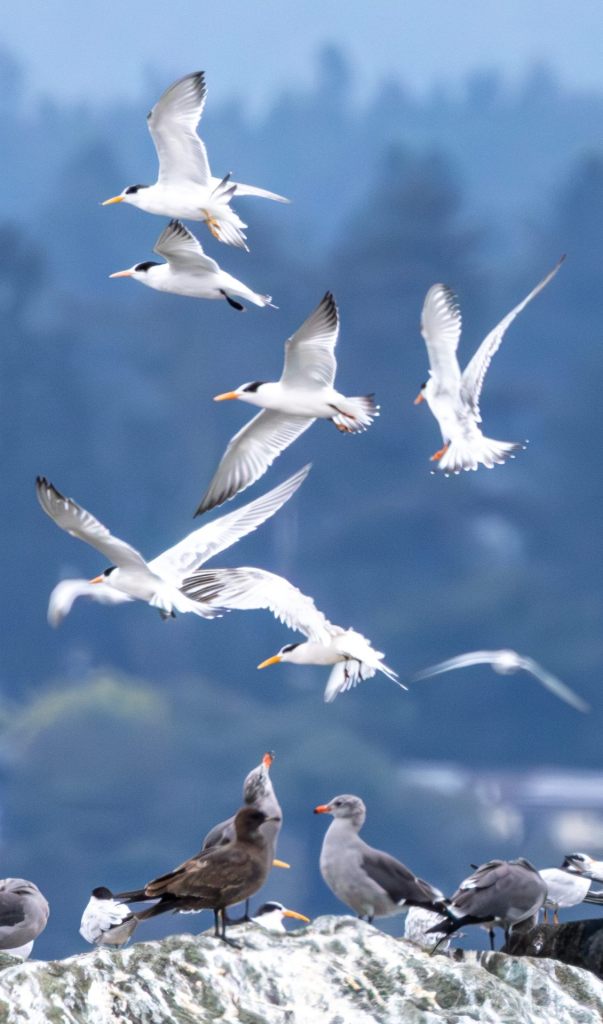
Both gulls and terns suffered population losses worldwide as their eggs have been scavenged for centuries by humans looking for an easy protein source. Their innocence to this predation is reflected in the names given the trusting birds by humans: “gull” having the same root as gullible, and “noddy”, a name given to several members of the tern clan, meaning “idiot” or “simpleton”. Not surprisingly, humans did not manage this bounty well (who was really the simpleton here?) and over-harvesting led to decimation of the colonies of birds and no more easy eggs.
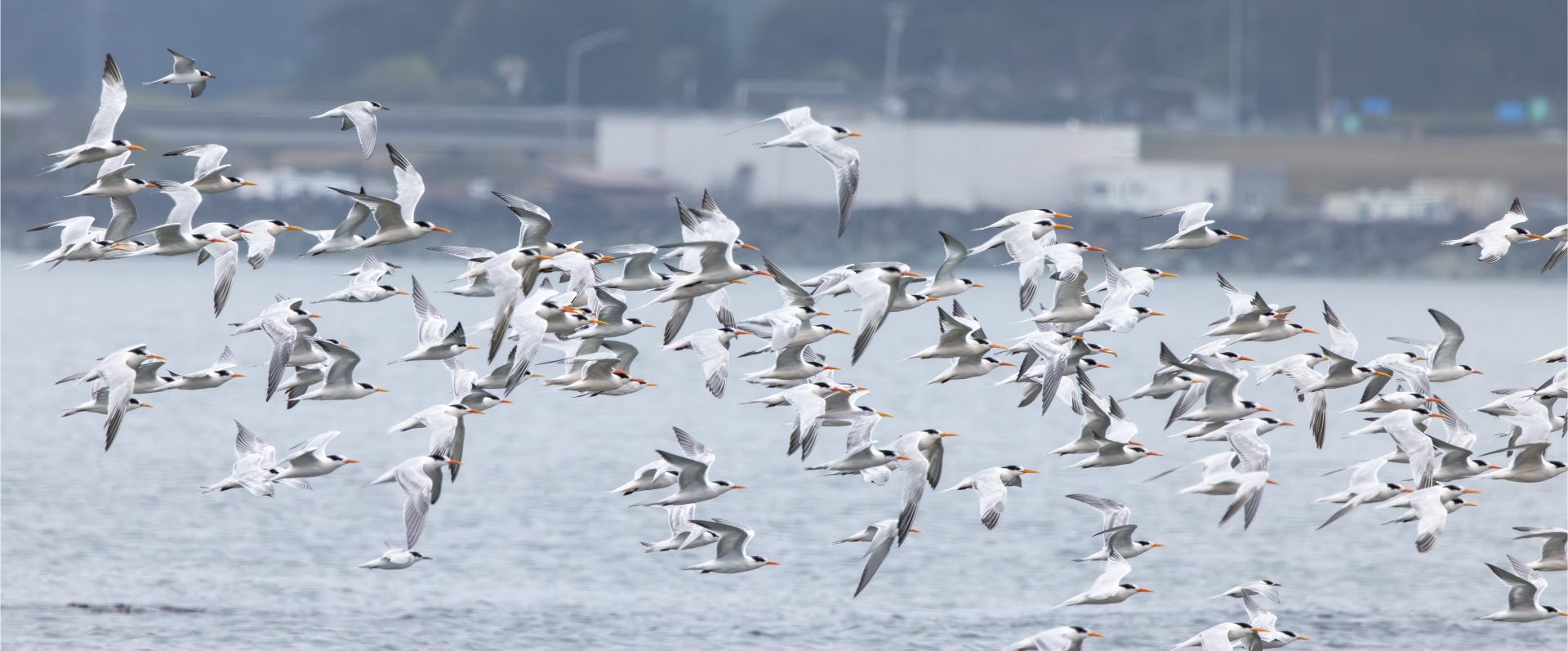
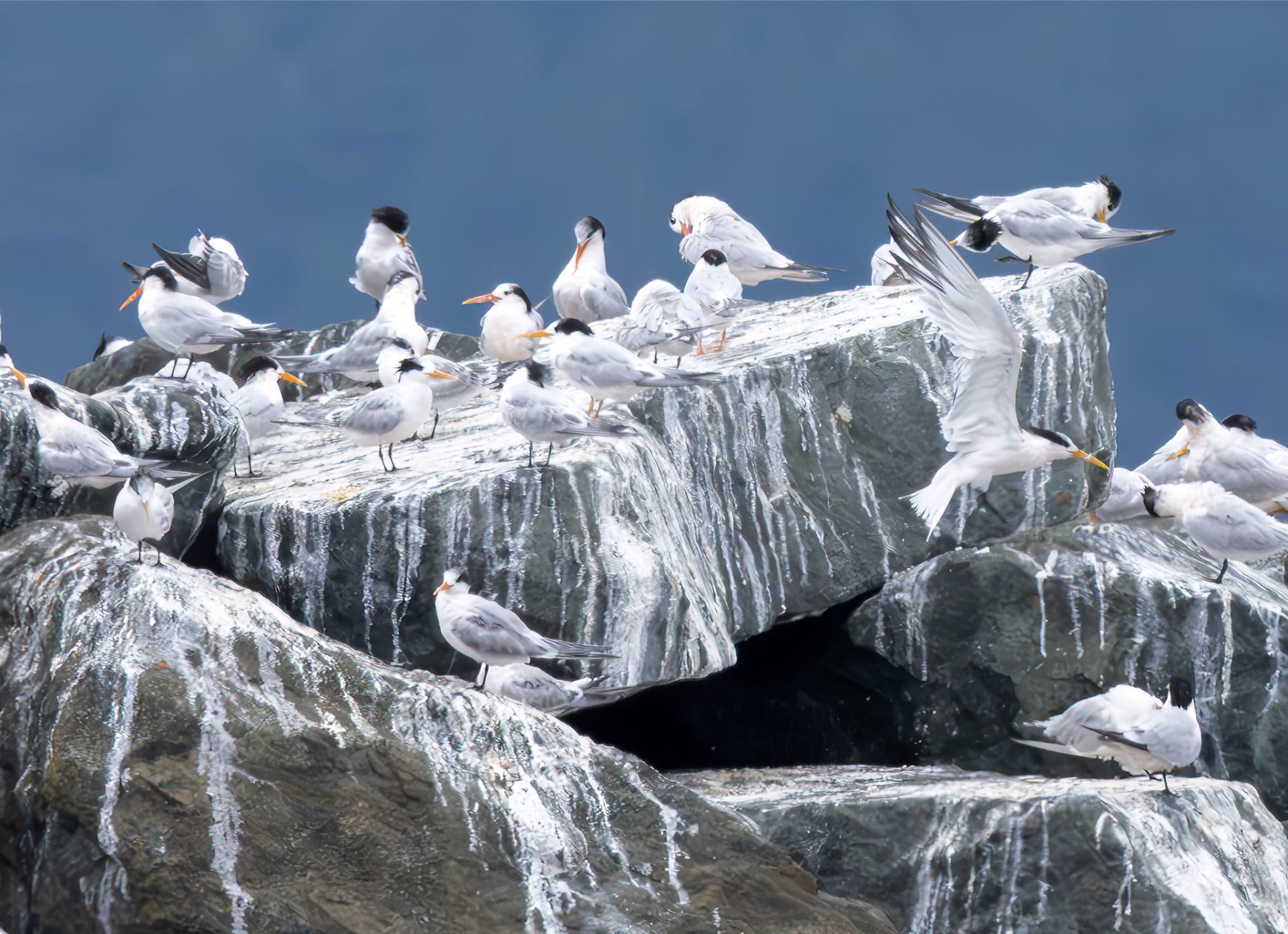
September is the best month for terns in Humboldt County and this year it was possible to see six species in one day near the tip of South Spit in a sandy cove on the bay side of the skinny peninsula, just south of the breakwater. Most numerous are the Elegant Terns, who breed in colonies in Mexico and then disperse both north and south, many hundreds of them come to Humboldt Bay. They are grouped among the larger terns and the golden, long, slightly down-turned bill indeed gives them an elegant look.
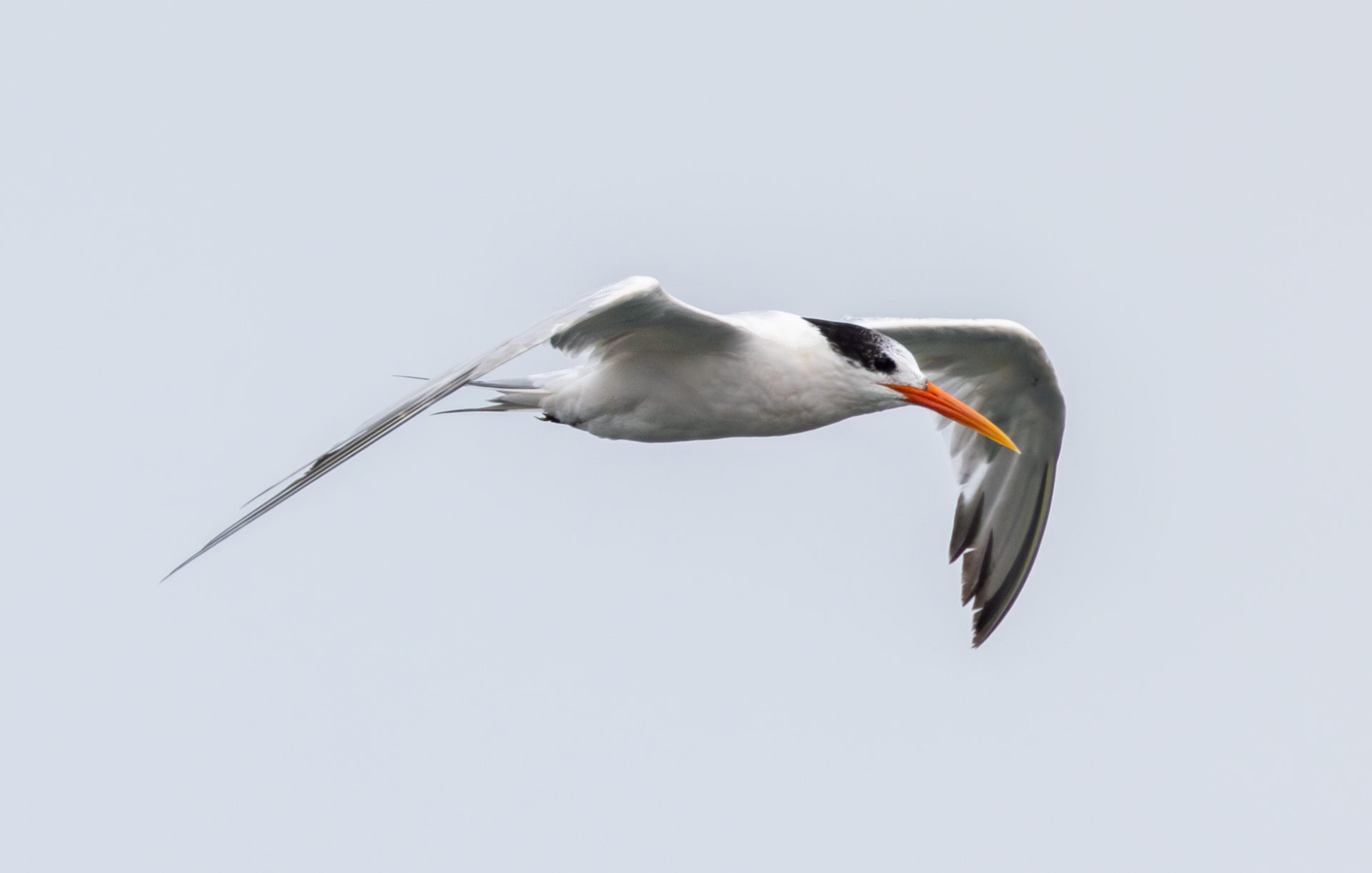
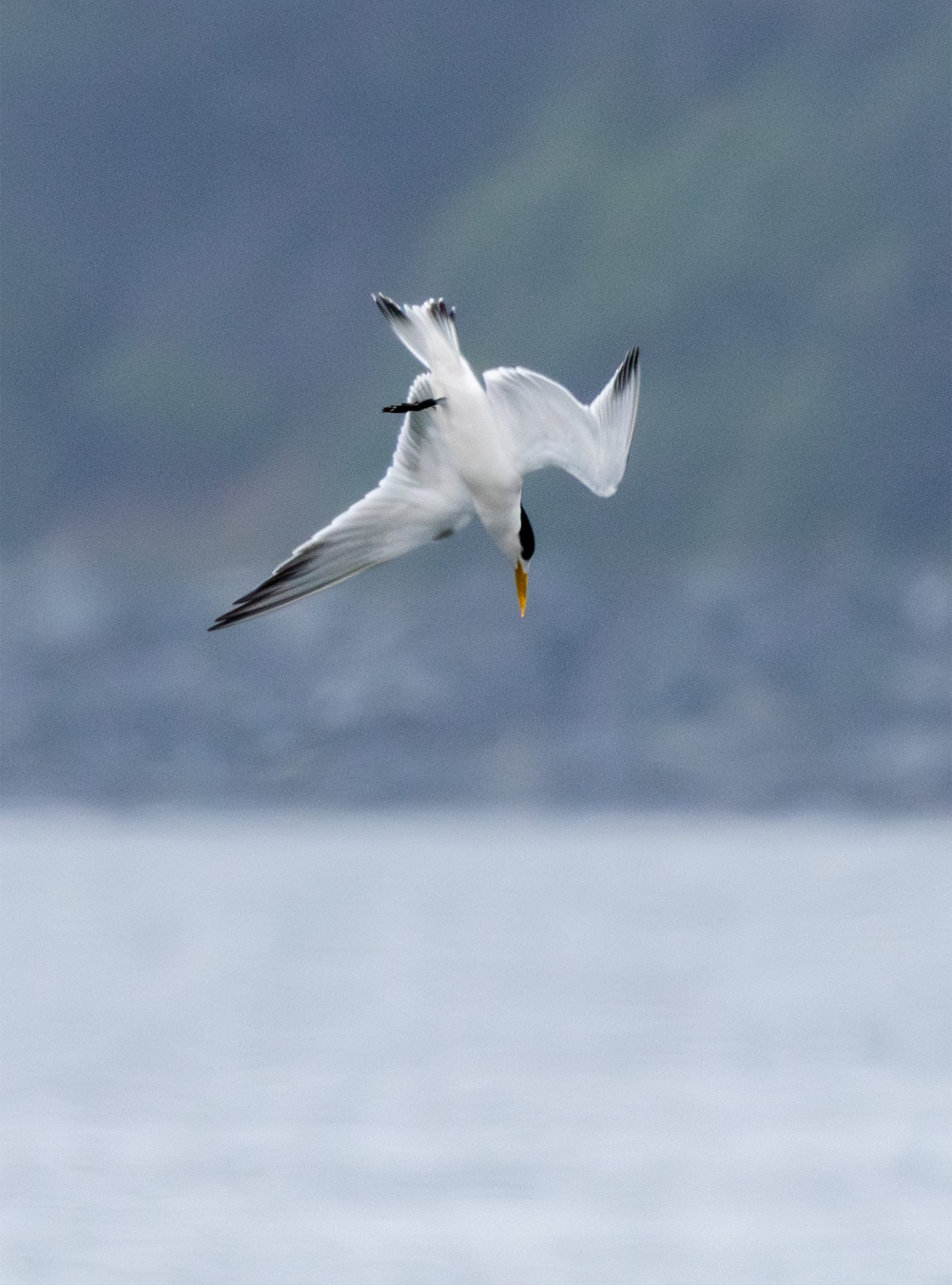
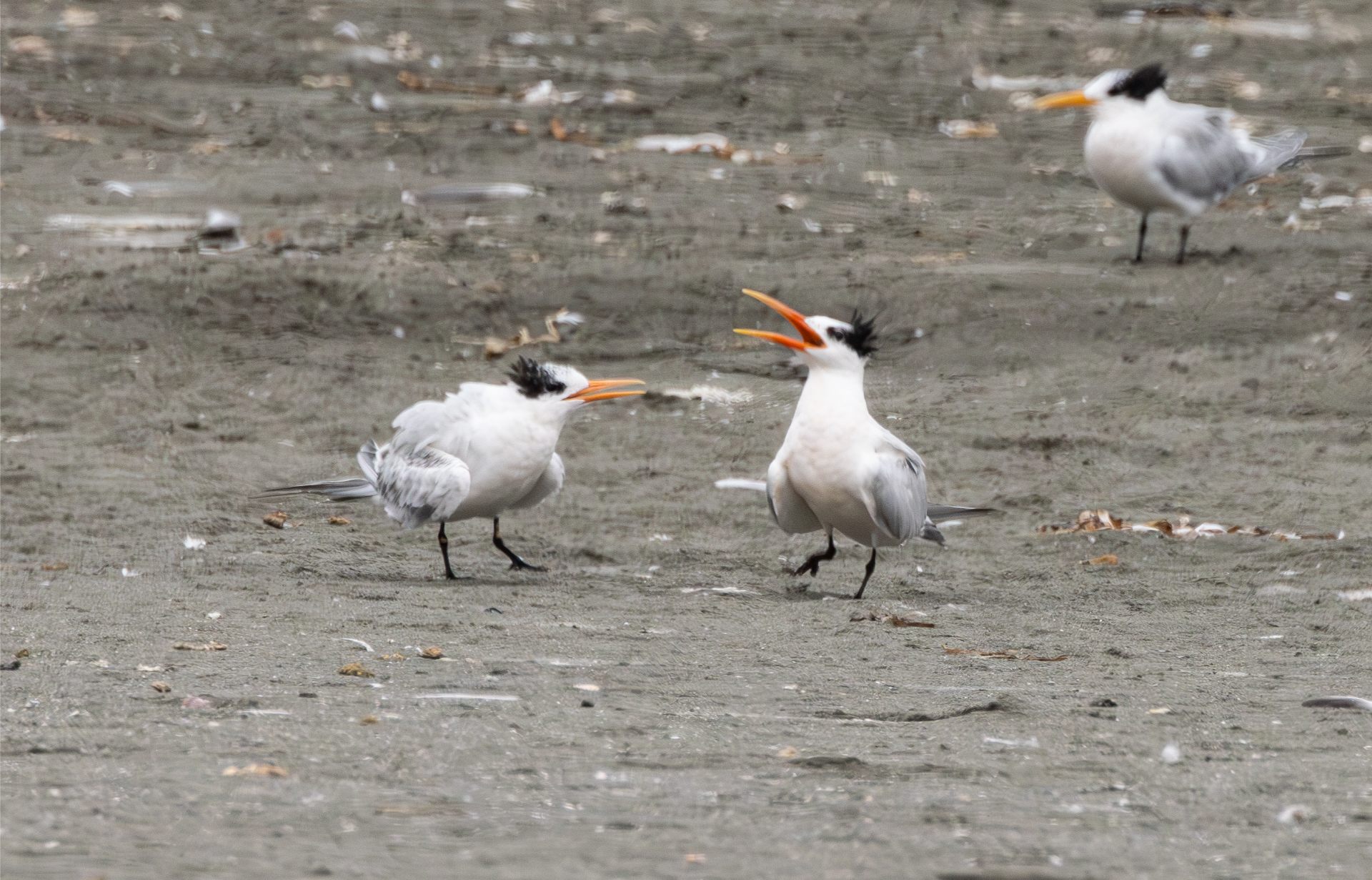
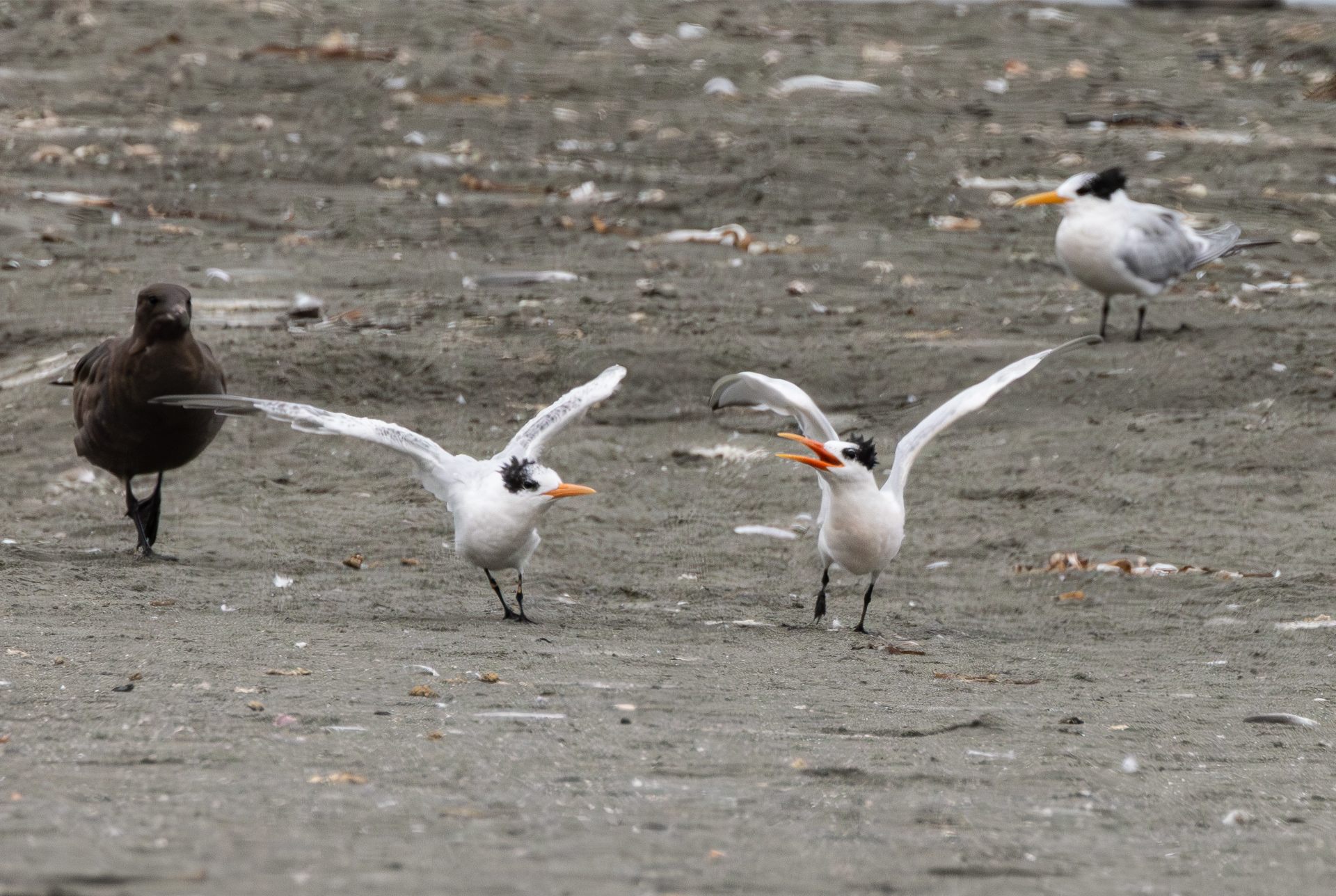
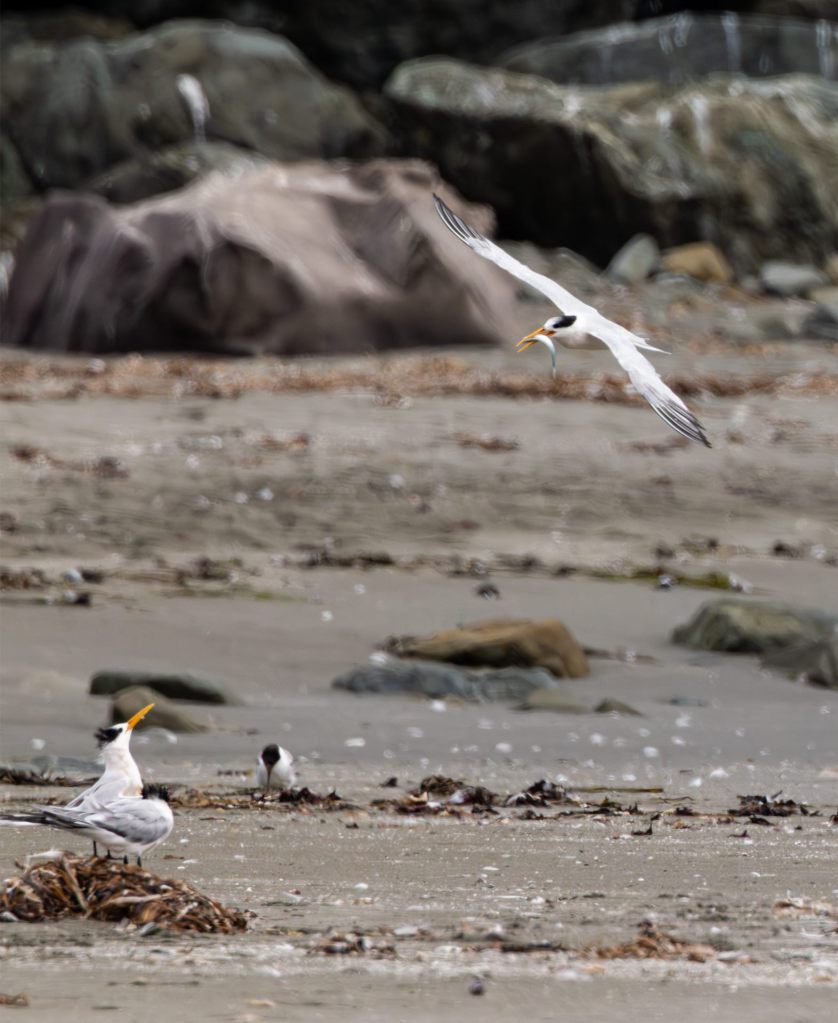
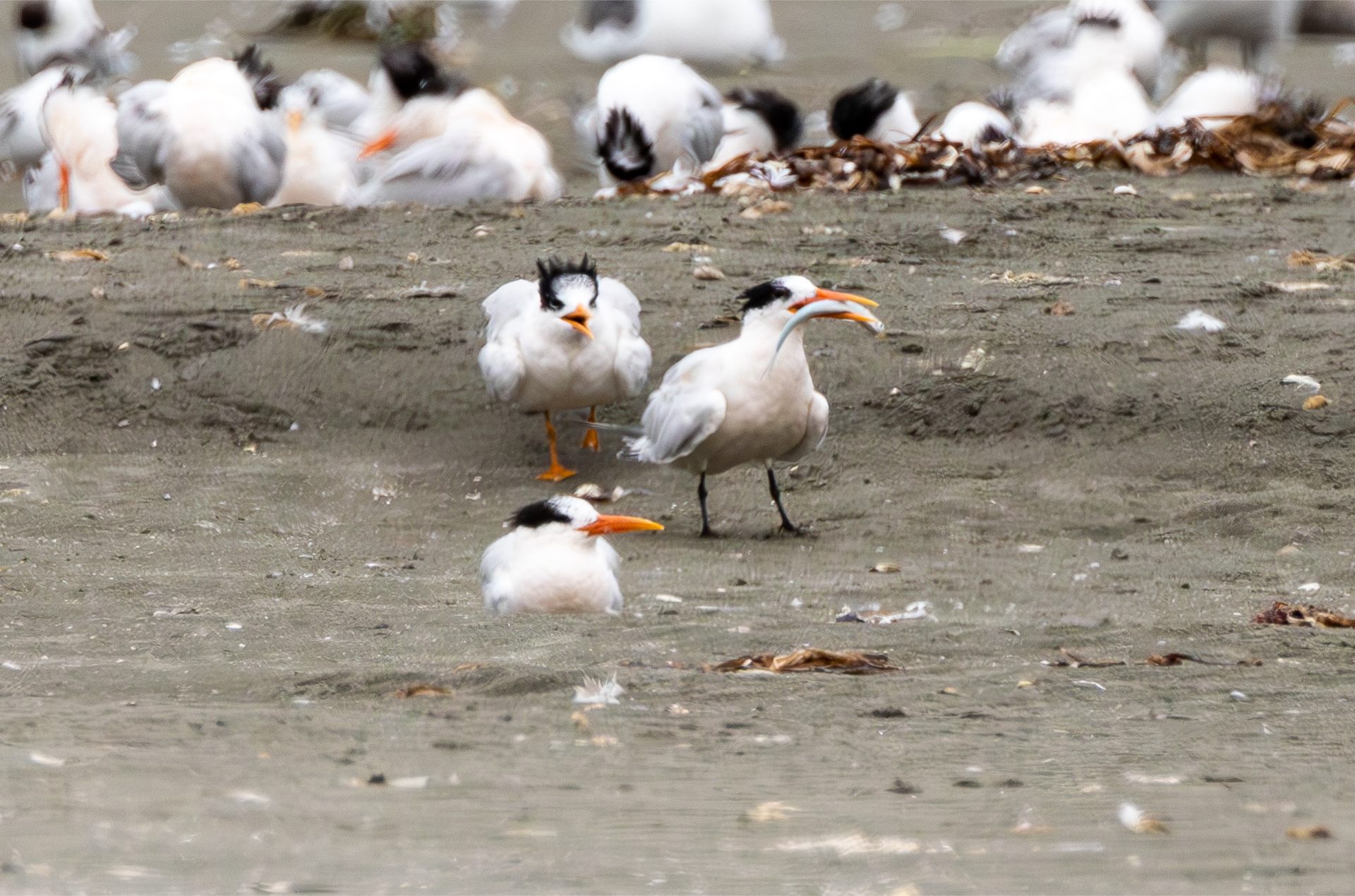
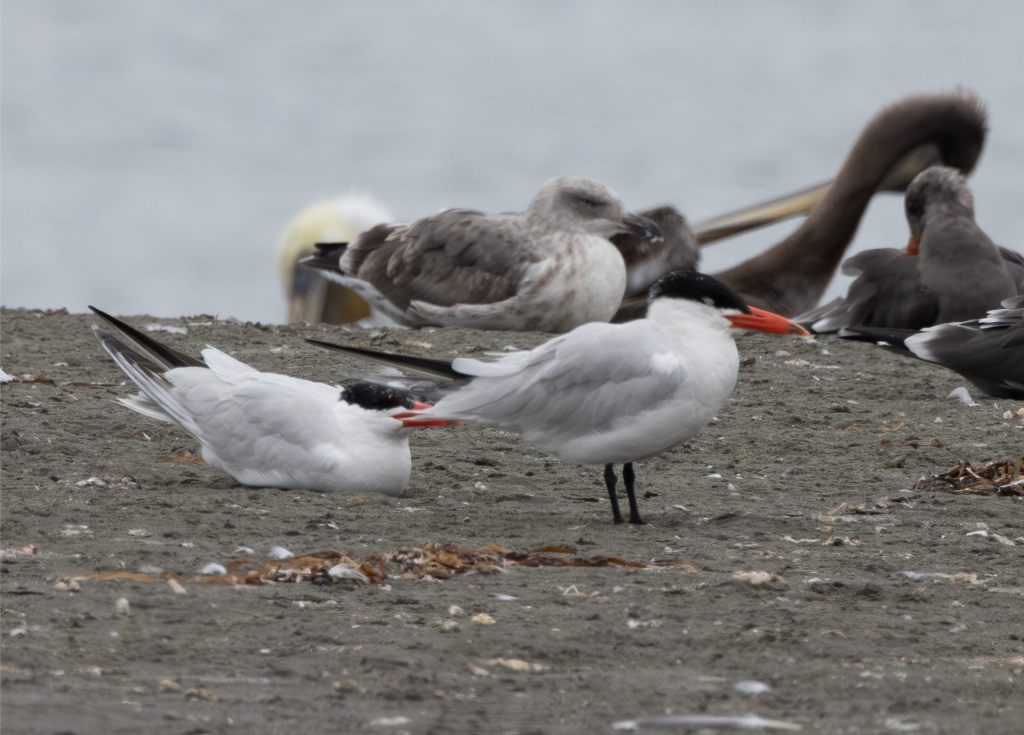
The world’s largest tern is the Caspian, and it is found on every continent but Antarctica. In September, Caspians, with their bulky appearance and stout neon red bills, have finished their breeding season and are starting to thin out as they begin to head south for the winter.
Common Terns are medium sized and are technically rare on this side of the North American continent, but a few of them each year are not unexpected. This year, there have been hundreds of them, making them close in number to the Elegants.

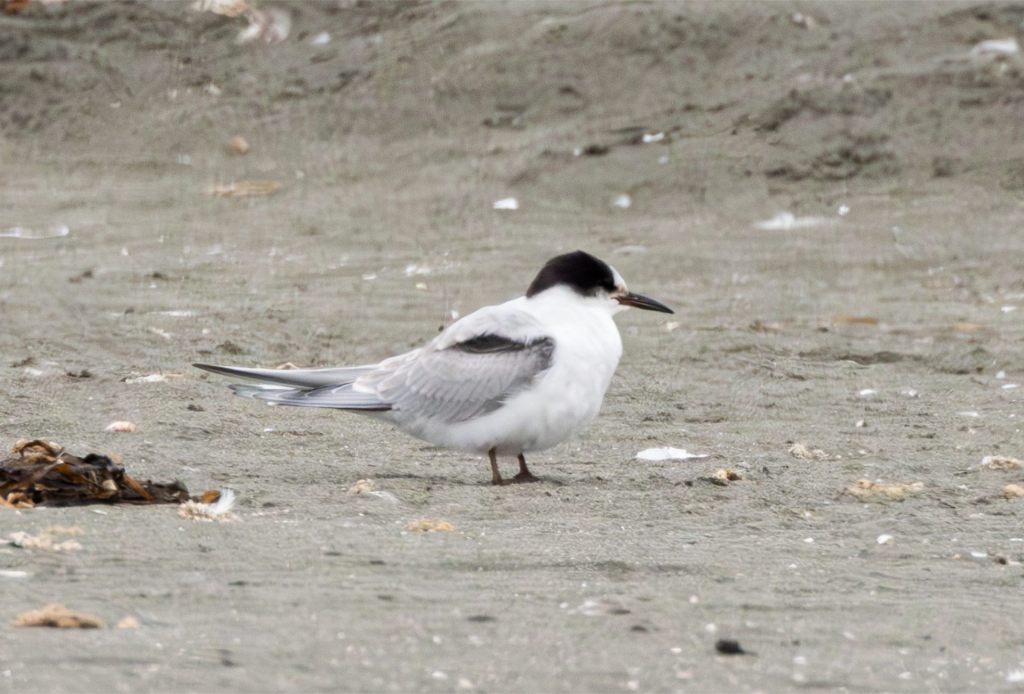
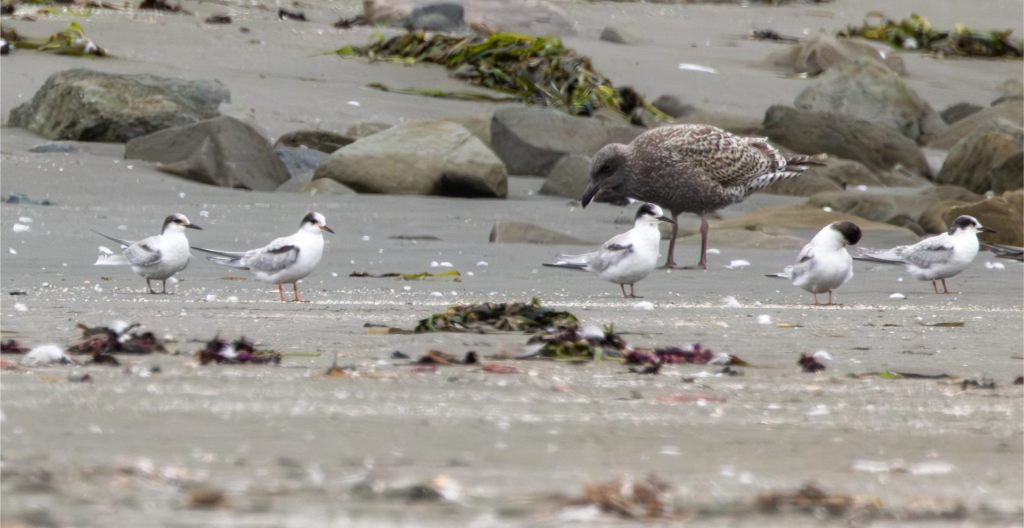
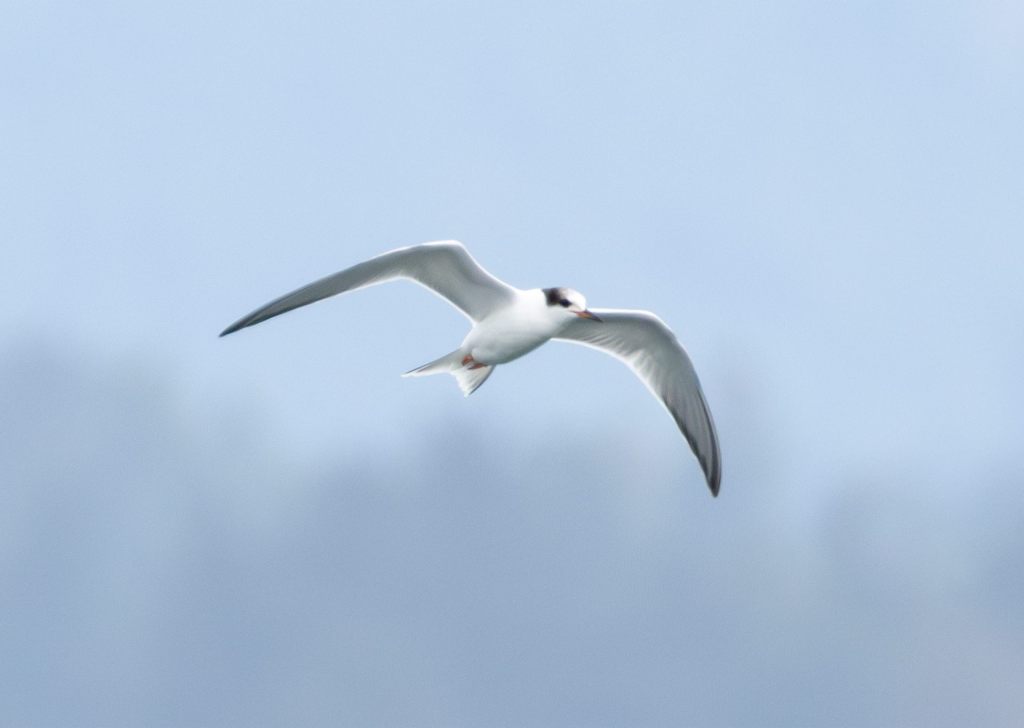
Forster’s Terns, also expected but technically rare here, can be told in the non-breeding September plumage by their isolated black eye patch which differs from most other tern species whose black cap recedes into a Wallace Shaun-like do, forming a black ring around the back of the head.
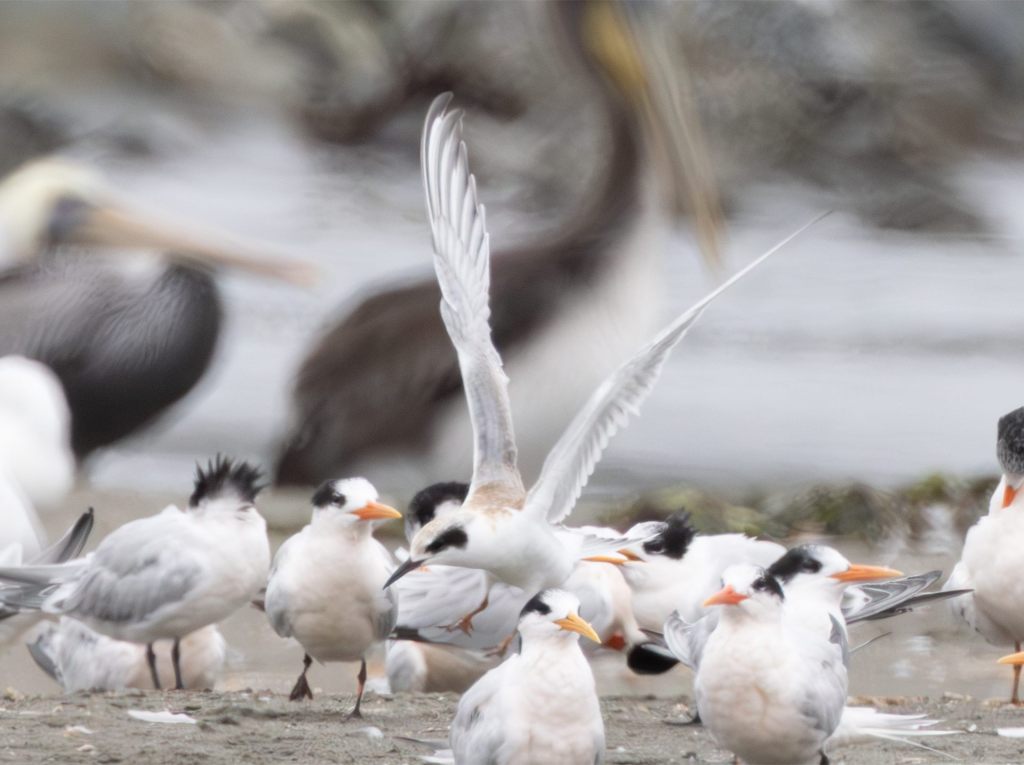
Arctic Terns are famous for making the longest migration of all bird species. After breeding in the far north, they travel over 18,000 miles to the Antarctic to summer there. The Arctic Tern seen several times this September in the little cove on South Spit had a leg deformity that made me wonder whether it would be able to complete its odyssey to the South.

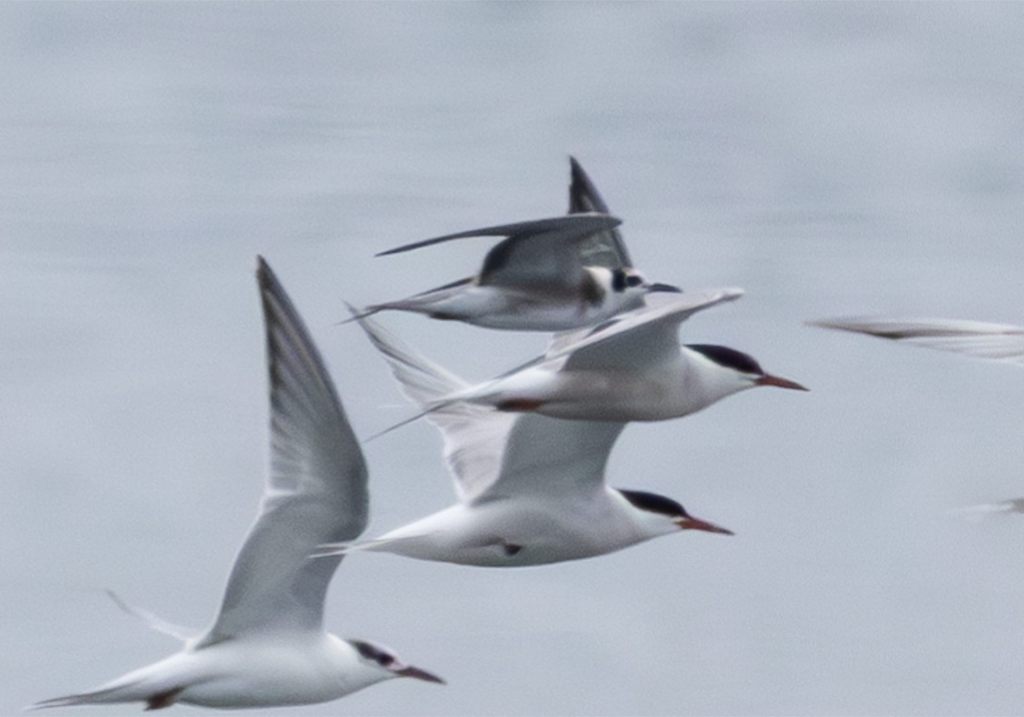
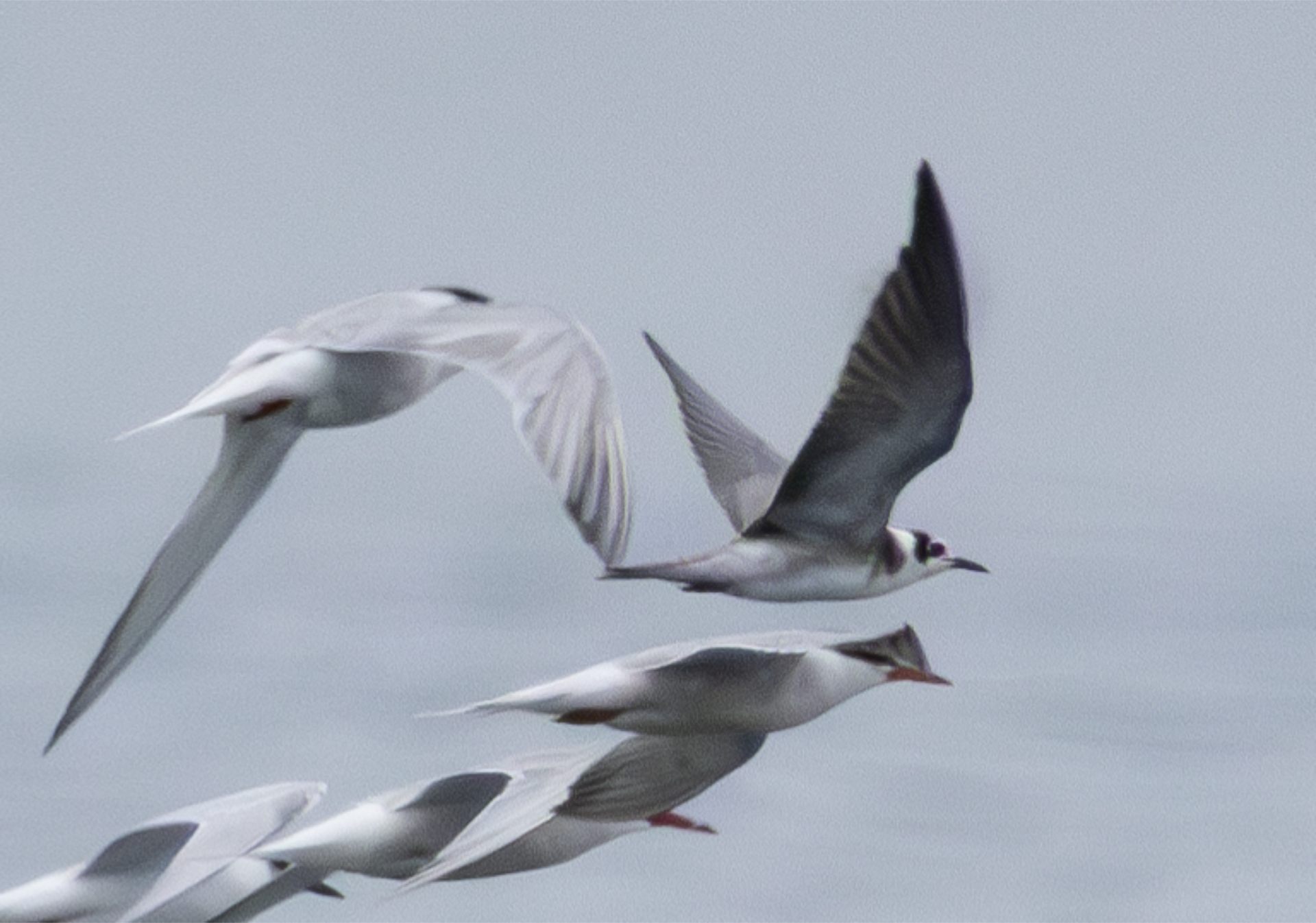
The Black Tern, second smallest of the whole tern family, is a skimmer of fish rather than a plunge diver, and also eats aquatic invertebrates and insects. It is an unexpected rarity in Humboldt, although the bird is not hard to find in its normal inland range throughout much of the northern US. In breeding plumage the head and breast are jet black, but in September the Black Tern that showed up in Humboldt had darkish wings, but white head and neck with distinctive facial markings. For some reason, the Black Tern was not very welcome among the other terns who roosted peacefully together. I even saw the little Black Tern being picked on in a flying group of Common Terns.
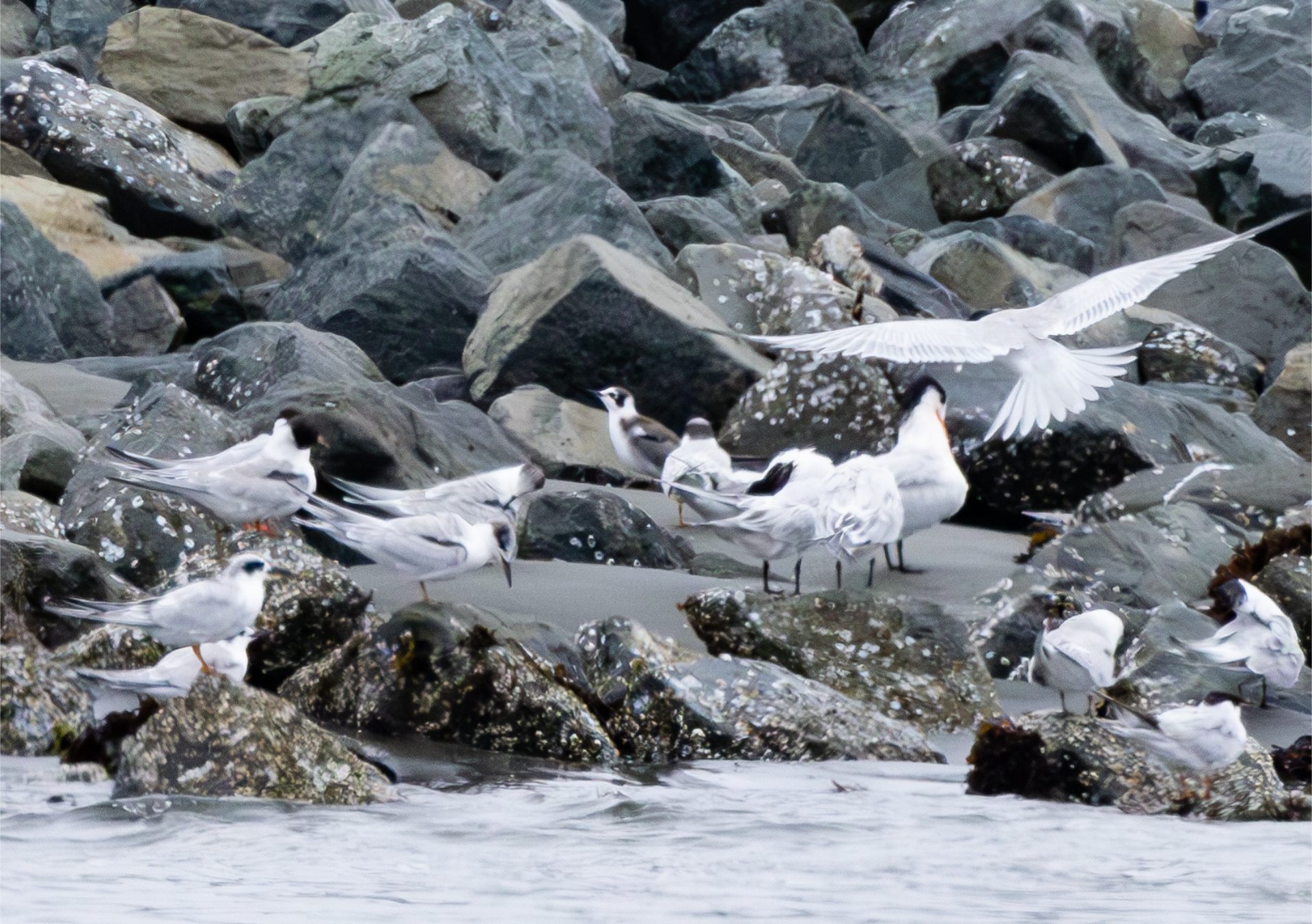
This video will give you an idea of the sounds and activity level of this huge group of several hundred terns. You will also see Brown Pelicans, Heermann’s Gulls, Western Gulls, and a couple of Marbled Godwits.
“A time for Peace, I swear it’s not to late.” –Pete Seeger

 Free Range Photography
Leave a reply to Kym Kemp Cancel reply