It’s getting late in eagle season, and this may be the last report from the nest until November or December when refurbishments begin for the 2026 season. I thought I would share below some of the other residents of the Benbow Valley that I am lucky enough to observe in between glimpses of the eagles.
A friend told me she had seen one of the eagles in the vicinity of the Benbow nest on August 2, so I figured there was a decent chance there would still be some action around the nest when I went up two days later. When I arrived shortly after dawn, however, I neither saw nor heard any sign of anyone from the family. An hour or so passed, and at last I heard the crying juvenile, somewhere around the nest, but not in it. The crying persisted for a long while.
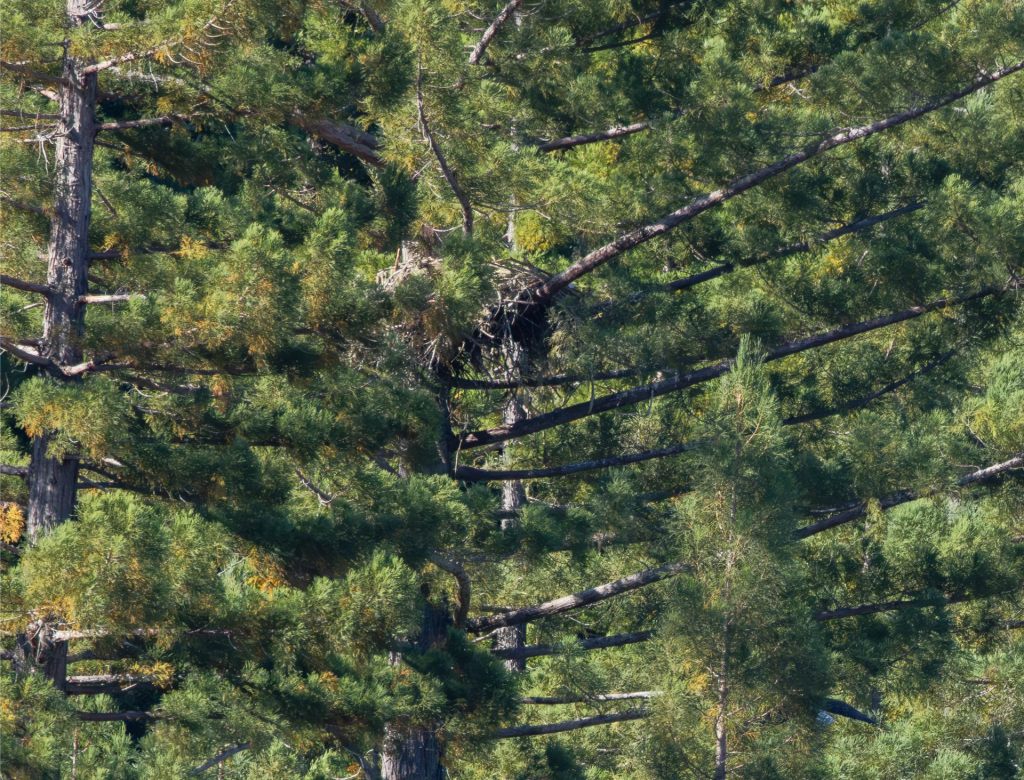
Not long after hearing the youngster I saw one of the adults flying in to the nest with some kind of prey. On close examination of the photos I believe it was a fish and possibly a Pacific Lamprey. The adult made the delivery and shortly thereafter flew off. I expected the juvenile to show up soon, but it was not until a second visit by one of the adults that the juvenile arrived, making a bit of a crash landing and hollering with even greater intensity as it did so. There were a few seconds of chaotic flapping as the young eagle laid claim to the food and the parent got out of the way and took leave of the nest out the back door.
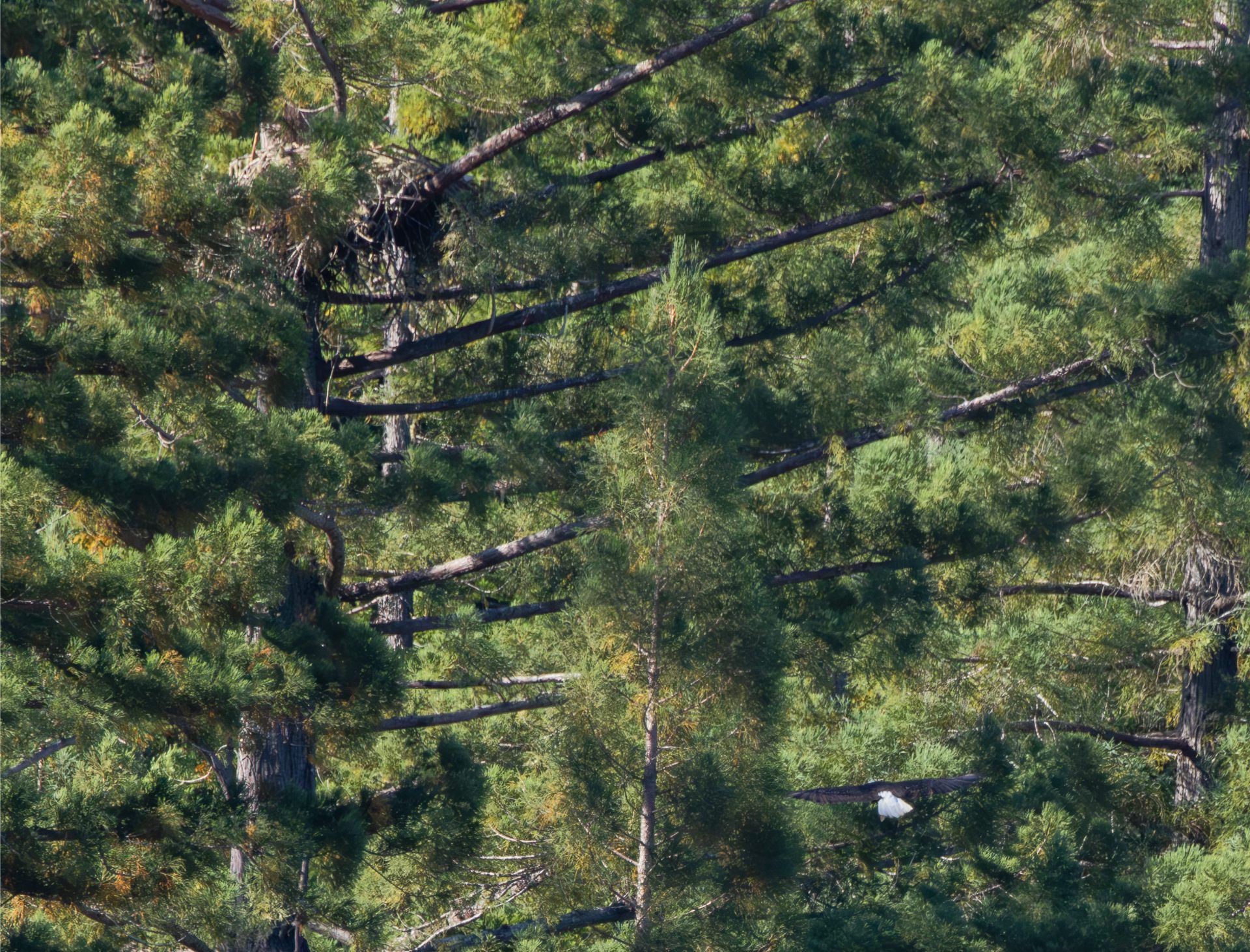
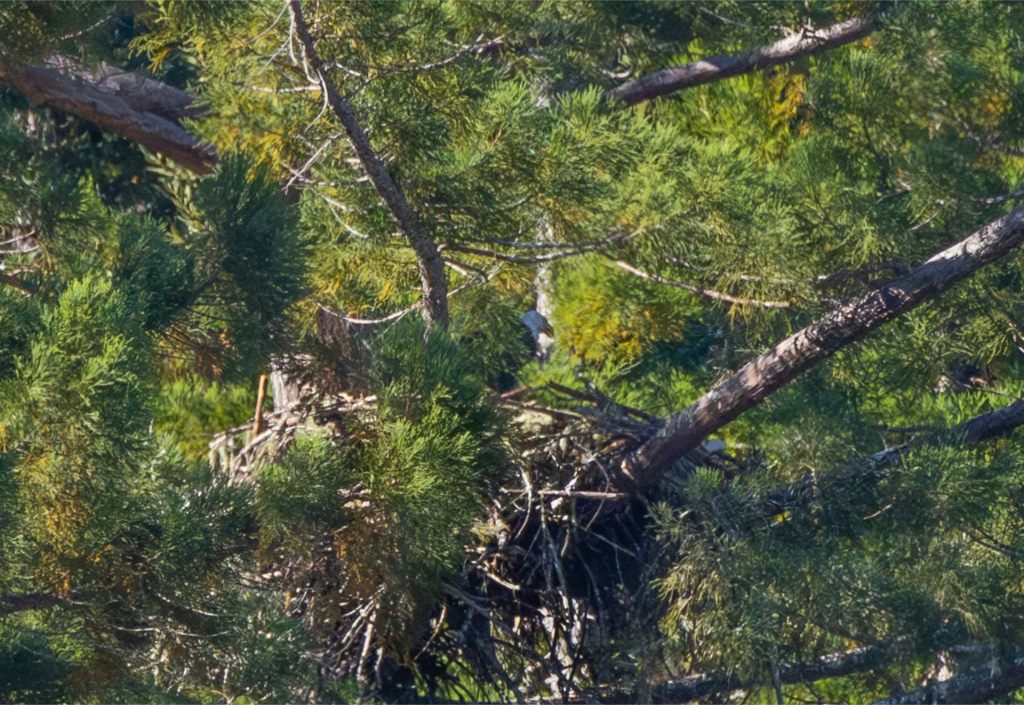
The branch that blocks the view of the center of the nest did its job well, but the juvenile could be seen well enough to be eating, occasionally pausing to continue sending up loud cries as it picked at its meal.
Over the years, we have observed this phase of the eaglets’ development to be variable. I have seen prey brought to a branch 20 yards from the nest to encourage flight out of the nest. I have seen the youngster eating 100 yards upstream from the old nest, perhaps because the juvenile was stronger at flight, and I have seen what I saw this day, a nest delivery. I assume the trajectory of maturity is not linear and it looks like parent eagles do what is needed for the care of the current year’s youngster. One year I spotted the recently fledged juvenile down at the river being harassed and driven off by a Wild Turkey.
It might be that the family will stay in the area a few more weeks as the juvenile will be dependent on its parents for meals for 5-10 weeks after fledging, which in this case, happened a couple weeks ago. Whether I see them again or not this season, it has been a thrill that never fades with repetition to witness the new life being brought into the world, cared for with the utmost tenderness, and ultimately asserting itself beyond the nest.
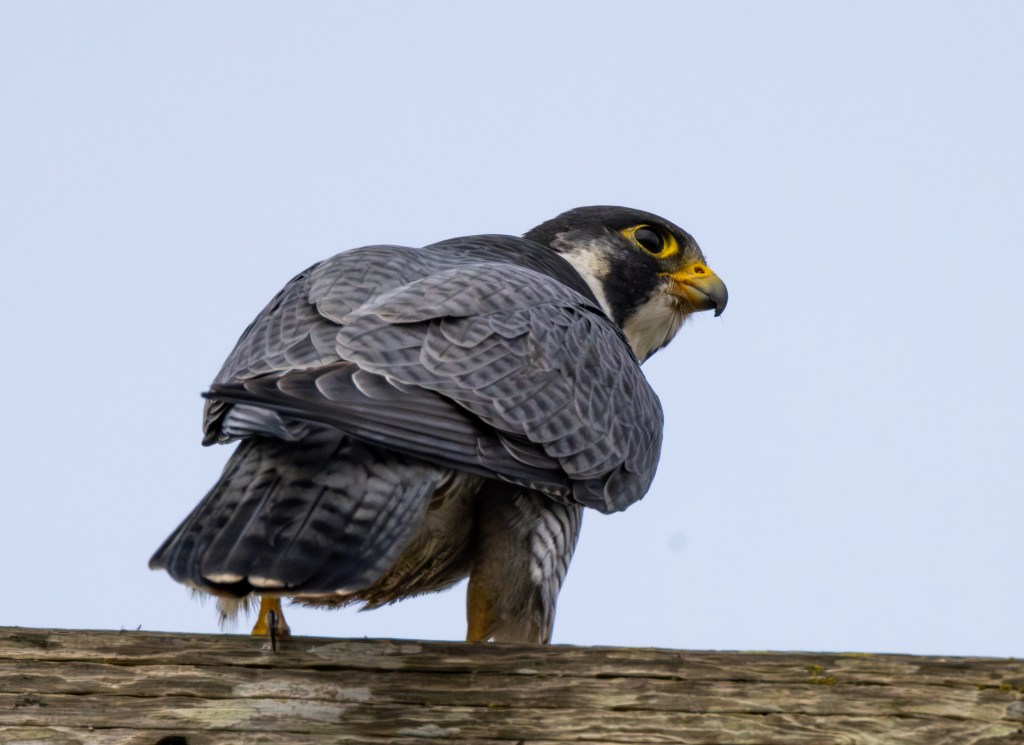
Here are some of the other most common creatures I get to watch going about their lives. A pair of American Kestrels has been raising a family every year in the same general area as the Eagle nest.
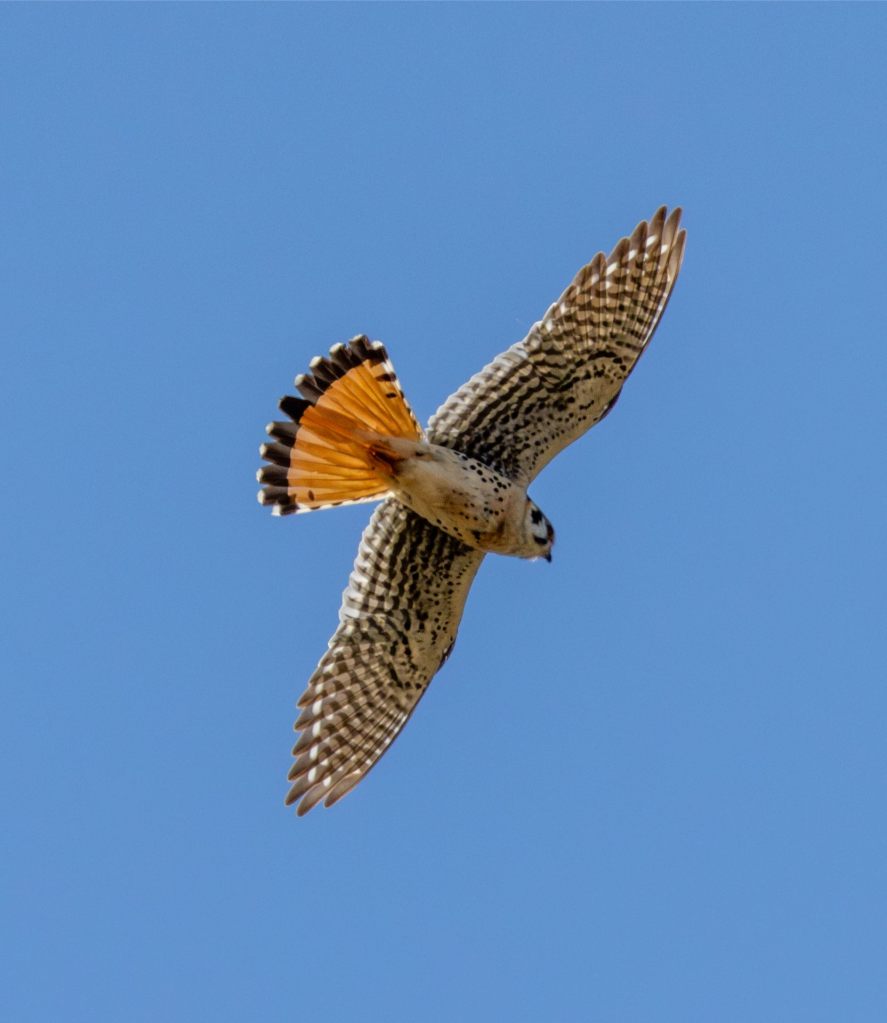
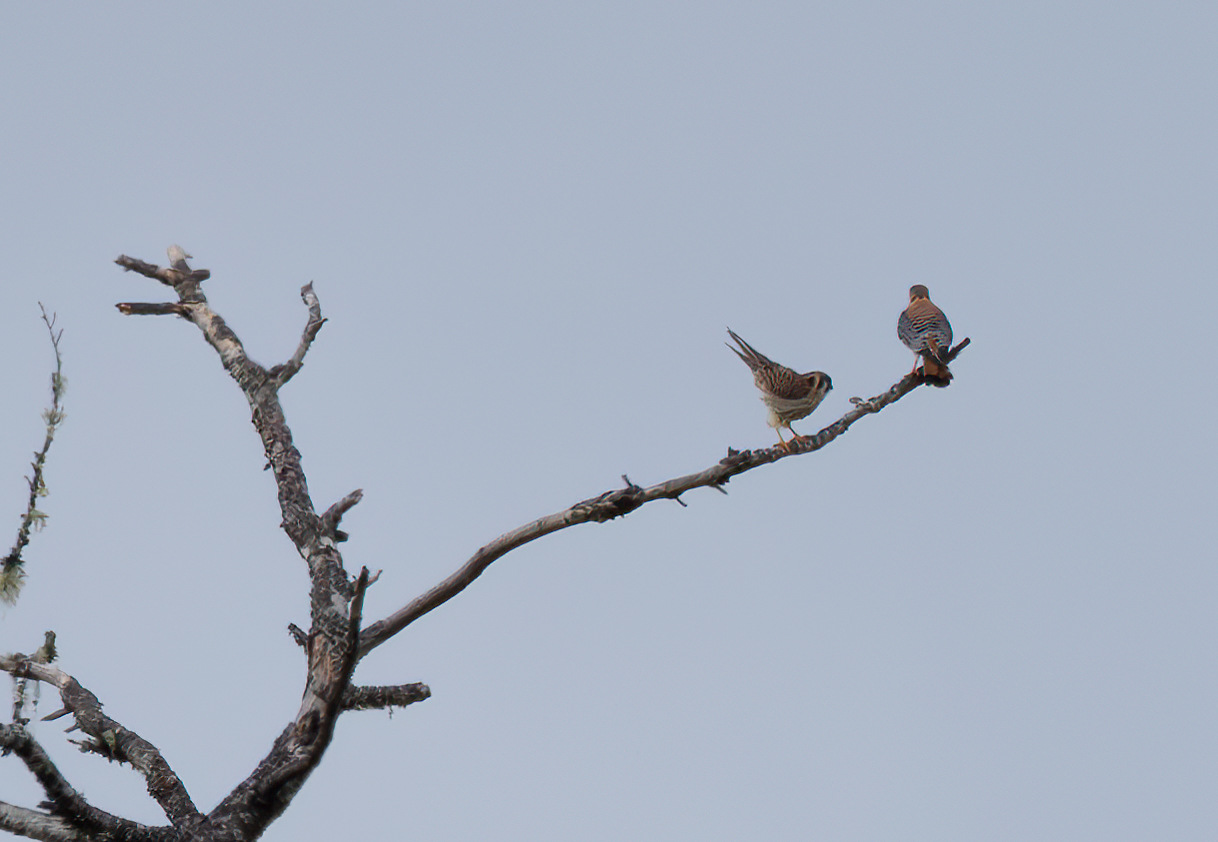
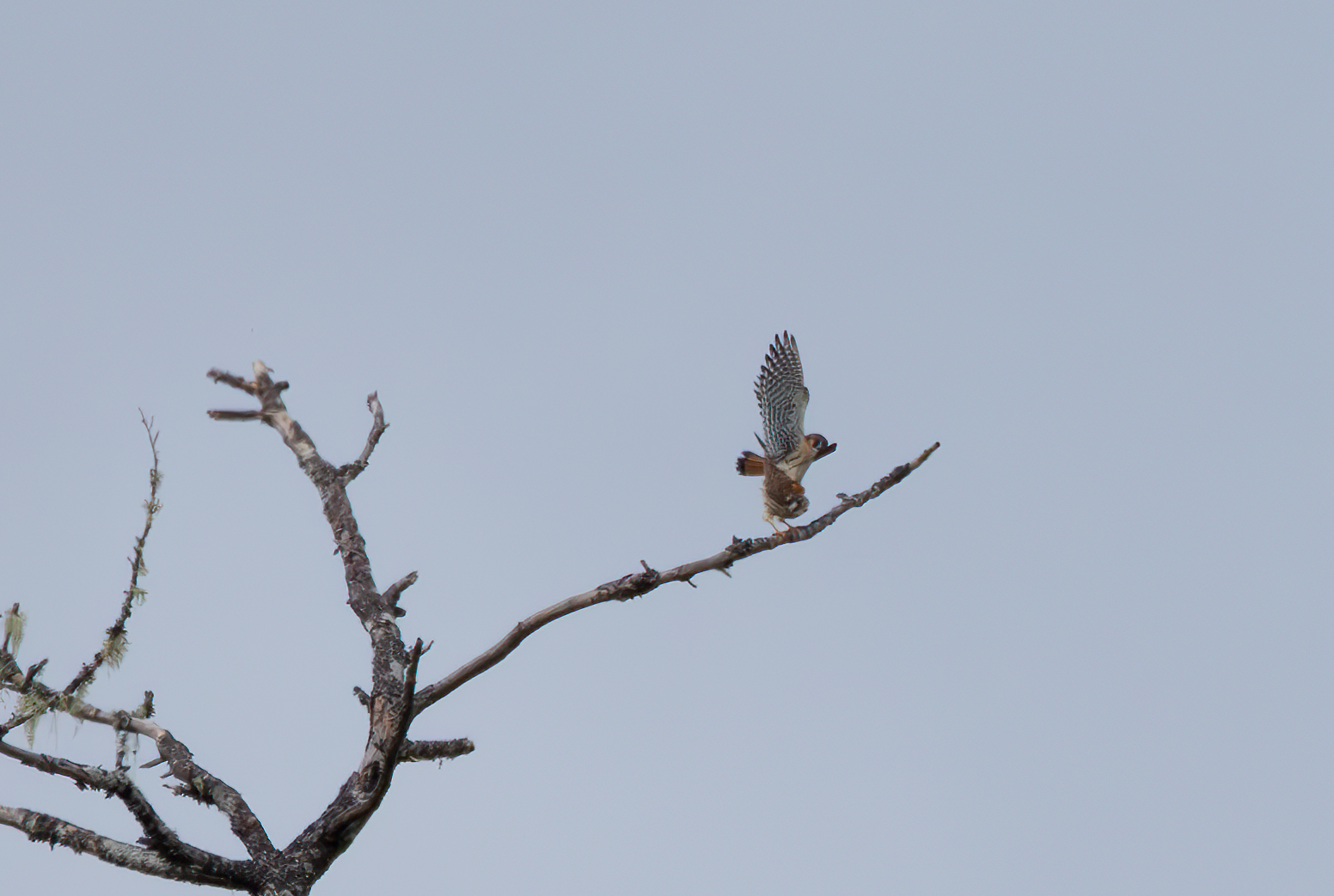
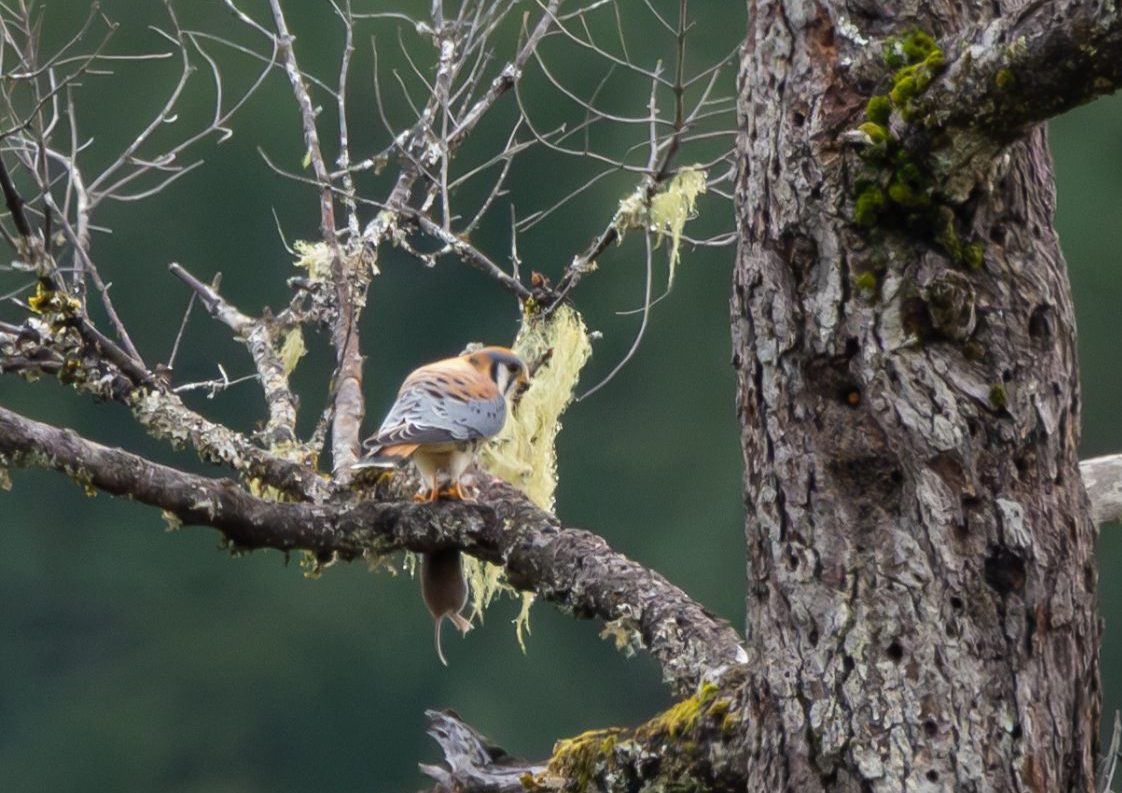
Kestrels are our smallest falcon. They will take prey as small as a grasshopper and as large as a vole, the latter weighing nearly half of what a Kestrel weighs.
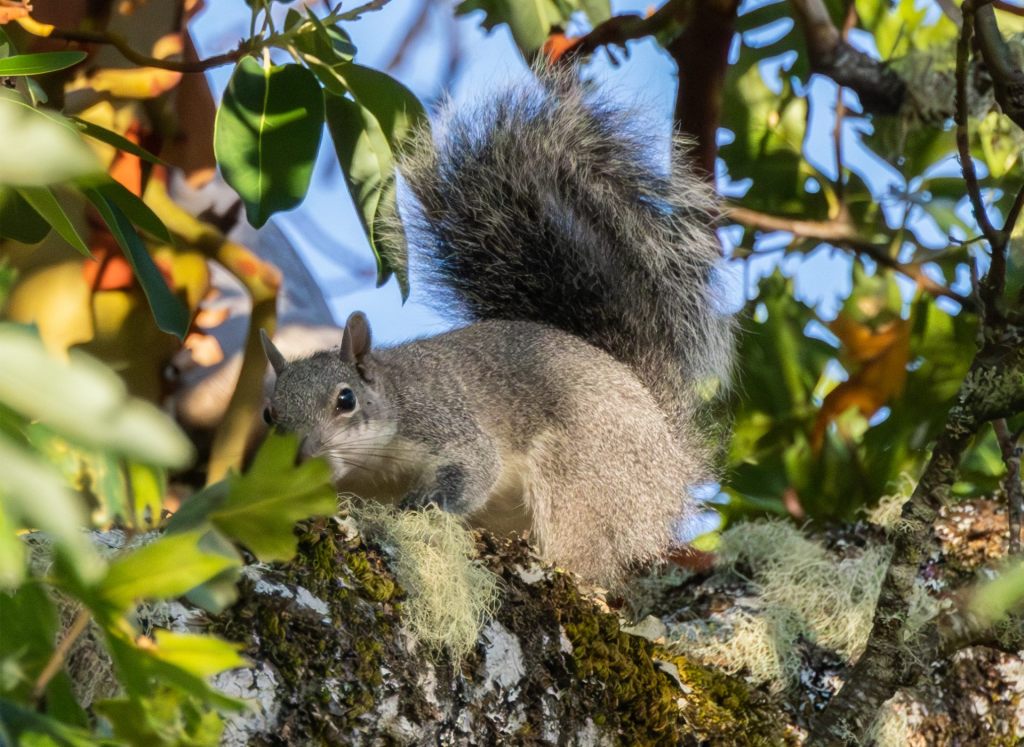
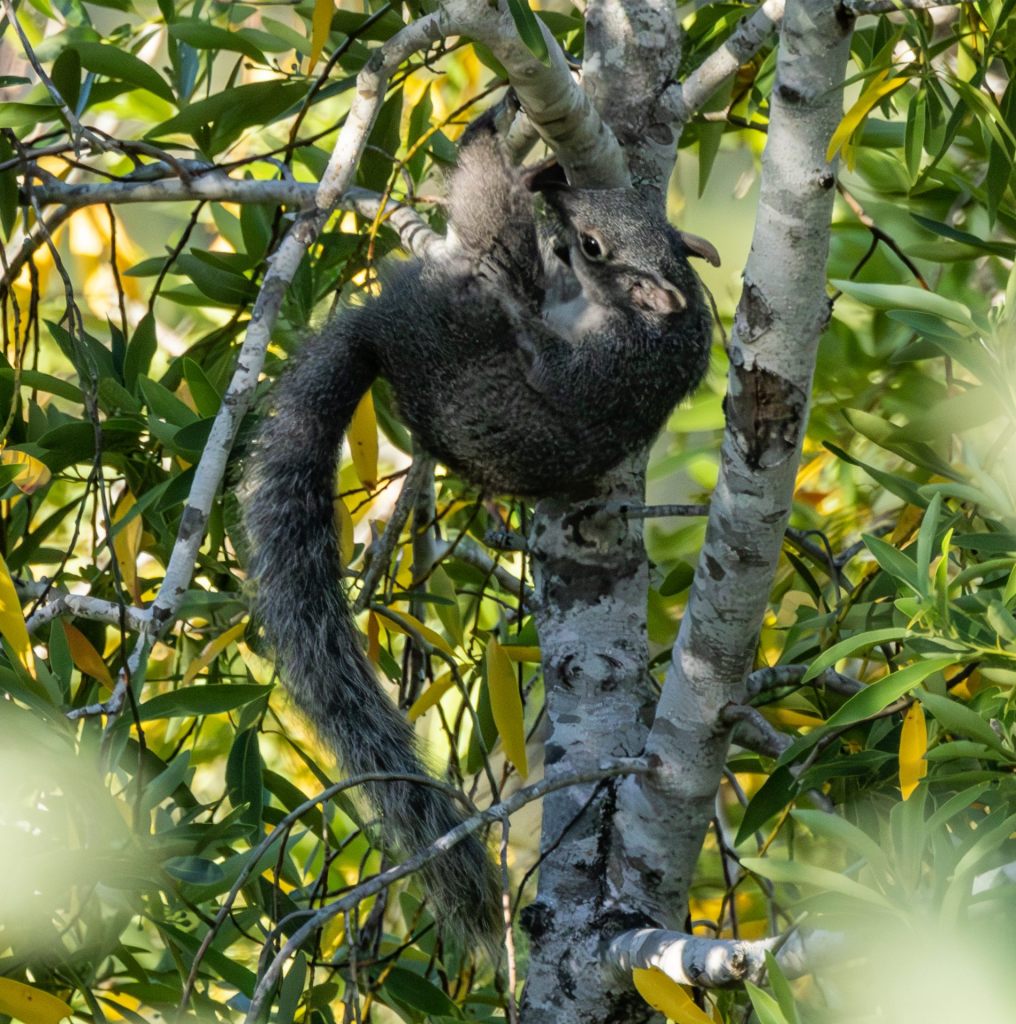
I nearly always hear or see a California Gray Squirrel while awaiting action on the Eagle nest, and for whatever reason, the watching spot for the new nest the eagles used this year gives me more intimate looks at this tree-climbing, acrobatic, bushy-tailed rodent.

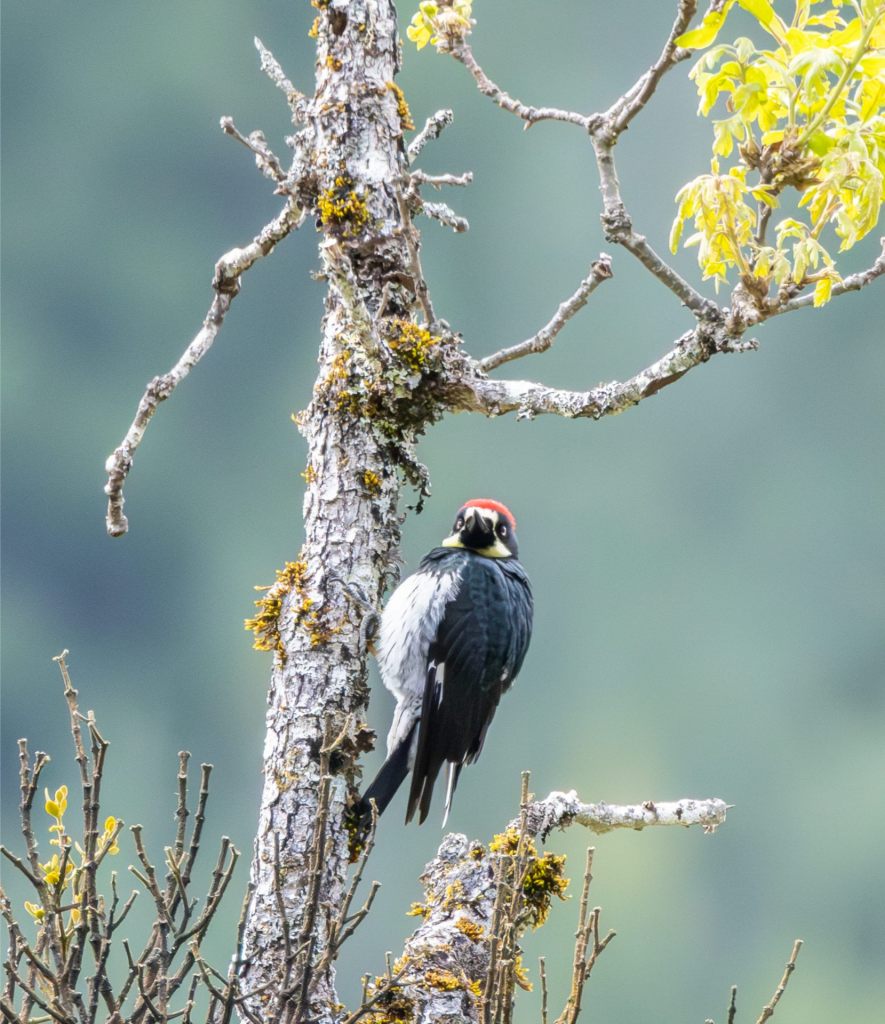
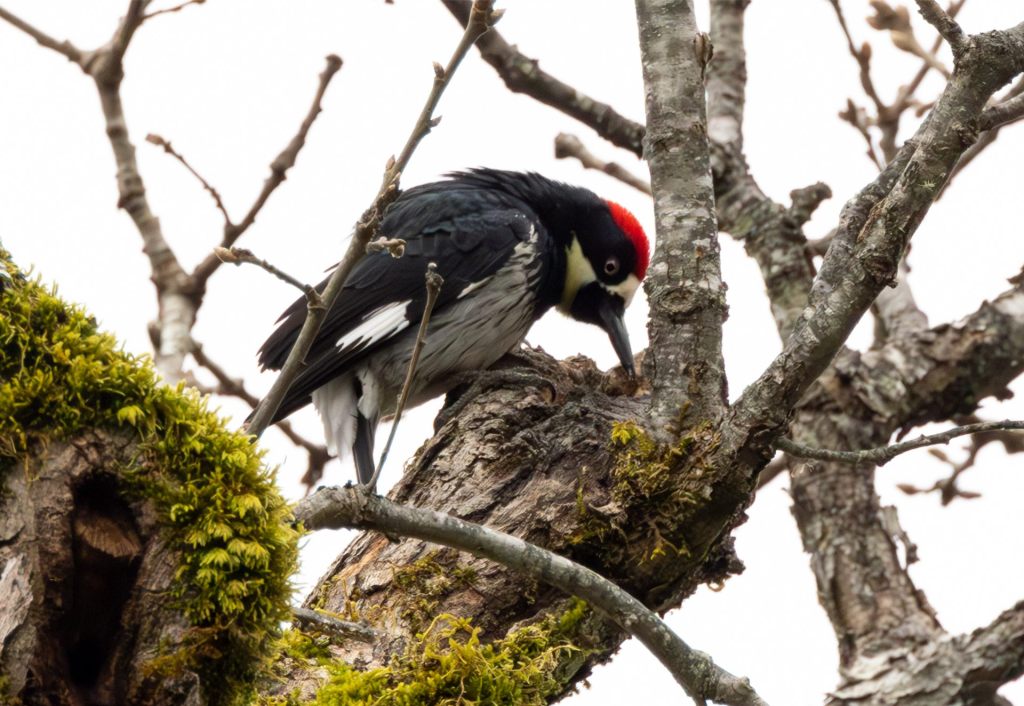
And most reliably observed of all are the Acorn Woodpeckers. These clown-faced birds live in communities and share family responsibilities. They are known for caching acorns in holes drilled in dead trees, but they also catch insects on the wing and will visit backyard feeders to scarf seed. Their loud and varied vocalizations are one of the first things I hear every time I make the trek up to the eagle nest.


 Free Range Photography
Leave a reply to latskojerry Cancel reply