The first day of summer, 2025 was a memorable one. On my visit to the river I saw or heard 59 different species of birds, many of whom were the usual suspects, but some of whom were surprises, suggesting the shift in activities from spring to summer. Once nestlings are present, parent birds can be seen more readily as they search for food to feed their families.
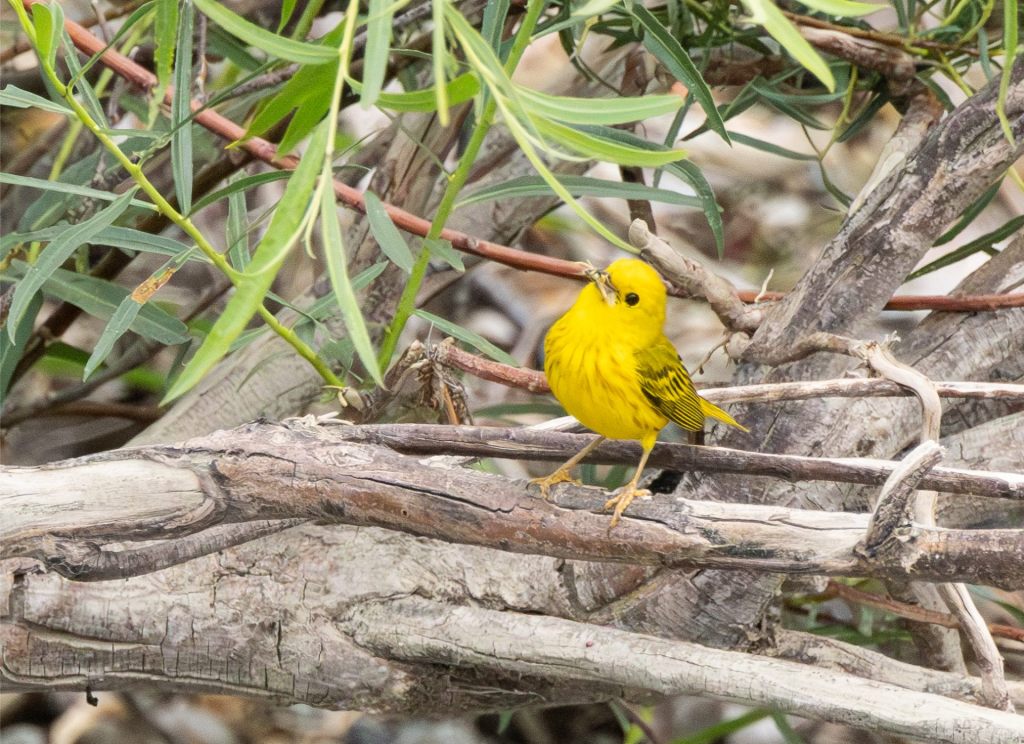
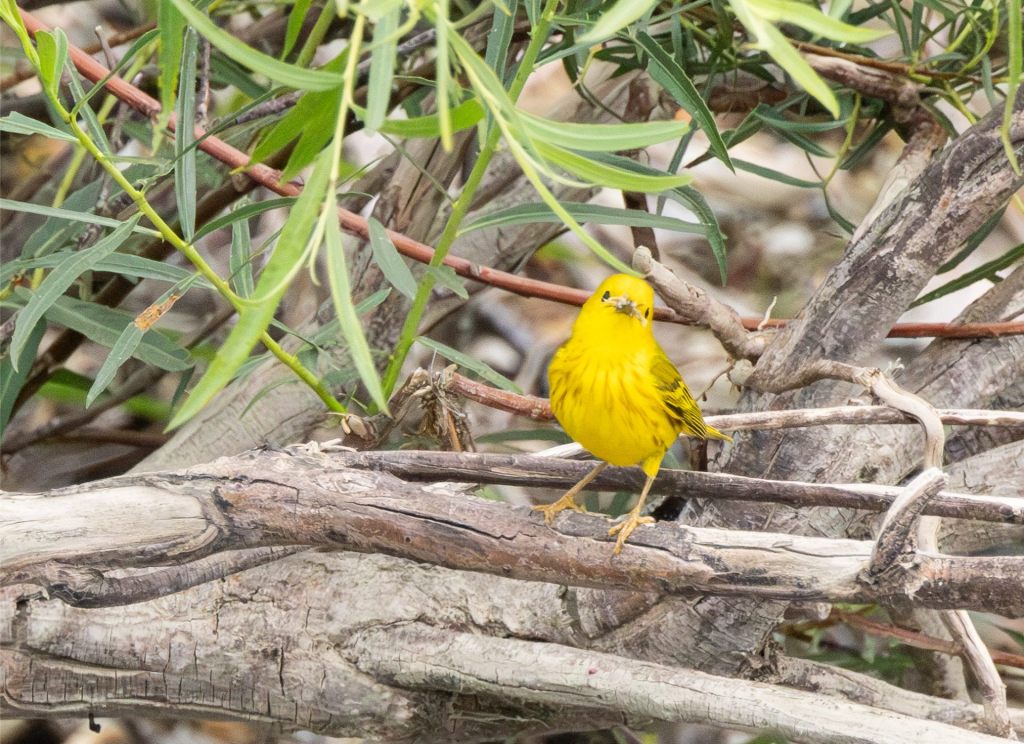
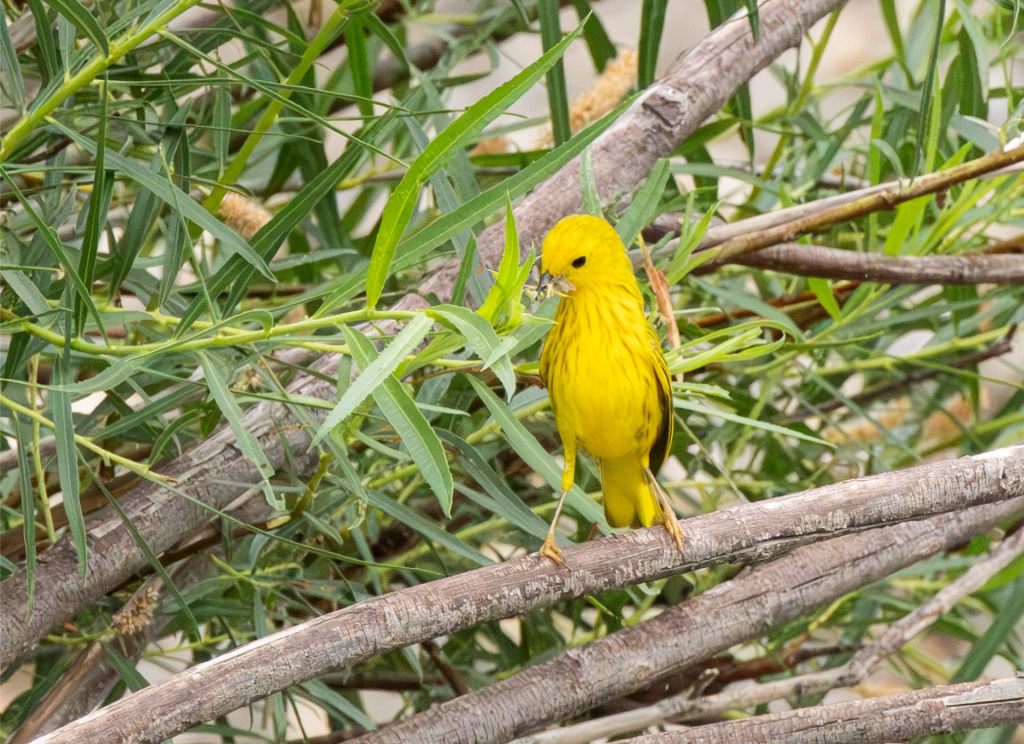
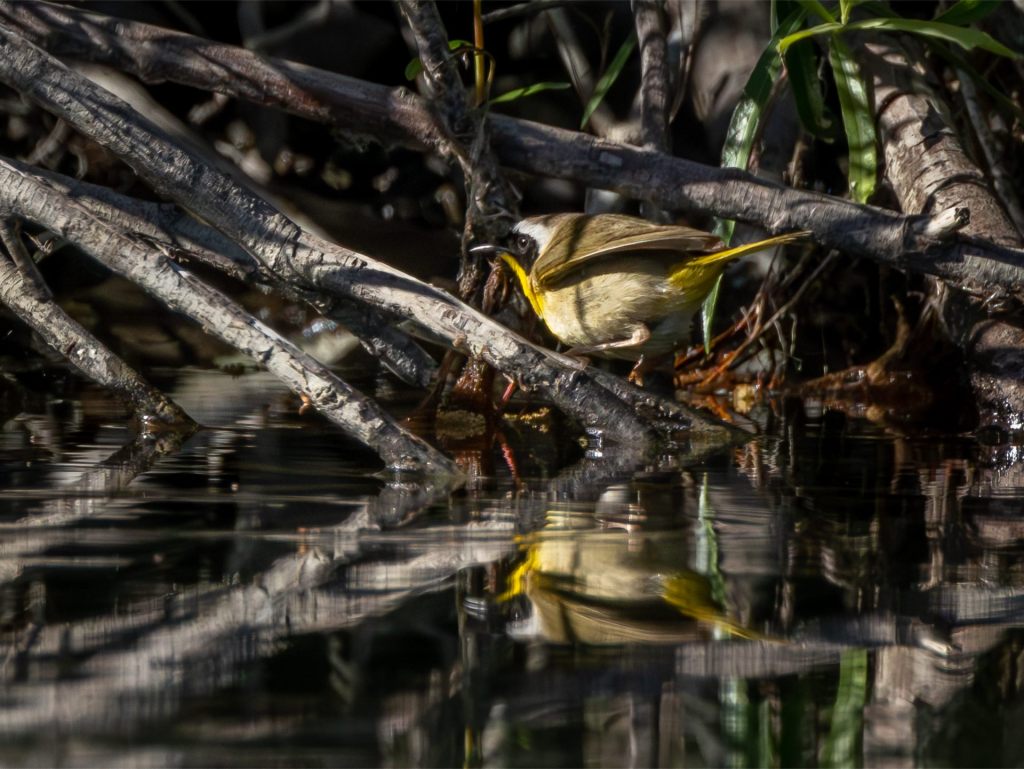
The morning began gloomy and dark and the first activity I observed was a bright male Yellow Warbler flitting around in the willows gathering insects for his young back in the nest. Maybe the cool temperatures made the bugs sluggish and easier to capture, but I saw him make several passes through the dense brush, stuffing as many tiny creatures as possible into his bill.
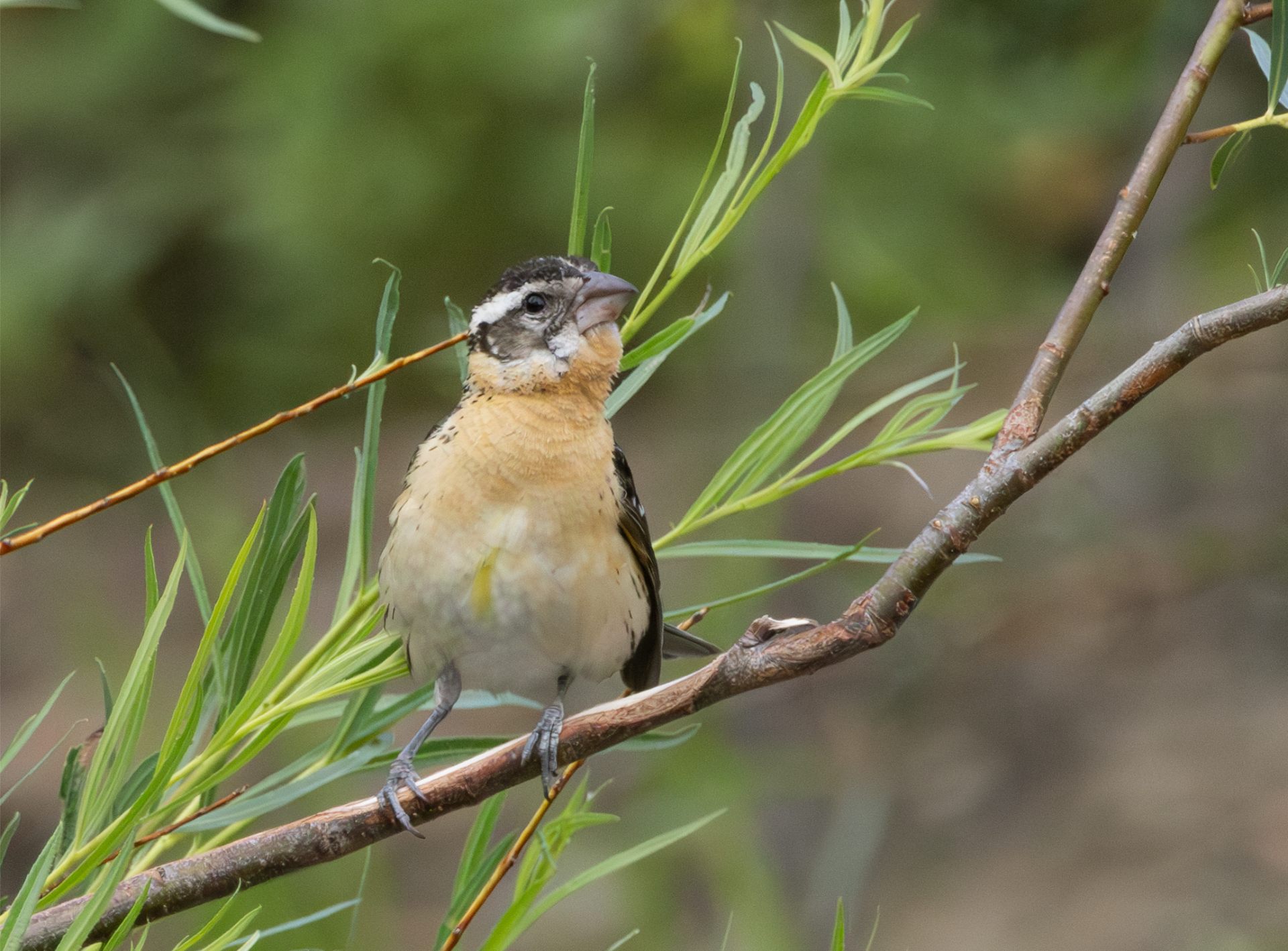
Along with the warbler were a couple of Black-headed Grosbeak families out with recent fledglings, showing the youngsters how to forage for food. Young birds are often recognizable by their lack of fear or skittishness as they move about in their new world, unafraid.
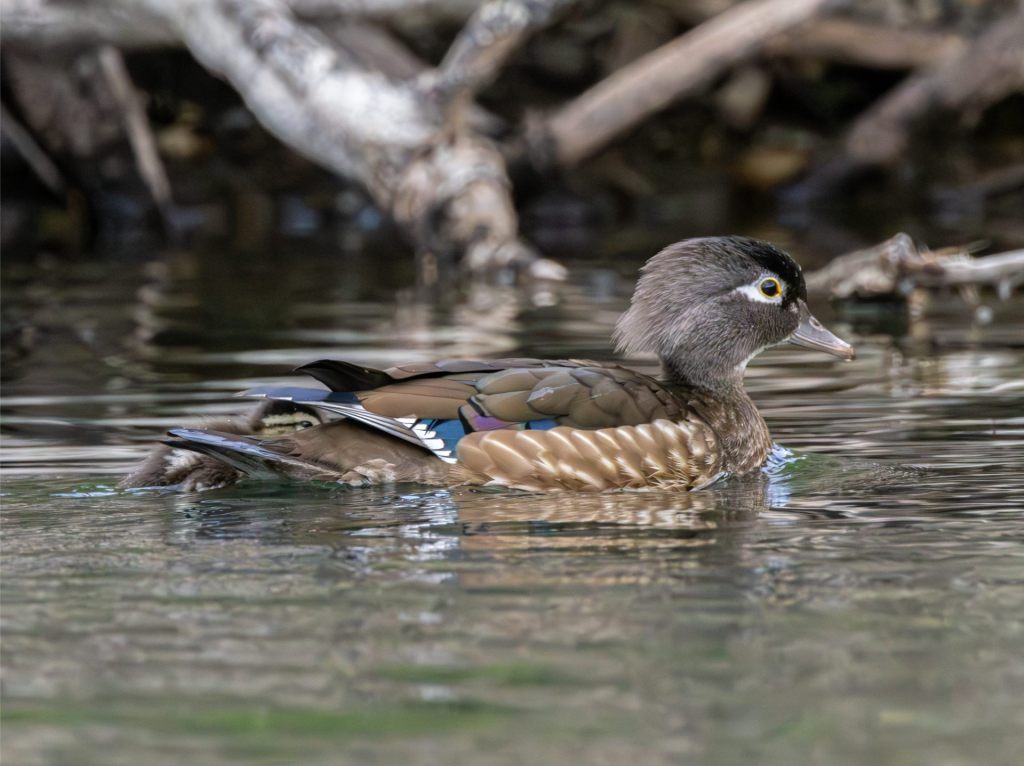
Then I heard the steadily repeated sound of a distant Wood Duck. Kind of a cross between a cluck and a whistle I was soon able to see a female Wood Duck slowly making her way in my direction from about 50 yards downstream. As she got closer I realized she had one tiny duckling with her. The two of them zig-zagged through the willow branches that dipped into the water, grabbing morsels of nutrition off of leaves and branches. Mom’s vigilance made me wonder if the little one with her was the last of many more her brood had begun with.
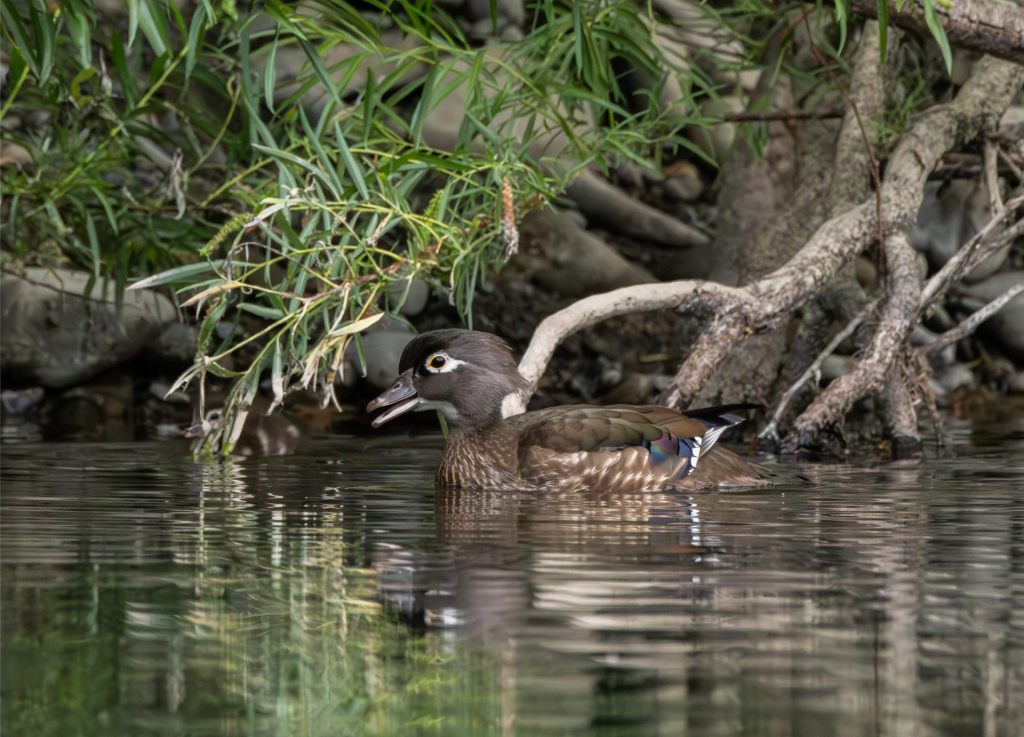
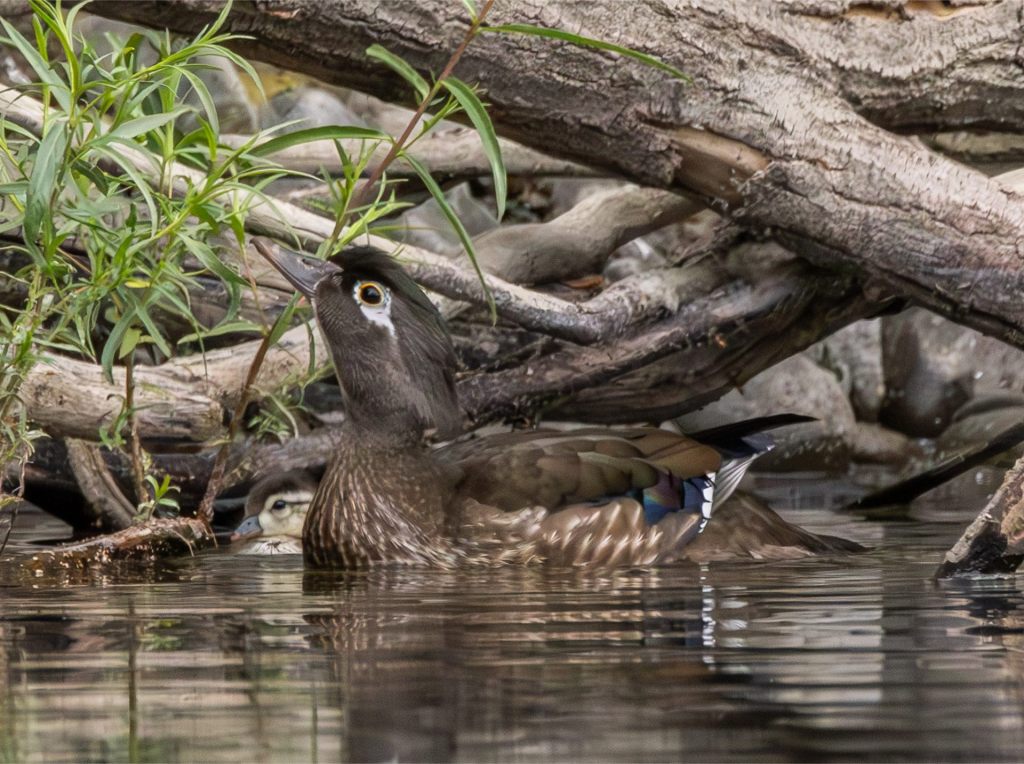
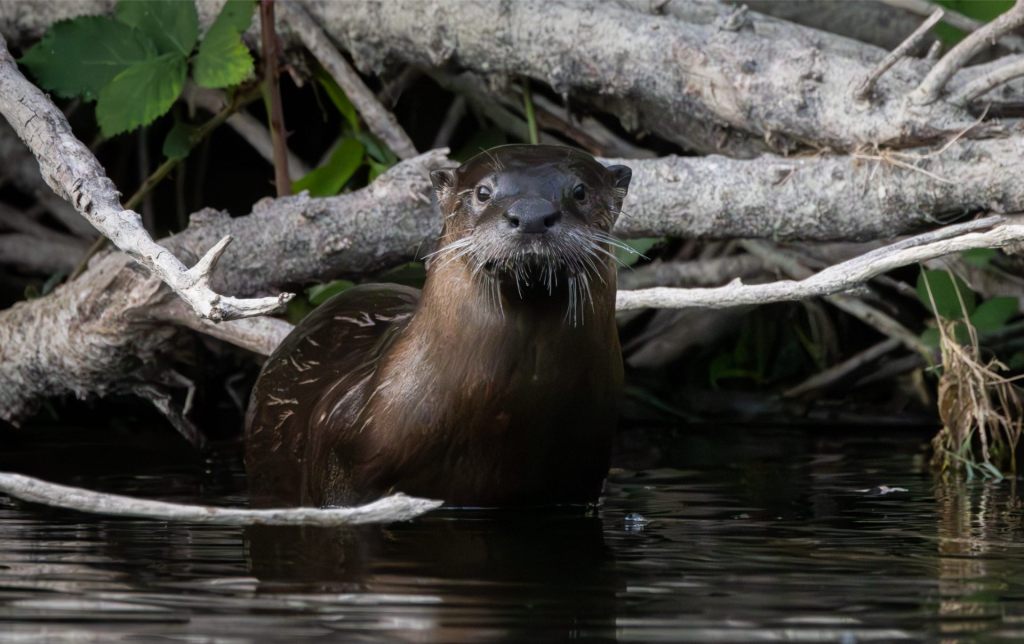
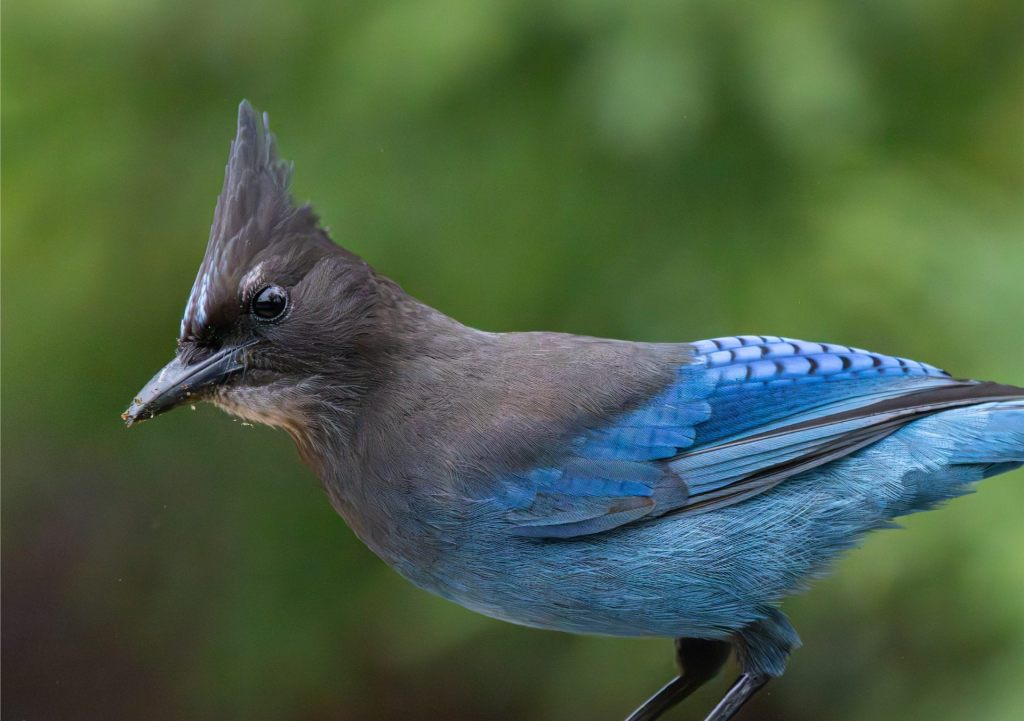
They carried on moving past me, slowly upstream through calm water until at some point the hen flew off, seemingly abandoning her duckling. Soon the lone duckling retreated back downstream and past me again. My heart was in my throat, wondering what might happen to this tiny creature all alone. Steller’s Jays and Ravens were nearby, and I knew the possibility of an otter or mink grabbing breakfast on the go was real.
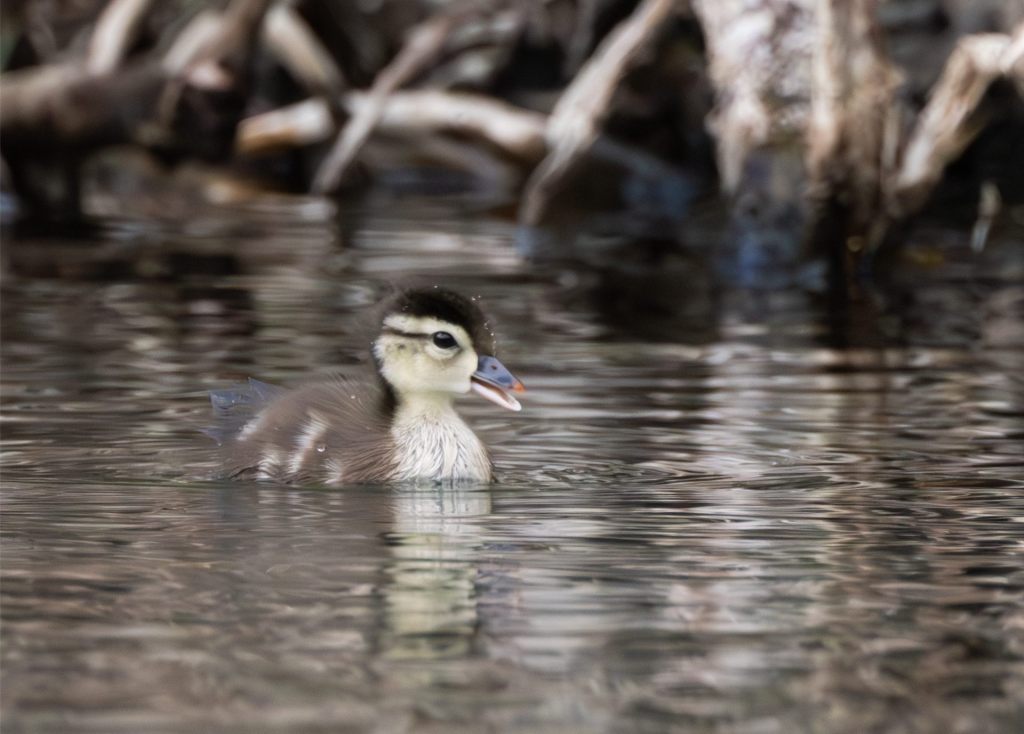

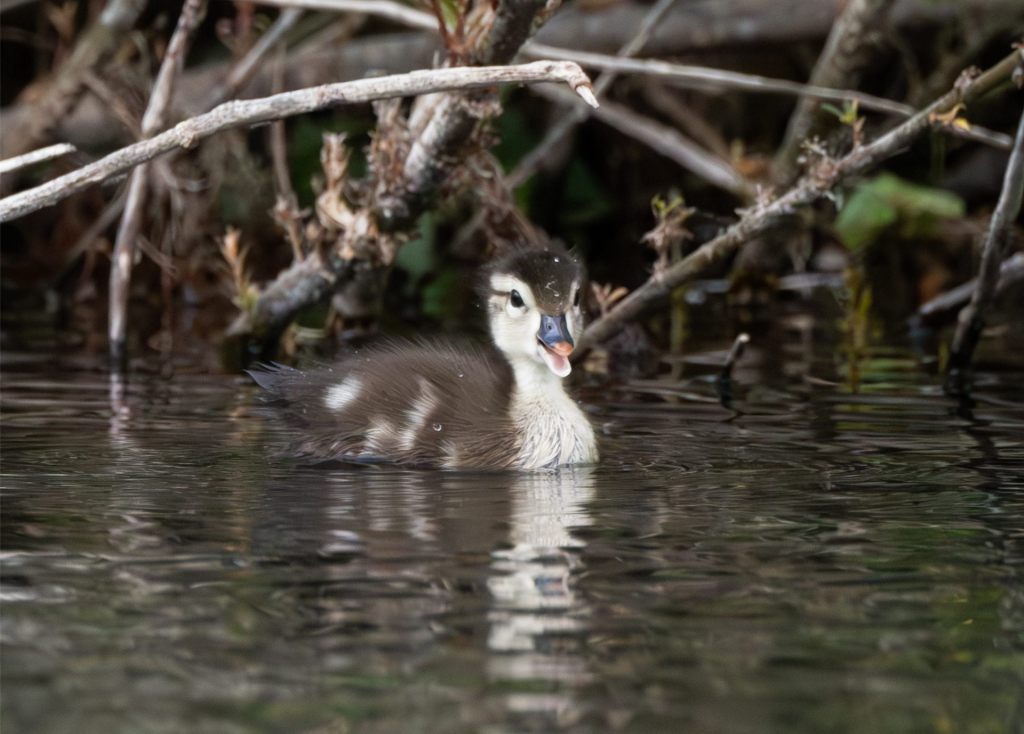
The duckling swam back and forth across my field of view, calling in its tiny voice the whole while, desperately looking for mom. This went on for at least 15 minutes until finally, the mother reappeared from the opposite direction into which she had flown away, paddling fast toward her little one.
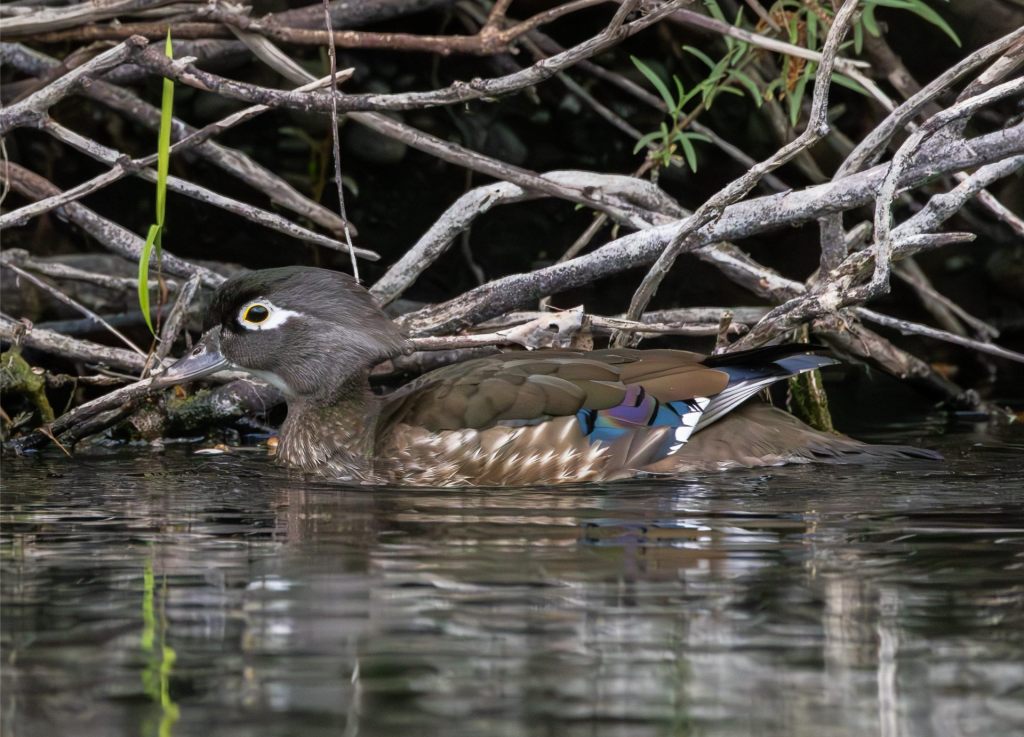
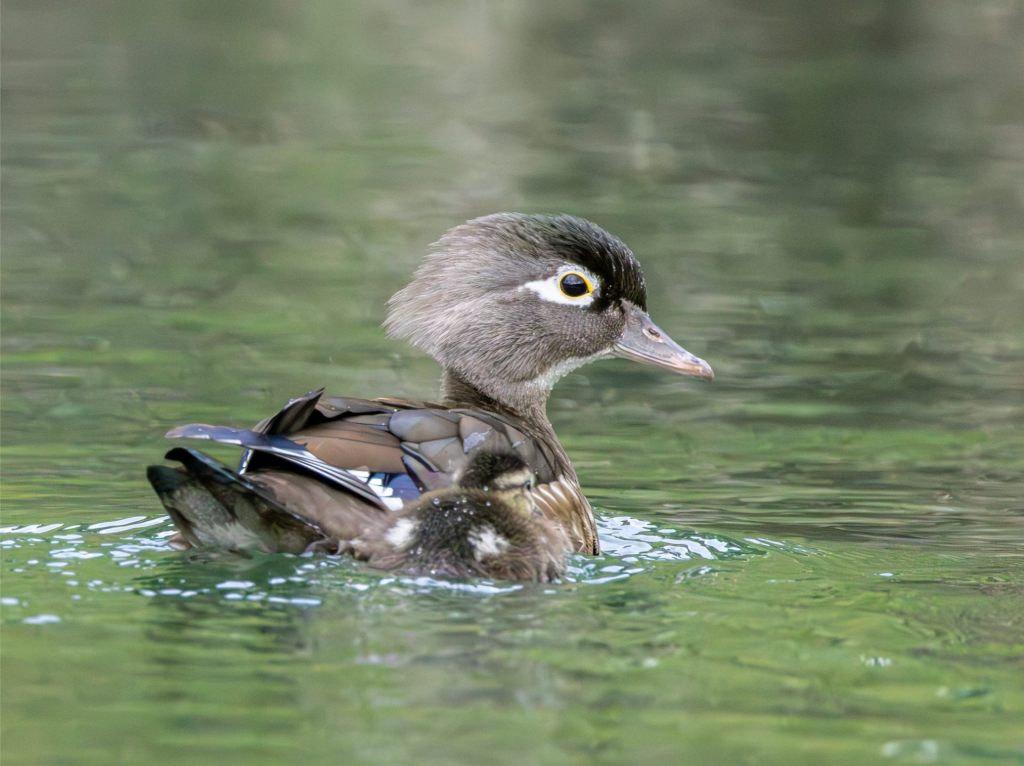
I exhaled fully for the first time in a quarter hour, and turned my attention to other things.
Next I got a couple good looks at Western Tanagers. While these neo-tropical beauties have been among us for well over a month, their persistent, hoarse, not very melodic sounds heard all over, they tend to remain mostly hidden until nesting is well under way, and food must be found for the nestlings.
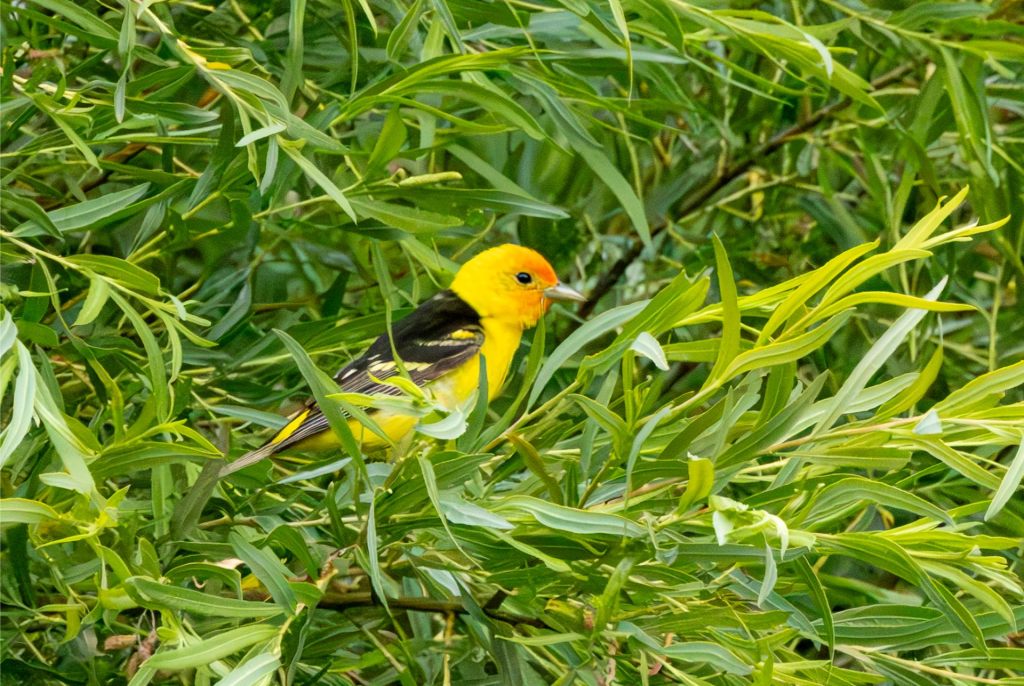
In another few weeks they’ll be even easier to see as they come out with their young, feeding on berries and bugs, fattening up for the long trip south for the winter to come.
The next unusual sighting was of the MacGillivray’s Warbler. This summer visitor from Central America is uncommon for us, but this is the second year in a row I’ve seen one in this same spot by the river.

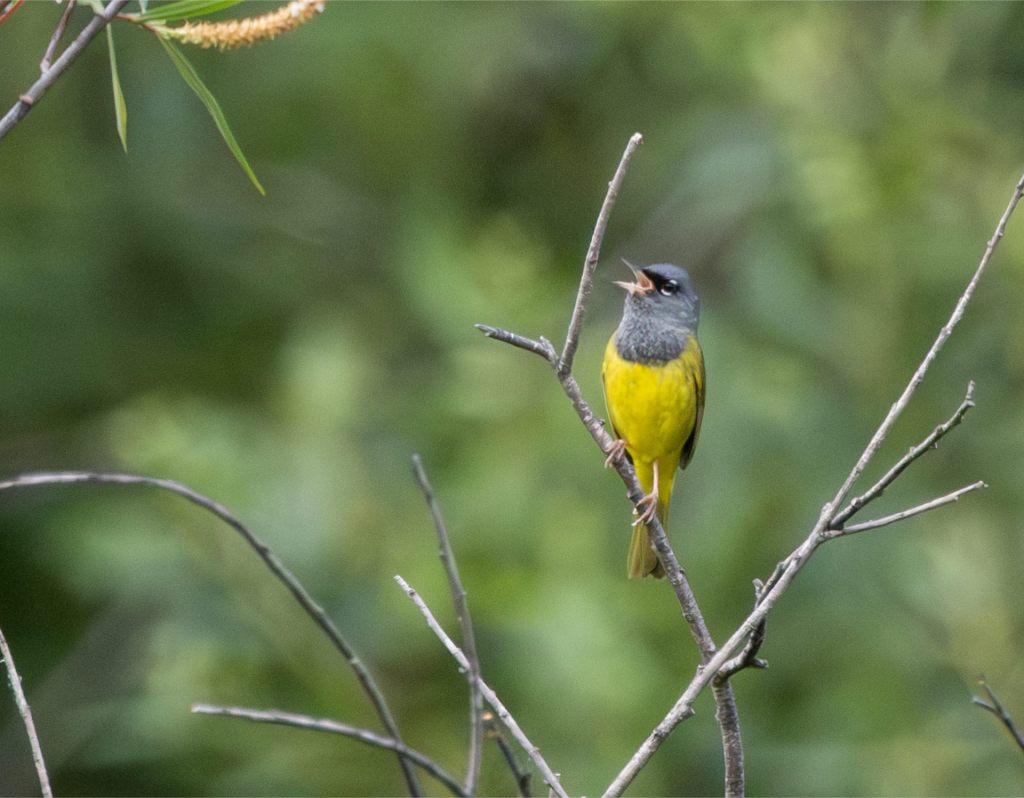
After enjoying a glimpse of this bird singing in the open for a brief moment, it was time for me to relocate to a different spot on the river where I might see some raptor activity.
As the air warmed, the sky was beginning to fill with swifts and swallows catching insects on the wing to take home to their nests. Some days I take on the challenge of trying to catch them in my camera lens, other days I opt out of that exercise in frustration and just take in the glorious aerial display.
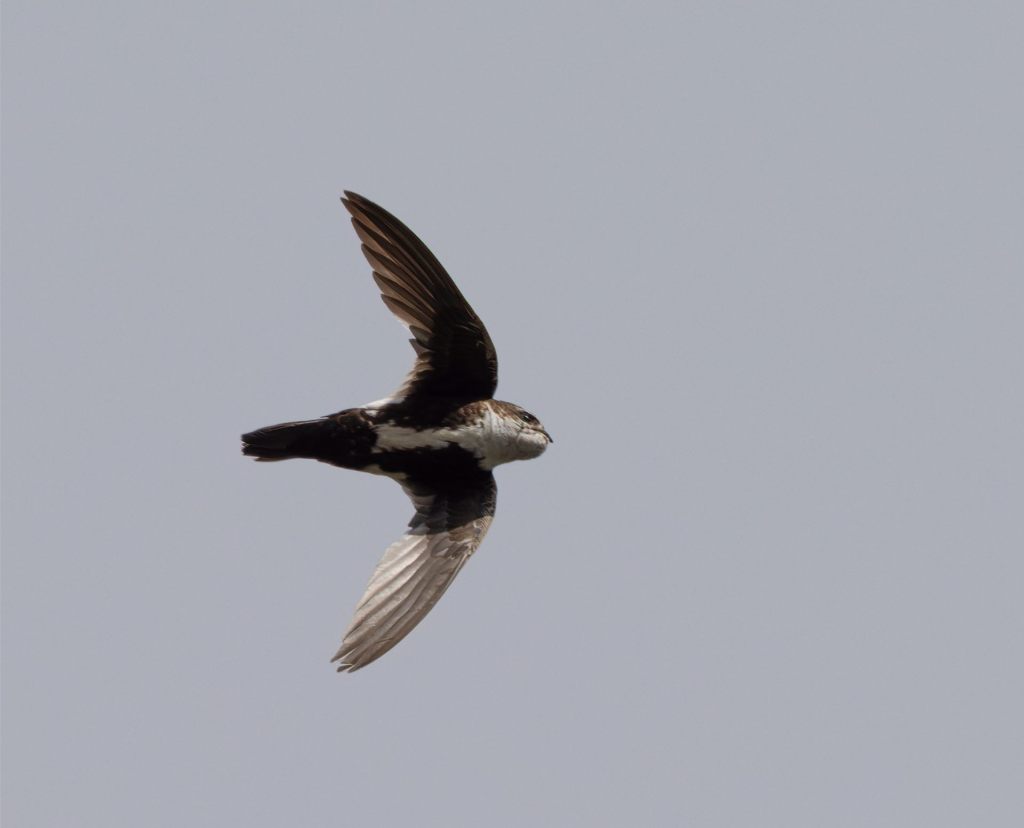
It you have ever had a good sized bird, especially a raptor, fly right by your head at high speed you have no doubt been impressed, even alarmed, by the sound of the wings cutting through the air. Part whoosh, part whirr, and way louder than you’d expect, this sound surely connects us in an instant to some ancient instinctive knowledge or apprehension of danger. For the second time that morning I found my heart in my throat, as just after I heard that sound right over my head I looked up to see a Peregrine Falcon with a White-throated Swift in its talons.

I hastily grabbed a couple sub-par snaps of the event and before I really even knew what had happened, the falcon was long gone with its prey.

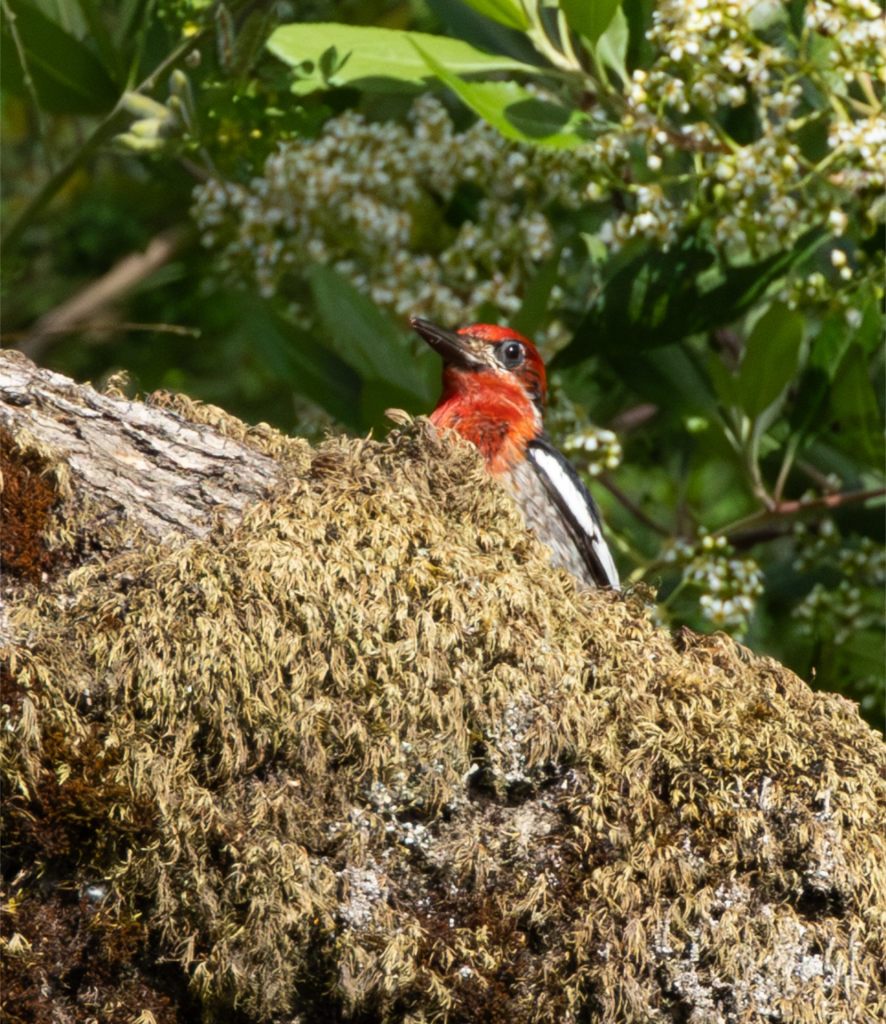
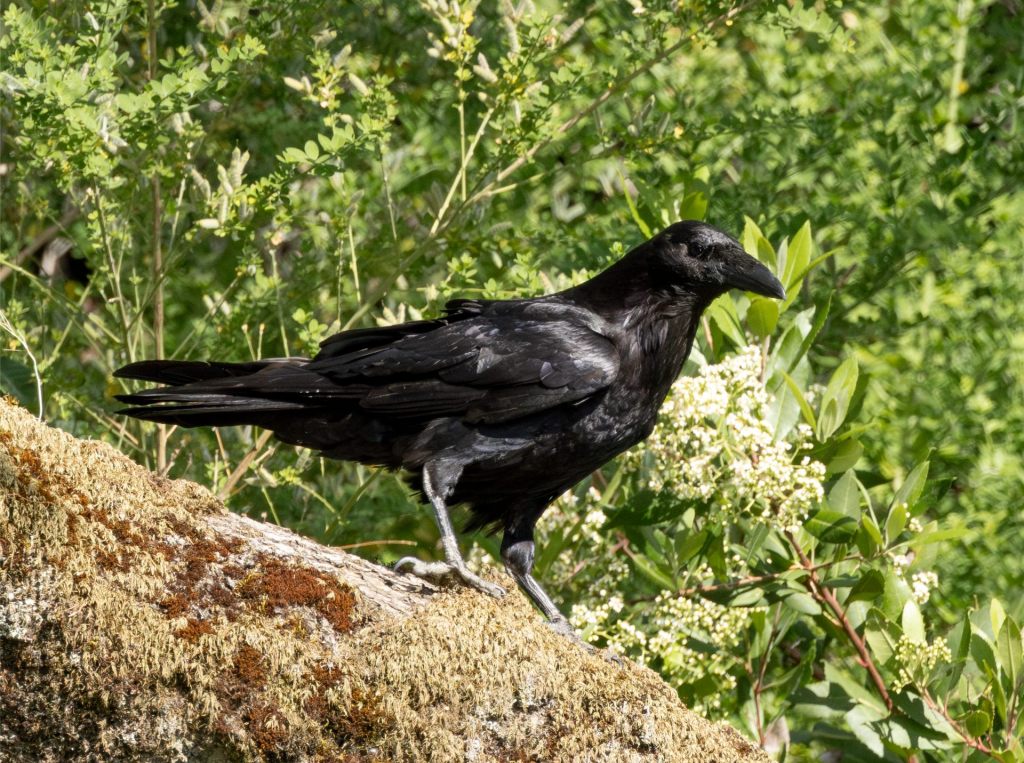
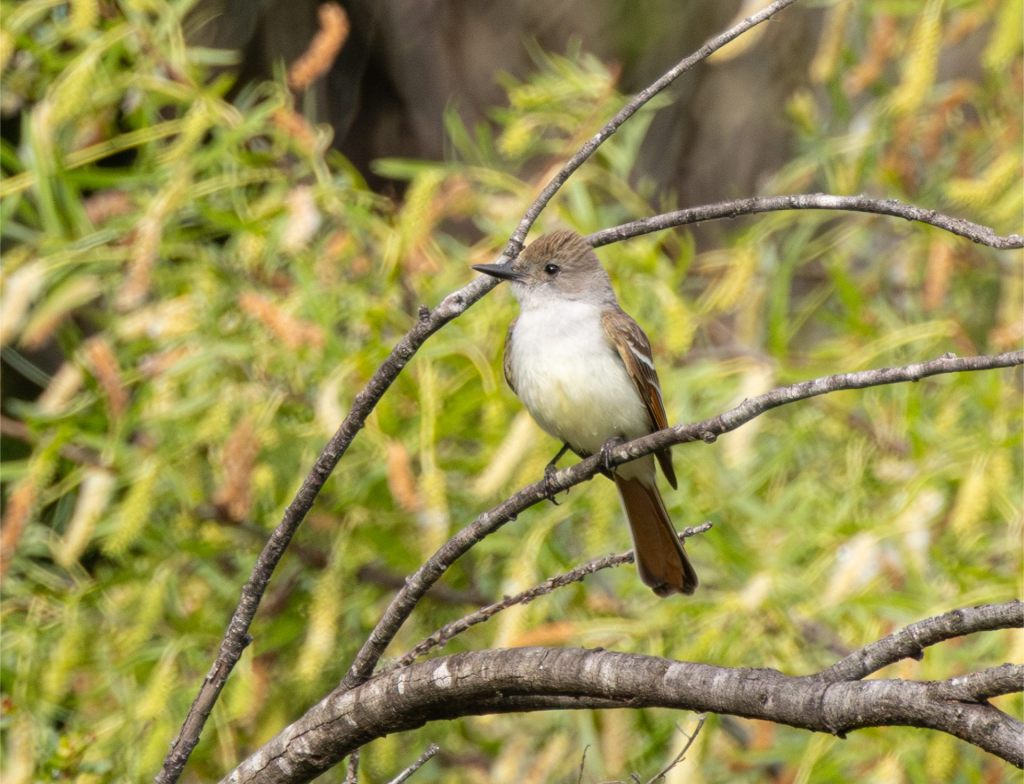
After that, I was really OK with the idea of there being no more drama for the rest of my visit to the river on this day. A group of 7 Turkey Vultures swirled lazily around for awhile. A pair of Ravens carried on intricate conversations and mutual grooming practices. Juvenile Warbling Vireos and Song Sparrows made brief appearances, as did a Downy Woodpecker and a Red-breasted Sapsucker. An Ash-throated flycatcher juvenile appeared, fluttering its wings in a begging posture, hoping for a parent to come by with a meal.
Then, interrupting the mellow mood, there was a loud cry of a Red-tailed Hawk. When I looked up in the direction of the sound, I recognized one of the local pair, the female I believe. She has had a gap in the flight feathers of her left wing for a few weeks and it is easy to pick her out because of it. She was making circles in the air and it appeared that she had something pretty sizable in her talons. It turned out to be a California Gray Squirrel, its long, fluffy tail stretching past the hawk’s tail as she flew.
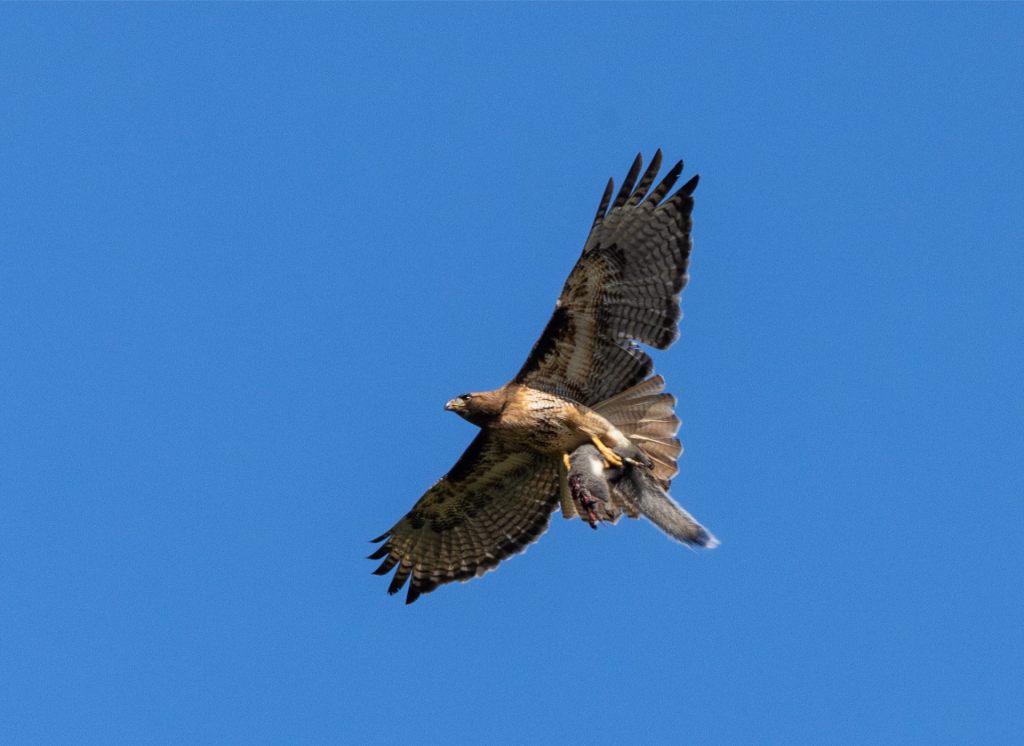
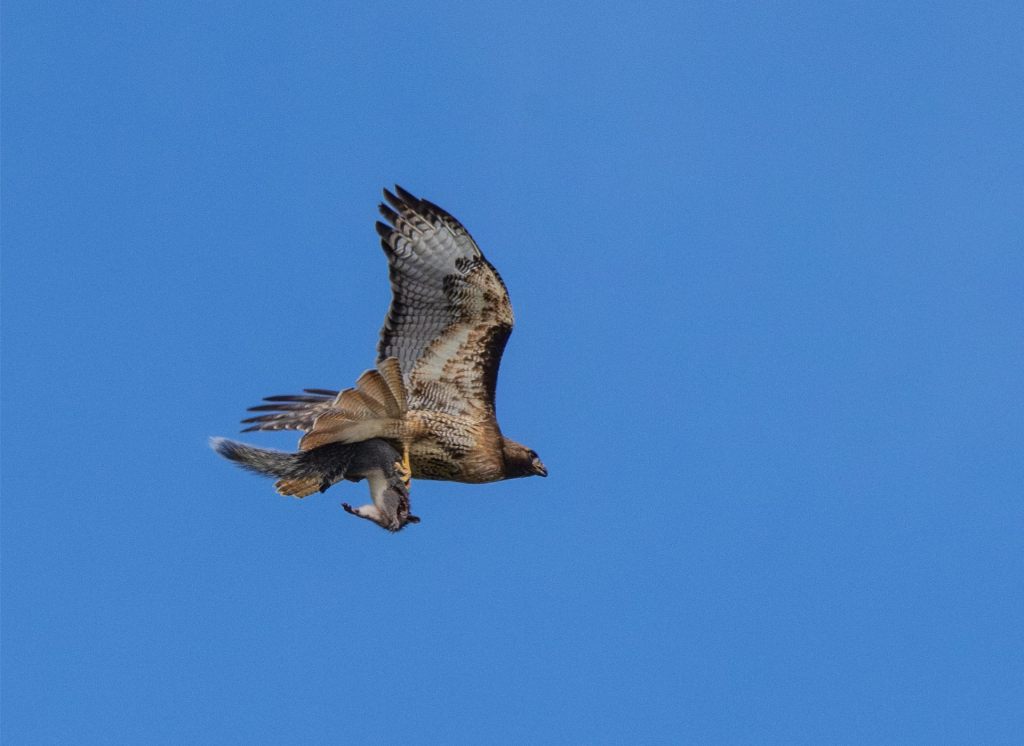
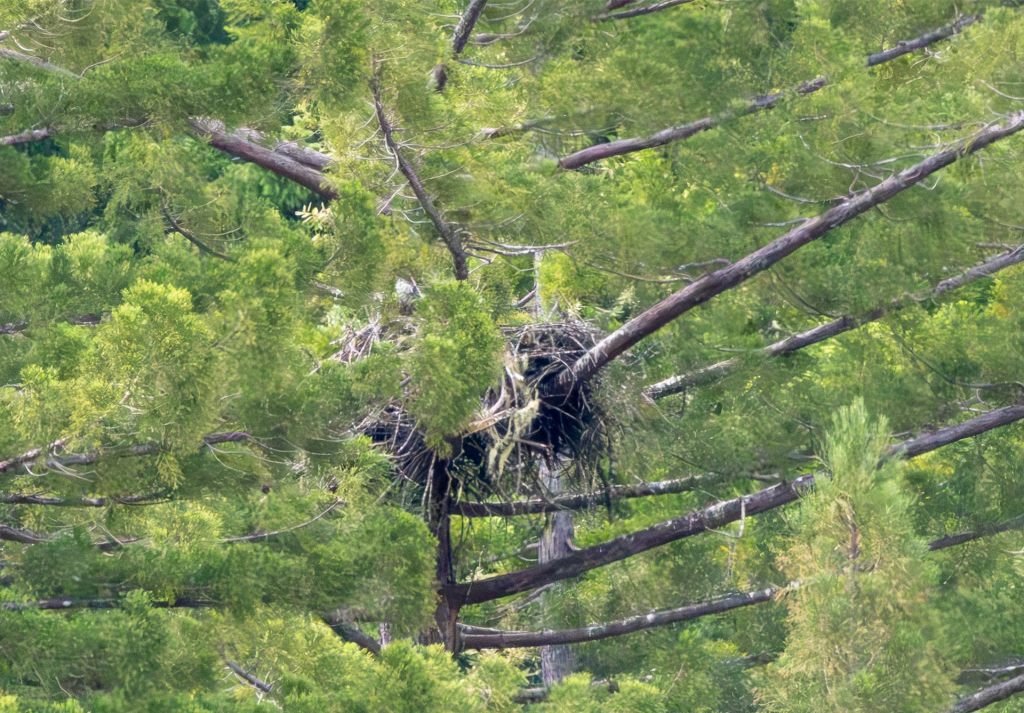
The hawk circled a few more times around, not far overhead, before taking off, I imagine in the direction of her nest. A squirrel can weigh upwards of half what a Red-tail weighs. This was the first time I have ever seen such a large catch in a Red-tail’s talons.
A morning like this one, on the first day of summer, 2025, brings into sharp focus the imperative and ultimately enduring relevance of the non-human world. Not hindered by the distractions that separate homo sapiens from connection to the earth and may well bring about our demise, the Wood Duck will always be there for her duckling, the swifts and peregrines will forever use their freakish speed to catch their meals, and the MacGillivray’s Warbler will always stand on a prominent perch and announce its territory to anyone who can hear it. Watching and listening can rehab and realign the human spirit if we pay attention.





Leave a comment