The Osprey is one of only two raptors with worldwide distribution (the other is the Peregrine Falcon). Only six land birds total have such a wide range. Osprey, like the Bald Eagle, have made an impressive comeback from being endangered by the use of the pesticide DDT which was banned in 1972 after it was shown to weaken egg shells making it impossible for young to hatch.
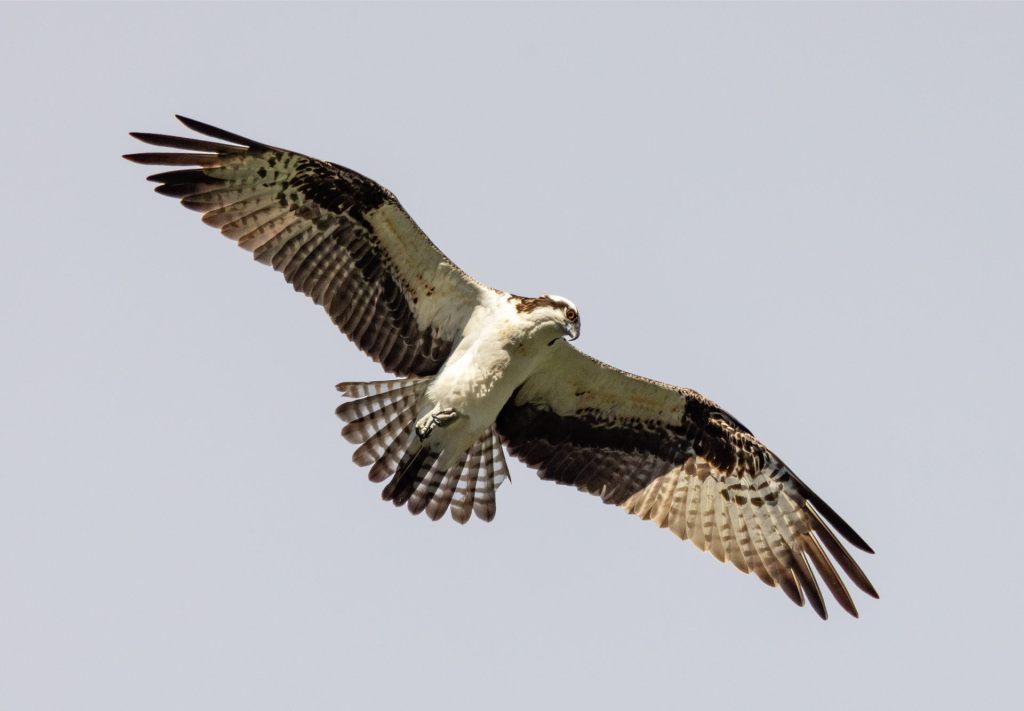
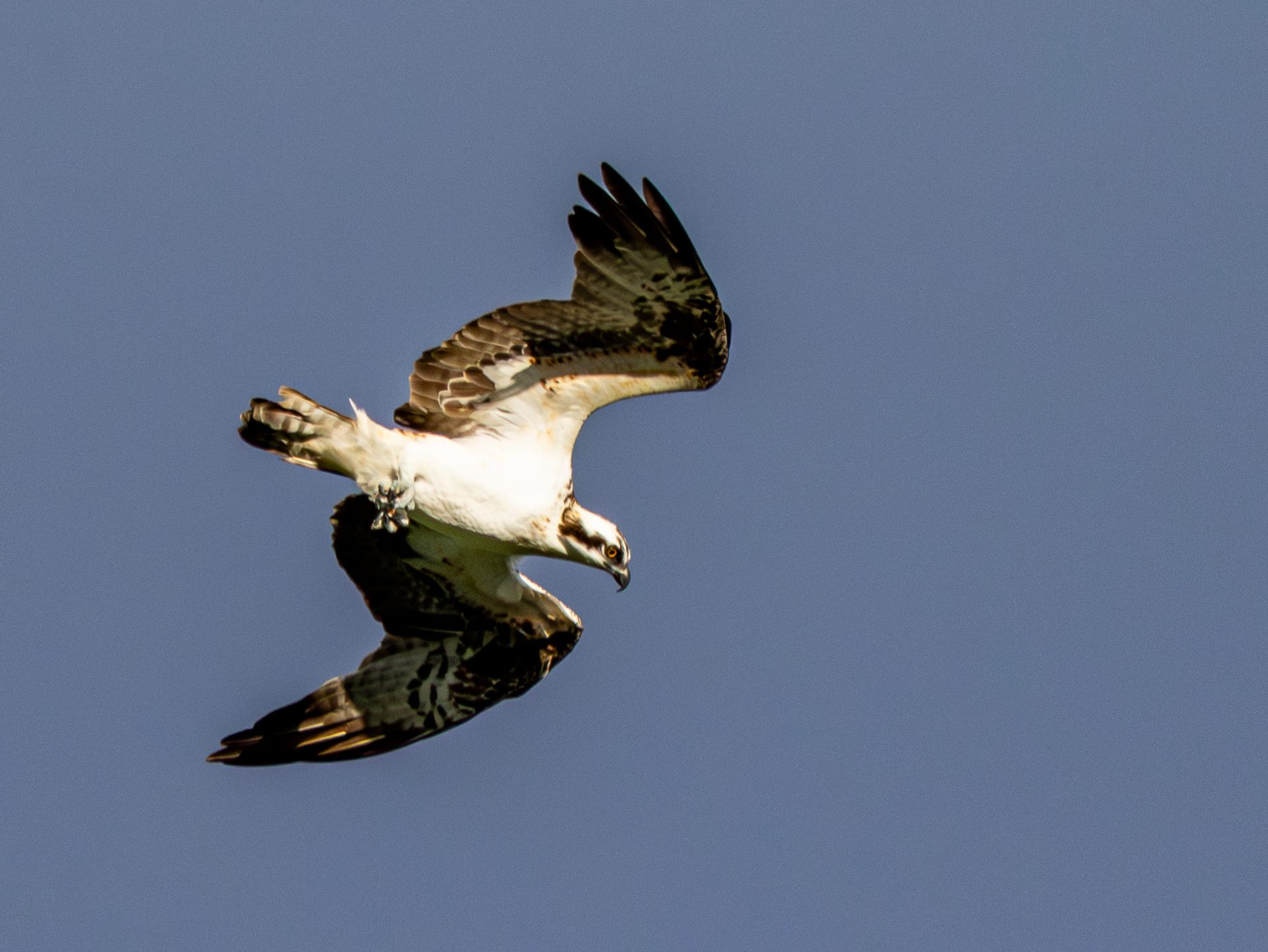
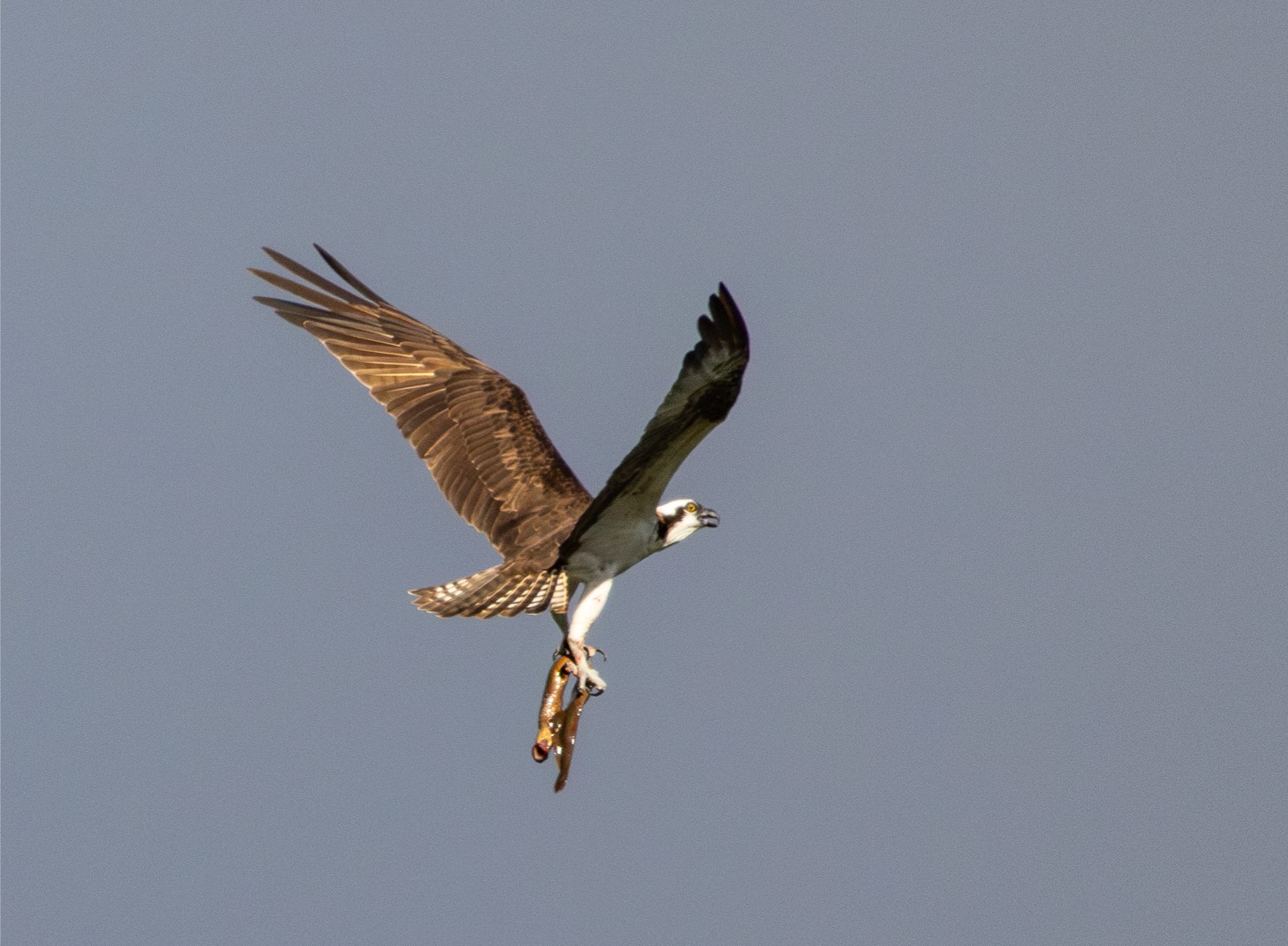
Osprey making an acrobatic change of direction as it looks for prey over the river.
Locally here in Southern Humboldt, we have Osprey during the breeding season, spring through early fall. Ninety-nine percent of an Osprey’s diet is fish, including one of the oldest fish-like species in the world, the Pacific Lamprey.
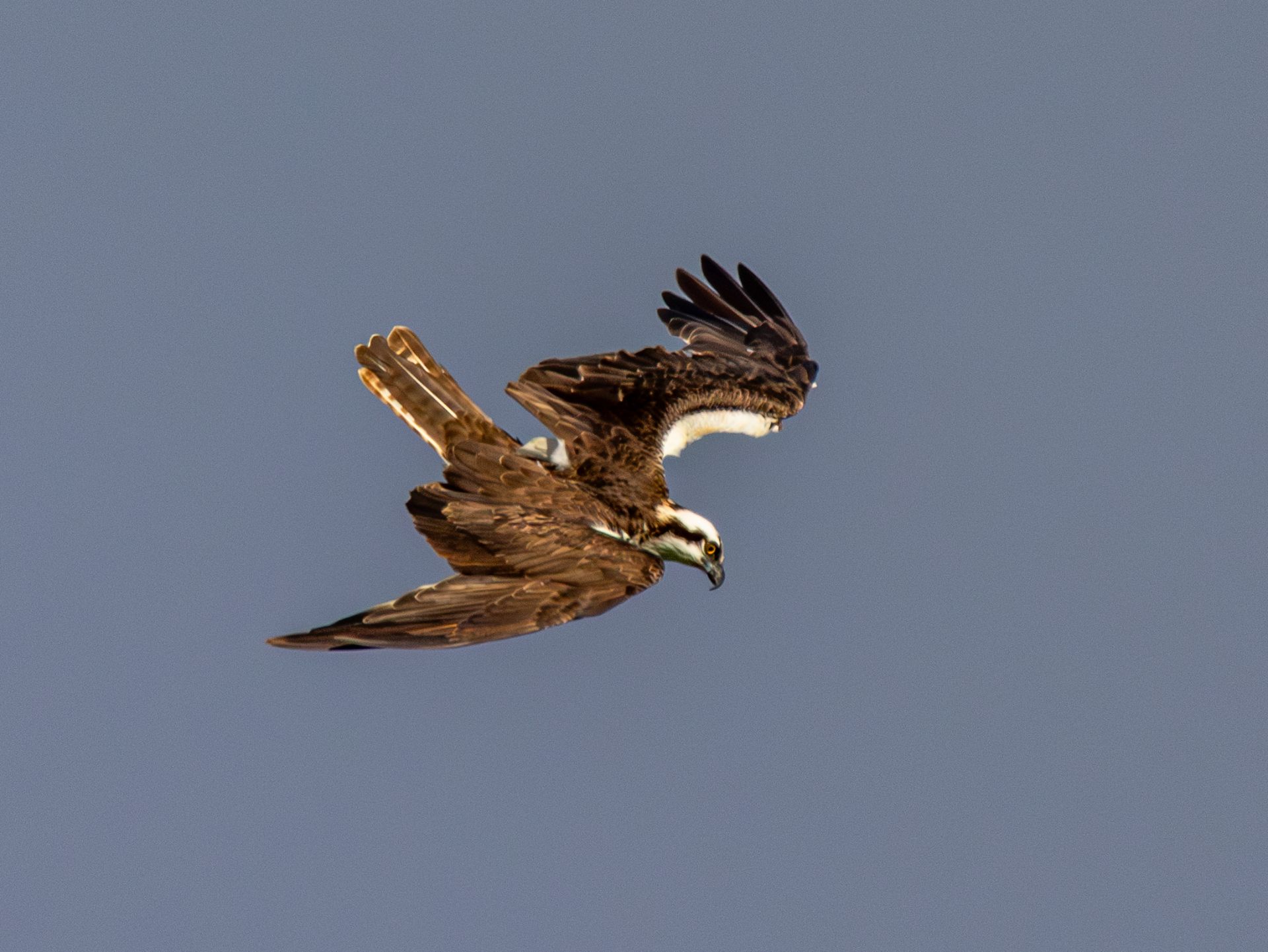
This Osprey appeared overhead, looking down into the water for breakfast. This part of the hunt often entails flying back and forth over a stretch of river, watching for fish moving through the shallows or visible in deep clear pools.
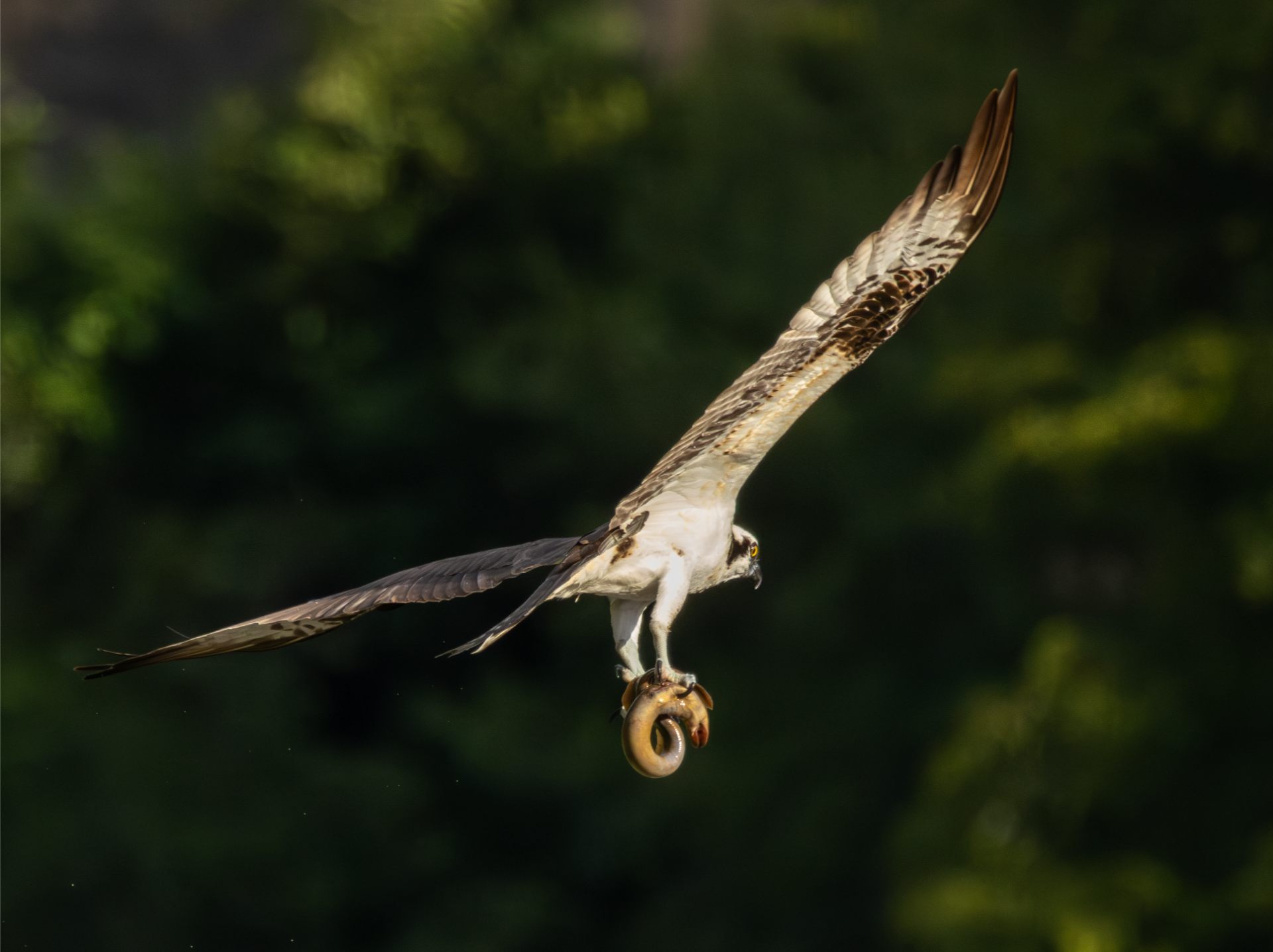
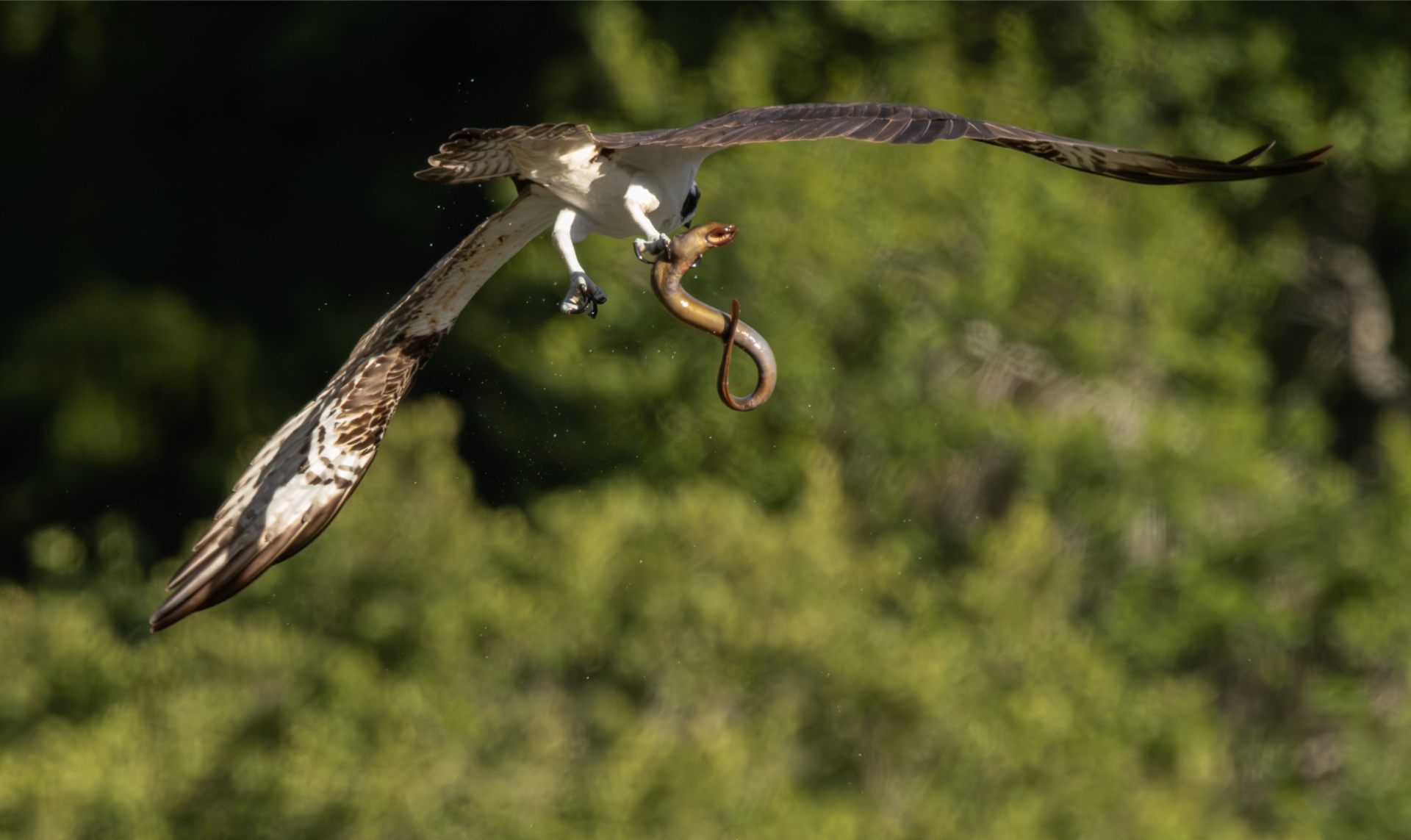
The other morning I got to watch an Osprey dive for and catch a Lamprey, something I’ve seen a few times in my years by the river, but never have I had such a good look at the whole event from such close range.
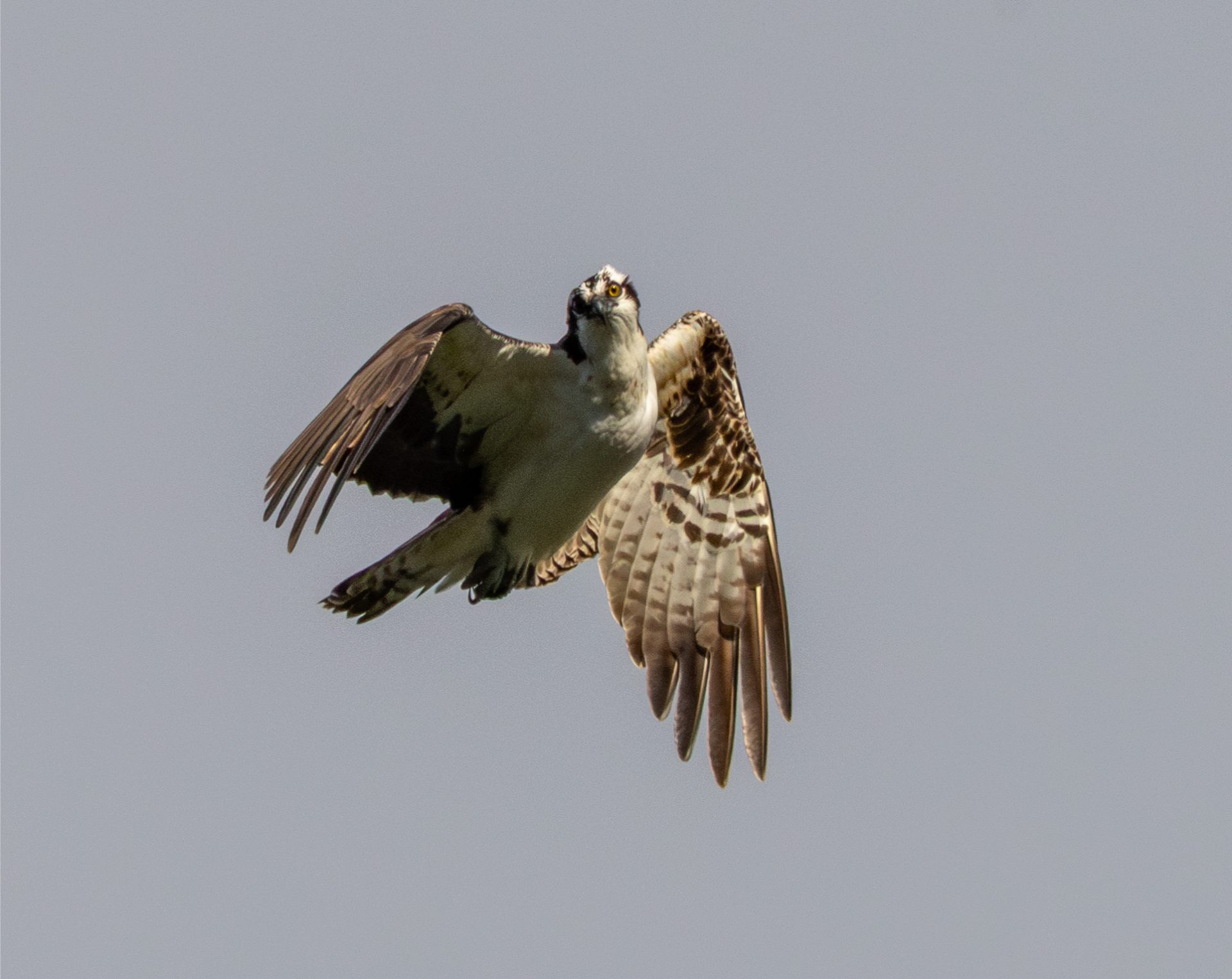
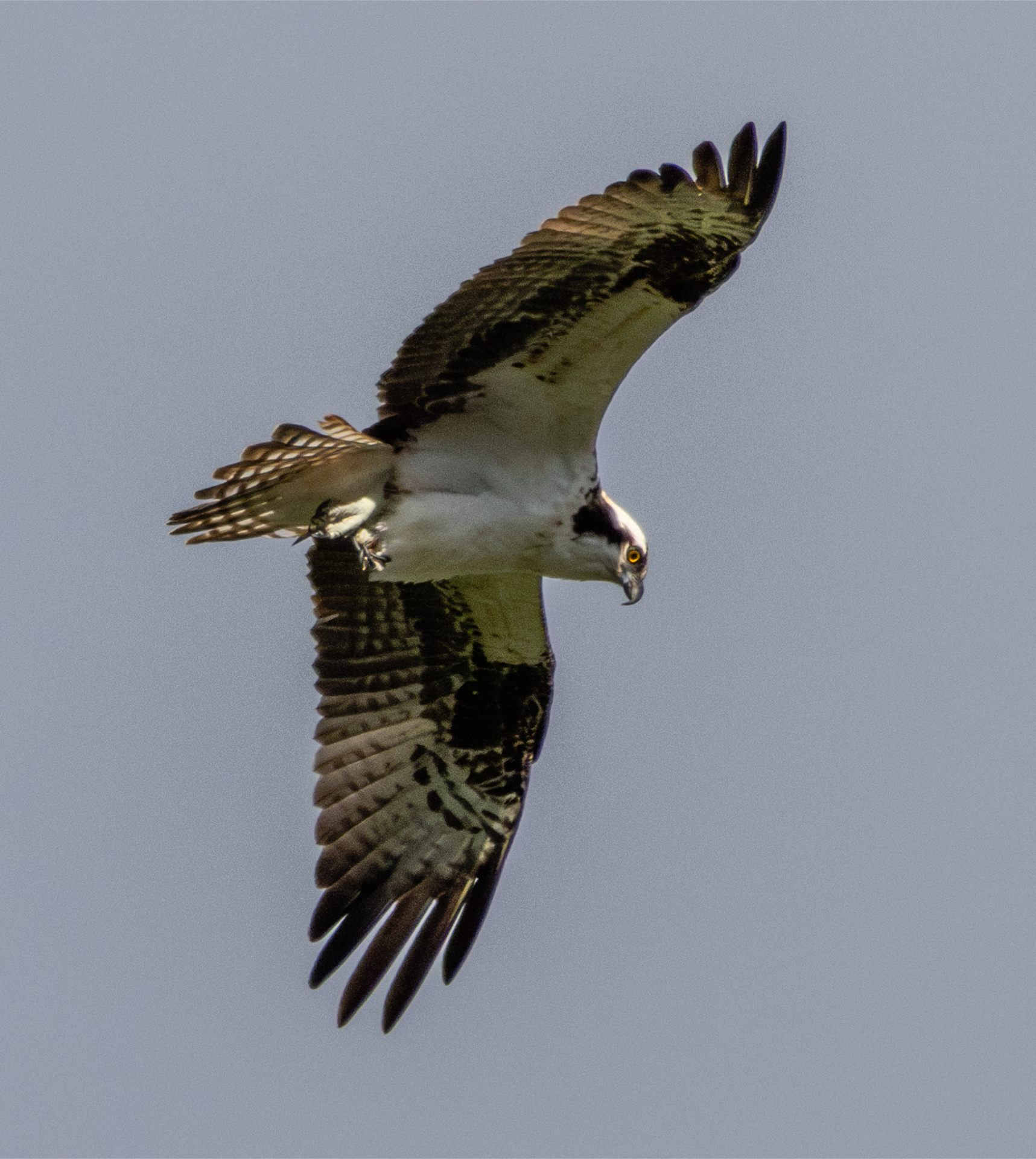
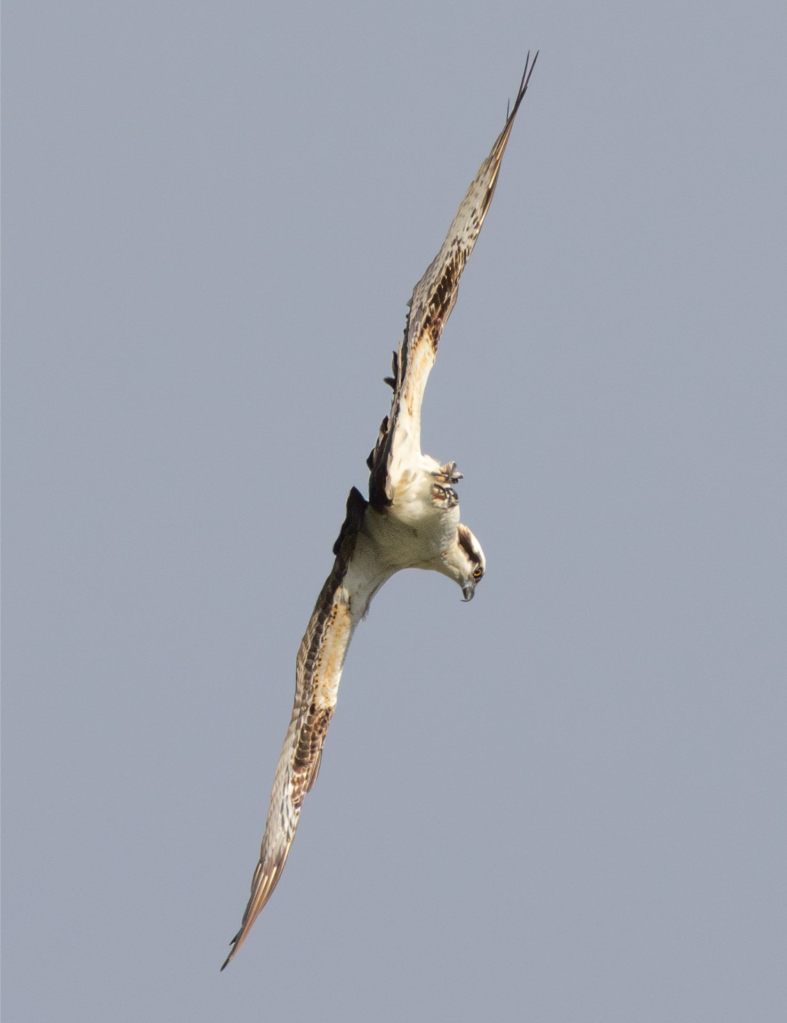
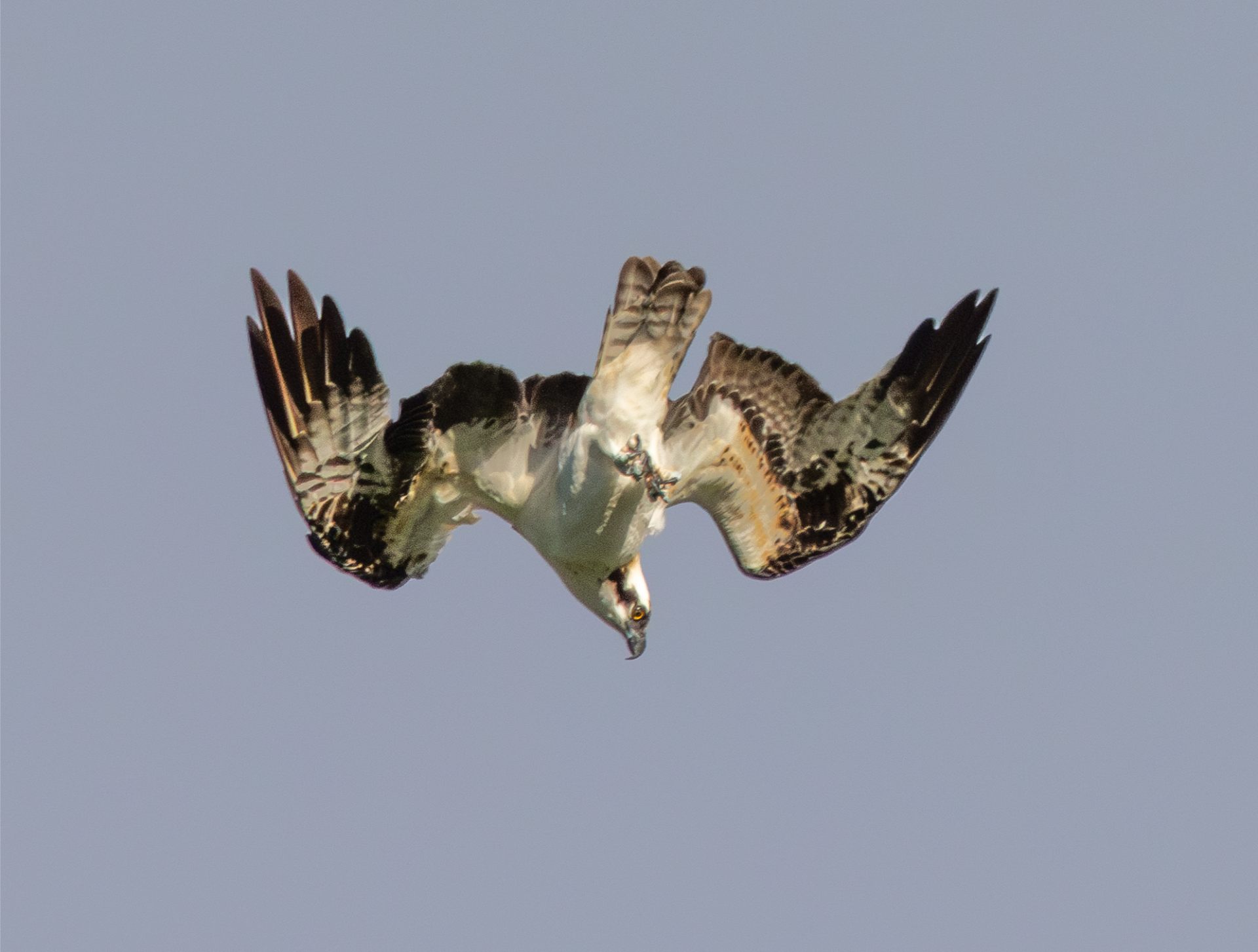
Eyes focused on the water below, body and wings twist and turn in service of the hunt.This is likely a male, with very little of a brownish necklace, and generally less brown on the underside of the wings.Once the prey is spotted, flight becomes more streamlined as the wings fold back for the dive. The feet begin to move forward, preparing to grab the slippery meal.Continuing to spin to stay on a direct route to the prey, the Osprey’s brown back is revealed.As the dive becomes more vertical, the eyes never stray from the target.The feet continue t o move forward, preparing to grasp the Lamprey.
Unfortunately, the path to the water took the Osprey briefly behind some trees and out of my view. I did see the splash as the bird hit the water, but was not quick enough to catch it on the camera. However, once out of the water it wasn’t long before I could see that a Lamprey had been caught.
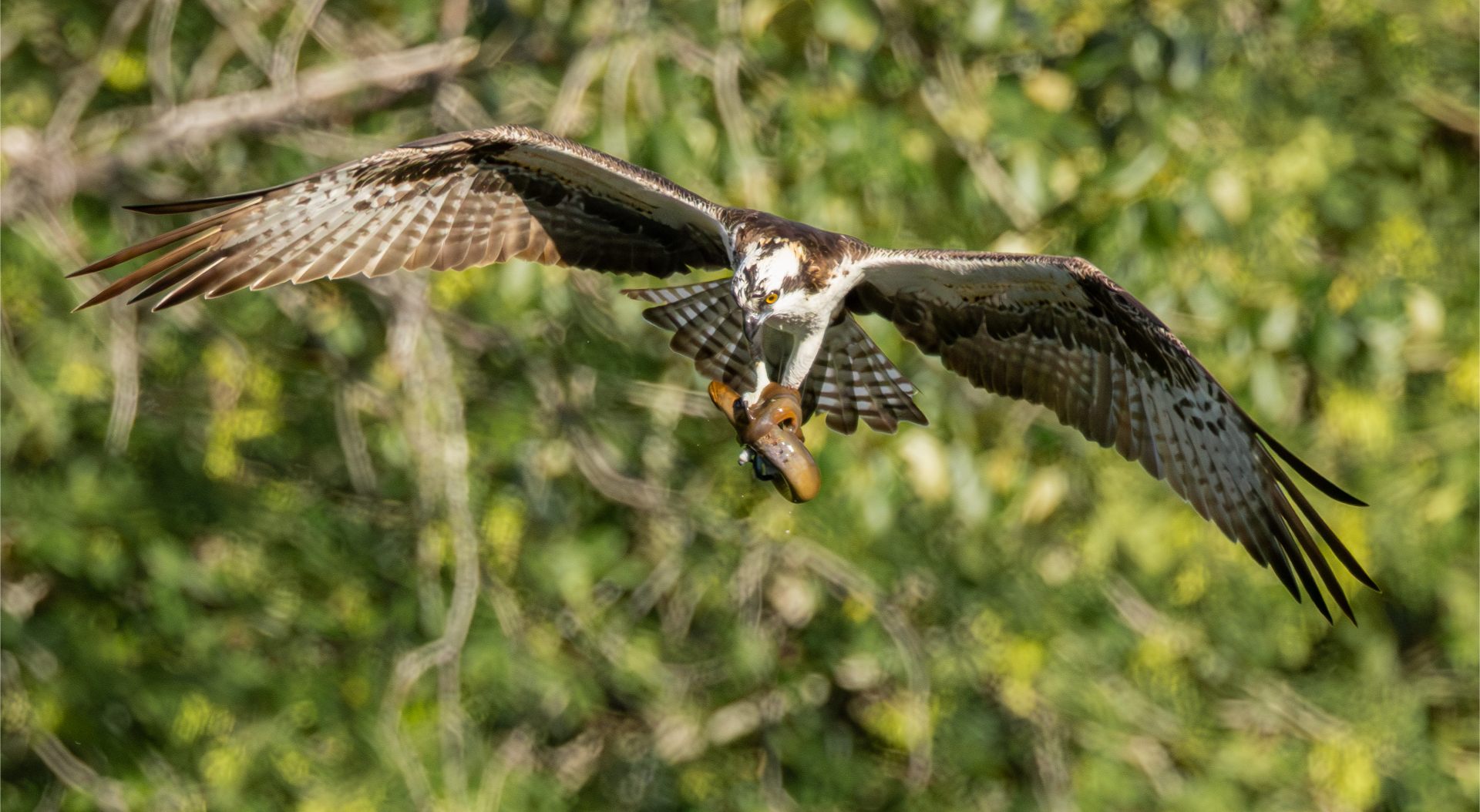
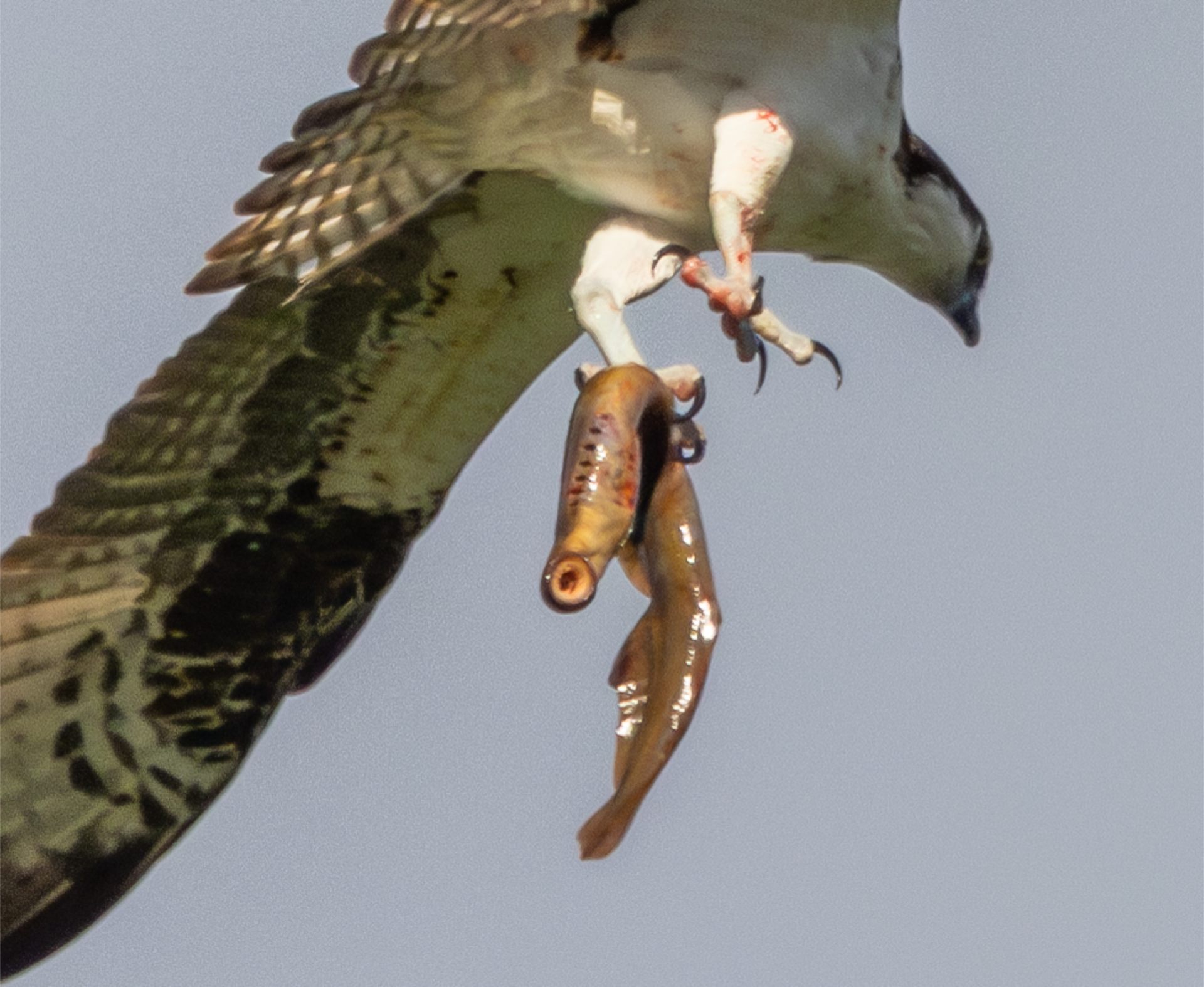
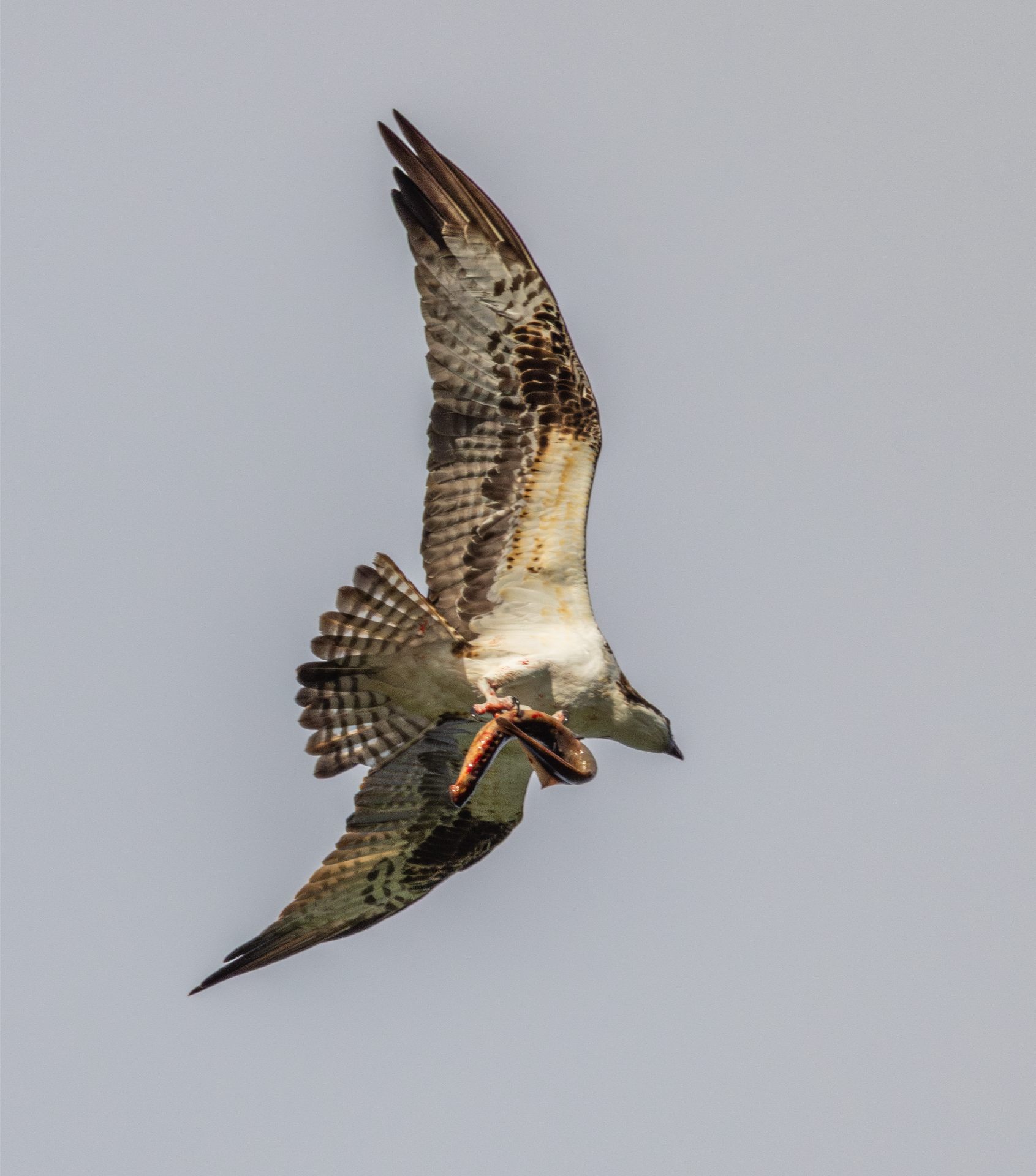
When first out of the water, the Lamprey struggles to free itself by winding around the Osprey’s legs and feet. Here you can see the primitive “gill pores” through which the Lamprey breathes.Here you can see the Lamprey’s eye, gill pores and tail.The Osprey starts to turn downstream with its catch.Perhaps a sign of losing the struggle, the Lamprey unwinds, but continues thrashing.Here you can see the Lamprey’s “mouth”, equipped with teeth in a circular pattern and capable of latching onto prey in order to use suction to take a meal of blood.Anadromous like salmon, Lamprey only eat while in the ocean. Once they return to fresh water (they don’t necessarily return to the stream in which they hatched, but choose the best option available), they do not eat.Ospreys often carry their catch with their feet aligned front to back. With most fish prey this creates an aerodynamic effect. Maybe not so much with the Lamprey, still writhing in hopes of freeing itself.Finally, the Osprey heads downstream and eventually out of sight. If he’s lucky, he’ll find a place to consume his catch away from the watch of Bald Eagles who would cheerfully relieve him of his meal.
Another interesting fact about lamprey is that they’re opportunistic, in terms of the streams they return to. That is to say, they choose good water quality and desirable flow, rather than intently returning to their natal stream.
Also, I think they only consume blood – not flesh! 8>}




 Free Range Photography
Leave a reply to Roger Cancel reply