
The river was finally beginning to green up a bit after weeks of a rain-swollen cafe latte-colored flow. There was a hint of spring in the late February air and it seemed like a great day to have a nice long sit on the shore, and wait to see who might happen by.
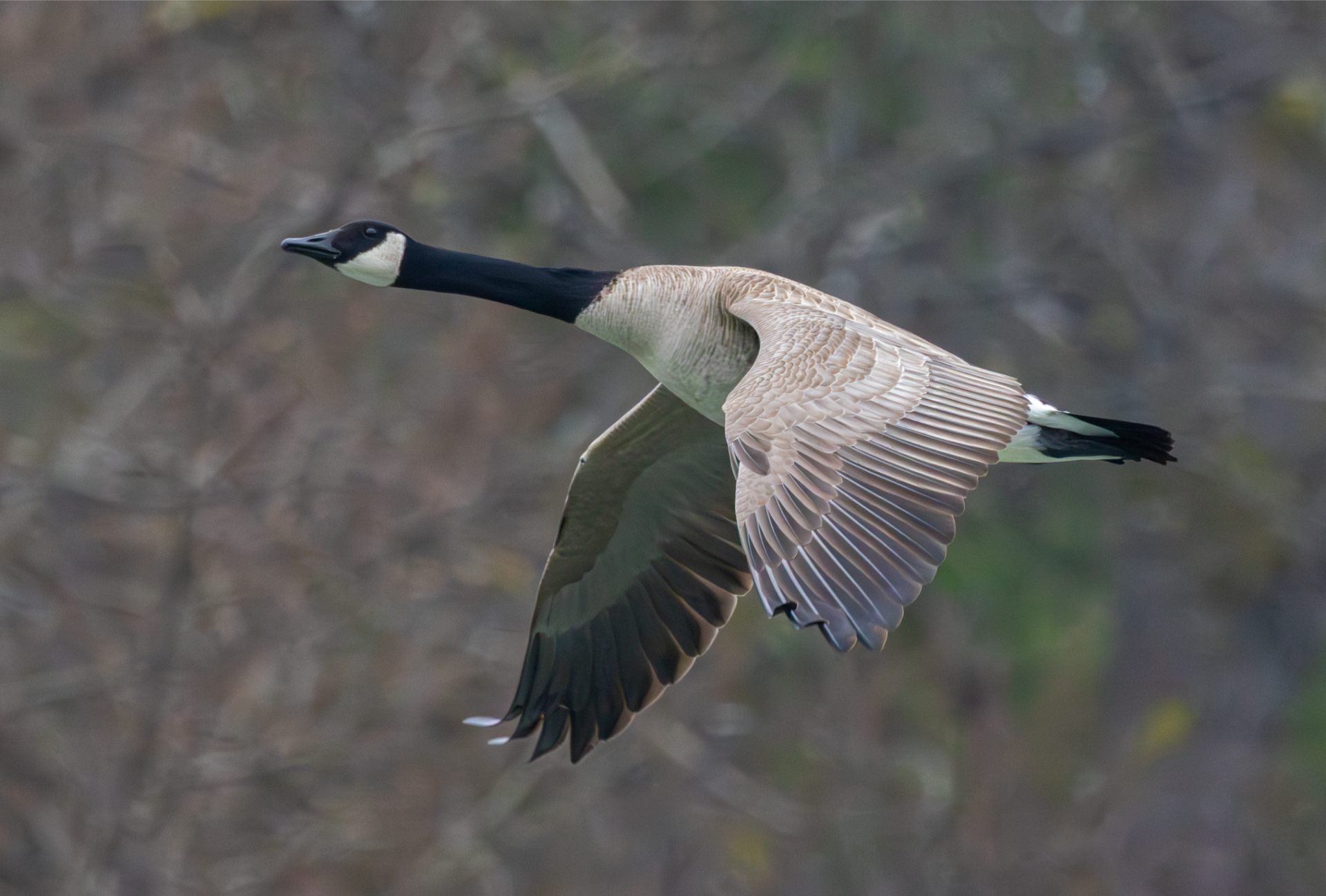
The first thing I saw was a pair of Canada Geese whose sudden loud honks and fast rise into the air made me wonder if a predator had startled them. They flew toward me and then made a wide circle, passing me again before disappearing upstream.

For the last five years or so, these huge birds have been nesting alongside the river, something they apparently did in the past, according to local old-timers, but then, for unknown reasons, they didn’t do so for a few decades. I imagined this pair might be planning to settle somewhere nearby for nesting season when I saw them flying southward, against the usual flow of bird traffic this time of year, which would be northward to breeding grounds.
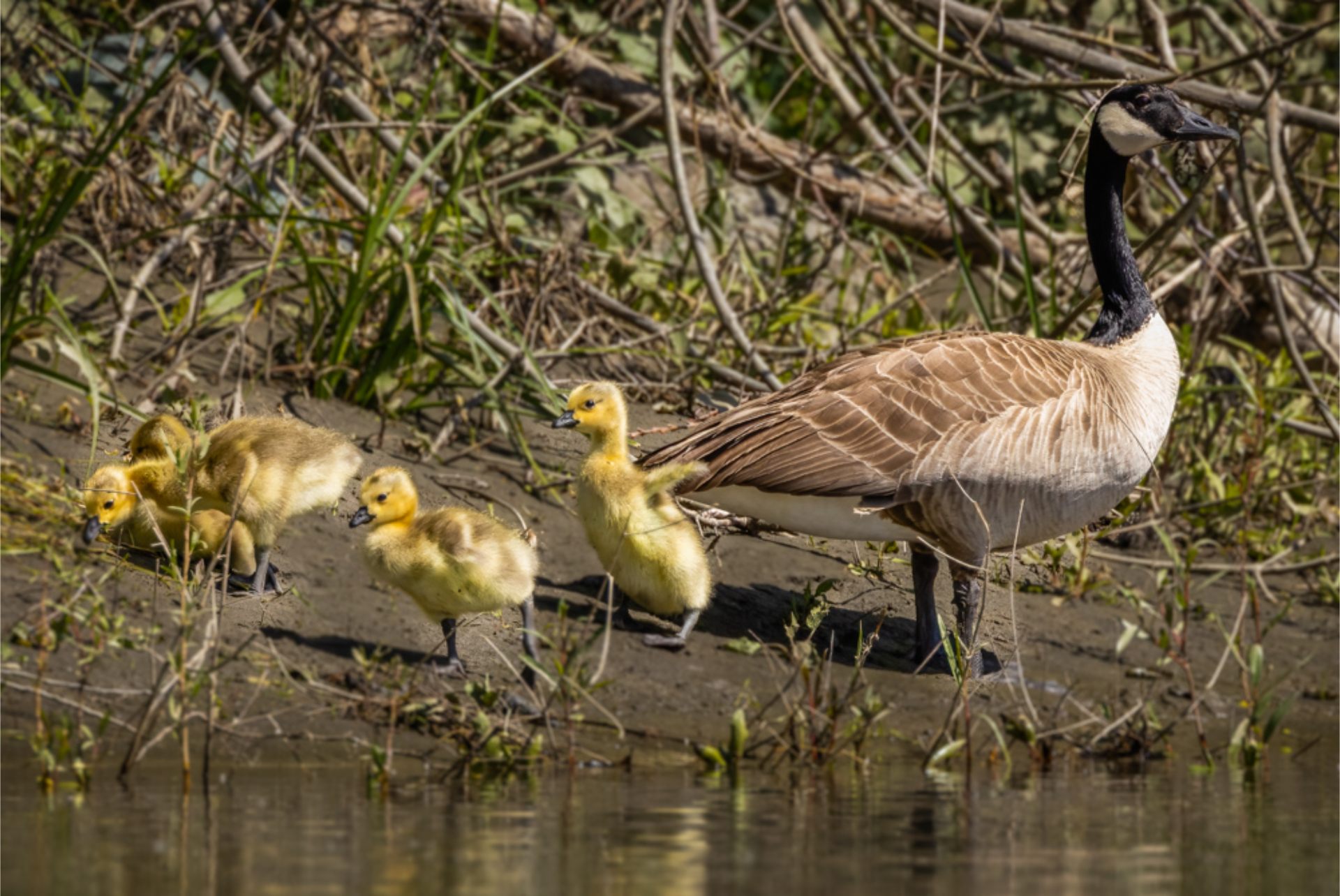
I found a good spot to park myself and watched and listened. I realized after an hour or so, that this might be one of those slow mornings that give me a lesson in not being greedy for action. But soon enough, I saw a large group of ducks fly over, very high and somewhat obscured by dense fog. I snapped a picture to try to figure out what they were, but the grainy silhouettes I captured were not helpful, except that one of them looked somewhat bigger than the rest. Another hour passed, the fog lifted, a few Ravens appeared, a couple Turkey Vultures circled around, and the persistent scolds of Steller’s Jays could be heard. I thought about giving up for the day and heading home.
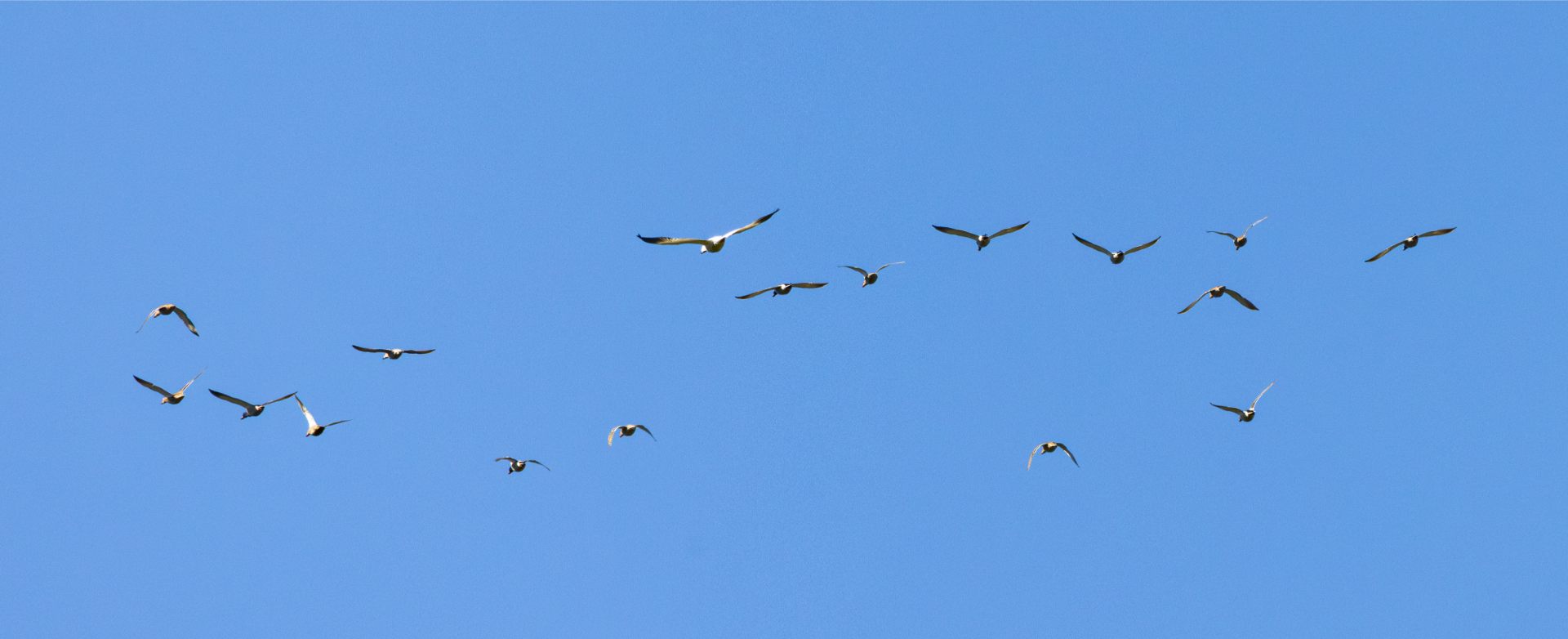
Then here came that big group of ducks again, and this time I could tell the ducks were Mallards, about 35 of them, and the big one who stood out among them was a Snow Goose. A huge white bird with jet black wing tips, dwarfing the Mallards flying beside it, this bird was perhaps off course for its northward migration and joined up with the Mallard flock for reasons I’ll never know.

There were about 35 Mallards in the flock and the whole group circled around a few times, the goose staying with them. After a while, the goose split off from the group of ducks and made its own wide circles for about ten minutes before disappearing to the west.
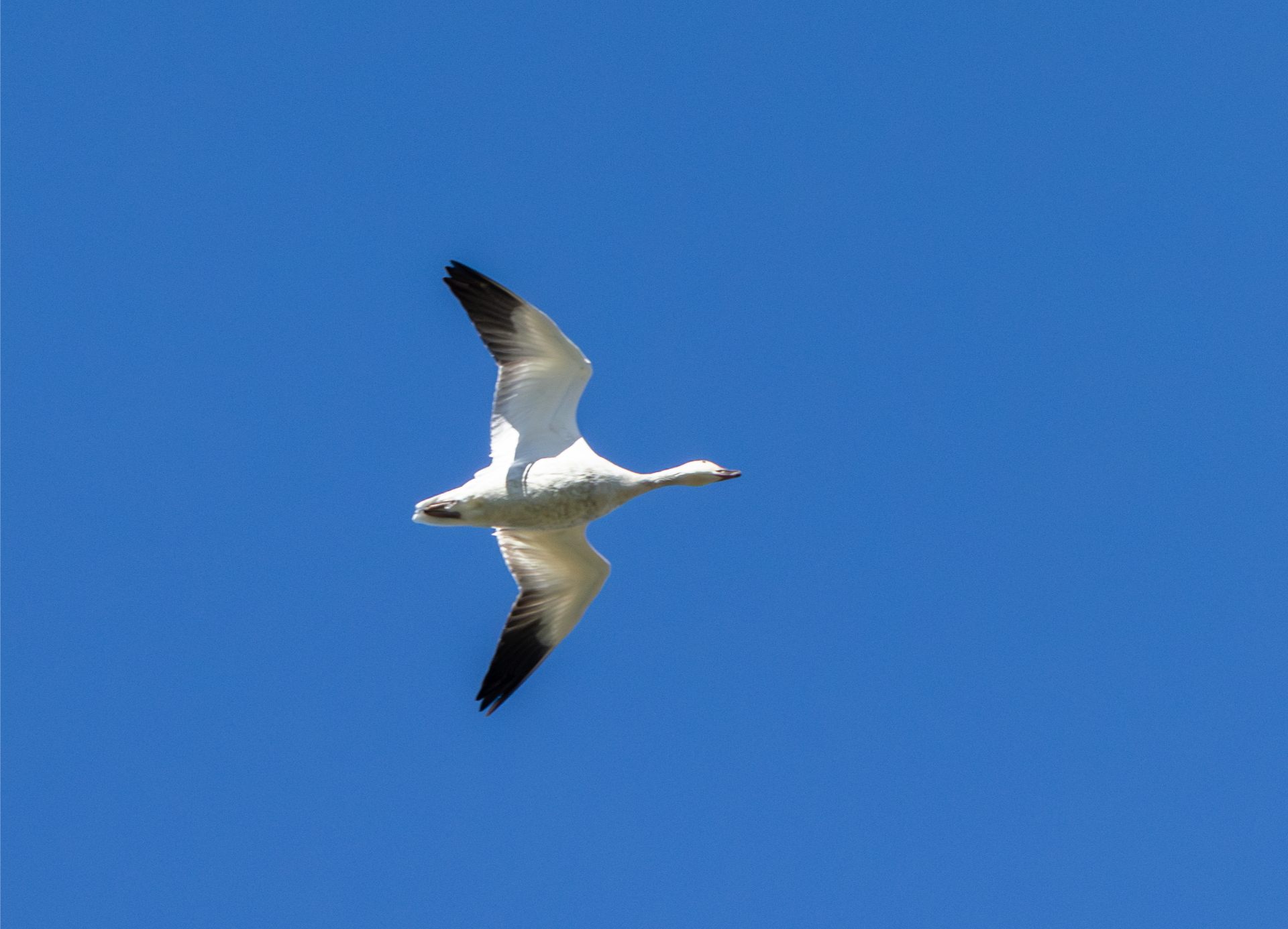
I’ve seen Snow Geese before, in their famously enormous flocks, wintering in the Klamath Falls area. They gather, feed, lift off and land in unison, as if rather than a collection of individuals they are a single giant organism. Birds that winter in California may have crossed the Bering Strait from Siberia to come to the refuges that host them in the Klamath Falls and northeastern California areas, as well as into the the state’s Central Valley.

It’s bittersweet to see a bird like this, off course, away from its own kind. It’s a thrill to get eyes on something so unusual and beautiful, but sad to realize its fate may be to never return to its flock.


 Free Range Photography
Leave a reply to Kym Kemp Cancel reply