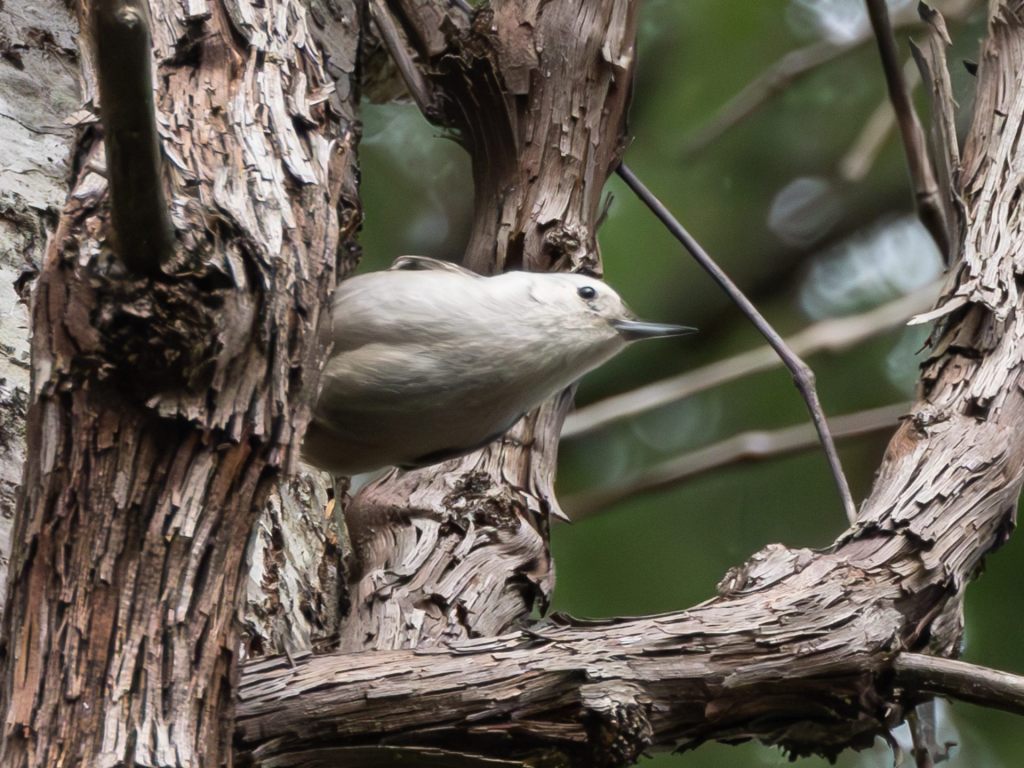
Because I hear or less often see this bird not exactly infrequently, I do sometimes wonder why it’s locally considered a rare bird when I report it on ebird, the world-wide citizen science website for recording and tracking sightings of our avian friends.
In 2024 I saw or heard this largest of all North American nuthatches 9 times, in 2023 I reported one 5 times and in 2022, I made 15 reports, all of these reports in two areas: my extensive “yard” near Garberville and the Southern Humboldt Community Park, a mile or so away.
I used to see them with some regularity up at the eagle nest watching spot, but hadn’t detected them there for probably close to ten years, dating back to when I was not yet an ebirder, until I heard a couple of them loud and clear on my last visit to the nest. For whatever it’s worth, all three of these spots are contained in what I call my “patch”, a five-square-mile area, where I do most of my slow birding, that has plenty of the forested habitat favored by these tree hugging birds.
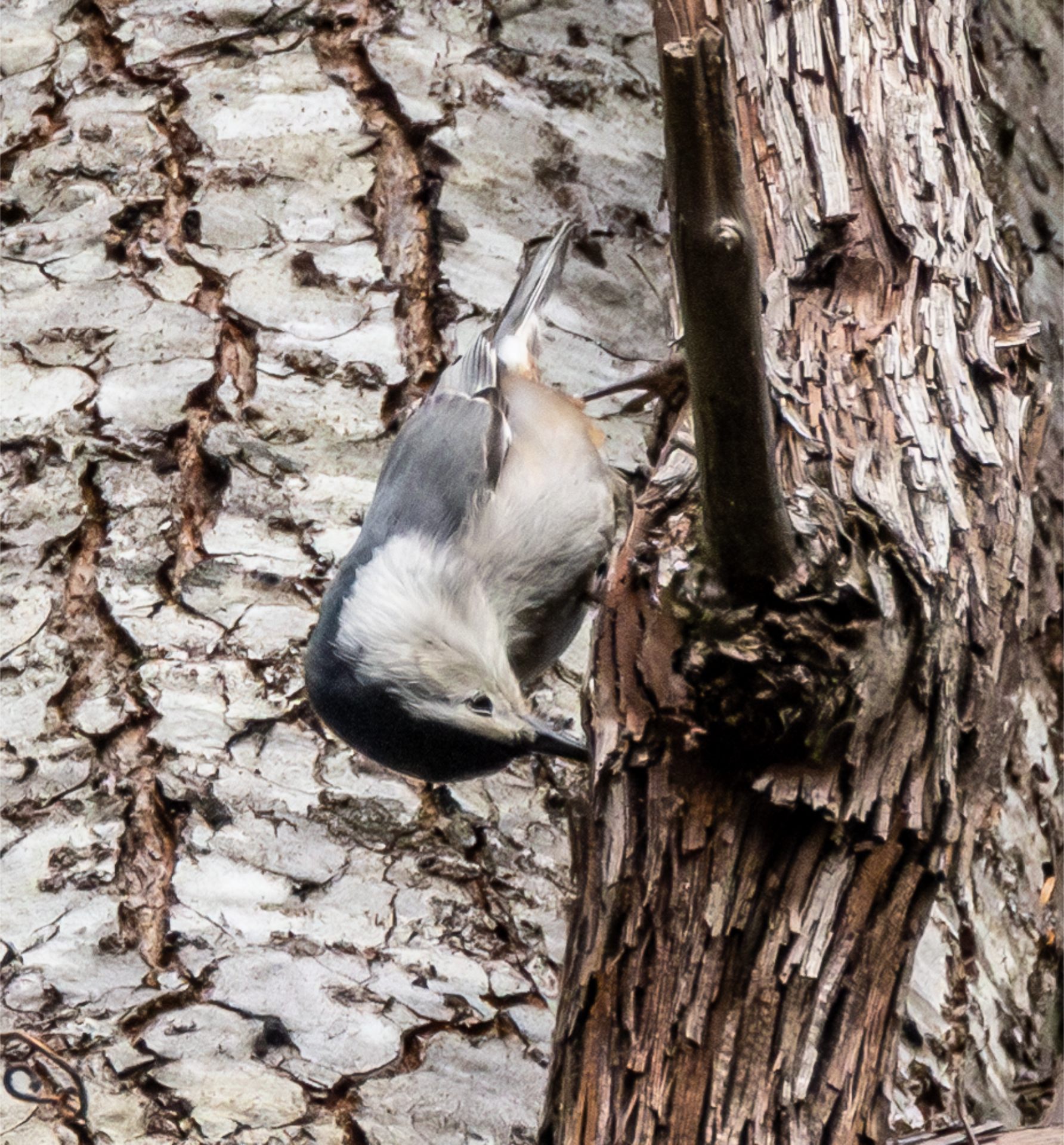
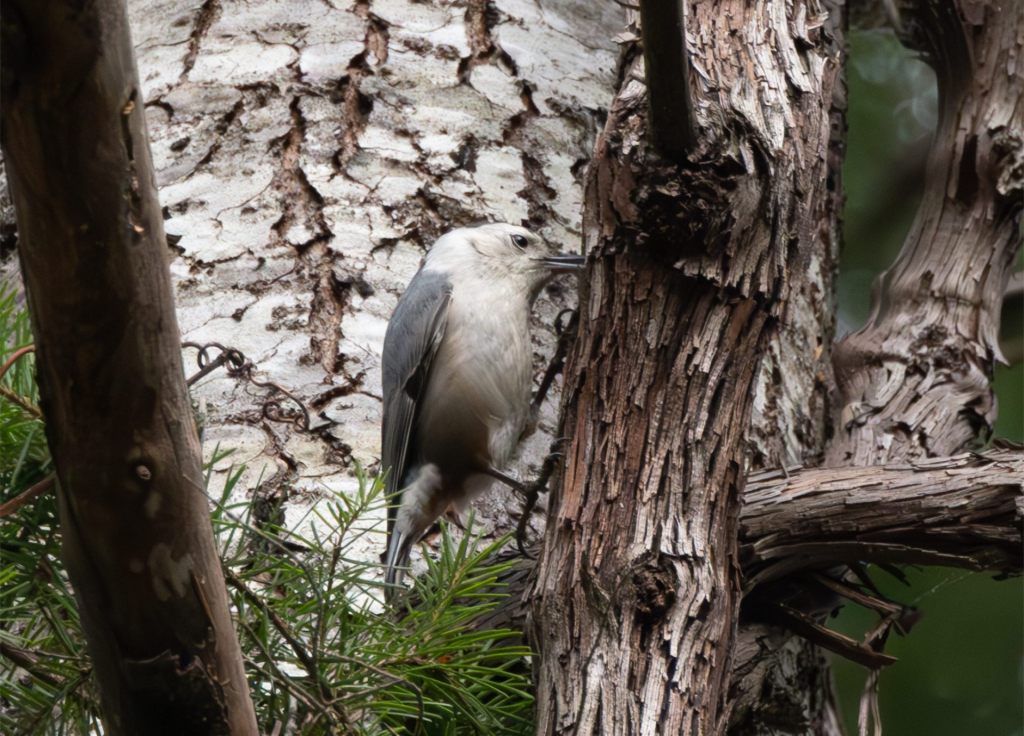
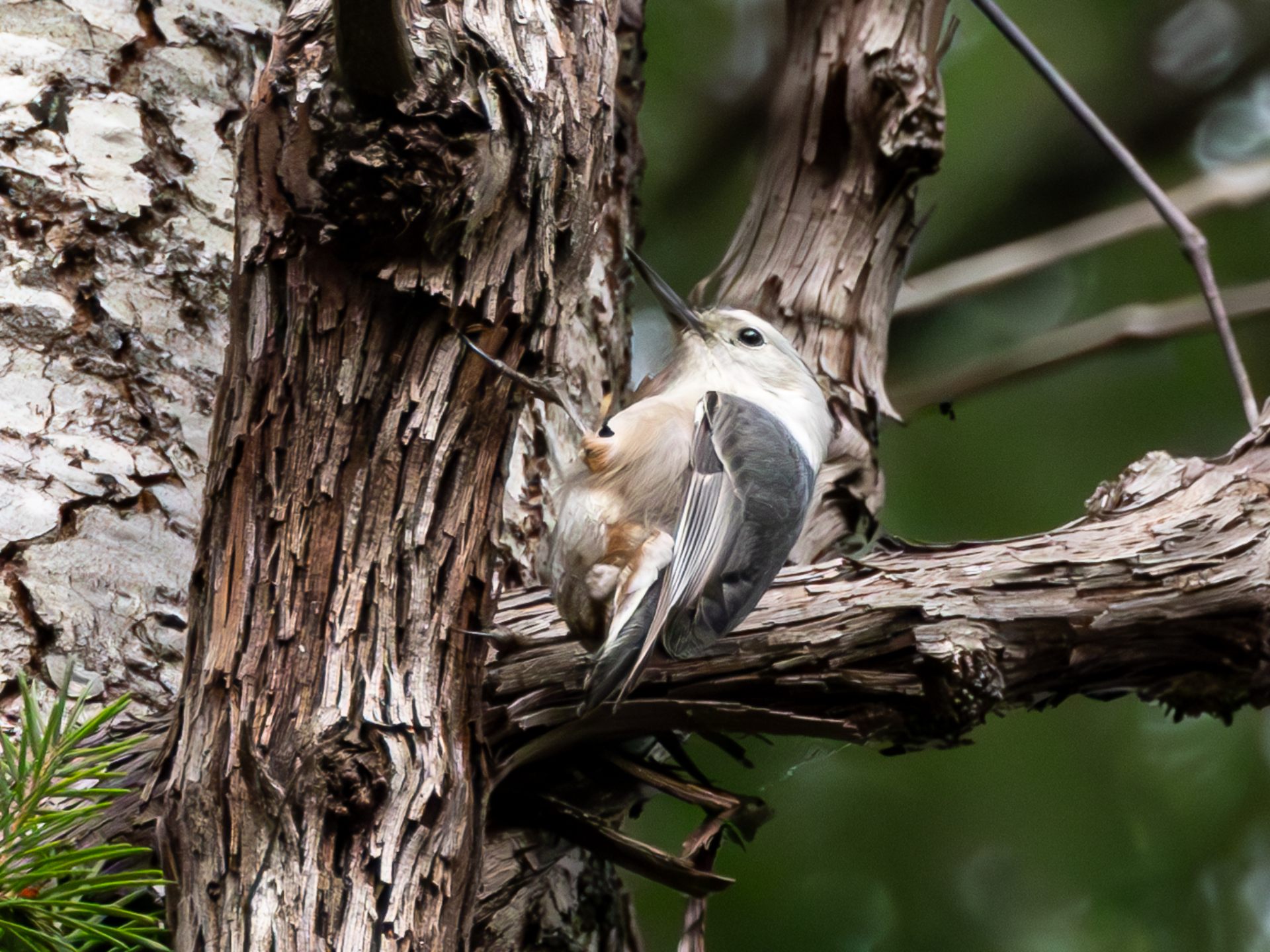
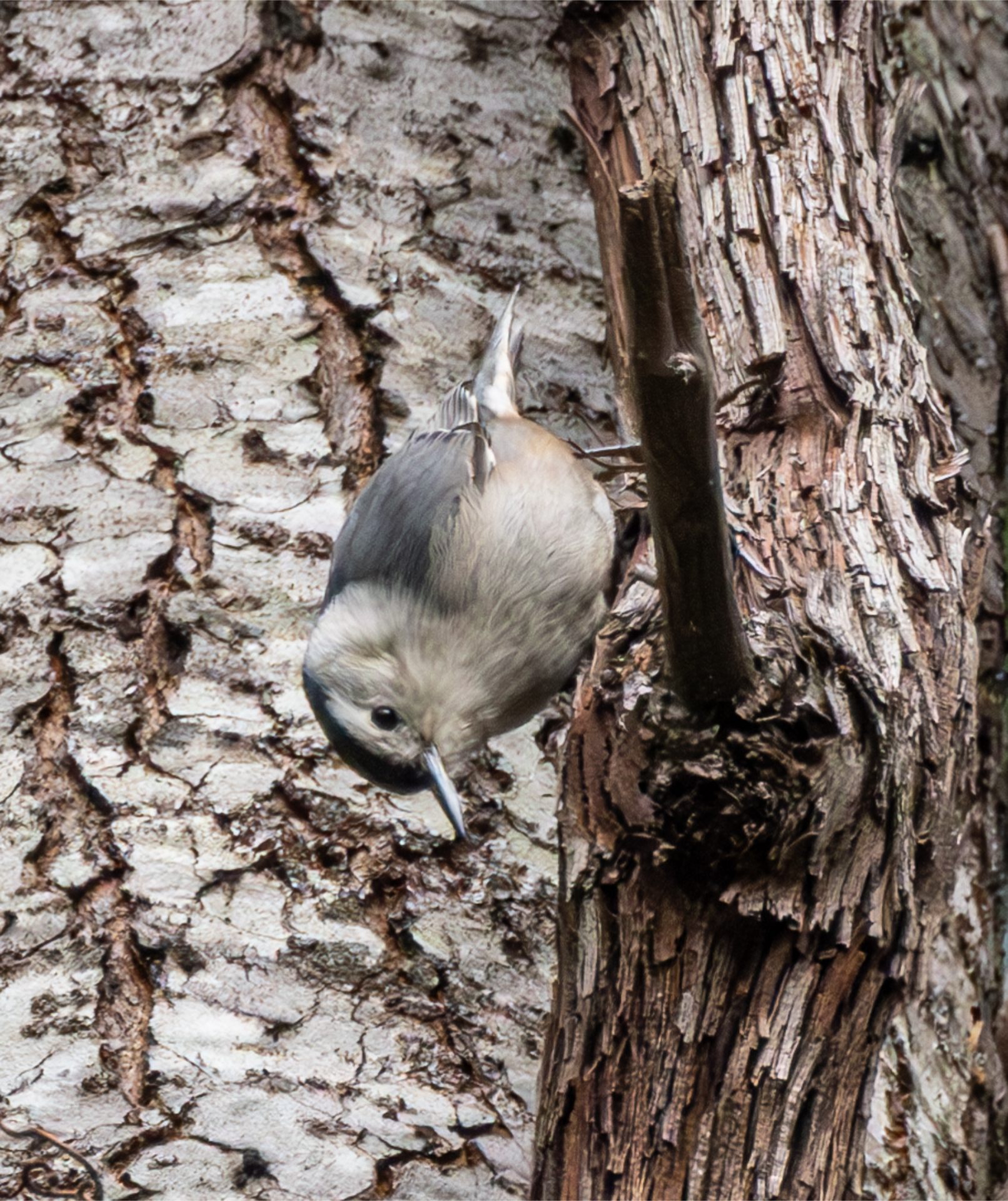
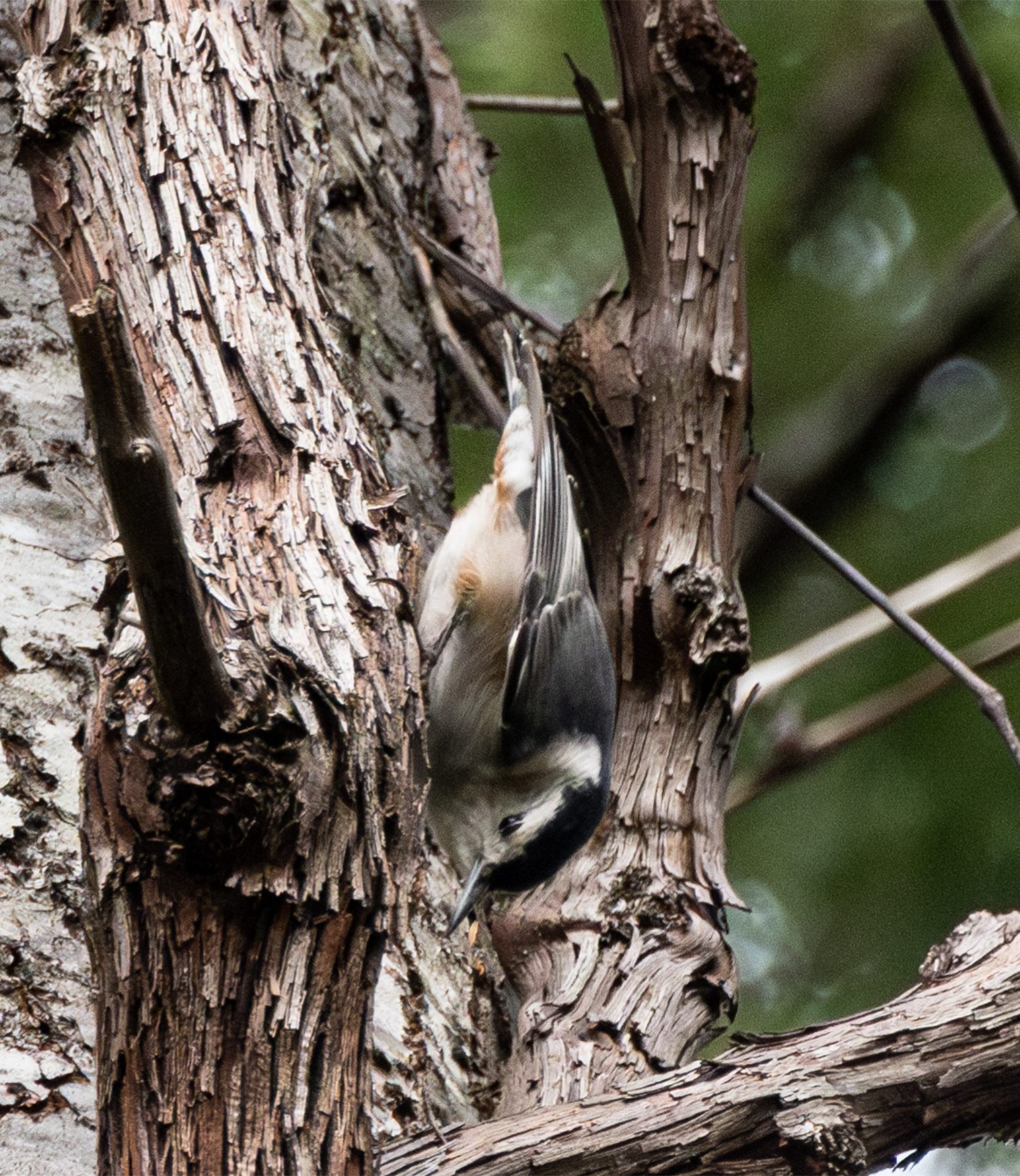
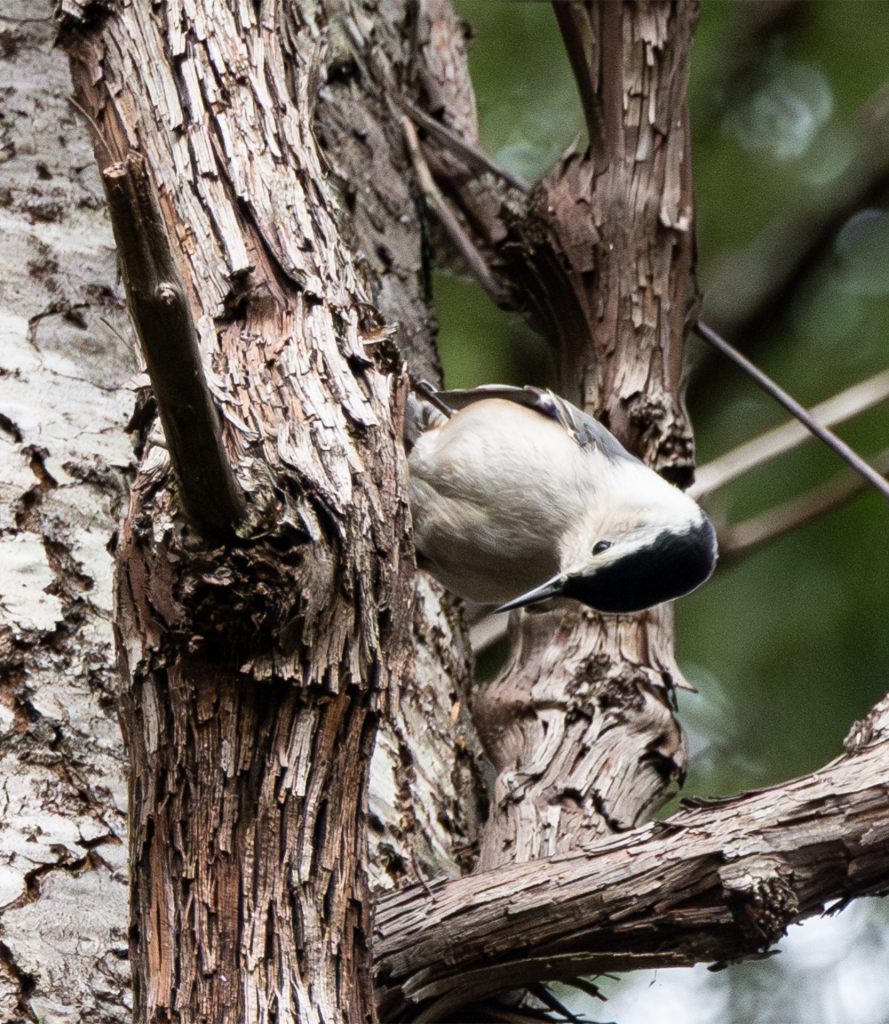
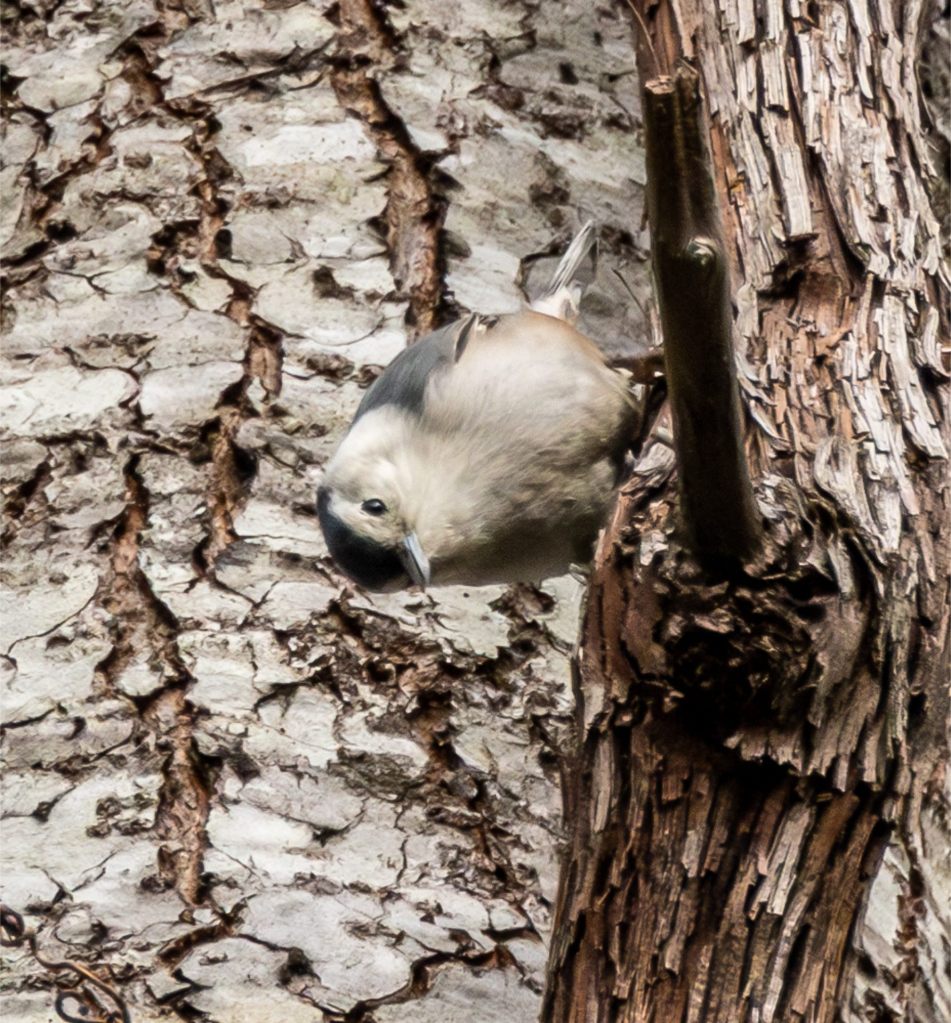
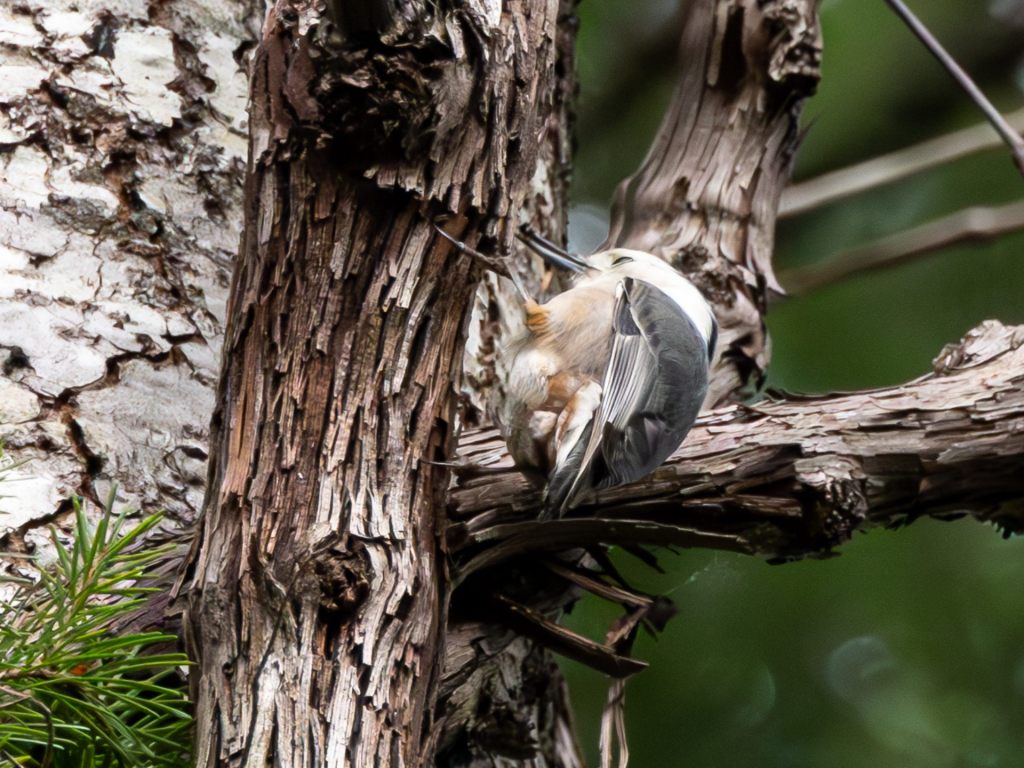
Nuthatches cling to tree trunks or branches with large strong feet and use their needle-like bills to find insects in the creases of bark, somewhat similarly to woodpeckers and the Brown Creeper. Unlike those unrelated tree-huggers, nuthatches don’t anchor themselves to trees with a strong tail, but do have the special ability to descend trunk or branches head first, and can even hang upside down when necessary to excavate bugs.
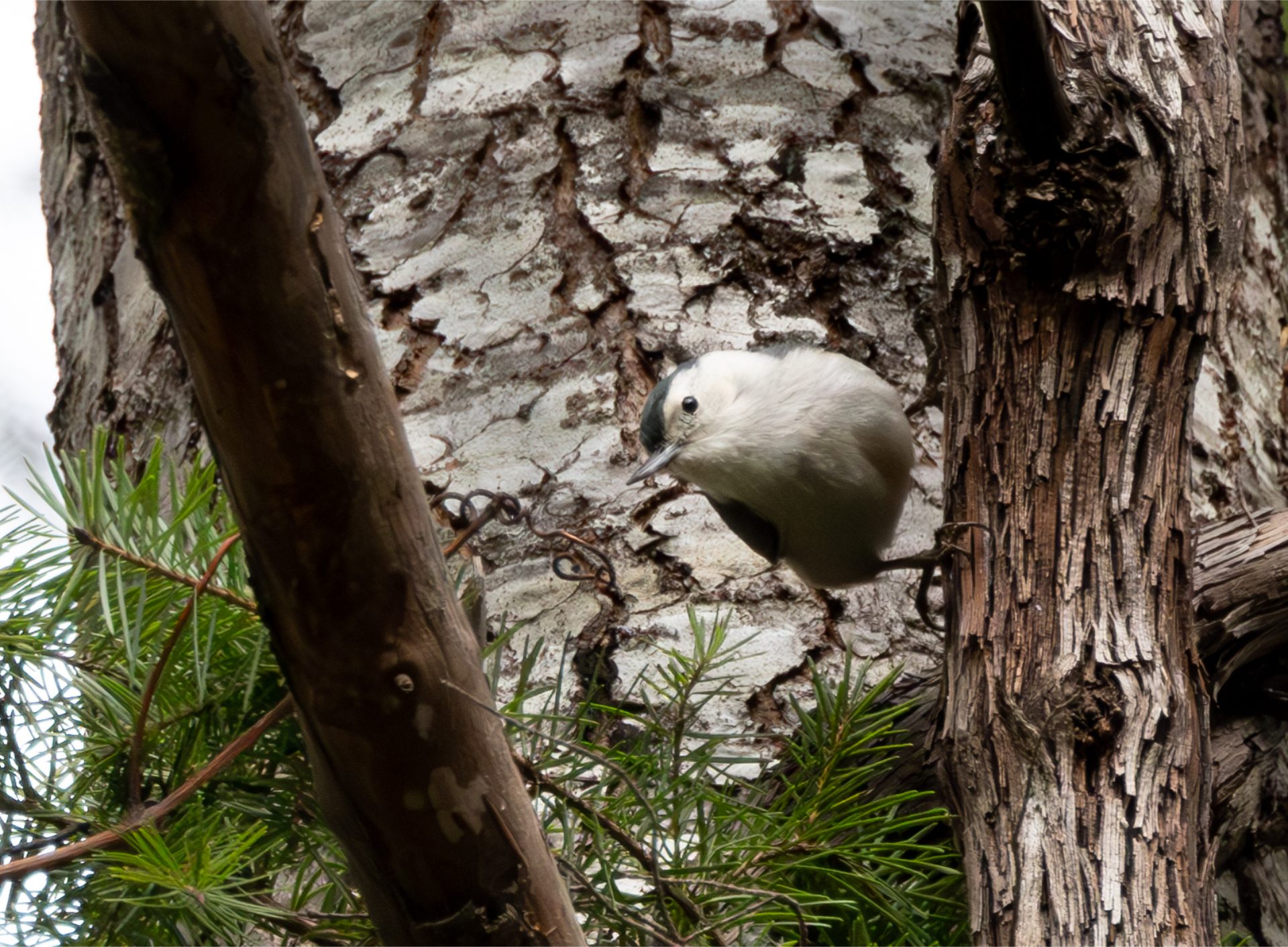
The other day at the Community Park I was lucky enough to get a good look at this not so rare bird. After hearing possibly two White-breasted Nuthatches in the area that burned last spring, I decided to sit down and wait hopefully for one to appear. I heard the familiar and repeated “brrrr” sounds, and could tell by the shift in where the sounds were coming from that the birds were gradually coming closer to me.
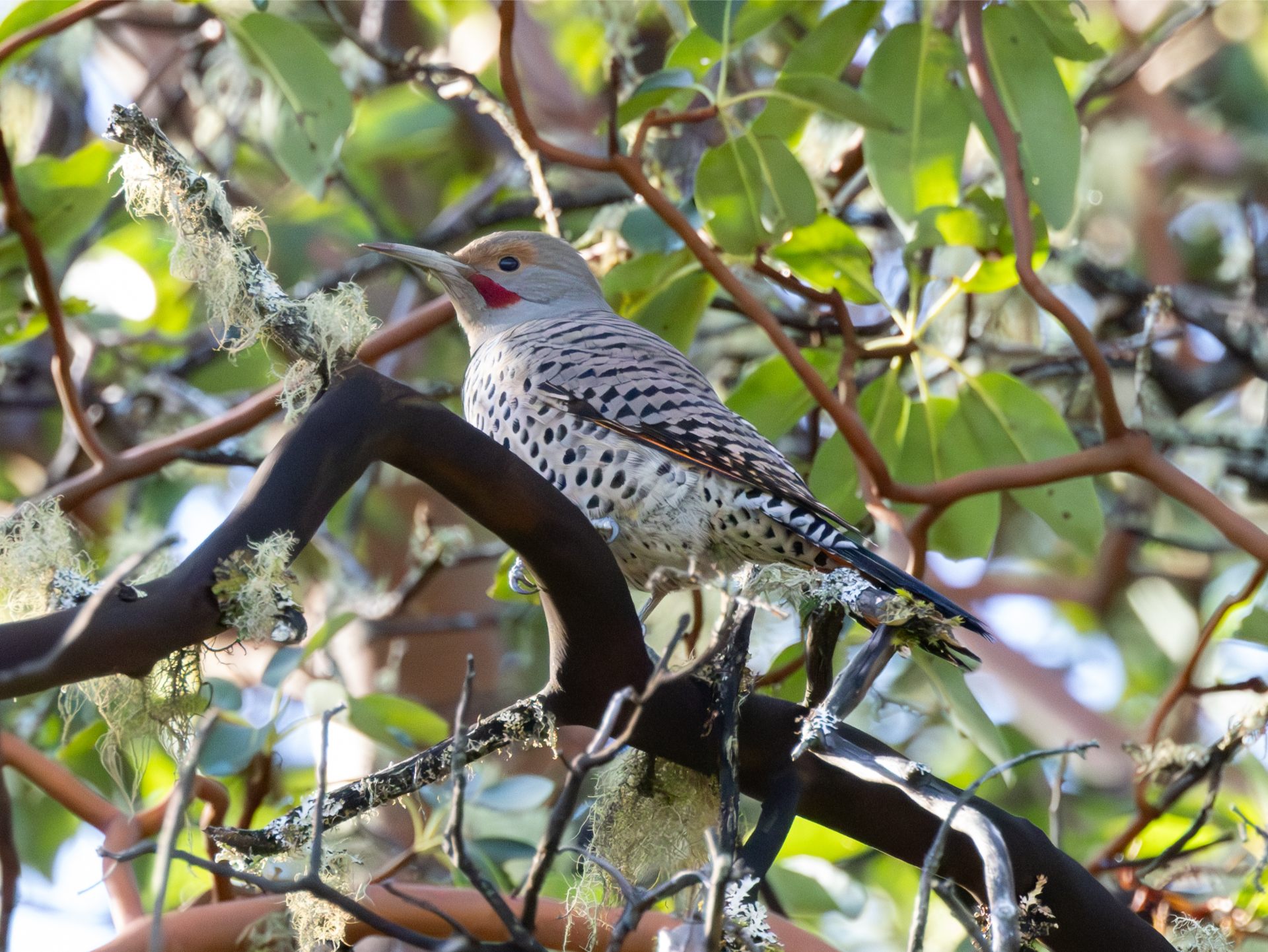
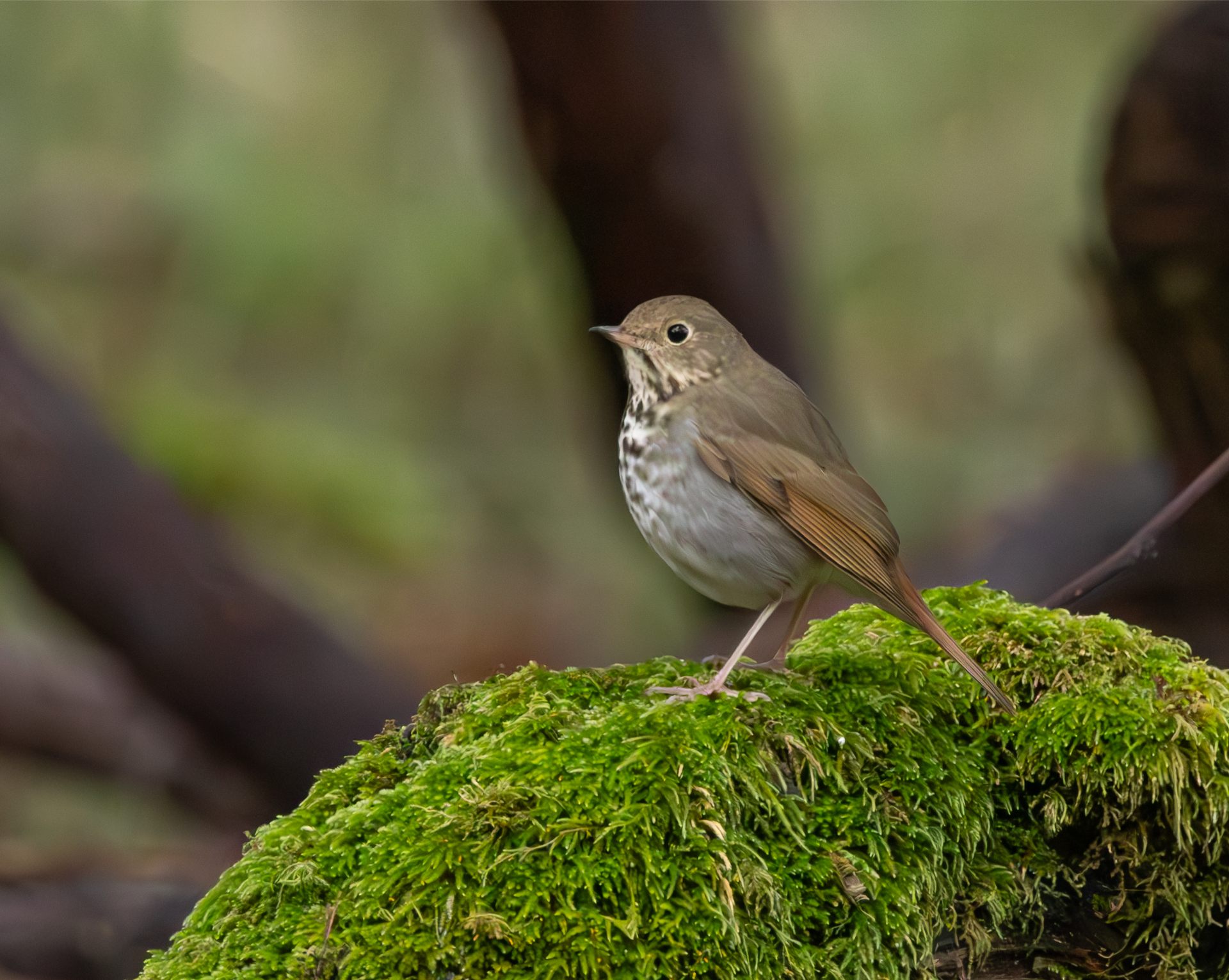
A few other birds came by while I waited: Northern Flicker, Acorn Woodpecker, Hermit Thrush, Common Raven, American Crow, Spotted Towhee, among others.
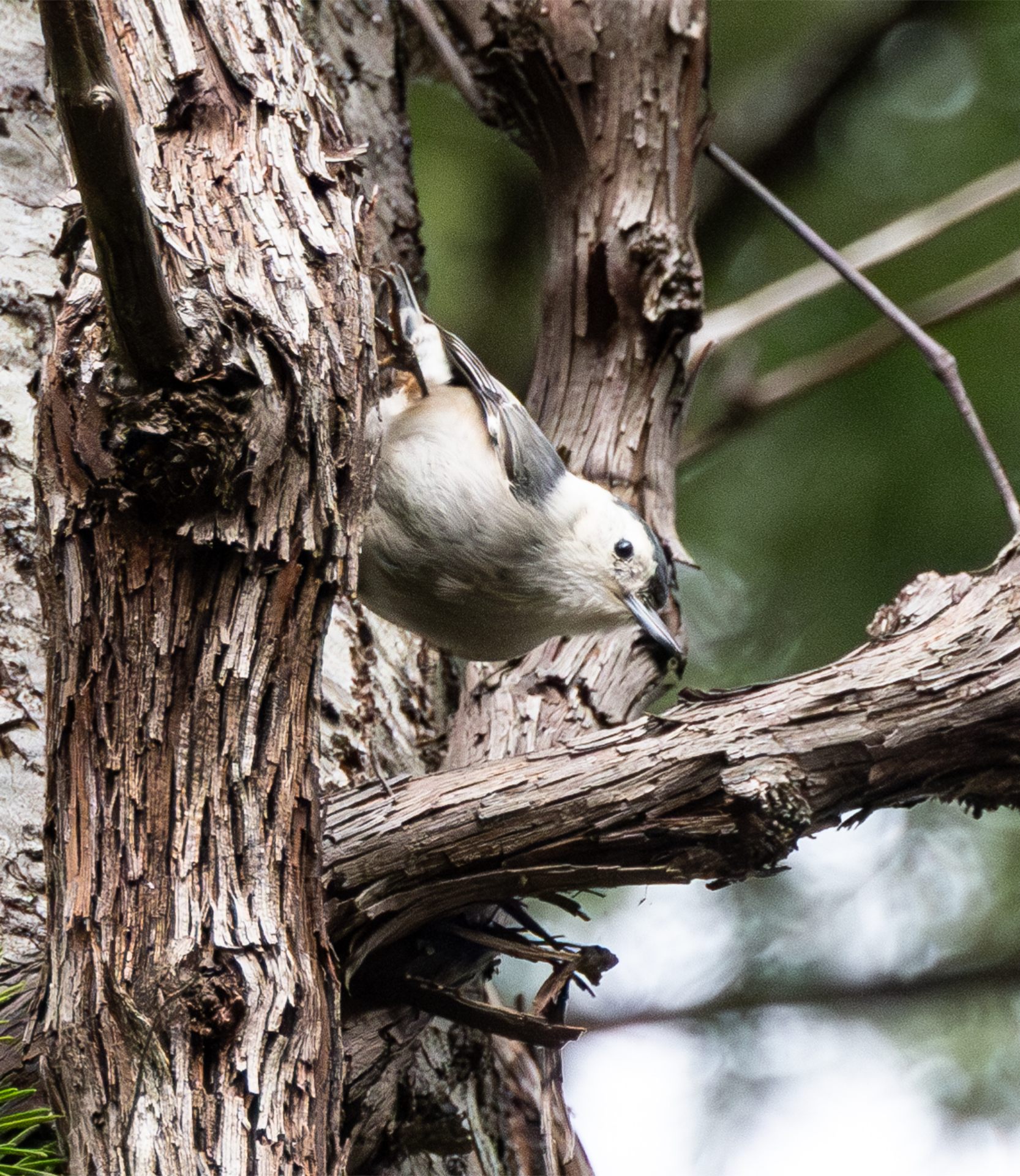
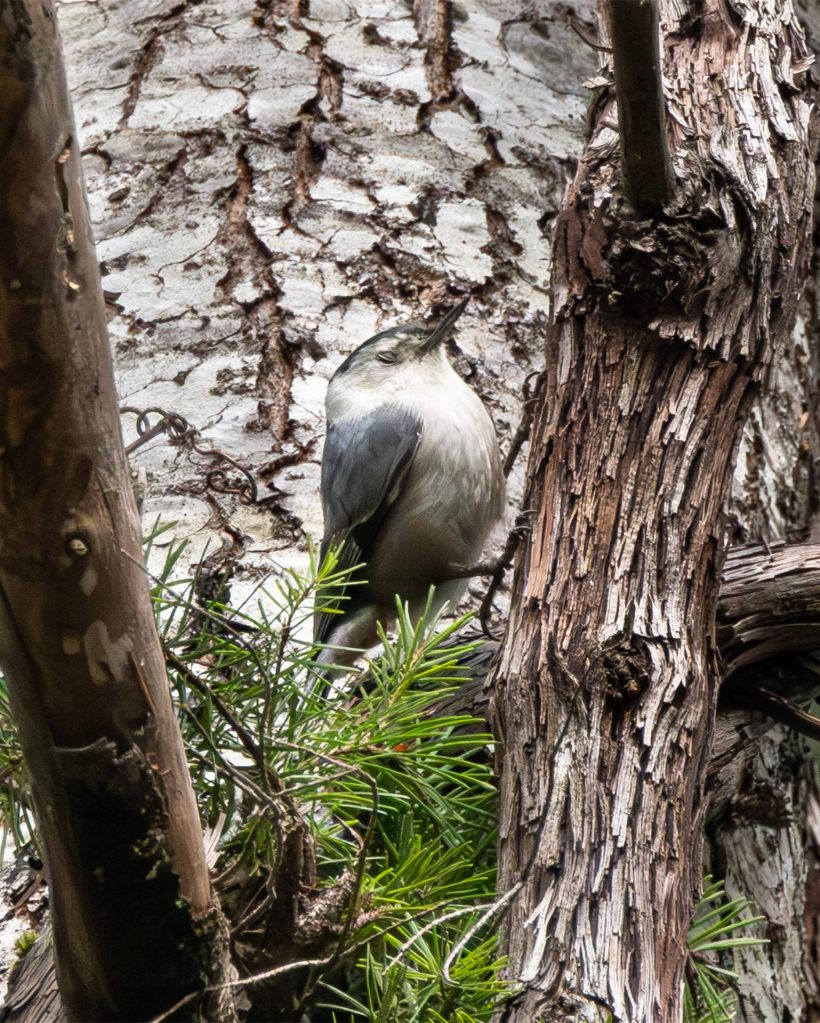
Finally, after an hour of neck-craning anticipation, a nuthatch appeared in a visible spot in a fir tree not too far out in front of me and about ten yards up. It put on a show of its unique foraging behavior and worked the area from every conceivable angle. This turned out to be my longest and best look ever in my patch.
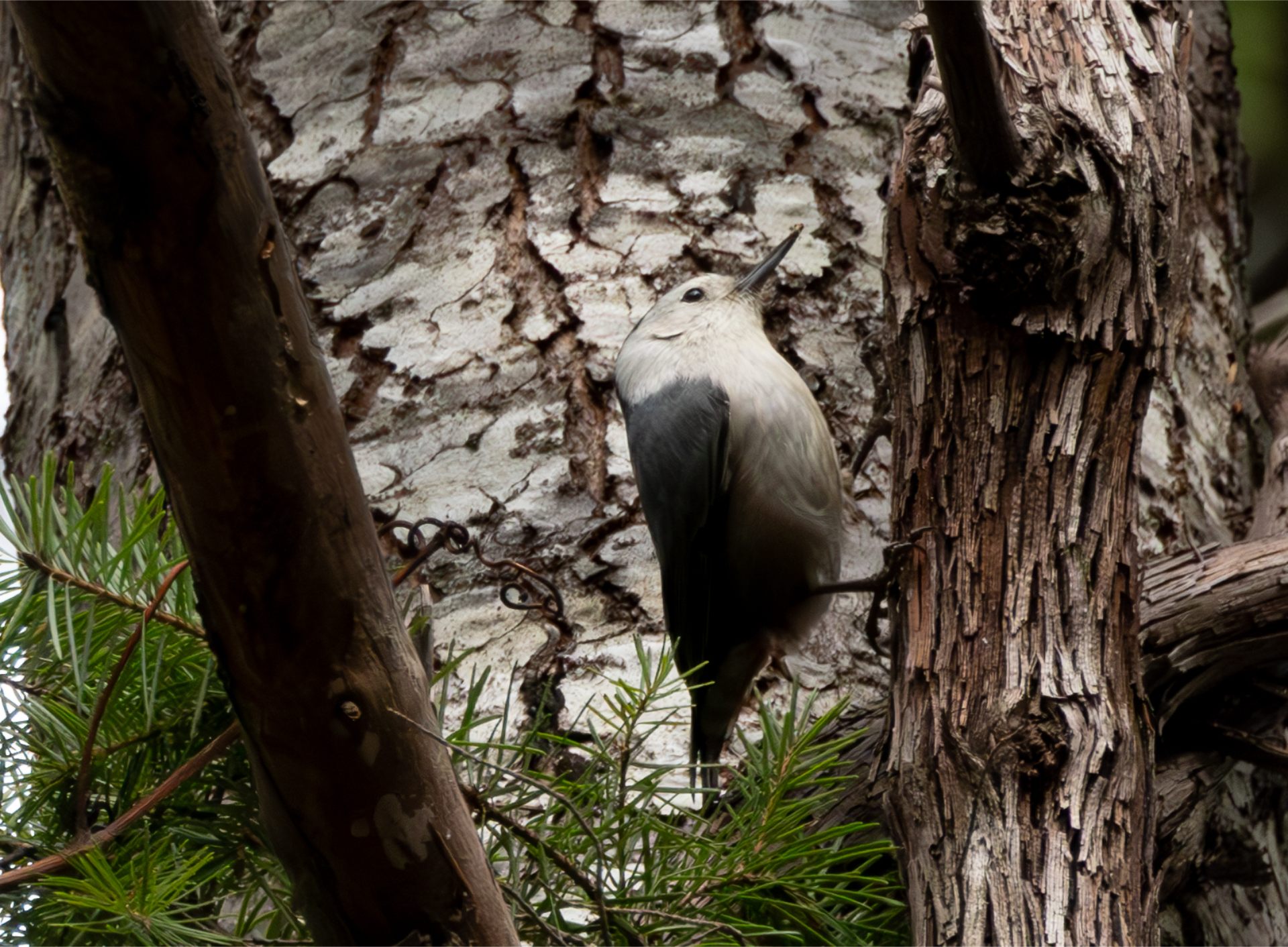
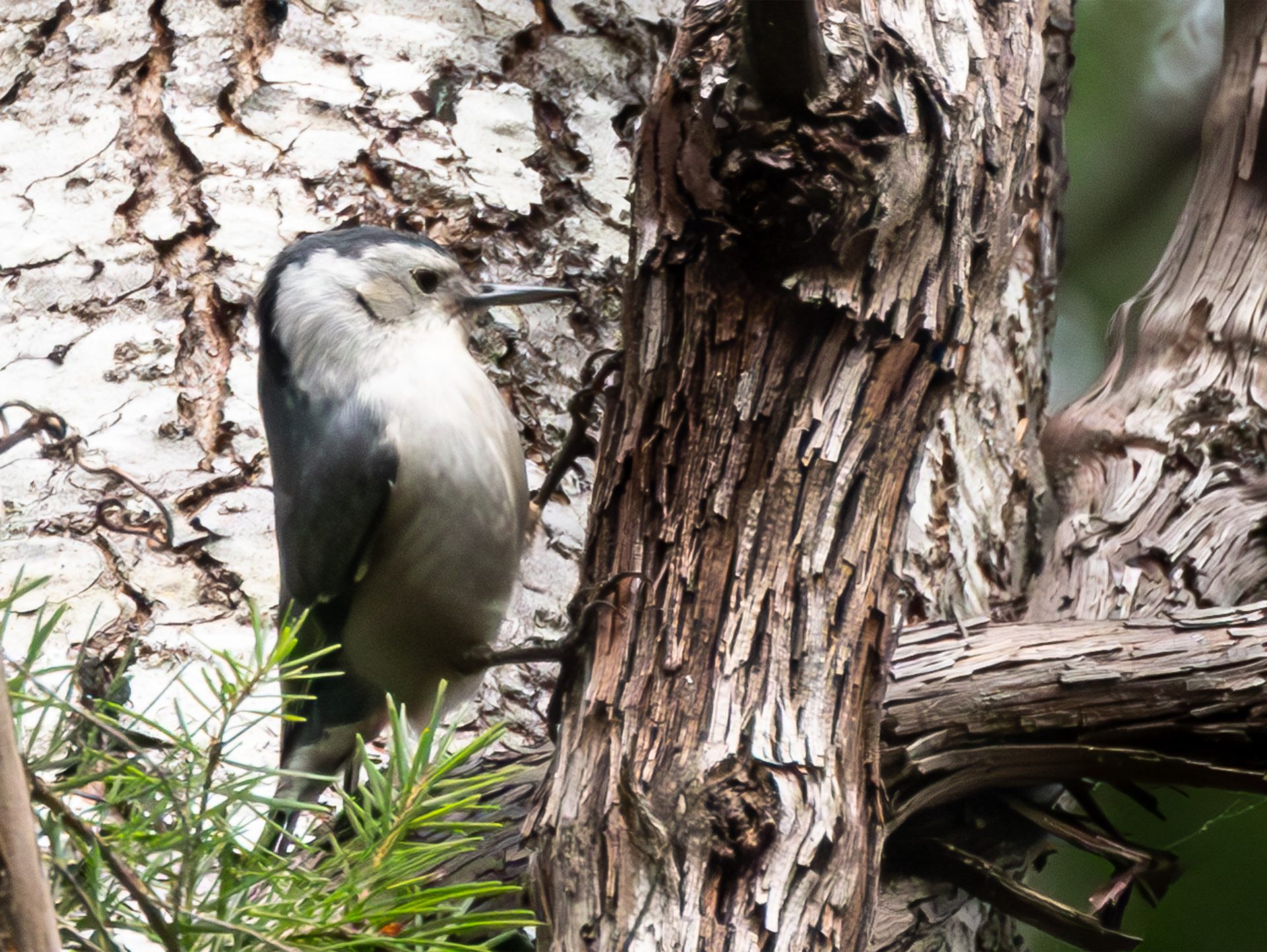
Below are a few more looks at this spritely and acrobatic little hunter.




 Free Range Photography
Leave a reply to scented0ebd97cdbc Cancel reply