A good traveler has no fixed plans and is not intent on arriving. -Tao Te Ching
The best birding days are like that. We may start with plans and expectations, as well as a strategy for fulfilling them, but the sooner those goals fall by the wayside, the more likely it is that we will enter the flow state of watching birds. Time becomes irrelevant, eyes fix to tree tops, bodies of water, and sky; ears filter for chirps, squeaks, honks, and cries. A fine-tuned alertness, still in our DNA, reminds us of our past, when it was evolved for survival. We are wild again.
January 20 was not a great day for photography due to bright sunlight, but here are a few pics and videos of some highlights of a ramble through several Humboldt coastal locations, which proved to be a perfect antidote to the human distractions of the day.
Give evil nothing to oppose, and it will disappear by itself.
I set out with two like-minded dear friends to look for birds. Plans were foiled at our first stop with the refuge being closed due to the holiday (a good holiday that normally would get a lot of press, but not this year when that other happening eclipsed it, nuclear-winter style), no one minded as we switched gears and headed to the South Spit, a 6-mile long skinny peninsula hemming in the southern lobe of Humboldt Bay.
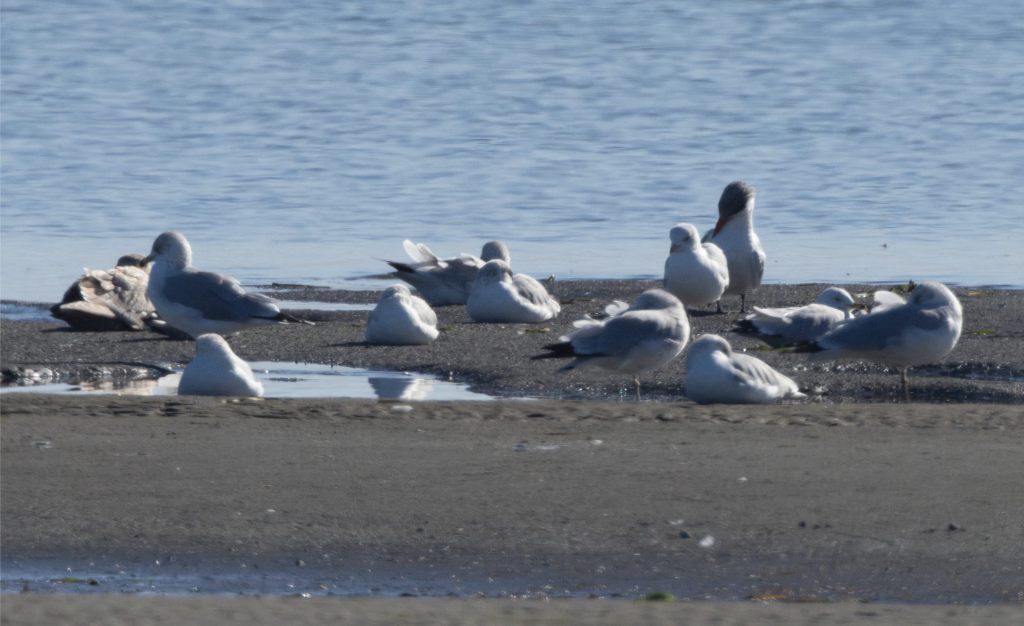
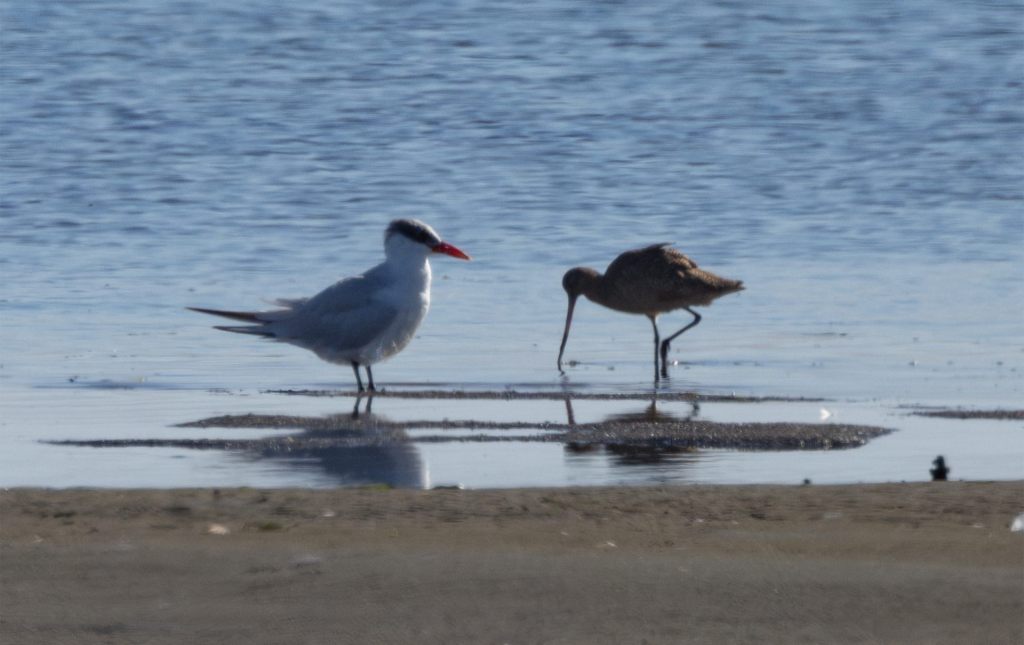
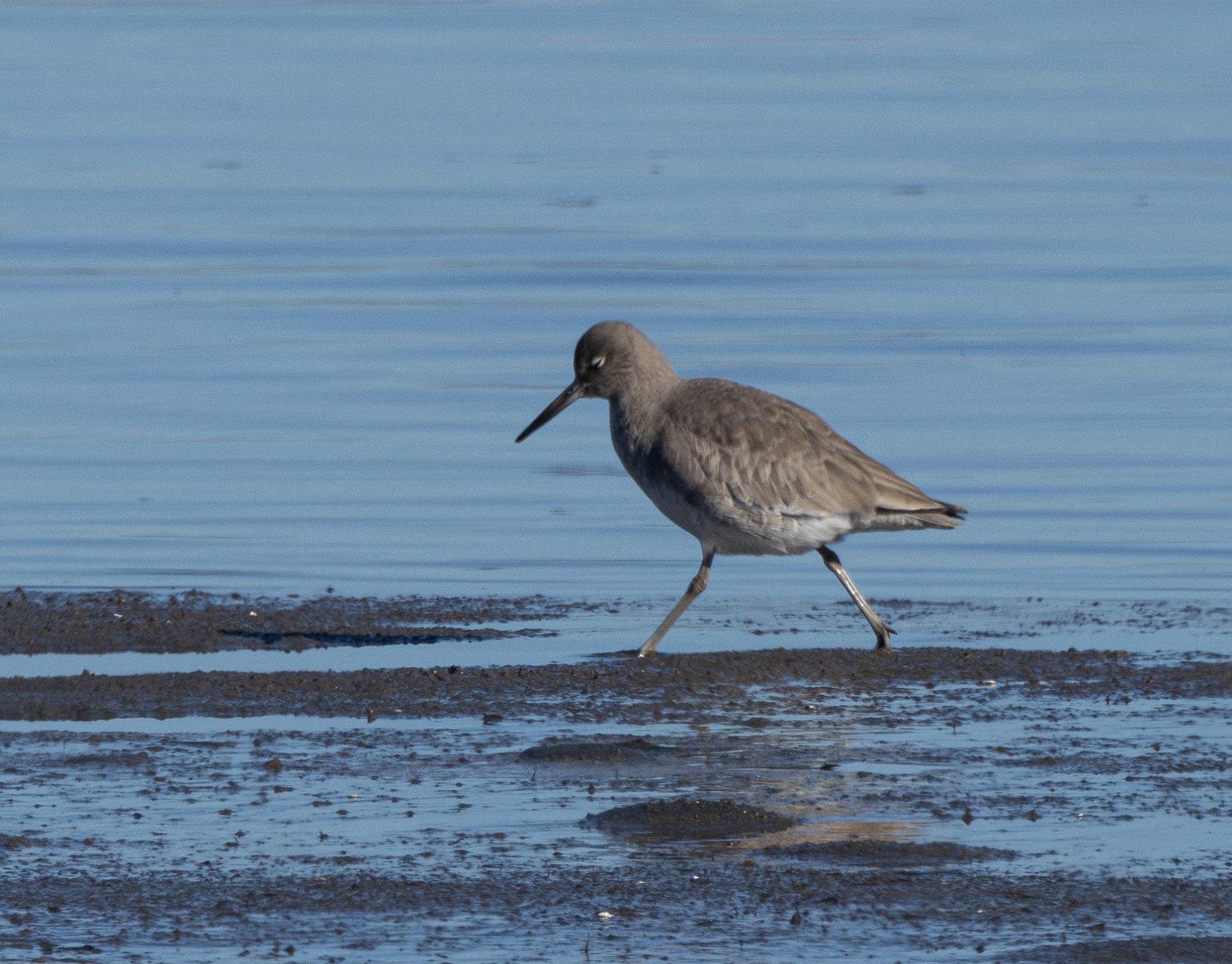
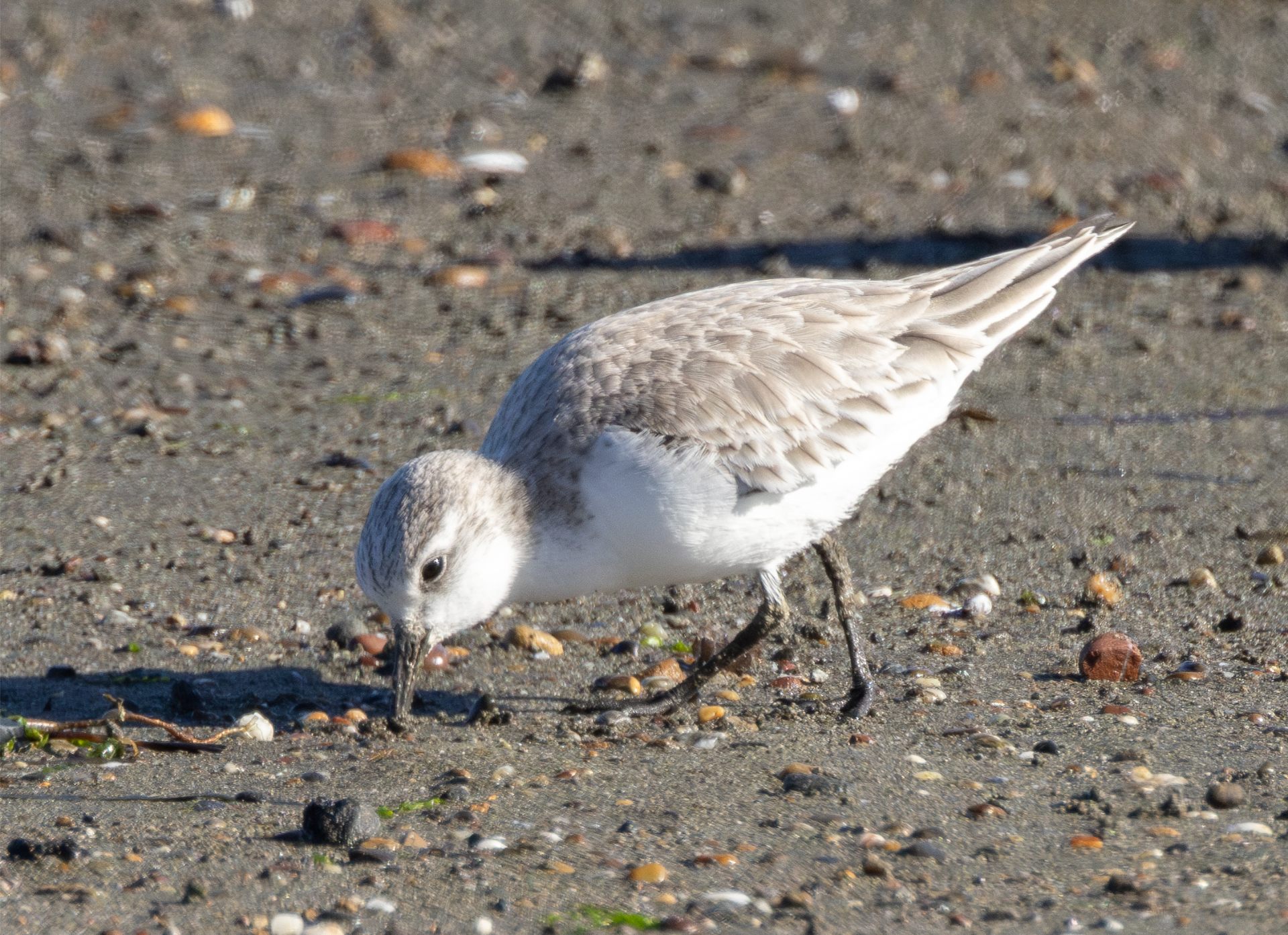
We saw a lot of birds along the muddy shore on the bayside of the spit, during what must’ve been a lowish tide. Dozens of Sandpipers were busy probing the mud for morsels of prey, gulls of several species were resting, Great Egrets and Great Blue Herons were present.
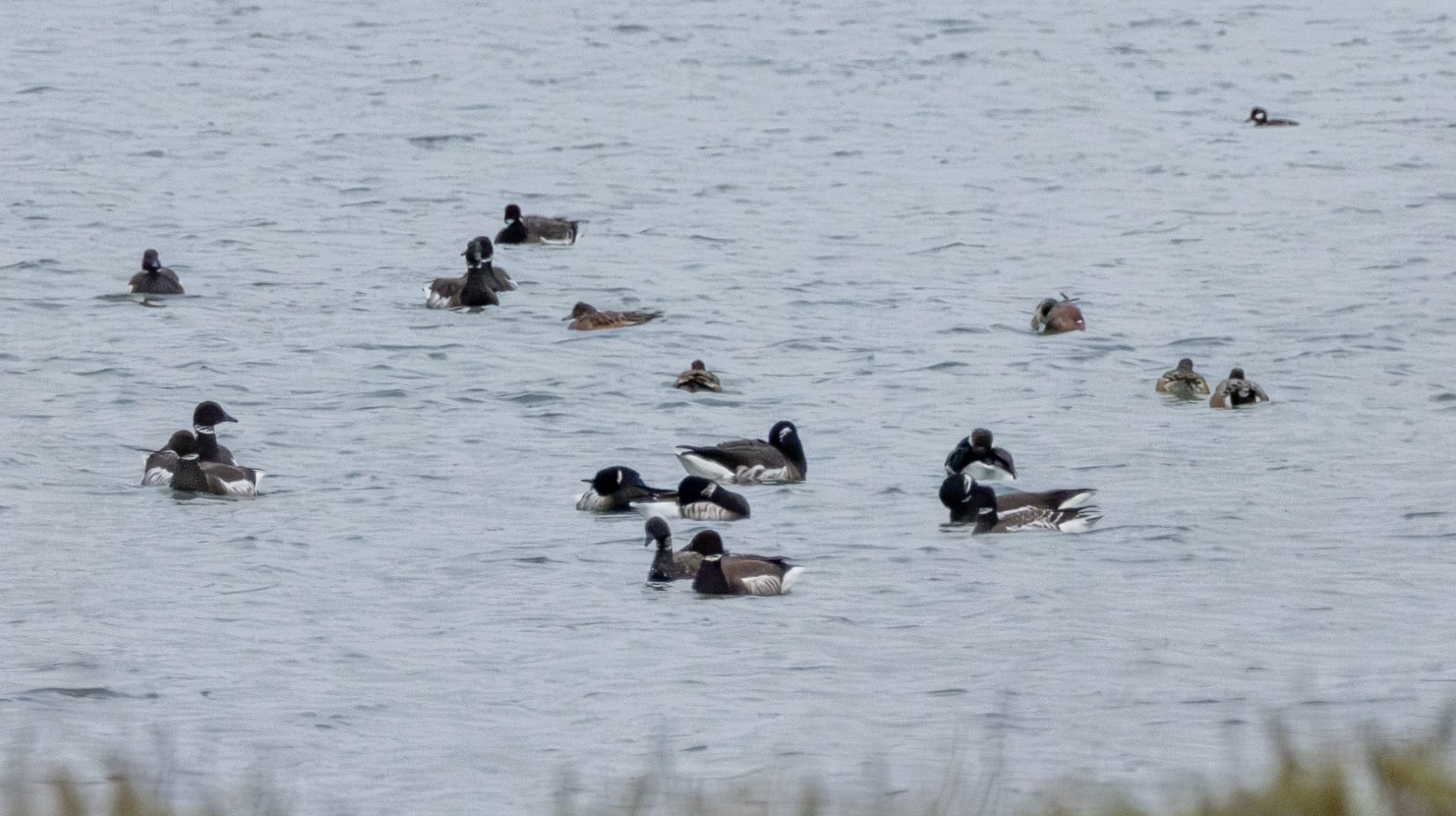
Further out in the bay were hundreds of ducks, mostly American Wigeons and Buffleheads, and many dozens of handsome Brants, an elegant black goose that breeds in the Arctic, but winters with us, dining on Eelgrass, a keystone species of Humboldt Bay ecology. Horned Grebes, a couple Surf Scoters, a Common Goldeneye, all too far away to photograph, but furnishing a sense of abundance and health in this place.
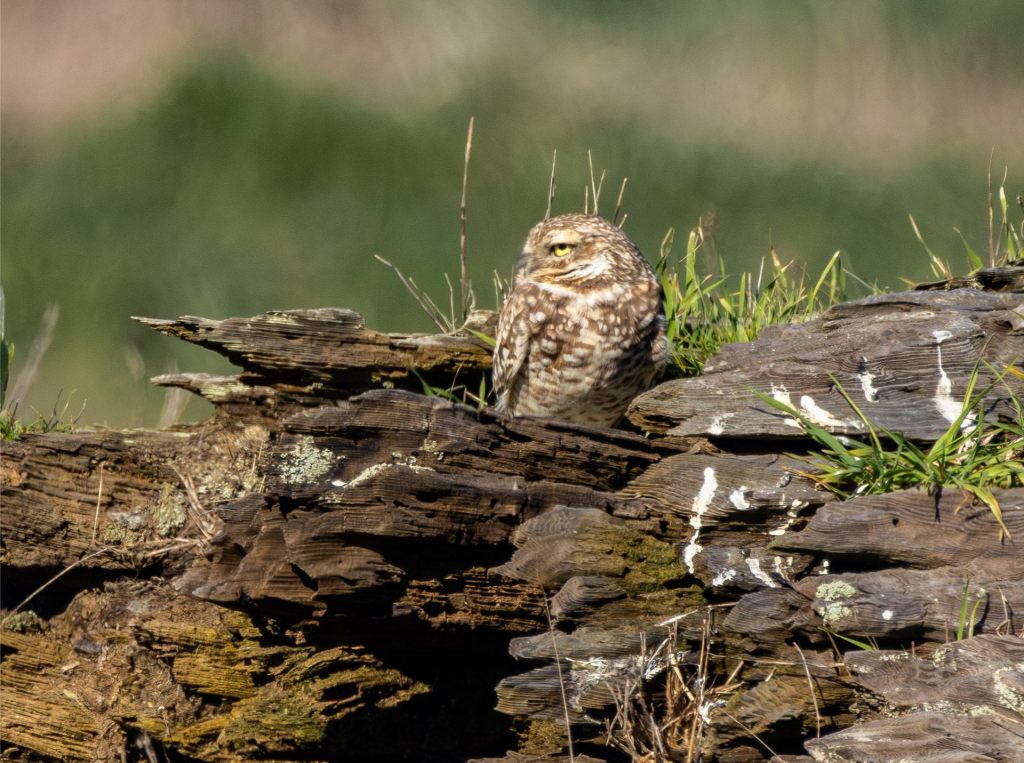
The Burrowing Owl we expected to see was not around where it had recently been noticed. Instead two Ravens were perched on the owl’s log, and it was easy to infer menacing intent from the pair, especially as I had seen Ravens harassing a very rare Snowy Owl not far from this spot a decade ago.
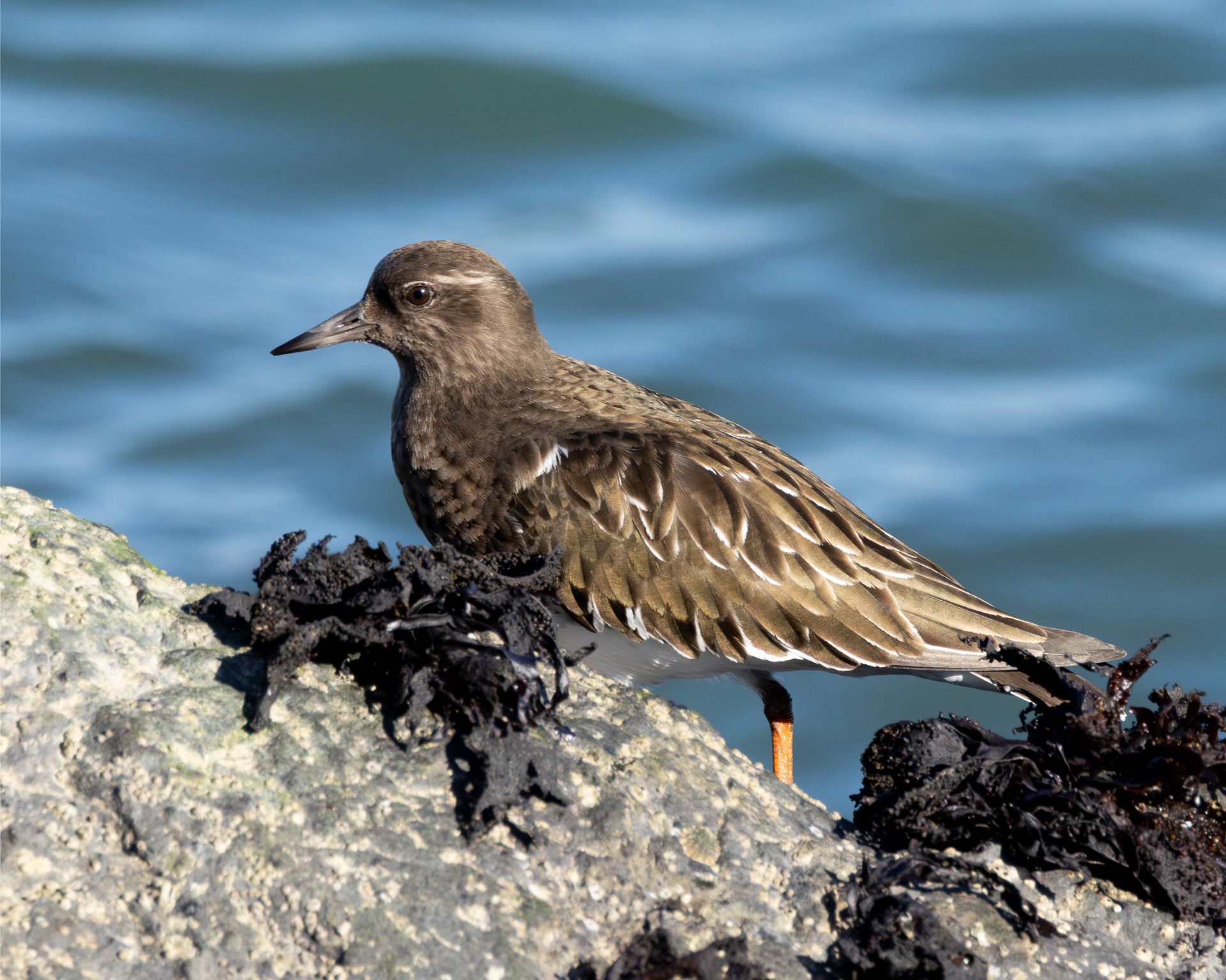
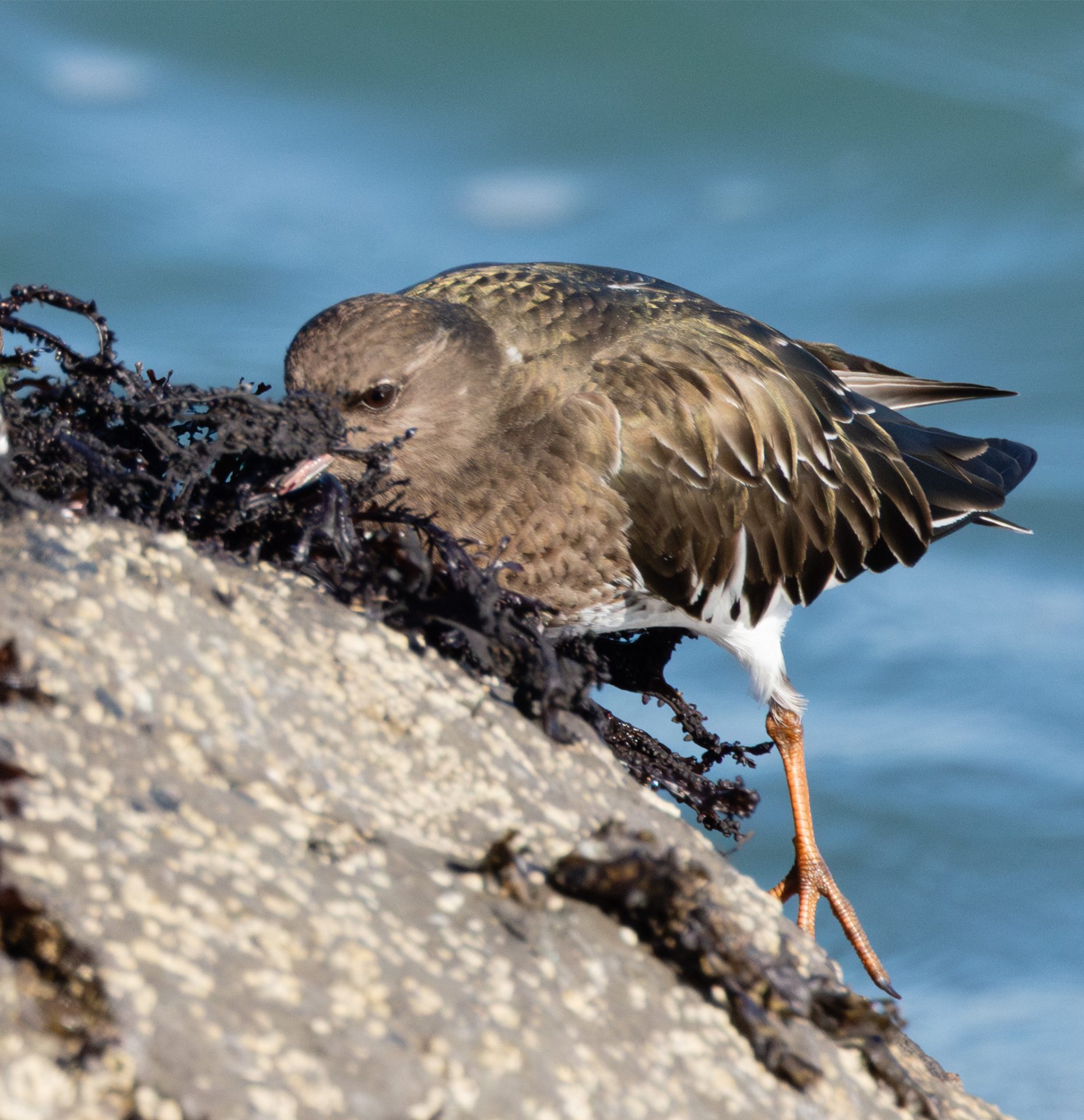
We continued on to the end of the spit, expecting loons, a couple species of which are often seen diving for fish close to the shore on the bay side. Instead, a small group of Black Turnstones appeared, hopping around on the rocks piled up along the water’s edge, using their stout strong bills to dig for food in and around vegetation clinging to the rocks. Another Arctic breeder, these birds also winter here, specializing in feeding along rocky shorelines, both the natural and man made kind.
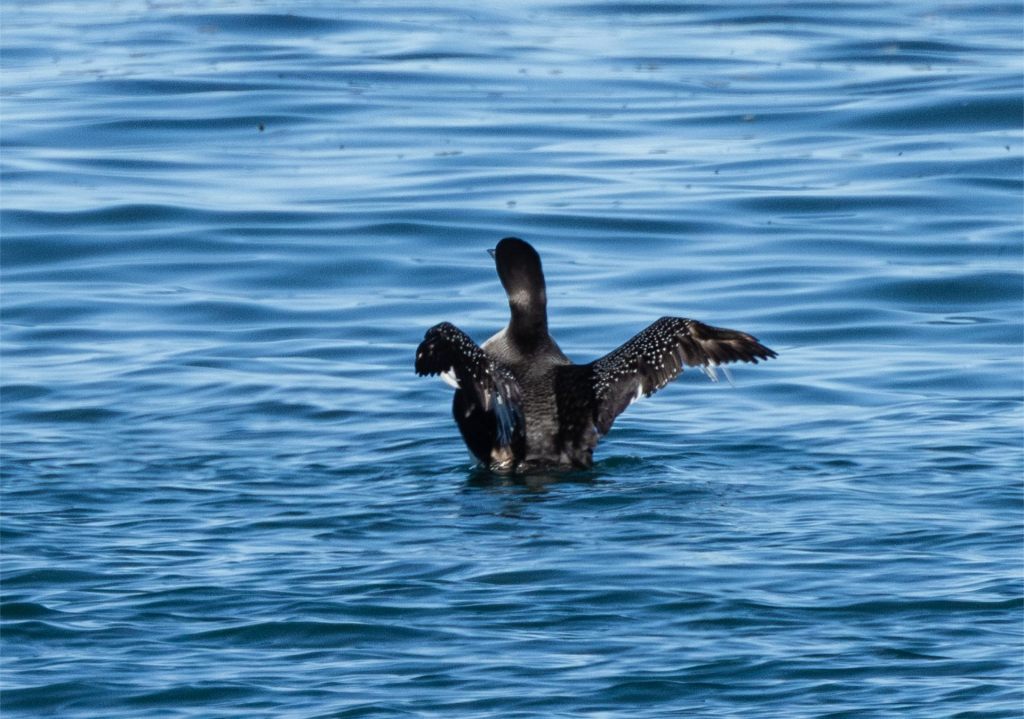
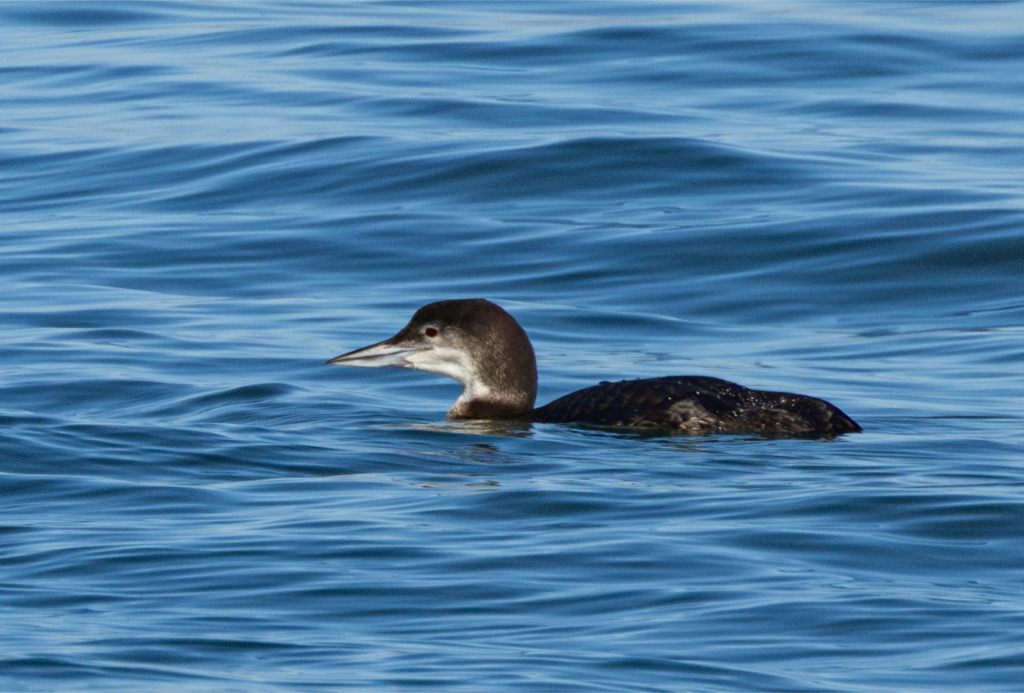
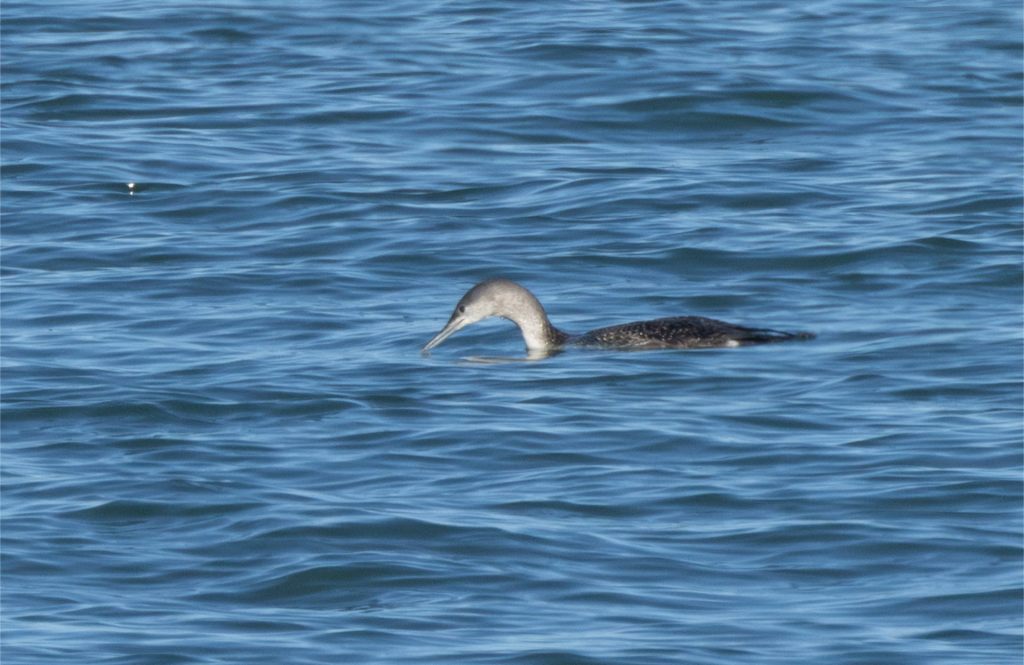
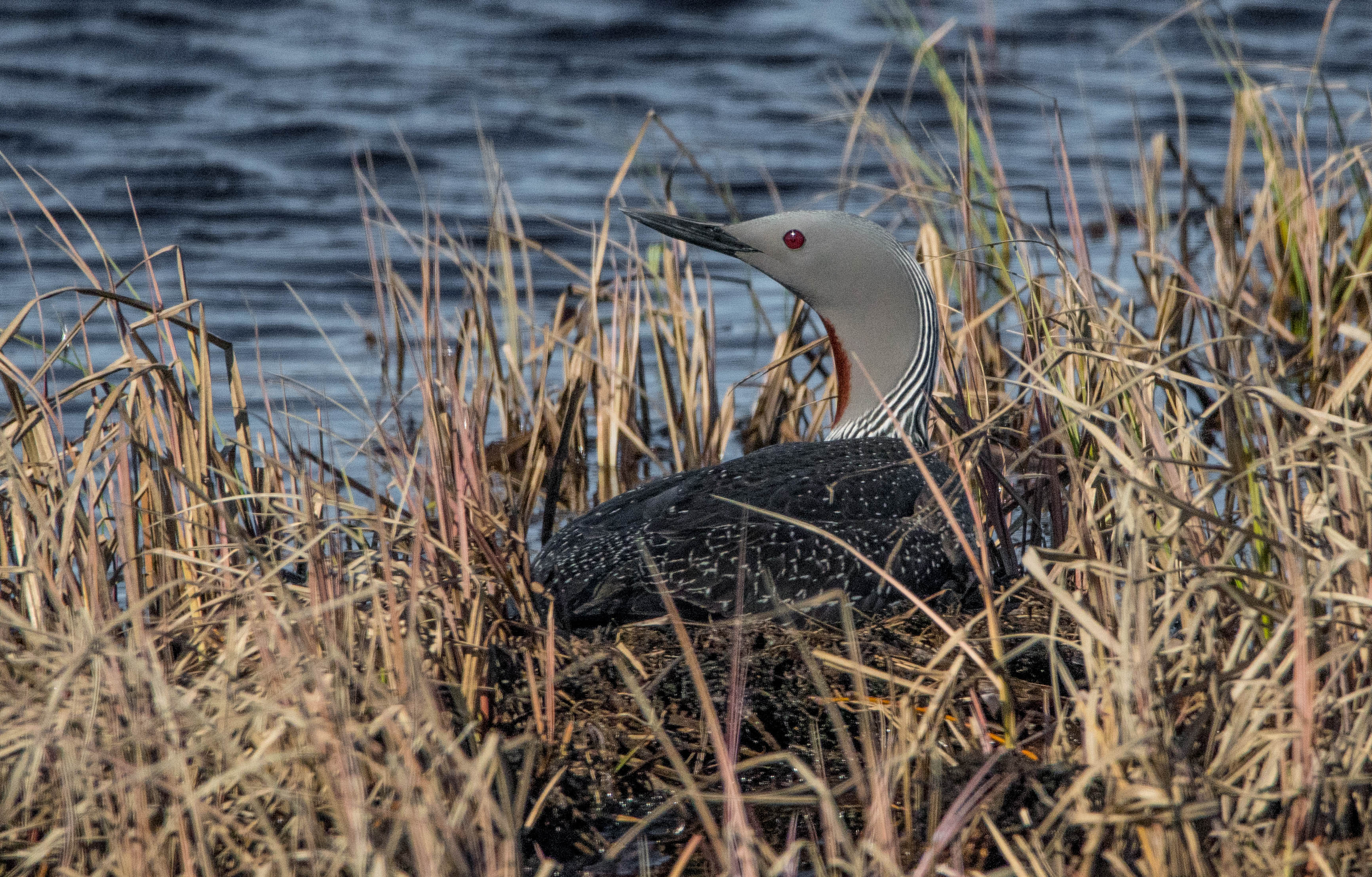
Soon enough, loons started to appear, surfacing briefly after diving for fish, but farther out from shore than usual. A couple of the Common Loons were beginning to show breeding plumage coming in, but the smaller Red-throated Loons were still in their winter garb of pale grays.
On the way back to the base of the spit we found the Burrowing Owl in the same spot we’d checked before, and those Ravens were nowhere to be seen. Somewhat misnamed, the Burrowing Owl does not often dig its own burrows, but relies on those previously excavated by mammals. Burrowing owls are in decline in part because the mammals who dig those burrows are also in severe decline. But there are a few that come every winter to some predictable spots around Humboldt Bay.
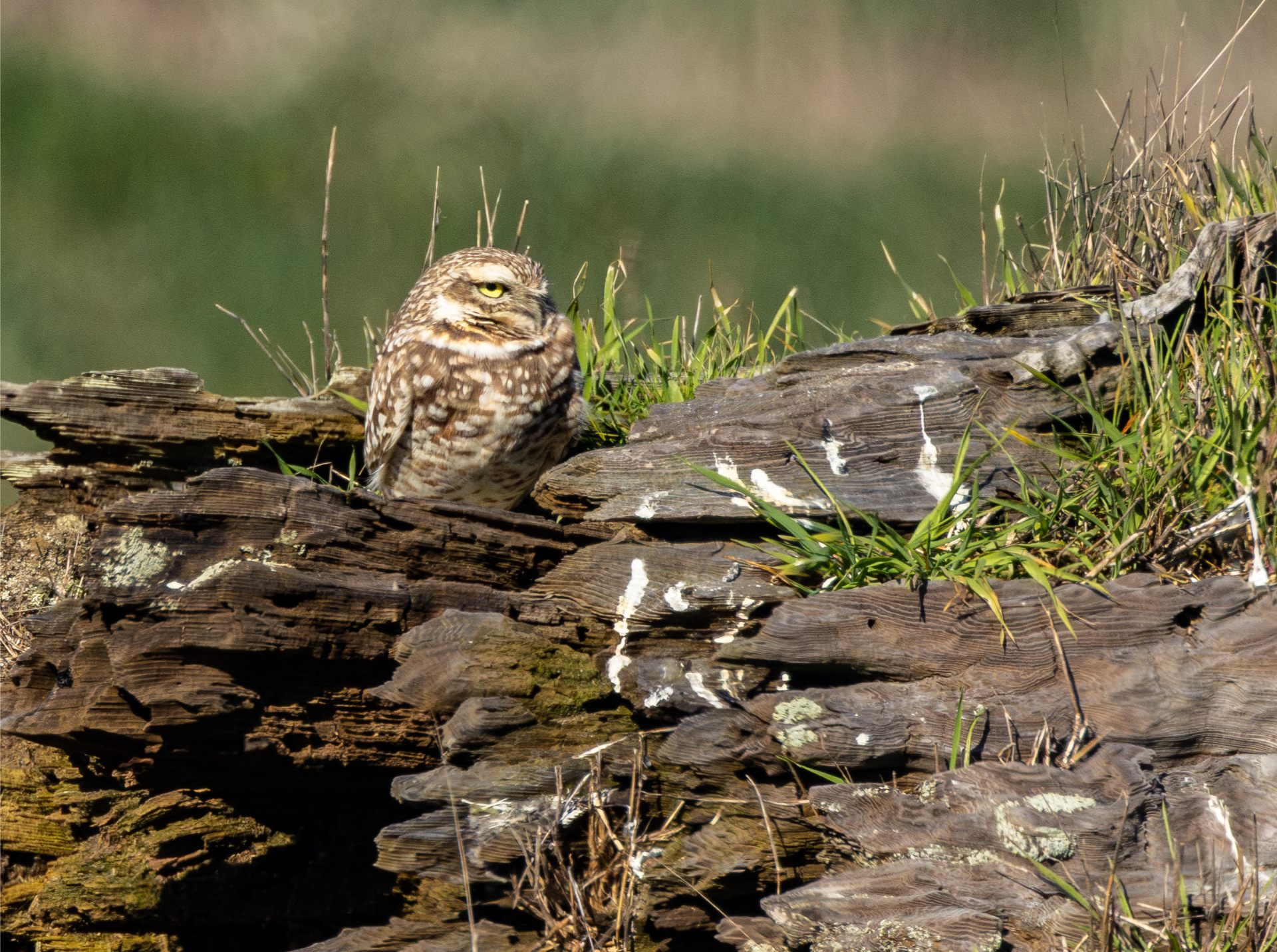
Being face to face with any owl is a mesmerizing experience.
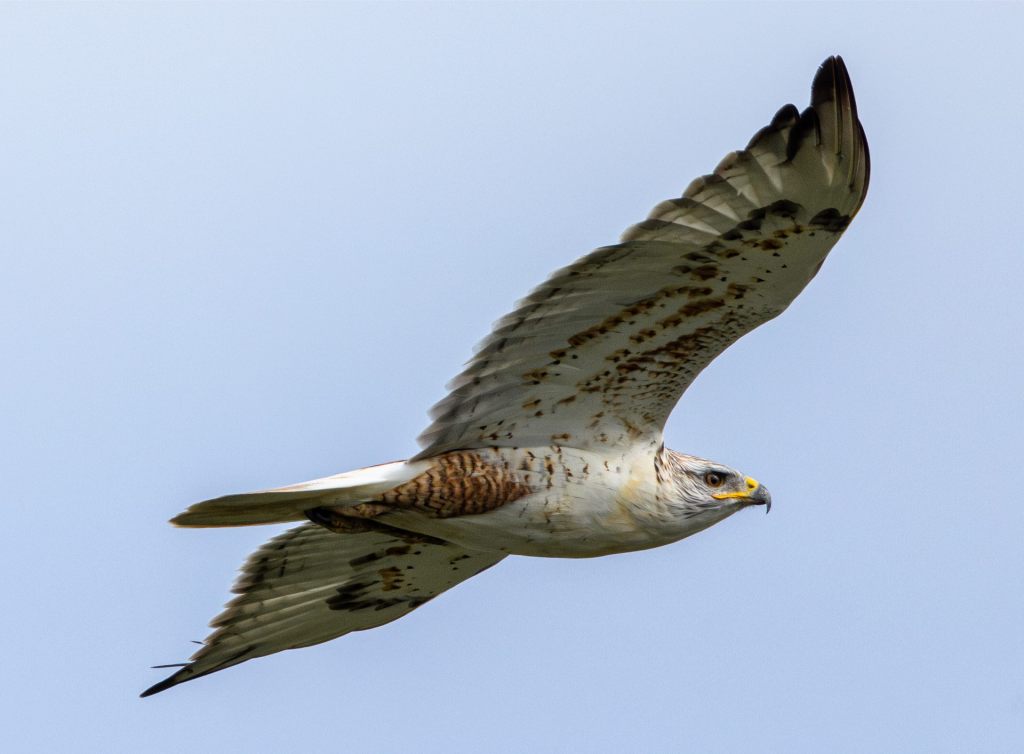
We left the spit after observing a couple Northern Harriers riding the wind in search of prey. We climbed up and over Table Bluff and back down to near sea level for a brief visit to the Ocean Ranch unit of the Eel River Wildlife Area. A pair of Wrentits played hide and seek with us next to the road. A male Harrier and two White-tailed Kites were seen all too briefly in the blustery wind.
Trying to grasp things, you lose them. Watching birds is like this, too. A glimpse of beauty teaches you to not reach for more.
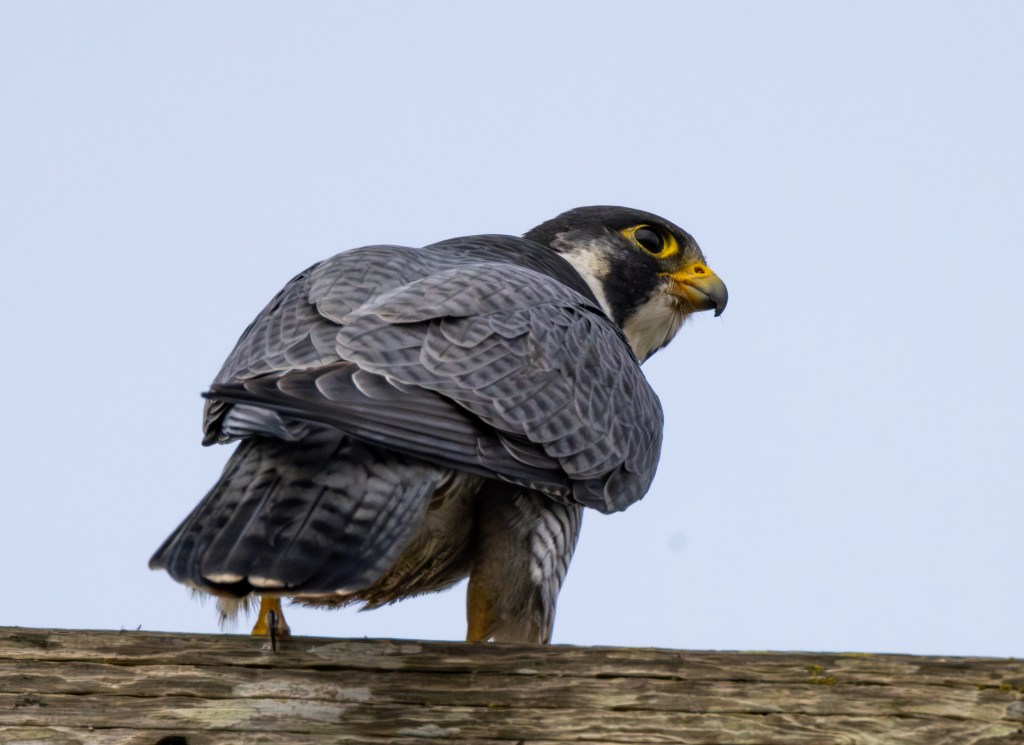
Copenhagen Road was the Broadway of American Kestrels on that day. Teed up on nearly every other fence post, perched on sagging power lines, we almost lost count of the tiny falcons. The spongy earth to the west of the road was dotted with pond-sized puddles full of coots and ducks wary of harriers and a peregrine cruising overhead.

Cannibal Island Road delivered the best surprise of the day, a large group of Tundra Swans, resting, feeding, and strutting about. These huge waterfowl come south to Humboldt from their far north breeding grounds for a few months each winter, but have not been around in their usual numbers the past two years. I could stare at them all day and I bet folks could get off their blood pressure meds if they could do the same.
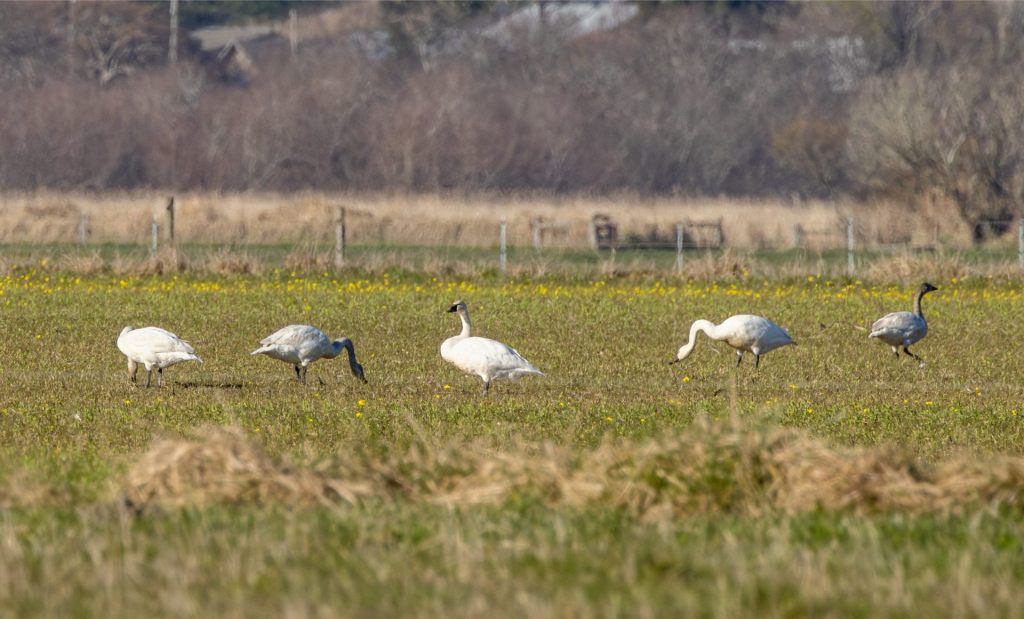
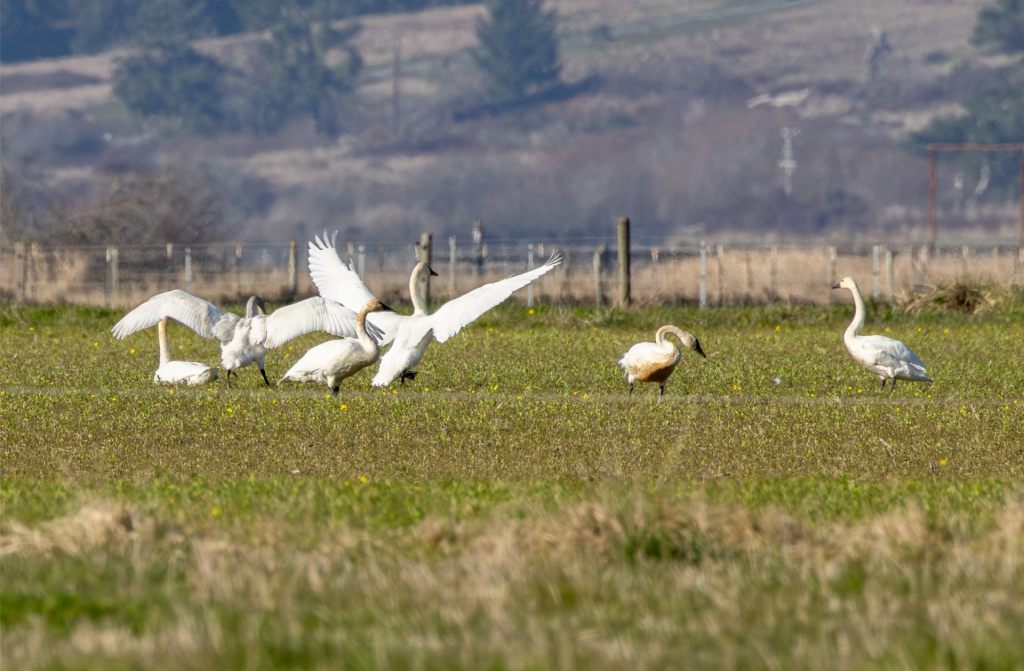
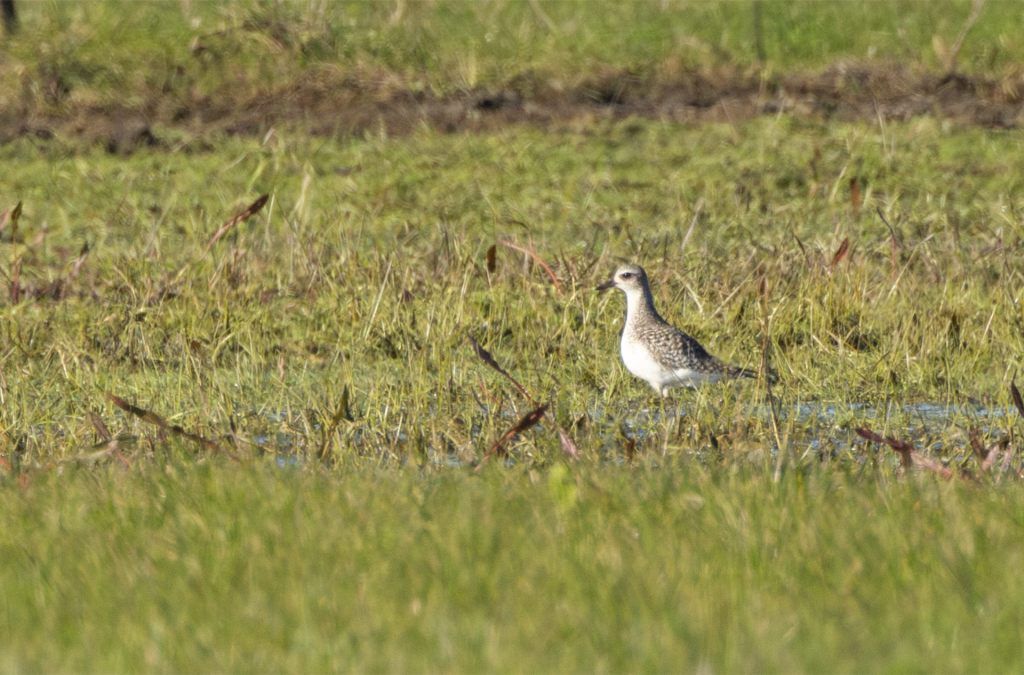
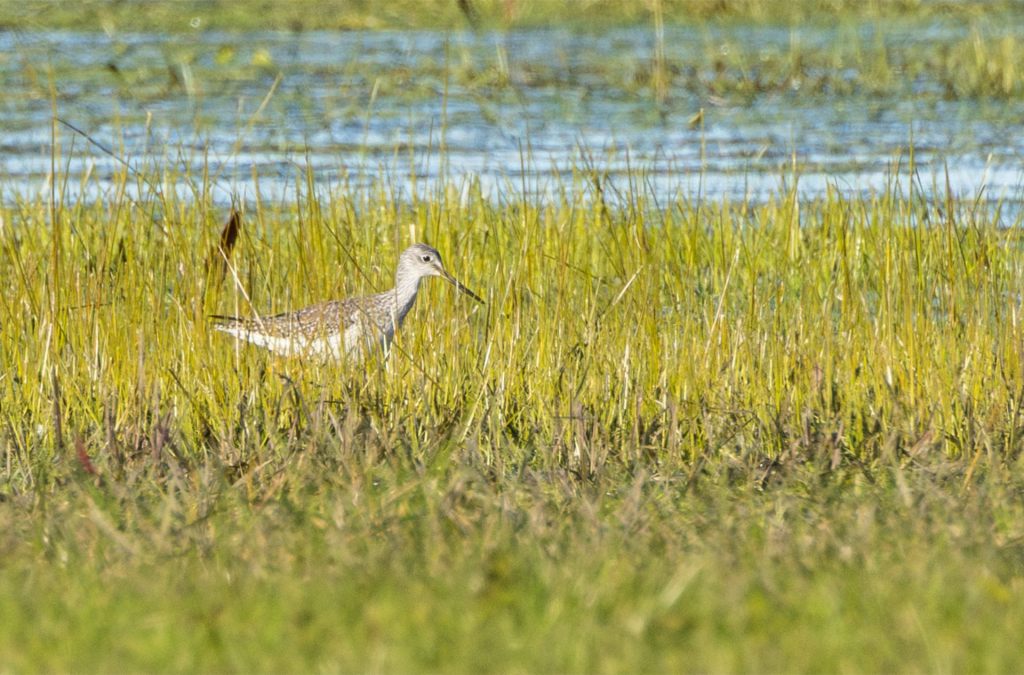
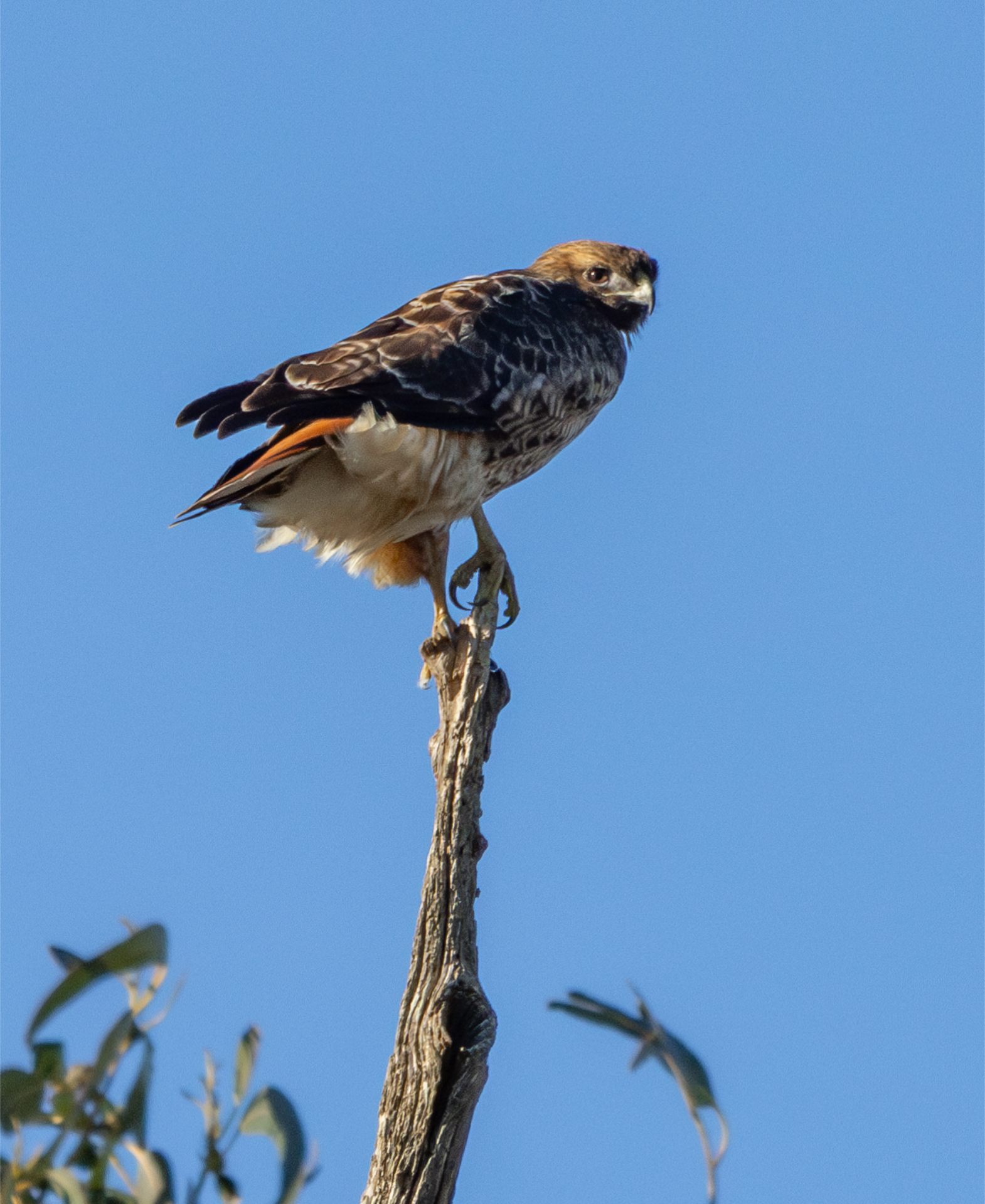
A bit farther down the road, next to a house surrounded by all kinds of bird feeders, a bare tree was full of finches, mostly American Goldfinches, along with a few House Finches.

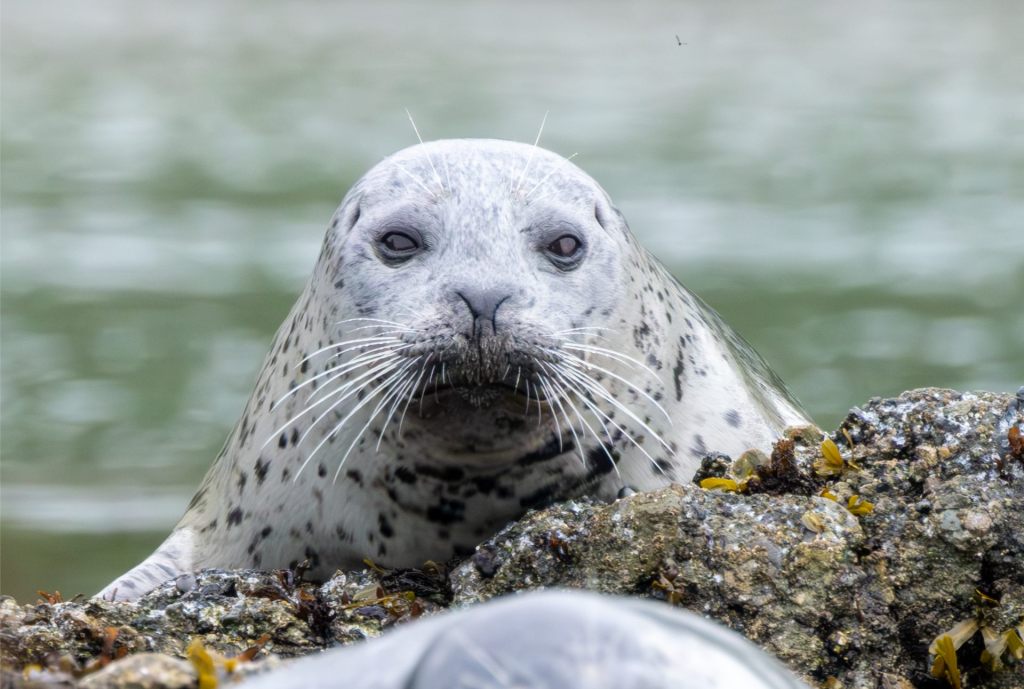
From Cannibal Island Road we went over the bridge onto Cock Robin Island, a chunk of land around which two strands of the Eel River flow toward the Pacific. There was at least one Harbor Seal in the water near the bridge, telling of the ocean’s nearness. A dozen or so Western Grebes were not far away, and a Belted Kingfisher loudly announced its presence.
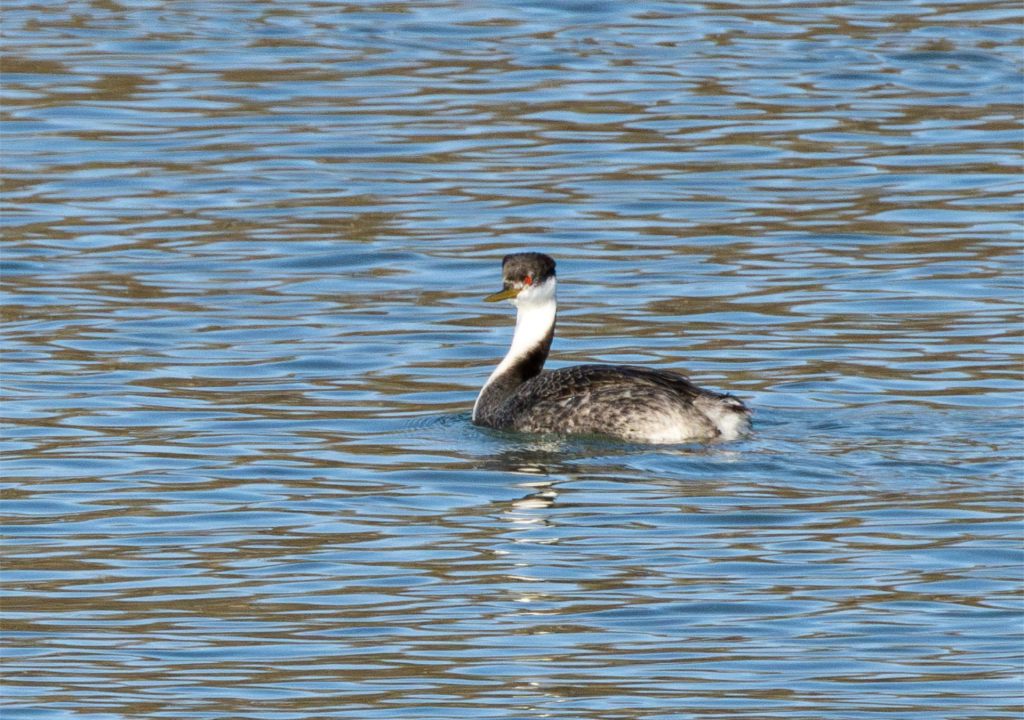
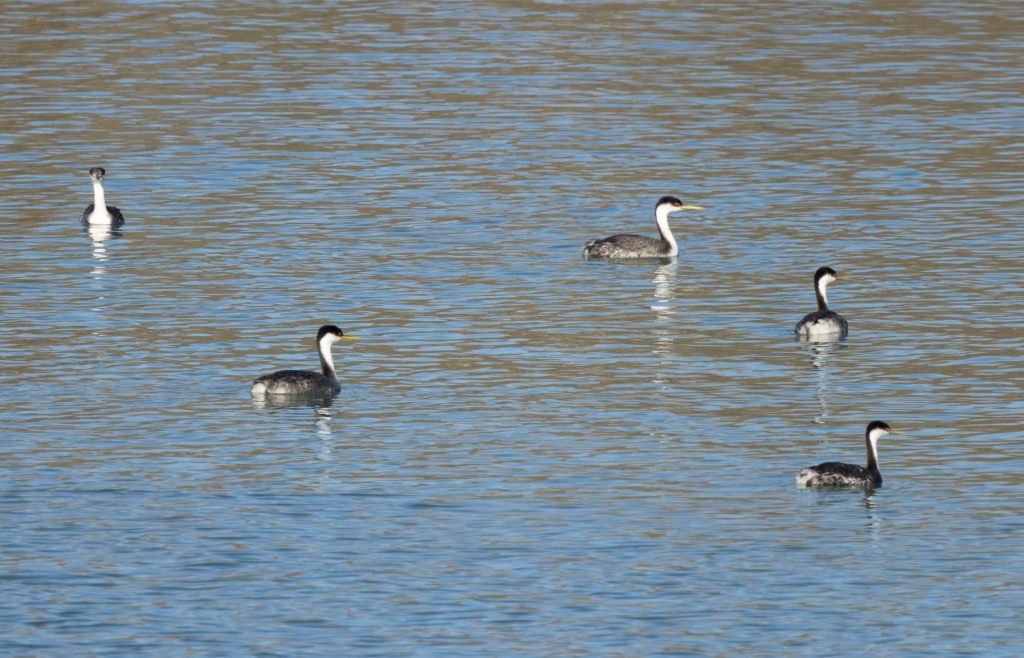
By now the winter sun, clear and bright but never very high at all, was getting serious about its progressive slant toward the ocean and we realized the day was coming to a close. A day spent in nature resets our priorities and strengthens our resolve to stay in the human fray.
When the country falls into chaos, patriotism is born.


 Free Range Photography
Leave a reply to loletaeric78638ca778 Cancel reply