I invite you to retrace my steps with me through the Salmon Creek Unit of the Humboldt Bay National Wildlife Refuge. On an overcast afternoon last week a wide variety of birds were visible, from the tiniest to the grandest and some of them consented to be photographed. For that brief time, the human world, which seems to be spinning out of control on so many levels, faded from consciousness and was replaced by the uplifting and undeniable truth of our most essential interconnections with the vibrancy of nature.
The Shorebird Loop trail begins near the visitors’ center, passes through some patchy thick willows and then opens out for a couple miles onto a loop through seasonal wetlands with some temporary and permanent ponds and waterways that are home to both migratory and year round resident birds.
As I entered the willows, there was a stir of activity as numerous tiny songbirds darted about.
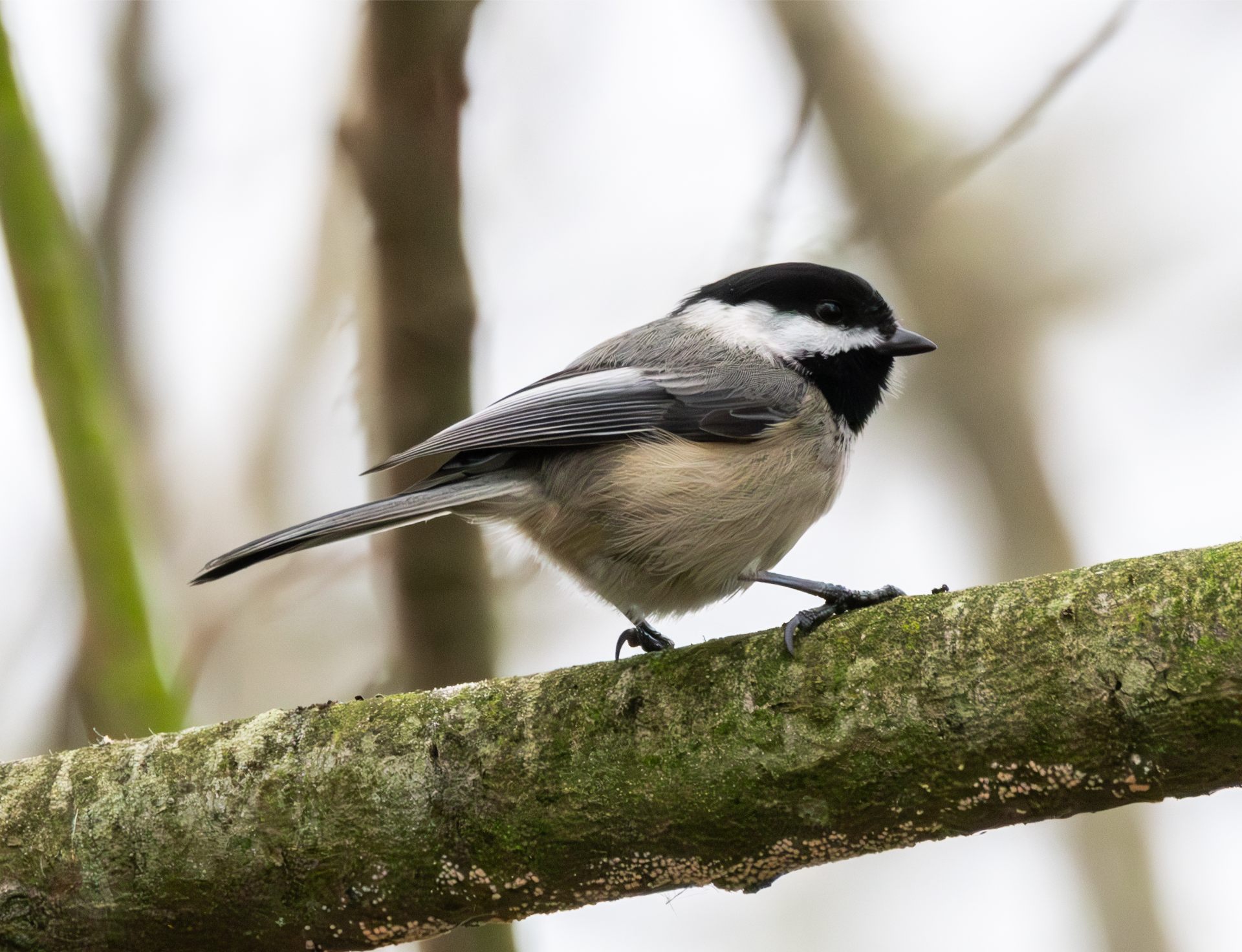

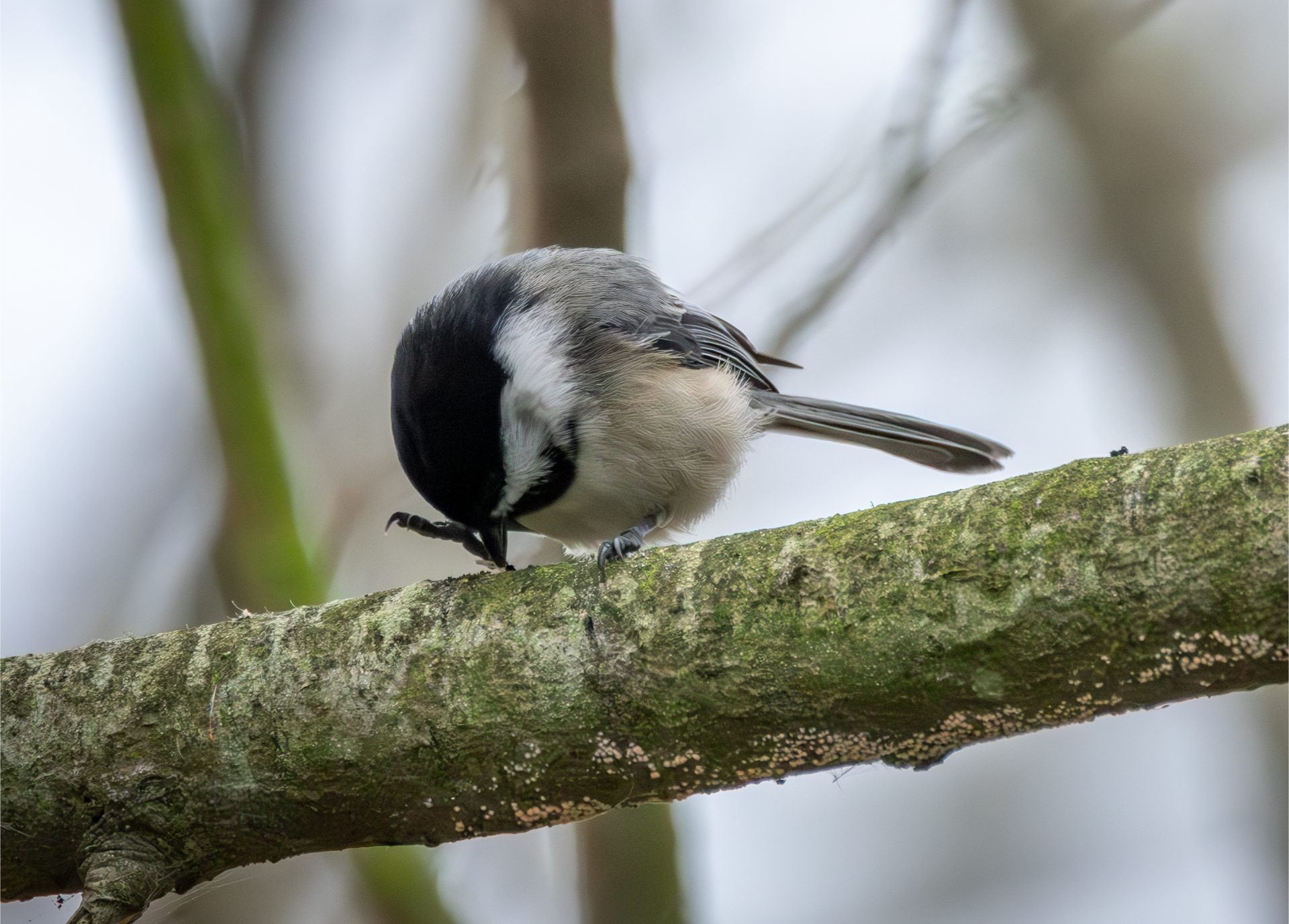
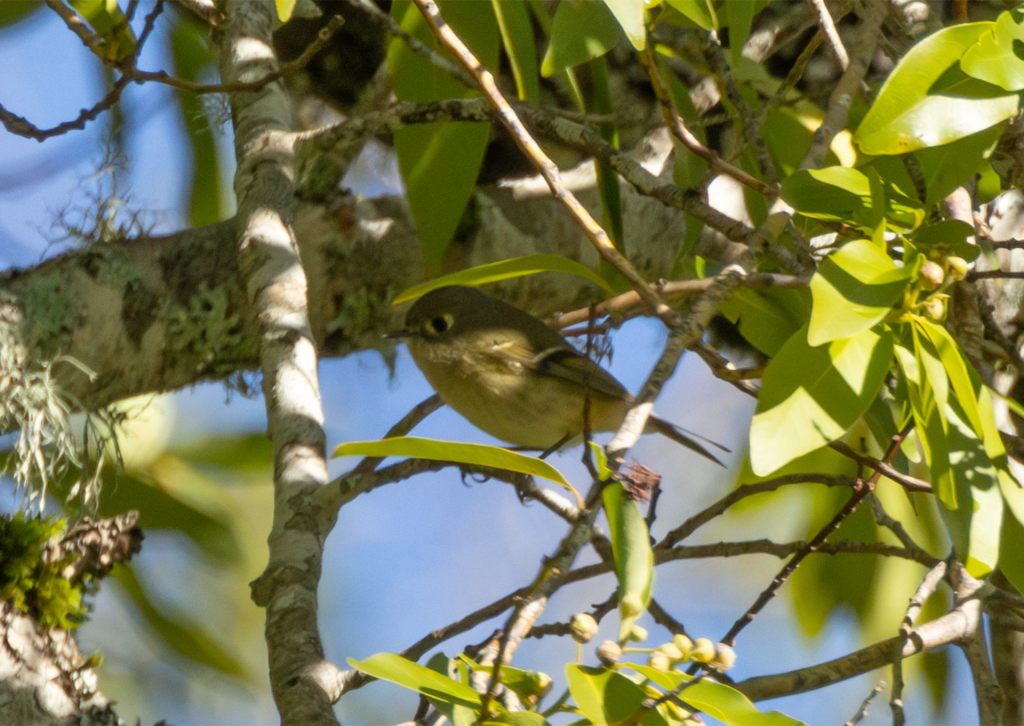
The only thing harder to photograph than a Ruby-crowned Kinglet is a Golden-crowned Kinglet, often because the latter is high up in the trees and aging ears can’t always detect their high-pitched sounds, much less pinpoint their location. Both of these birds flit from branch to branch in a speedy blur as they hunt for tiny prey, making the wielding of a heavy camera lens a fairly ridiculous and futile endeavor most of the time. So I was thrilled to see a Golden-crowned at eye-level. Apologies for the low-quality pics, but it was a triumph to get even these less than decent captures.
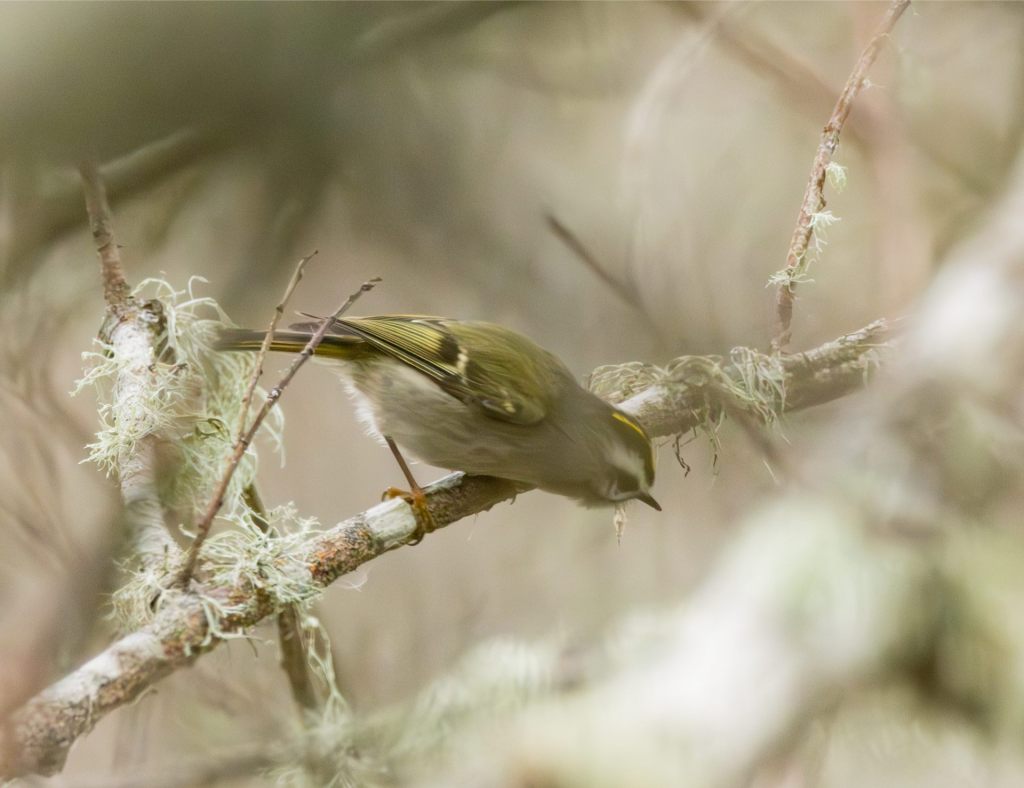
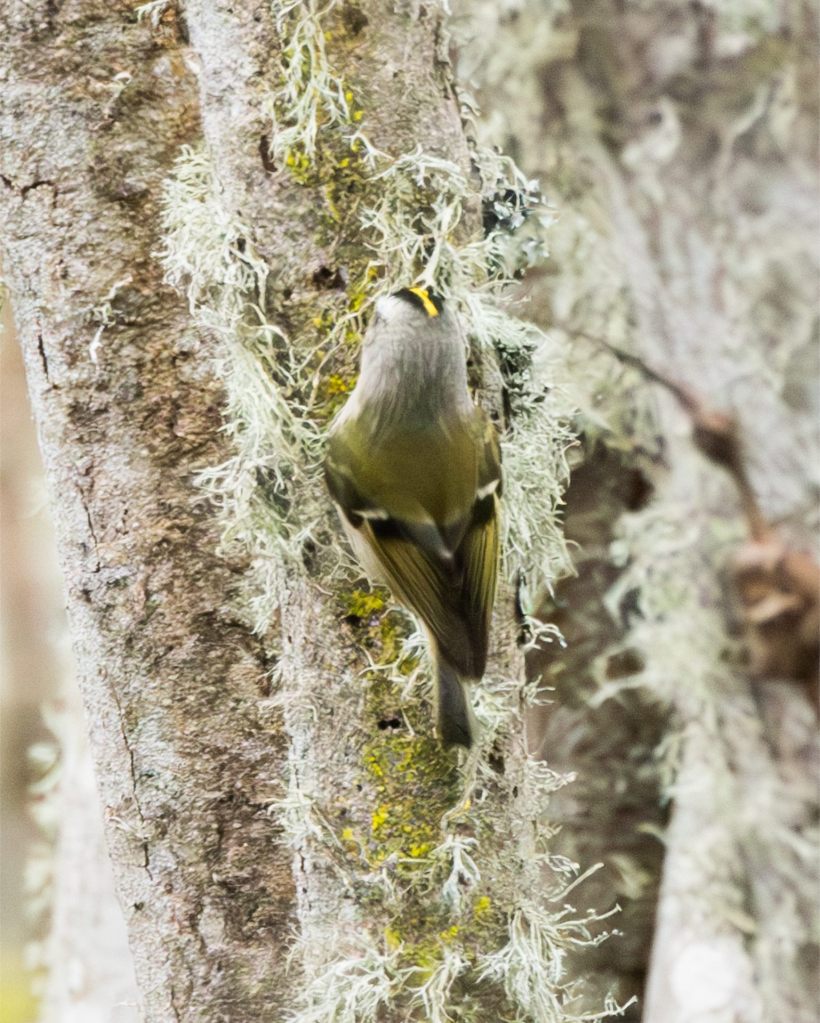
Golden-crowneds live around here year-round, but Ruby-crowneds are wintering birds only. Most of the winter you can hear their electric typewriter-like chatter, but just before they leave for northern breeding grounds in the spring you might catch their beautiful song.
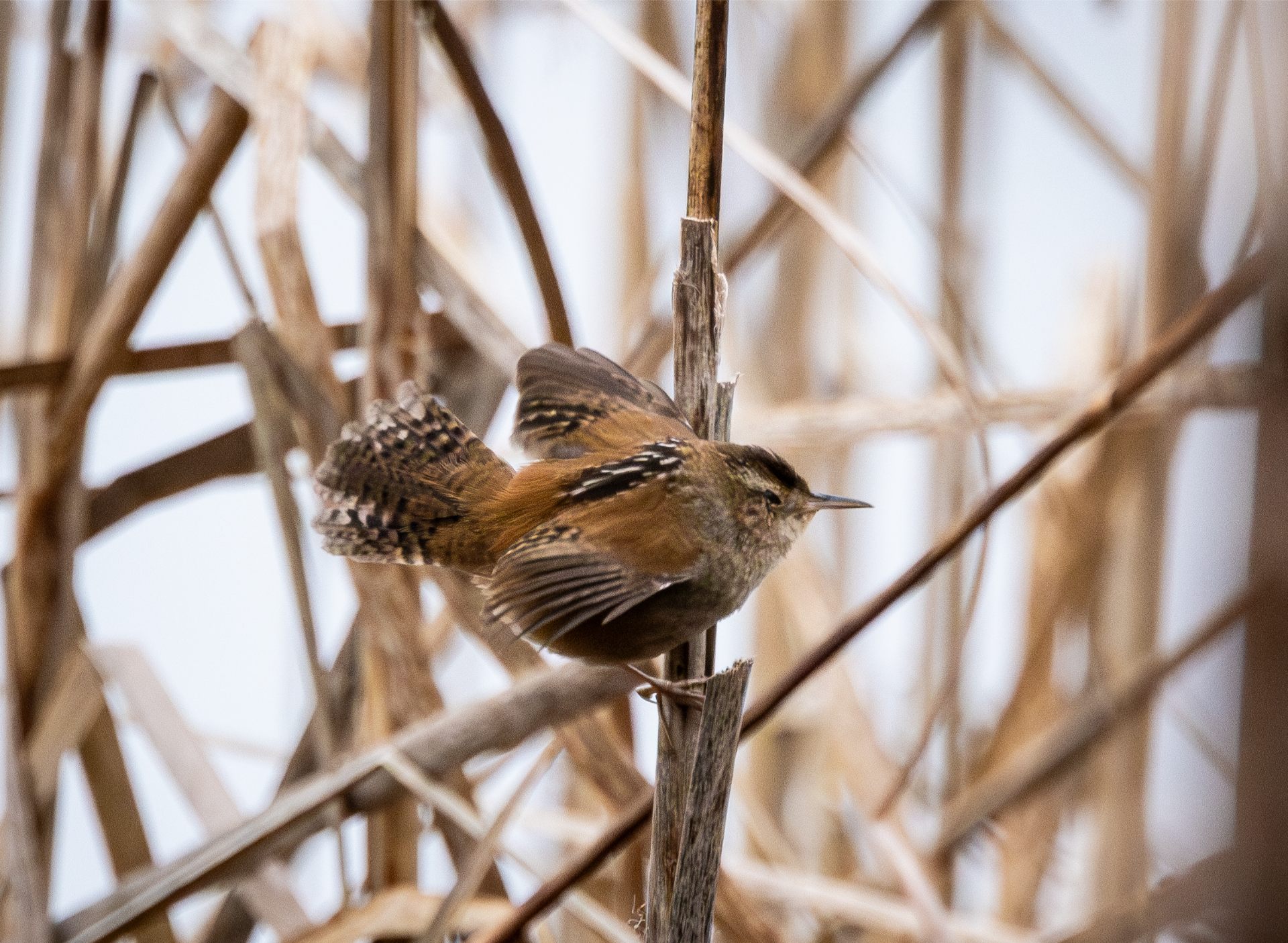
A bit further along the trail is a bench under a gazebo that looks out over a pond where several species of duck and a few coots were resting and lazily feeding. I sat for a while and soon heard the busy chattering of a Marsh Wren. This bird pops up from deep within cattails, sometimes pausing to straddle them and let out its irrepressible chattering sound. In the spring there is a symphony of these sounds anywhere cattails are found around Humboldt Bay.
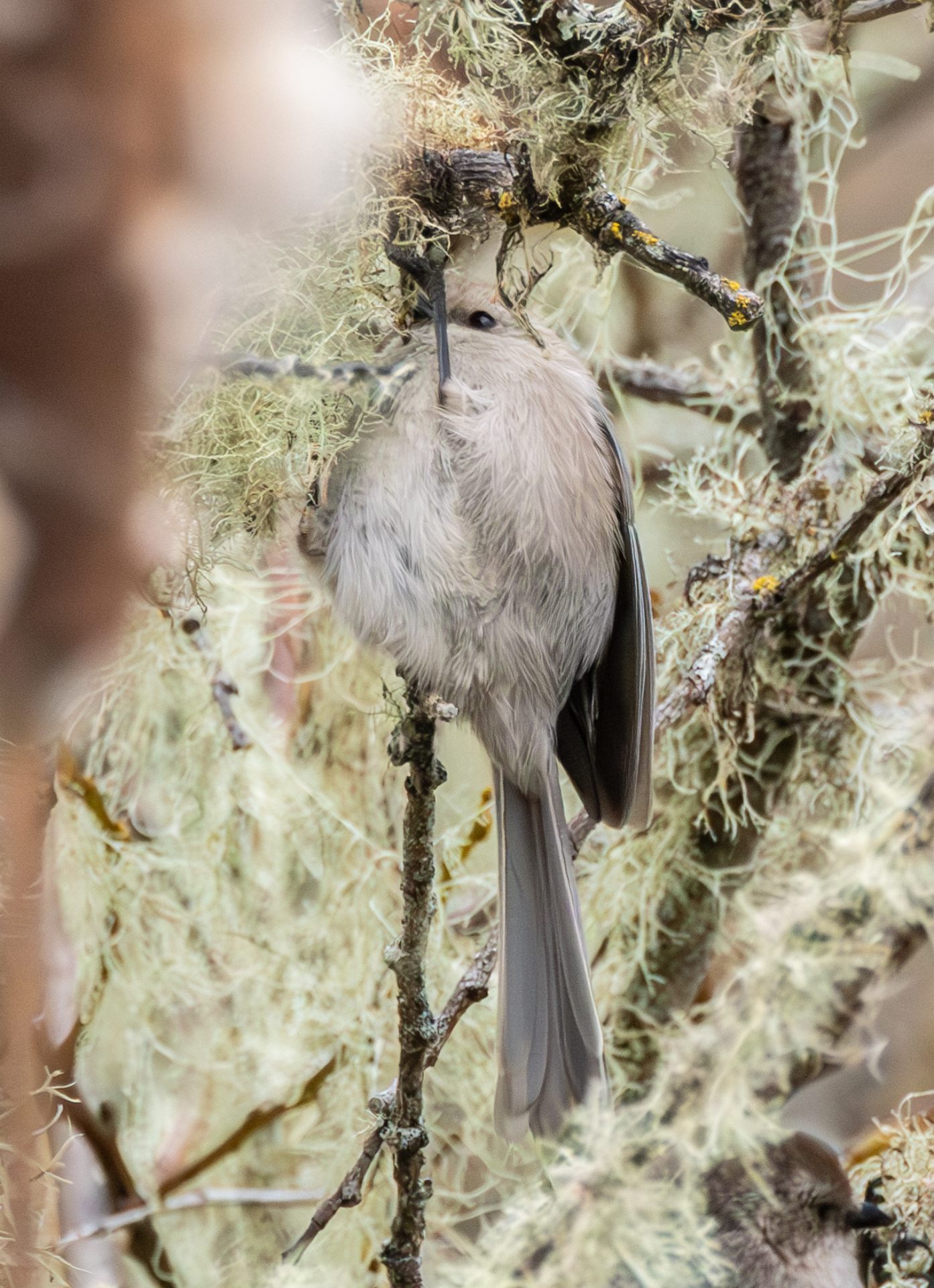
Then another flurry of activity caught my eye and yet another species that can make a photographer cry appeared as several Bushtits were working the lichens in another direction. These tiny, long-tailed puffballs mob through an area in little packs, gleaning prey and moving with purpose.

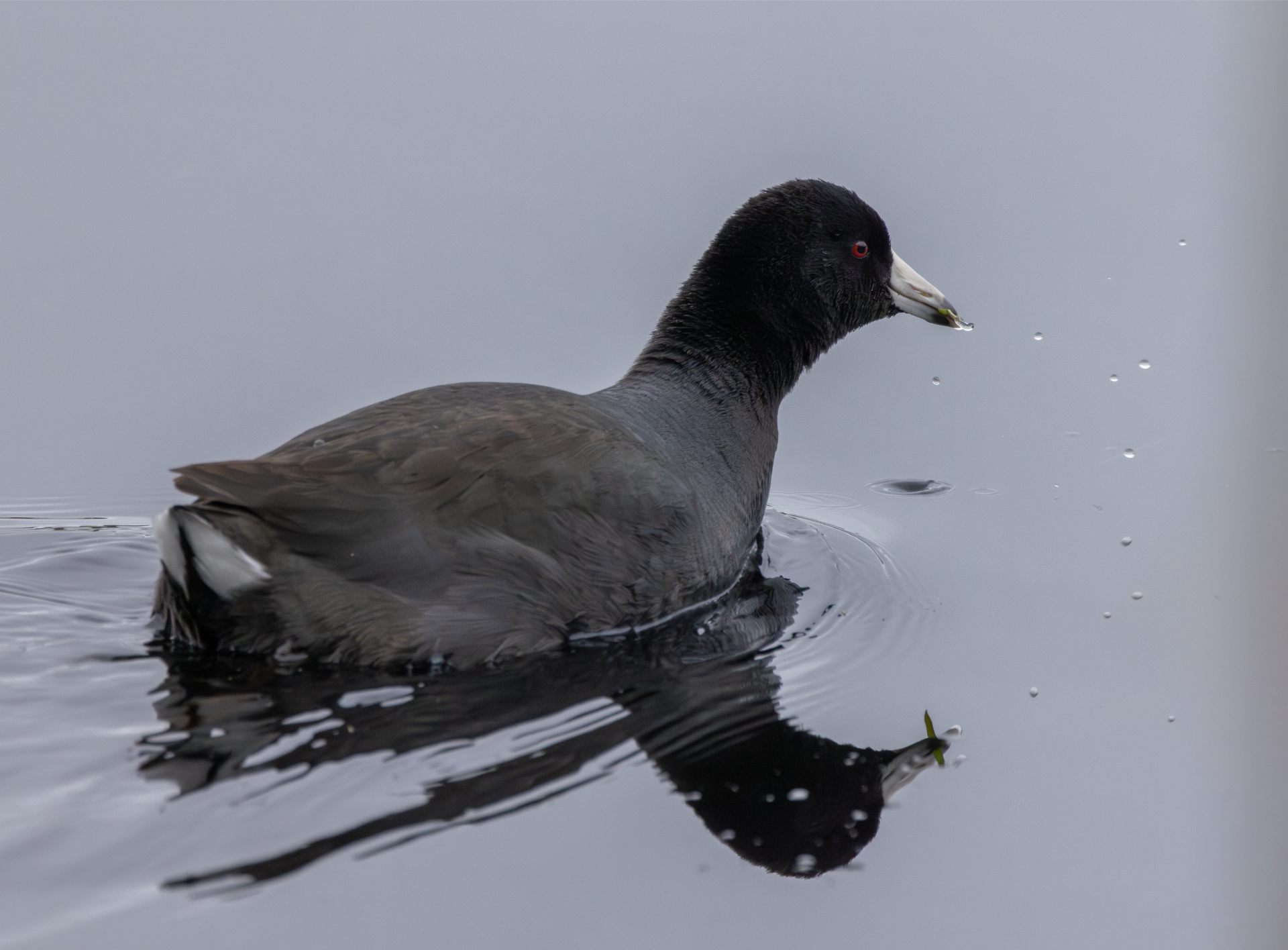
Finally, a slow-moving bird floated out in front of me on the water. The American Coot might be the most common bird on the refuge these days. They hang out in large groups and often in the company of dabbling ducks who share their vegetarian diet. Coots are in a family more closely related to chickens than to ducks, and they make a kind of nasal clucking sound.
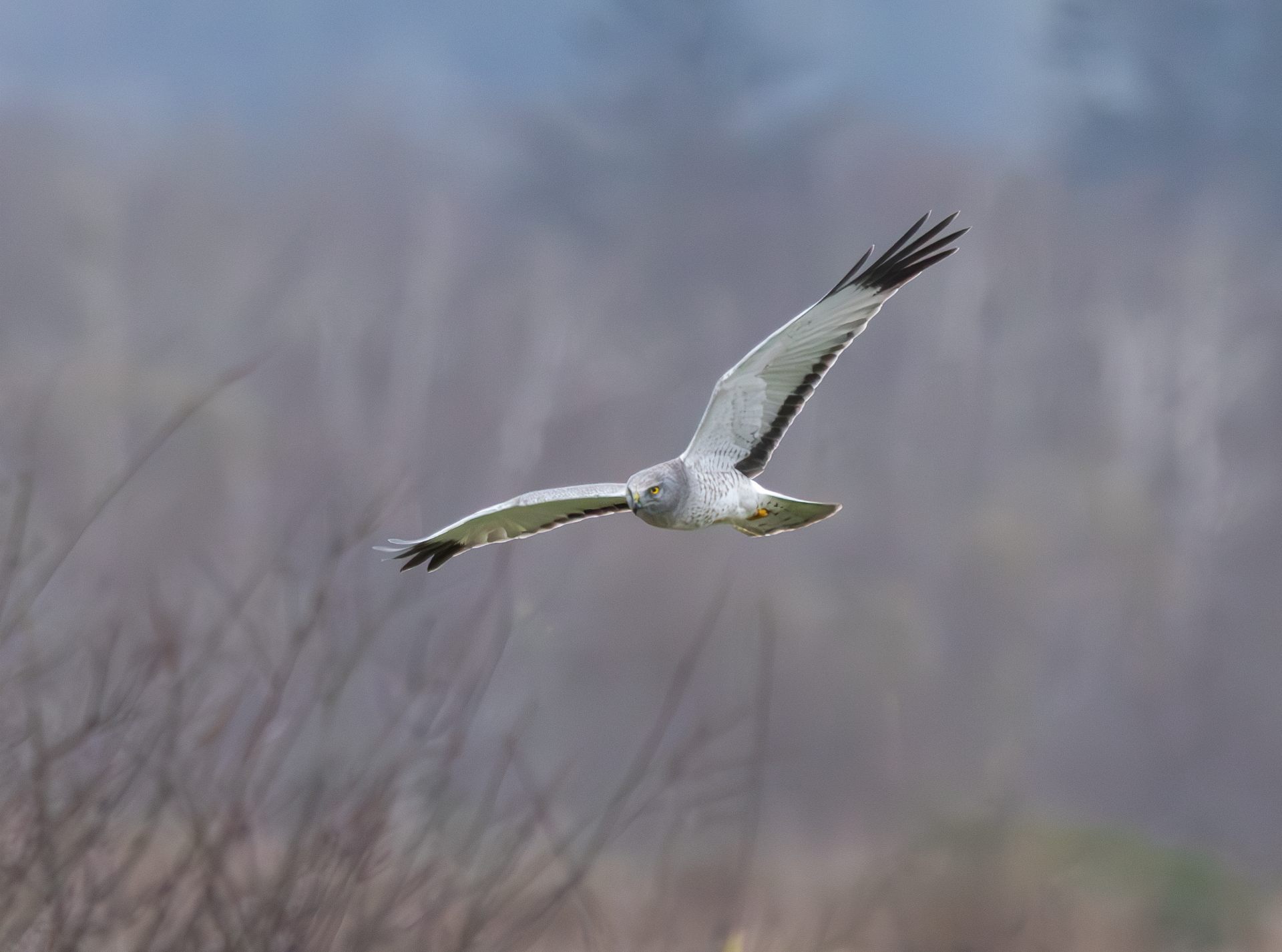
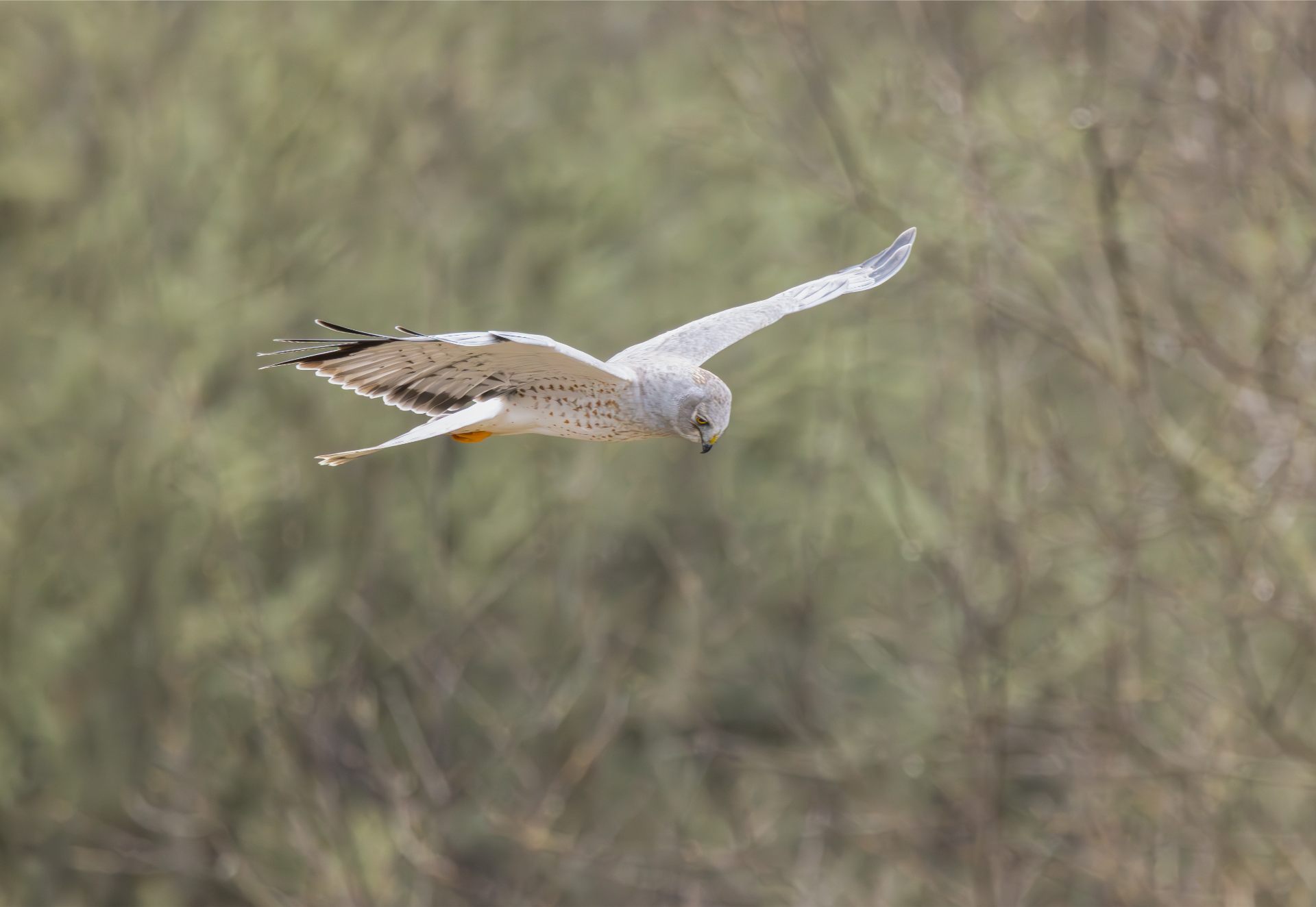
I continued along the trail as it opened up, leaving the tangled willows and all of the tiny flitting birds behind. Ducks and shorebirds started to come into view in greater numbers, as did a female Northern Harrier who was patrolling for a lunch selection from the shorebird menu.
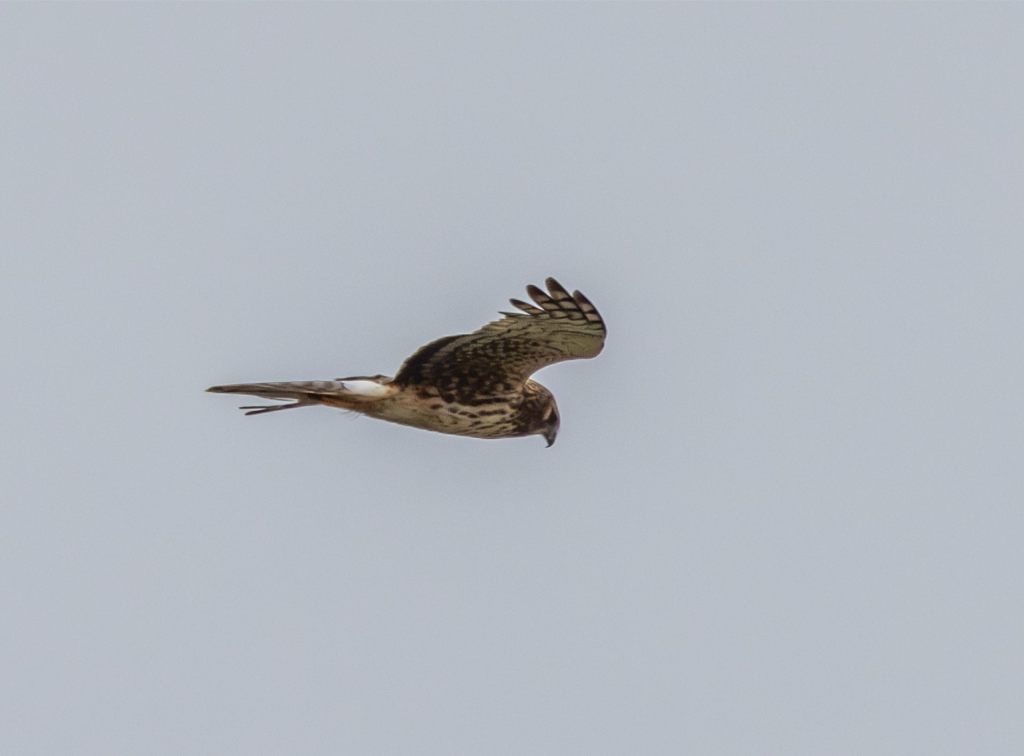
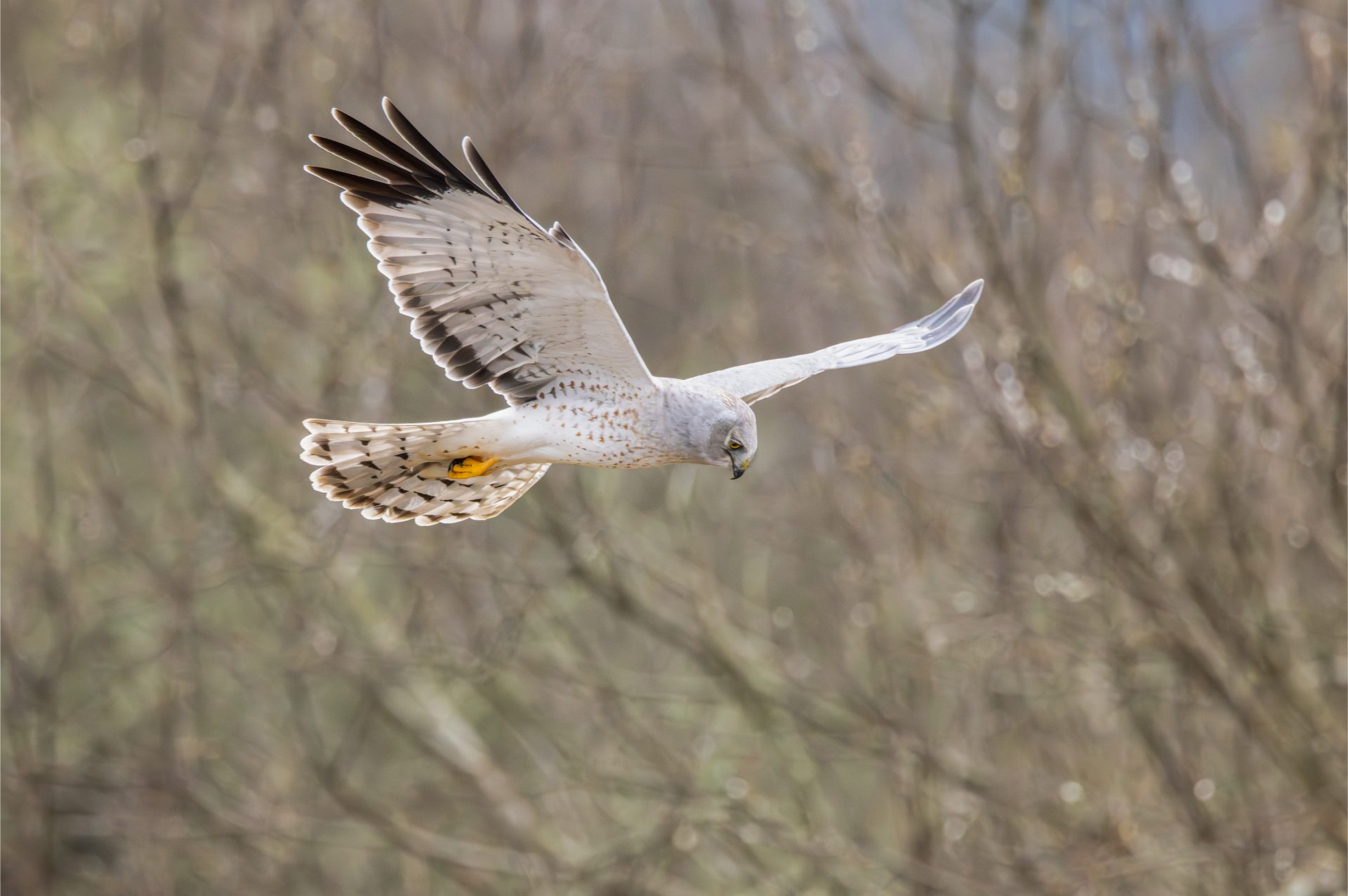
Because both females and immatures of both sexes have this brownish coloring overall it can be quite special to see an adult male, often called the Grey Ghost. When a gorgeous male appeared in front of me it took my breath away to see its beauty and grace at such close range.
Continuing along the trail some shorebirds came into view.

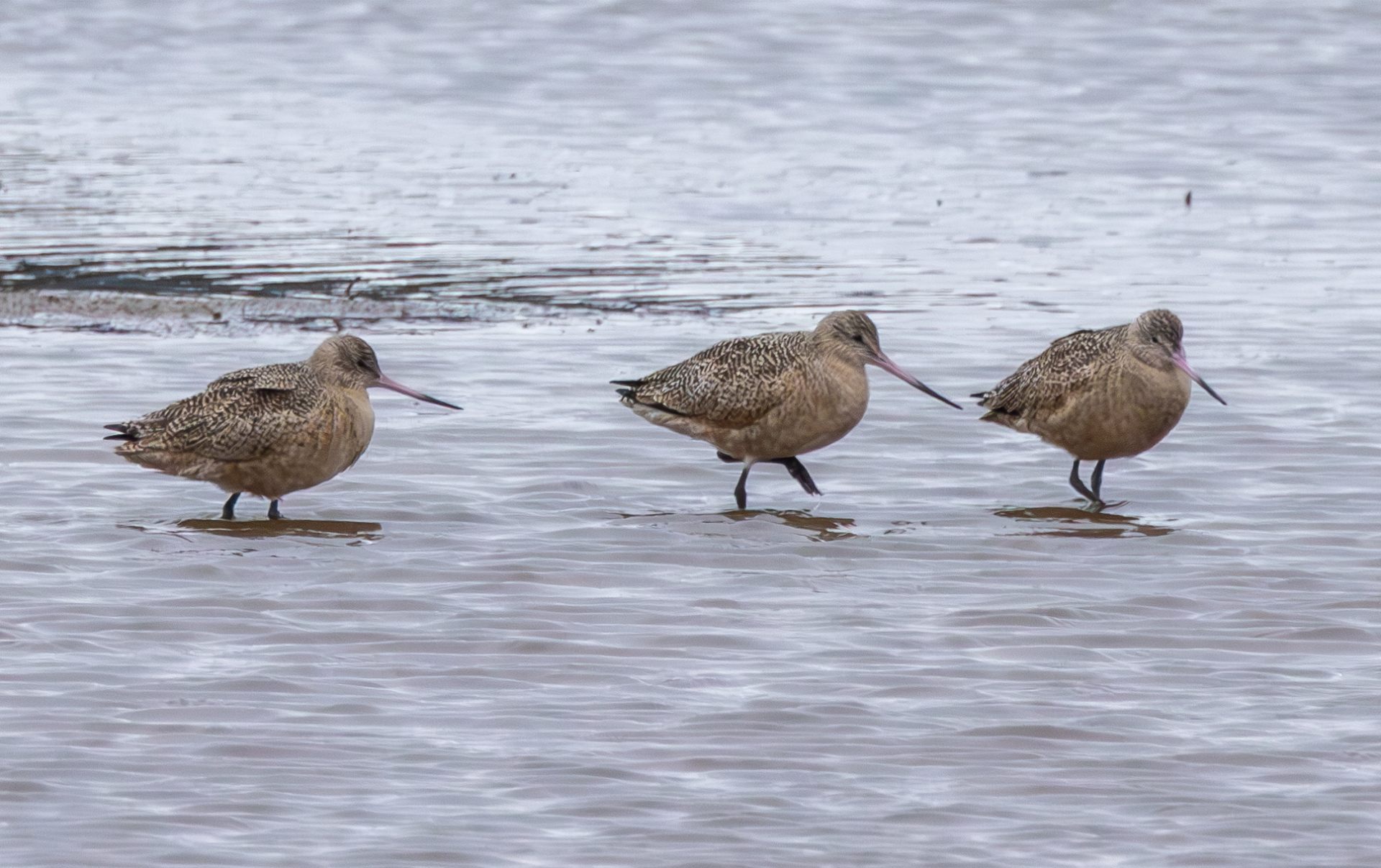
More numerous than the Godwits on this day at the refuge were Long-billed Curlews. In large resting groups with bills tucked away, it can be hard to distinguish the Curlews from the Godwits, as their coloring, size and feather patterns are similar. But when those long, droopy, probe-like bills are in view, there is no mistaking this big shorebird.


The male Harrier made another appearance, stirring up clouds of ducks and shorebirds as it careened over the water.

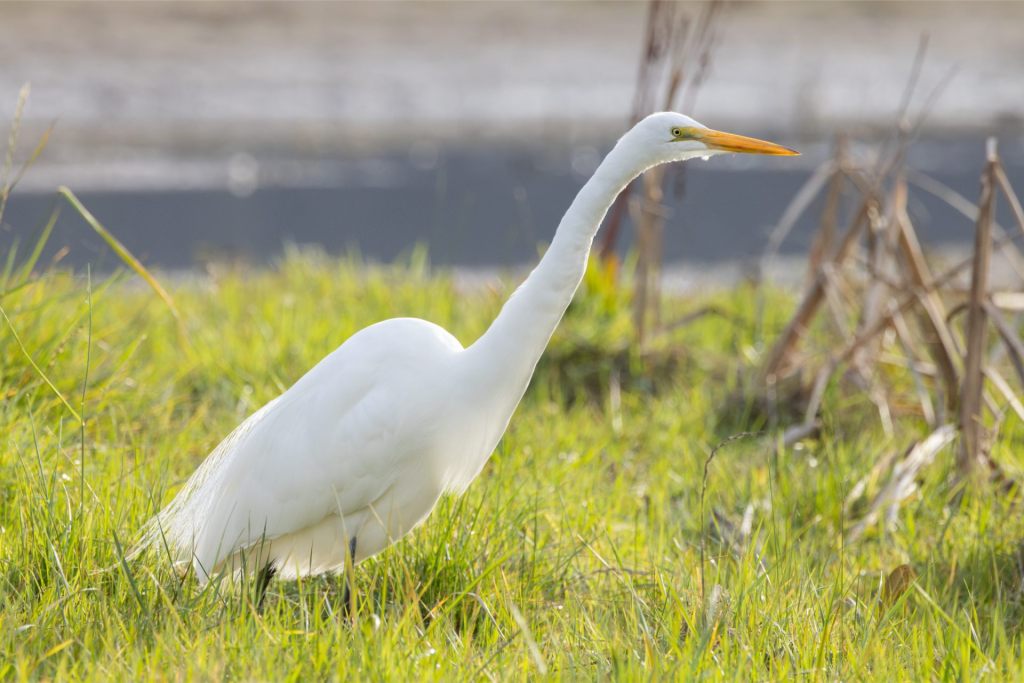
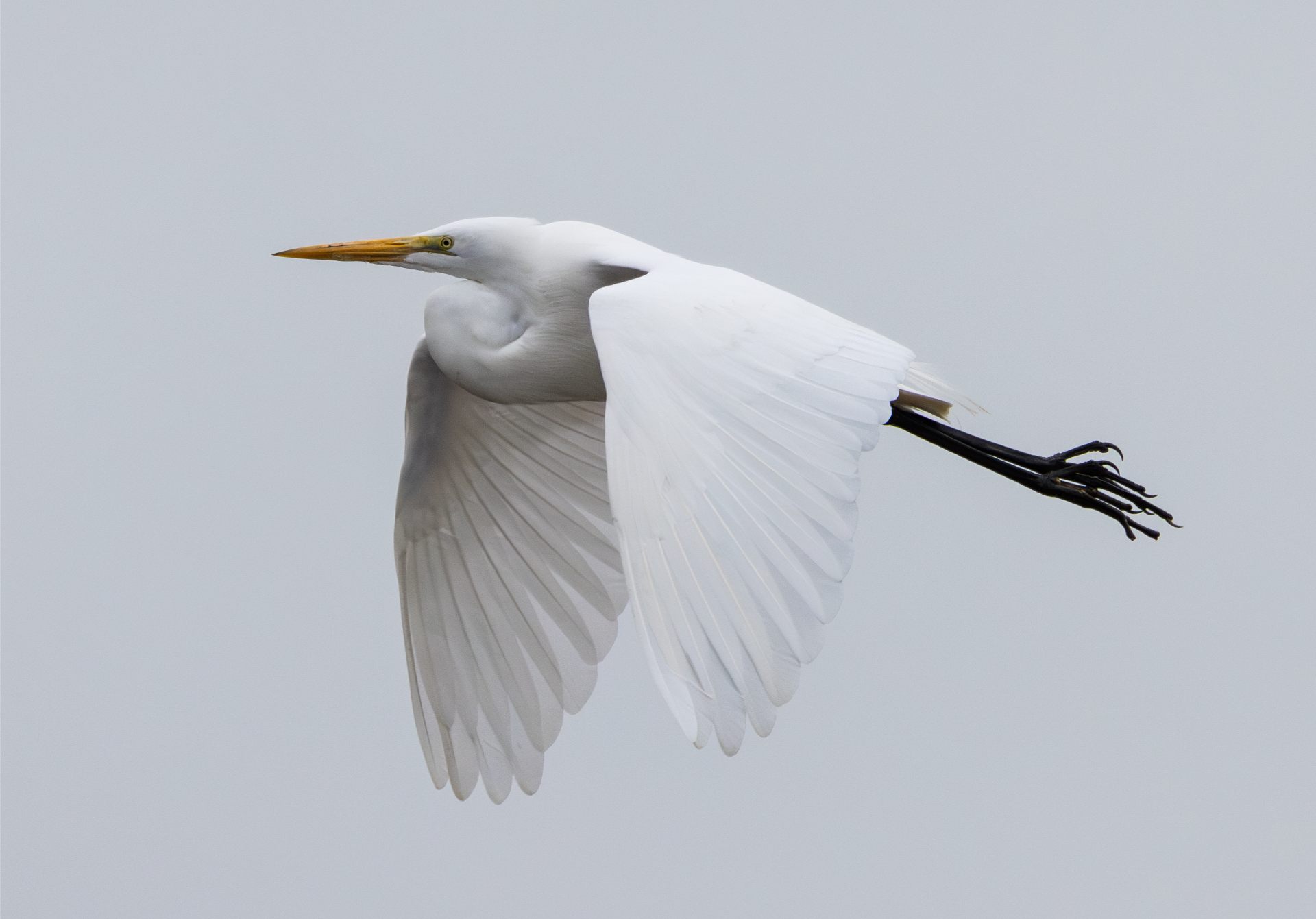
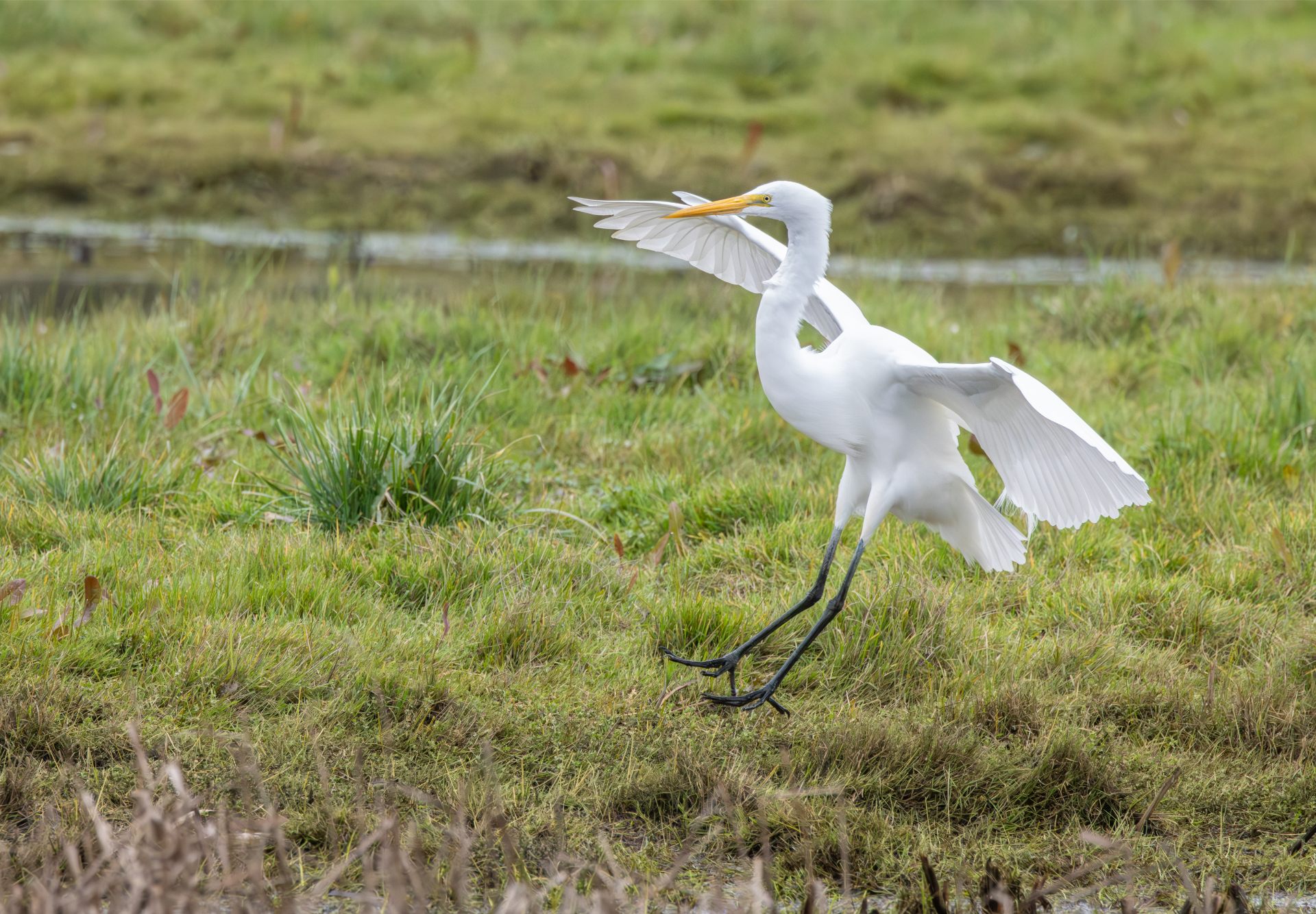
A great Egret flew by. It was one of a half dozen or so on the refuge that day.
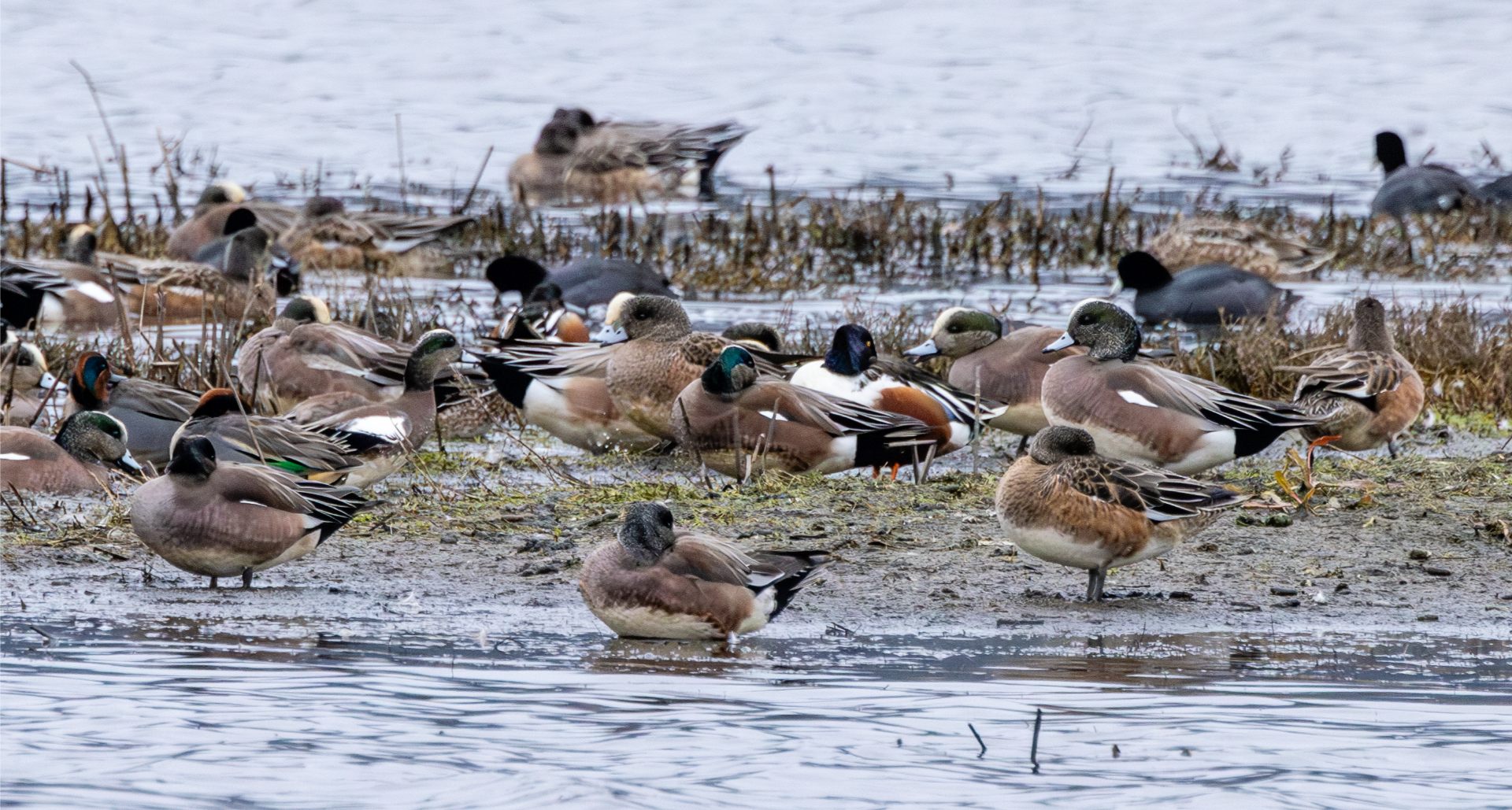
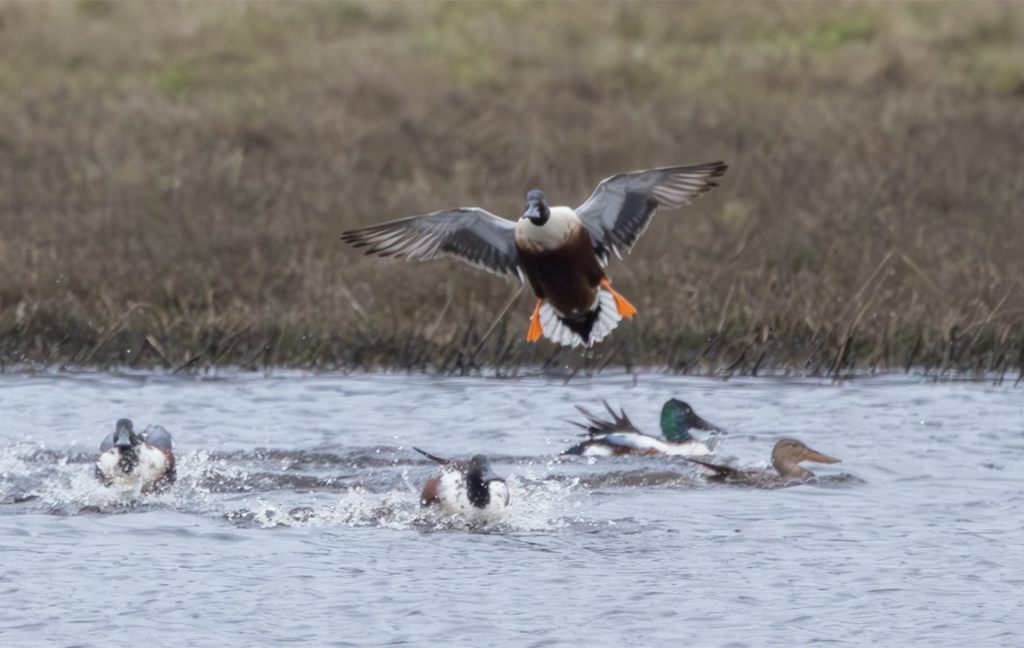
A variety of ducks and coots rest and groom on an island.
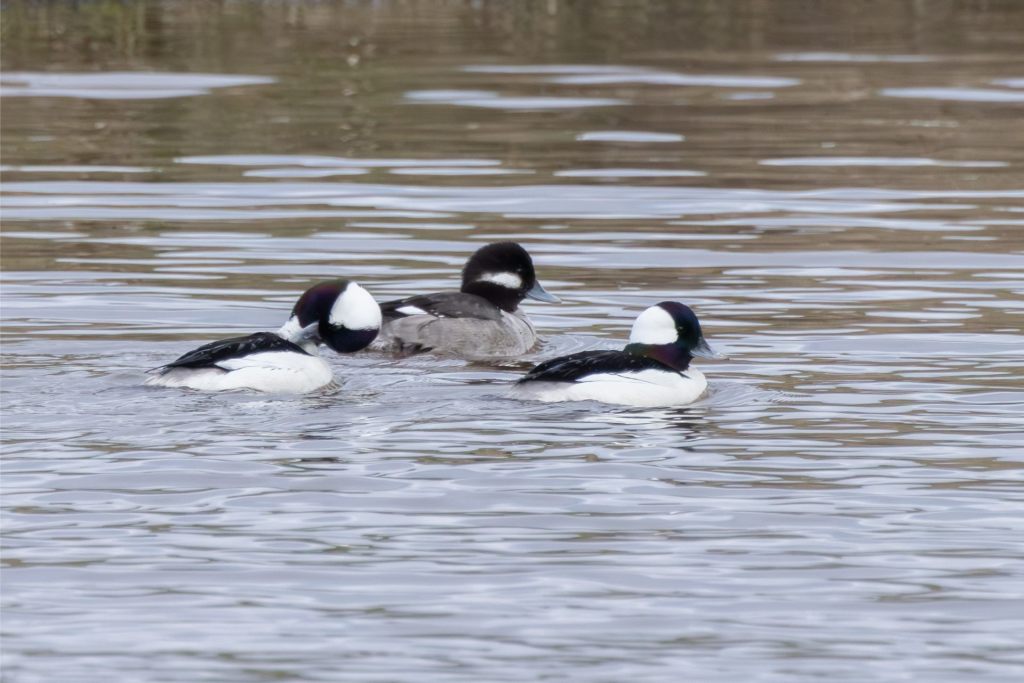
In another area, Buffleheads were seen. The males have a striking white head patch flanked by iridescence that was a little subtler than usual on the gray day. These are diving ducks who rarely eat plants, preferring snails and aquatic insects.
Accompanying this female Bufflehead below is a Scaup. There are two species of Scaup, the Greater and the Lesser. I wouldn’t bet the farm, but I think this is a Greater Scaup, either a male in non-breeding plumage or a female. Another diving duck, I have seen Scaup wrangle with some sizable mollusks for meals.

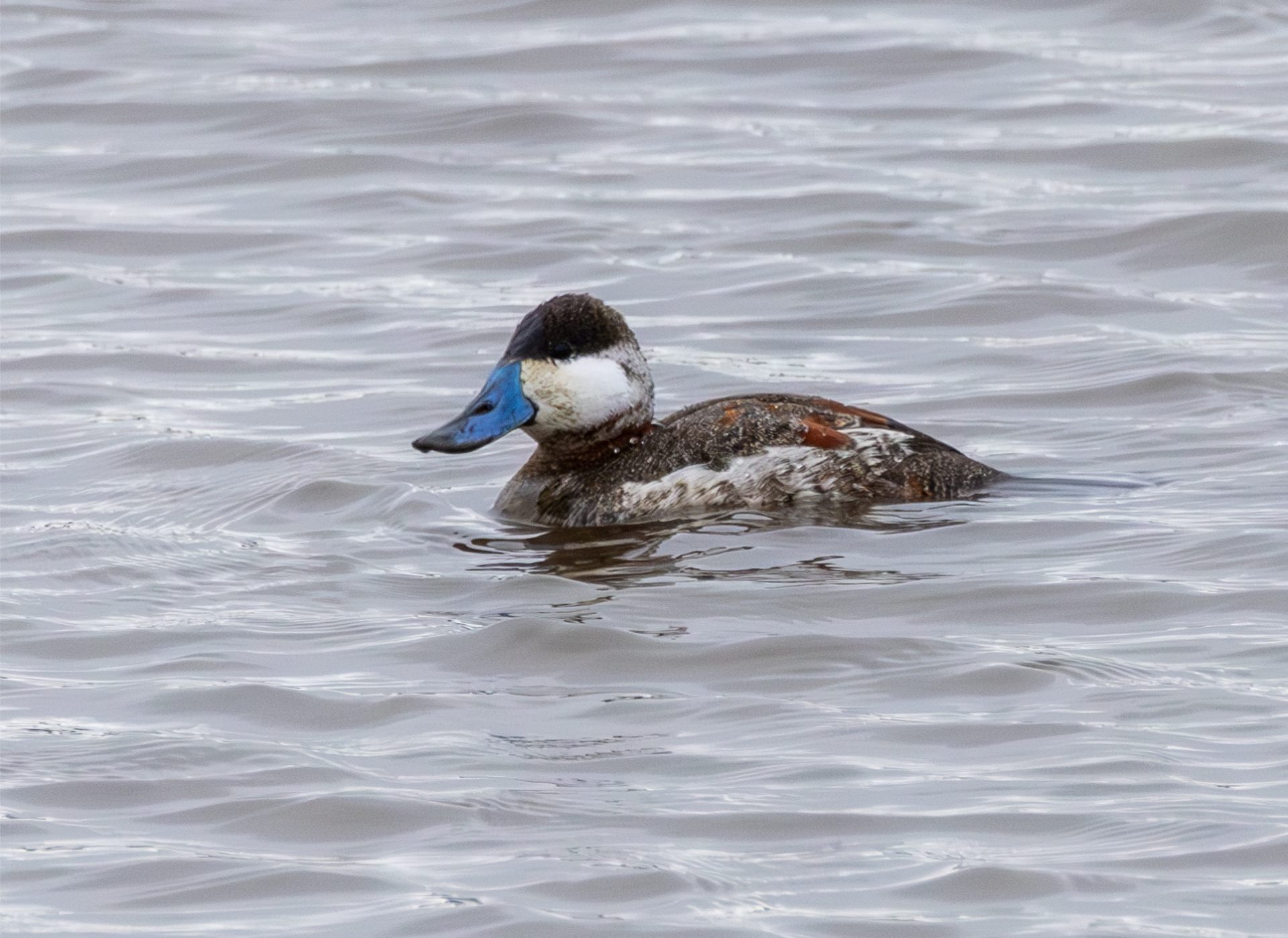
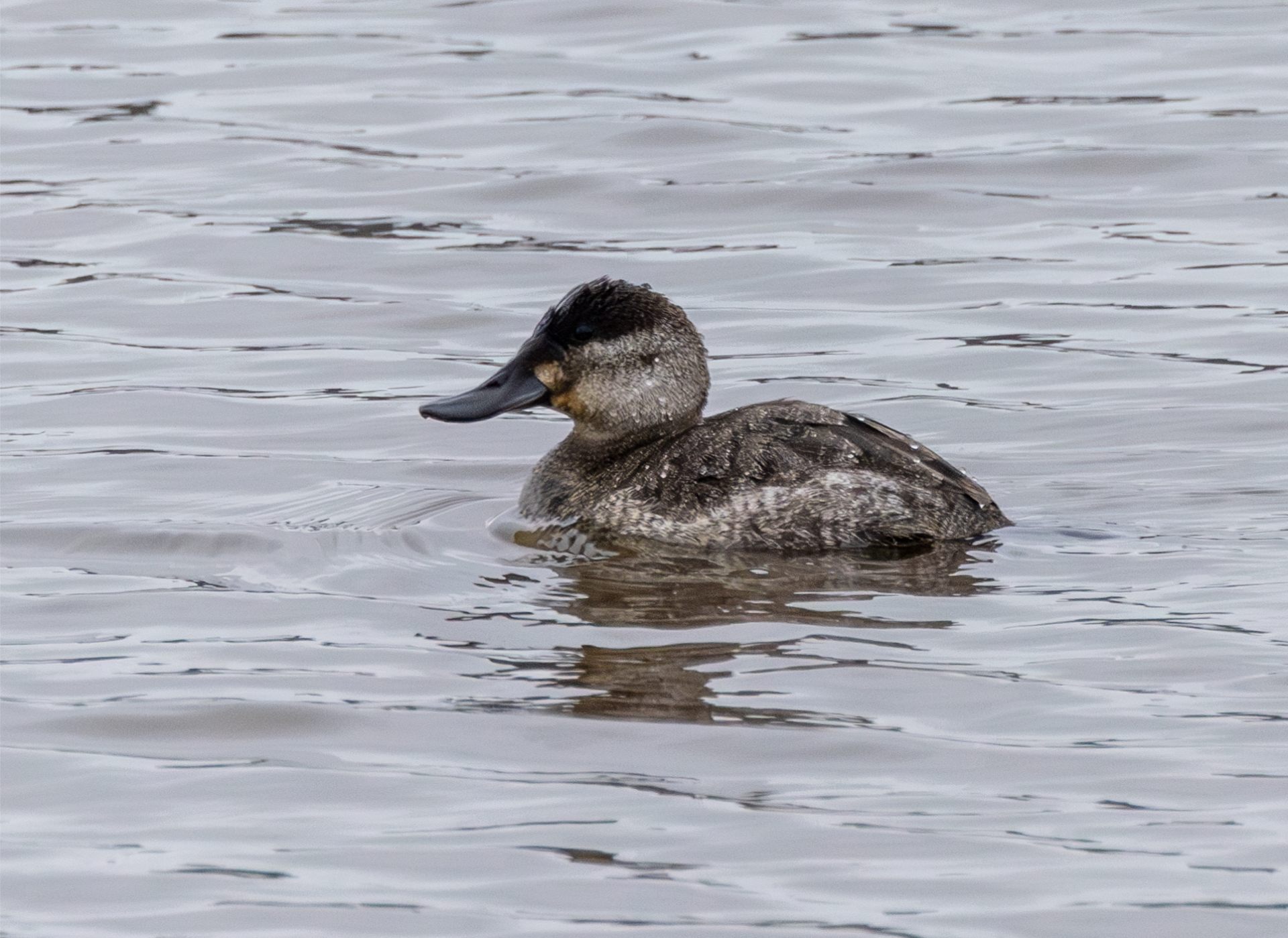
A favorite of mine among the diving ducks is the Ruddy Duck. Compact in size with a crew cut-like do, a spiky tail and a large head that brings to mind your bath-time rubber ducky, the male turns a beautiful deep rust color in breeding plumage with an astoundingly bright blue bill.
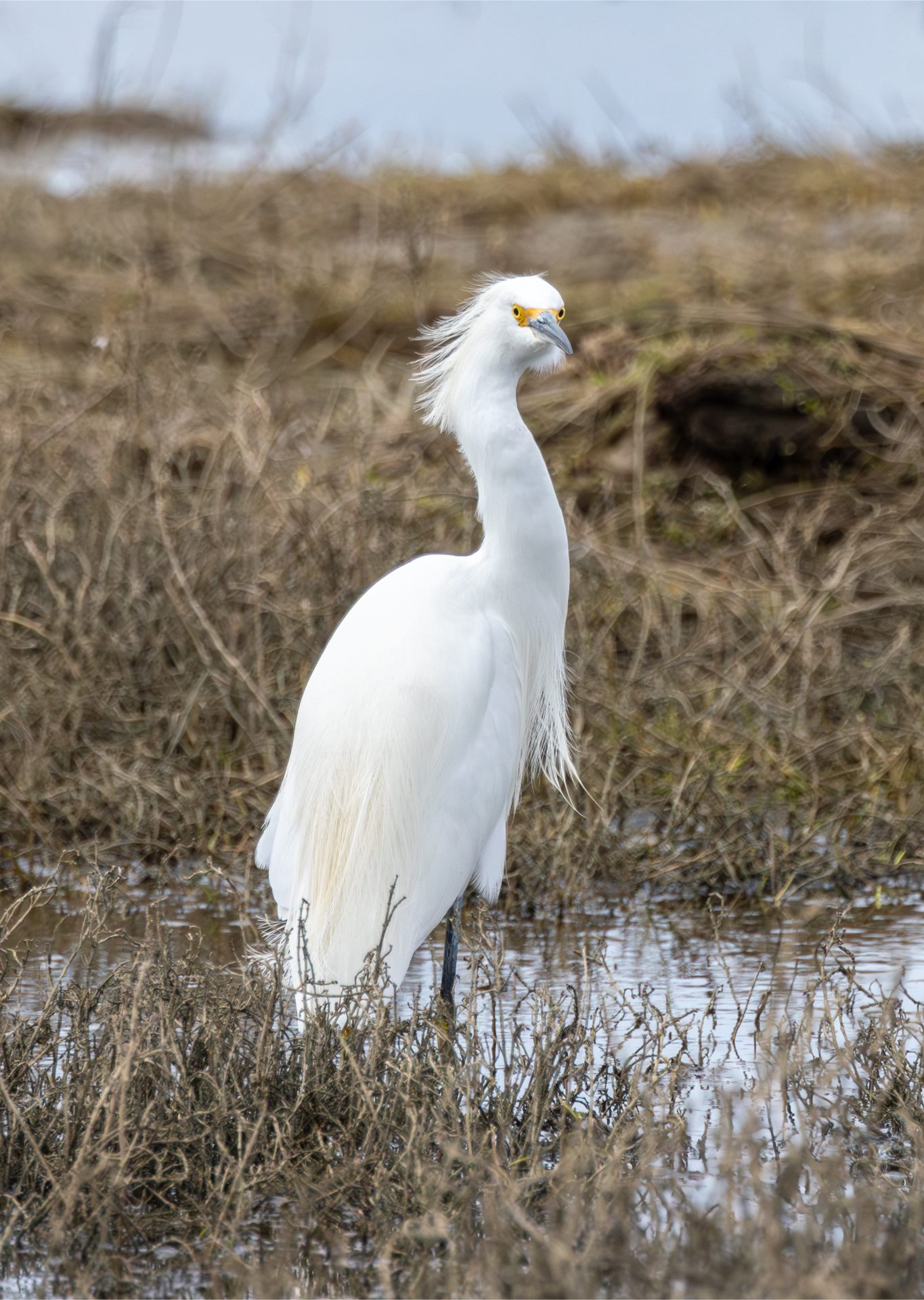
Snowy Egrets are much more active in their hunting style than their Great Egret cousins. About half the size, Snowies have black bills and their legs are black in the front and bright yellow-orange in back. The entire foot is also bright yellow-orange. Snowies walk through their foraging areas, reaching out with one foot and agitating the mud to stir up prey.

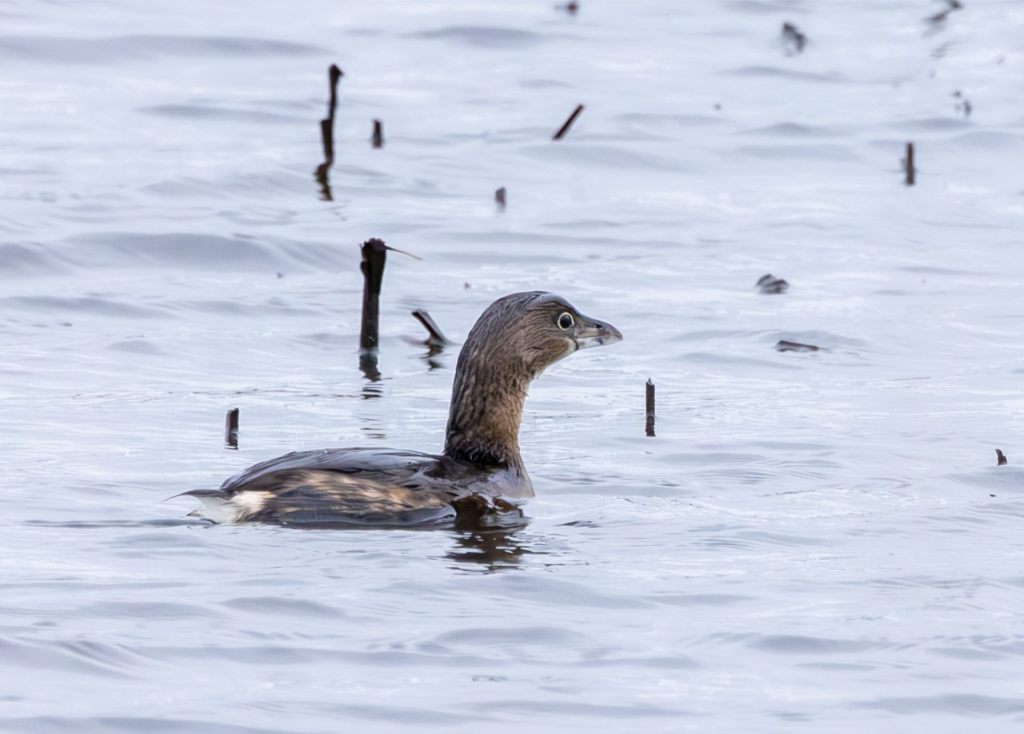
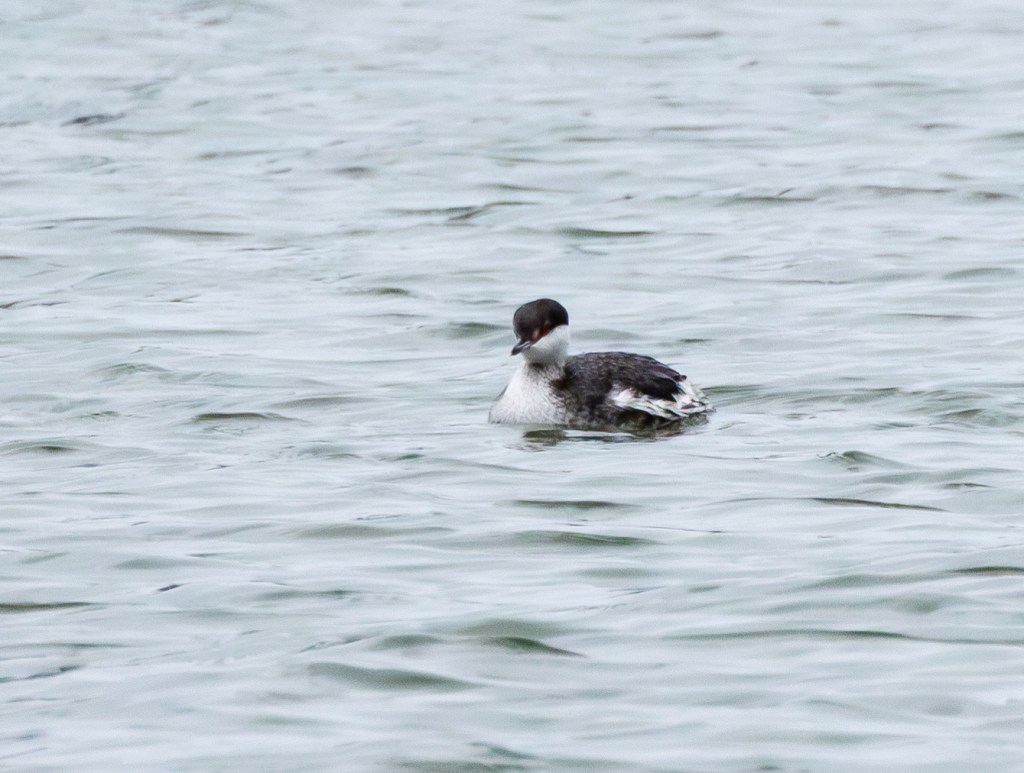
Only two different grebes were seen that afternoon. Grebes are among our oldest birds, originating 80 million years ago. They all dive for prey and most of them have spiky bills to skewer their meals. The local exception is the Pied-billed, a small grebe with a chunky bill. It has the unique habit of hiding itself from predators by lowering straight down into the water like a submarine.
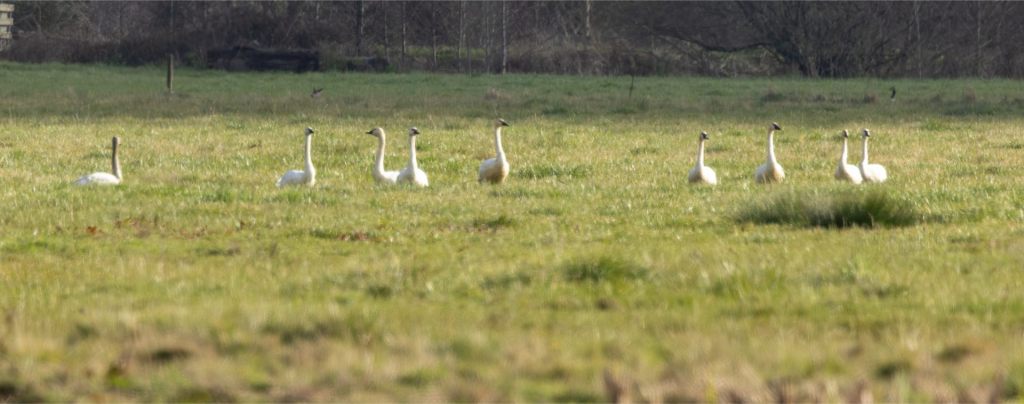
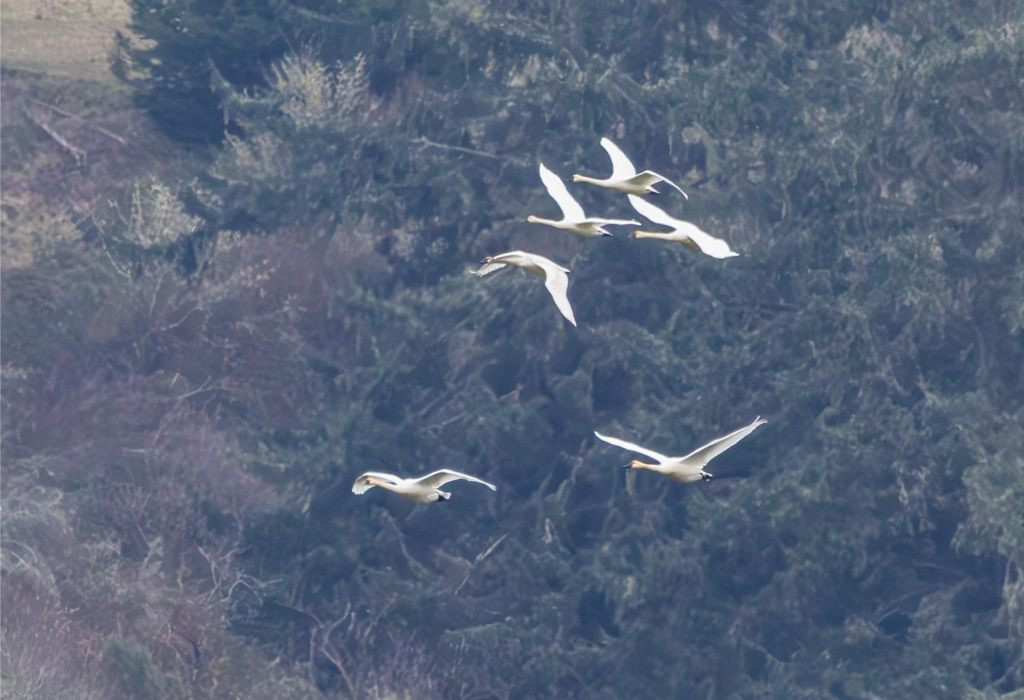
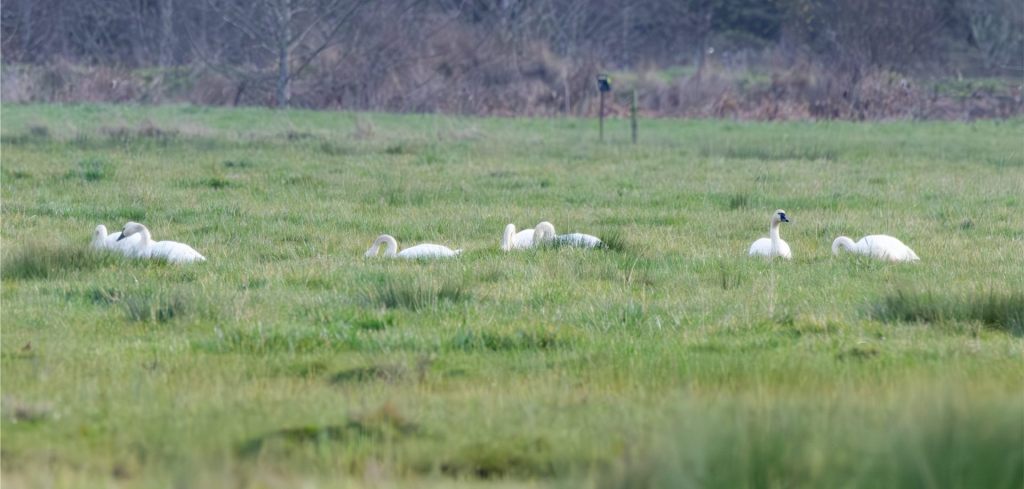
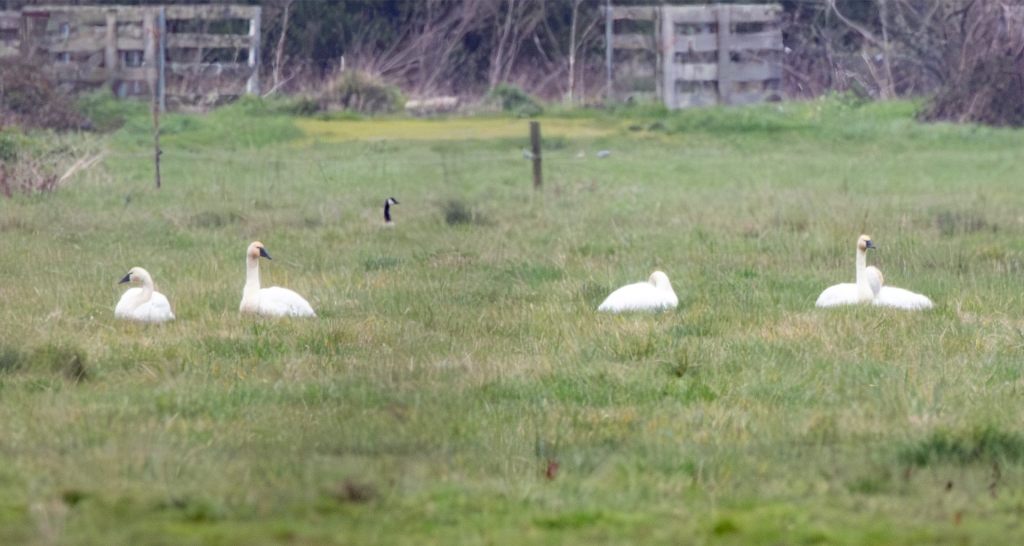
The star of the refuge show for me has always been the Tundra Swans. Arriving late in the calendar year, and departing far too soon as winter begins to wind down, these graceful beauties have been few and far between the past couple years. As I rounded the back of the loop trail and started to head back toward the visitor center the sun appeared very briefly and illuminated a group of about twenty swans, far in the distance.
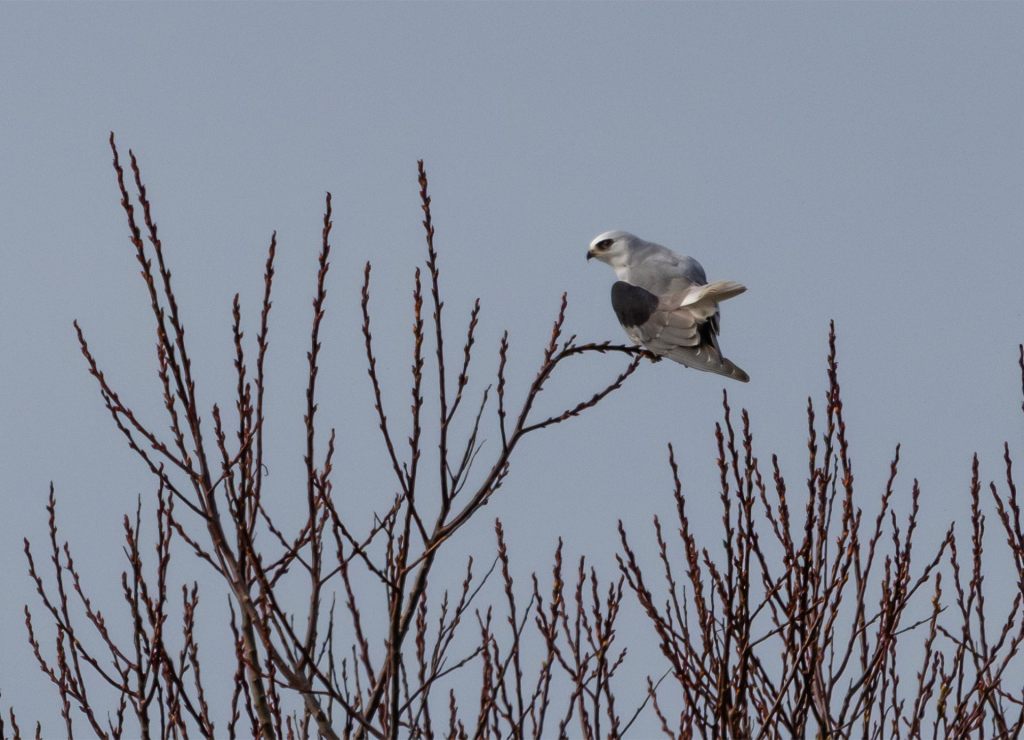
Another predator made a brief appearance. This White-tailed Kite perched briefly between hunting forays.
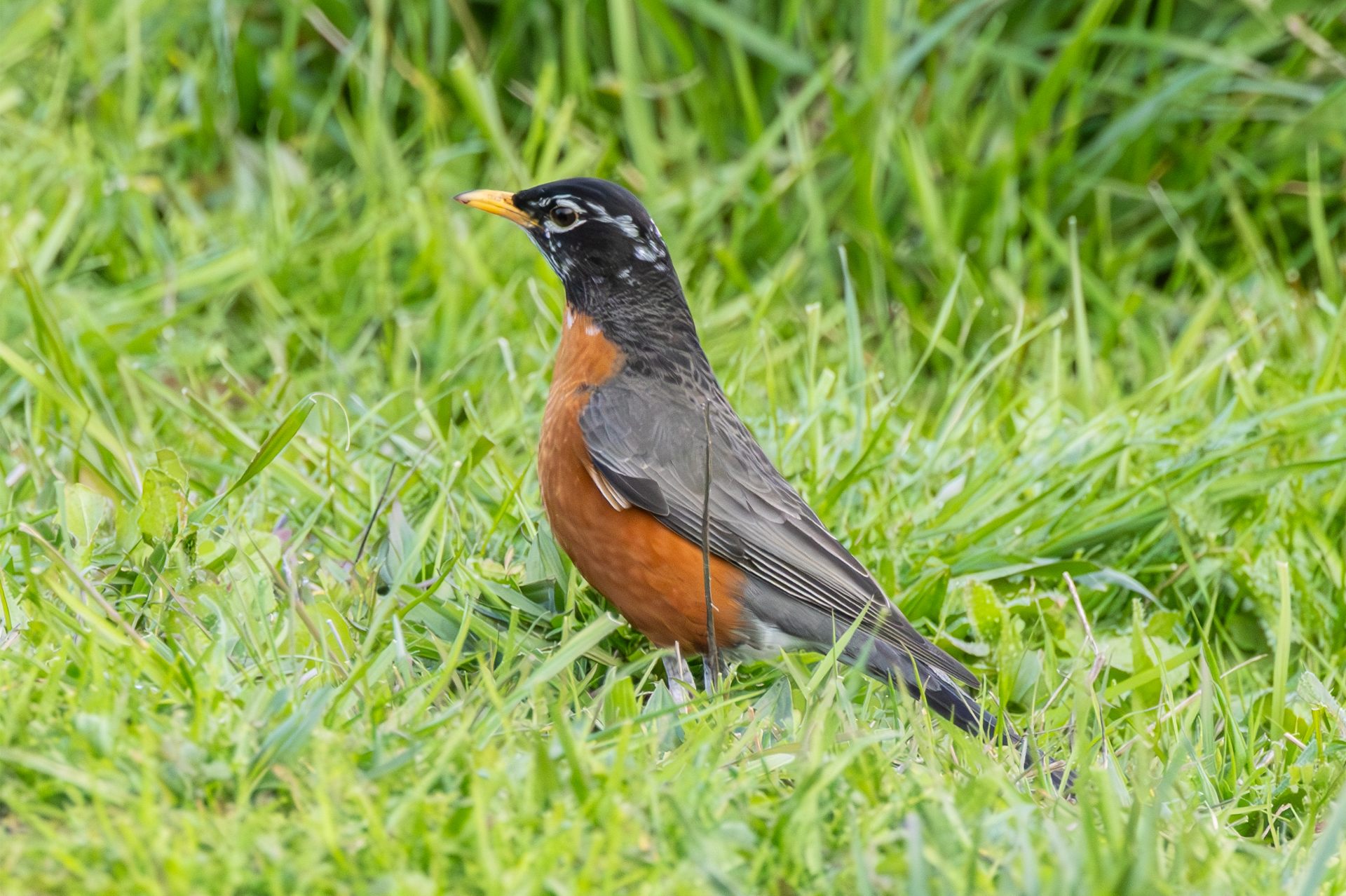
The last bird I saw that day at the refuge was this American Robin with a few odd white head feathers. Robins are businesslike in their demeanor and this one was busy digging for worms under the grass.
Wildlife refuges are precious jewels of public land. Visit them and let your senses revel in the landscape and its inhabitants. Forget for a spell the busy-ness and chaos of our lives too often detached from our original way of being. Share a knowing smile as you pass the other humans you meet there.


 Free Range Photography
Leave a reply to margadrichem Cancel reply