Over two different days last week, between downpours of rain, I had the good fortune to observe twelve different species of raptor (birds of prey) in Humboldt and get photos of ten of them.
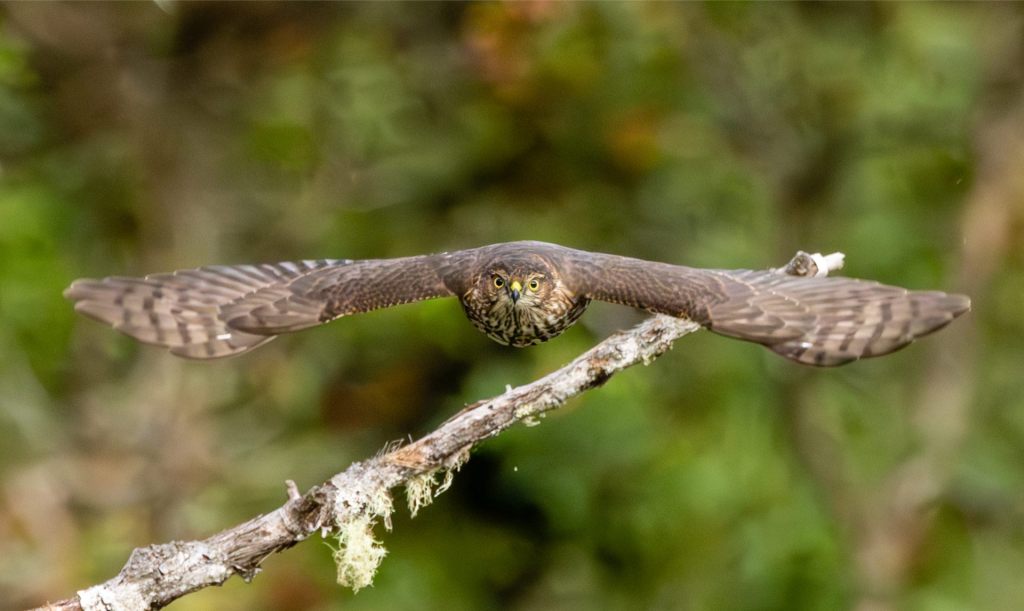
A Bald Eagle and a Cooper’s Hawk made appearances near my house when my camera was not on hand. However, four buteos, three falcons, one owl, a harrier, and a kite were captured by the technology of my camera, whose ability to make the best of less than optimal light on these dark rainy days is quite amazing.
The Buteos
Buteos are mostly large raptors with broad, rounded wings and bulky bodies. We see Red-tailed Hawks and Red-shouldered Hawks pretty regularly in Humboldt all year. In the winter Ferruginous Hawks and Rough-legged Hawks visit from their colder or more northern breeding grounds.
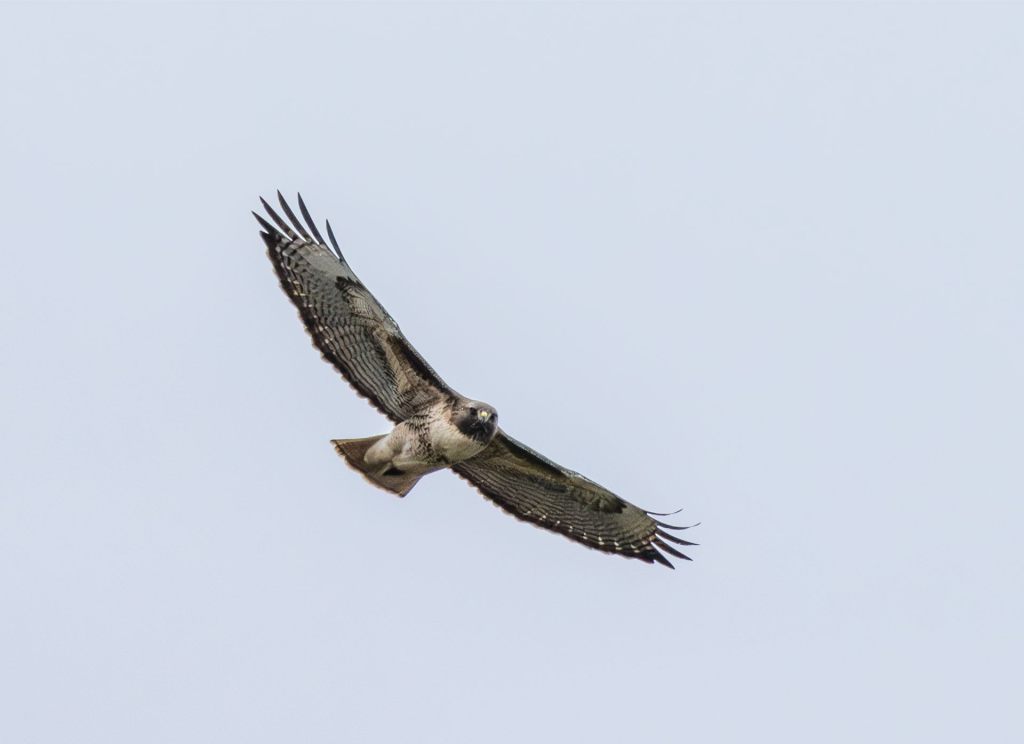
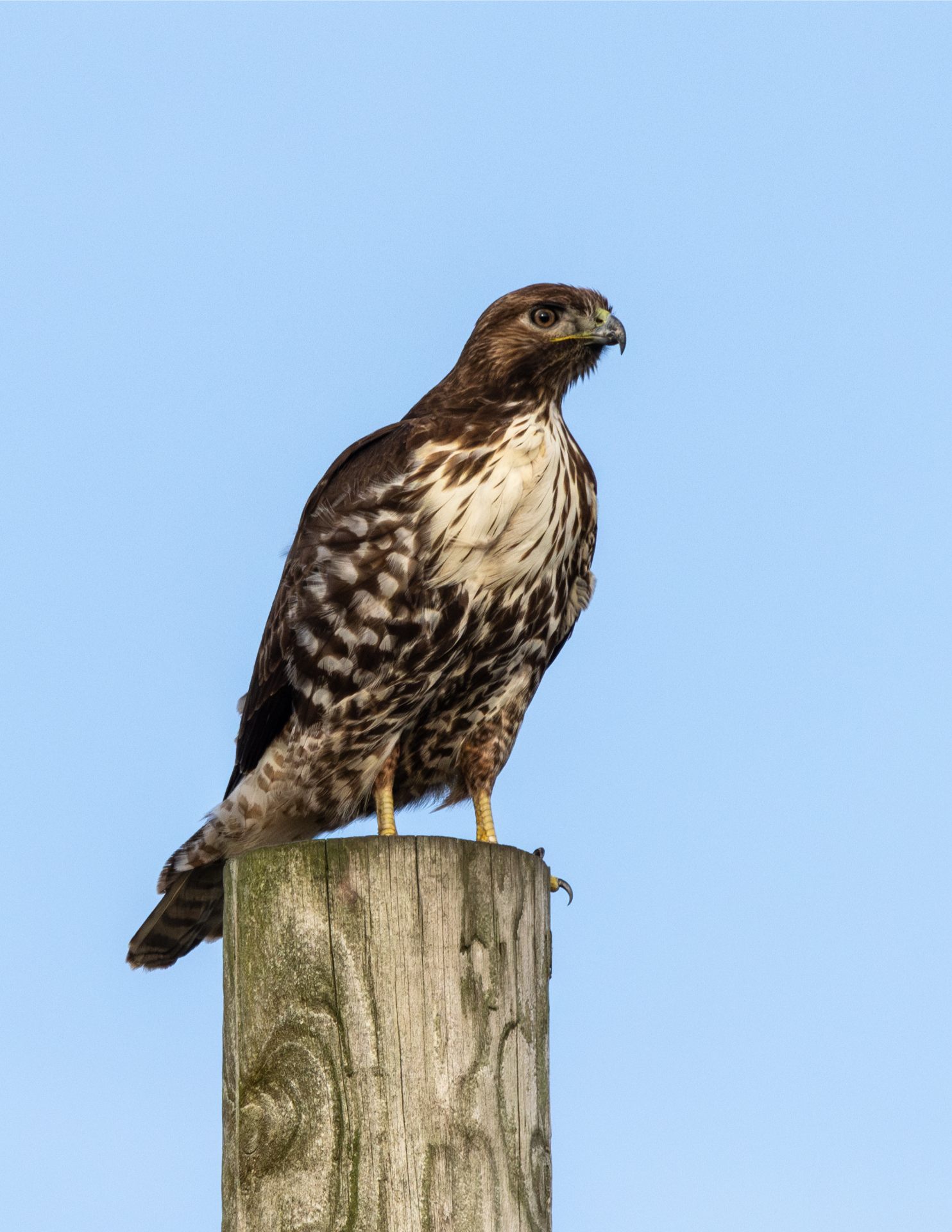
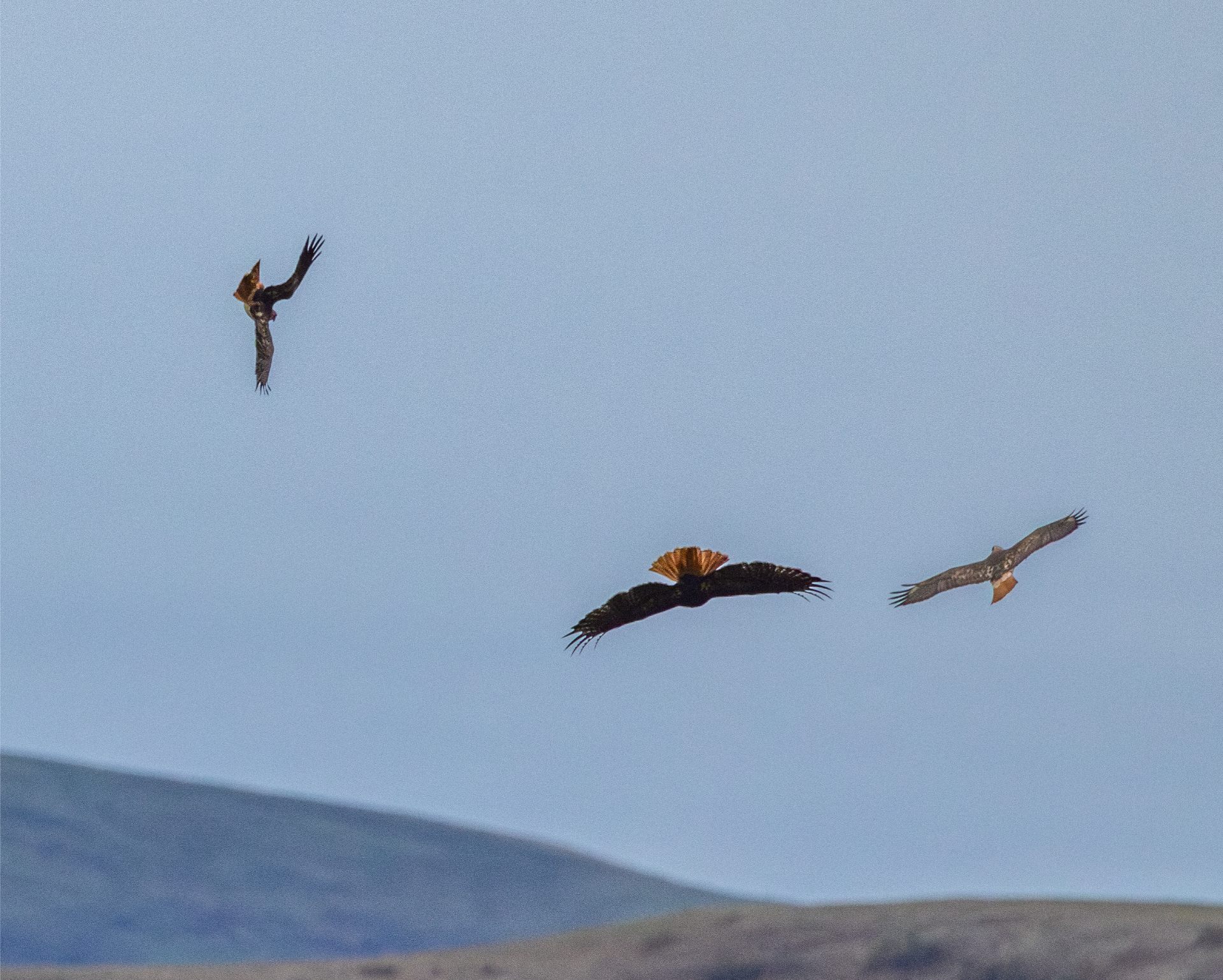
This Red-tailed Hawk’s light colored eye and banded tail indicate it’s not fully mature.Here three mature Red-tails dance in the wind on Bear River Ridge
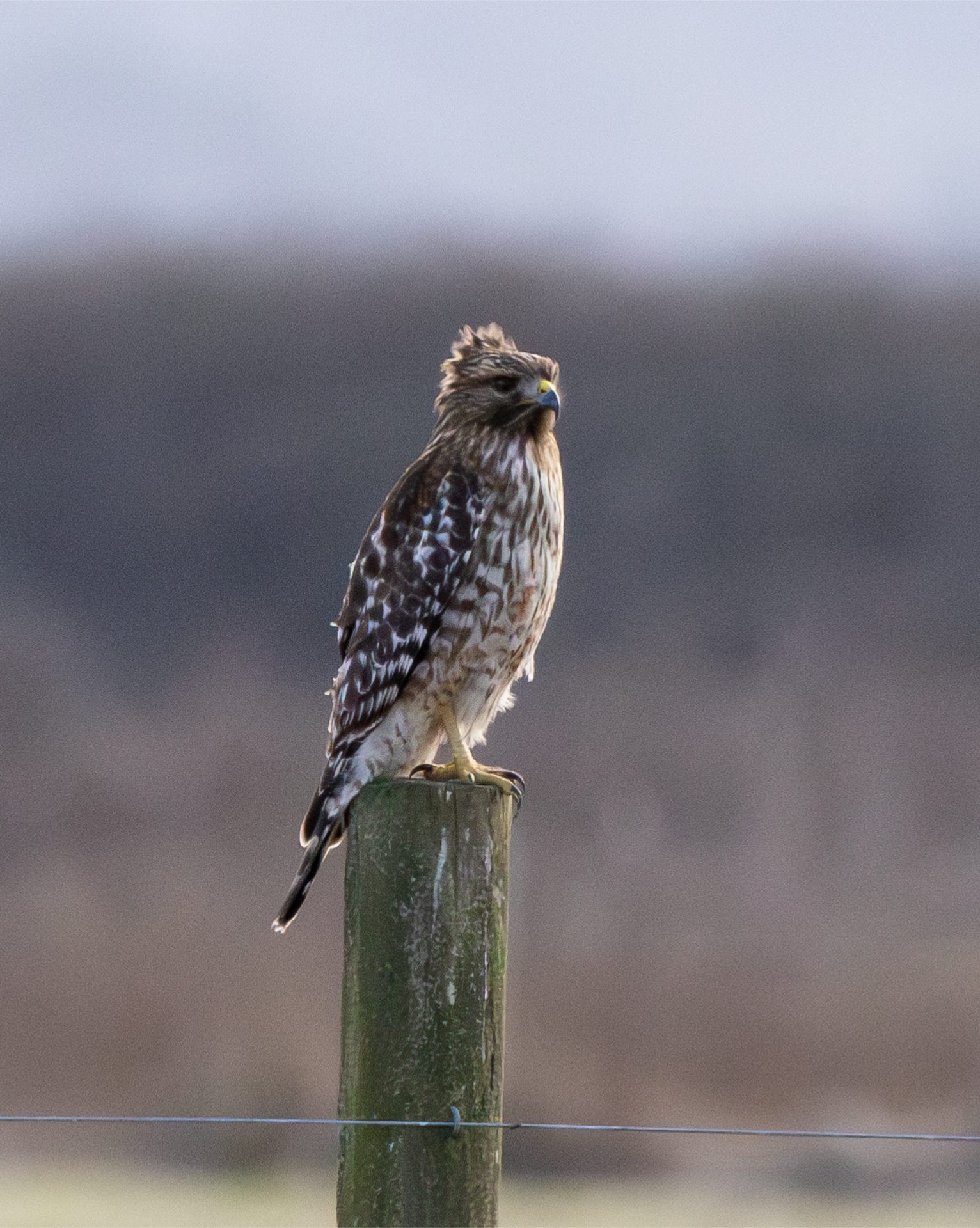
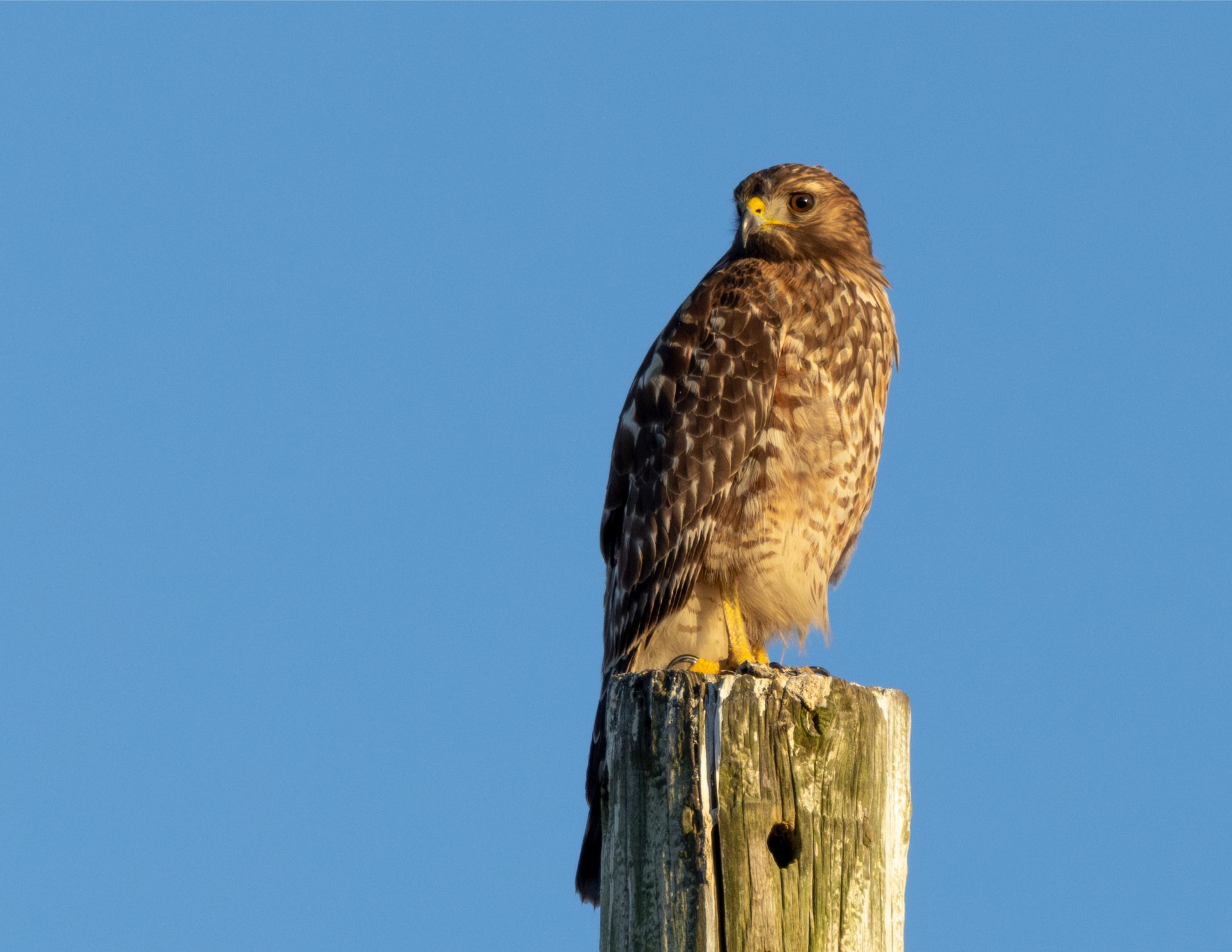
You might know Red-shouldered Hawks by their loud insistently whiny call that belies their striking beauty. A smaller Buteo, we have them year round in Humboldt.
This is a mature Red-Shouldered Hawk, shoulders, breast and leading part of the underwing are orange. The distinctive “checkerboard” black and white on the tail and trailing wing feathers are seen in all ages.Immature Red-shouldered Hawk with streaked breast.Another immature Red-shouldered Hawk
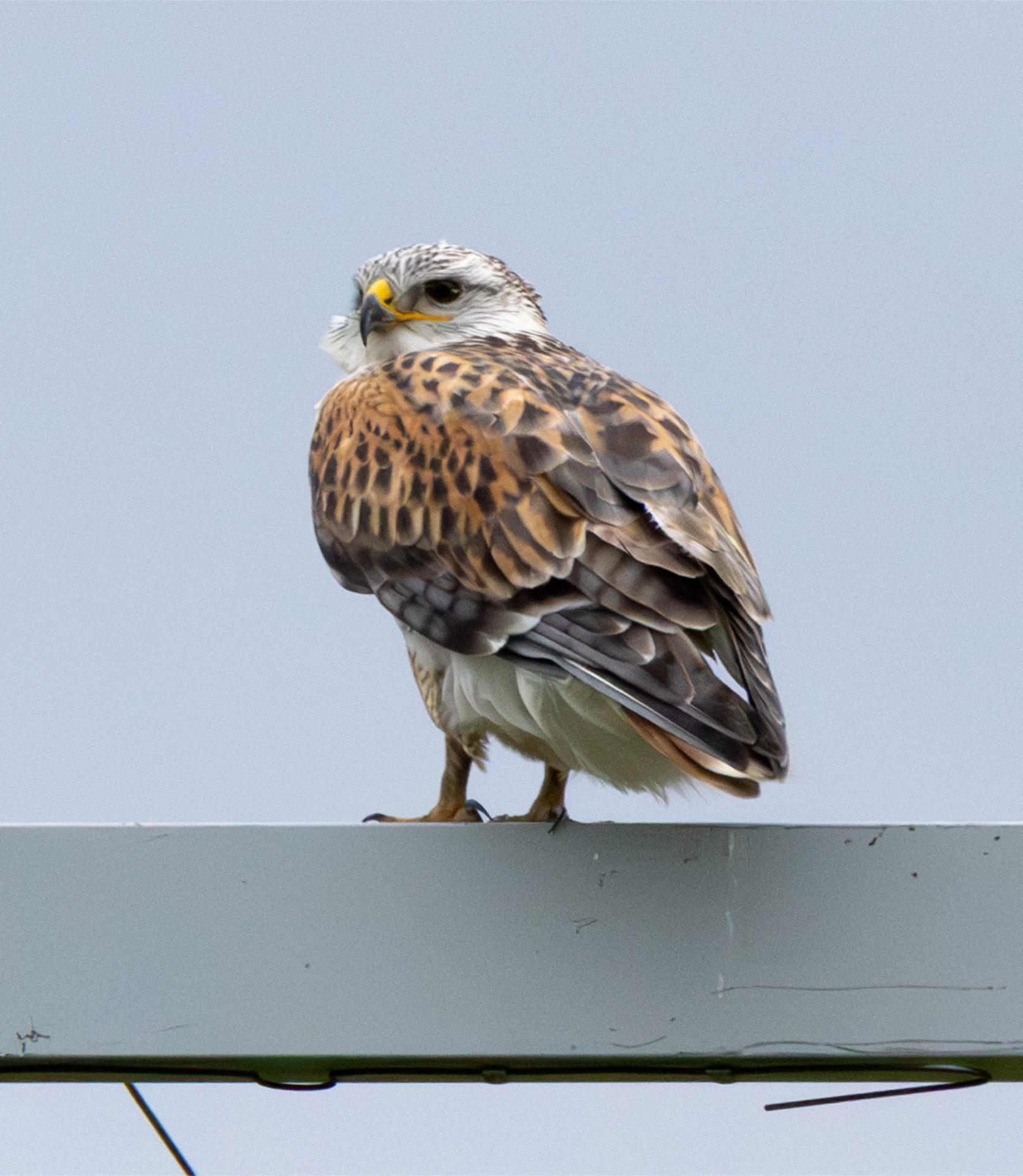
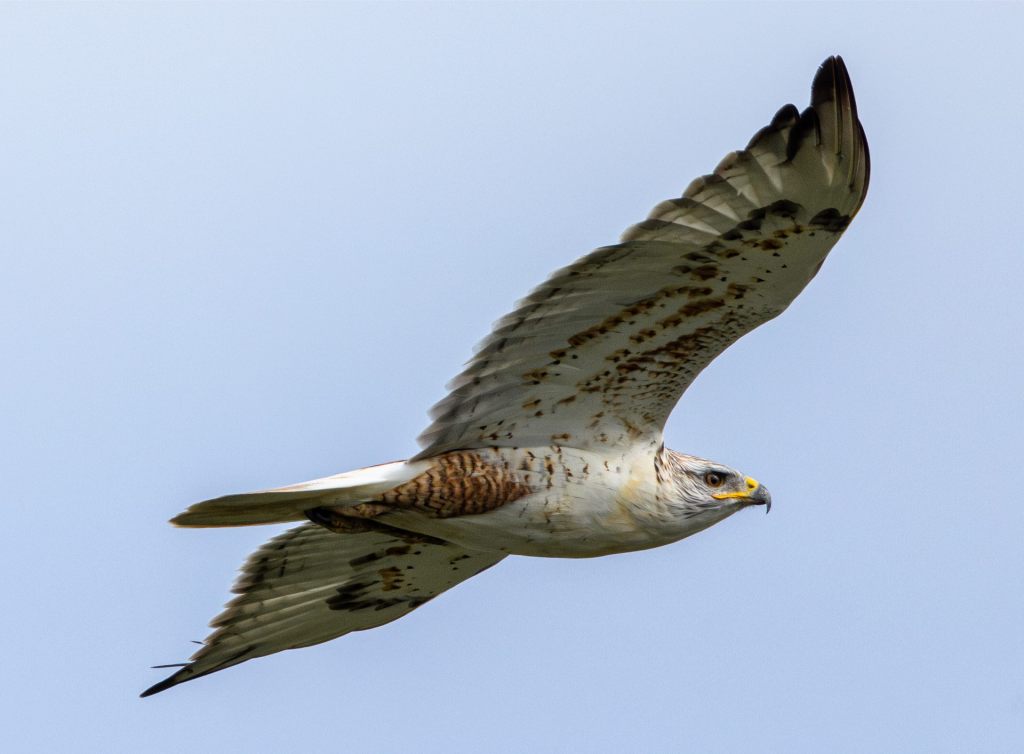
Every year I look forward to seeing a Ferruginous Hawk when fall arrives. This year they’ve turned up both on Bear River Ridge and in the Ferndale bottoms. They have an eagle-like countenance and an elegant beauty.
Our largest Buteo, the beautiful Ferruginous Hawk is a winter visitor seen both in the coastal bottoms and high over ridge tops. Here it is perched on a Ferndale power pole, showing its characteristic broad gape (the opening of the beak stretching all the way back to under the eye.)
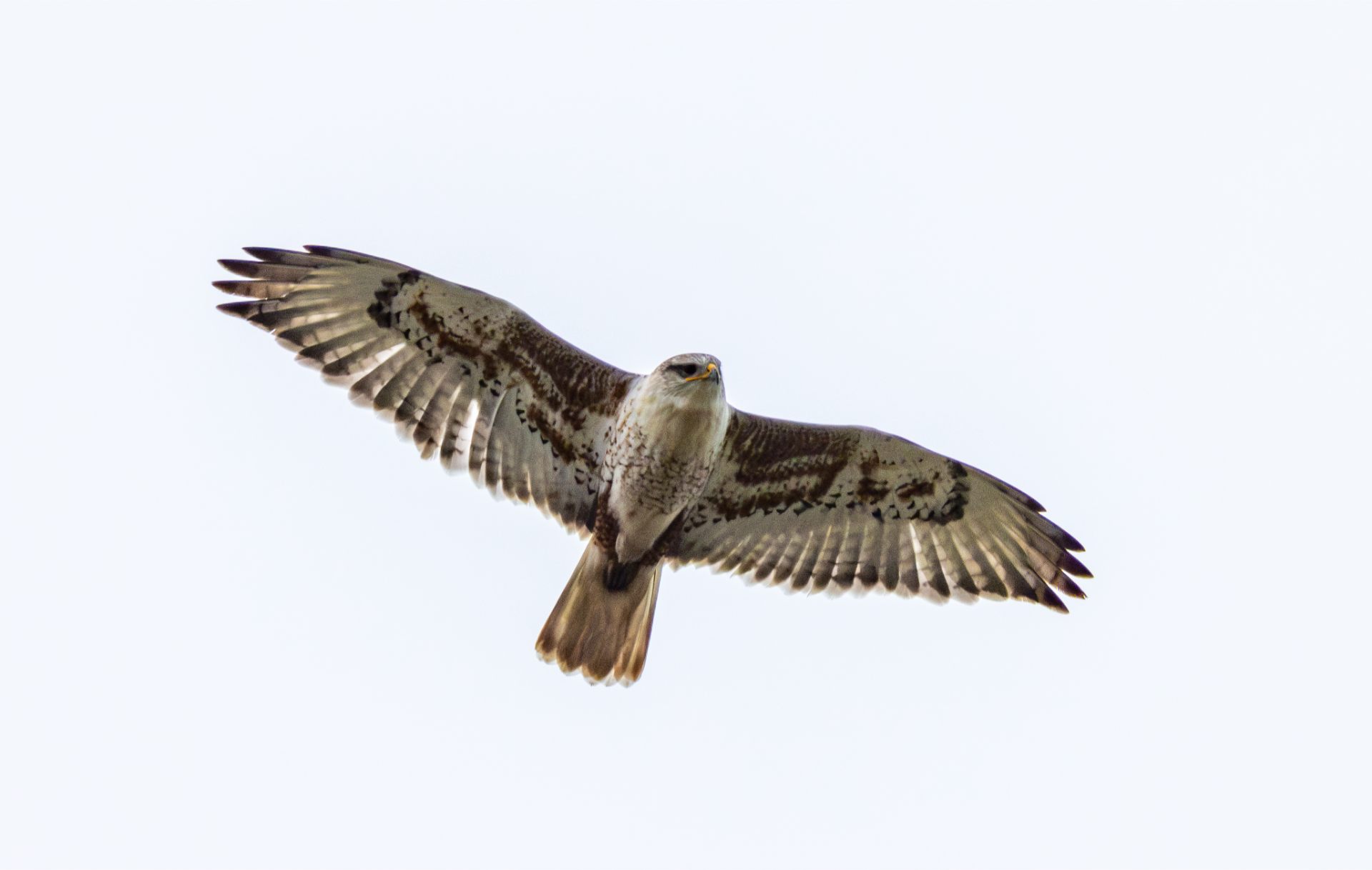
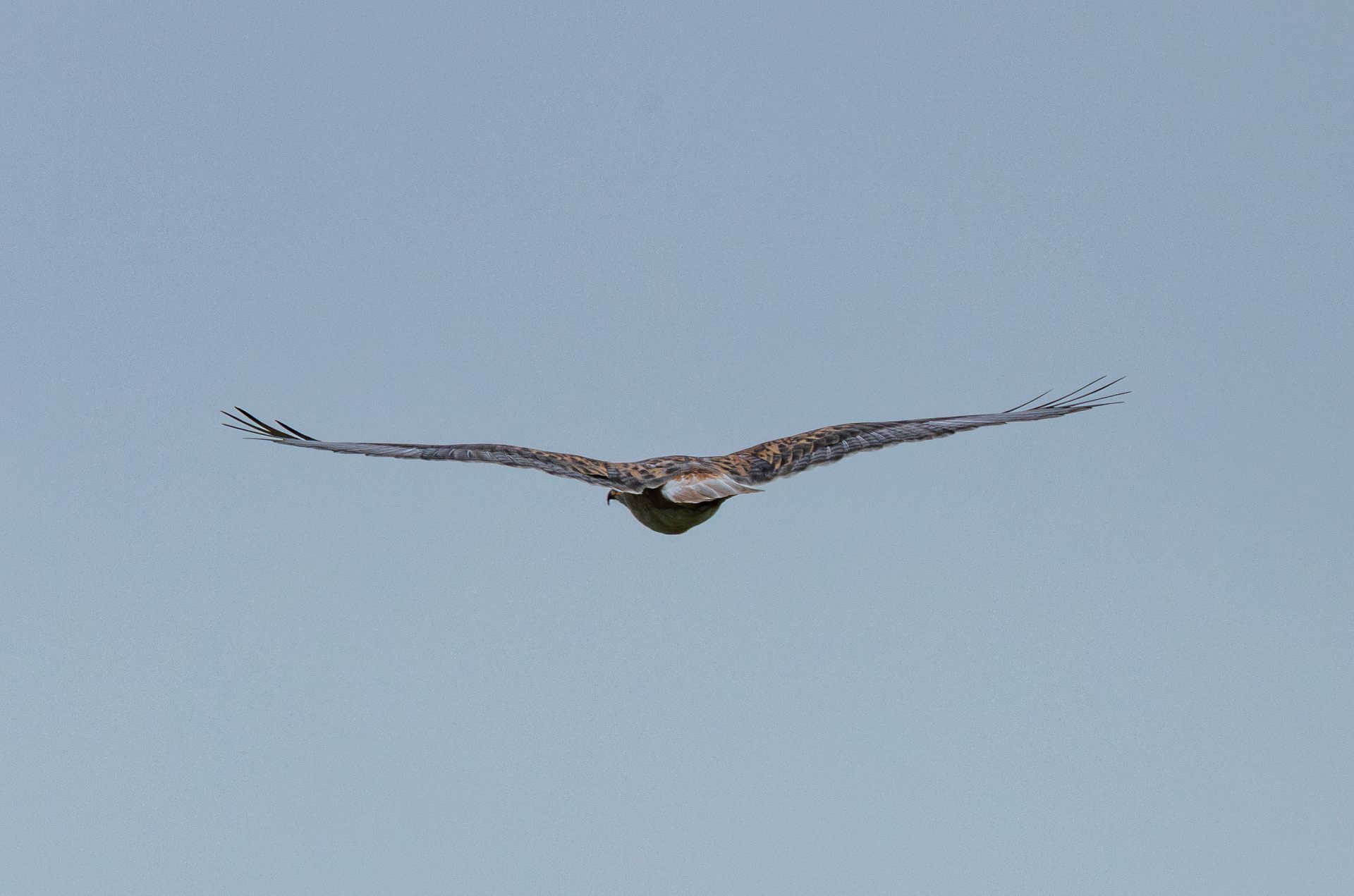
Ferruginous hawk from below. The plumage from underneath can be quite variable, from mottled like this one to much lighter. The legs (tarsi) have rust-colored feathers all the way to the feet, forming the “V” you can see here.Seen from behind in flight you can see the light unbanded tail, the wings held at a very slight “dyhedral” or wide V shape, and just barely, the windows of lighter flight feathers toward the outer edge of the wing that are distinctive.
It’s been a couple years since I’ve seen a Rough-legged Hawk. I have seen them both on Bear River Ridge and in the Loleta Bottoms alongside Cannibal Island Road, but searches the past two winters have been unlucky. So it seemed like the best Christmas present I could ever ask for to see one along Upper Bear River Ridge Road on December 25.
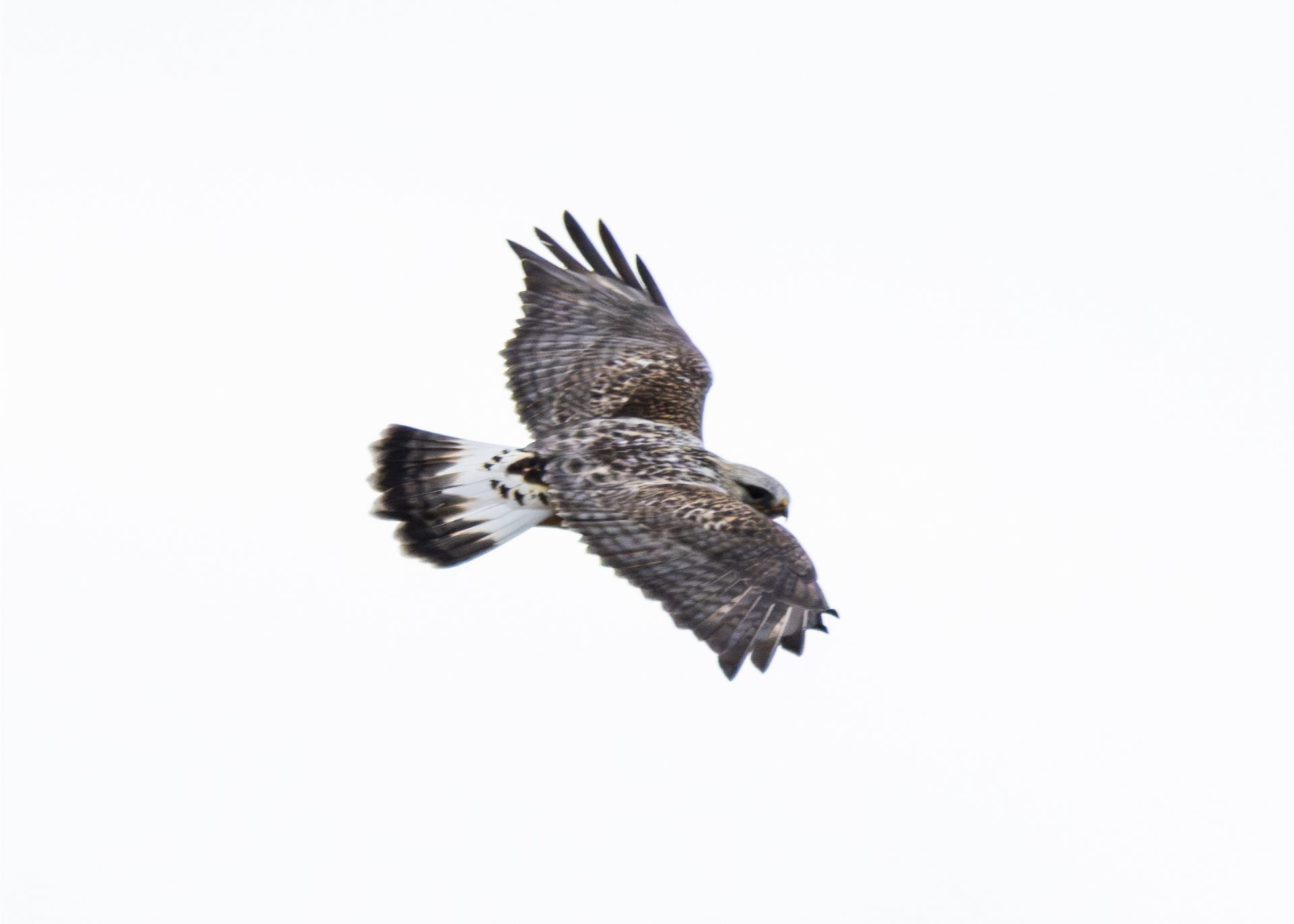
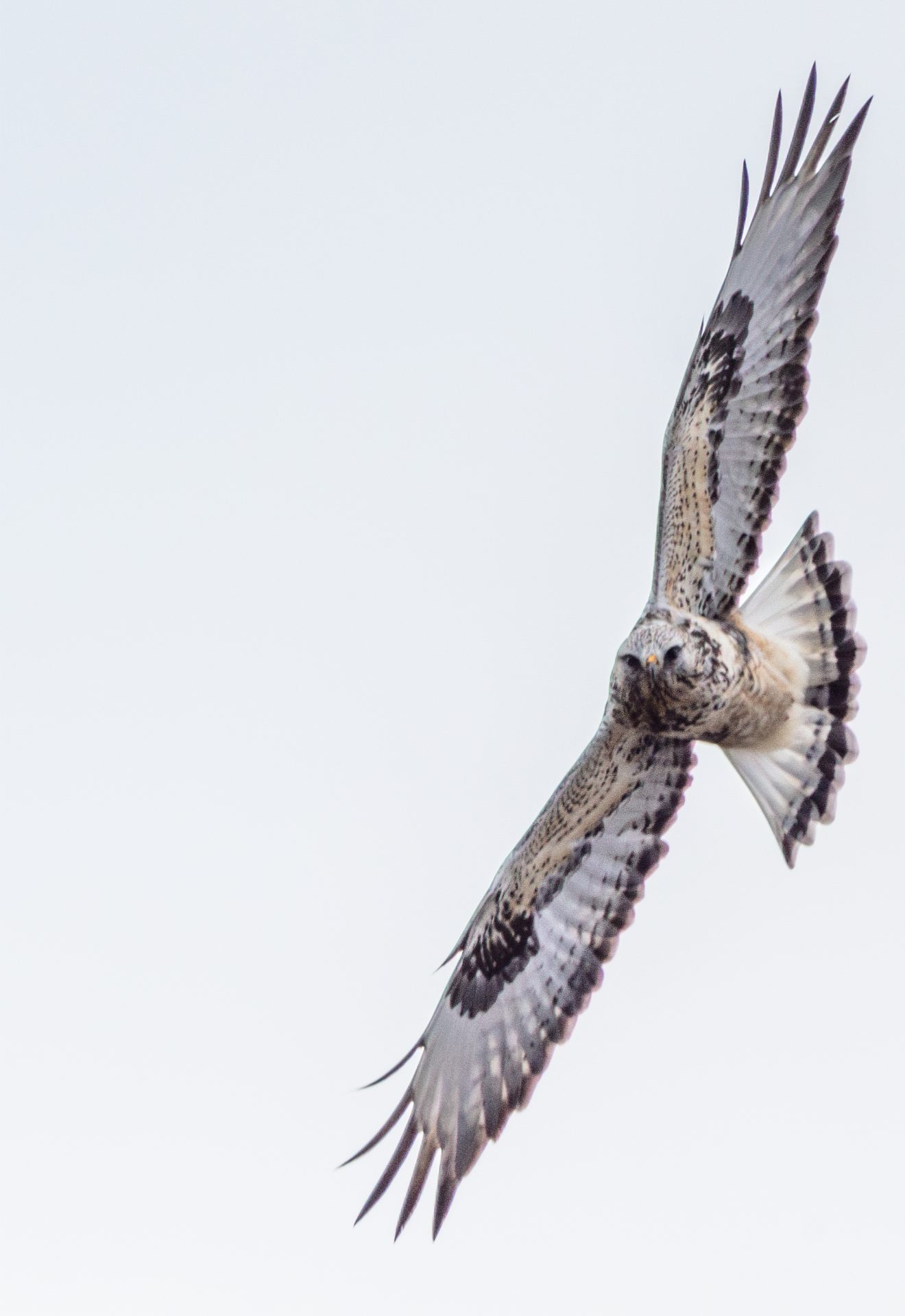
Rough-legged Hawk from above, showing distinctive tail-banding and the smallish bill.Named for their feathered legs, they breed in the far north where the extra insulation is needed.From underneath, the dark wrist patches show as well as another look at the tail band. I’m guessing this bird is a male as females have dark bellies.
Roughie riding the wind.Face and underwing detail
The Falcons
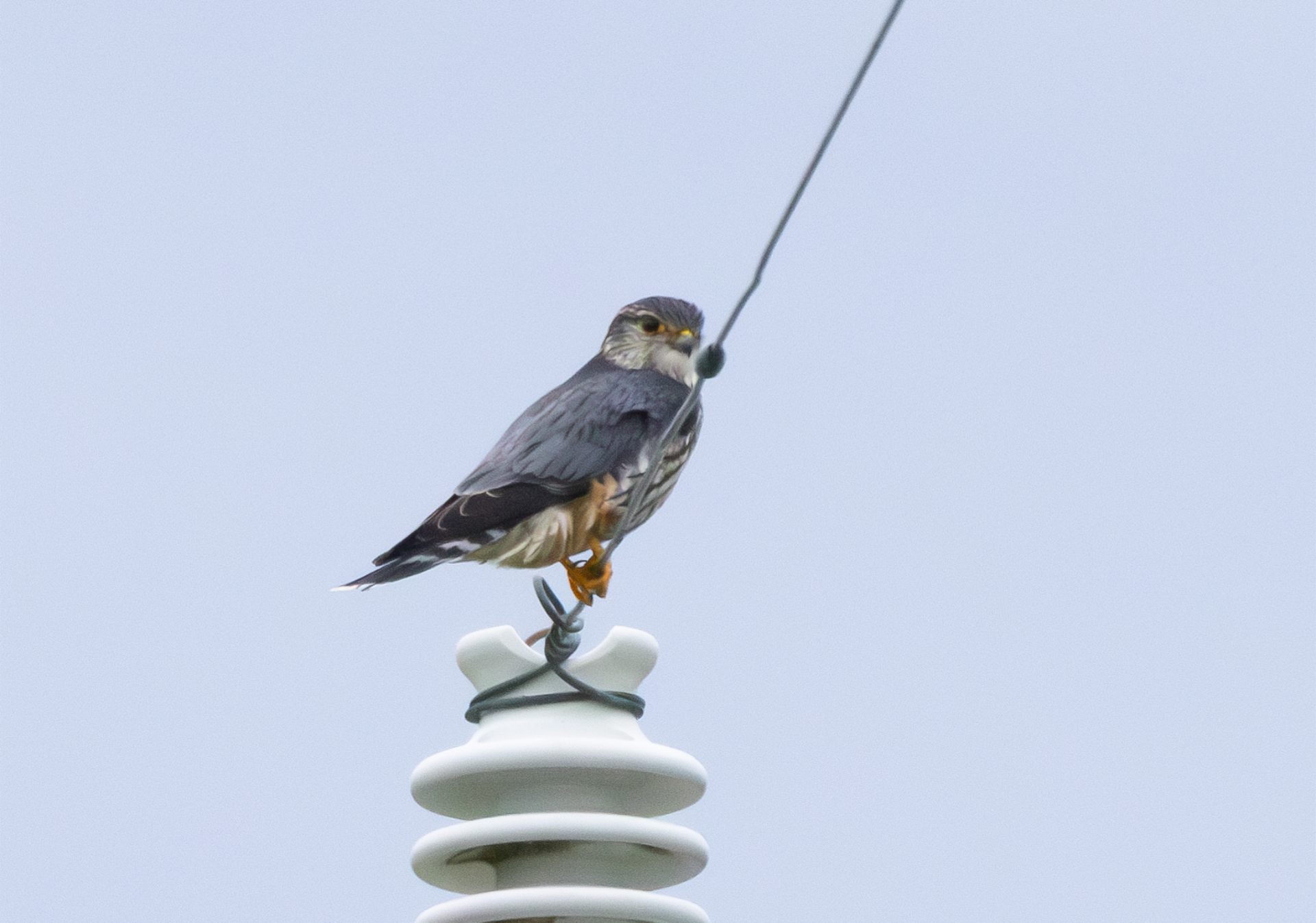
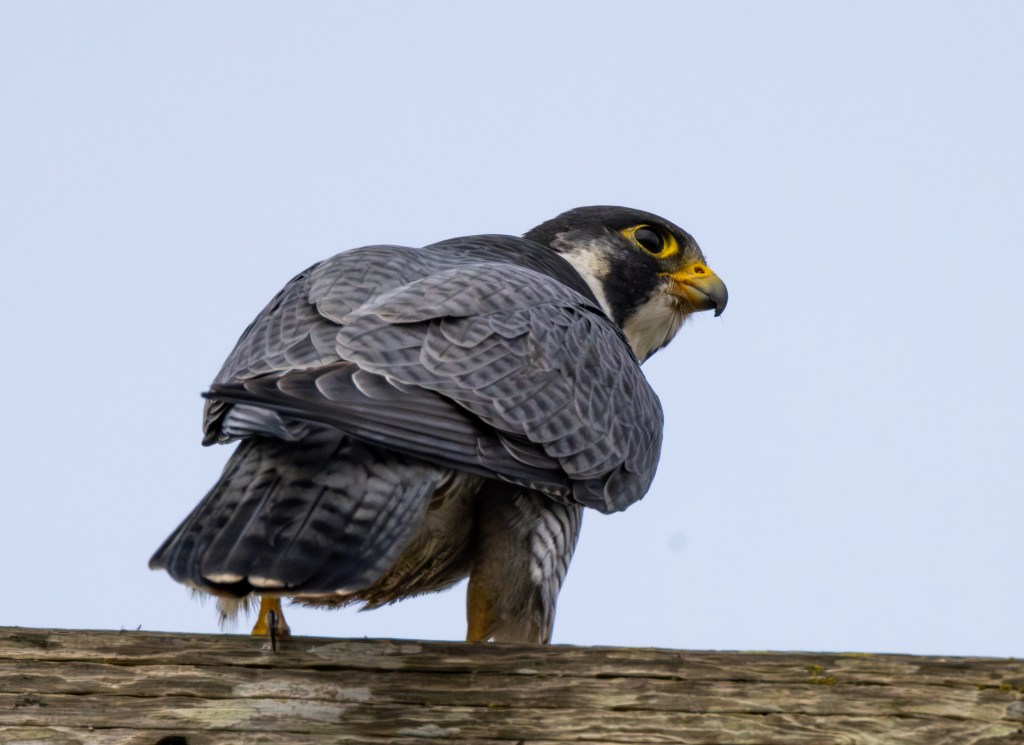
Falcons are built for speed with their streamlined bodies and narrow pointed wings. American Kestrels and some Peregrine varieties live in Humboldt year round, Merlins and Tundra Peregrines pass through on migration or winter here.
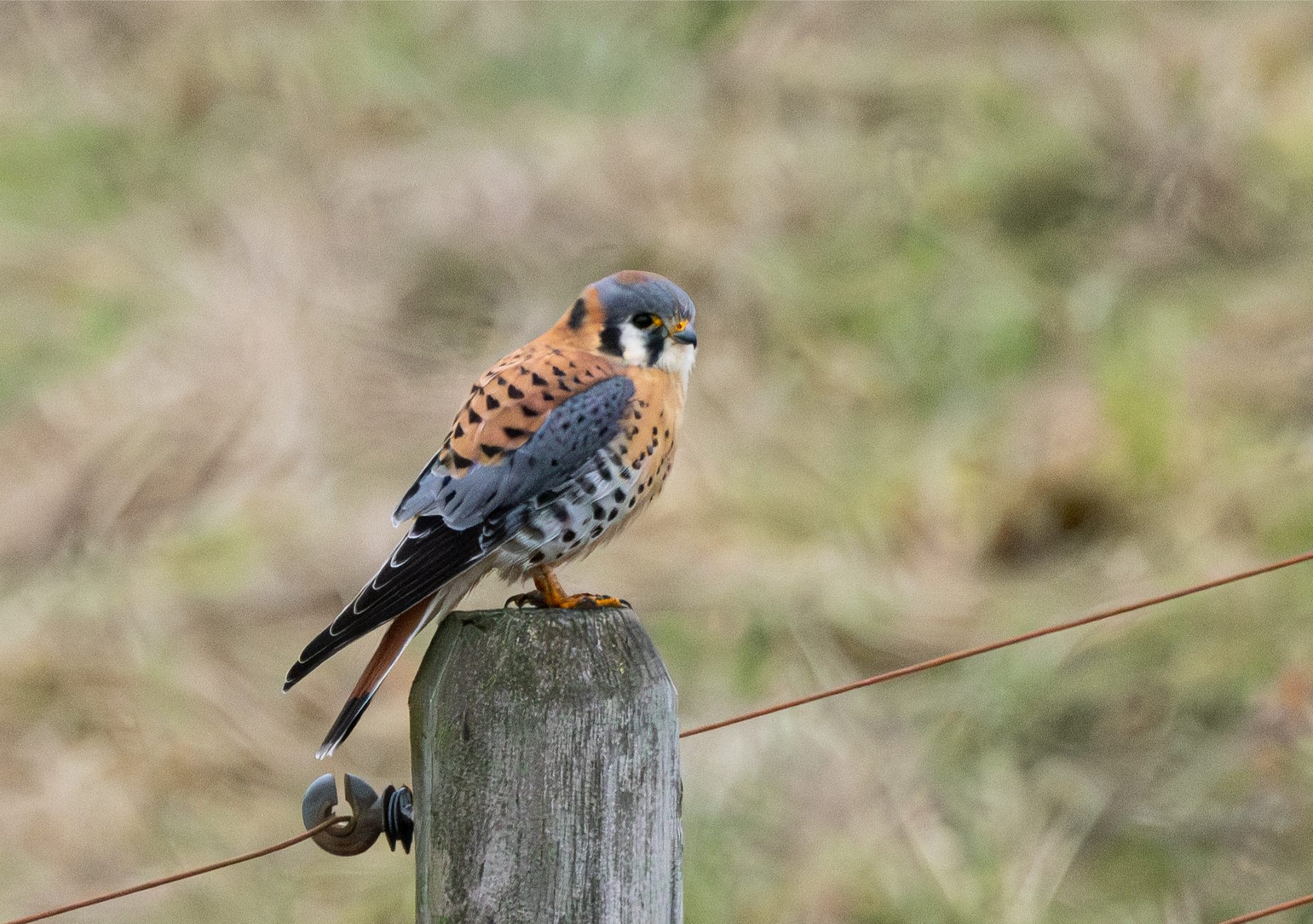
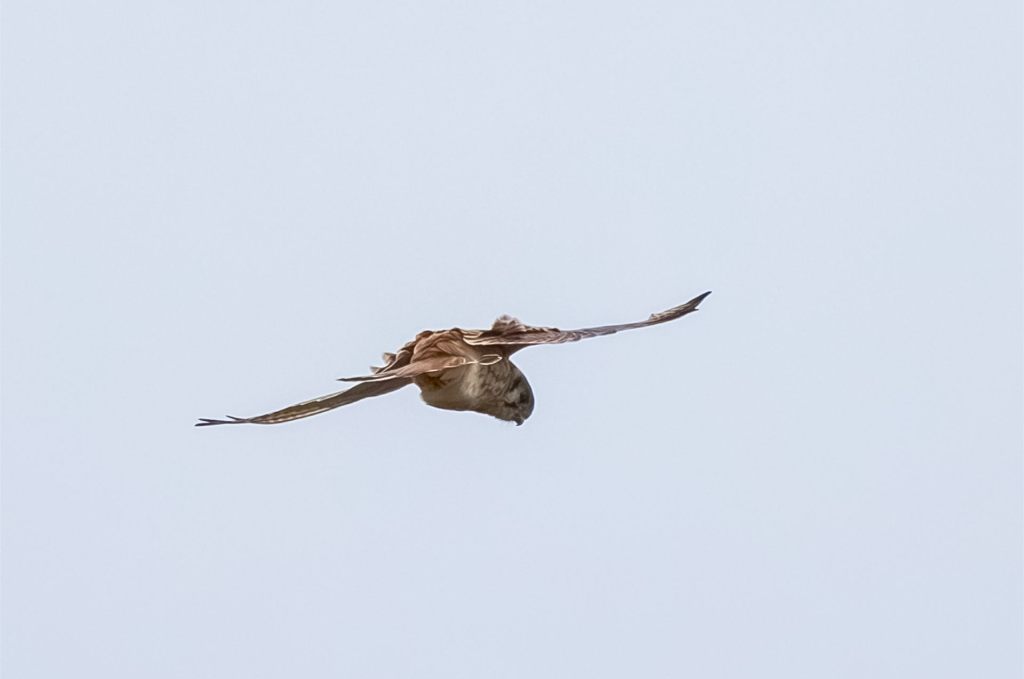
The American Kestrel is our smallest falcon. This is a male with his striking and intricately colored feathering.Kestrels are one of few raptors who hover over prey before diving for the catch. This is a female.The Merlin is slightly larger than the kestrel and a much more adept hunter, often taking prey bigger and heavier than itself.
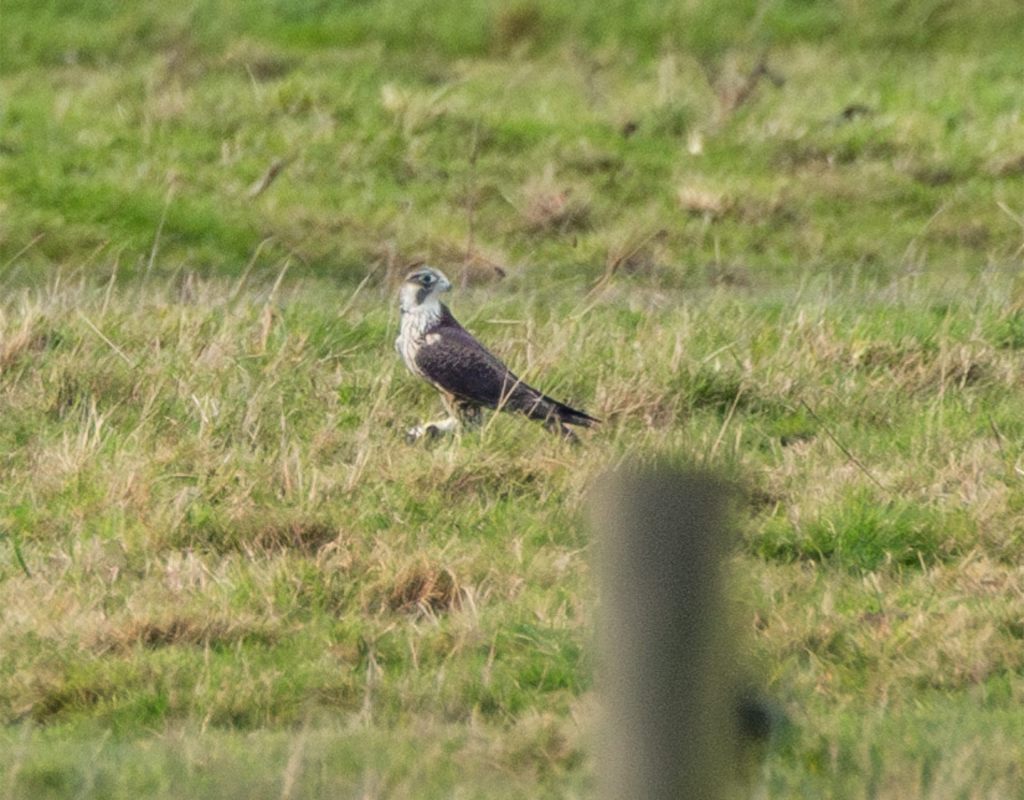
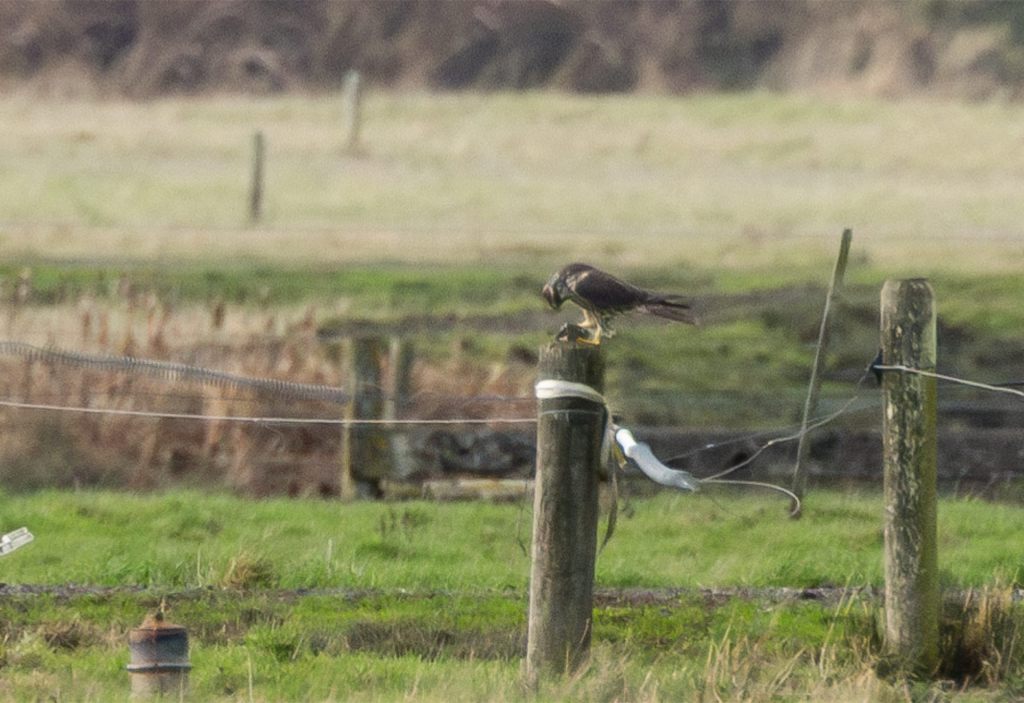
This immature “Tundra” Peregrine Falcon may have wandered off of its long migration course from the Arctic to South America. Told by its more slender body and narrow moustache compared to other Peregrine varieties, this bird typically “leapfrogs” over the migration paths of its relatives. This one stands on a catch in the Arcata bottoms.
The catch turned out to be a small bird, maybe a shorebird or a starling?
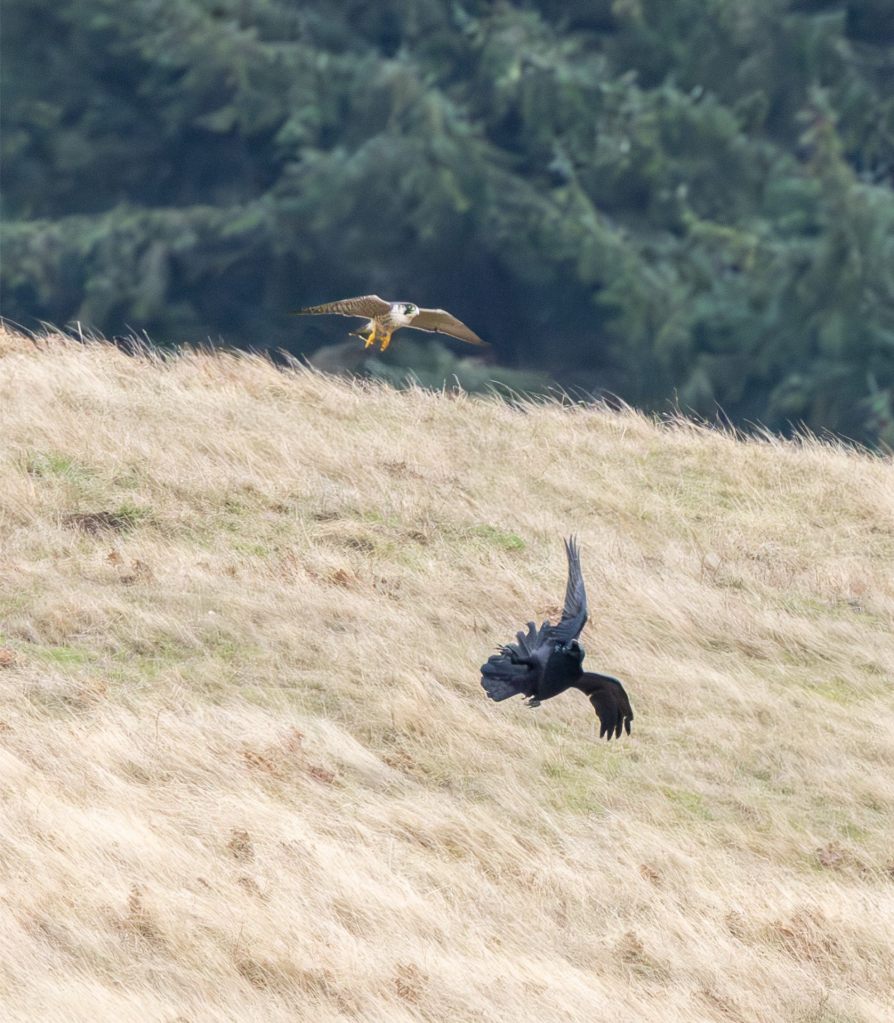
Nine times out of ten, when Ravens are interacting with raptors it’s the Ravens doing the harassing and the raptor being escorted out of Raven territory or just plagued incessantly for no apparent reason. But this time a Peregrine appeared out of nowhere like a bullet aimed at this Raven and its cohort (out of this frame). I seldom feel any sympathy for Ravens, much as I love them, but was finding myself relieved they escaped the falcon’s swoops and dives in an aerial show that went on for a couple minutes on Bear River Ridge.
White-tailed Kite
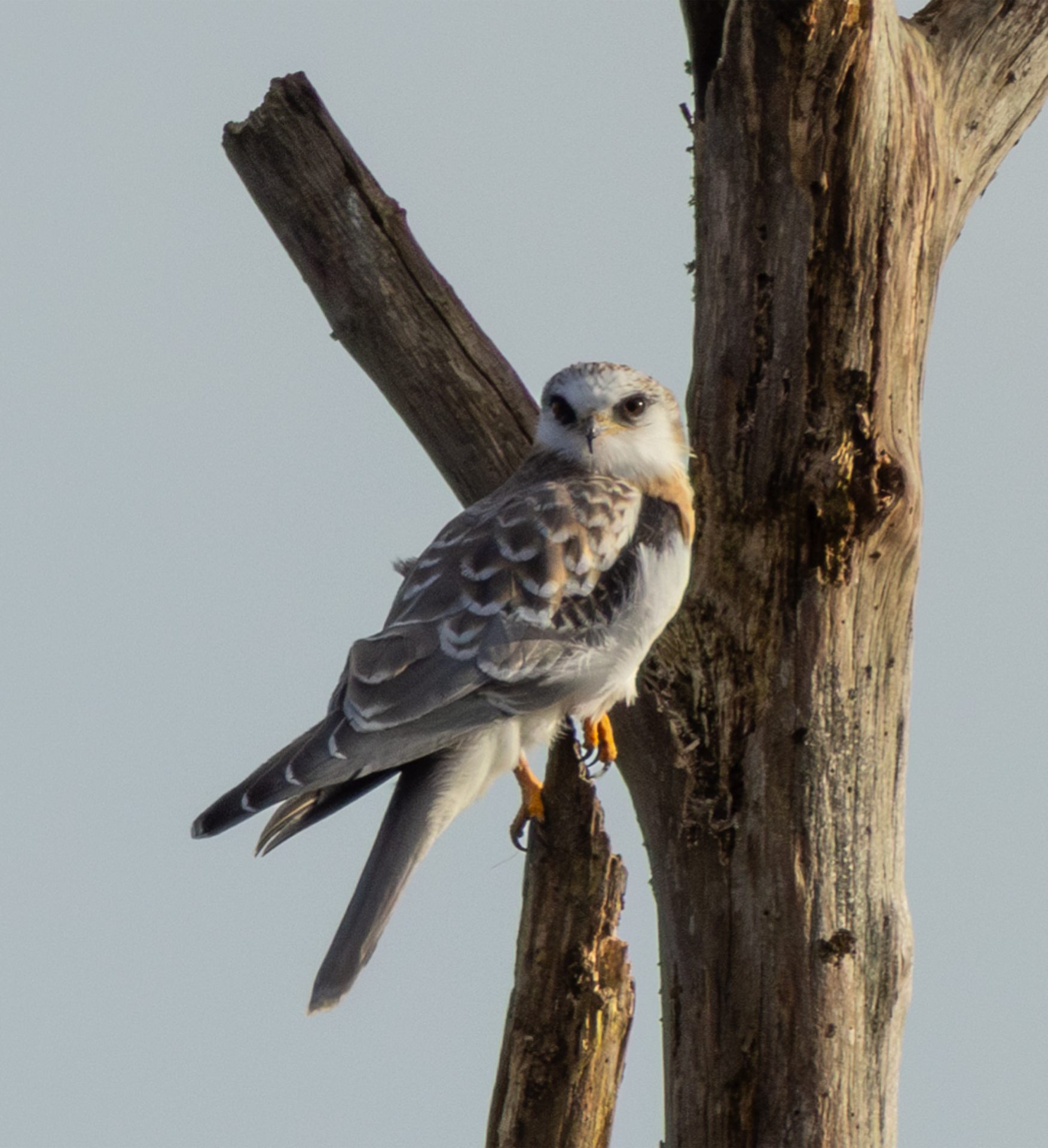
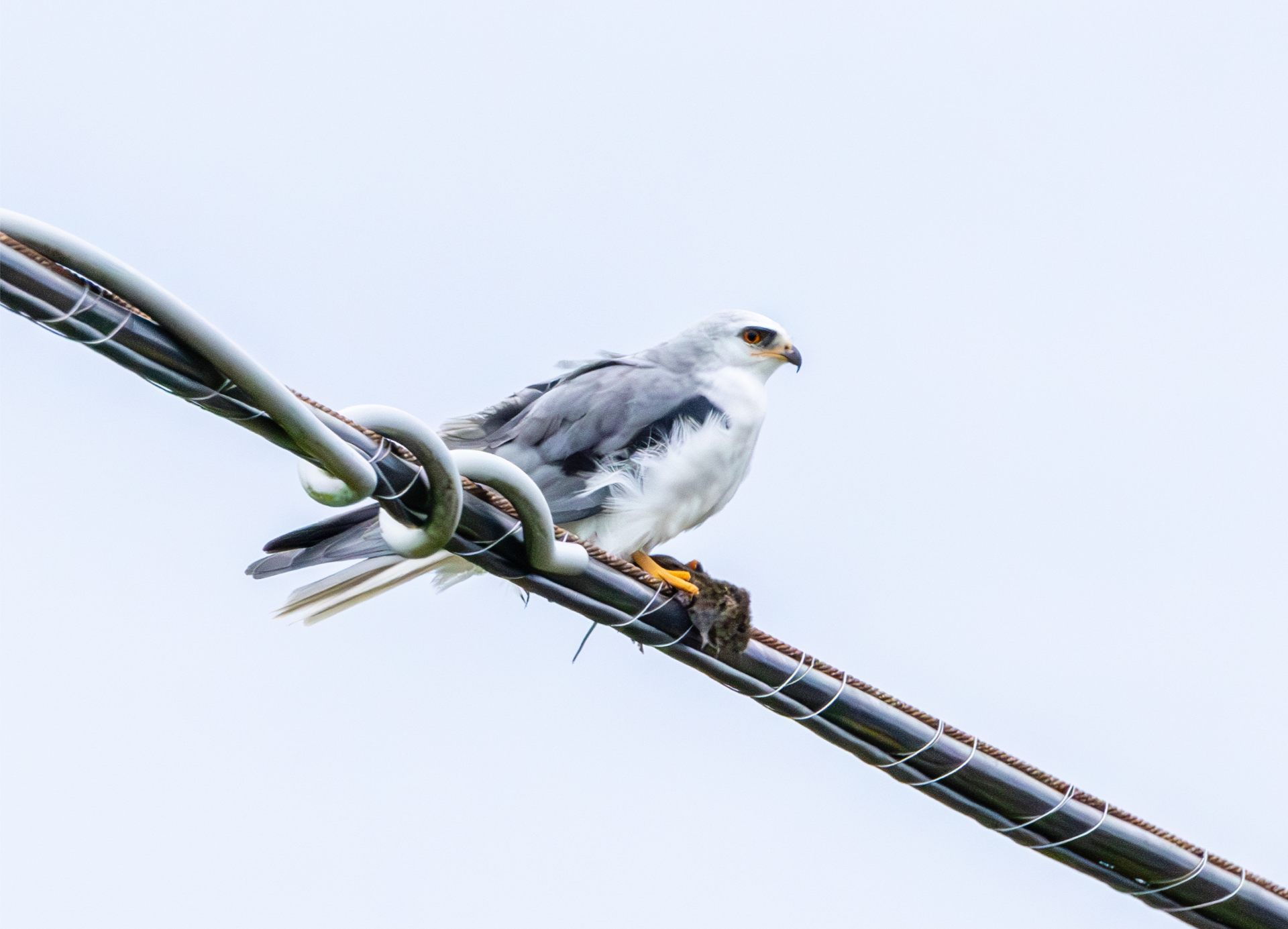
We are lucky to have a breeding pair of these gorgeous predators right in southern Humboldt, less than a mile from my house. The birds shown here were seen in the bottoms of Ferndale and Arcata.
This is an immature Kite, told by the light scalloped edges on the feathers, and some buffy mottling on the breast. Kites live in Humboldt year-round and are often seen hunting over open fields. Their characteristic hovering is followed by an unusual floating descent onto prey.Kite with prey in the Ferndale bottoms.
Listen to the Kite vocalizing to another nearby Kite who answers with a raspy growl about the ownership of the prey.
Northern Harrier
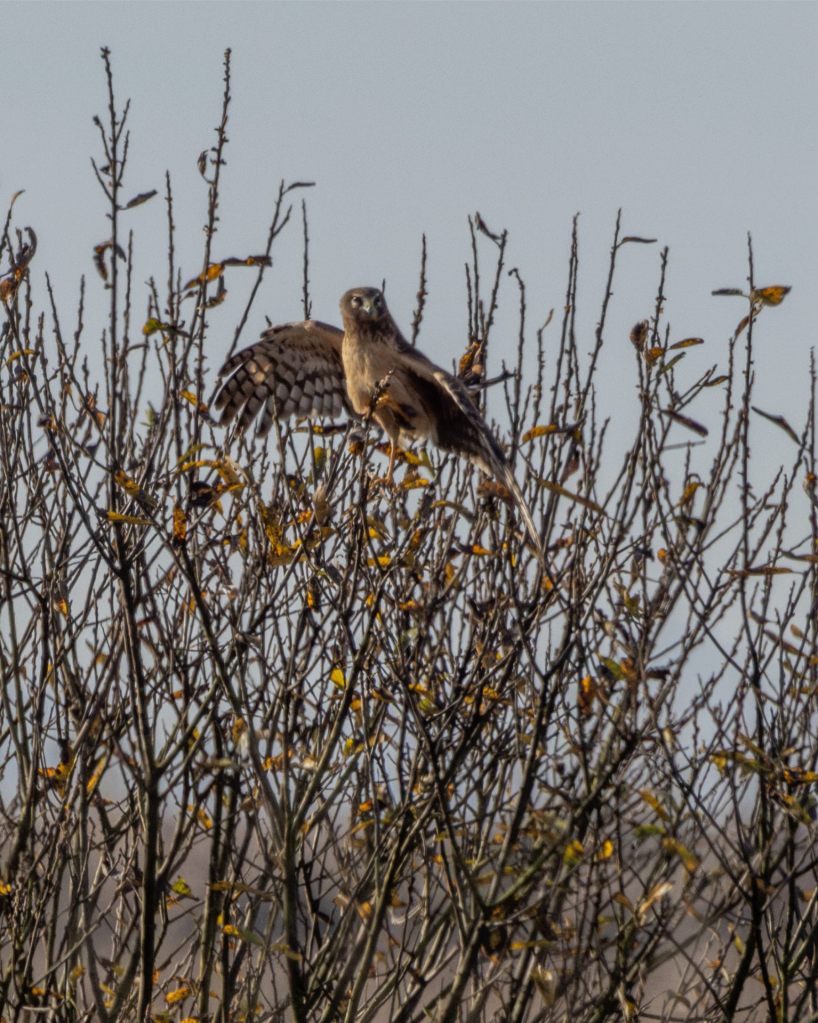
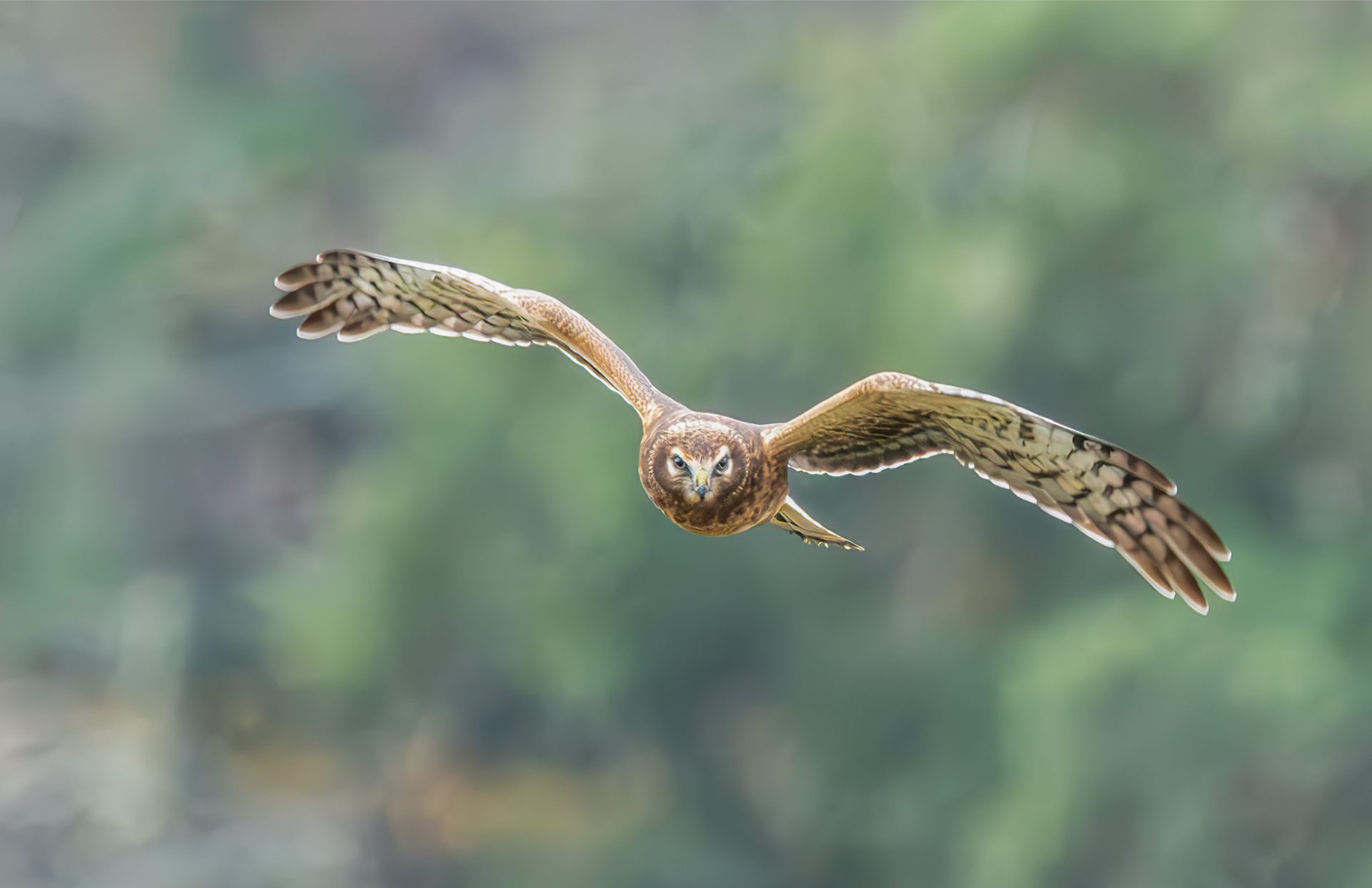
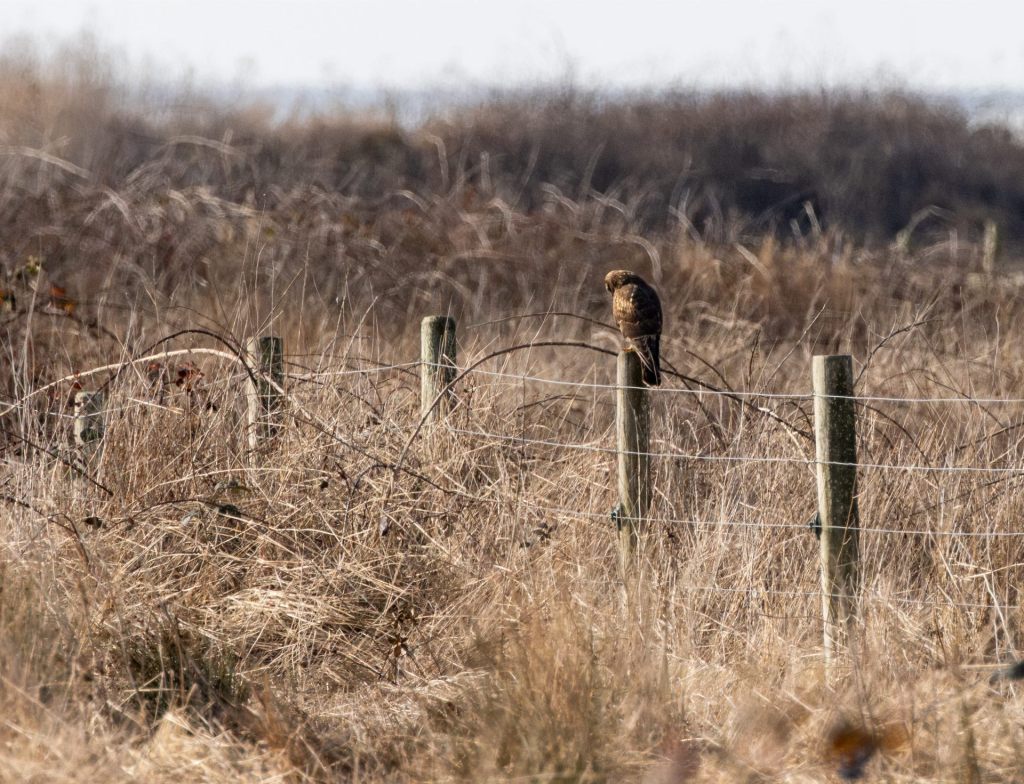
Harriers live in Humboldt year round and may turn up in different areas in different seasons. This is an immature bird, told by its brownish color and lack of breast streaking. They are beautiful acrobatic flyers who swoop low over their hunting grounds, often marshy areas which gave it its previous name of Marsh Hawk.
Harriers have an almost owl-like facial disc.Resting Harrier shows long wing tips and tail.
Short-eared Owl
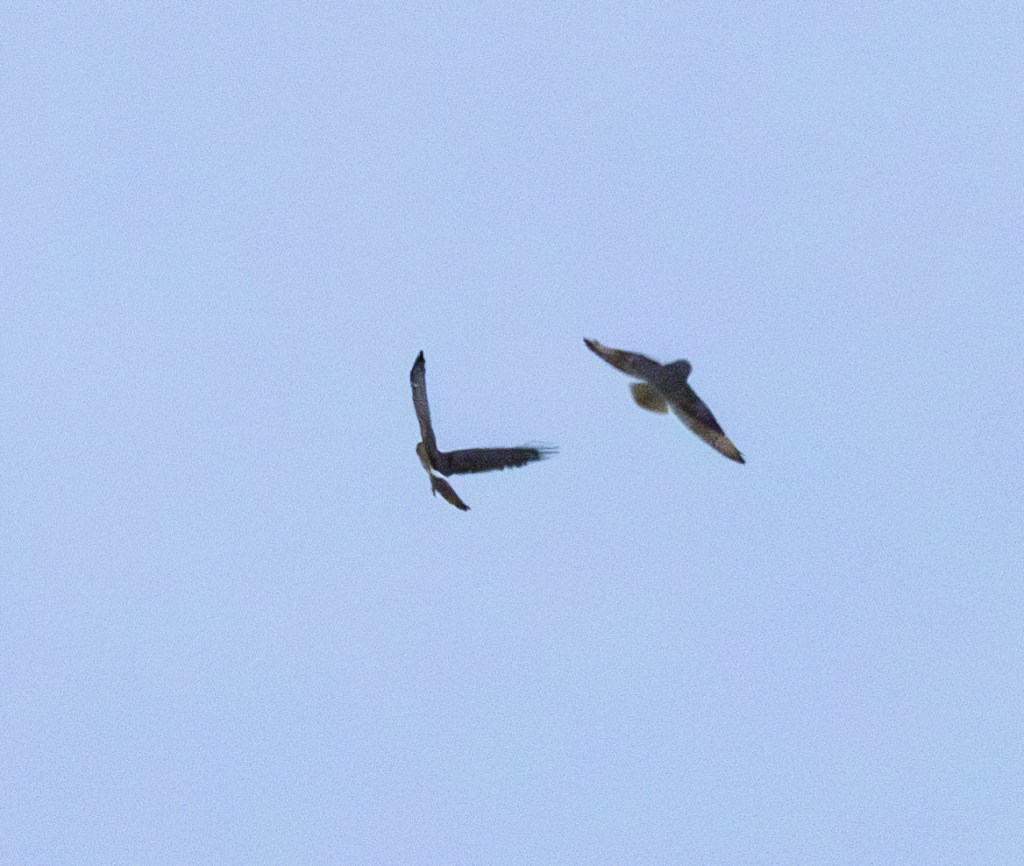
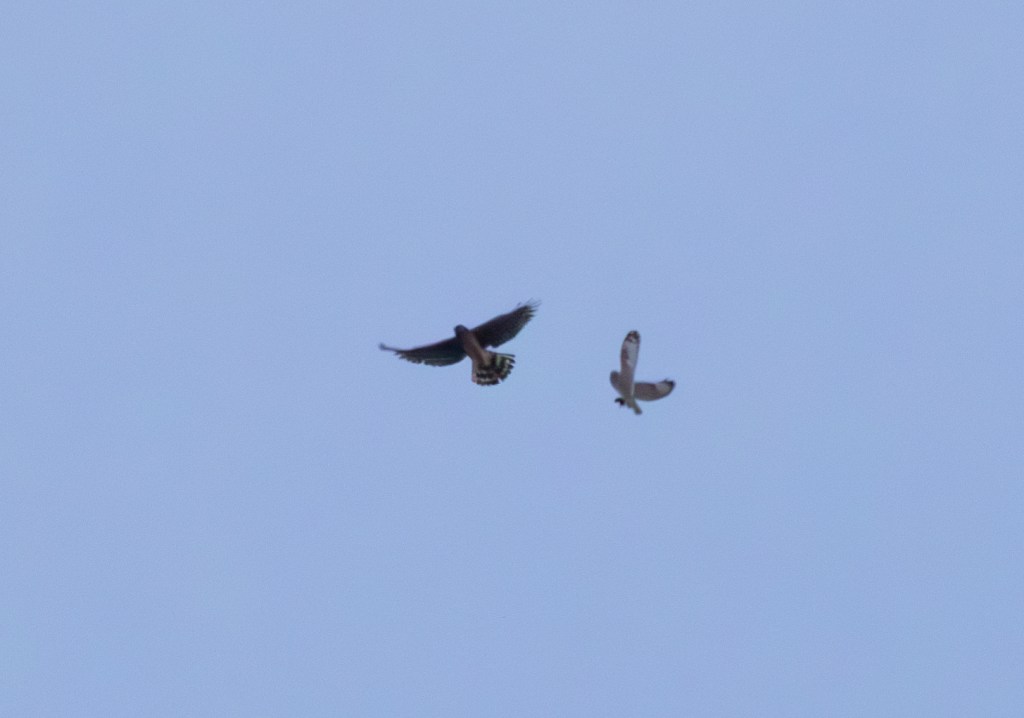
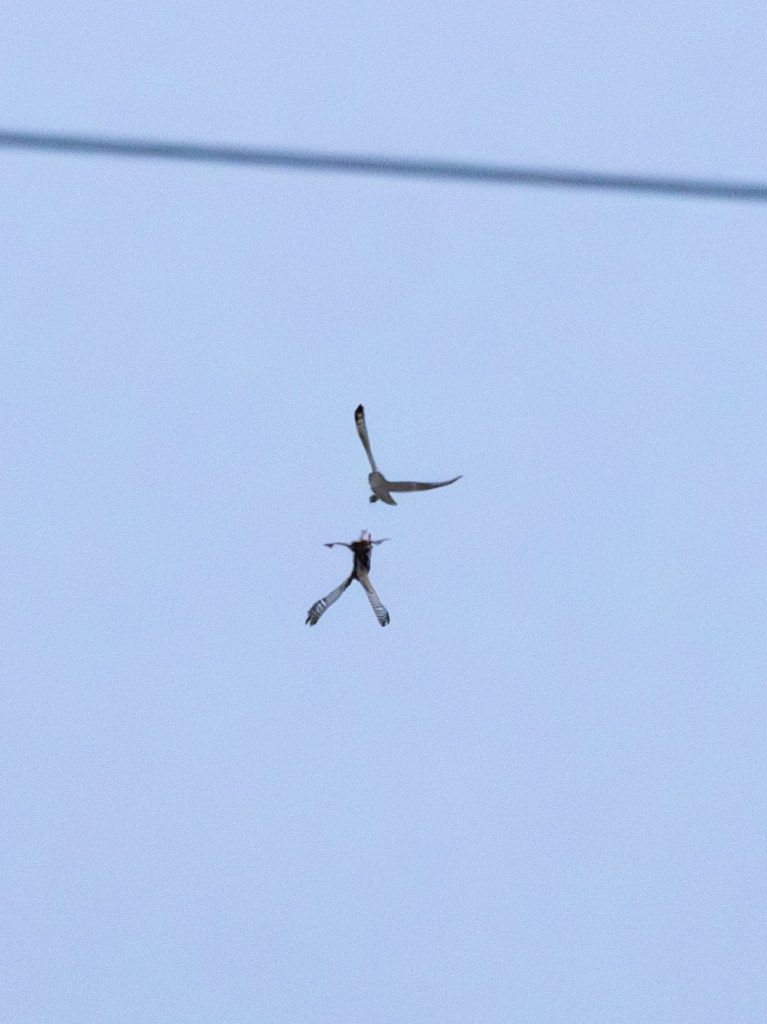
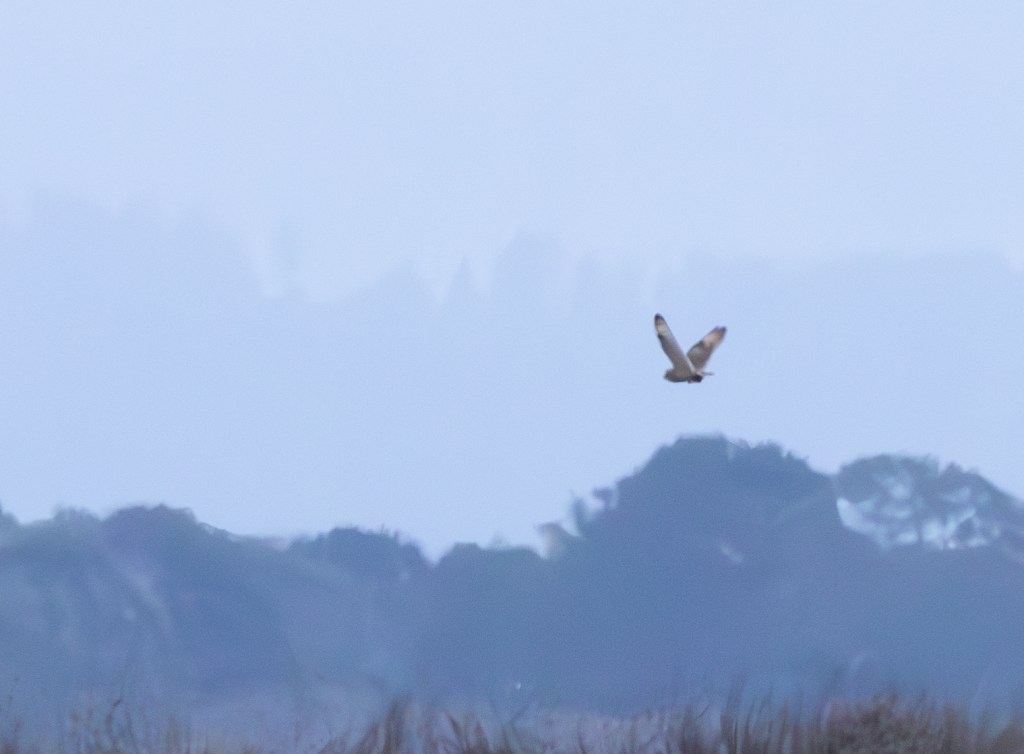
So far this winter, I’m counting myself lucky to see one of these visiting beauties, but not lucky enough to get any decently close pictures. Nevertheless, there was plenty of action once this one had prey in its talons, observable despite the distance.A Northern harrier (left) soon showed up to harass the owl into dropping its prey.The owl retains possession after a big swoop by the HarrierThe Harrier tries another approach.The poor rodent is caught in a tug o’ war.It was getting very dark at this point, but I believe the owl has successfully hung on to its catch and is speeding away from the Harrier toward a safe place to dine.
After New Year’s Day I start to feel a pull toward the excitement of what spring will bring. But for now, my birding cup feels full to overflowing with these many sightings of raptors.






 Free Range Photography
Leave a reply to deliciouslyfc5ff86ae8 Cancel reply