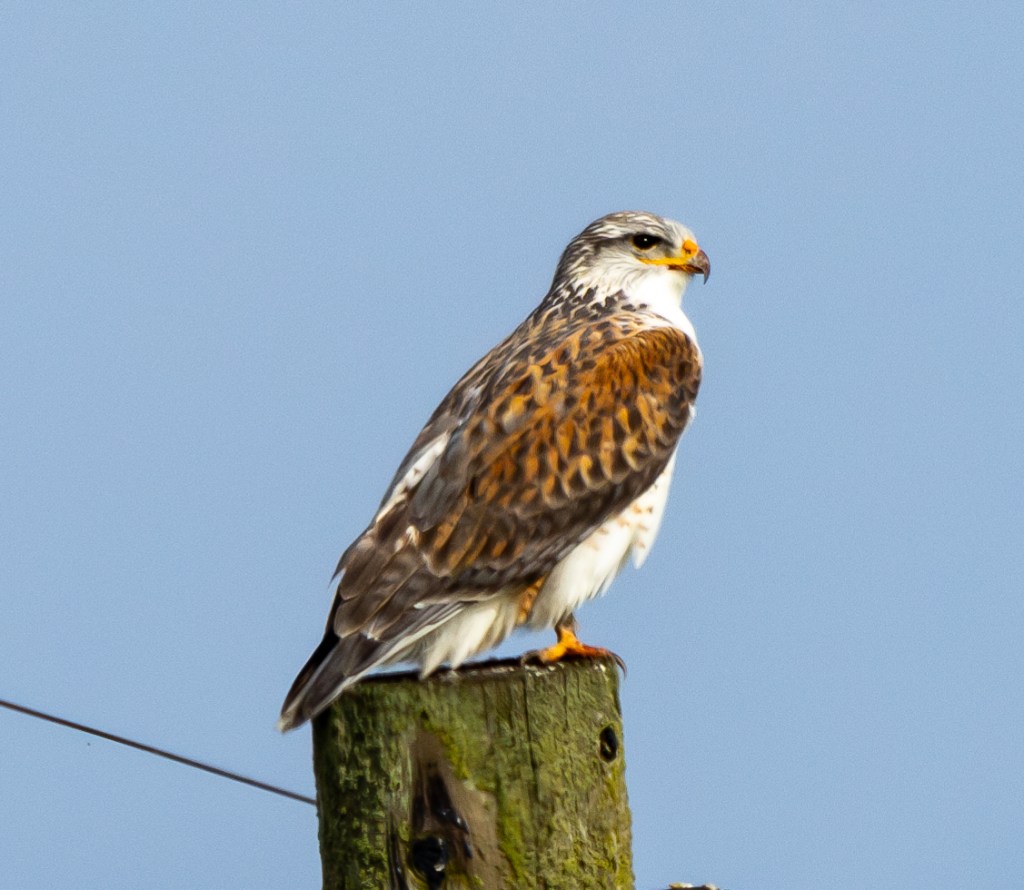
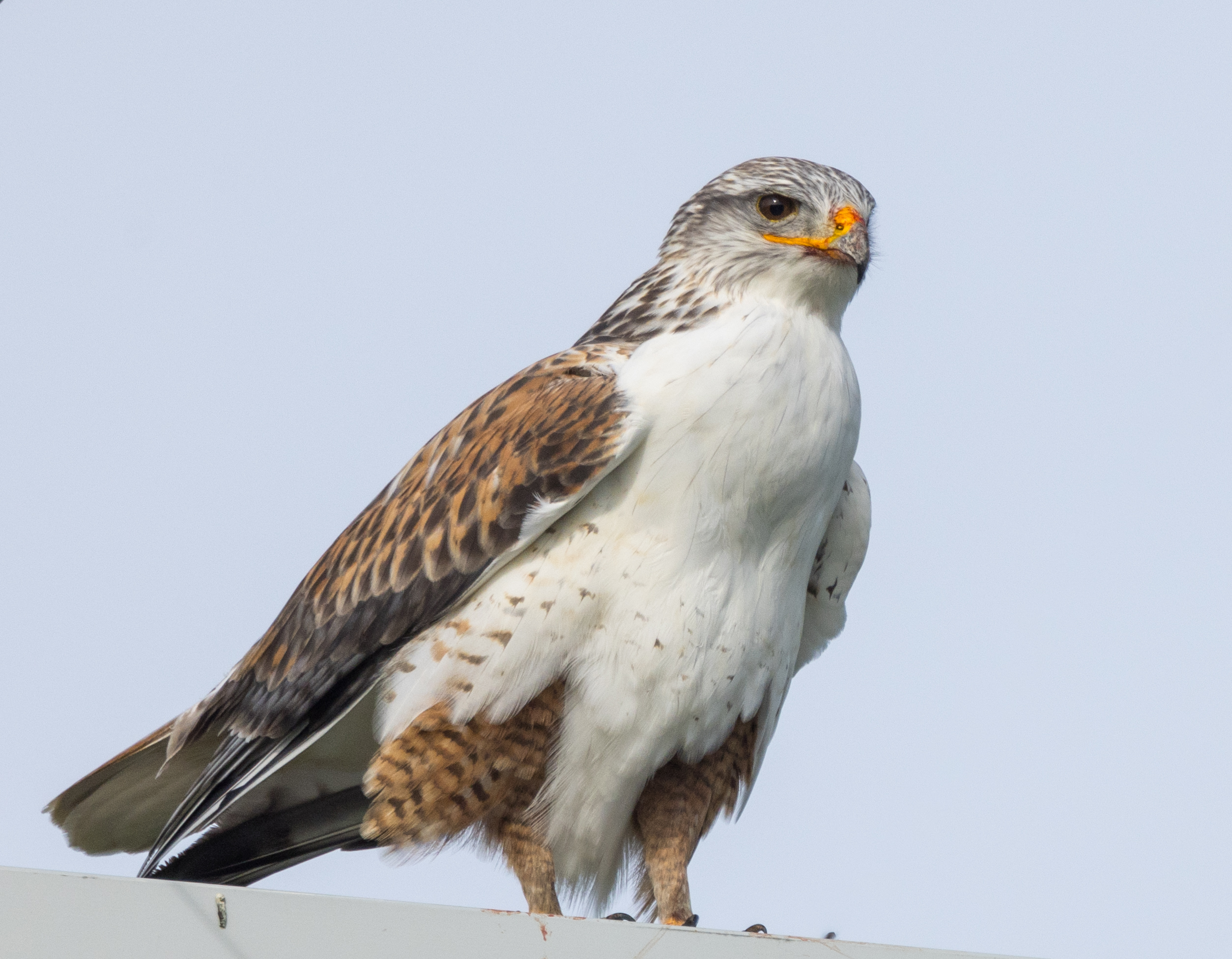
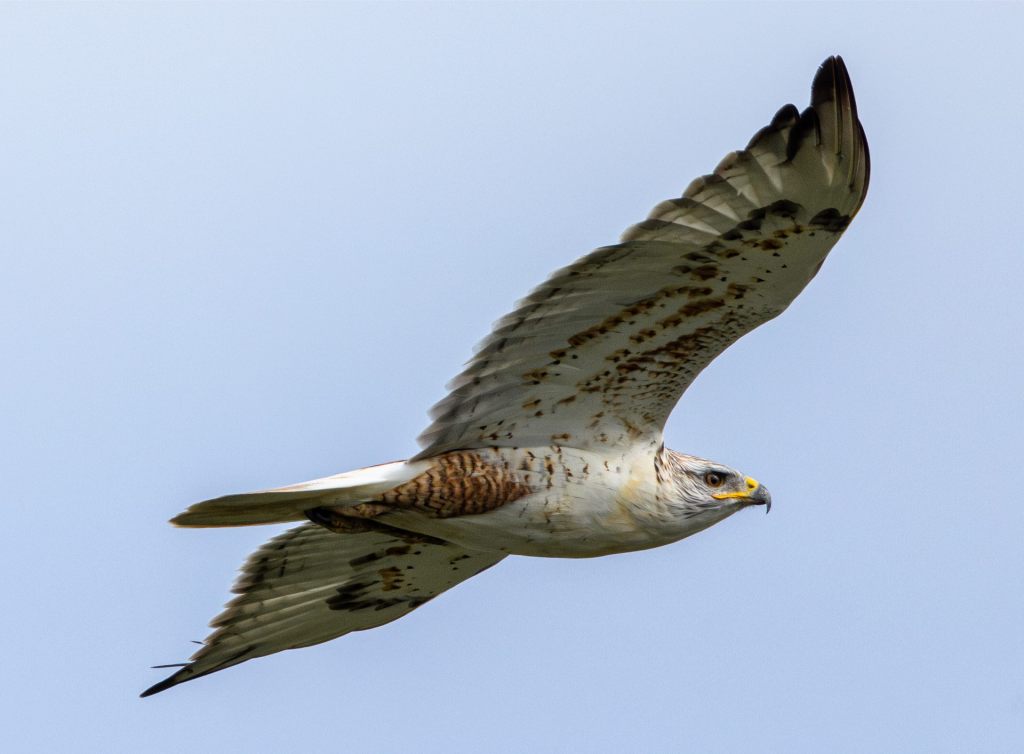
All raptors have a hold on me, whether a tiny kestrel that looks more like a delicate watercolor study than a predator, or big bulky Red-tailed Hawks that are common enough that I probably don’t pay careful enough attention to every one I see. But the one that floors me every time, maybe because I don’t get good looks all that often, is the beautiful Ferruginous Hawk. North America’s largest buteo and winter visitor to Humboldt is striking for its plumage’s varying colors of snow white on the front and underside, and rust, white, and charcoal on the back and back of the wings, including glorious rusty pantaloons feathering the tarsi (the bones between the leg and the foot of birds and some dinosaurs) all the way to the feet.

Not every view of this magnificent creature will show the remarkable legs. From a distance the light head and dark back might make you think Osprey or Bald Eagle first but get a bit closer and the rusty back makes the ID unmistakable as a Ferruginous Hawk, Buteo Regalis.
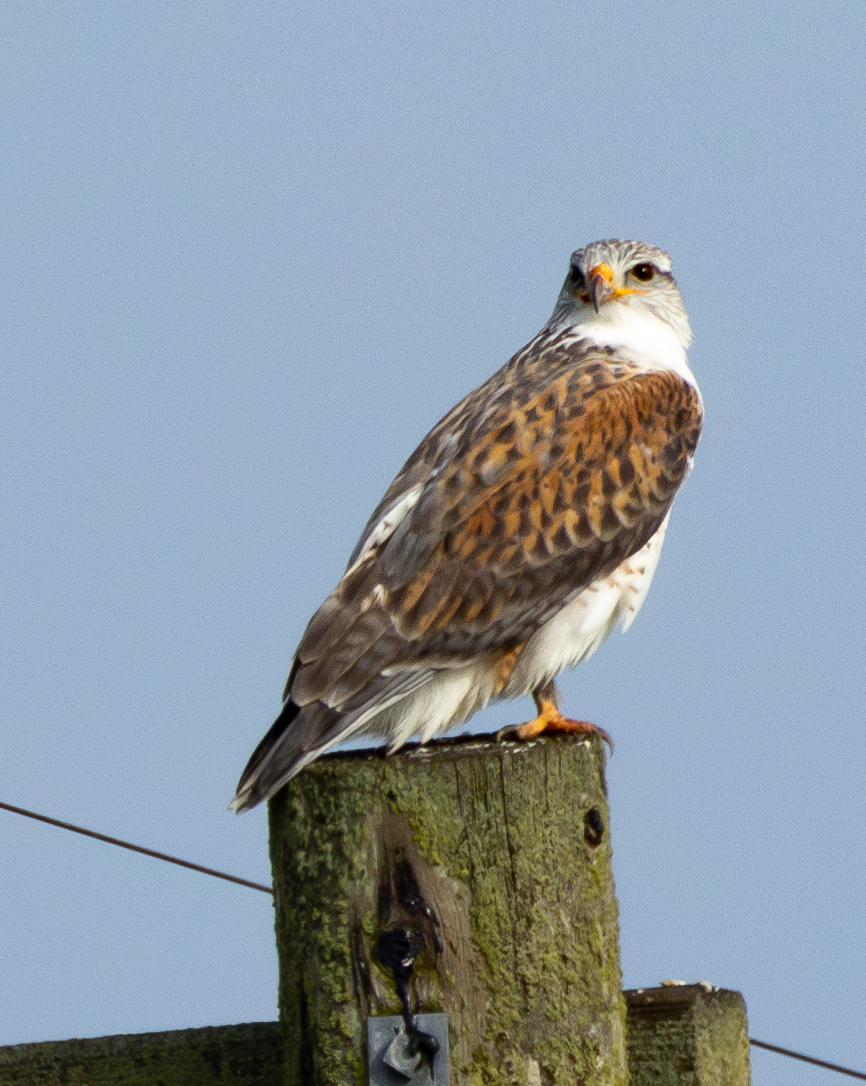
It can’t be taken for granted that you’ll spot a Ferruginous Hawk in any of the four places I’ve been lucky enough to do so in Humboldt County: Bear River Ridge, Dyerville Loop Road, or the bottoms of Ferndale and Arcata. Every winter I prowl these areas hopeful of seeing one but the past several years luck has not been with me except for one distant view on Bear River Ridge.
Last Saturday two dear birding friends and I set off on a drive along a “winter raptor route” created by local bird expert, author, and guide Ken Burton. Ken created the list “in response to a plea for routes of a certain length throughout the state for a study of winter habitat use.” Knowing it was a bit early in the season, we were still eager to give the route a try.
We scanned power lines and poles from our vehicle on back roads around Loleta and along Hookton Road, and saw mostly American Kestrels, lots and lots of them, and a good number of Red-tailed Hawks. We also saw a couple Red-shouldered Hawks and a pair of White-tailed Kites. We were surprised by the absence of Harriers, didn’t see a single Merlin, no matter how much we tried to turn a couple kestrels into one. It was a beautiful fall day, vivid seasonal foliage only slightly muted by a cloud cover that squeezed out a few raindrops onto the windshield.

After cruising the back roads of Ferndale we were finished with Ken’s route but decided to try our luck on a detour onto Coffee Creek Road. We were almost immediately rewarded with a Ferruginous Hawk perched on a power pole in almost the exact location I’ve seen one before, though not for several years.
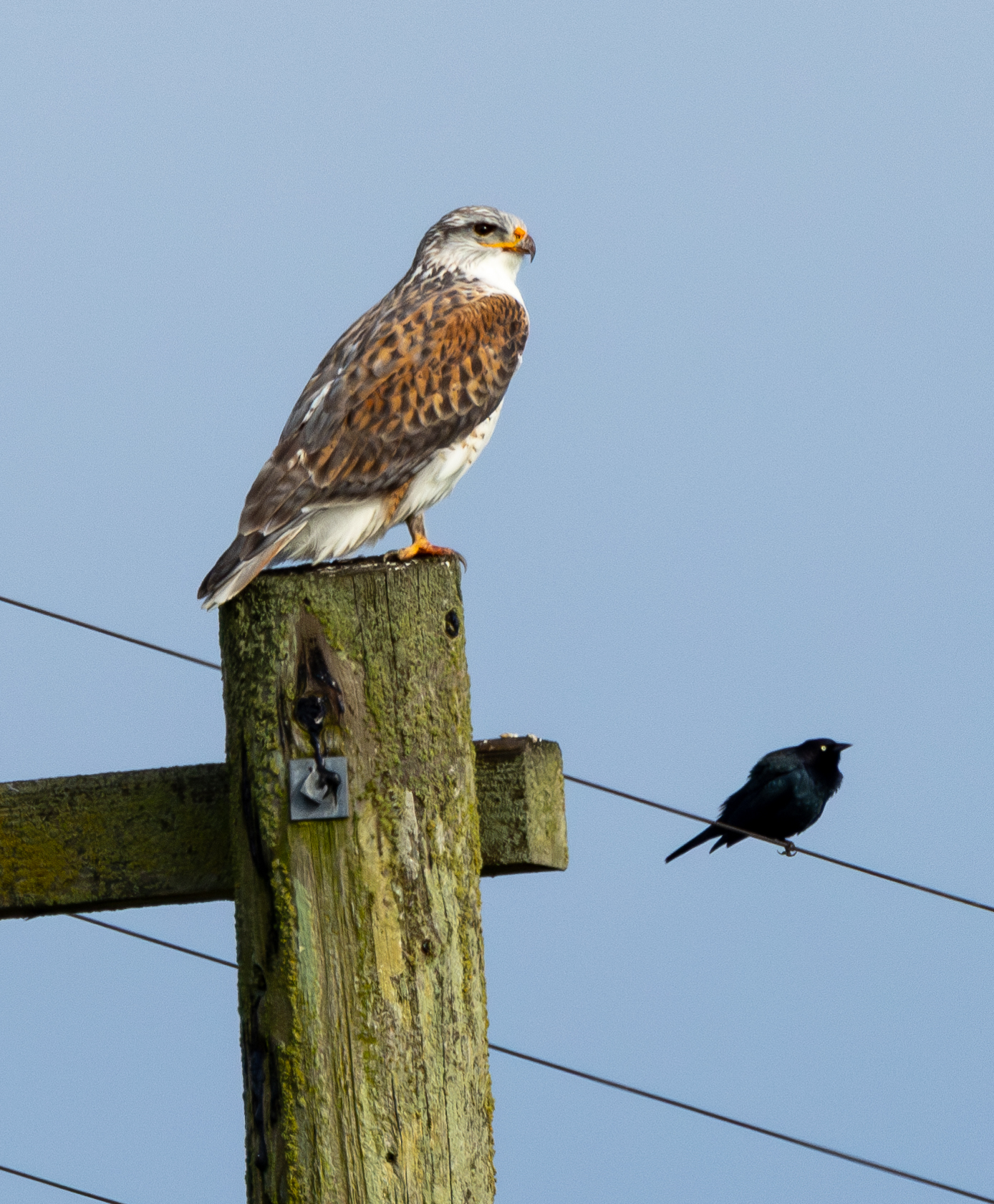
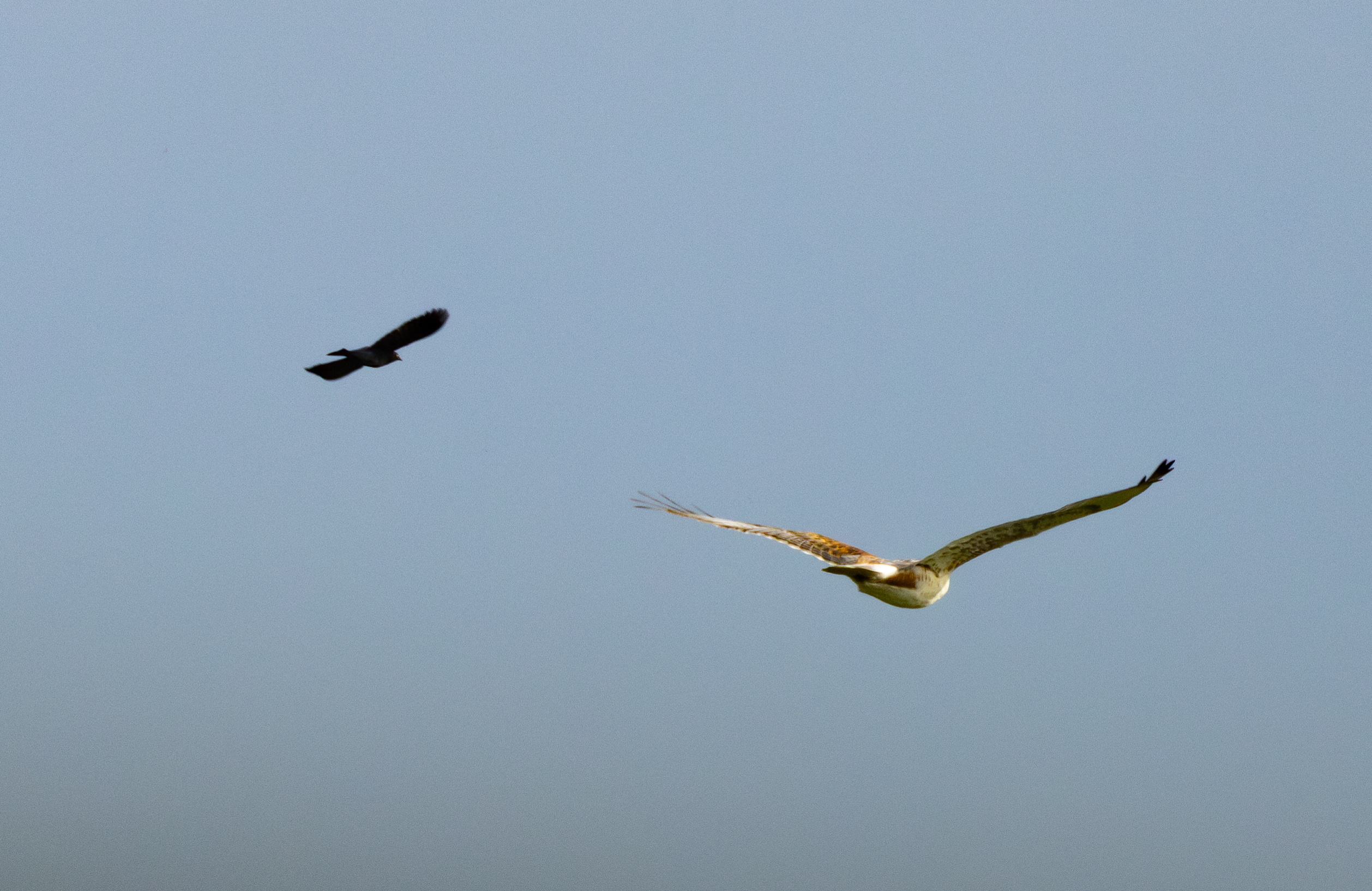
The bird was flanked by several Brewer’s blackbirds and when the hawk took off in a direction away from us, one of the blackbirds went with it so I assumed the hawk was just escaping harassment. Soon, however, we were able to follow its flight path all the way onto the ground into a field maybe 1000 yards away. We drove along the road in that direction until we were somewhat closer to the landing spot and soon realized the bird had made a kill and was settling in to consume it.
Not long after the hawk began eating, four Ravens showed up hopeful of getting in on the action. Ravens are about the size of Ferruginous Hawks, but these showed some respect even while lunging toward the hawk repeatedly trying to sneak a grab at the prey. Eventually one of them seemed to make off with a piece of the trophy. (see the video below.)
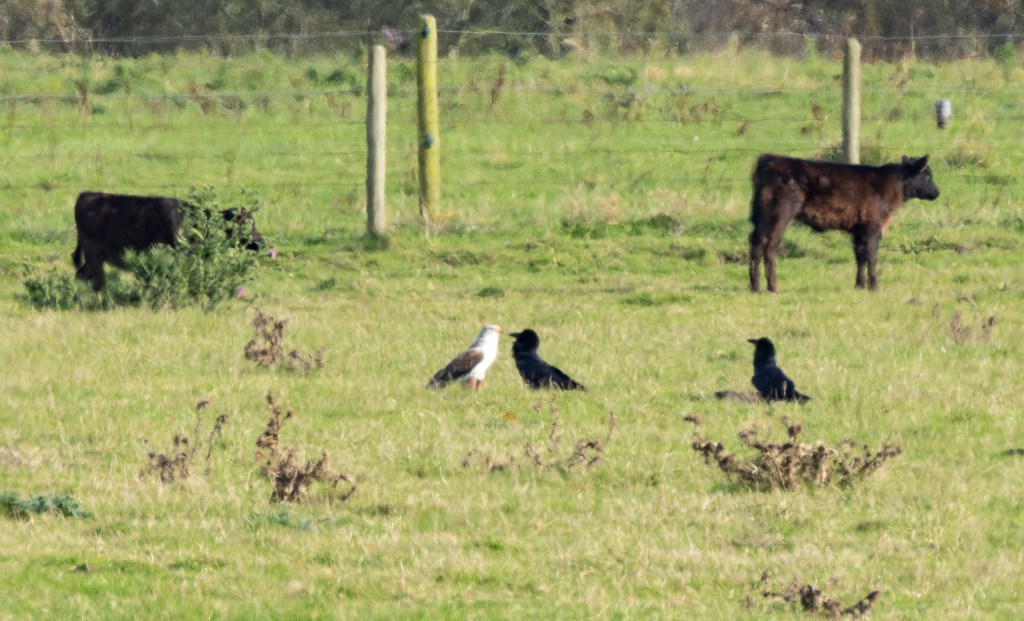
Common Raven seems to be inquiring, “Are you gonna finish that?”
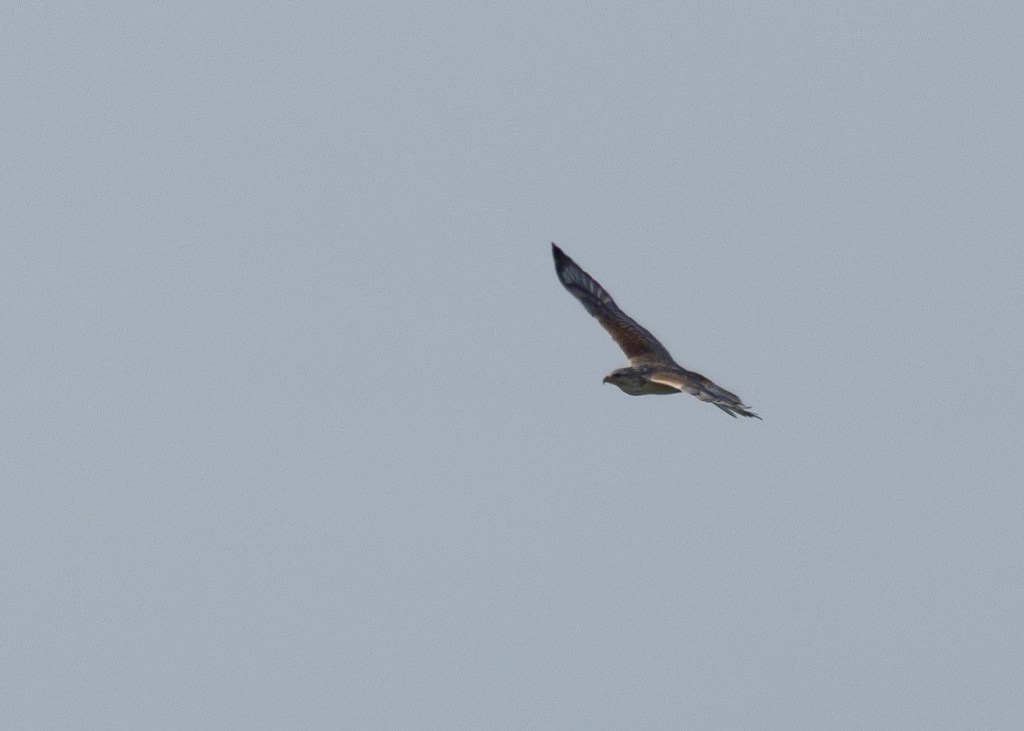
After several minutes of gulping down most of what might have been a gopher, the Hawk took off again. Flight shots even from very far away showed the bird’s full crop before it disappeared, and we could hardly wipe the grins off our faces after having witnessed this spectacle, surely the climax of a fine day of birding.
We continued along Coffee Creek Road, tallying yet more kestrels and finding an immature White-tailed Kite, until we were surprised to come upon the Ferruginous Hawk again, teed up close on a power pole and not very concerned about our proximity. The bird’s distinctive very wide gape showed, as did blood on the beak in the head shots I looked at later on the computer. This strikingly beautiful creature gave us a nice long look before taking off again. We were filled with a quality of gratitude mixed with awe that I have only ever experienced before when touched by the essence of wildness and our indelible, cell-deep connection to it.


 Free Range Photography
Leave a reply to Kym Kemp Cancel reply