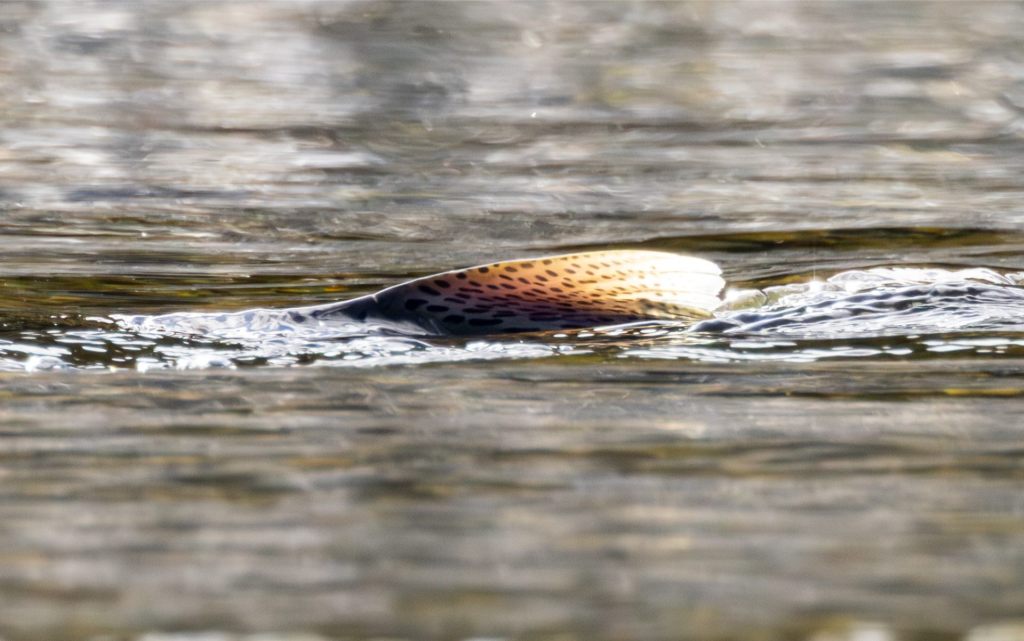
The first good rain we had a couple weeks ago brought the river up a bit and the season’s first run of salmon was on. The anadromous fish whose poignant journey upstream to spawn tugs at human heartstrings in a way that buoys our sense of life affirmation. At the same time, we are brought to tears over the tragic irony of the instinct-driven plight, as success means both female and male die, having survived not only the risks of predation but also those of low flows and other, human-caused alterings of the stream. Once you know salmon life history you never forget it and your sense of life’s meaning deepens, unexpected layers of compassion for all of creation woven in.
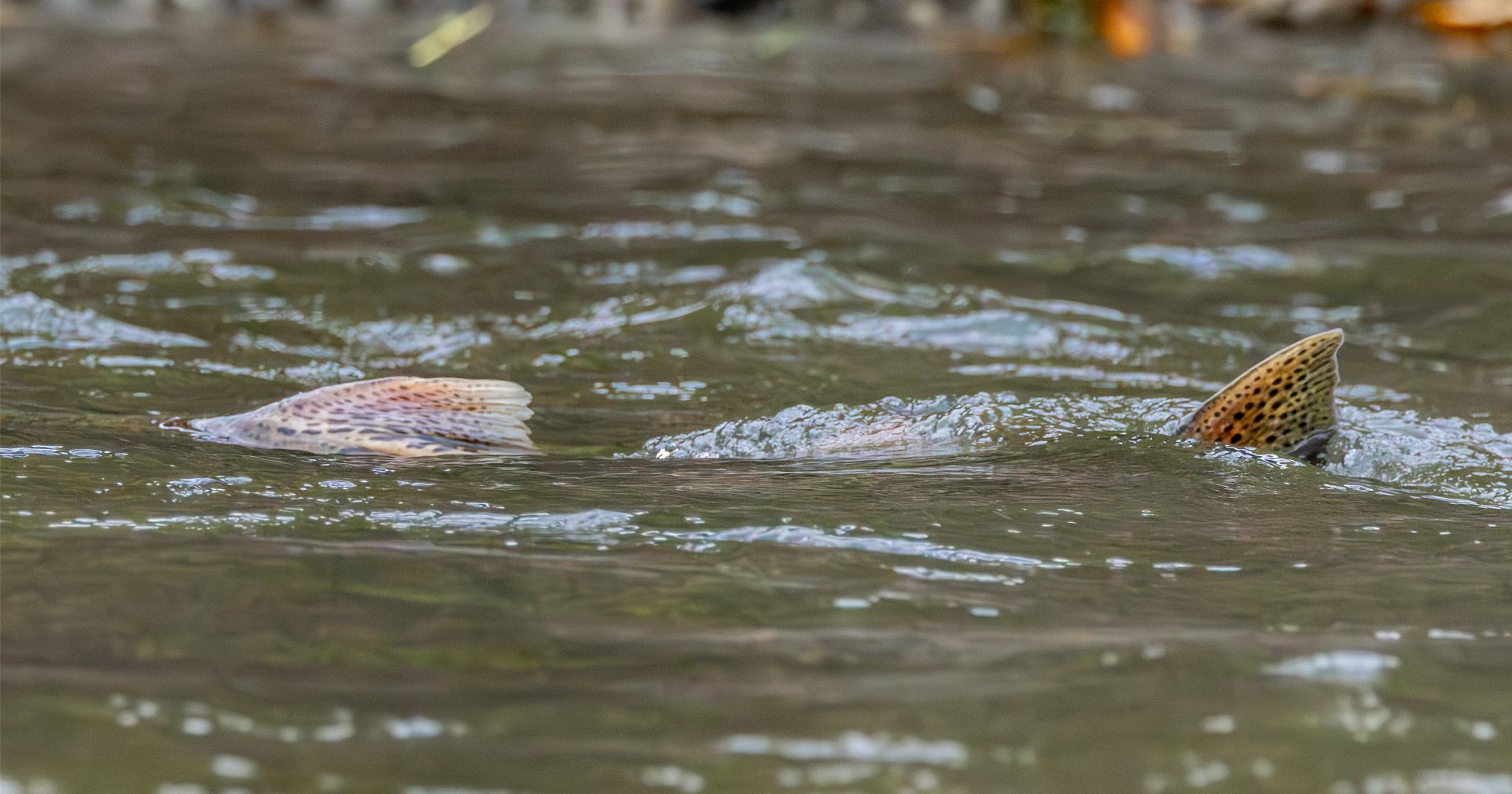
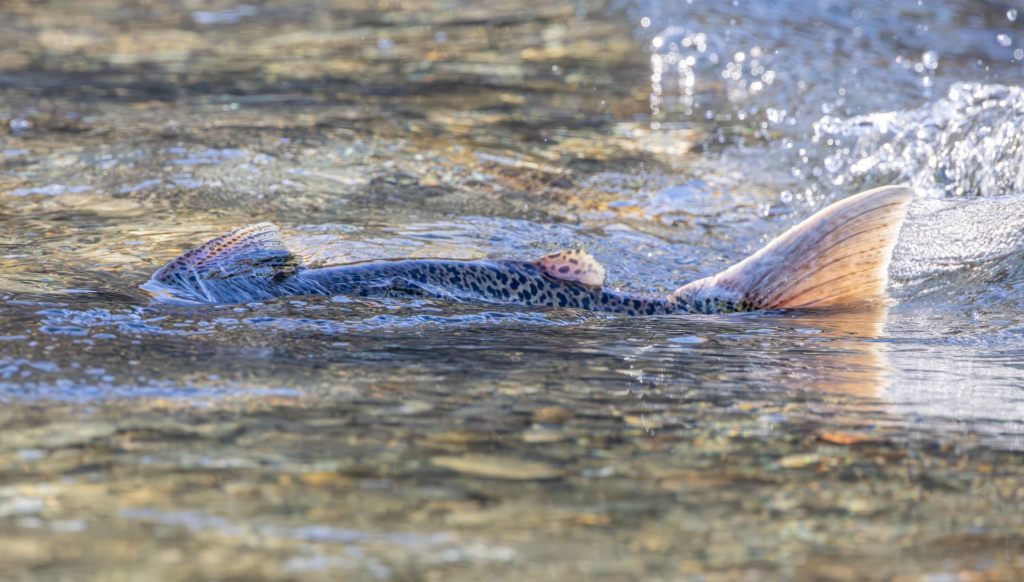
Every year I spend time checking the spots along the river near my house where the riffles are shallow enough that I can actually see the fish moving through them, sometimes just a dorsal or caudal fin, on lucky days the speckled body rides for a short time above the surface of the water, and every once in a while I see a true leap, head and all, high out of the water.
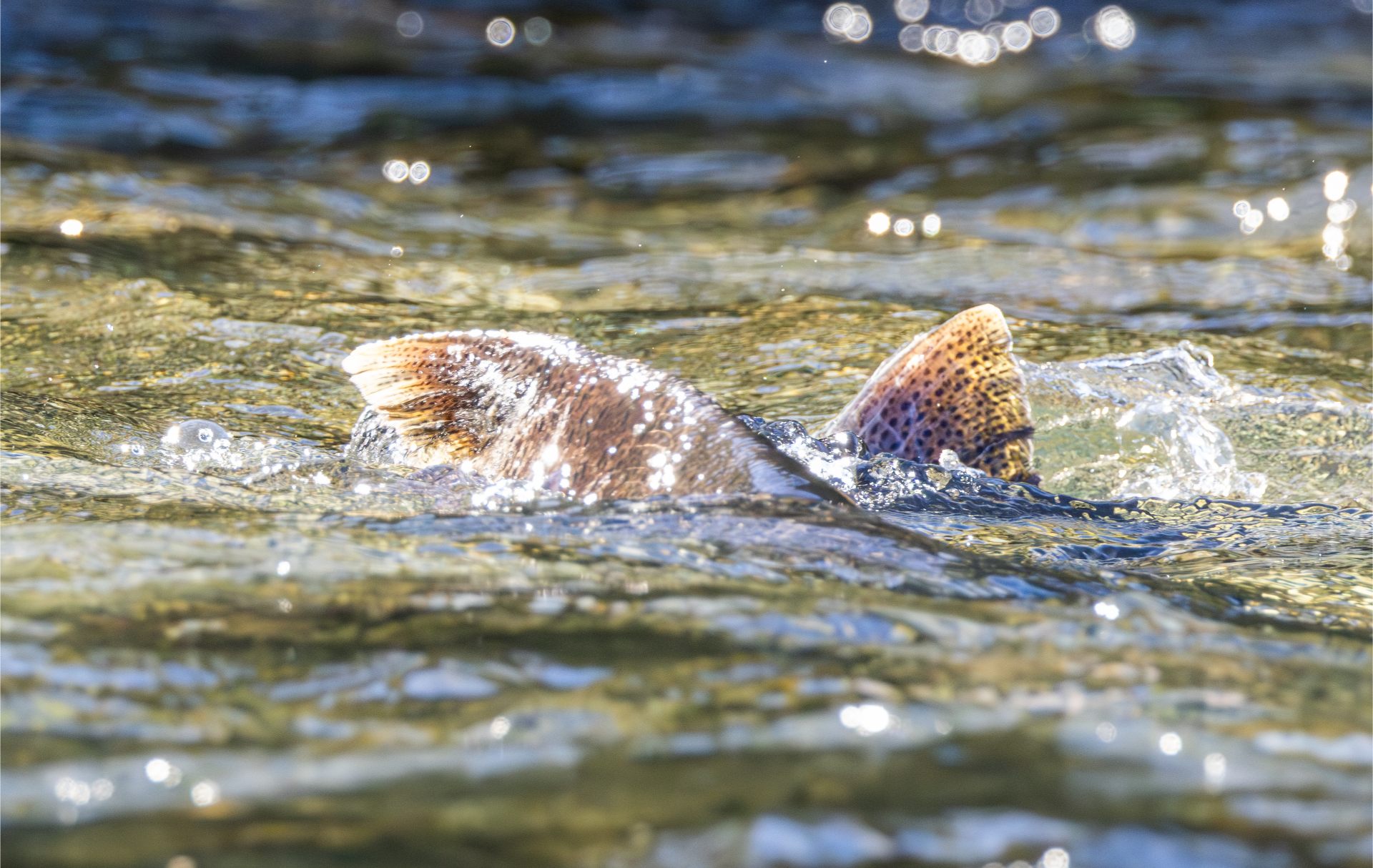
My first look at the lowest riffles netted just one or two fish sightings which seemed strange after hearing reports of many dozens from friends and fellow salmon watchers downstream. On my way to another watching spot I saw huge ripples in the water over a stretch of river that is a long deep pool, almost stagnant during low flows of summer and early fall. The ripples were concentric, like those I’ve seen hundreds of times made by smaller fish, just many times larger, indicating a much larger maker of them. After watching for a while I saw exactly how the unusual ripples were made as a huge salmon popped out of the water for a split second, making an elegant splash before disappearing back into the deep.
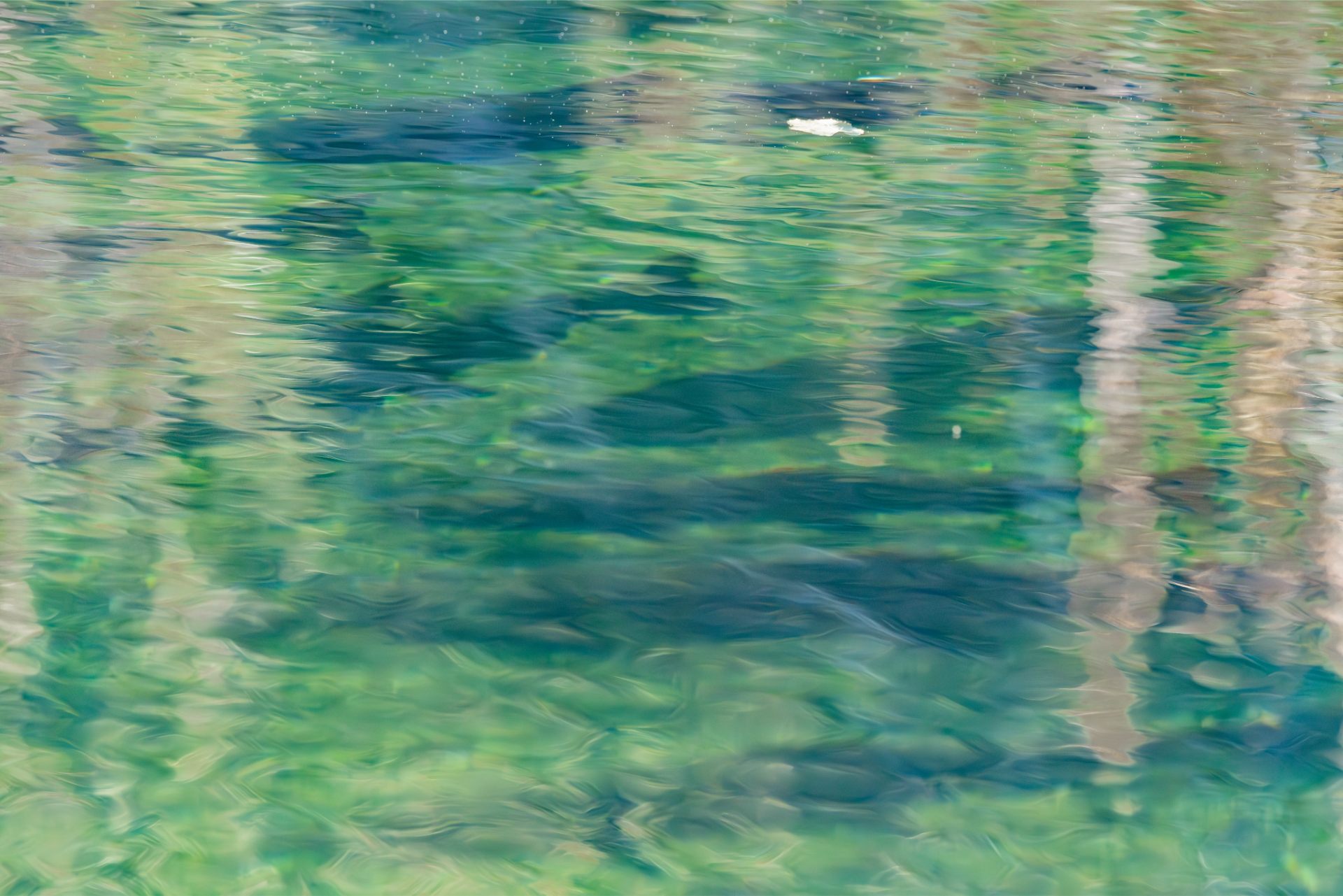
The water was so clear and still that once the ripples stopped, I was able to see into the hole and could just make out dozens of shadowy fish shapes, all pointed upstream, just sitting there, if fish could ever be described as sitting.
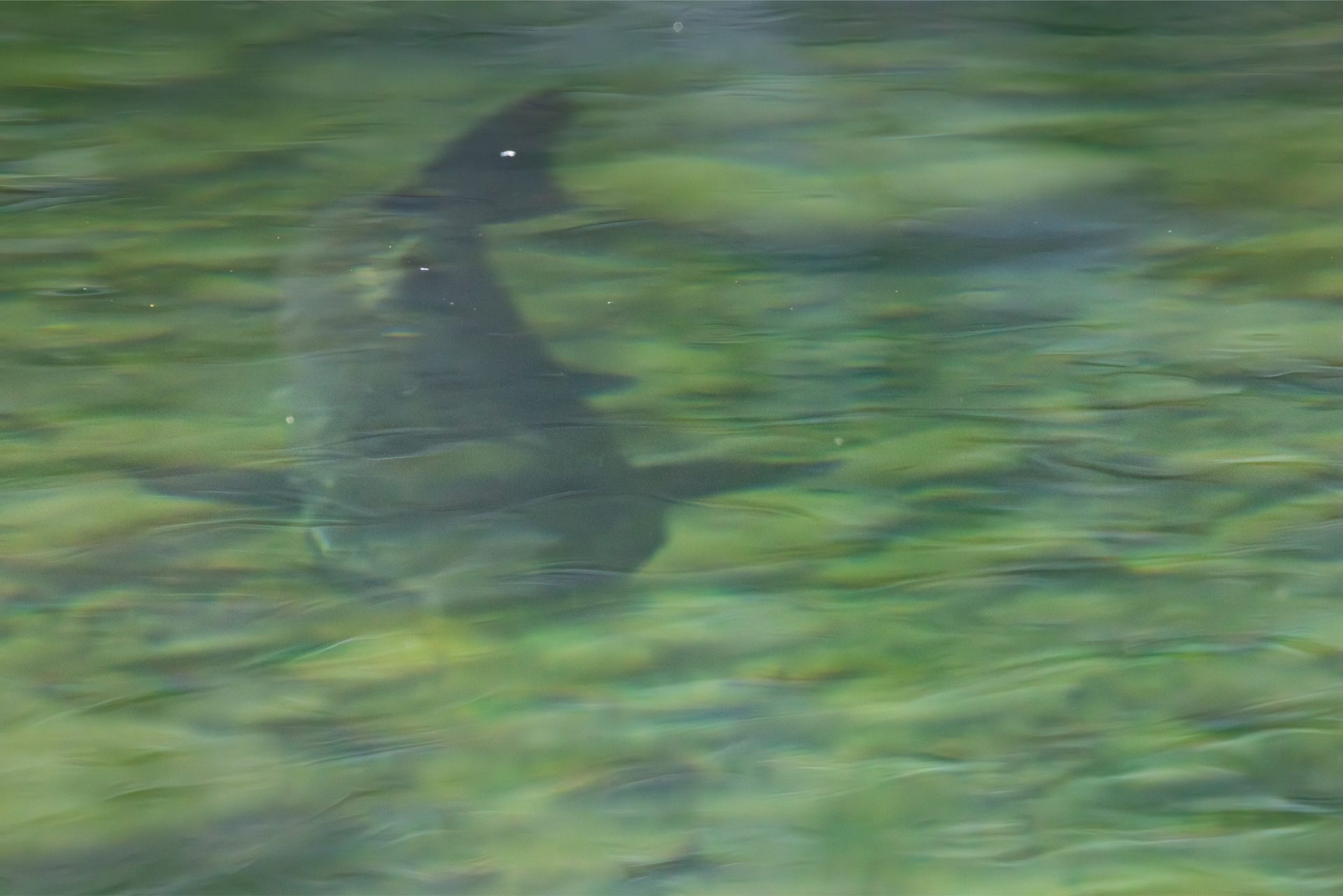
Local salmon guru Eric Stockwell explained that they were “staging”, pausing their journey until flows improved allowing them to move on upstream. I watched them continue to sit there for several dry days, hoping more rains would come and free them soon.
When the next rains came, about a week ago, I began to see the fish moving again through the riffles I was able to watch. A steady parade of them moved through, my photographer’s ego only slightly bruised that the water level had risen enough that I knew I wasn’t going to get any pics beyond a few fins sticking up above the surface. I knew the higher flows would improve their chances of spawning success.
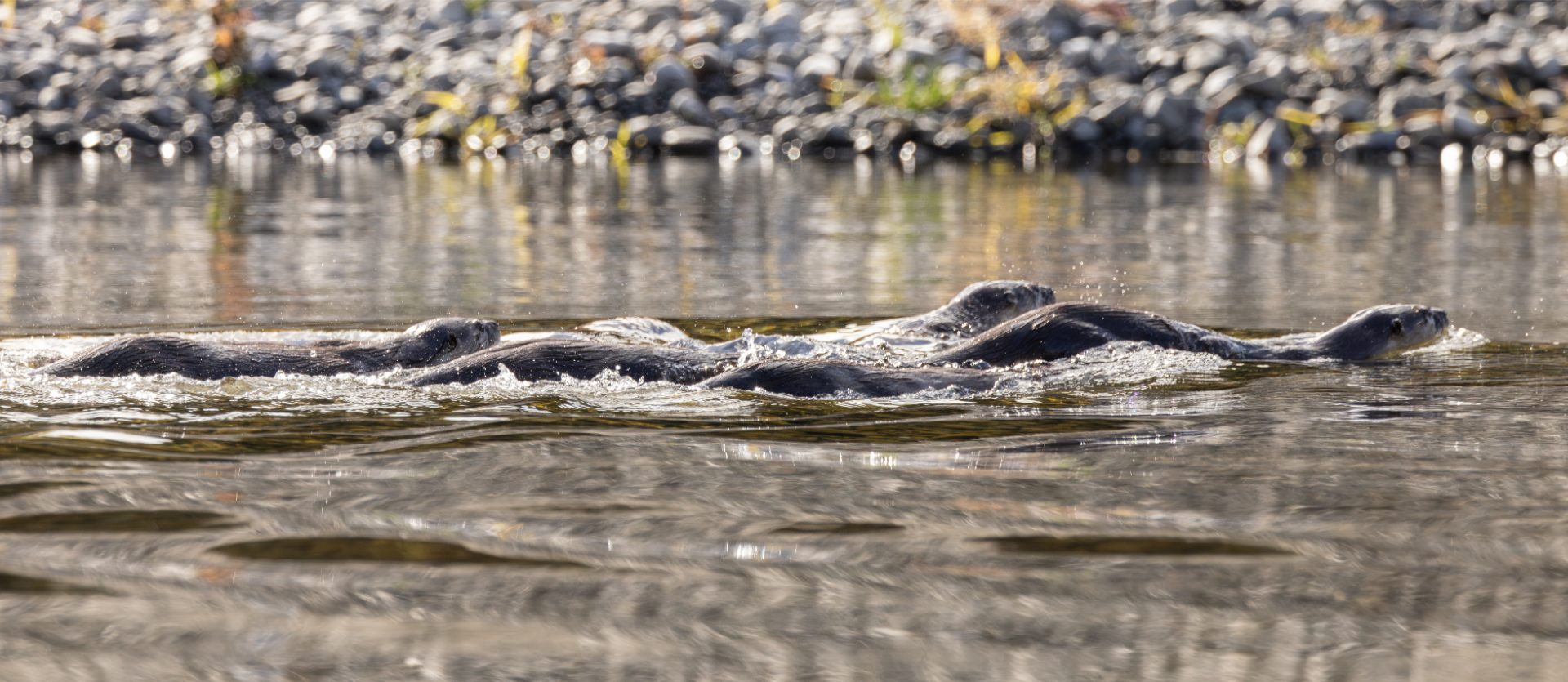
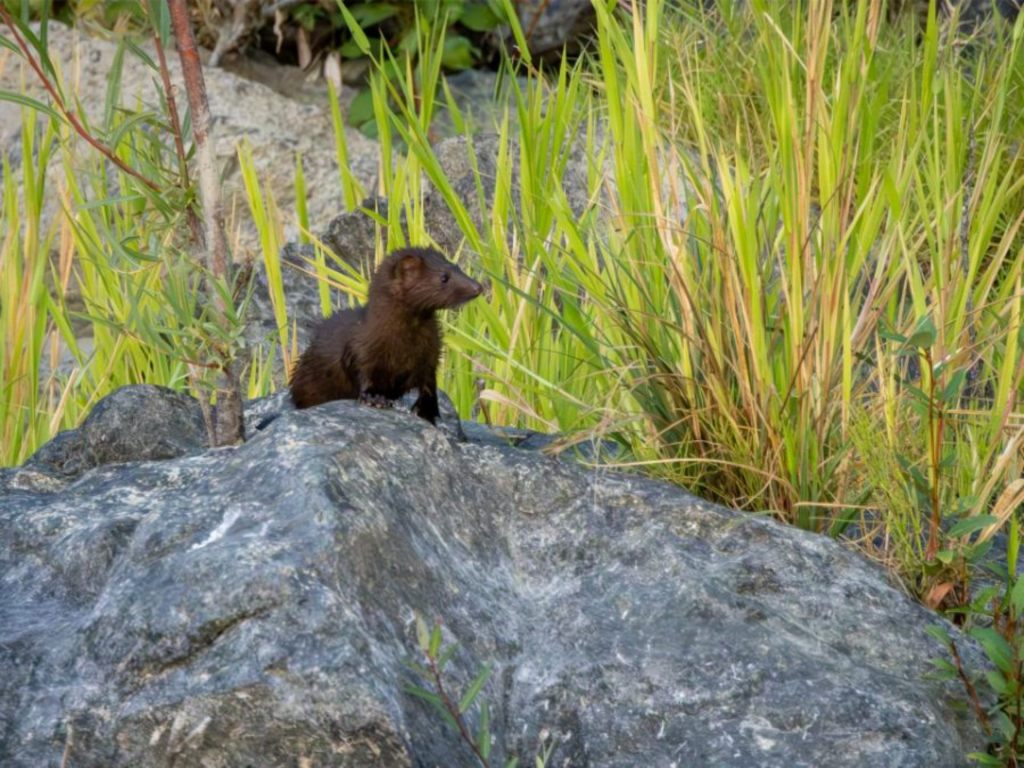
But then, on the day I was celebrating their liberation from the staging hole, a band of six river otters suddenly appeared, moving downstream on what looked to be a purposeful mission and not lollygagging as groups of otters tend to do when they have full bellies and time on their hands. They moved packed closely together, as a unit, in a way, and while otter sightings usually bring me joy and smiles, I instead feared for the lives of the salmon this time. Indeed, after the otters passed by, I saw no more salmon on the move that afternoon, and found out later from another fish guru and friend Pat Higgins, that salmon indeed lay low to protect themselves when otters are about.
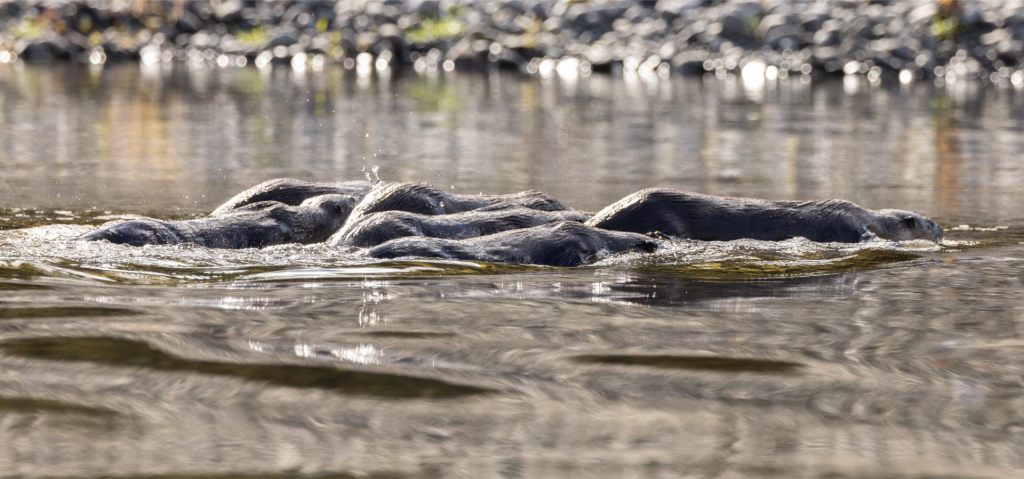
The next day I went out again, and discovered the hole was nearly empty and the otters were nowhere to be seen. I’ll never know if the otters, who do hunt cooperatively, caught a fish and relished the meal second only to Pacific Lamprey in nutritional quality, but it’s a safe bet that most of the fish made it through and with this next spell of rain that’s just begun as I write, the waters will rise enough to carry them upstream with more ease. That movement may be hidden from my lens under cover of the murky milky high water, but the salmon story stays deep in my heart.


 Free Range Photography
Leave a reply to latskojerry Cancel reply