Octoberfest, Part 2

Autumn was no longer fooling around in the second half of October. The subtle blush of oaks, the not so subtle turning of willow leaves to gold punctuated days so crisp and clear that the extreme heat of just a couple weeks ago felt like ancient history.

Thankful for friends who reminded me there’s more to see in the sky than just birds, the Tsuchinshan comet.

The Tsuchinshan comet had us mesmerized for a few evenings and I’m pretty sure I’m not the only one who was glad we could just call it Atlas as it whizzed by on its 80,000 year cycle through the cosmic neighborhood.

The most unusual visitor to my little river community during this time was a Northern Pygmy Owl. This tiny owl weighs in at just over 2 ounces with a total length of 6-7 inches. It lacks the facial disc and asymmetrically placed ears most owls need to hear better in the dark perhaps because it is a diurnal hunter. It specializes in songbird prey and can take a bird three times its size, sometimes caching its leftovers in tree hollows. The snag this owl perched in was too far away to give quality images, but a visit this special still deserves to be recorded.

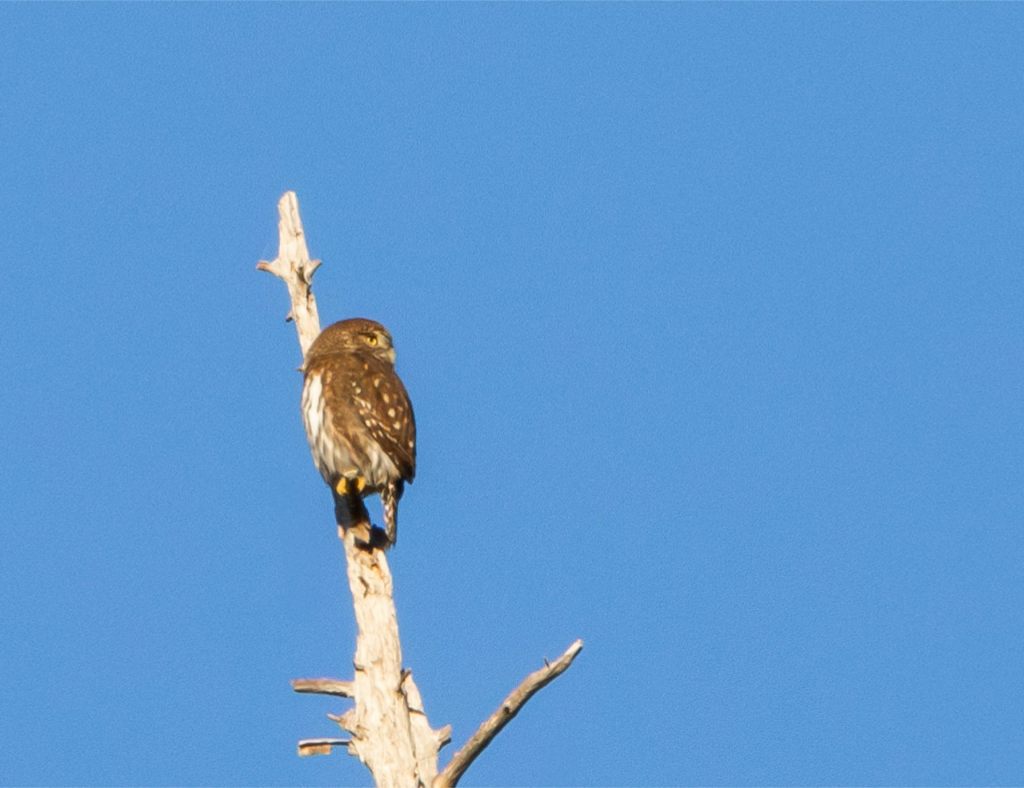
Even at a distance, the profile of this bird is unmistakable: little round body capped by large round head with huge yellow eyes, and a stiff banded tail.
The other profile, as the bird demonstrates that owl thing of turning the head 180 degrees.
This is actually the back of the owl’s head, but the markings that look like eyes are meant to fool birds that like to “mob” or harass owls to get them out of their territory.

I usually hear the song of Golden-crowned Sparrows each fall before I see one. Remembering that they have arrived here after a long journey from their breeding grounds in the far north, it seems fitting that the song has a weariness to its sound, a slow descending tone.
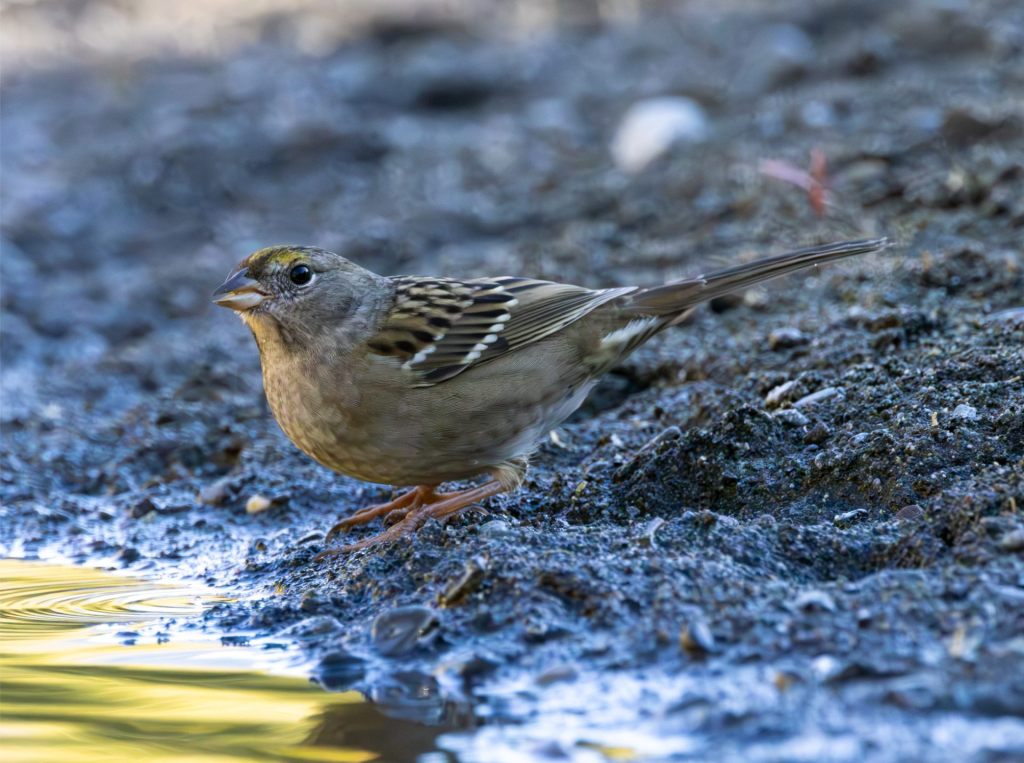
Immature Golden-crowned Sparrow, recently arrived for its winter stay after its first long migration from the north.

Young herons and egrets starting their adult lives began showing up at the river.

Immature Great Blue Heron
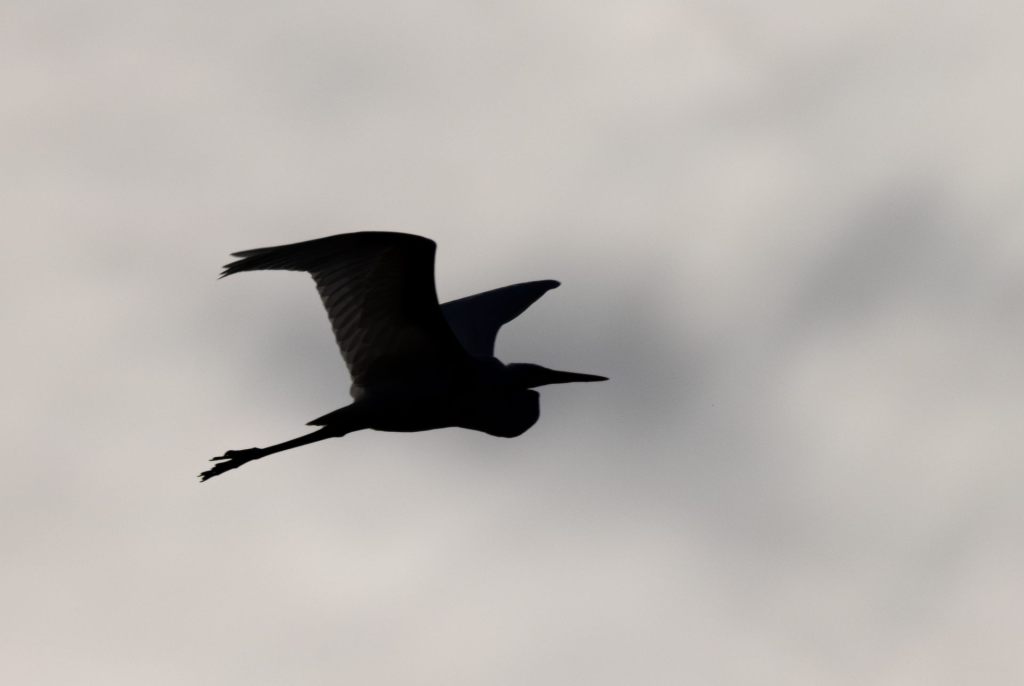
Great Egret, a snowy white bird, looks almost black as a pre-dawn silhouette
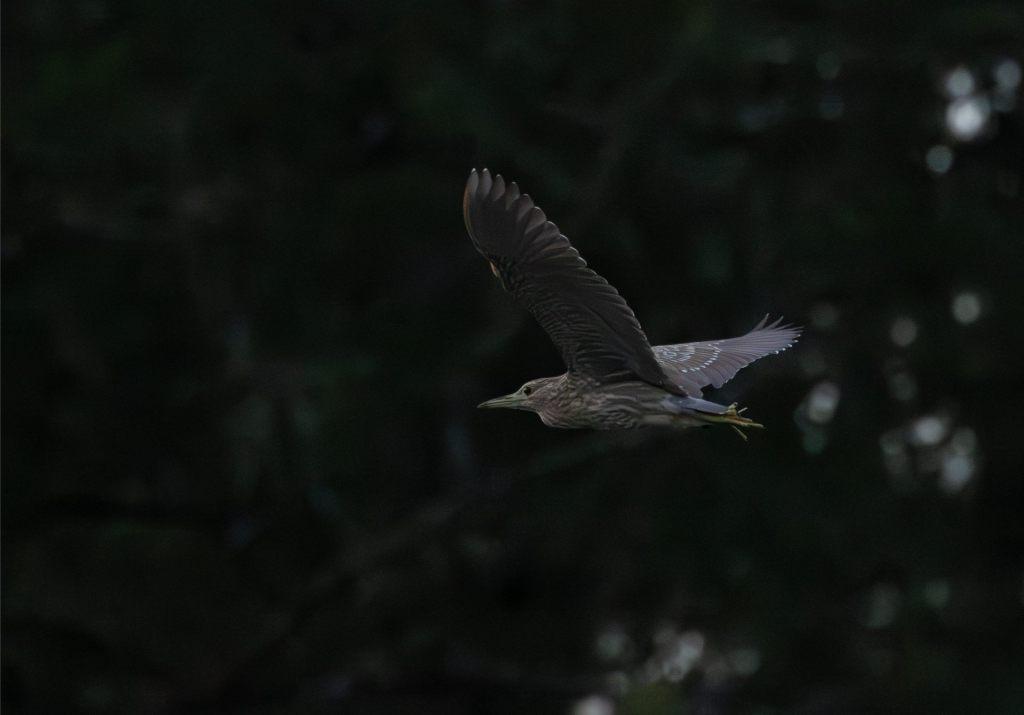
An immature Black-crowned Night Heron made a very brief pre-dawn appearance.

Less common locally than the “red-shafted” Northern Flicker, this “yellow-shafted” male has been hanging around and showing itself pretty regularly.
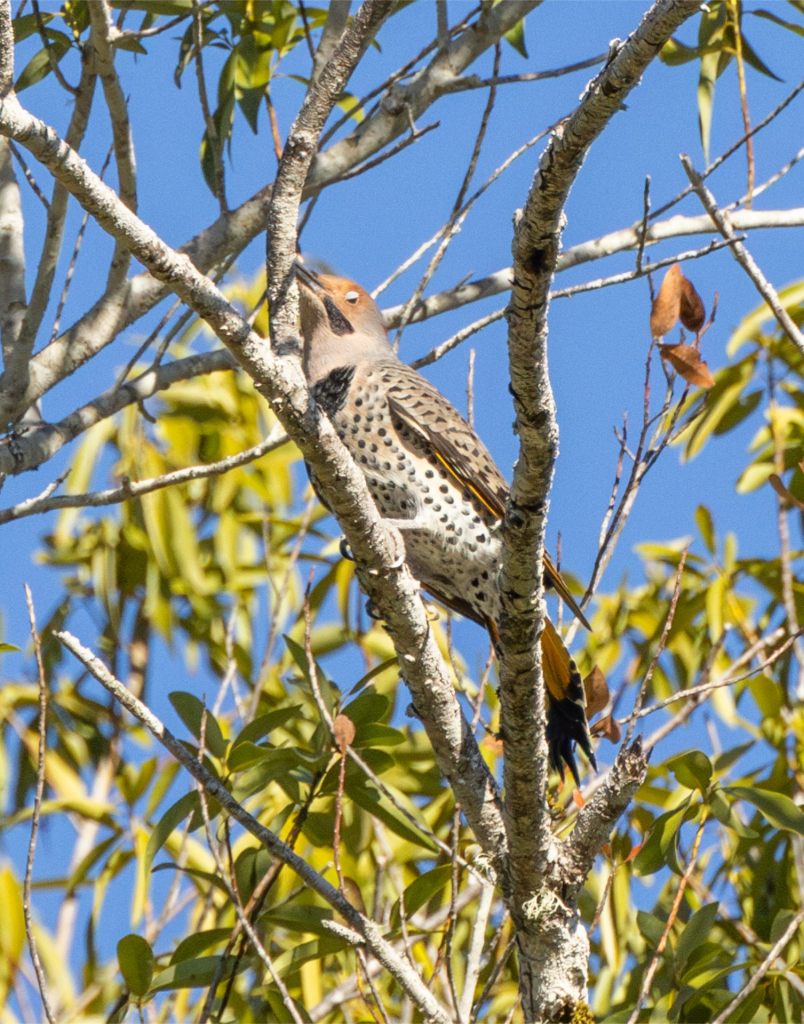
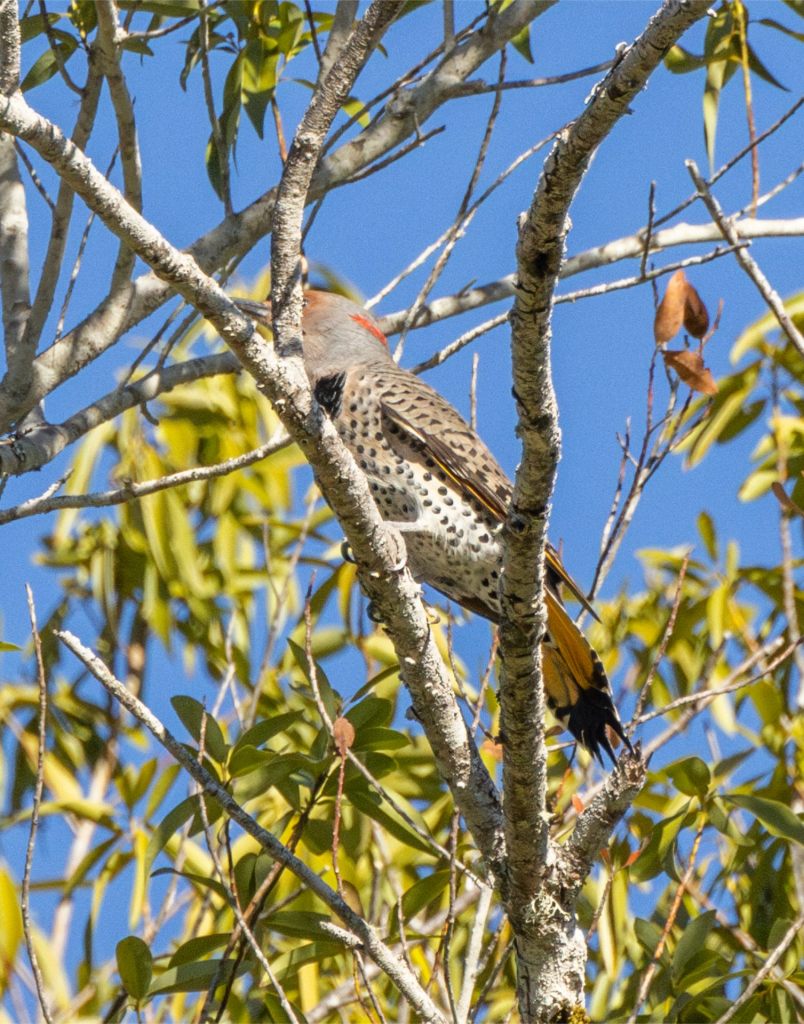
The male Yellow-shafted Flicker has a black moustache and bright yellow under the tail and wings whereas the more common local Red-shafted has a bright red moustache and orangey-red underneath.
Here you can see the other distinguishing feature of the Yellow-shafted variety, the red Chevron on the nape.

When I was a kid, Turkey Vultures completely disappeared from Humboldt every winter, migrating south to warmer climes. Gradually that has changed. At first they still disappeared from southern Humboldt, but a few stuck around in the Humboldt Bay area where winter temperatures are milder and there is less heavy rain than in SoHum. Then we started seeing just a few down here over the winter, and now they are quite commonly seen all winter in many areas of Humboldt County. Climate change? Migratory patterns of many bird species have changed in ways we probably don’t yet fully understand as the weather becomes less predictable.
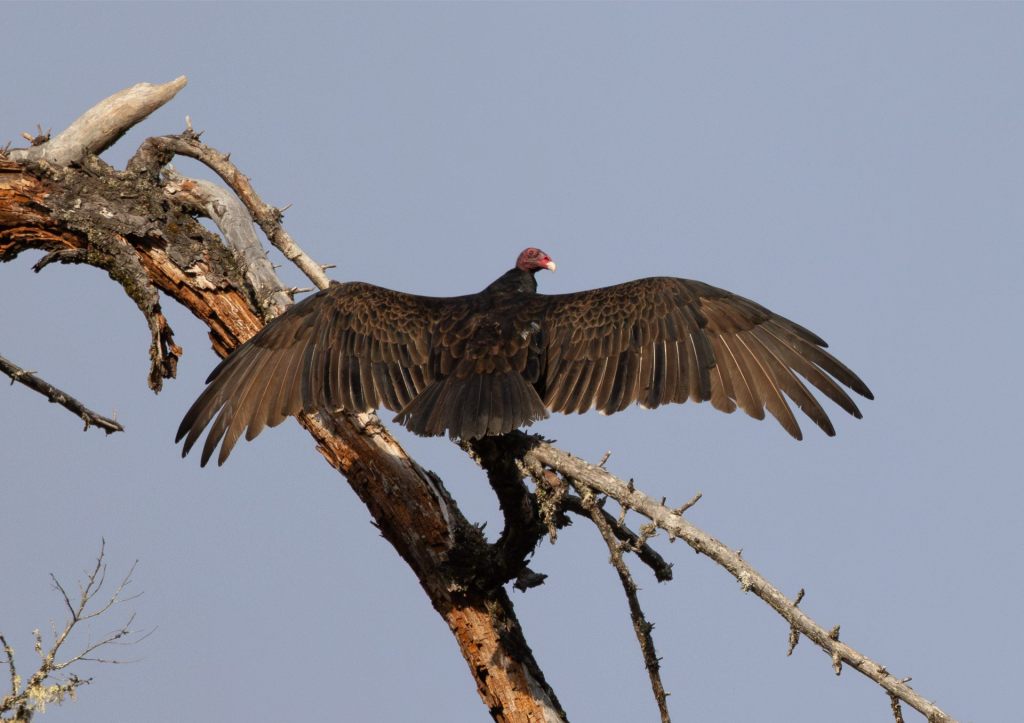
Turkey Vulture taking advantage of the morning rays of sun

However, I have seen a few large groups migrating south high in the sky these past few weeks. This is called “leap-frogging” when a species overlaps a local population to migrate past where the locals remain. When you see vultures in flight closer to the ground, looking for food or maybe just enjoying what looks like effortless time on the wing, they circle, glide, and swoop, sometimes pausing in a tree to groom or take sun with wings spread wide, and sometimes riding thermals upward accompanied by Ravens or Red-tailed hawks, they seem relaxed, almost casual in their movement. Surely, a knowing patience is pragmatic for a creature whose next meal will be provided by the death or left-behind remains of another. But these groups of migrators seemed by contrast purposeful and businesslike as they soared together high above where food might be spotted. Their eyes on the prize of a mild winter, I wondered how far they travel in a day.

Large group of migrating Turkey Vultures

Below is a selection of other creatures seen by the river in late October.
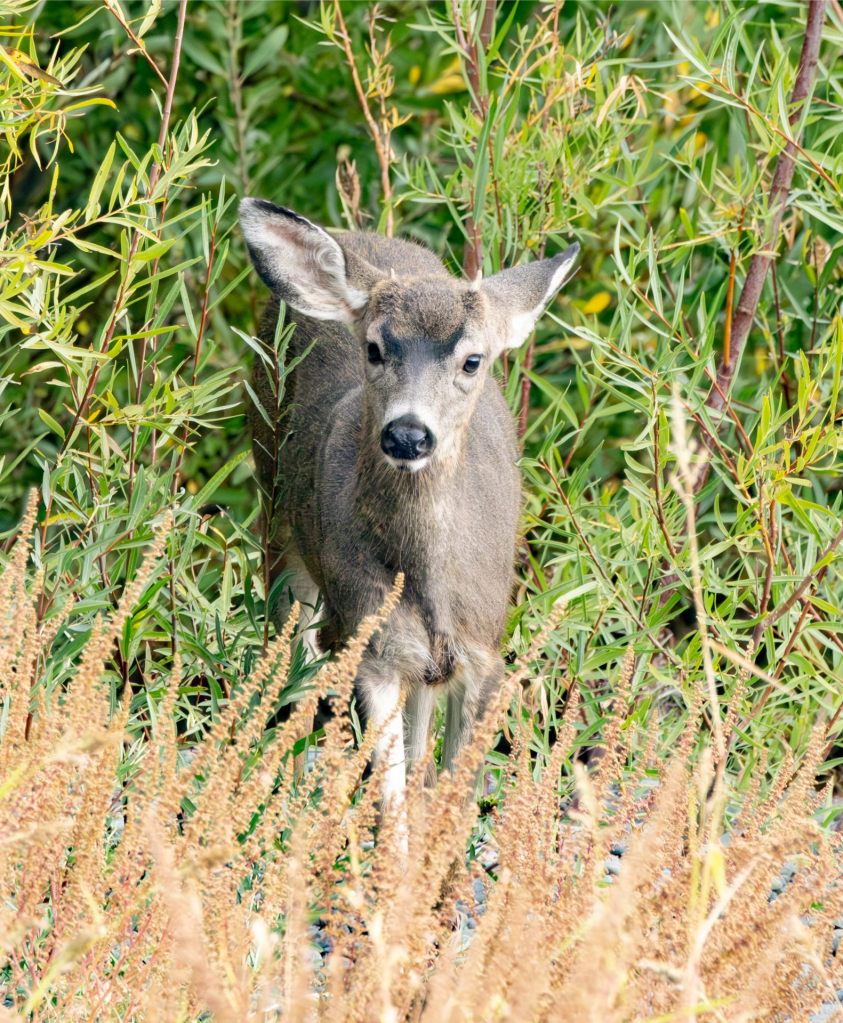
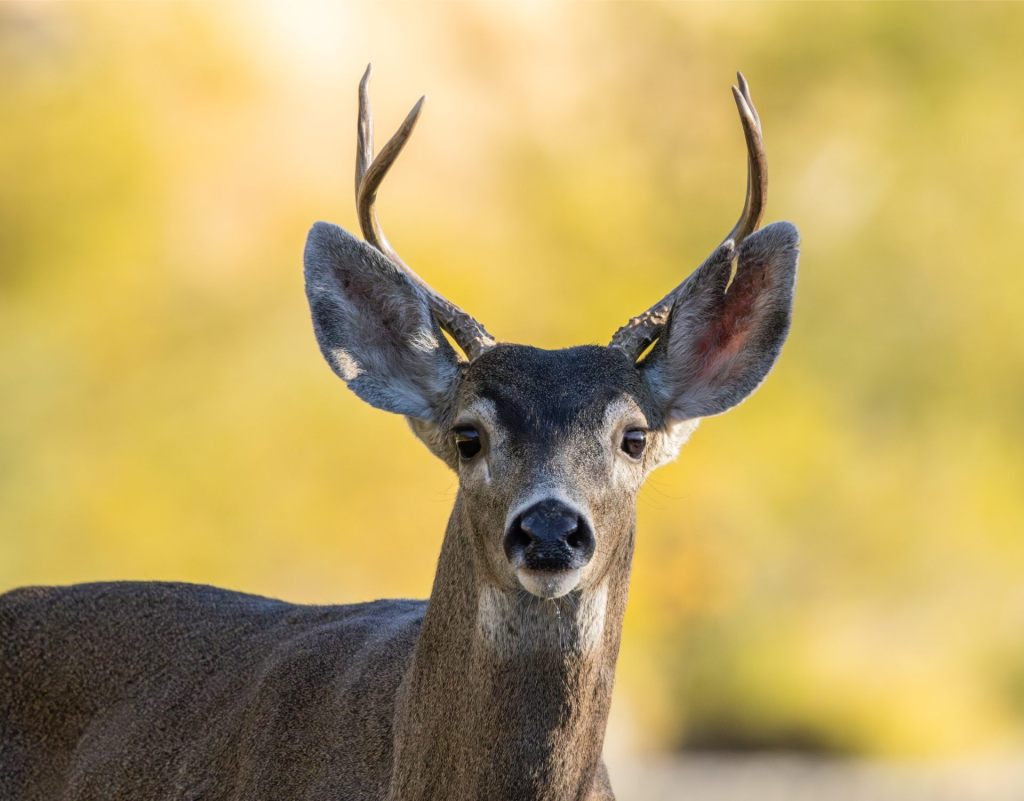
A young Black-tailed Deer buck with little spike antler nubs.
Much more mature buck eyeing me after crossing the river and making his way upstream.
The demure Hermit Thrush has abandoned its beautiful flute-like song of spring and summer for its winter noises of whirring and smacking, heard often in low brush along the river.
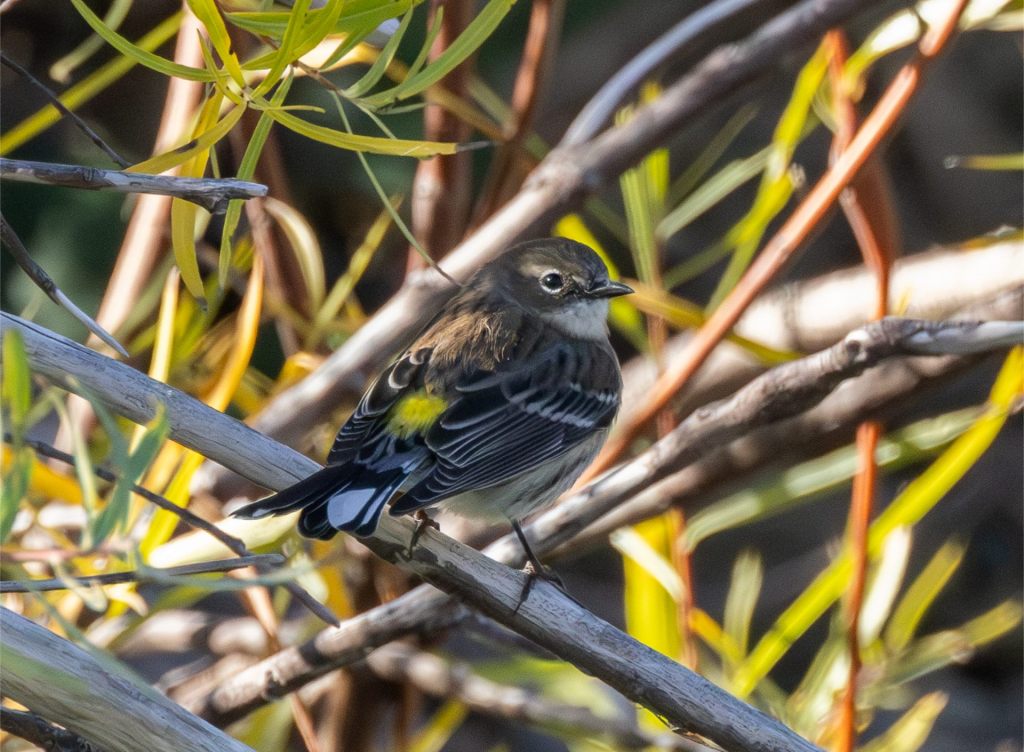
Yellow-rumped Warblers have returned to the river in numbers, where they vie with Black Phoebes for the more and more scarce flying insect prey.
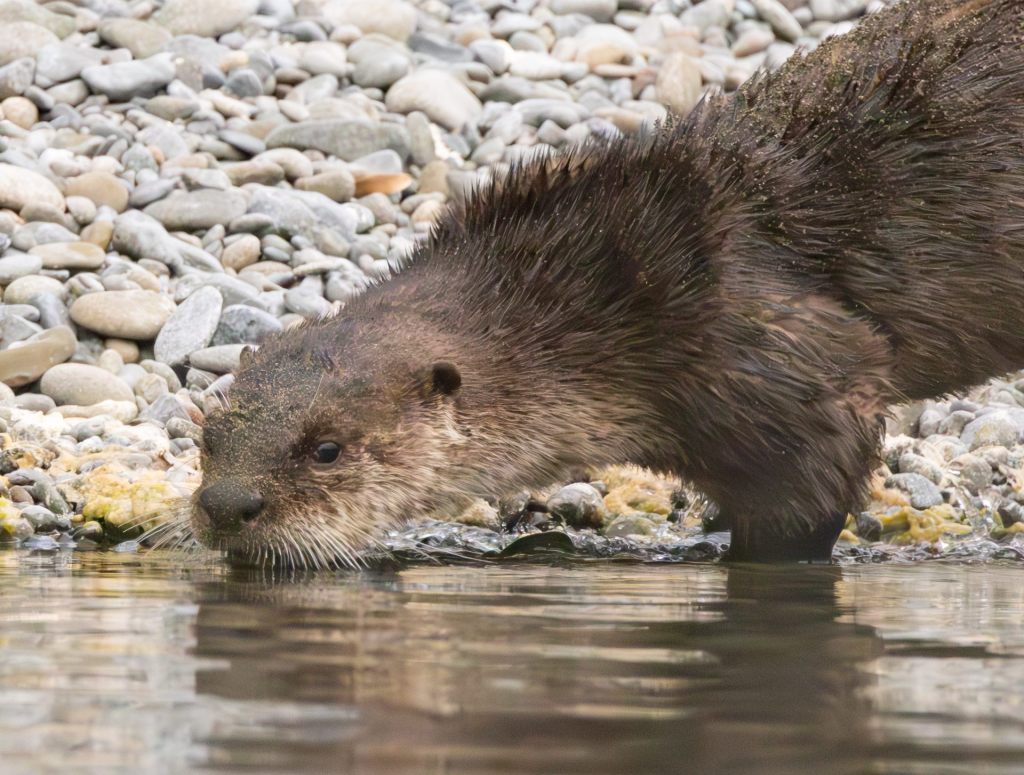
Lone Northern River Otter after a sand bath, making its way to a foraging area.
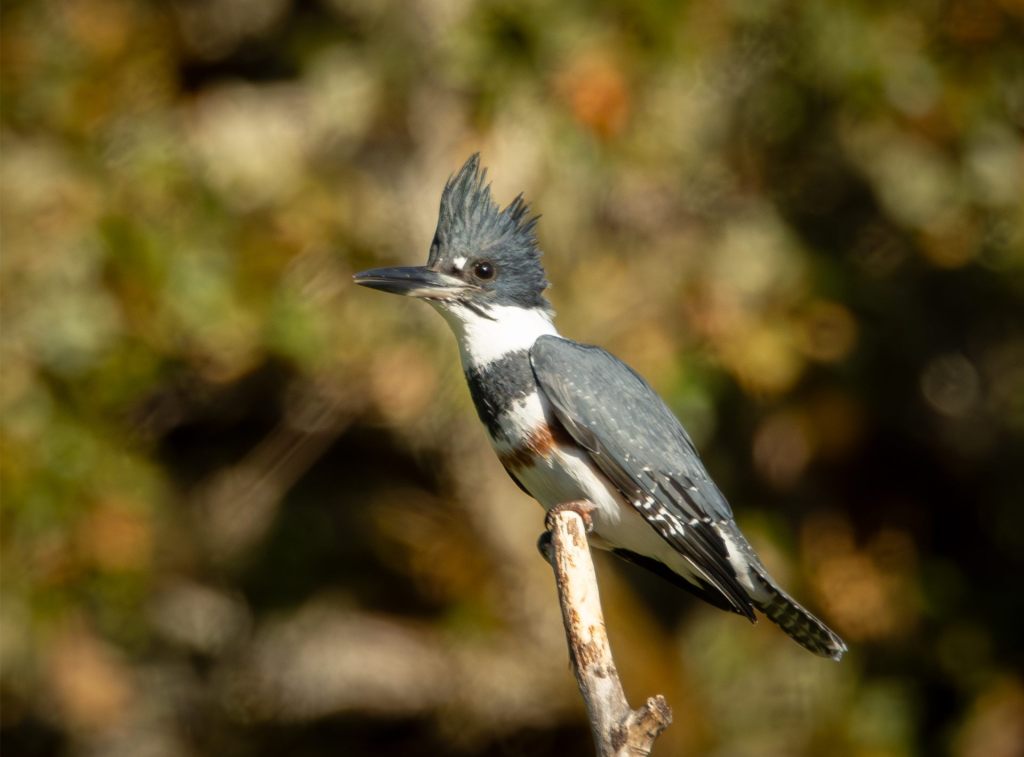
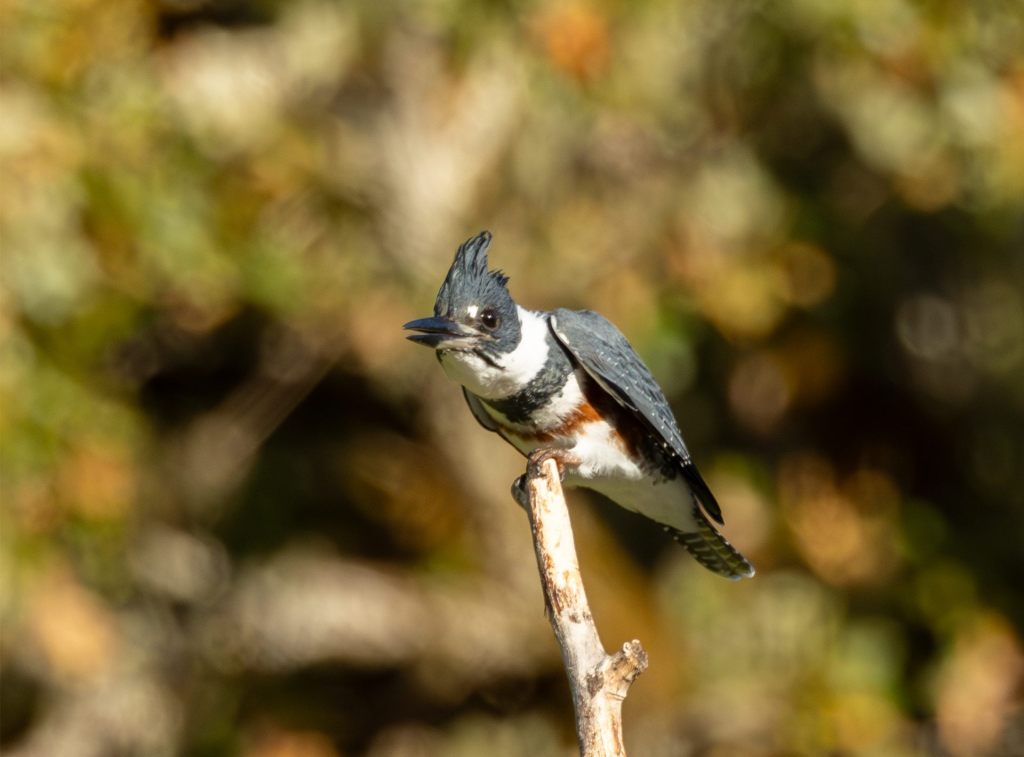
Belted Kingfishers continue to be a daily treat. This is a female, told by her rust-colored band below the blue “belt” for which she is named.
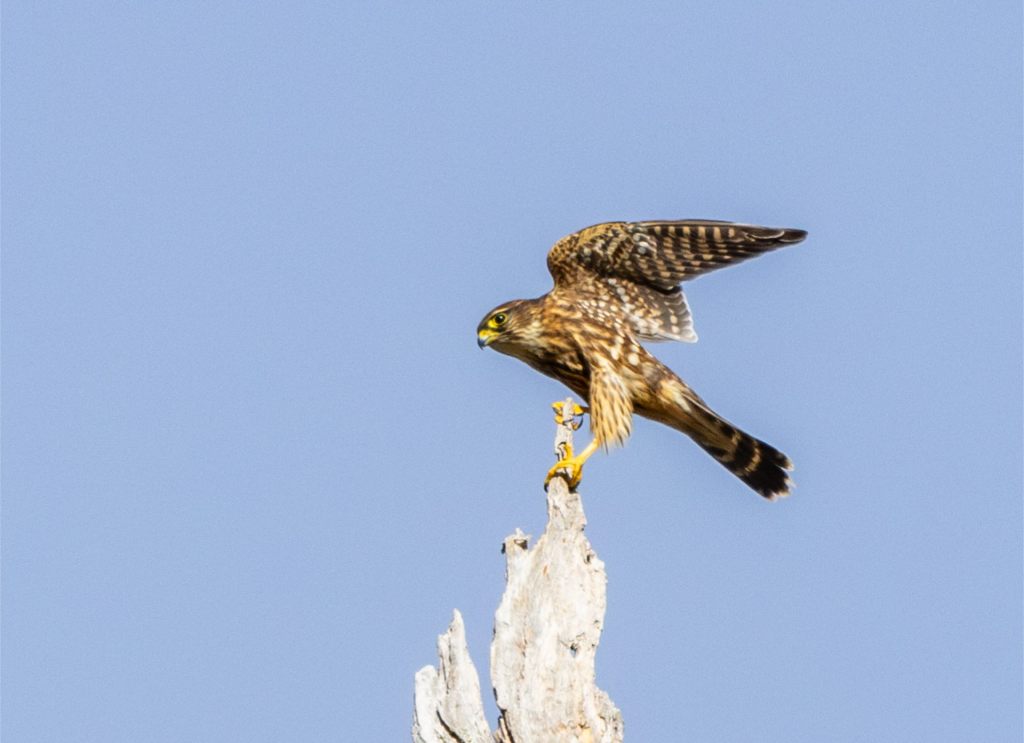
This is the fourth different Merlin I have seen so far this fall. I can go a whole year feeling lucky to glimpse just one of these beautiful little falcons, but for much of late October, it’s been another day, another Merlin.
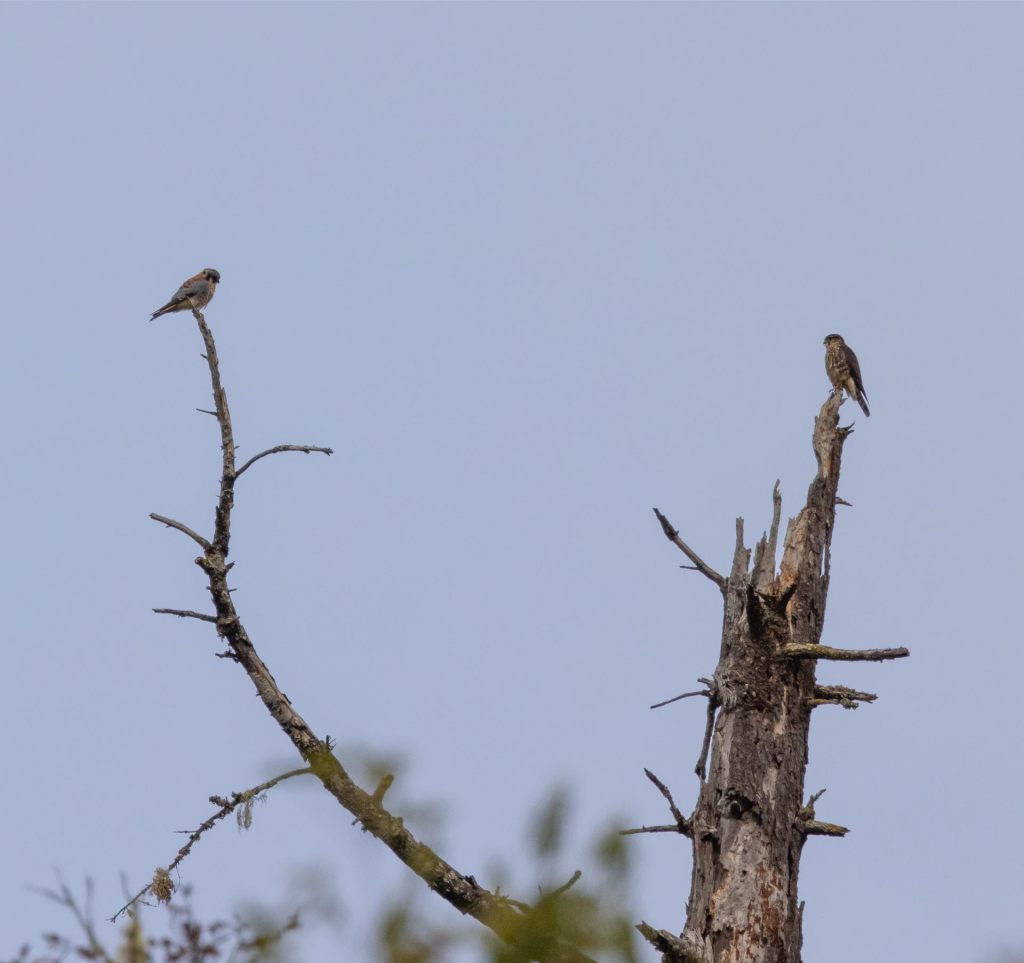
Usually when two different species of raptors are in each other’s space there is loud, aggressive conflict, so I was surprised to see these two falcons, an American Kestrel on the left and a Merlin on the right, sharing this snag peacefully for about 20 minutes one morning.
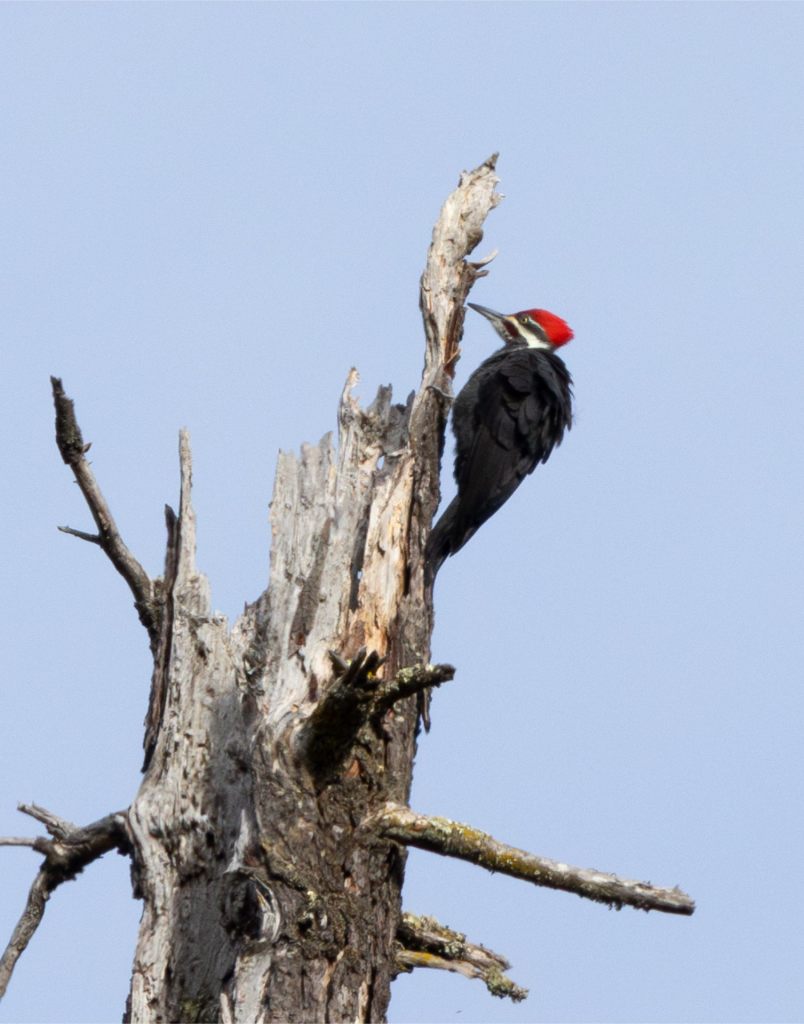
Pileated woodpeckers are still making daily appearances, this male stopping by briefly in a favorite snag.
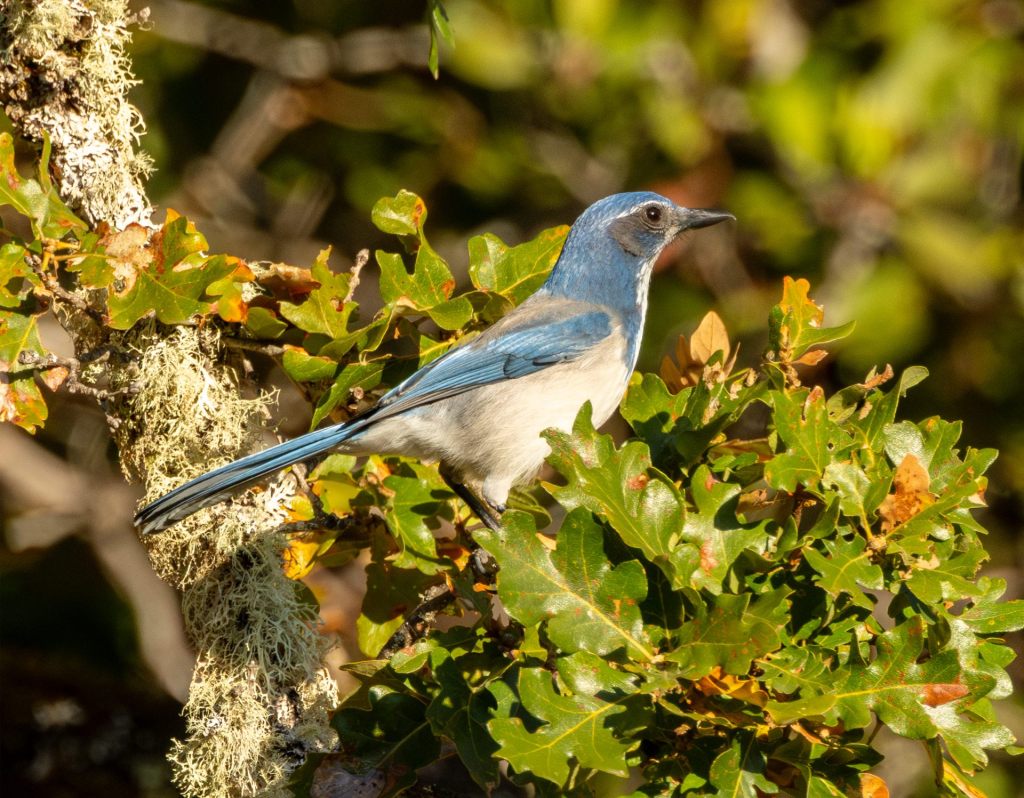
California Scrub Jay patrolling oaks looking for acorns to stash for the winter.
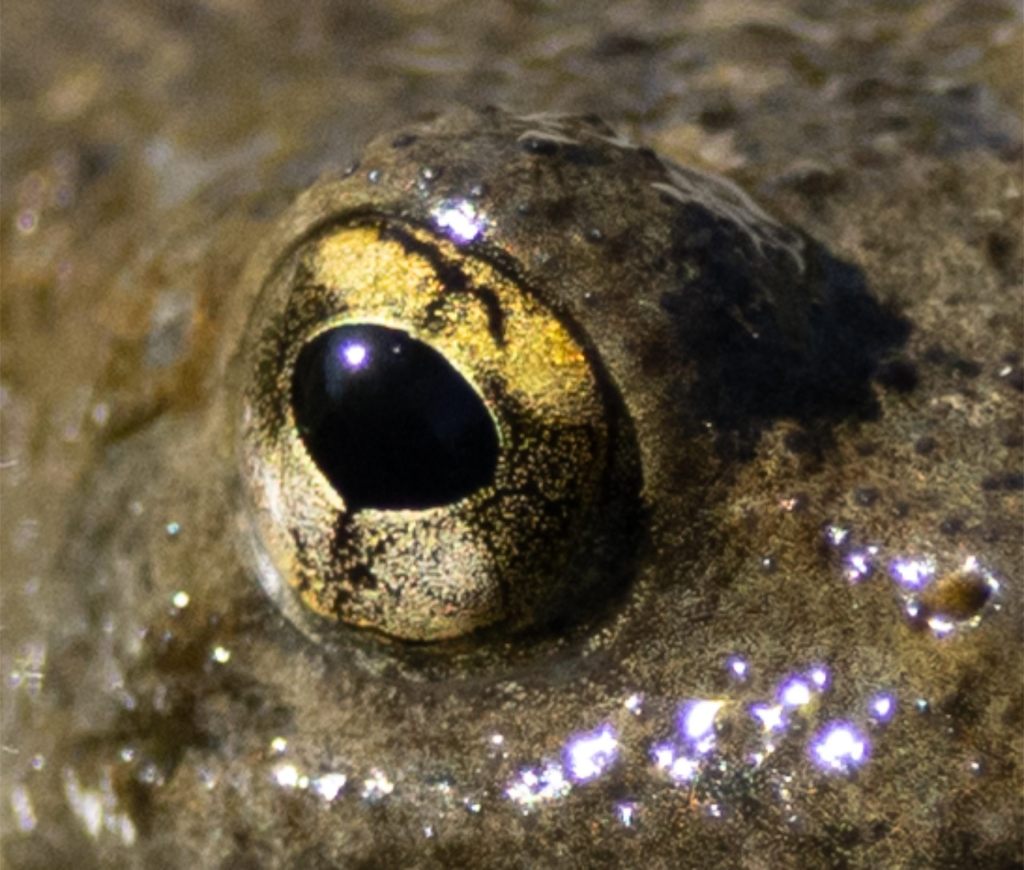
The eye of a Western Toad

11 responses to “Octoberfest, Part 2”

  1. Kym Kemp Avatar

    The otter and the mature buck photos are wonderful!

    Liked by 1 person

  2. Kym Kemp Avatar

    The otter and the mature buck photos are especially fantastic.

    Liked by 1 person

  3. latskojerry Avatar

    Great variety of the changing cast of characters. The comet seemed brighter last time through; it must be getting old.

    Liked by 1 person

  4. margadrichem Avatar
    margadrichem

    What a great October, it is remarkable, that the pygmy owl can catch prey 3x it’s size.

    We saw many yellow rumped warblers during our October walk in the park.

    love reading your blog, Margrete

    Liked by 1 person

    1. Ann Constantino Avatar
      Ann Constantino

      Thank you Margrete. It’s all different out there now. Here comes the salmon!

      Like

  5. sally teegarden Avatar
    sally teegarden

    What a wonderful treat this morning! I love reading your tales of the ‘hood. … delightful

    Liked by 1 person

    1. Ann Constantino Avatar
      Ann Constantino

      Thanks Sally. I feel so lucky to be a witness to it all.

      Like

  6. Marci Avatar
    Marci

    What delight to find your blog and discover your photos this evening. Love learning bits of their stories from you too. When I was on the mountain we were overwhelmed with the golden crowned sparrows each winter. Thanks Ann.

    Like

    1. Ann Constantino Avatar
      Ann Constantino

      Hi Marci! How nice to see you here. Thanks very much. Sometimes I get a little sad when the colorful summer birds leave, but the golden-crowned sparrows perk me up.

      Like

  7. Humboldt Avatar
    Humboldt

    Thanks so much Ann. Mark

    For a prompt reply please call me, then text me. Due to reception and connectivity, mails may not be checked daily. Thank you.  Mark Schaffner 707-616-8895

    Liked by 1 person

    1. Ann Constantino Avatar
      Ann Constantino

      Hey Mark Great to hear from you!

      Like

Leave a reply to Ann Constantino Cancel reply

Welcome to Free Range Photography, a photo-journal of encounters with birds and wildlife, mostly in Humboldt County, California.

Connect