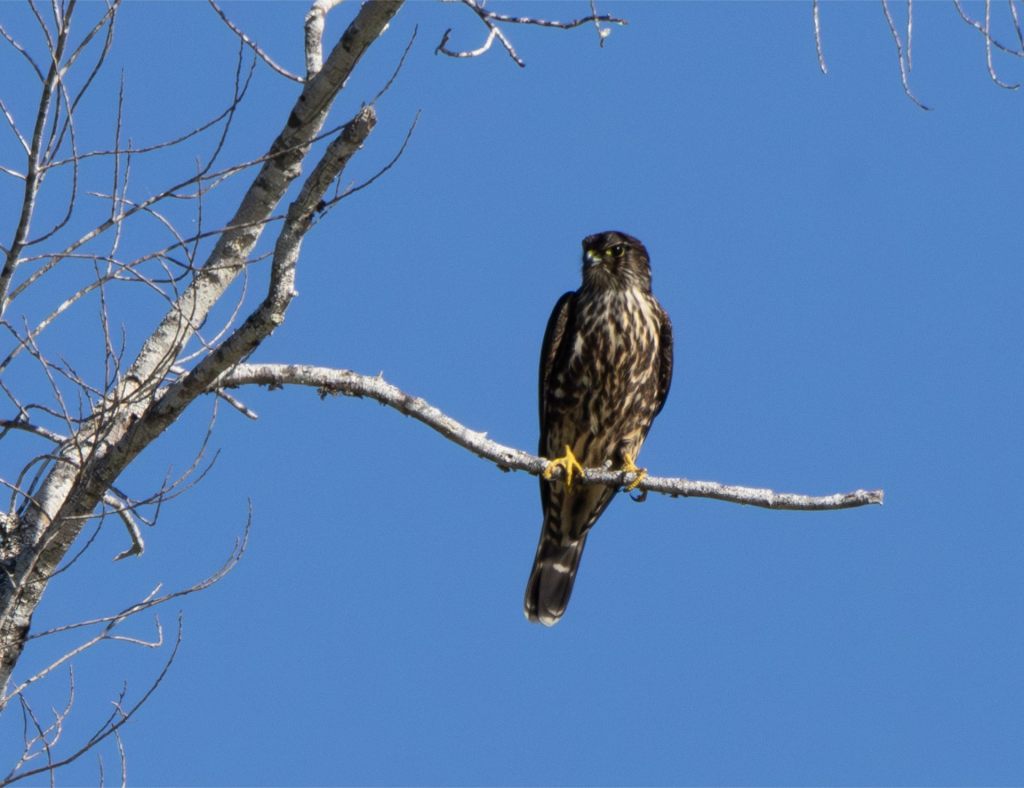
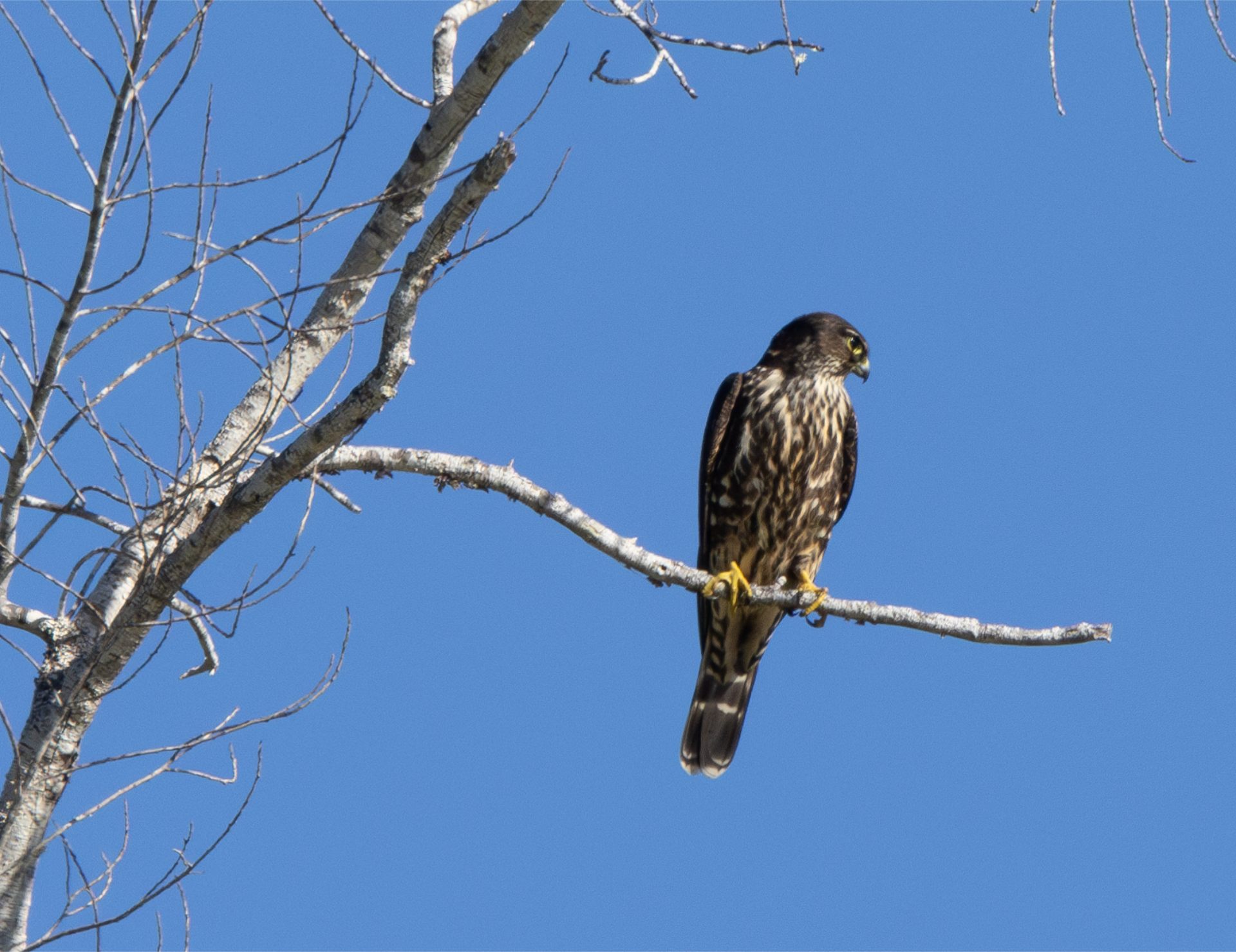
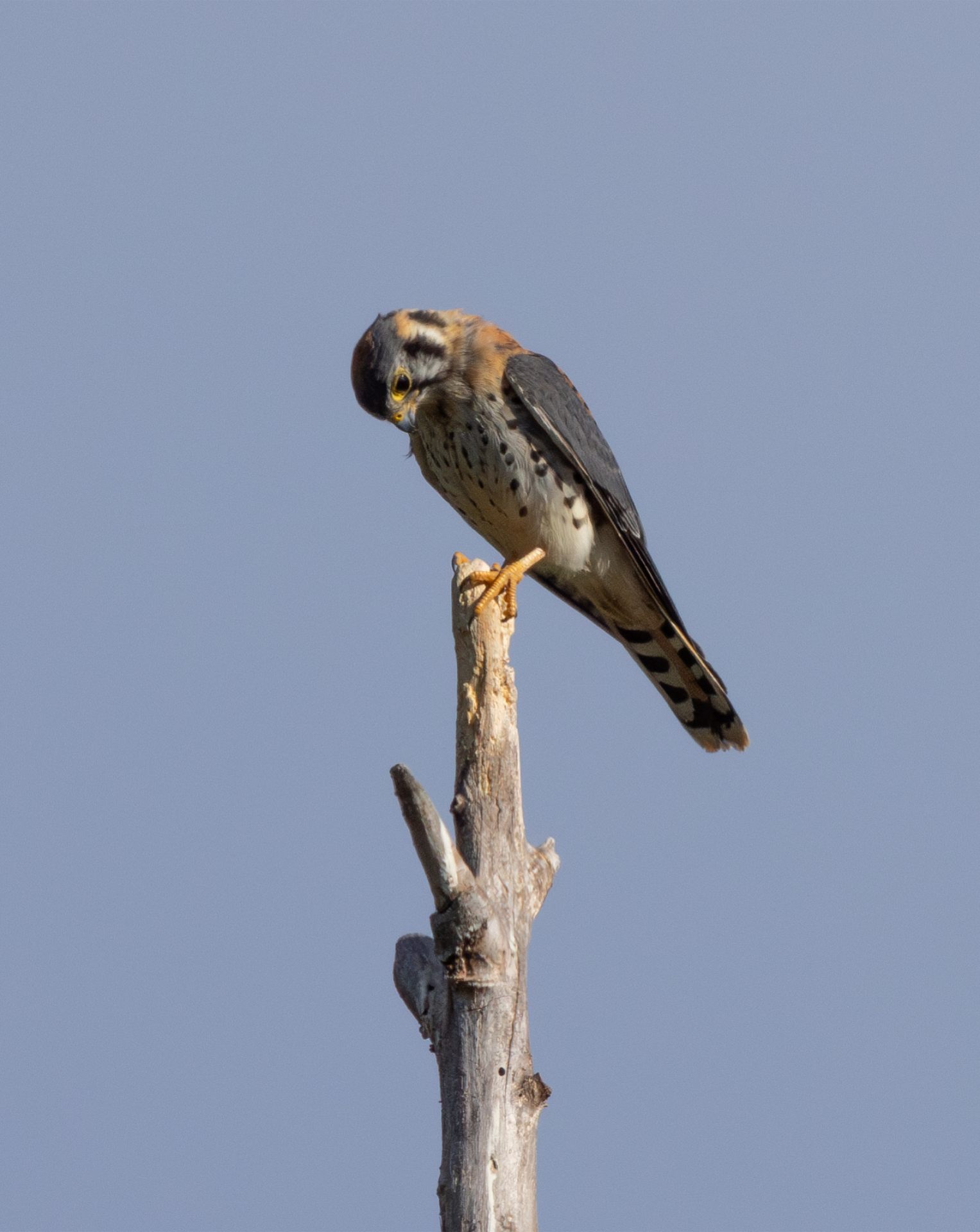
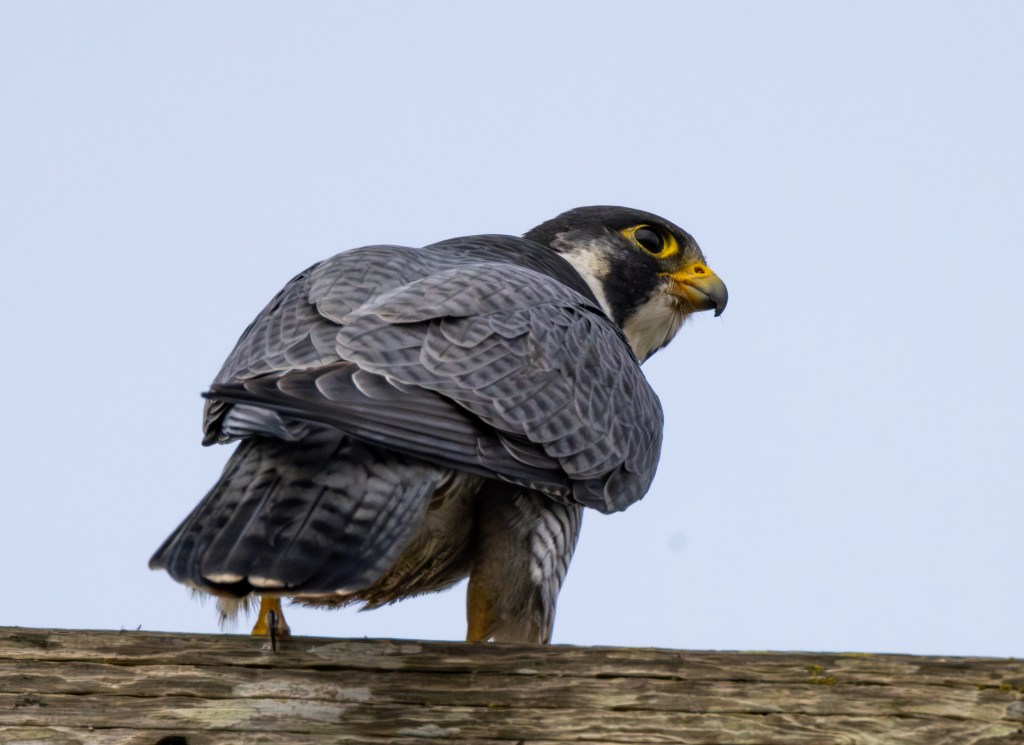
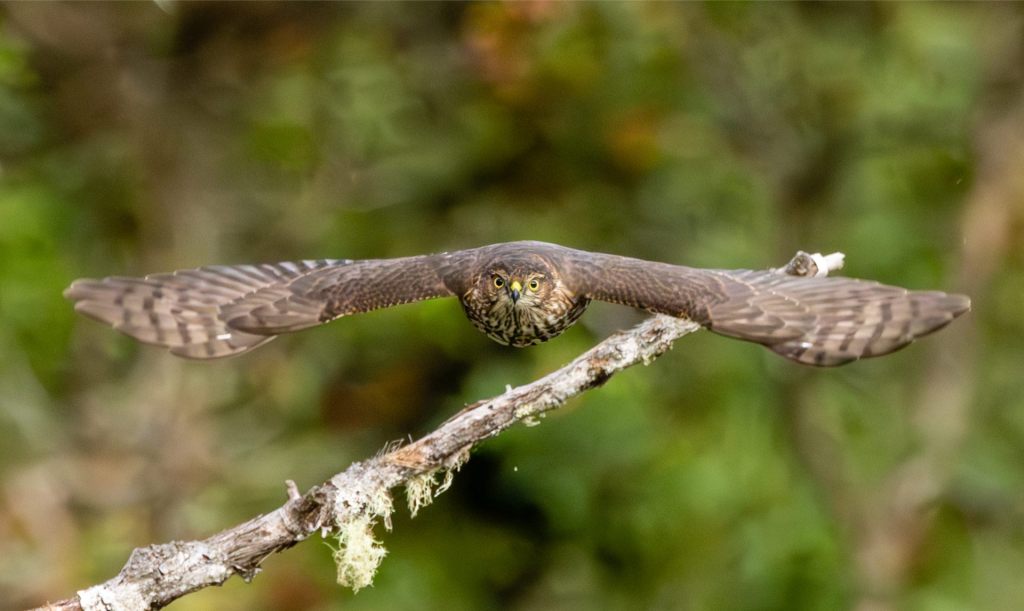
North America’s smallest falcons, the American Kestrel and the Merlin have made recent visits to my neighborhood. Kestrels are year round residents while Merlins only spend the winter here or migrate through. All of our falcons share jet black eyes, long, tapered wings, and a taste for small birds, although a Merlin can take a pigeon nearly twice its 6 ounce weight, while Kestrels, weighing about 4 ounces, might settle for tiny songbirds. Both species take a variety of other prey from large insects to rodents, reptiles, etc. Merlins are far more powerful than Kestrels.
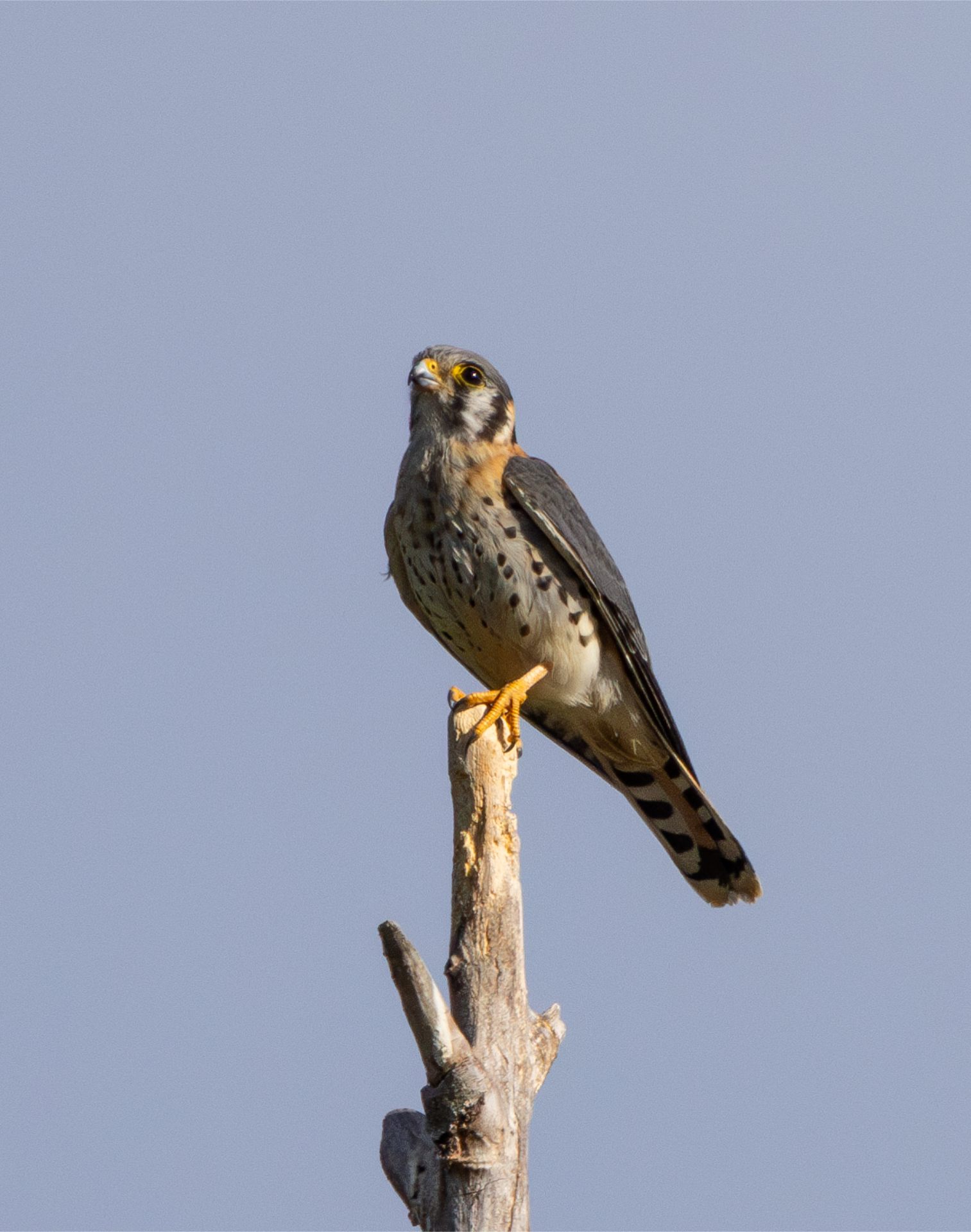
Kestrels were labelled Sparrowhawk and Merlins were called Pigeon Hawk in my 1967 Golden Guide, the book I stared at for hours as a child and in which my mother wrote my name so I could take it to school and show it off to my rather unreceptive 3rd grade classmates. Kestrels may have been renamed to match their European counterpart, the Eurasian Kestrel. The word Merlin somewhat resembles the French esmirillon for the species.
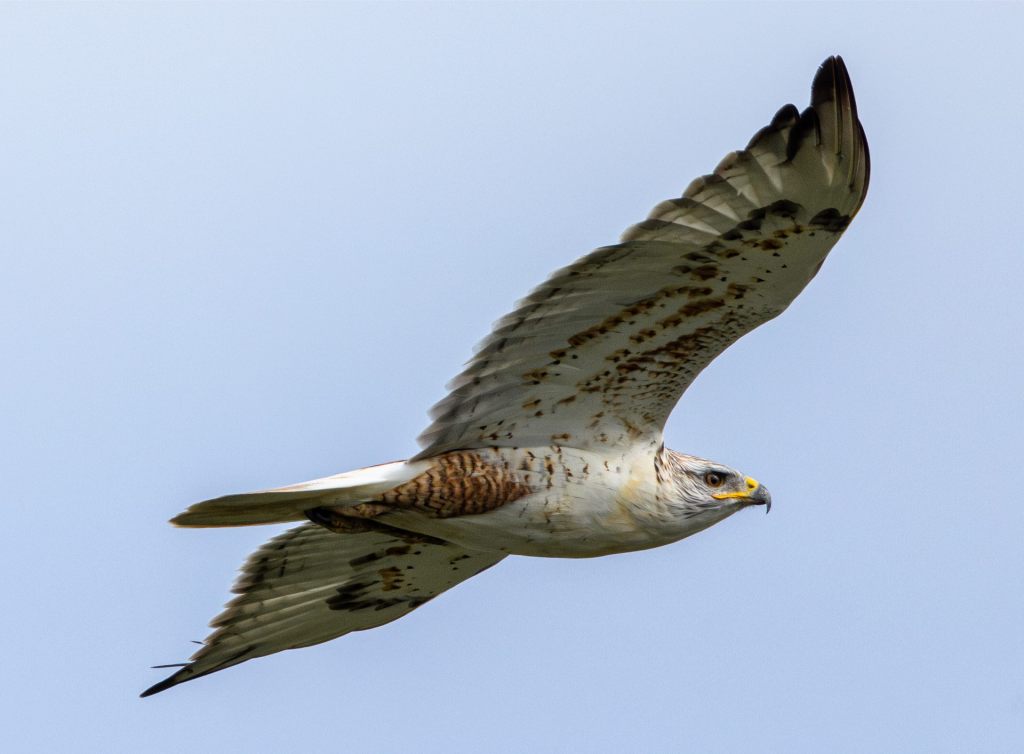
Falcons are more closely related to parrots than to other “raptors”, the hawks and eagles. They rely on speed more than strength to catch their prey.

Songbirds get very quiet and go into hiding when a Falcon arrives on the scene, but at the end of the video below, a Steller’s Jay shows no respect.





 Free Range Photography
Leave a reply to Kym Kemp Cancel reply