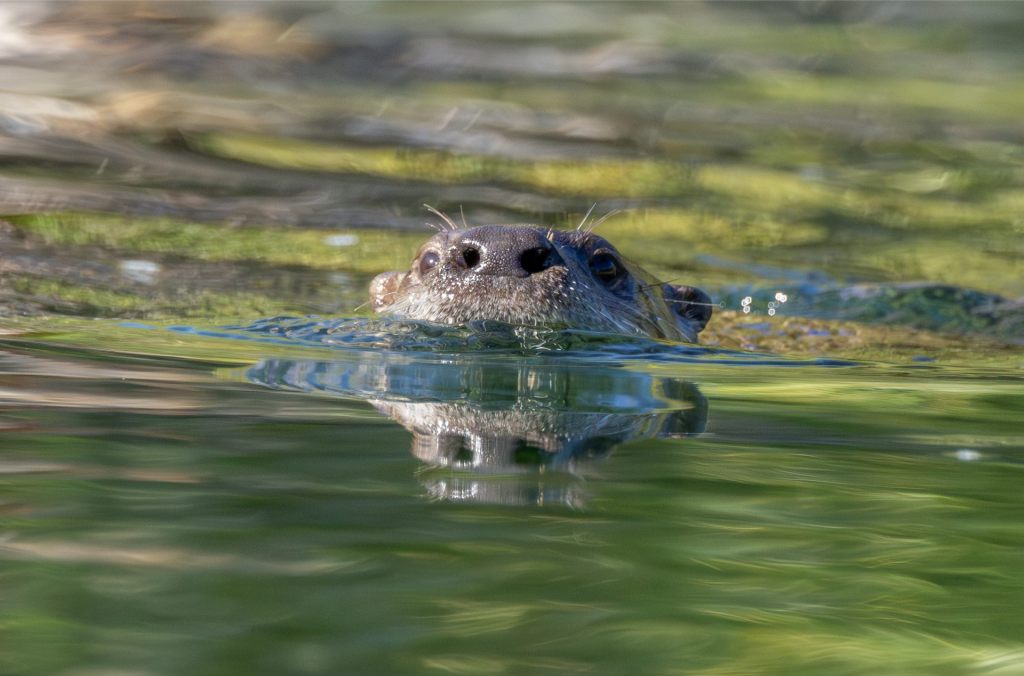
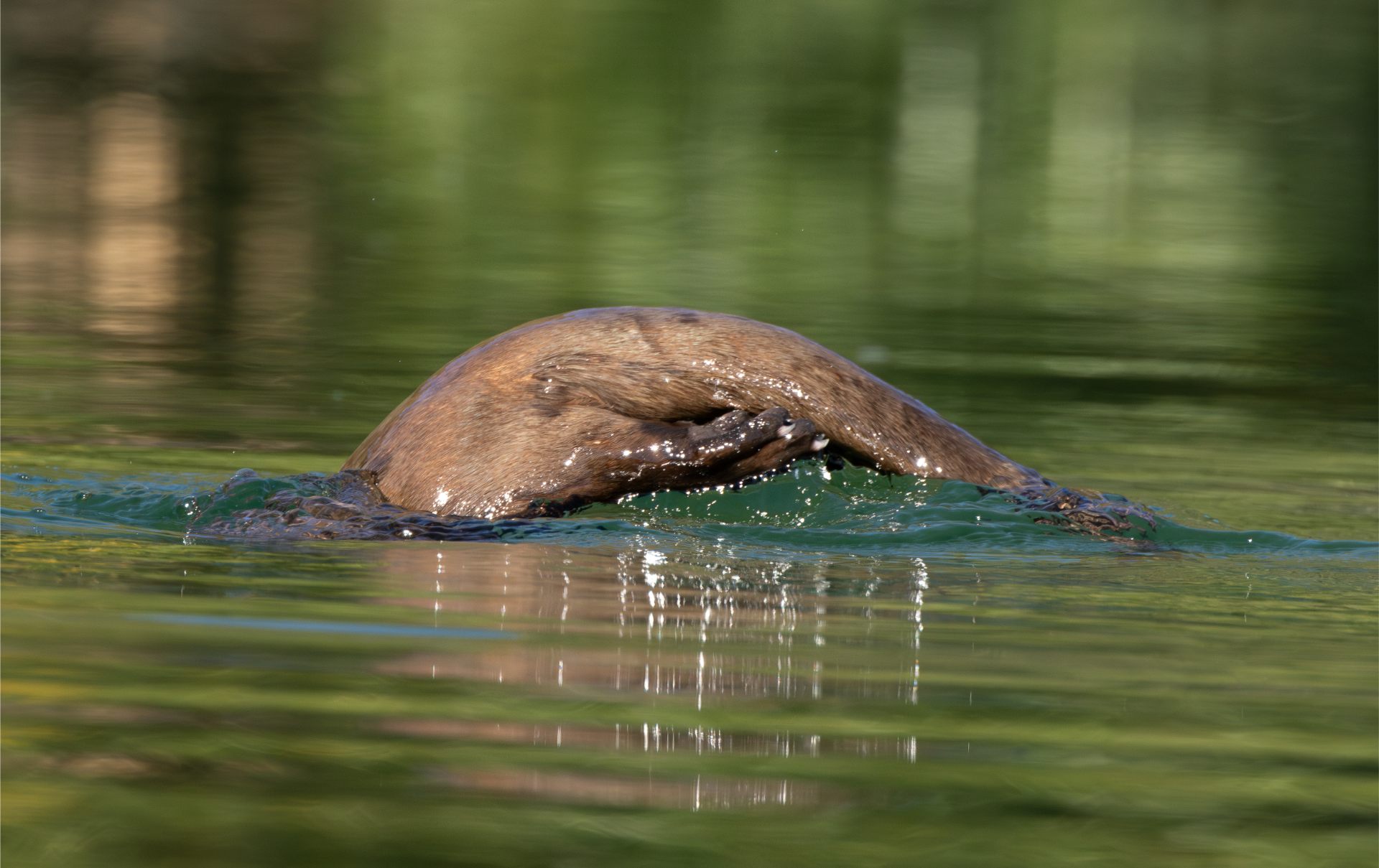
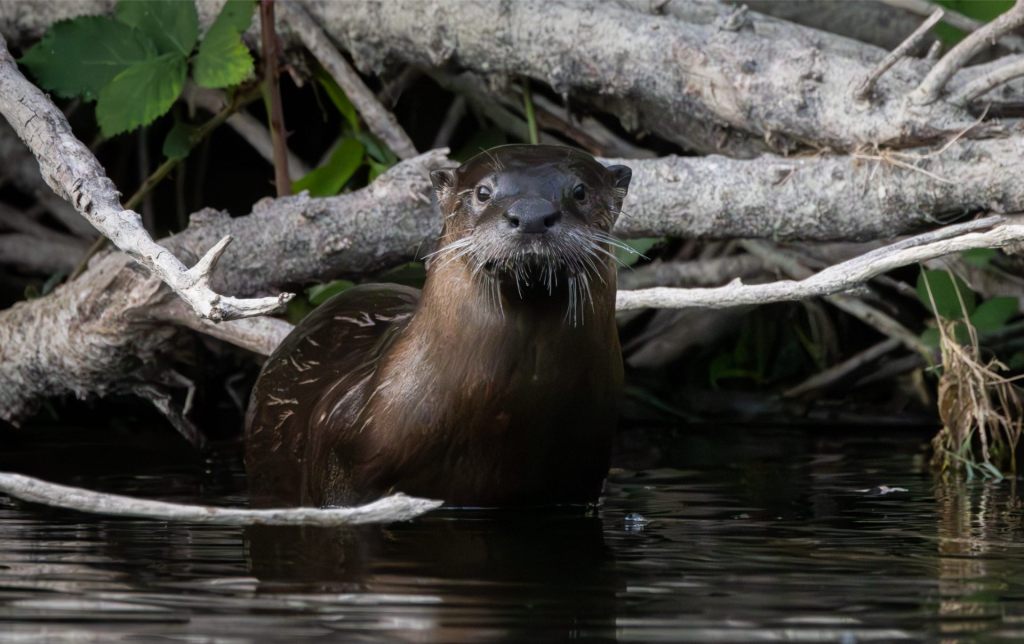
This otter spent quite a while diving for small treasures in a fairly stagnant part of the river the other morning and gave me a chance to watch her efforts pretty close up. An otter’s body takes on an almost liquid form as she sleekly enters the water, causing very little splash to be seen or heard.

Once the otter is submerged, you can observe air bubbles rising to the surface giving an idea of approximately where she is exhaling while foraging for food. However, the otter sometimes travels quite a distance from where the exhale occurs, so bubbles can be misleading. I have read that otters can stay submerged for up to eight minutes, although I’ve never seen any dive last longer than a minute or so.
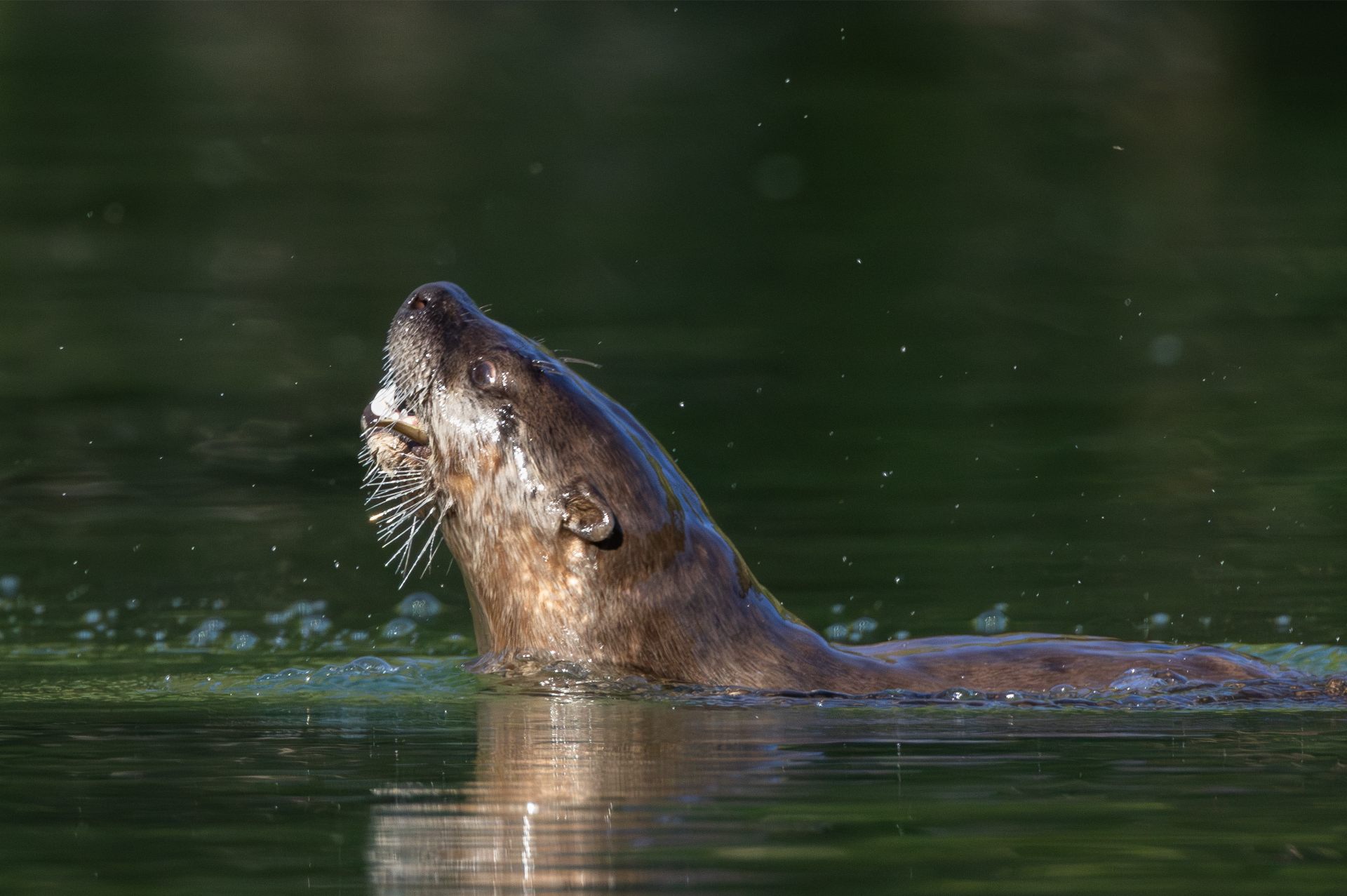
When the otter does come up for air, she pops up almost explosively, especially so if she’s got something in her jaws. She will throw back her head and chomp vigorously to consume the catch in one gulp, or if she’s caught something that requires some wrangling or even dismemberment, she’ll swim to shore and come out of the water at least partially to manage the big prize. A good-sized cray fish usually requires a trip to the shore, as do sizable fish or lampreys fighting for their lives.

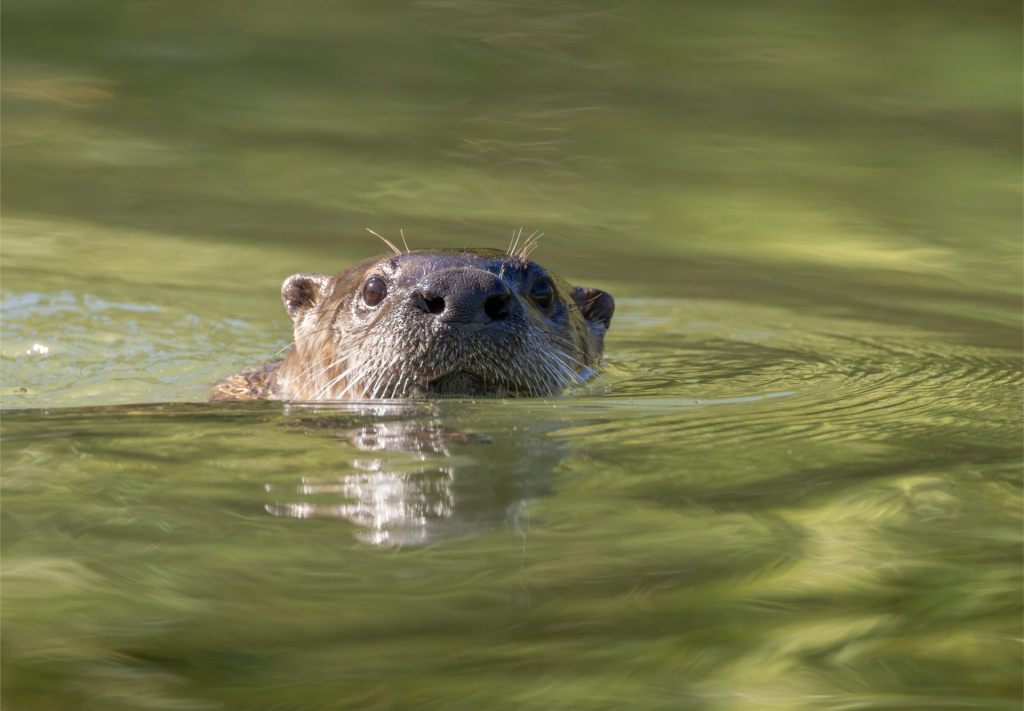
More often than not, dives are unsuccessful, and on this morning in mid September, this otter gave me some sweet looks at her face after some of those dives, which I took to mean that she was young enough not to feel threatened by my presence, even though she clearly knew I was there.
After a diving session, this otter got out of the water, presumably with a full belly, and climbed up onto a dusty bank for a luxurious sand bath, photos and story in an upcoming post.





Leave a comment