
Pileated Woodpeckers are North America’s largest member of the Woodpecker clan and their range covers most of the eastern US with a lucky-for-us distribution down the Pacific edge of the US through western Washington and Oregon and then down through coastal northern California and the Sierras.

Their bright red crest, bold facial markings and crow-like size make them unmistakable when you see them, but their vocalizations are also distinctive. Right now they are reappearing along the South Fork of the Eel, presumably after keeping quiet during nesting season, and their calls can be heard all day long, filling the river valley and rivaling the Kingfisher’s rattle for volume.
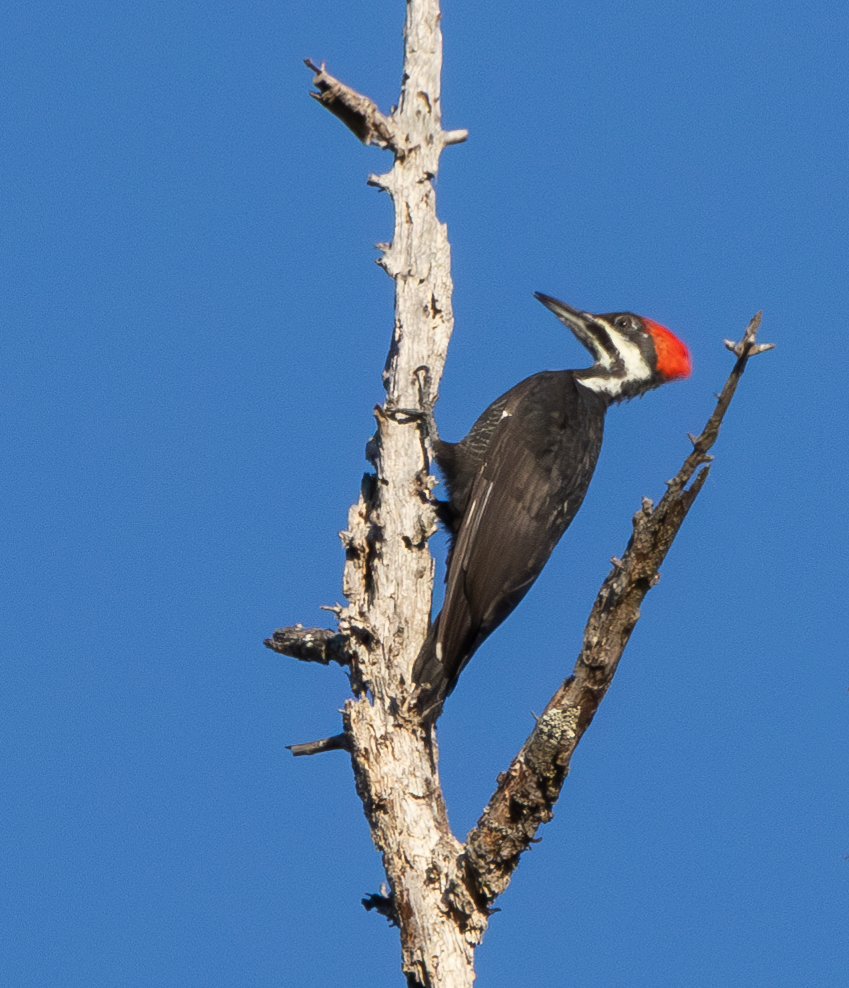
Every year there are some moments of doubt as August progresses and I wonder if I will hear and see them again locally, as they’ve been quiet and secretive since late spring. So the other day when I heard the slightly maniacal, rhythmic, rising and falling call, I’ll admit to a small fist pump and an eagerness to go out and find the source of that glorious noise.
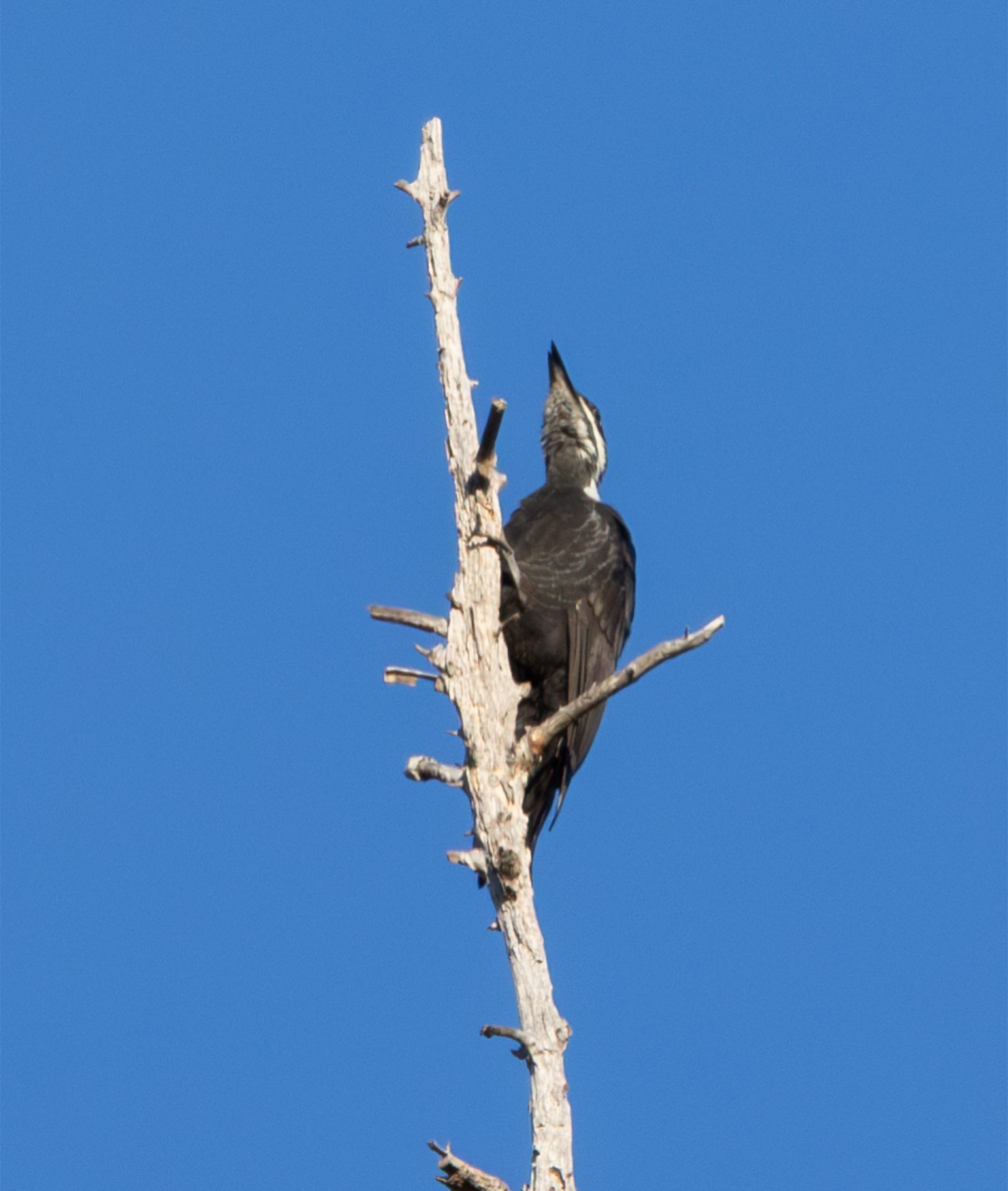
The very next morning I went out looking and I knew where to park myself for views of several snags that would be a likely perch. For over an hour I heard repeated calling coming from deep in the woods above the river, but could not get eyes on the source.
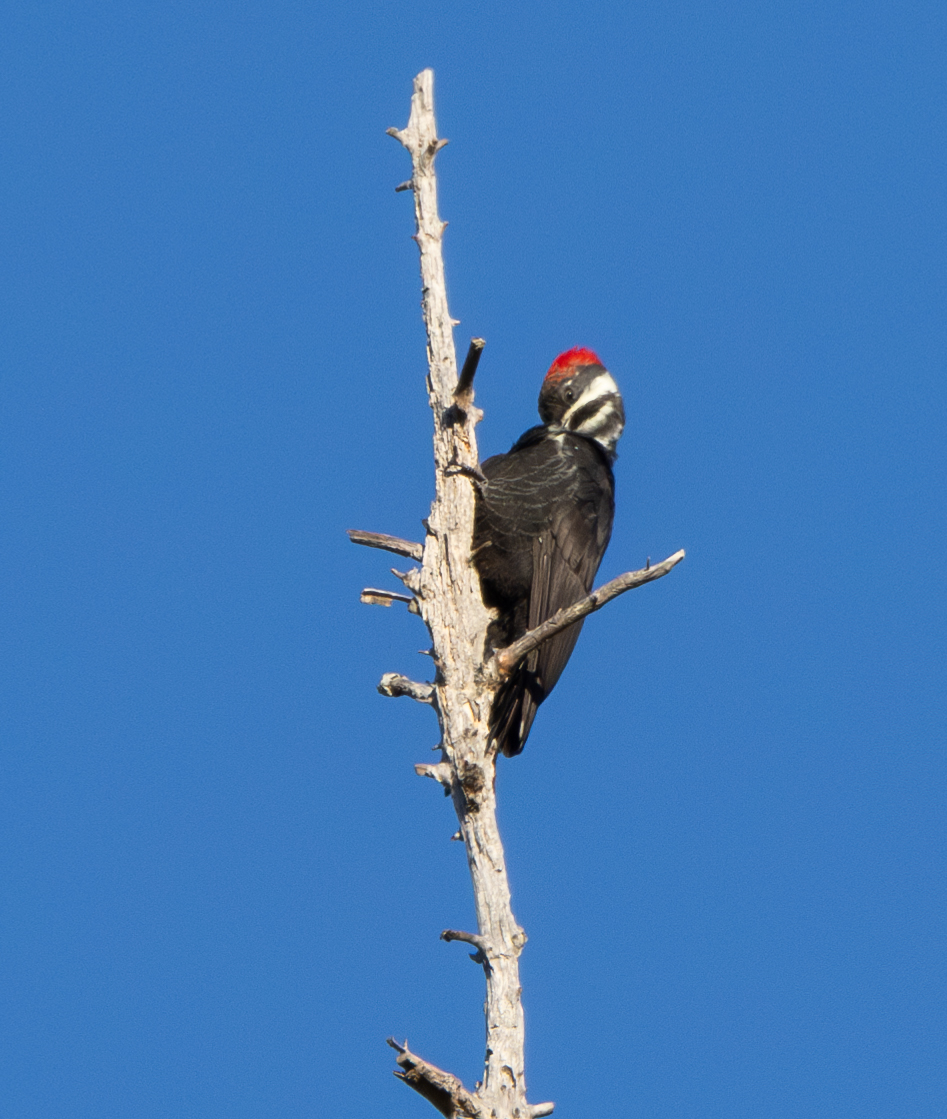
Then suddenly, a second Pileated flew in, directly over my head and right onto one of the snags I was watching. It was a female, and I wondered if the one deep in the woods was one of her young. There was a call and response conversation between the two, and the female stayed around for a good five minutes before flying off into a forested area a bit upstream.
There are many birds that give me a thrill when I see them, but a Pileated Woodpecker, no matter how often I see one, momentarily takes my breath away. They are striking, full of personality and just uncommon enough that I am riveted from the moment one appears until it takes off, a black and white and red flash with big strong wingbeats and a rhythmic flight call announcing its movement.



 Free Range Photography
Leave a reply to Susan Nolan Cancel reply