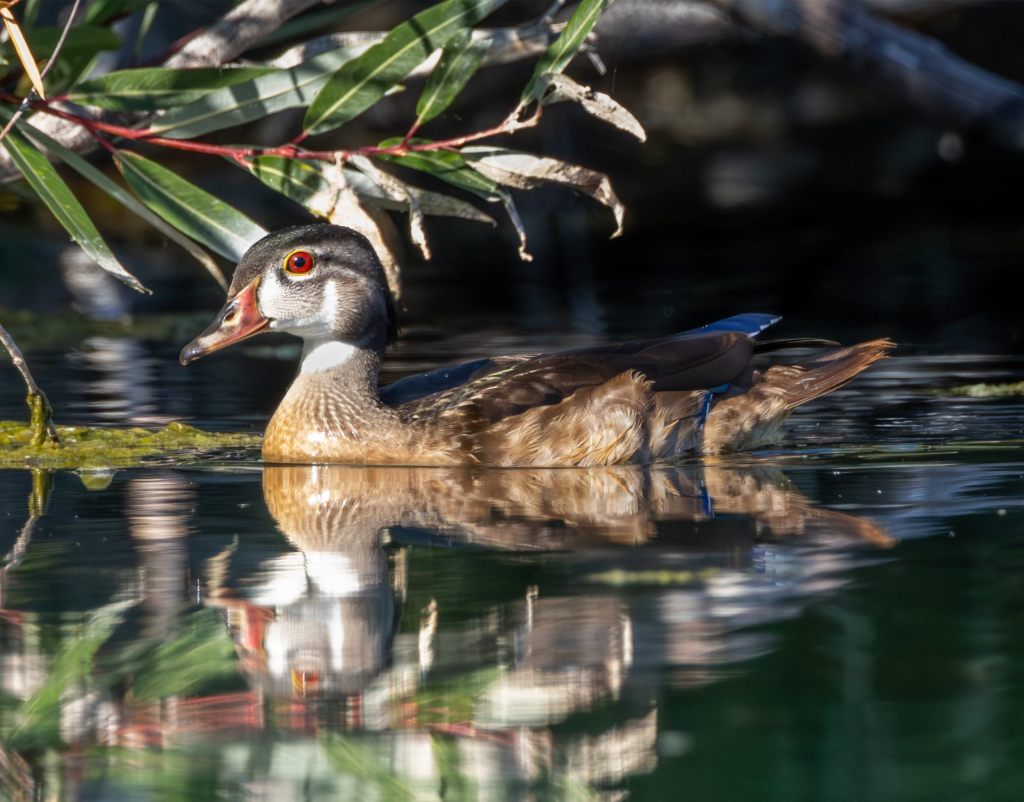
Not long after mating, the male Wood Duck loses his exquisitely beautiful feathers and goes into “eclipse” plumage. Seen from a distance it might not be easy to distinguish the drake from the hen, but if you can get a good look you will see a faded version of the bold patterning on some of the feathers as well as the bright orange-red eye and orangish bill.
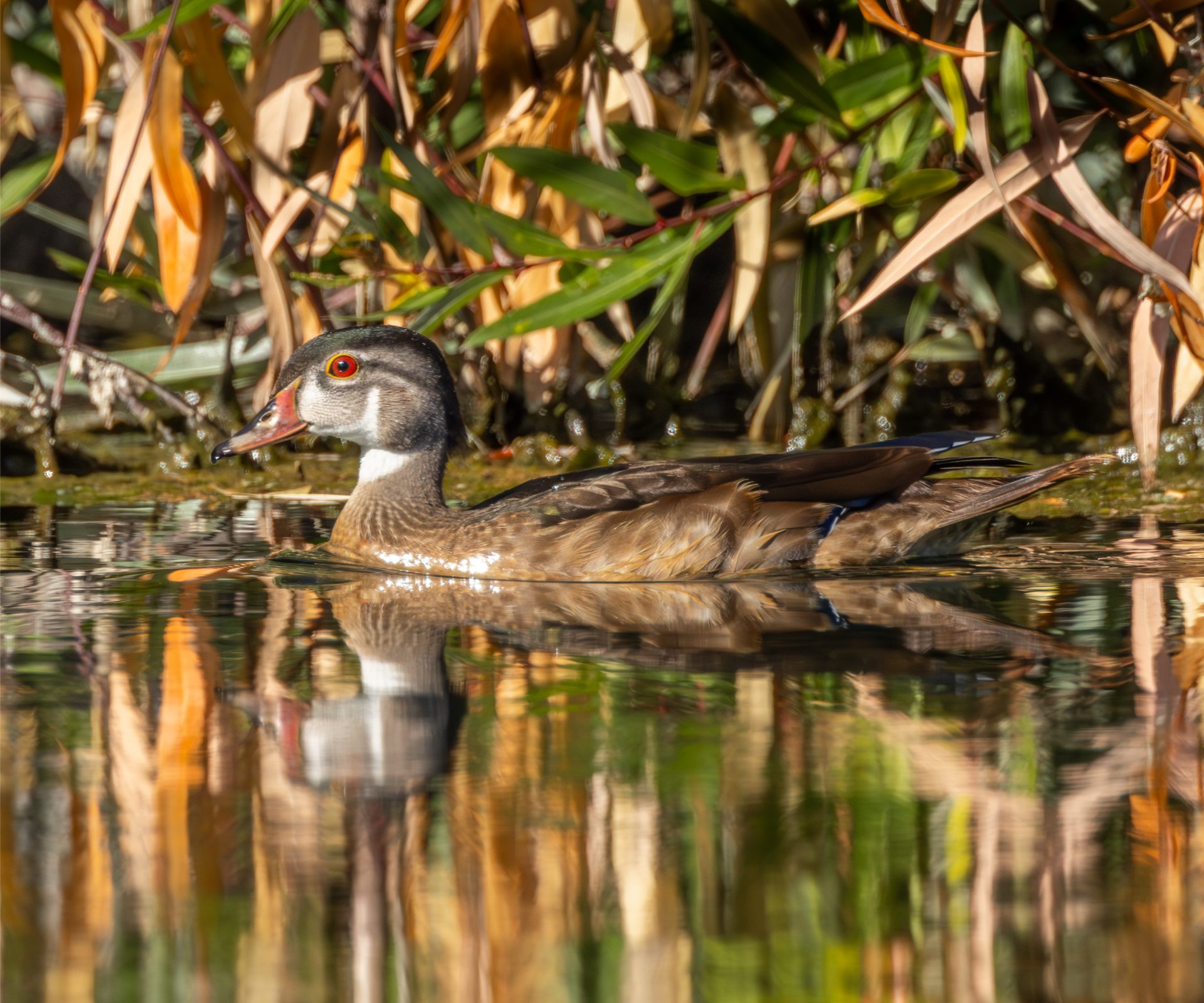
Wood Ducks have been especially common this spring and summer on the South Fork of the Eel and I have seen at least two and possibly three families with seven ducklings or more. The males do not help with rearing the young, and until recently I haven’t seen a male at all since the last time saw them in all their breeding plumage glory.

Yesterday I saw a pair drifting down the river, a male and female, apparently without ducklings.
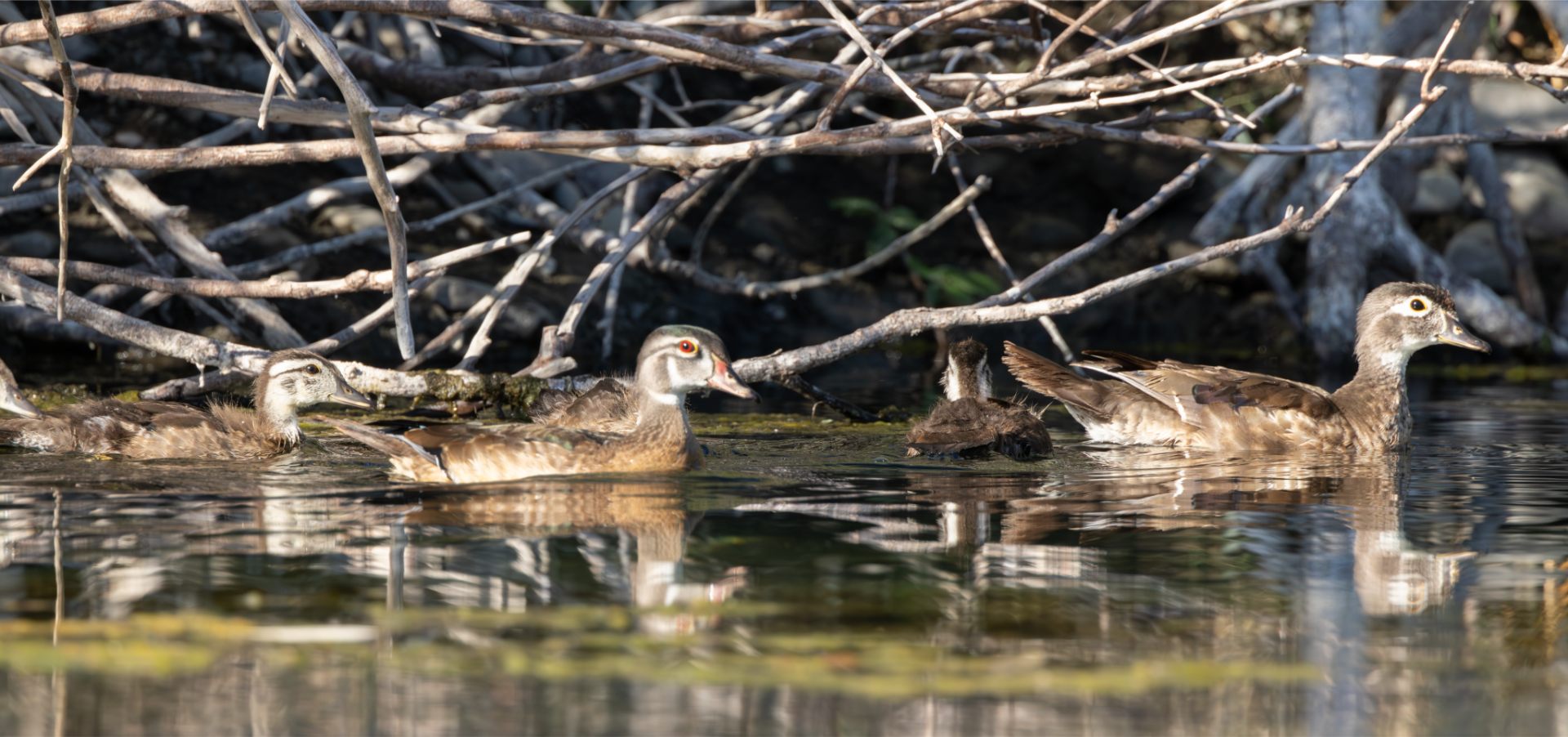
Not long after that, a group of ducklings, maybe half-grown or so, appeared, their downy look beginning to be replaced with some adult feathers. Not far behind floated mom, and then along came a drake much to my surprise. I don’t know if there’s any way to tell if this was dad or just a lone male looking for a little company.
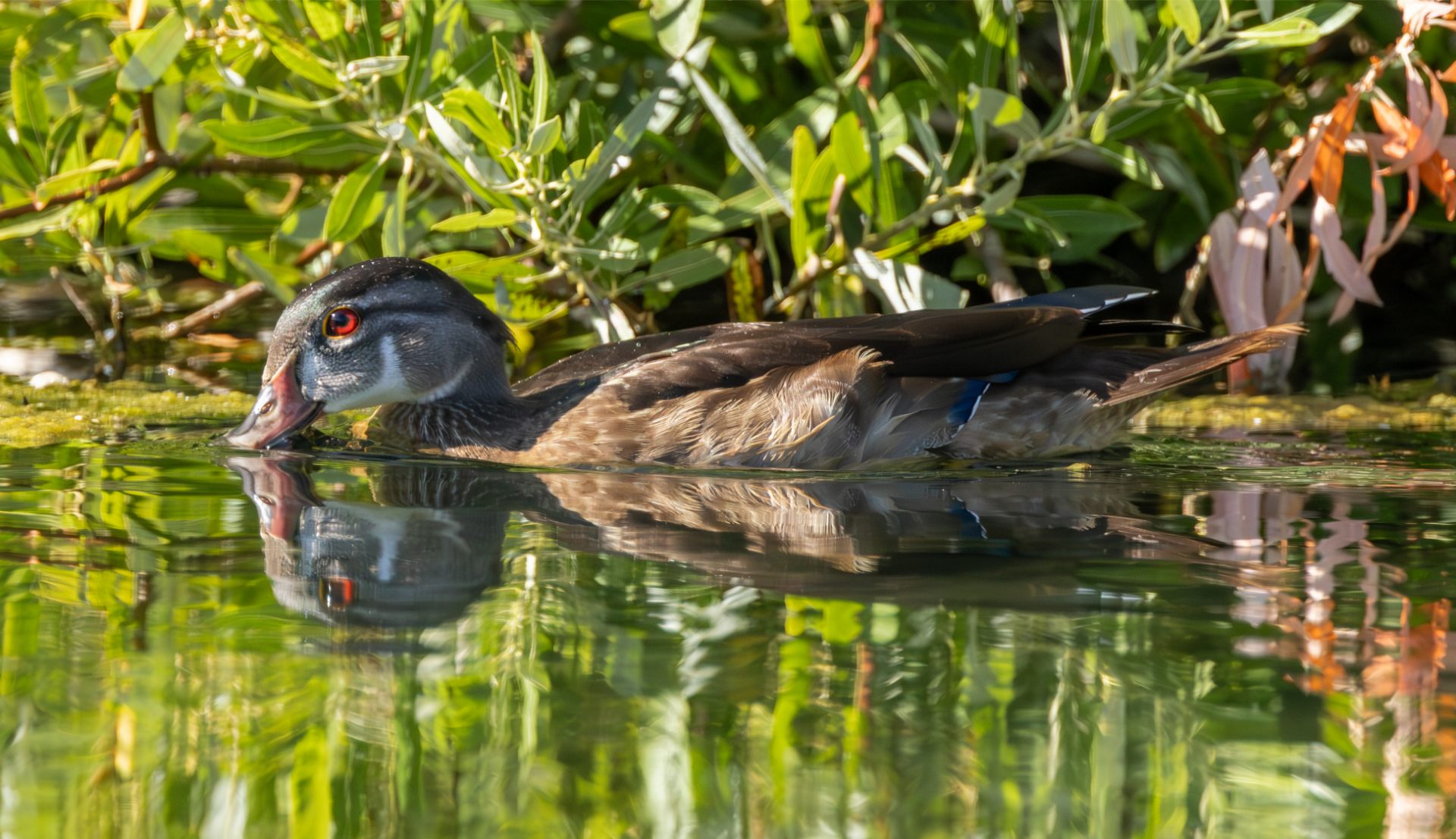
He didn’t stay long with the group, and eventually paddled off upstream on his own. Wood Ducks are serially monogamous, staying with one female all breeding season, but then getting together with a different hen the following year.
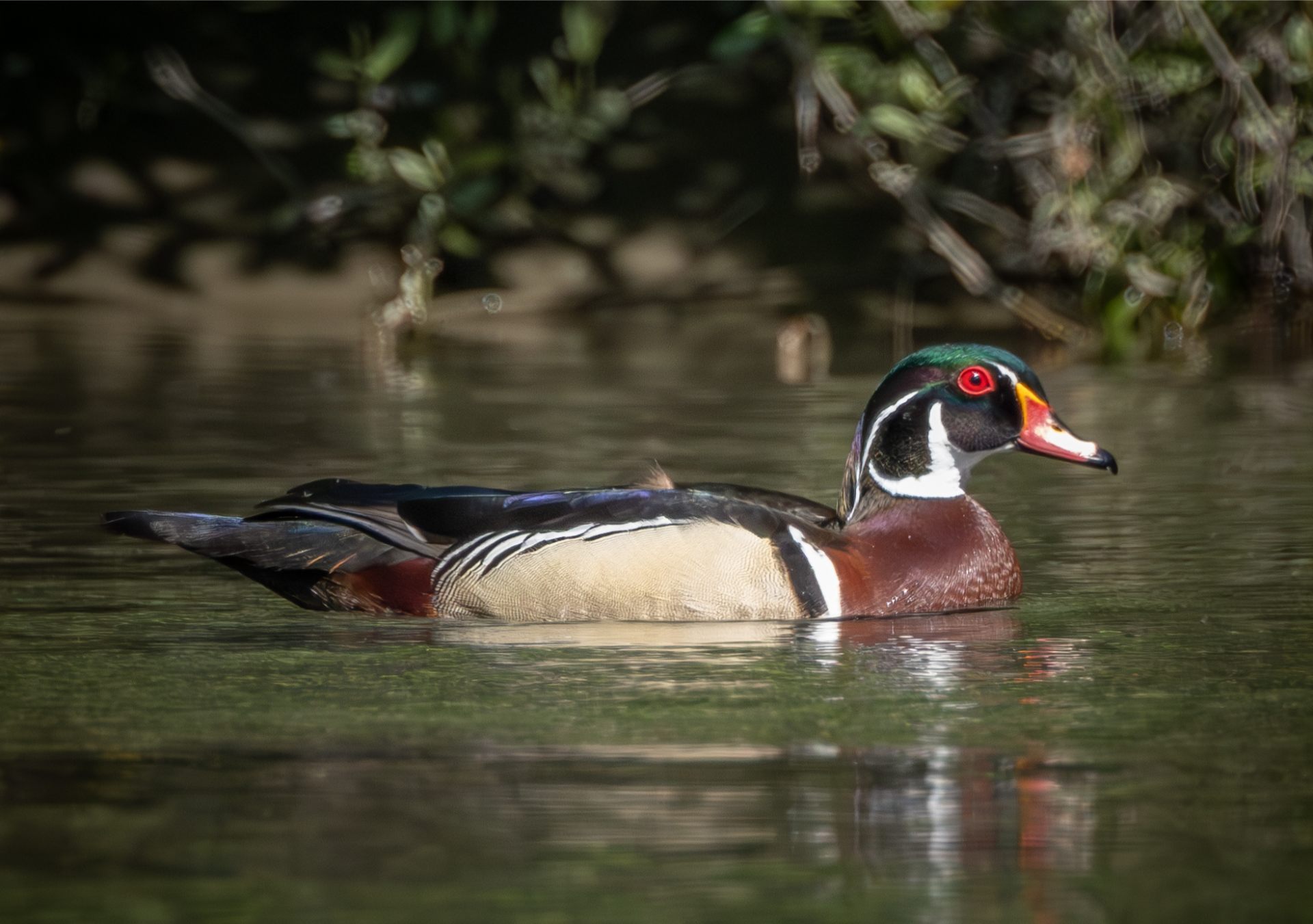
Below is a previous post showing Wood Ducks paired up last spring.

 Free Range Photography
Leave a reply to latskojerry Cancel reply