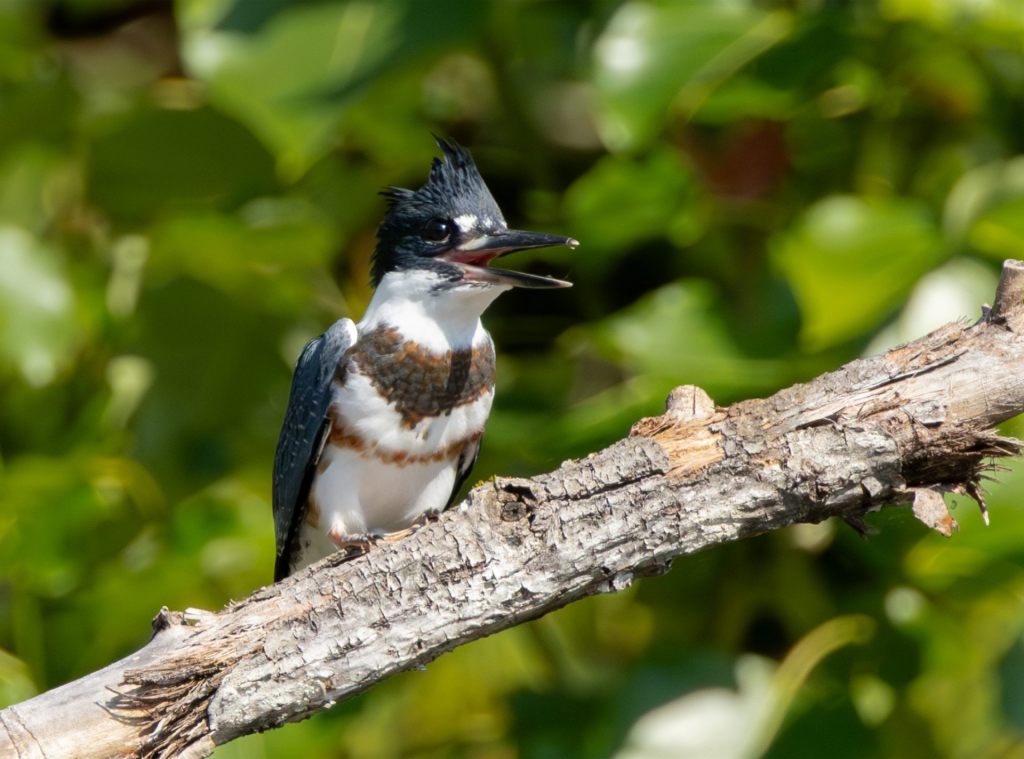
Every summer there is a time when a loud abrasive rattle returns to the airwaves after many weeks of absence from the little stretch of Eel River that river I observe . The absence of this noise has serendipitously allowed more focus on the songs of the spring migrants as they arrive. The sweet phrases of Yellow Warblers and Wilson’s Warblers, the fluty fanfare of Swainson’s Thrushes, the scat-like improvisation of Black-headed Grosbeaks, and the comical chatter and chirpy scold of Yellow-breasted Chats fill your ears and make it hard to decide where to perch your attention. It’s delightful to let the orchestra surround you as you become immersed in mellifluous tones.
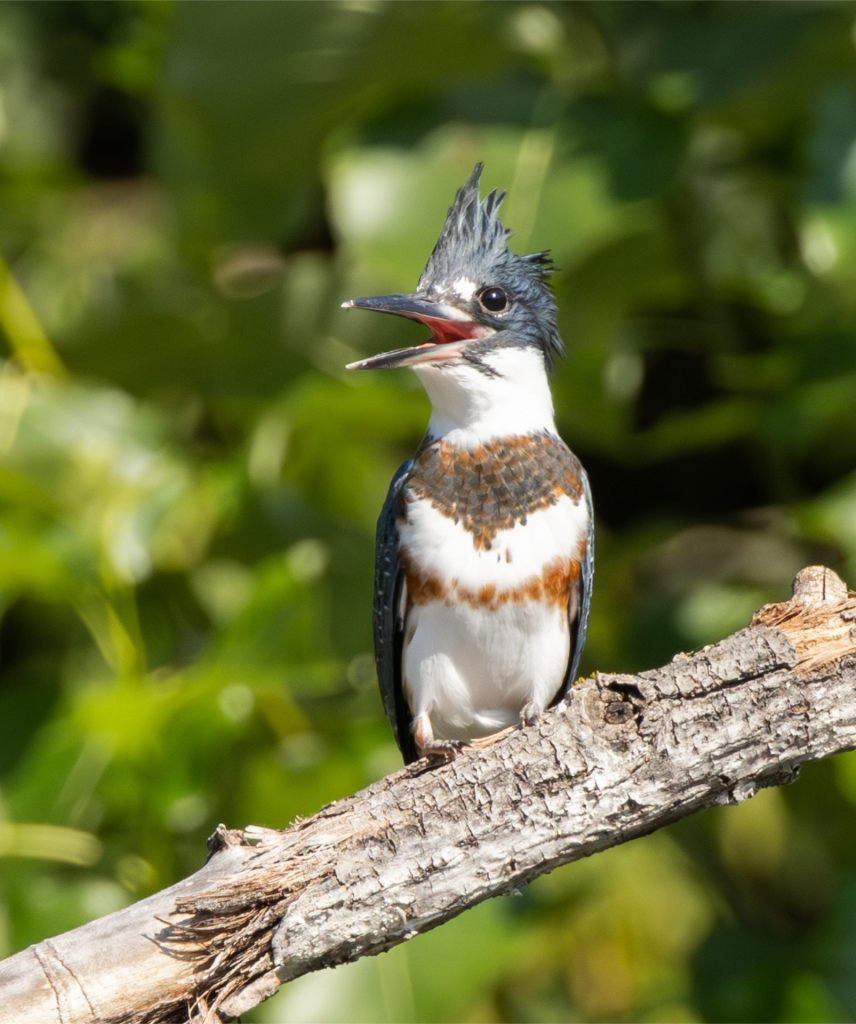
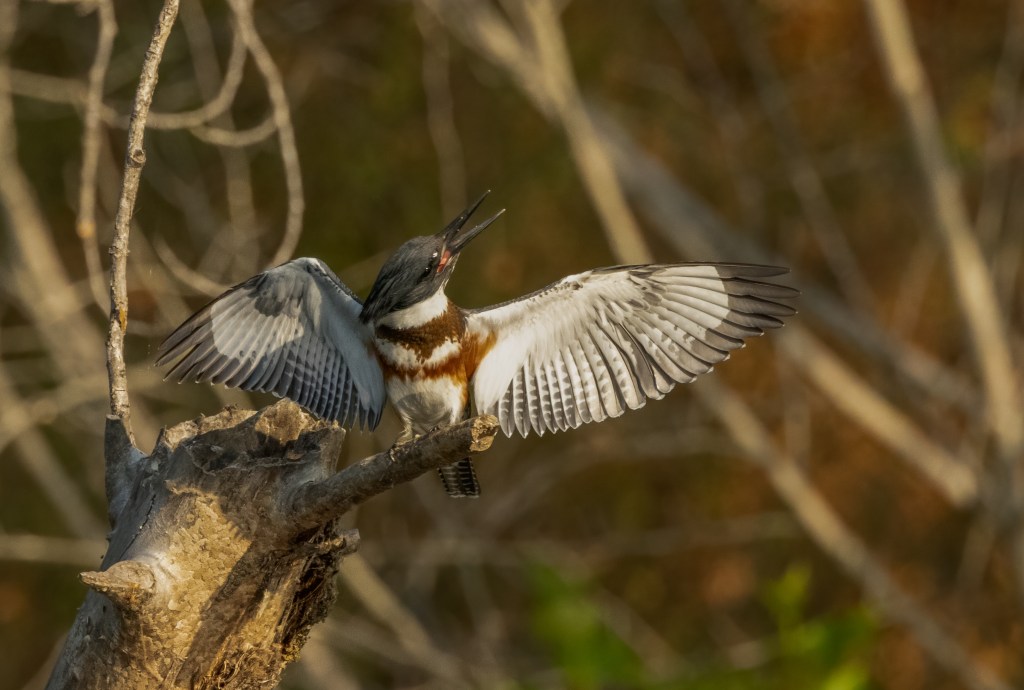
The birds go on with their business of making baby birds as spring moves into summer. Just as the sounds of the youngsters begin to rise up and the louder territorial and mate seeking claims recede, the Belted Kingfishers’ rattle returns like a bold intrusive cacophany, overtaking the rhythm. As the current year’s young first find their way along the banks of and and over the river there always seems to be an insistent fervor that is even more energetic than the every day mature kingfisher sounds, as though the young are being trotted out to demonstrate that they very much deserve the last spot in some exclusive kindergarten.
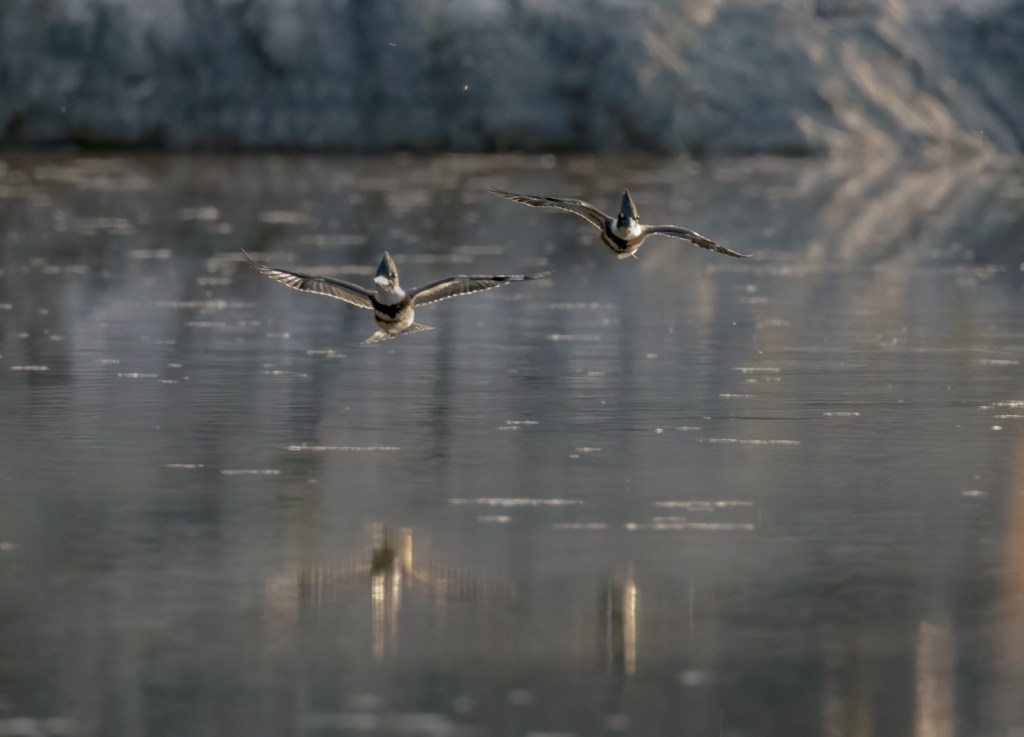
Along with the loud rattles, there is much repeated flying, swooping and dashing about to and fro without any interest in looking for prey. It seems to be all about making a big statement and showing off. They are fast and flashy fliers unmistakable as they glide low over the water and then high into the trees above it.
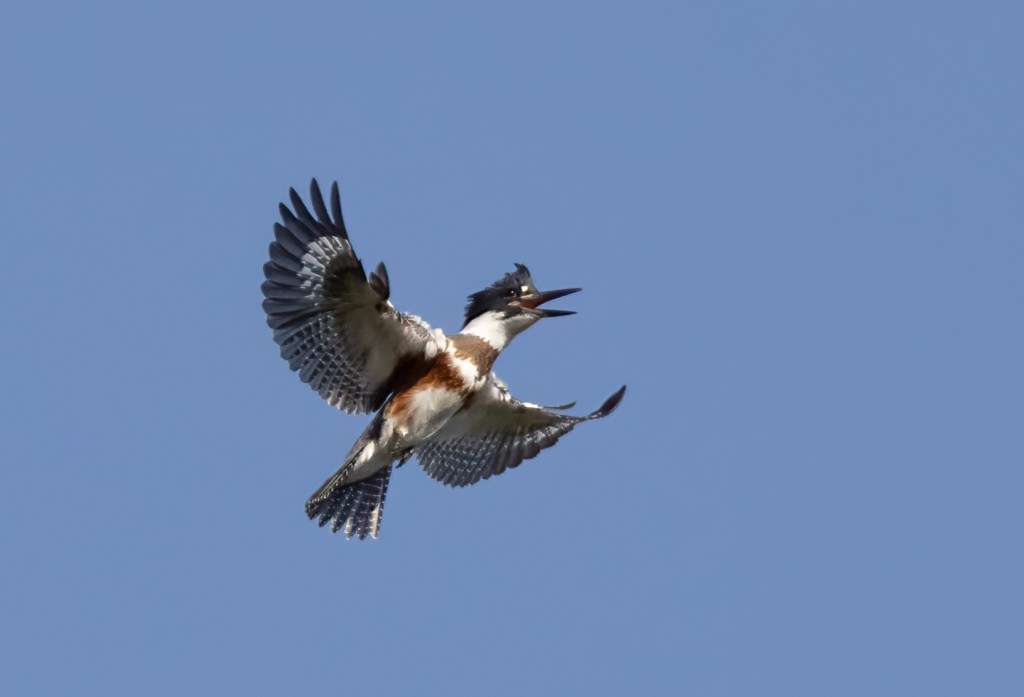
Kingfishers are usually quite skittish as they go about their normal business of patiently perching over the water, looking for and diving into the water for prey. If I’m sitting along the bank watching, they can spot me from quite a ways away, no matter how well camouflaged I think I am, and they nearly always veer away from me and out of sight as if to let me know they are not to be fooled. Once safely out of range of my camera lens, I will hear a mocking rattle. However, this debutant behavior lacks any reluctance to be photographed or observed and I can soak up as much Kingfisher mojo as I like.
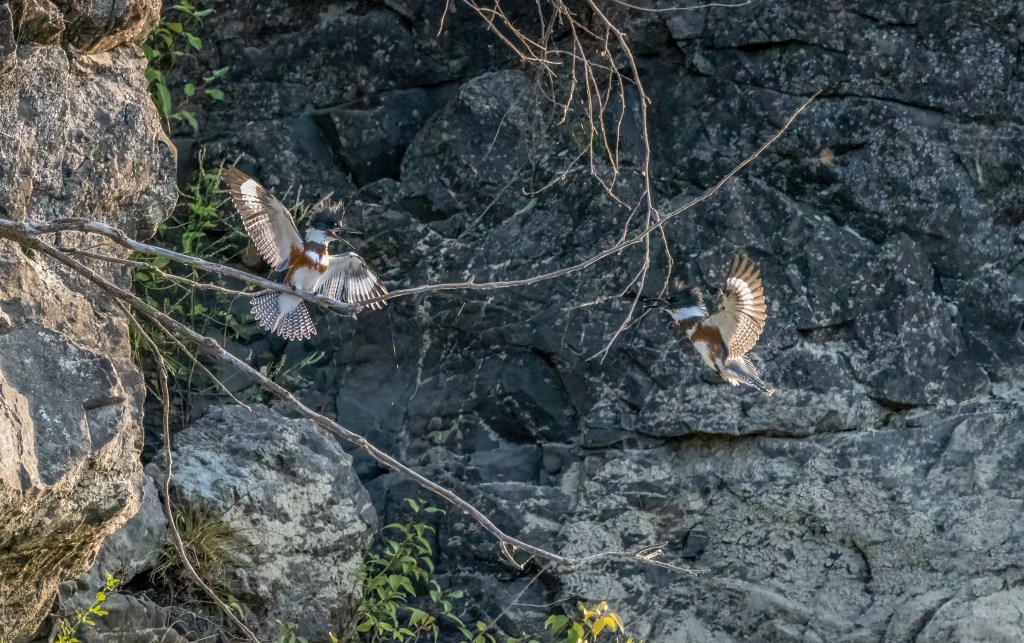
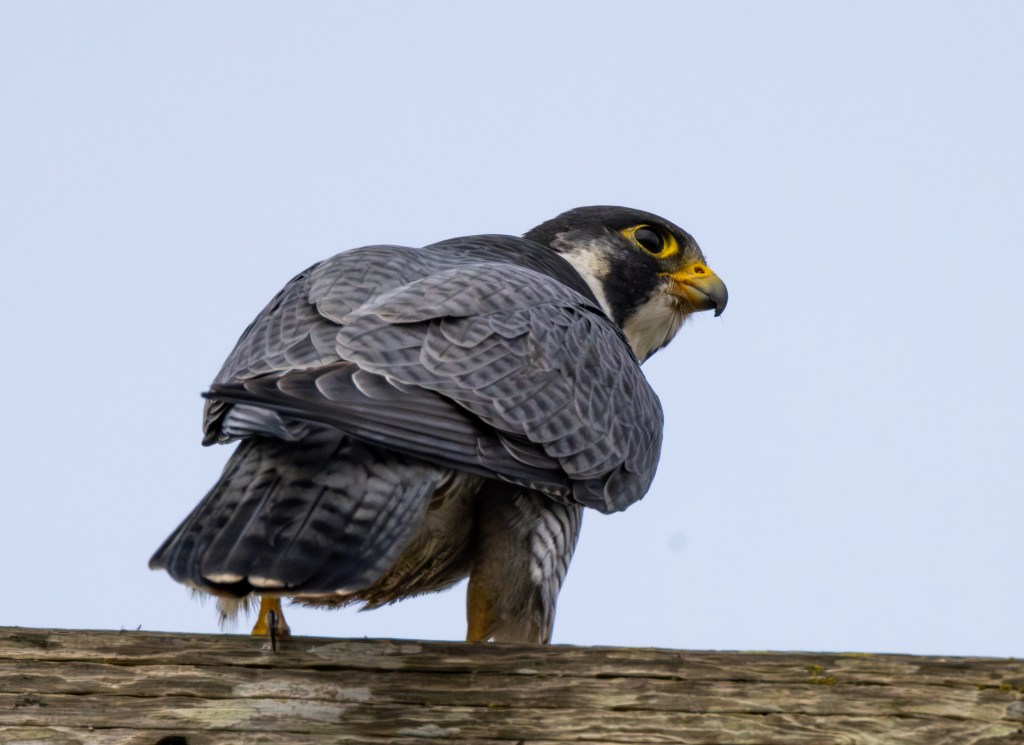
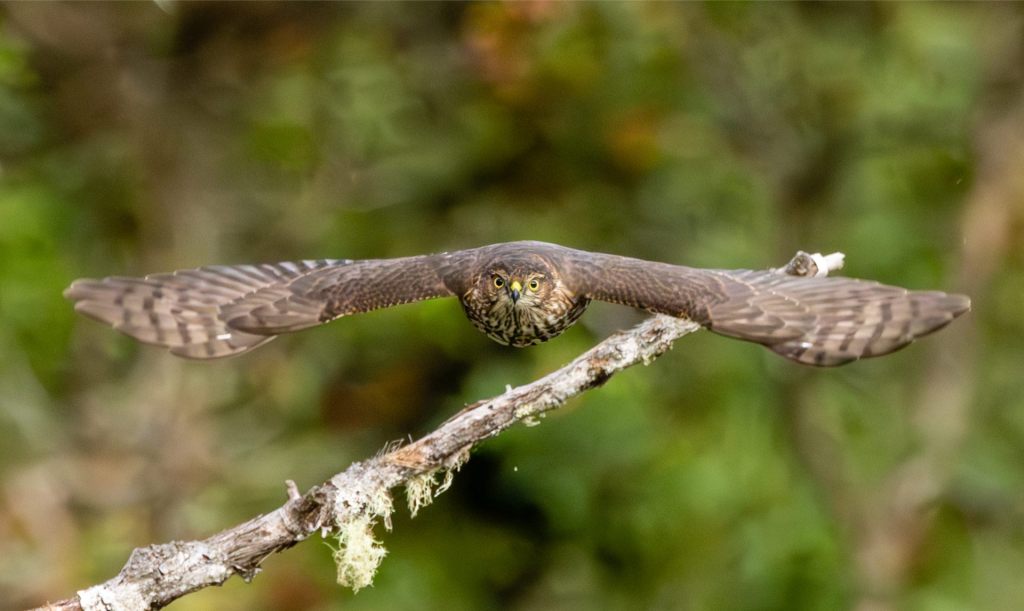
Some years two juveniles pair up for the shenanigans and one year they even tried to bring a young Sharp-shinned Hawk in to the fray. I’m not sure where the parents are while this unruliness is taking place, nor do I have a clue as to the purpose of it all.

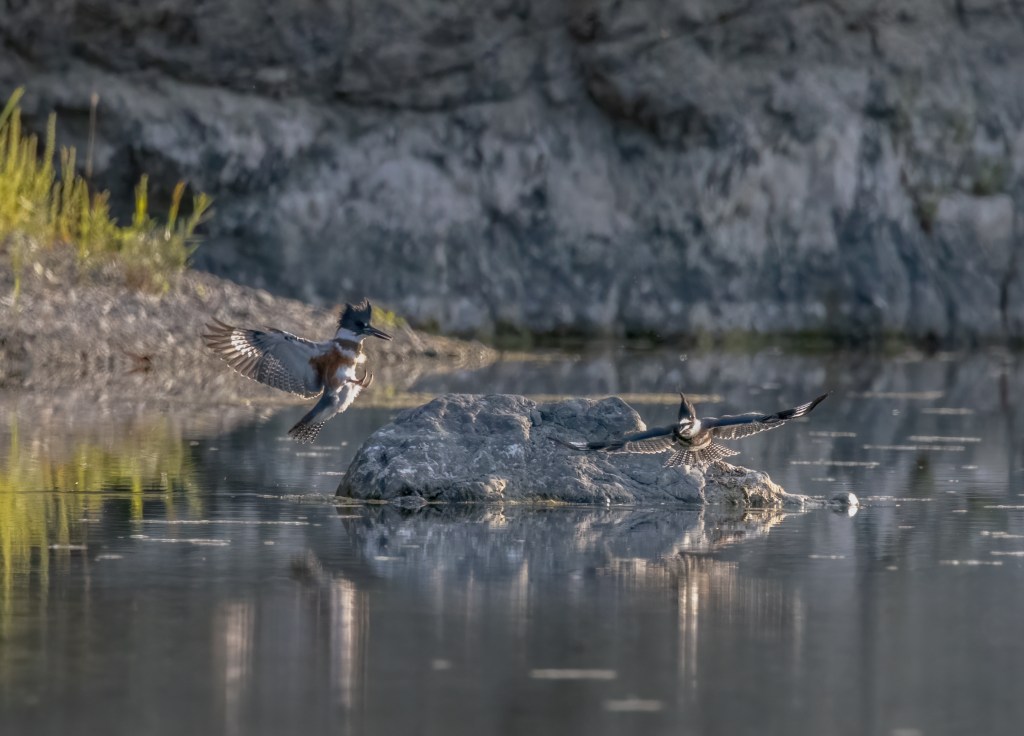
I do look forward to it, because despite its not so bucolic tone, it is a sound that tells me something exciting is going to happen.



 Free Range Photography
Leave a reply to latskojerry Cancel reply