Almost at the other end of Humboldt County, Trinidad is nearly two hours away by car from my Garberville home. It’s one of the state’s smallest incorporated towns with a slowly declining population of less than 500. Even though much of the town sits on a flat a couple hundred feet above the ocean, you are immediately magnetized toward the bay by the salt air and the downward slope of streets drawing you to the water.
The Humboldt coast is fascinating for its several lagoons, its “bottoms” made from tidal estuaries that snake many miles inland, and life-abundant Humboldt Bay itself, so upon a quick glance at the map Trinidad Bay’s little crescent might not catch your attention among those more unusual features. Elsewhere on the Humboldt coast the interface of land and water serves up crashing surf that belies the ocean’s name. But standing on the lip of Trinidad Bay’s calm and intimate shoreline, sheltered to the north by the imposing bulk of Trinidad Head and hemmed by rugged cliffs to the south, the Pacific is a beast tamed, at least on a mid-September day.
Dotted with dark, gnarled rock formations rising out of the bay, many patched with green plant life, others whitewashed by roosting birds, the water would call even the most ardent landlubber to investigate its charms. It was my great good fortune to spend a long morning as a client of Kayak Trinidad on a bird-seeking tour of Trinidad Bay, our primary hoped-for species: the Marbled Murrelet.

I got to sit in the front of a 2-person ocean kayak and my knowledgeable guide, who goes by Oso Feliz, did all the work as we looked for the Murrelets while I took pictures. Before launching I was supplied with a life vest and a dry suit to keep the elements on the outside. There was a safety talk and reassurance that we weren’t going to dump but if we did, everything would be OK. I’m convinced that getting into a dry suit should be an Olympic sport, but with patient assistance from Oso I was finally sealed and zipped into that diabolical garment and ready to go.

The first bird we encountered on the water was a Common Murre. In the same Auk family as the murrelet, these birds breed by the thousands along the Humboldt coast. We saw many adults and juveniles throughout the day, in a variety of plumages suggesting their age and molt status. We heard juveniles calling to parents, watched them dive and stay under for a long time, resurfacing improbably far away from where they dove.

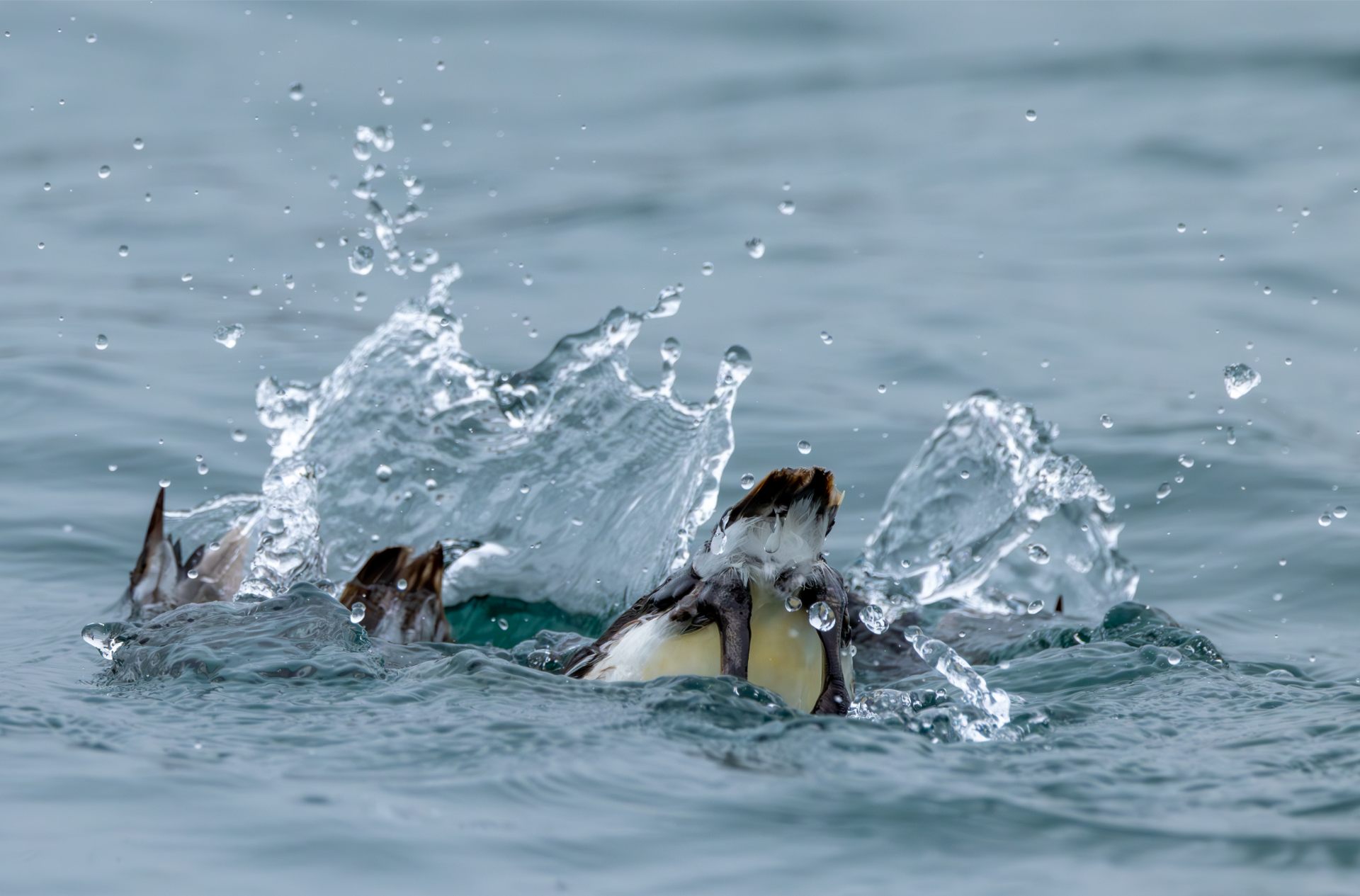
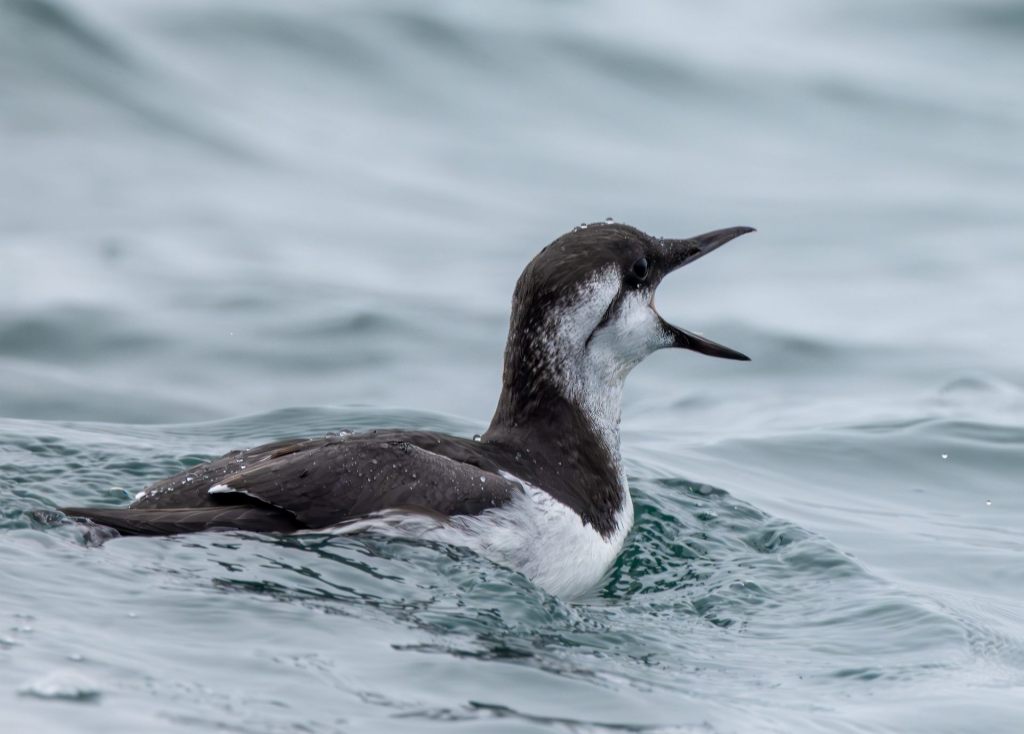
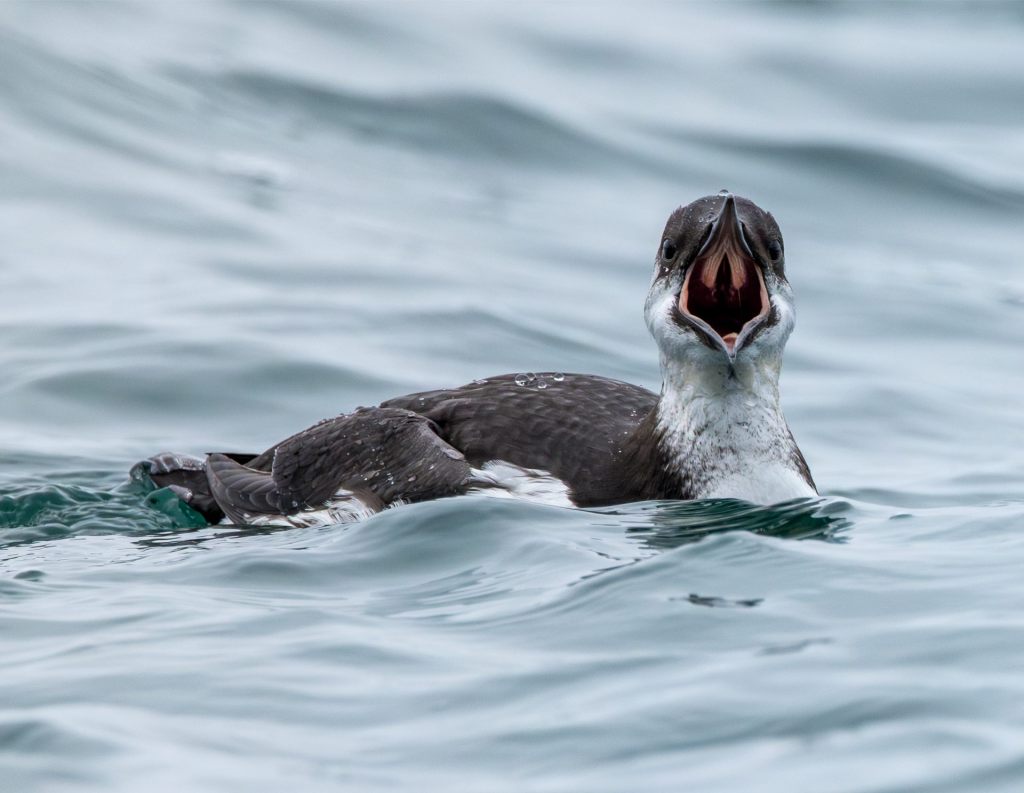
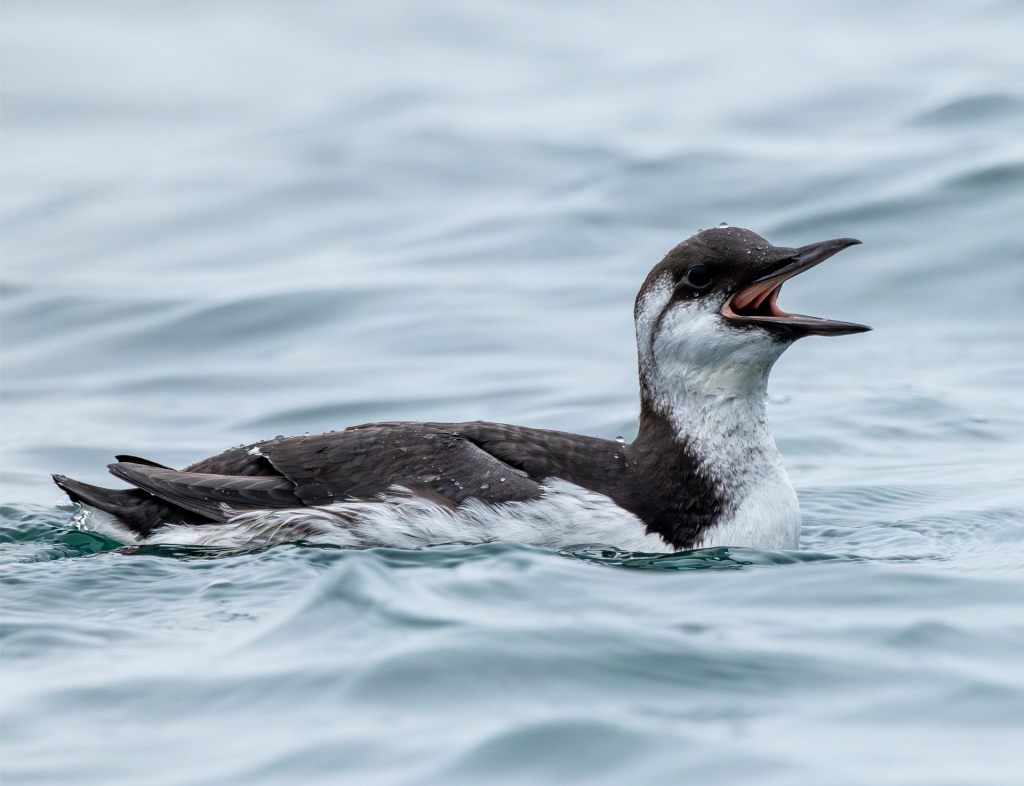
Common Murre calling
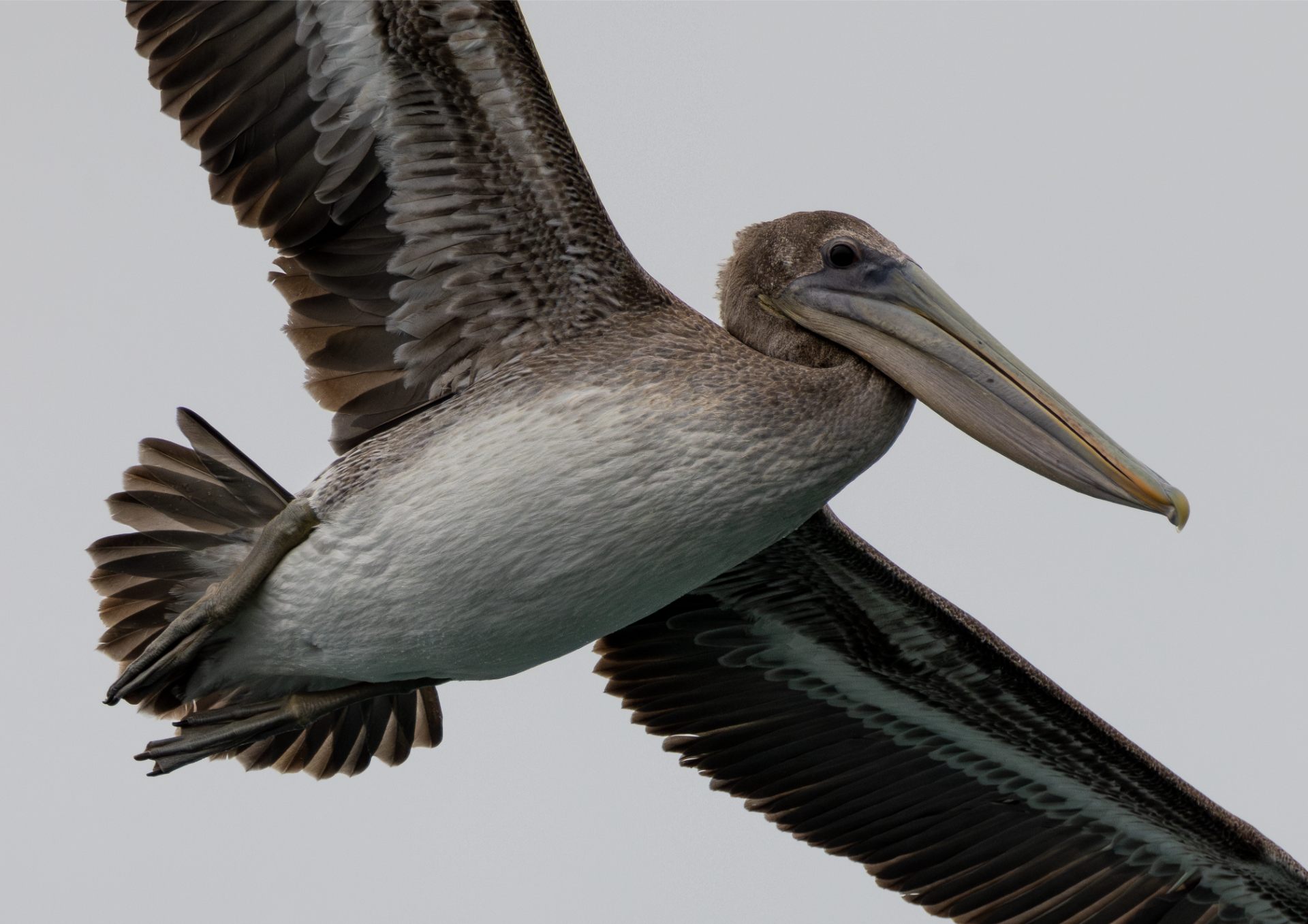
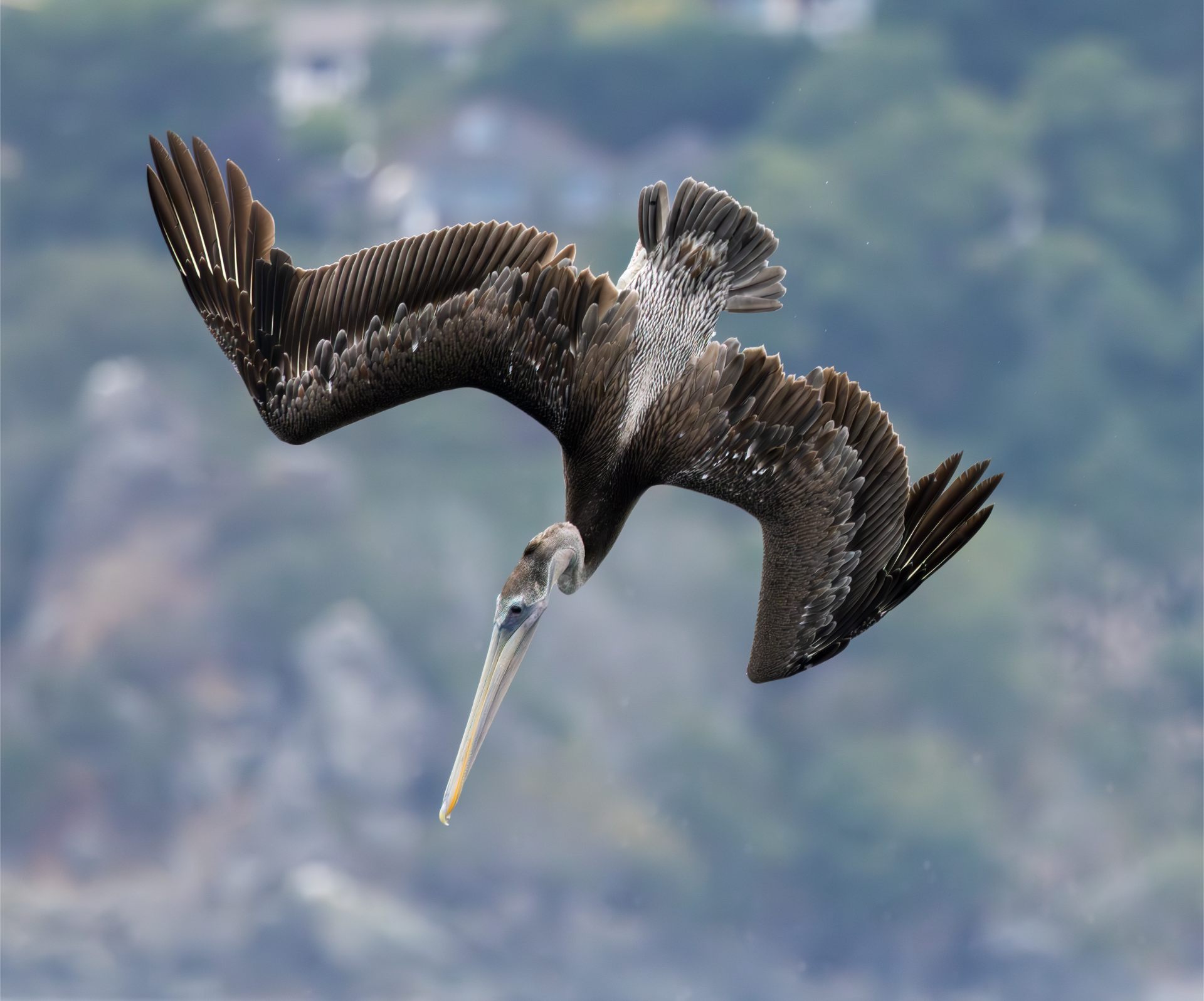
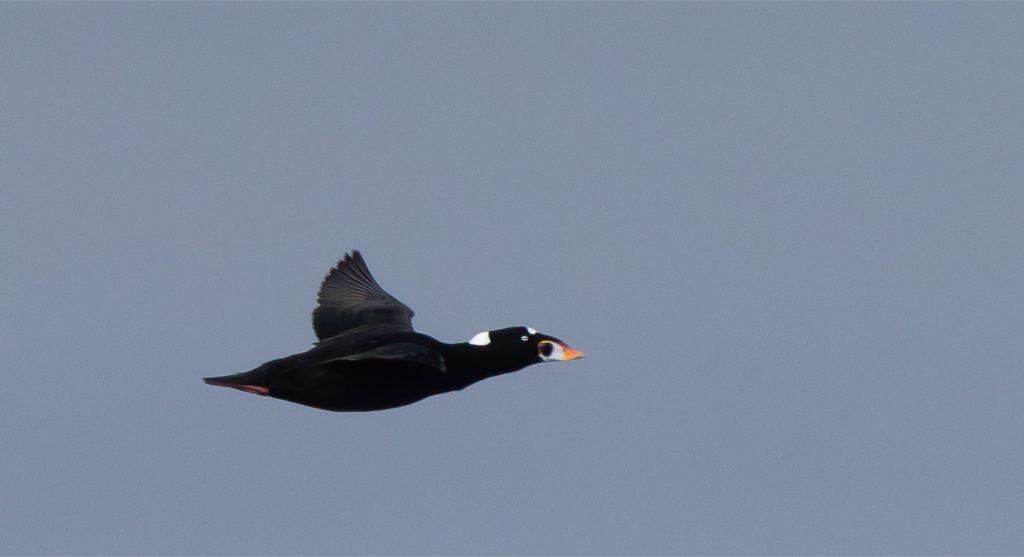
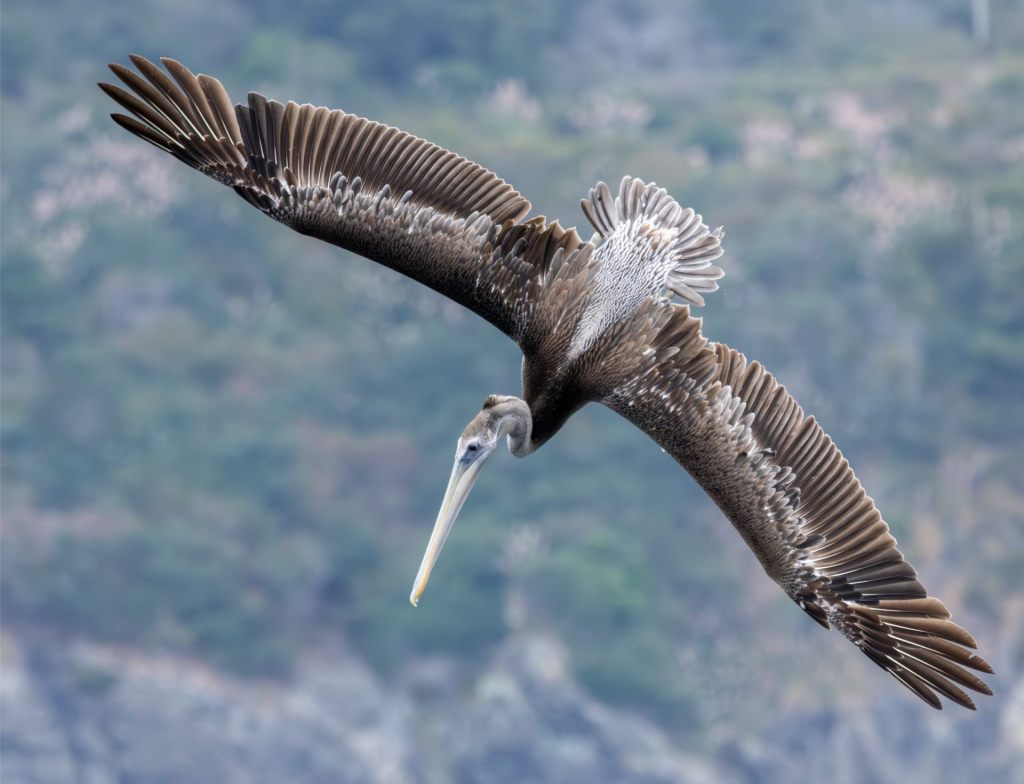
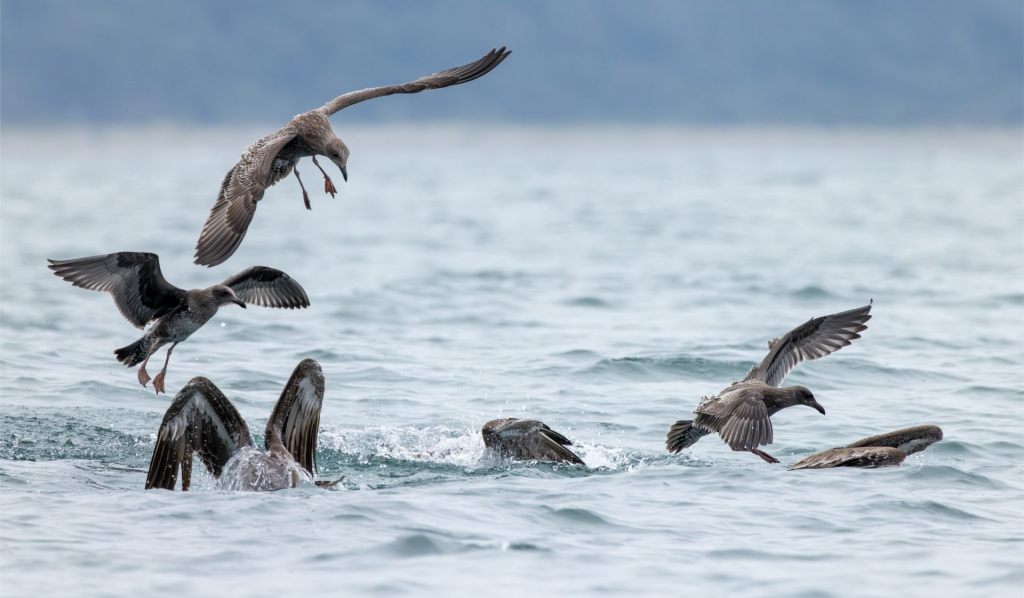
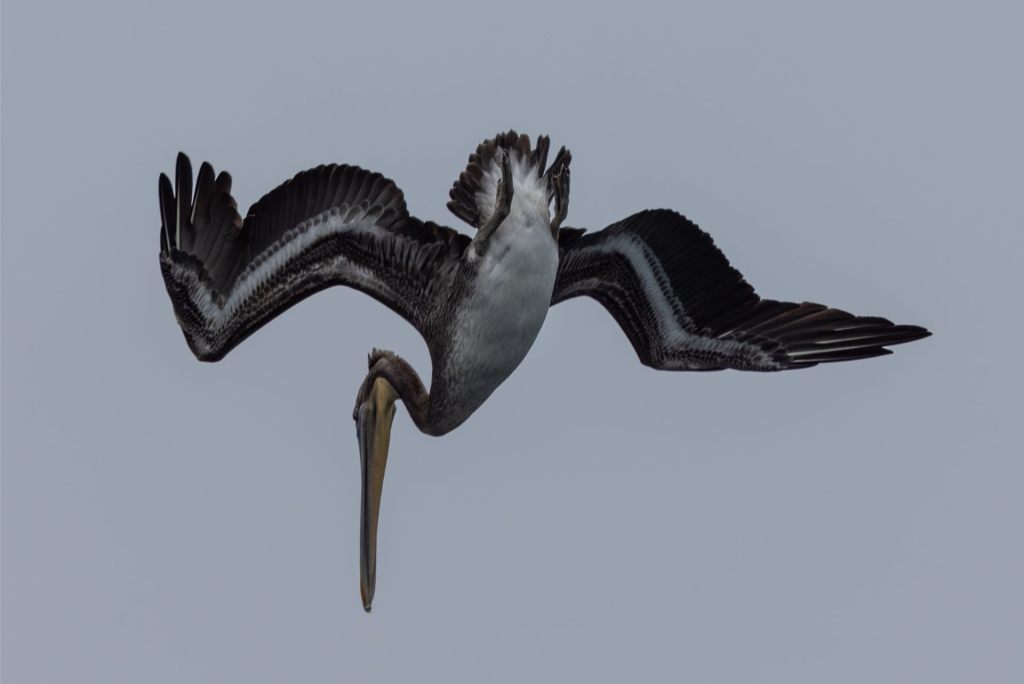
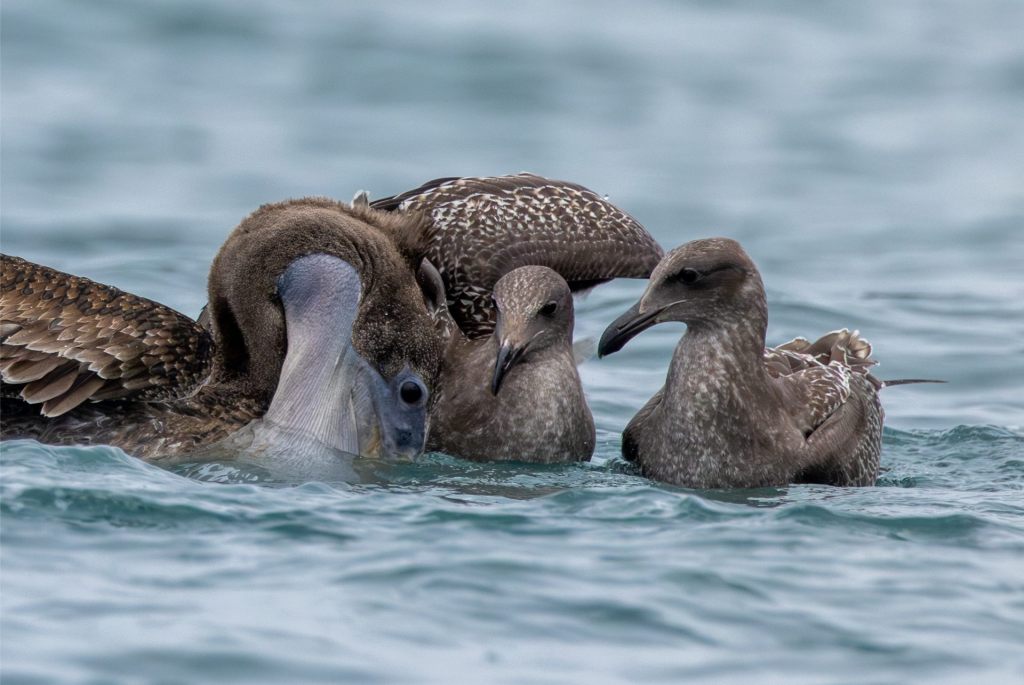
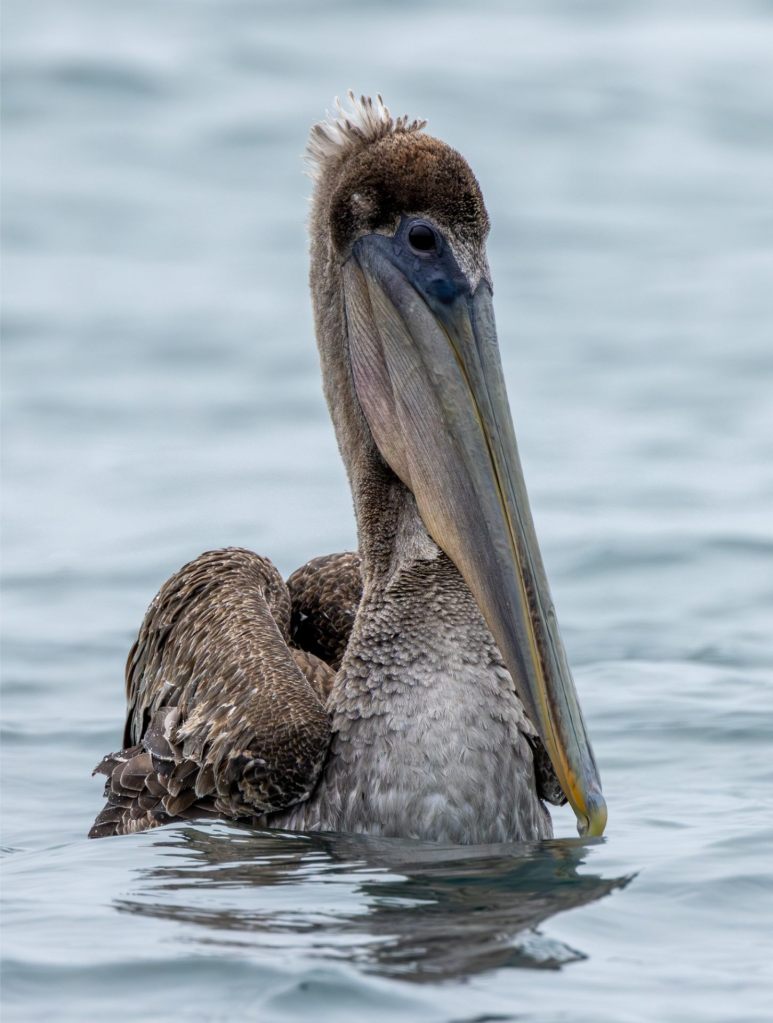
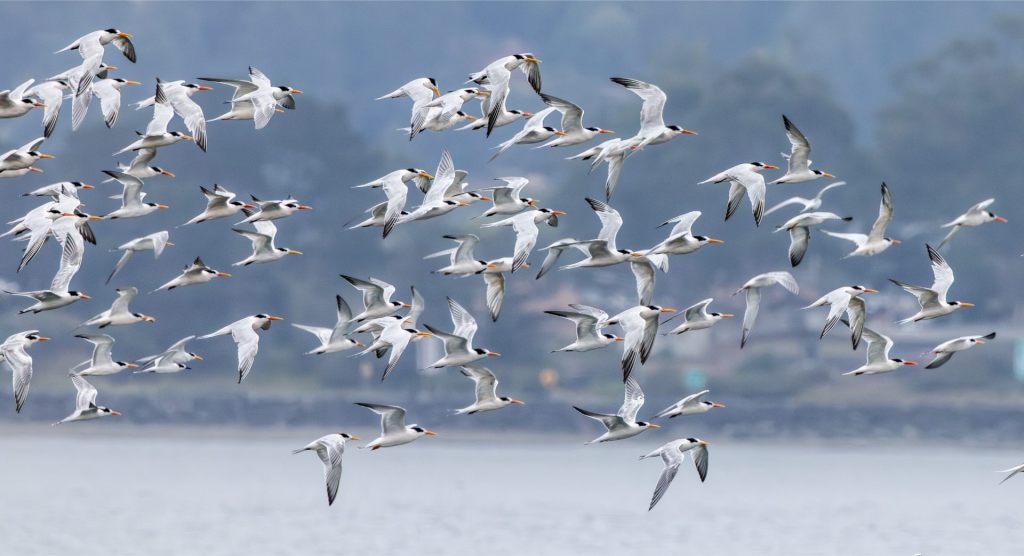
There were lots of Brown Pelicans around, mostly juveniles. Many had an entourage of juvenile Western and Heermann’s Gulls, hopeful of opportunistically stealing some of the prey gathered by the pelicans. Forster’s and Elegant Terns flew by a few times, as did numerous Brandt’s Cormorants and a couple Surf Scoters.
A wildlife biologist with encyclopedic knowledge of this environment’s inhabitants, and completely at ease steering the kayak around in water that was a bit rougher than we’d hoped for, Oso kept up a detailed narrative of what we were seeing and where we were going to maximize chances of finding the murrelets. Where pelicans and their groupies were, there were likely fish the murrelets would also be drawn to.

Sure enough, before long, Oso spotted a Murrelet. Then another. The 2 small birds bobbed in and out of sight as the swells lifted and dropped them as well as the boat. I was torn between looking with my eyes and trying to aim the camera at them in hopes of capturing a photo.

This small seabird is known for its unique nesting habits which because of clashes with human tree-harvesting habits have rendered the species endangered in Humboldt. The birds lay a single egg in a shallow depression among densely layered needles of an old growth conifer, usually at least 50 feet from the ground, often in the crown of the tree. With an incubation time of nearly a month, both parents tend the nest and after hatching, both parents bring food from the ocean, as often as 8 times a day, but the youngster is alone most of that time except for the first few days after hatching. After a month, the food deliveries cease, and the downy brownish chick transforms into a fully feathered black and white bird who miraculously figures out how to fly on its own to the sea, sometimes at a distance of up to 20 miles. It wasn’t until the 1970s that this species’ remarkable nesting habits were known, so secretive is the placing of the nest.
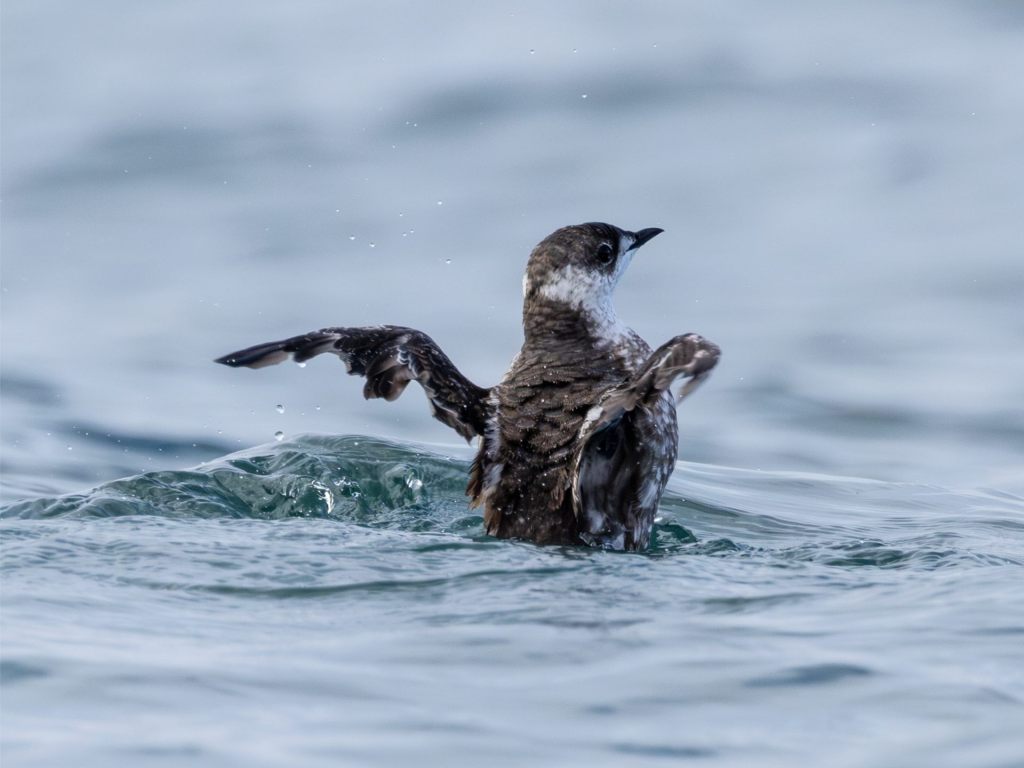
Further up the Pacific coast, Marbled Murrelets are not threatened, and are even common along the Alaskan and Canadian coastlines. I have seen them a time or two before from land and at a distance, so the opportunity to be on the water with one was something not to be missed.
Before long, the murrelets disappeared into the depths. They, like their larger cousins the murres, swim with their wings as if flying, and steer with their webbed feet. We didn’t see them again, but I always feel a little greedy when I’ve been treated to seeing a special bird and then expect to see more, so I was happy to turn my attention to the many other creatures all around.
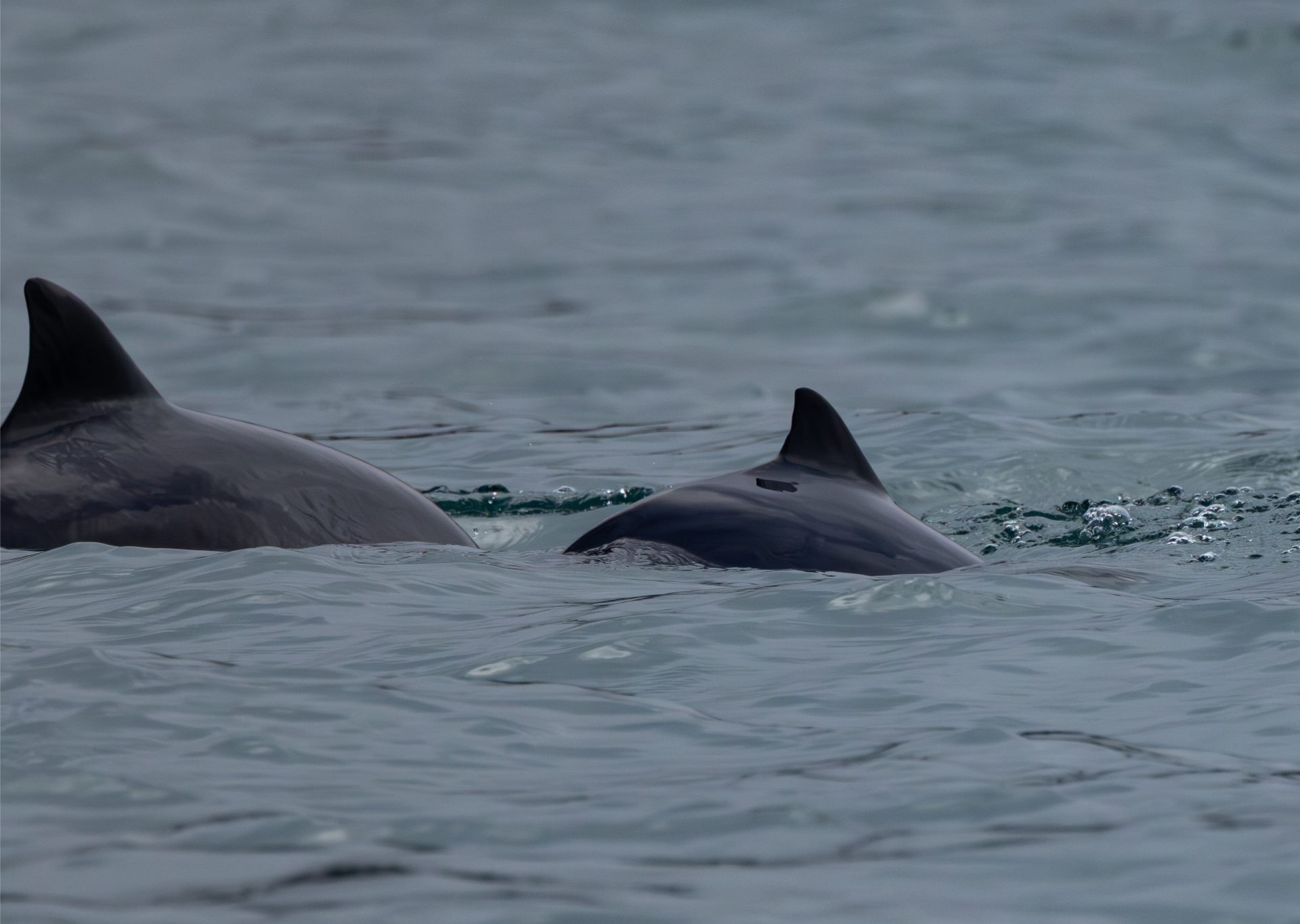
A couple of Harbor Porpoises made a brief appearance, a mother and juvenile, jumping in unison out of the water.
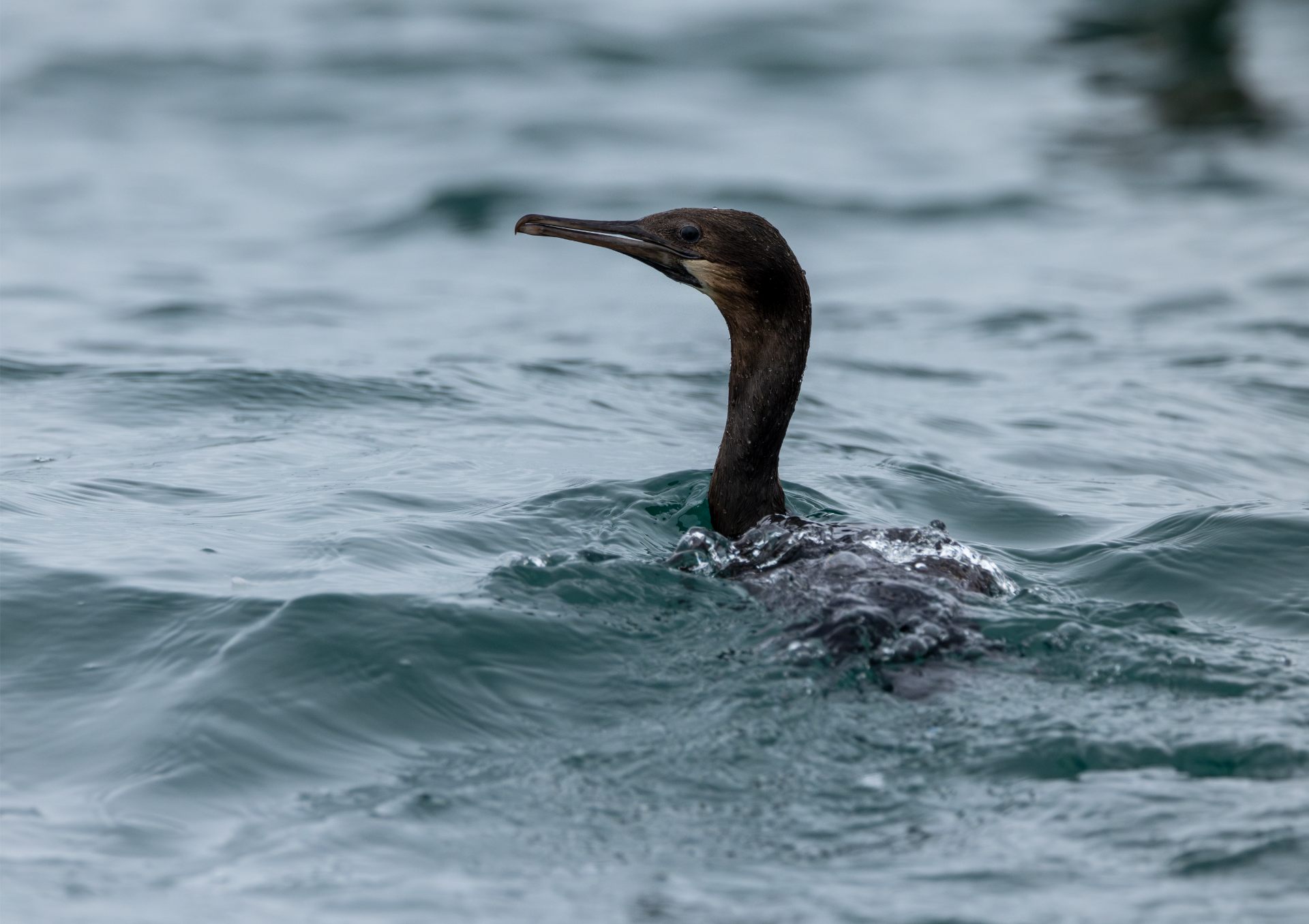
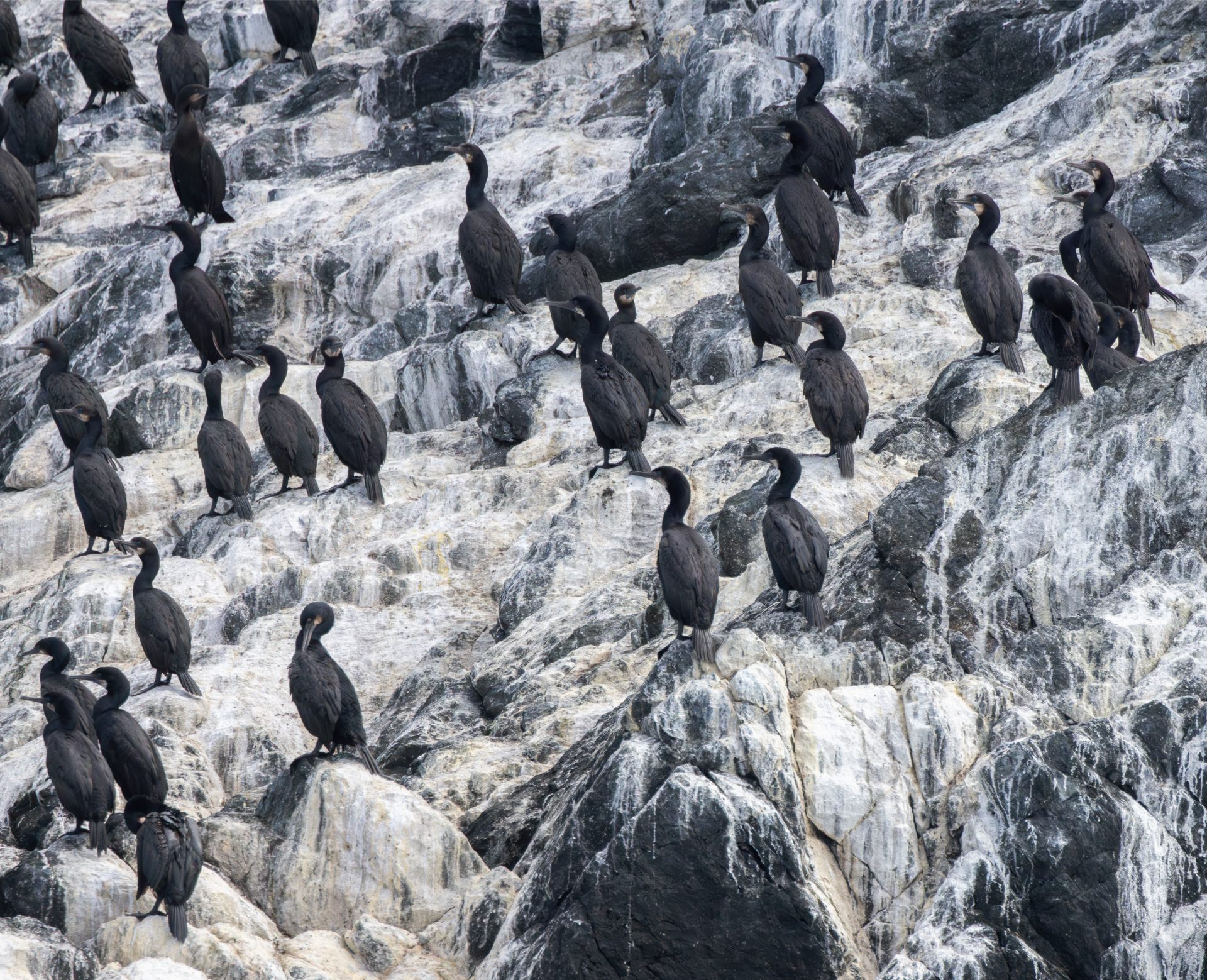
There were a lot of Brandt’s Cormorants, a slender relative of the Double-crested Cormorants we sometimes see on the river back home.
We saw this scene over and over: Pelicans diving into the water to catch fish were immediately surrounded by gulls and cormorants attempting to share in the catch. As insistent as the potential thieves were, the action never became hostile. The pelicans never shooed the other birds away and the other birds never became aggressive toward the pelicans.


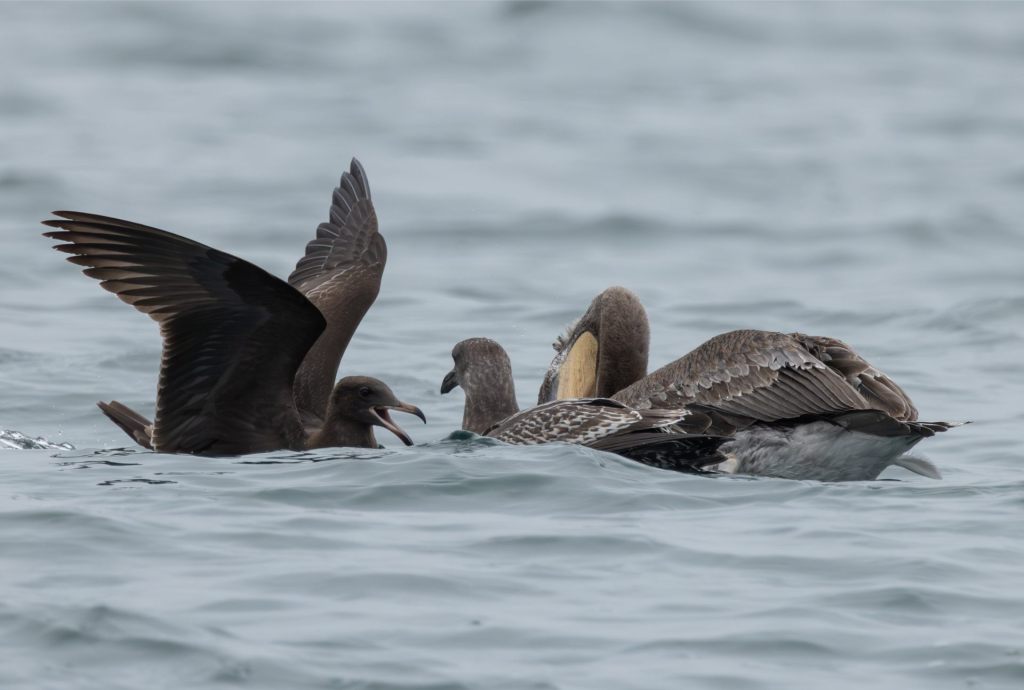
As we got further from shore I realized I had no sense of direction or distance in this unfamiliar realm, yet rather than unsettled, I felt a calming sense of surrender, layered under an excitement for what might turn up next. Maybe that just proves what a rube I am when it comes to boats on the ocean, but I’ll own it.
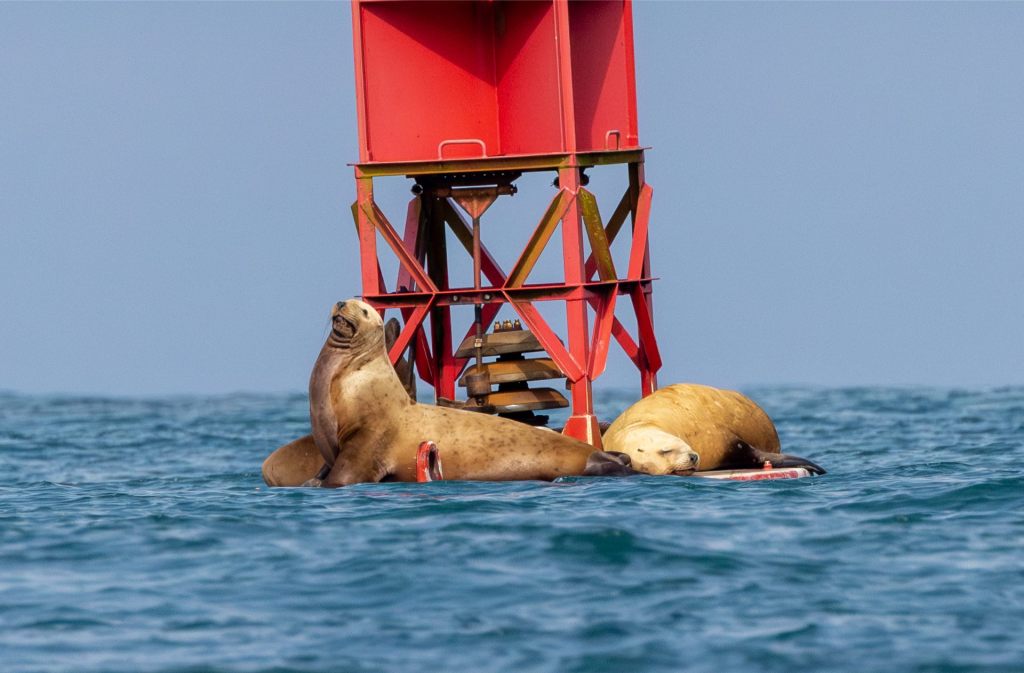
Oso kept offering to extend the trip and I was more than happy to do so. We made our way out toward a huge red buoy, upon which lounged what looked like a whole family of Steller’s Sea Lions. These massive beasts range along the northern Pacific coasts of North America and Asia. Males can weigh up to 2500 pounds and females up to 1000 pounds. Dwarfing the California Sea Lions we see at Shelter Cove, the adults are lighter in color and Oso pointed out their lion-like visage as well as their roar-like vocalizations we could hear even from a distance.
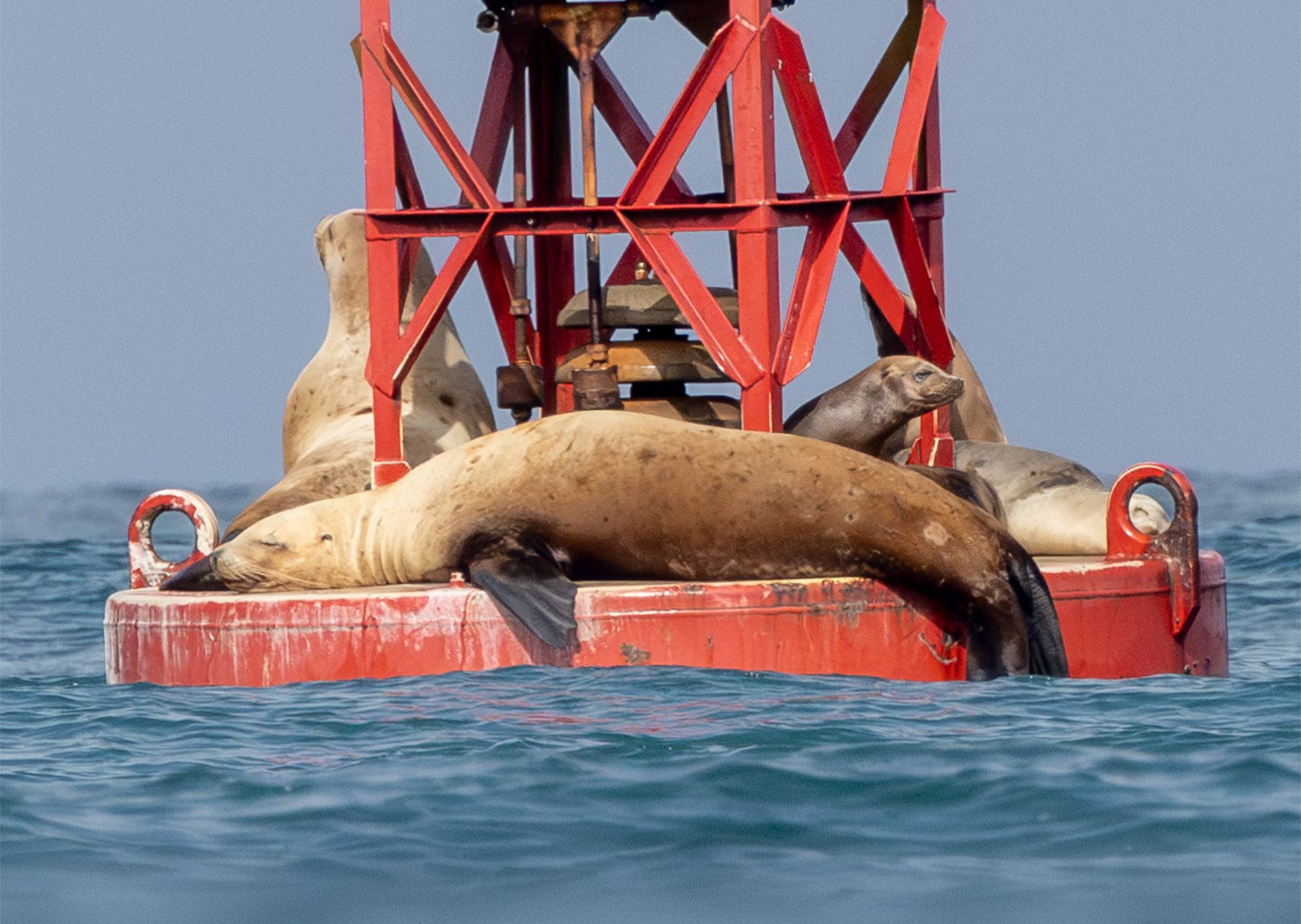
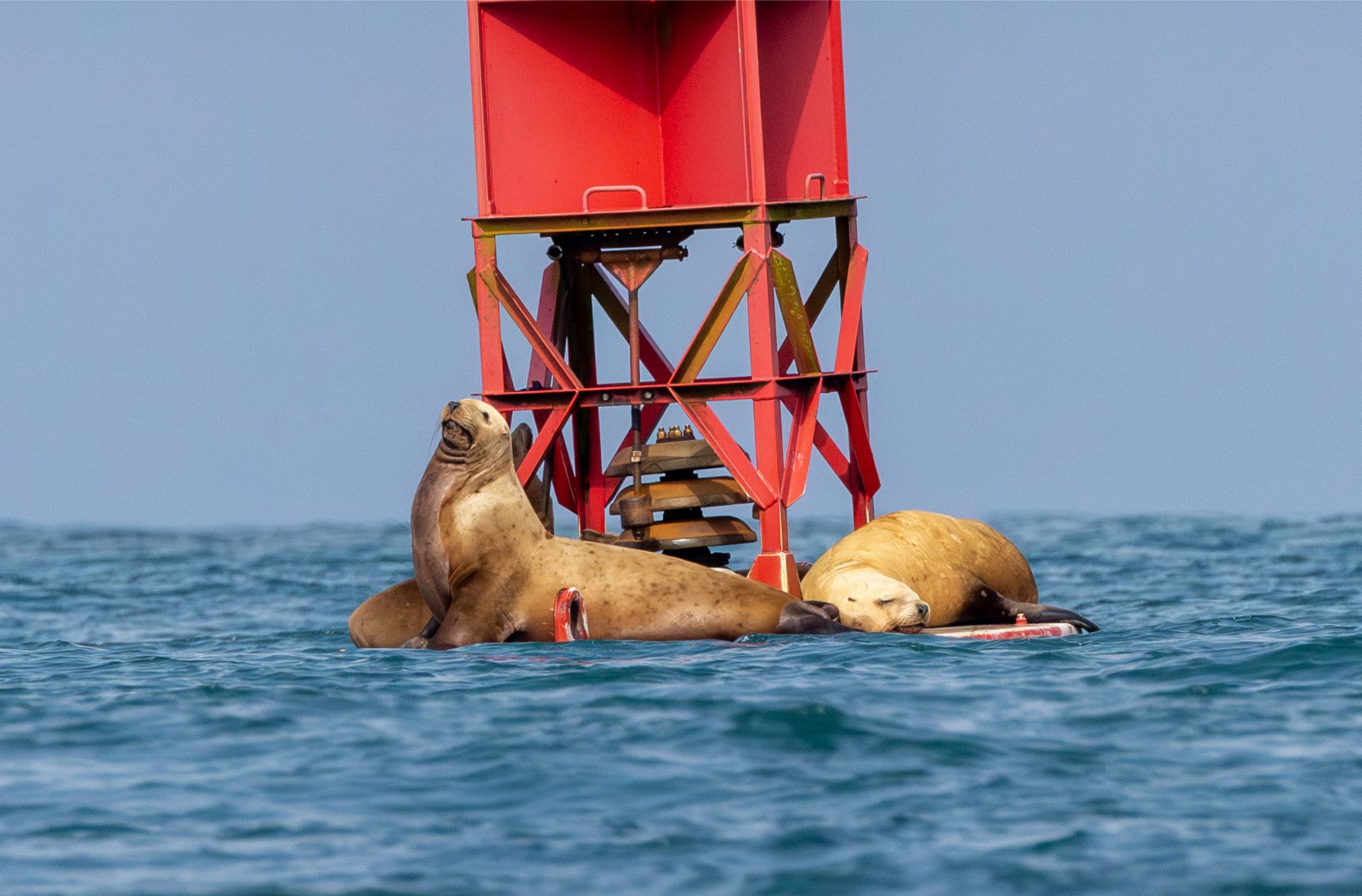
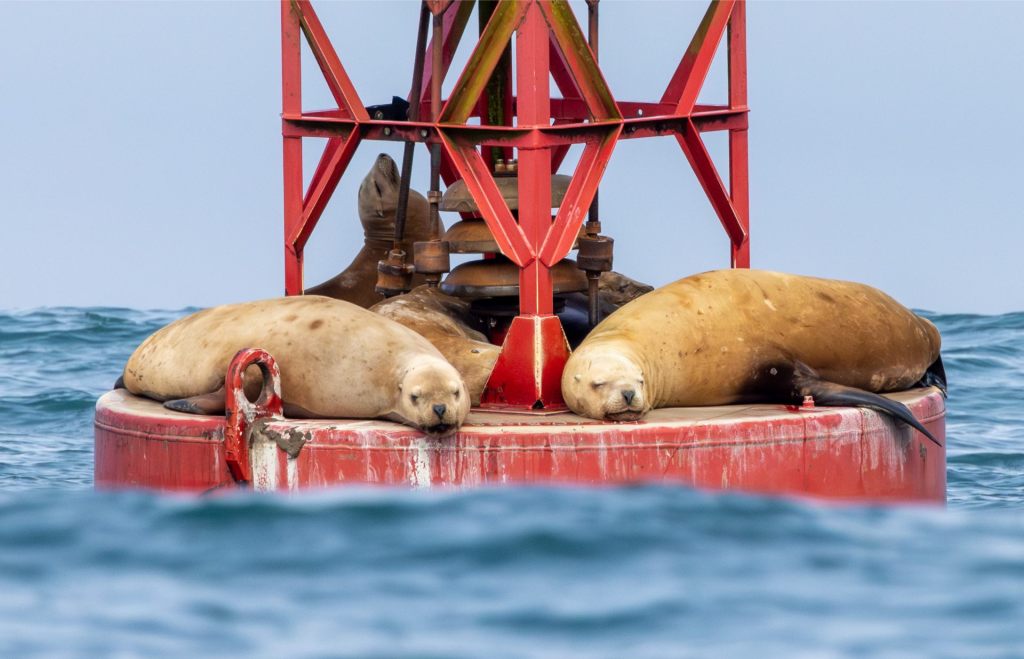
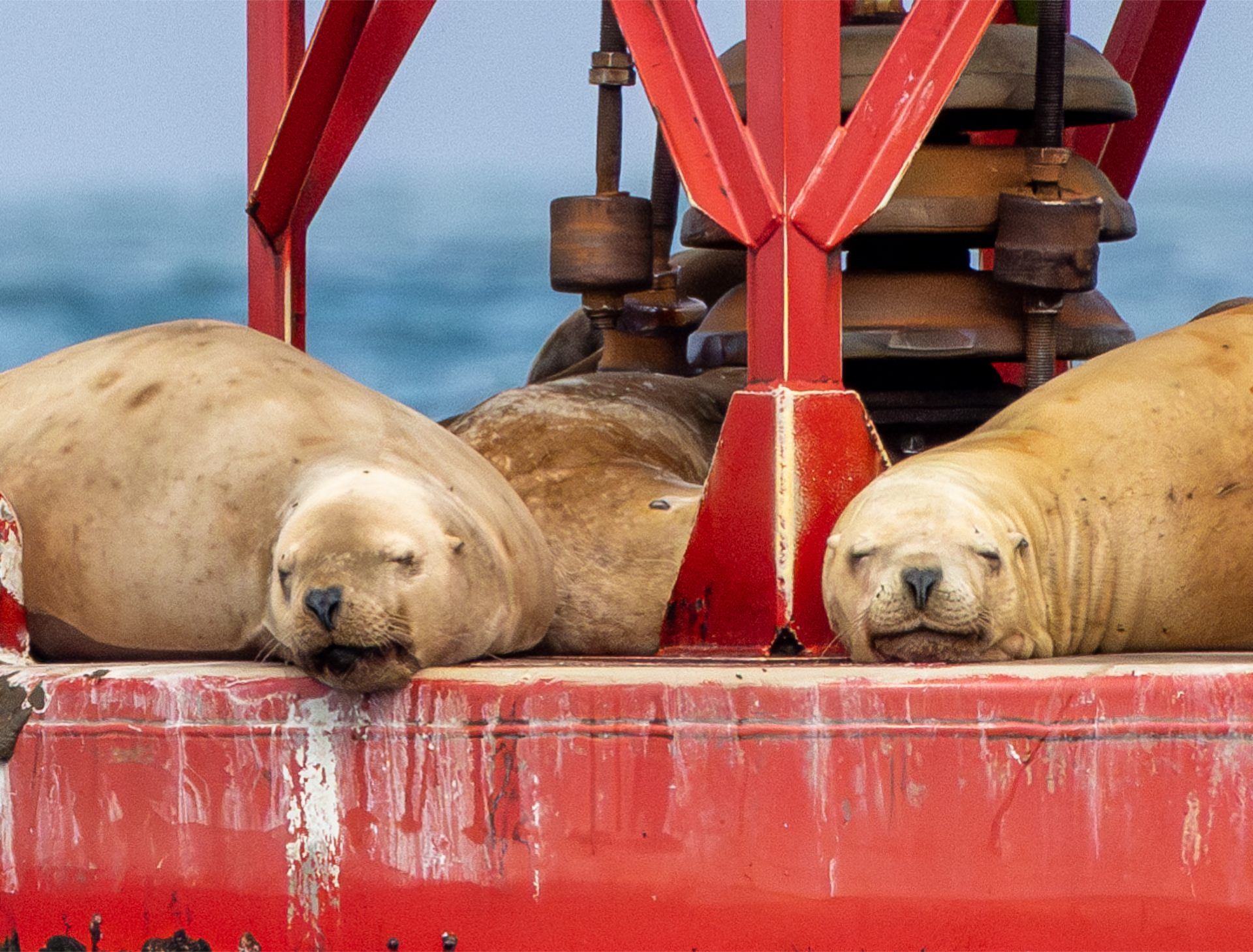
After watching them for awhile we circled around Pilot Rock where dozens of Brandt’s Cormorants rested, and then began to slowly make our way back to the shore.
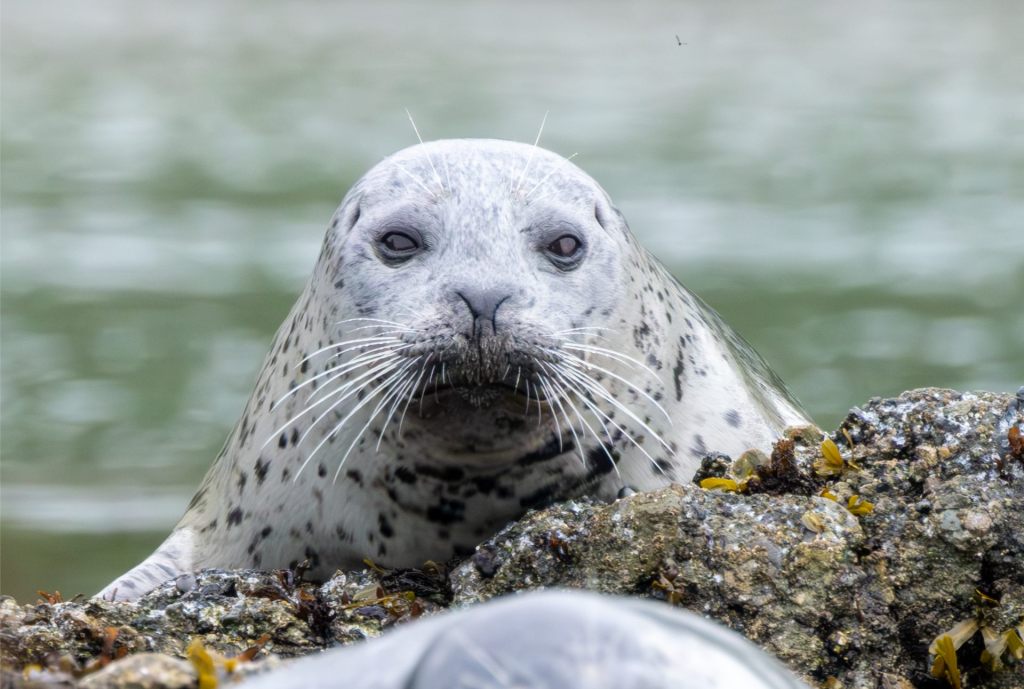
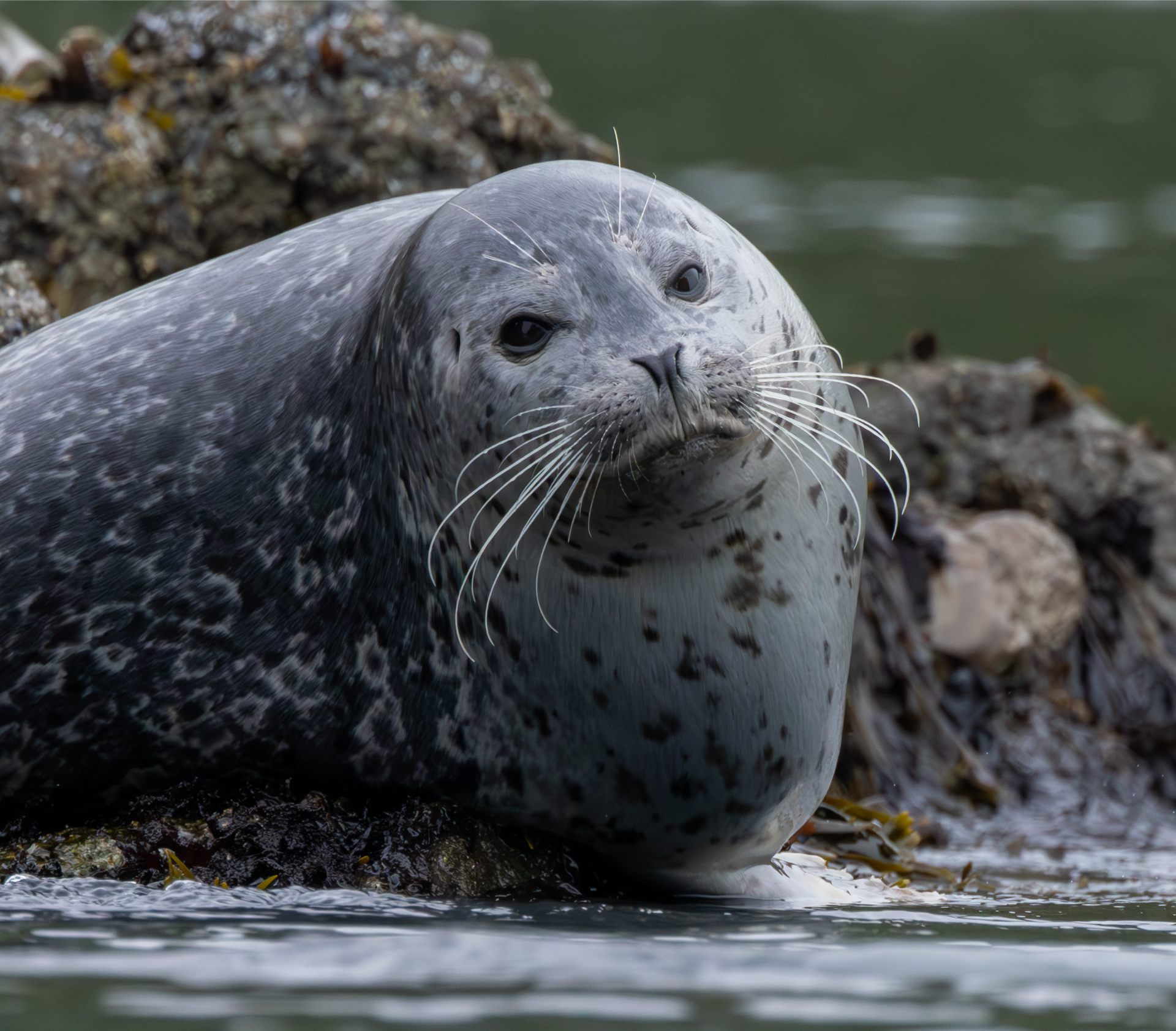
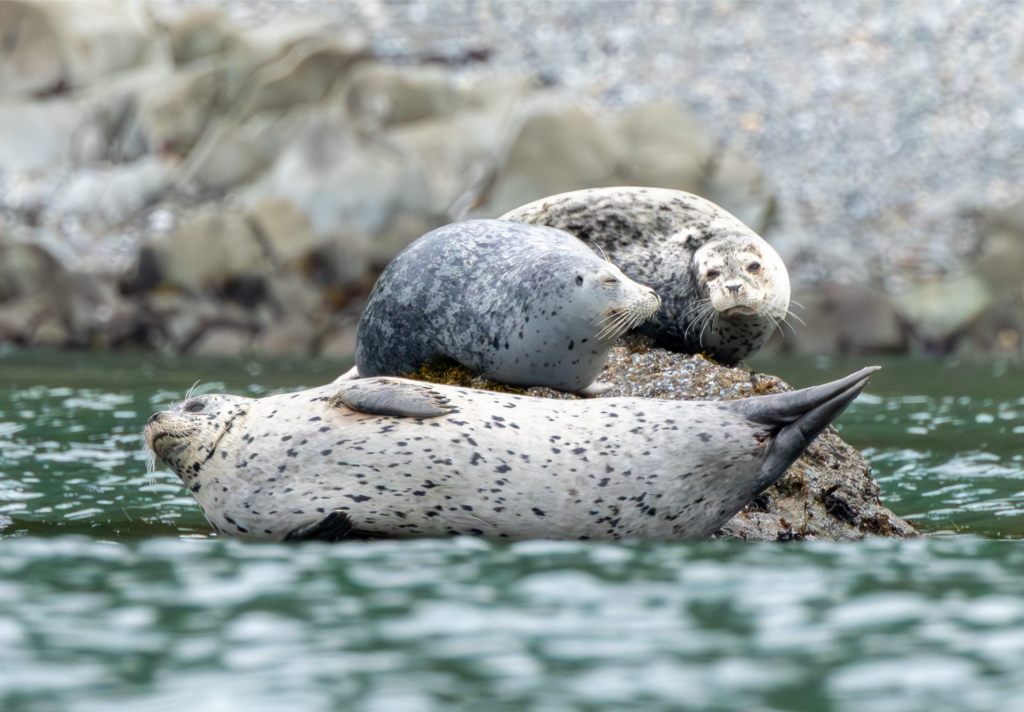
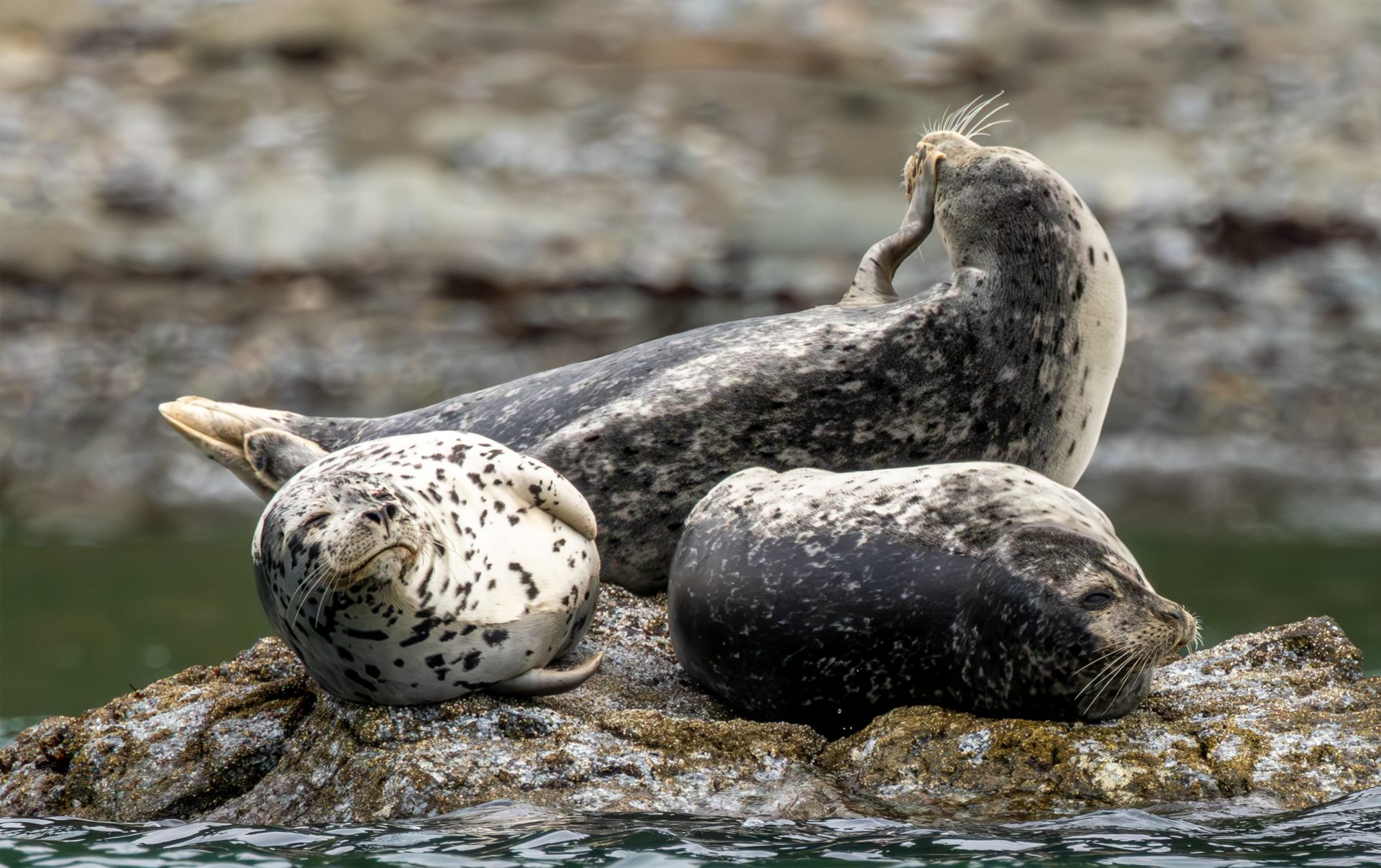
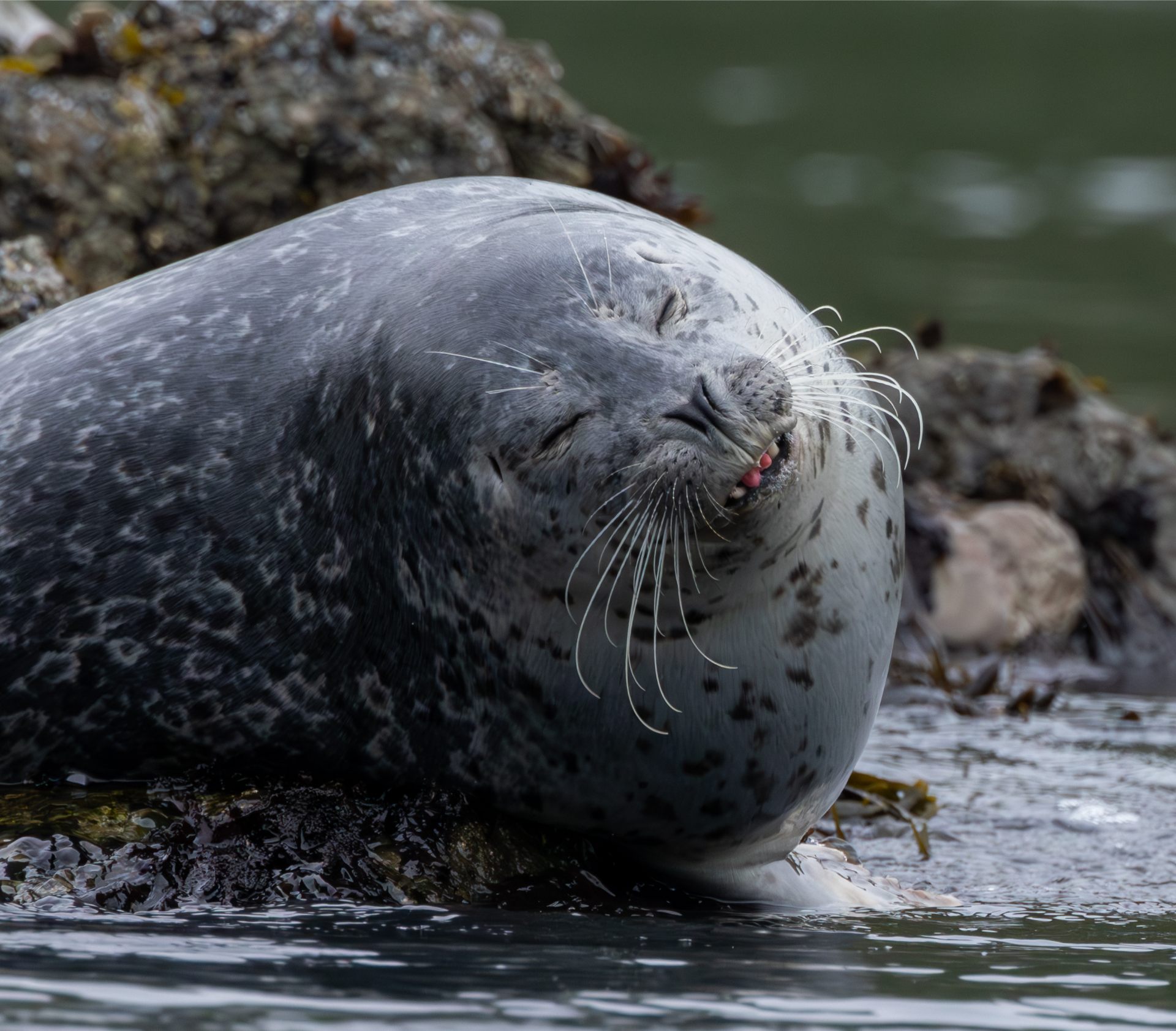
We passed a few groups of Harbor Seals, hauled out on rocks not far from the beach. These are the seals we see in abundance at Shelter Cove.
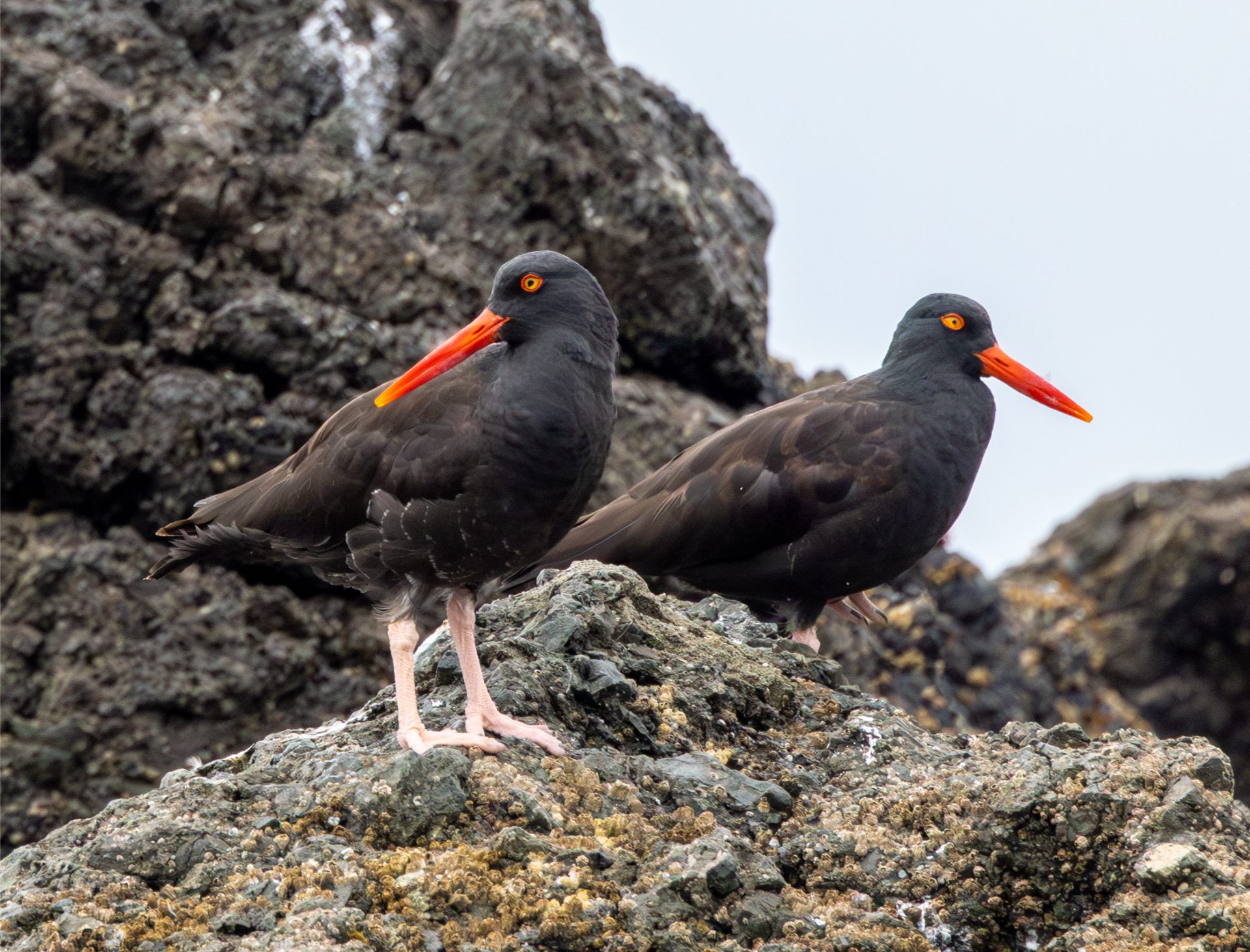
There were several pairs of Black Oystercatchers standing on some of the rocks, another bird we sometimes see at Shelter Cove. A plain dark bird with bright orange eyes and a long, stocky neon red bill used to pry prey off of rocks, Black Oystercatchers range all along the Pacific coast of North America, from southern California to Alaska.

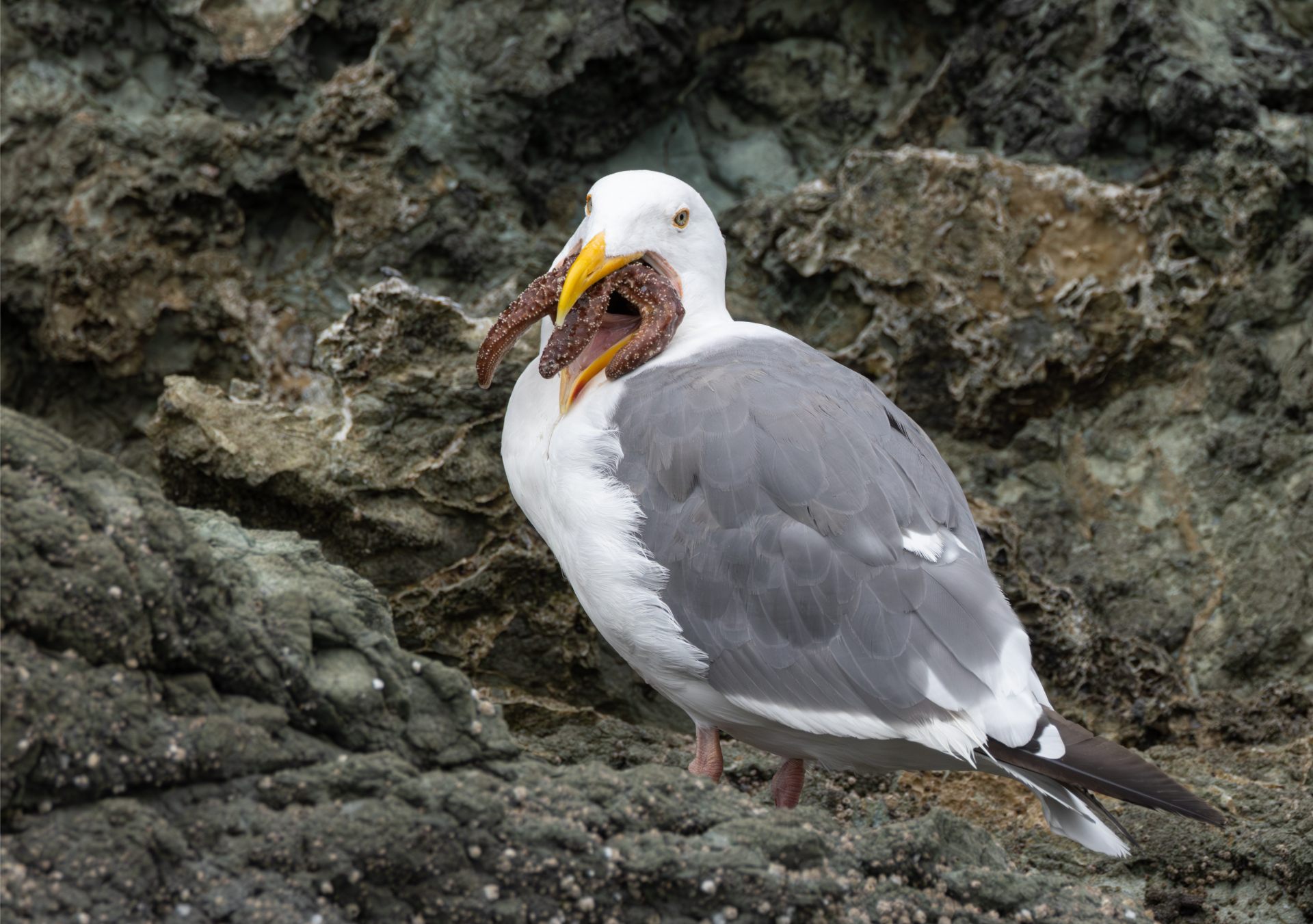
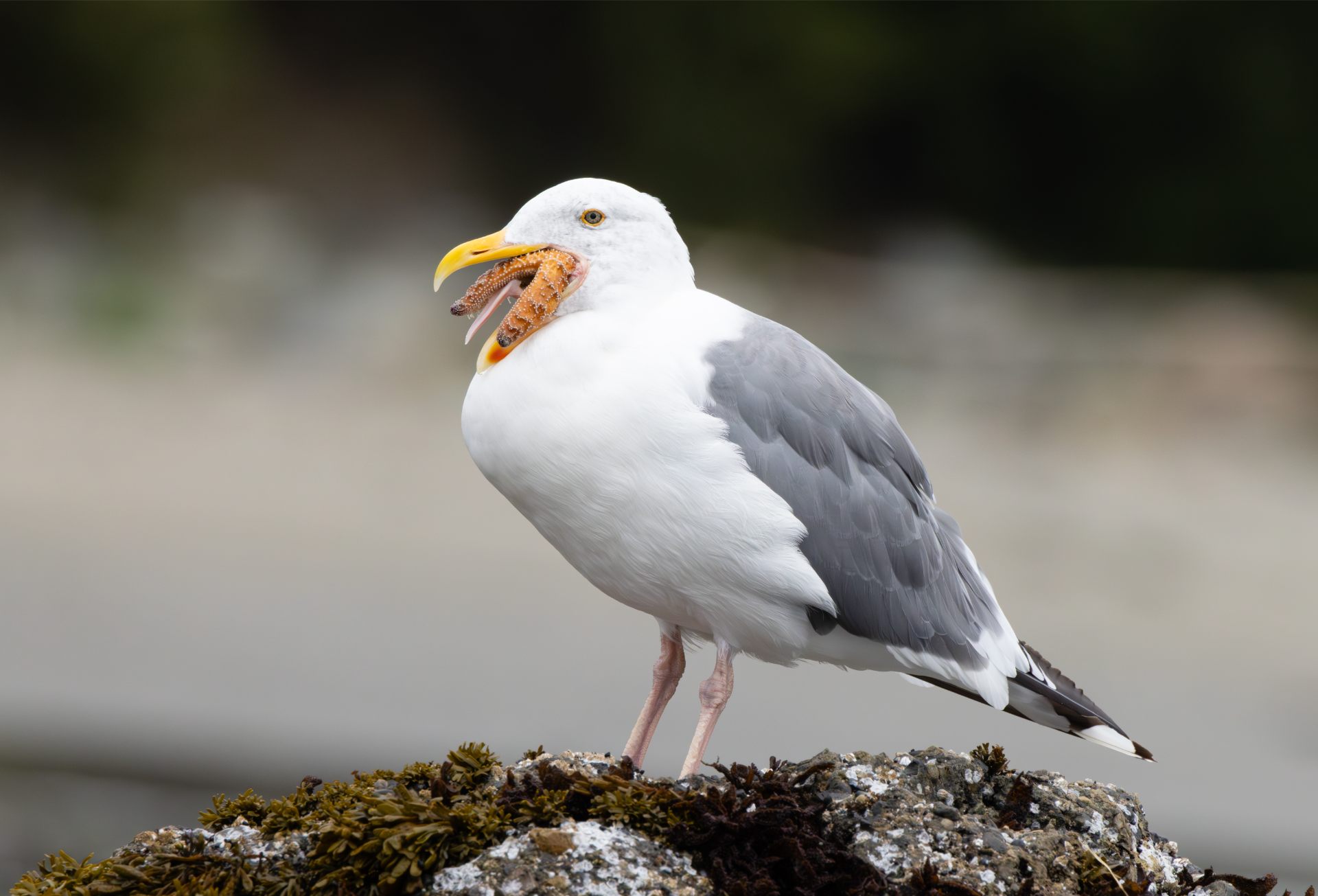
As we neared the shore, I was feeling a little sad that this time in the healing waters of Trinidad Bay was coming to an end. But the sight of a couple Western Gulls giving new meaning to the term “slow food” brightened the mood. The gulls had captured starfish too big to swallow in one gulp and were using their strong bill and throat to hold onto the prey as they patiently waited for it to weaken so the well-defended animal could be consumed. I’ve watched herons and egrets choke down huge fish and gophers with some difficulty, and I’ve seen a Common Merganser take over ten minutes to swallow a Pacific Lamprey that might have outweighed her, but this looked like a task requiring even more patience. It can take over an hour for a starfish to succumb and be completely swallowed.
And so, an unforgettable morning came to an end. Being right on the water with creatures as special as the Marbled Murrelet, as fascinating as Brown Pelicans, and as thrilling as marine mammals provided a reset to the spirit and will stay with me as a reminder that we humans are not separate from the interdependence of all life forms. Make the trek to Trinidad and treat yourself to this life-affirming connection.
Big shout out to Kayak Trinidad (kayaktrinidad.com), locally owned and providing guided trips, kayaking lessons, and retail sales as well as rentals of gear and boats. “We’re all about connecting folks to the ocean and the area’s waterways safely and responsibly,” says owner Jason Self. As a terrestrial elder with more orthopedic issues than teeth, I was generously accommodated, and can vouch for the company’s statement that no experience is necessary and all ages are welcome.


 Free Range Photography
Leave a comment