The heat has been intense in Garberville lately, so much so that just after a cool shower provides a bit of a reprieve, sweat glands immediately get back to work. The best remedy for such a day is a trip to Humboldt Bay where the bracing coolness and salt tingle in the nose made me almost forget cursing the sun just a few hours before.
The tide was out but starting to come back in when I arrived at the Elk River Estuary, so an impressive line-up of birds was moving around as the water slowly crept higher. With many shorebird migrants already beginning to make their way to wintering grounds bulking up the roster of residents it was hard to decide where to point my camera.
Below is a sample of the wide variety of species I was able to catch in less than perfect conditions, giving a monotone look that at the time was soothing to eyes that had been squinting in intense sunlight the day before. Some birds are molting–shedding old feathers to make way for new–so you’ll see some gaps and some stubby new feathers in many wings. Others are in juvenile colors, fresh and dapper.
Brown Pelican
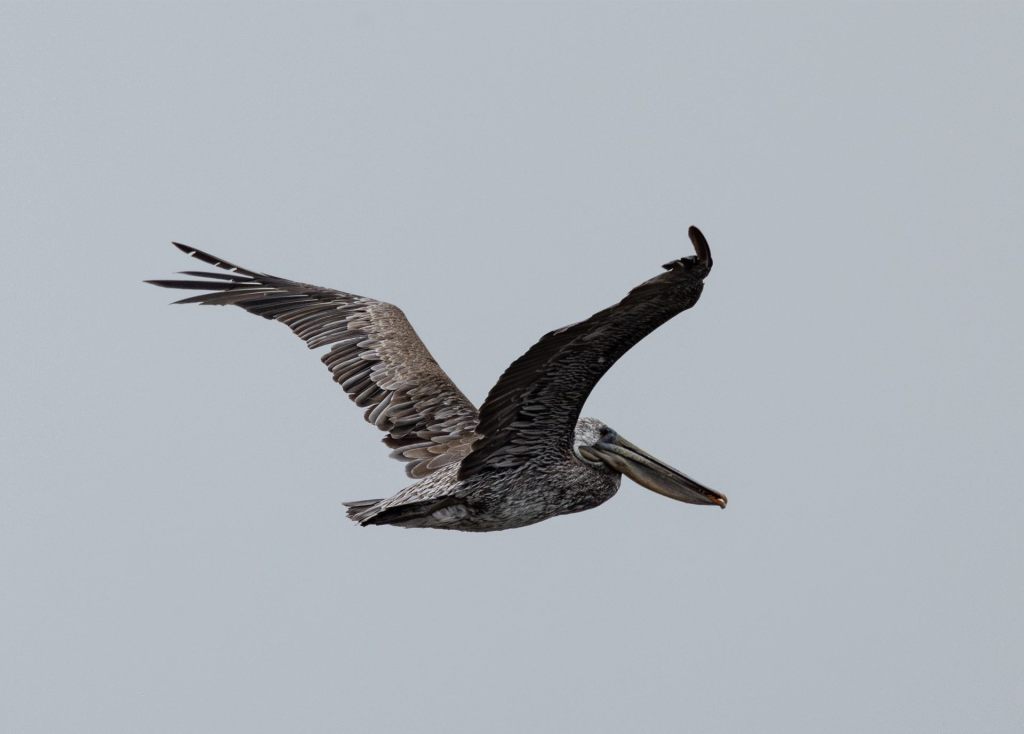
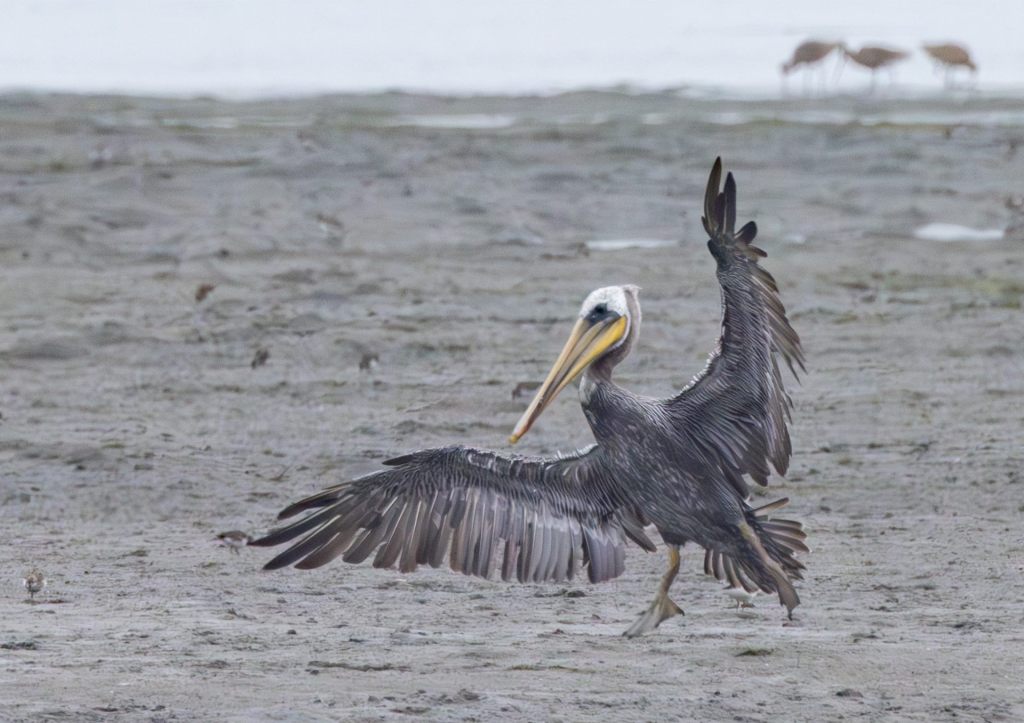
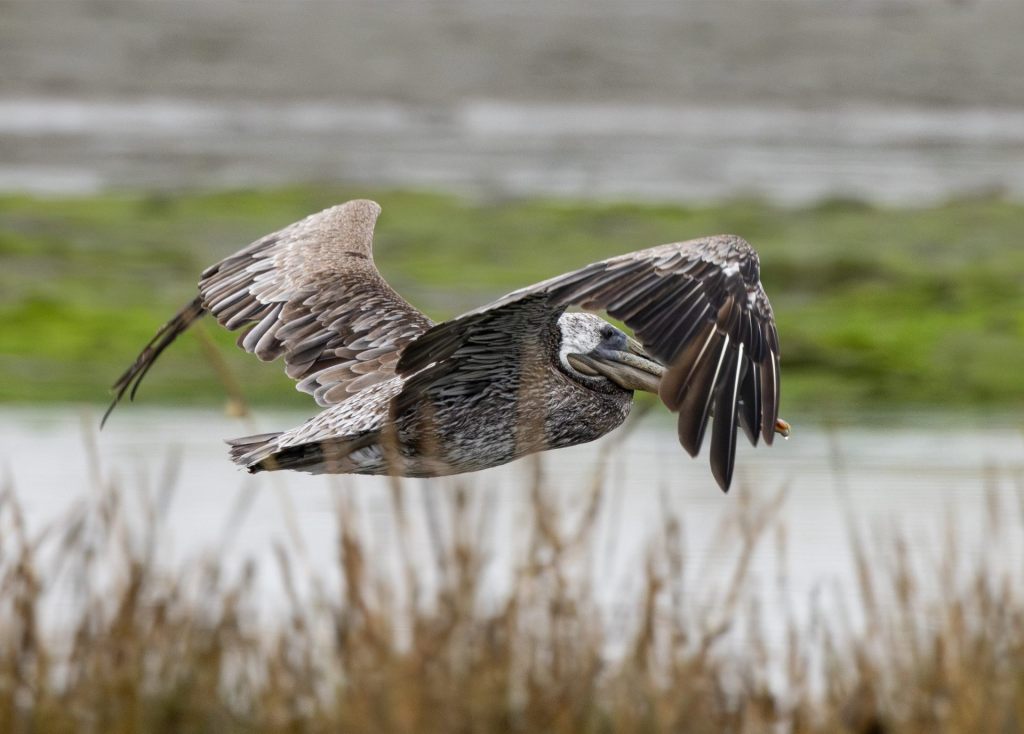
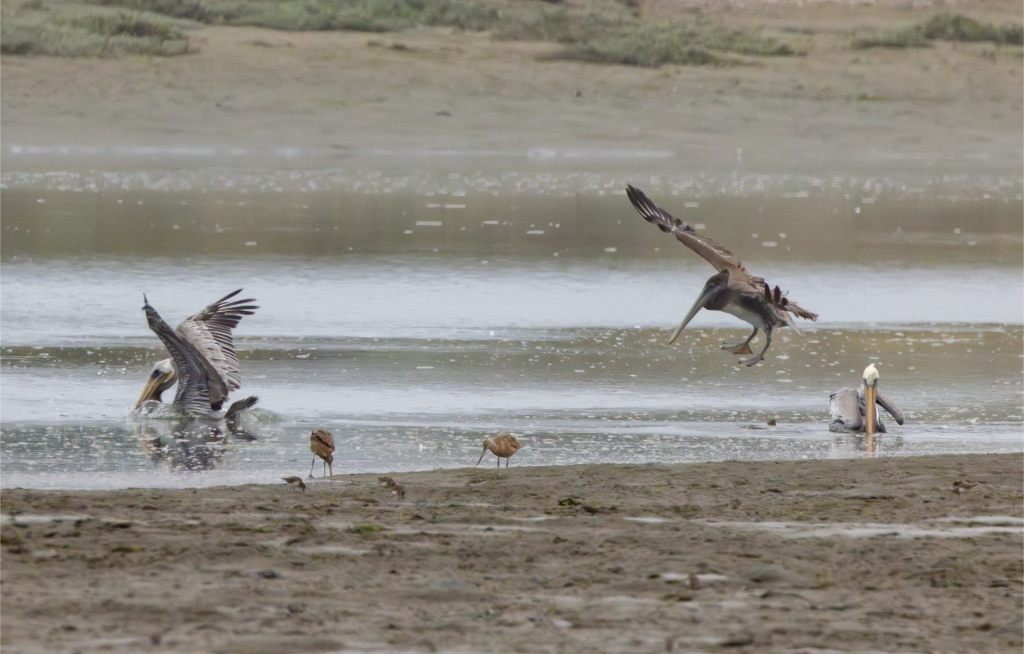
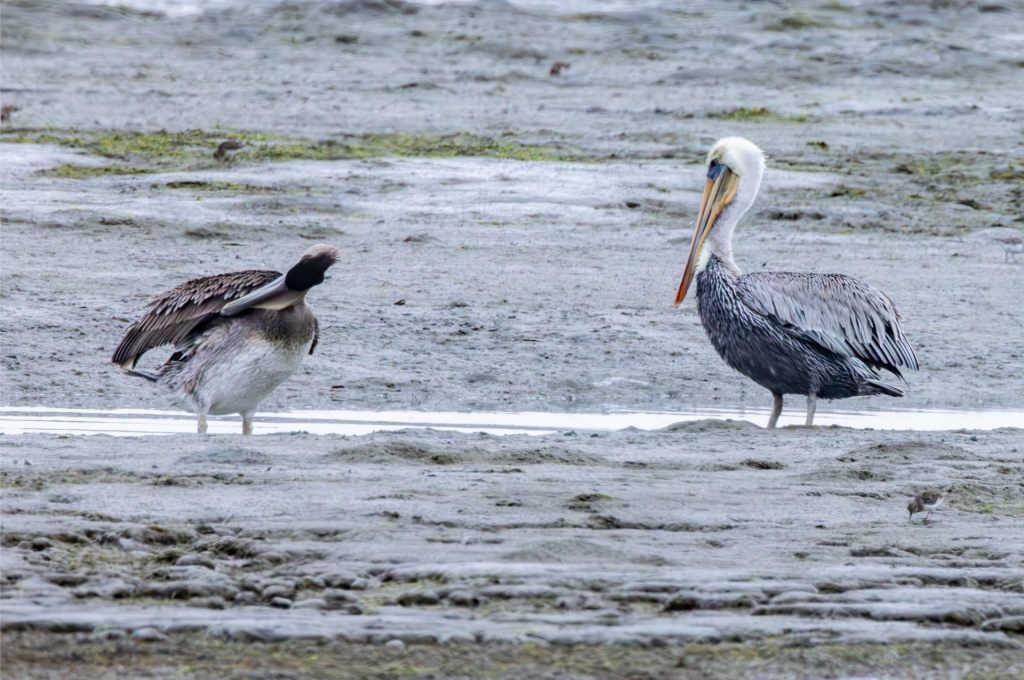
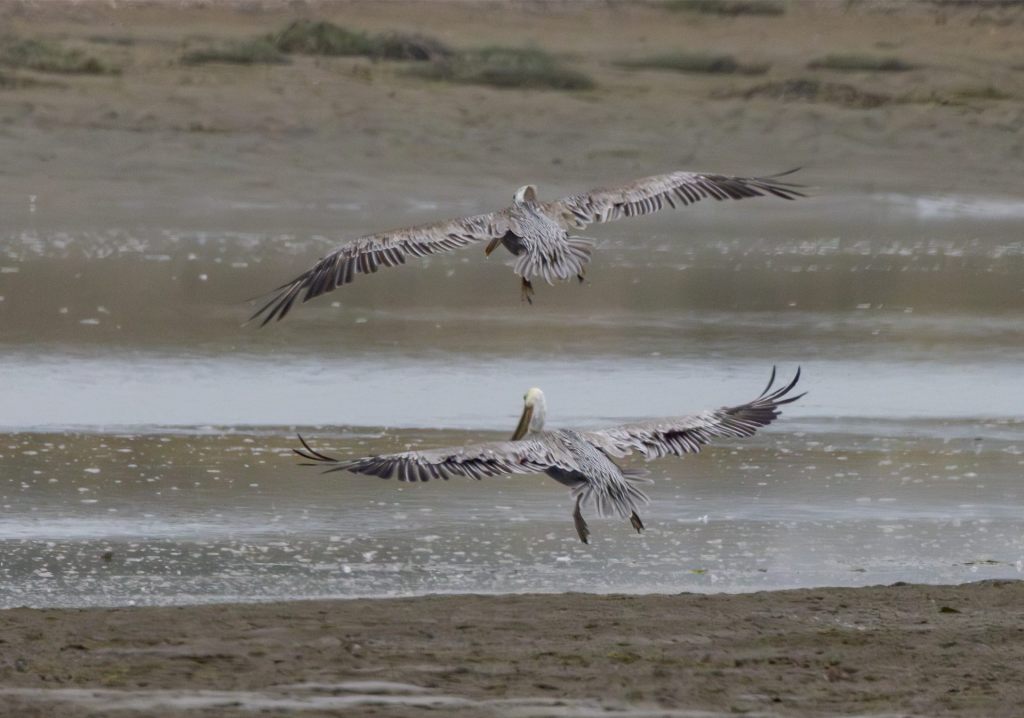
The Brown Pelican, saved from likely extinction by the 1972 banning of the pesticide DDT, was well represented with quite a few adults and juveniles. Awkwardly beautiful, these heavy birds are known for their acrobatic diving abilities, scooping up fish prey and then storing the catch in the seemingly infinitely expandable gular pouch attached to the lower bill and throat. But on this morning, they were mostly resting on land or paddling about the slowly rising shallows of the estuary.
Juvenile Brown Pelican cruising byat low altitude.Two adults in the water and a juvenile coming in for a landing, with Marbled Godwits(18 inches from crown to tail)and tiny peeps (6-7 inches) on the shore in the foreground for size comparison. Pelicans are up to 54 inches crown to tail and can have an 8 foot wingspan.Adult on right, juvenile preening and showing off its handsome black crown on the left.Showing off the impressive wingspan.
Familiar Faces
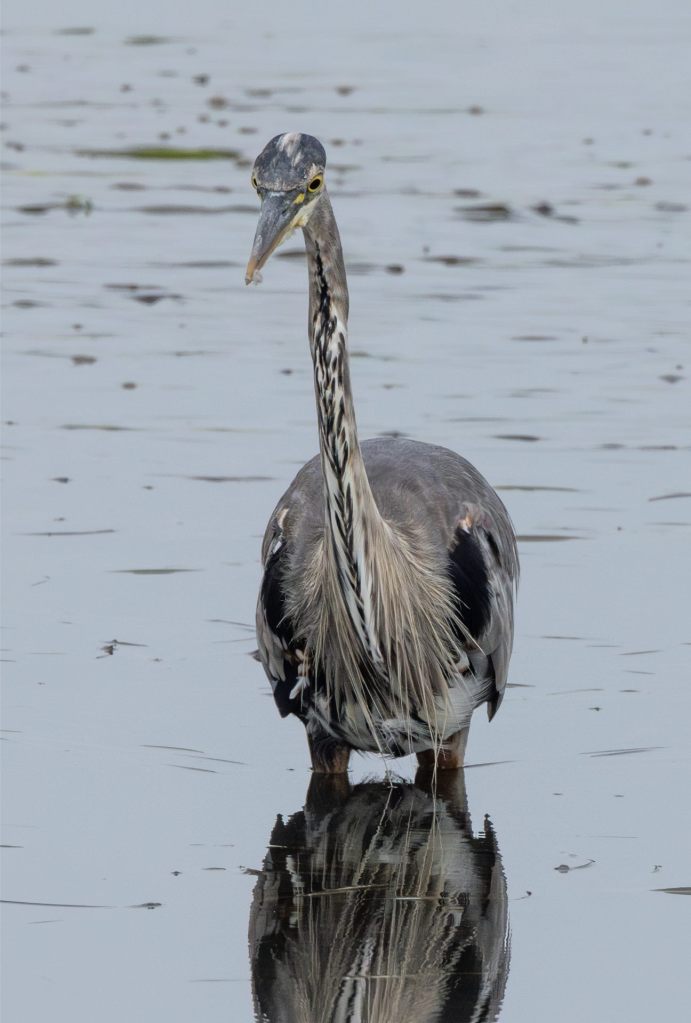
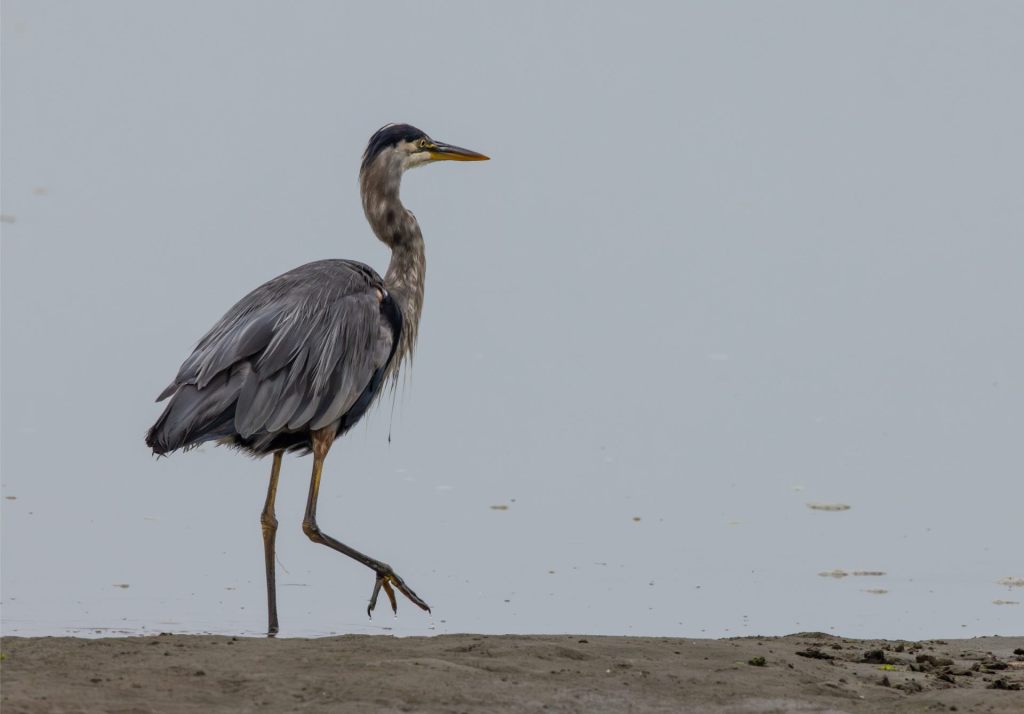
A few birds that I commonly see on the river back home have no problem making a living in this very different environment.
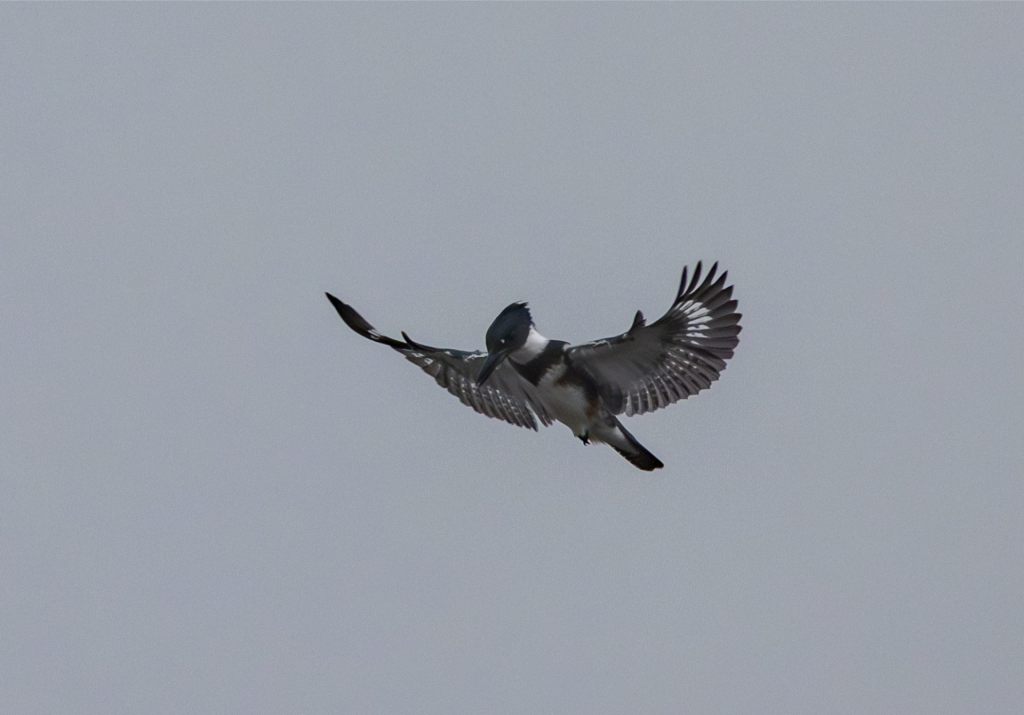
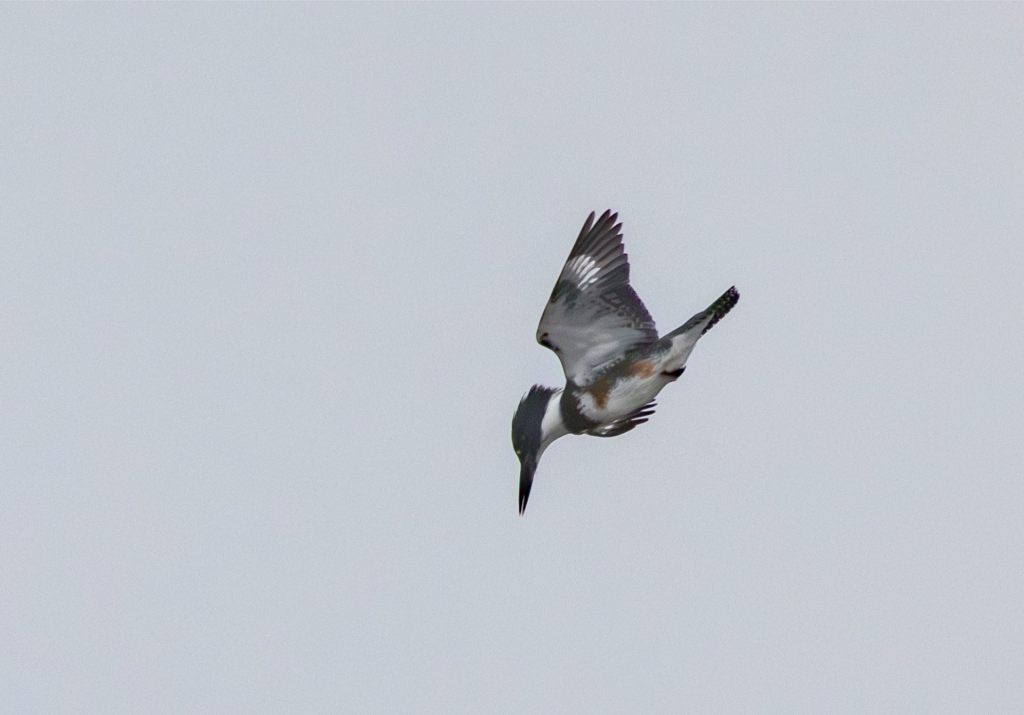
Great Egret in the classic flight pose. You can see the symmetrical molt pattern in the wings.Great Blue Heron with a tiny morsel of food.Great Blue HeronI see Belted Kingfishers often on the river this time of year, so it’s fun to compare the way they fish in the two different environments.It is fairly rare to see this hovering fishing strategy of the Belted Kingfisher at home along the river, but around the Bay, it is quite common.The start of a dive that did not end up producing a catch.
The Star of the Show
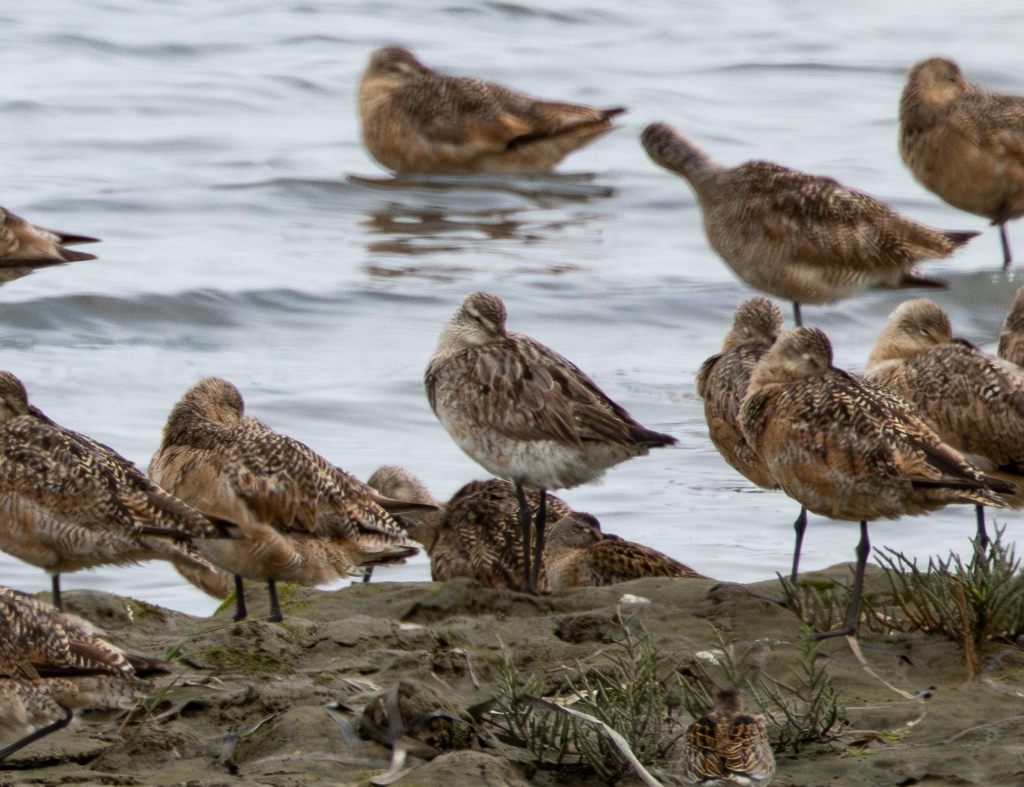
After meeting up with friends we were soon alerted by text to the sighting of a special bird and headed to the Samoa Bridge to get a look at this rare creature. A Bar-tailed Godwit had wandered off its migration route that typically goes from the Alaskan tundra to New Zealand and Australia, sometimes along the coast of east Asia and sometimes over the open Pacific. Bar-tailed Godwits take the longest known non-stop migratory flight of any bird. They travel from arctic breeding grounds all across the globe from Alaska to Siberia to wintering grounds in the southern hemisphere, up to 7,000 miles one way, without stopping to feed. To prepare beforehand this species fattens up and shrinks the internal organs not needed for the journey. Those organs will be regrown at the destination.
Through diligent searching through hundreds of Marbled Godwits, this vagrant rarity, the Bar-tailed Godwit, was found by birding friend Max Brodie.
Shorebirds
Two families of shorebirds, the plovers and the sandpipers, were abundant in various forms that morning.
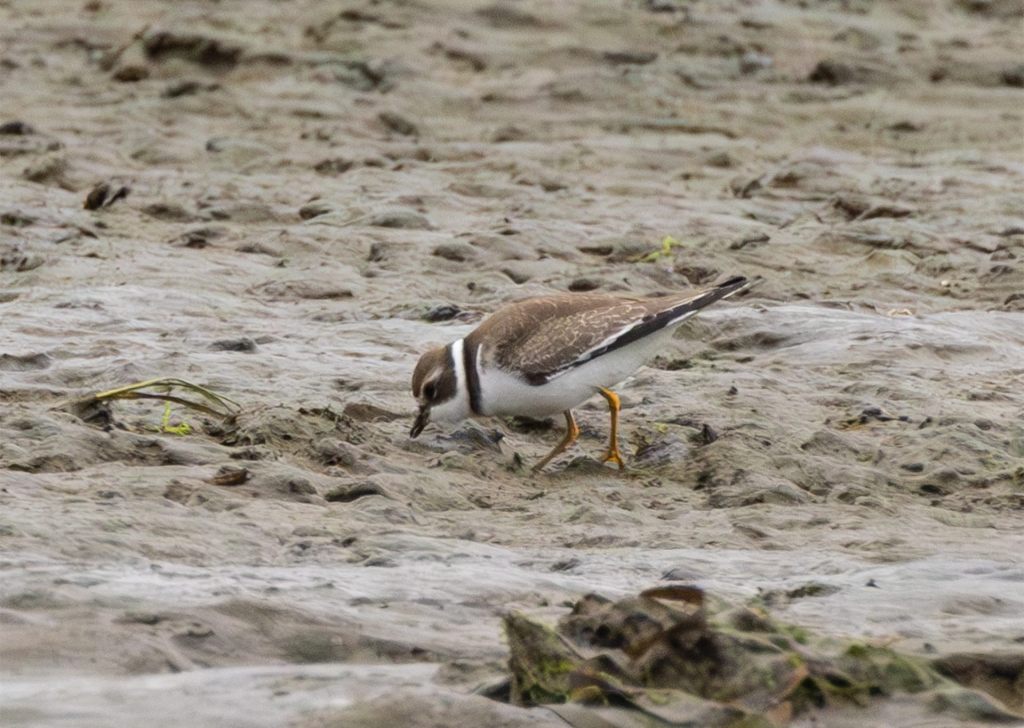
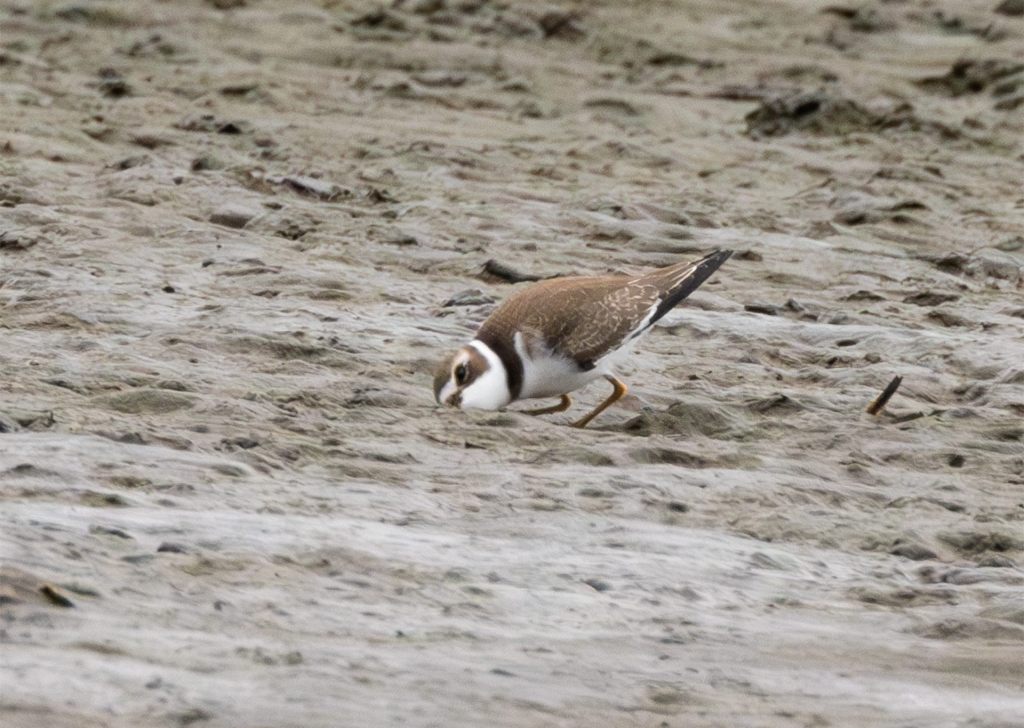
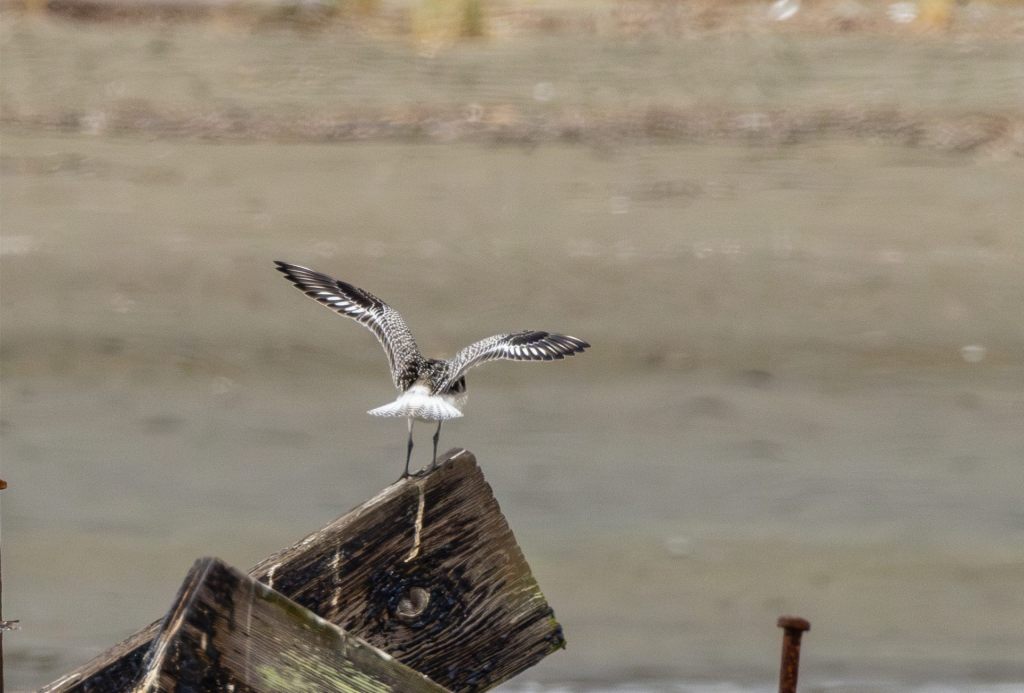
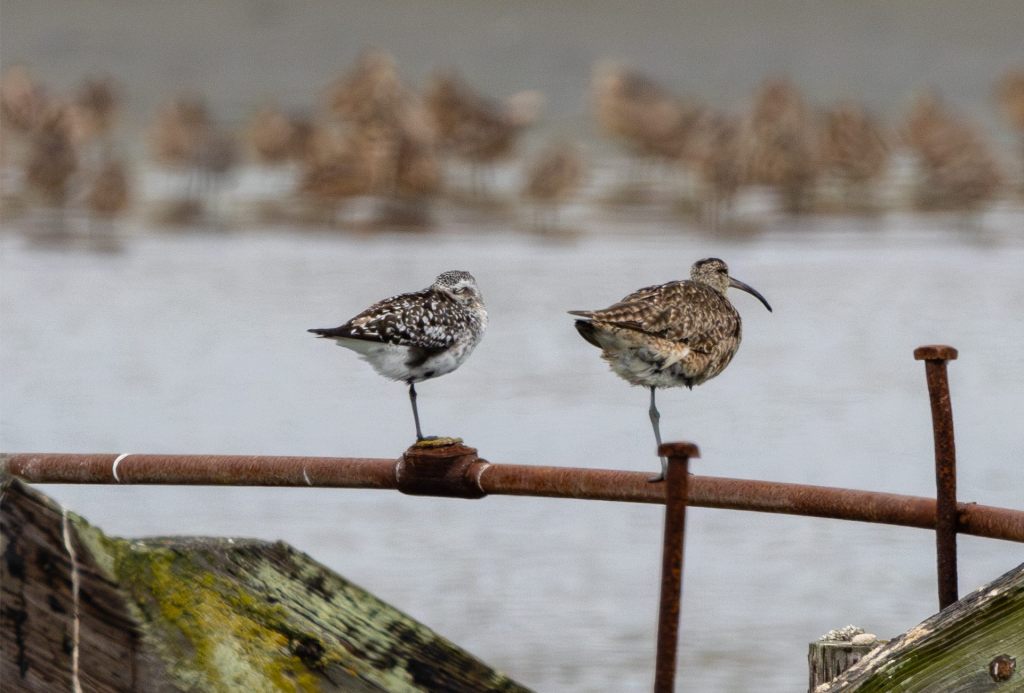
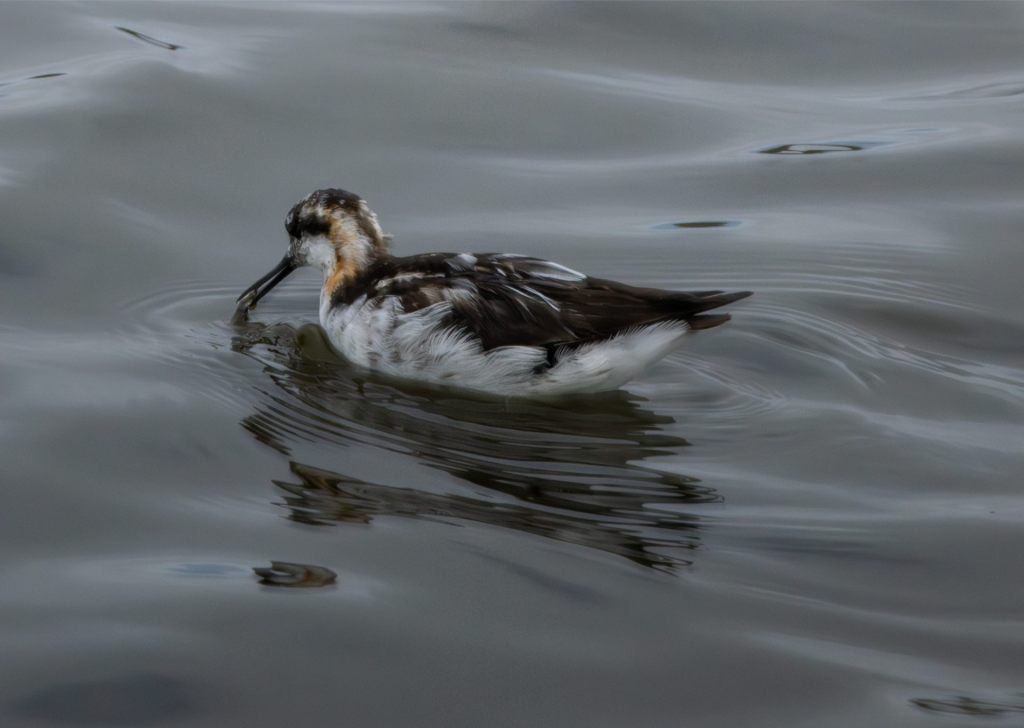
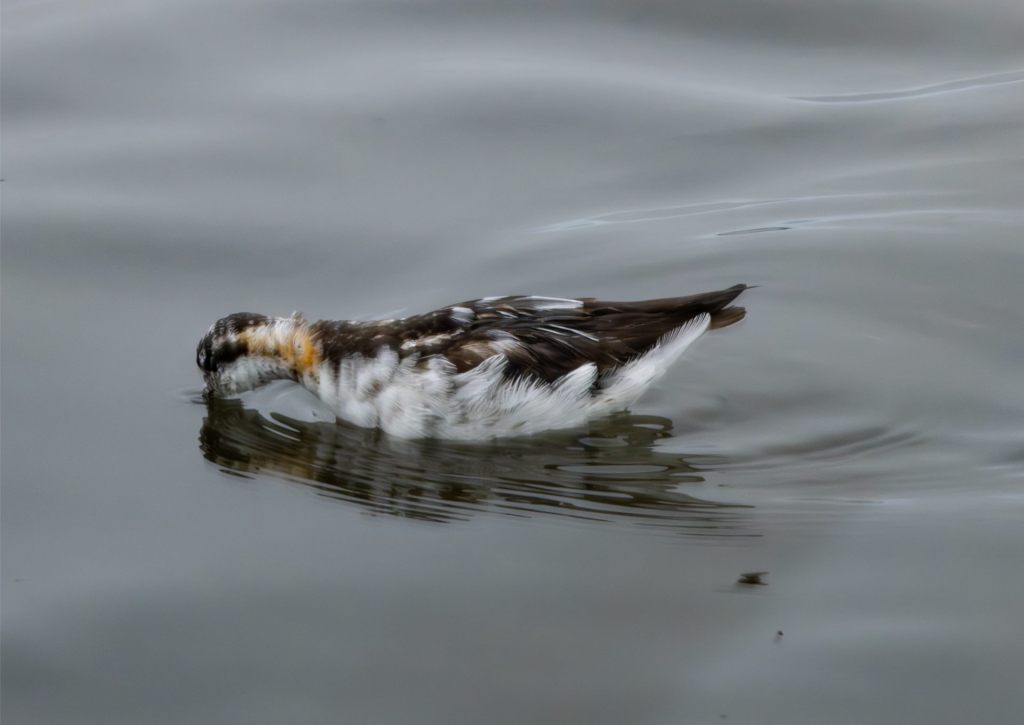
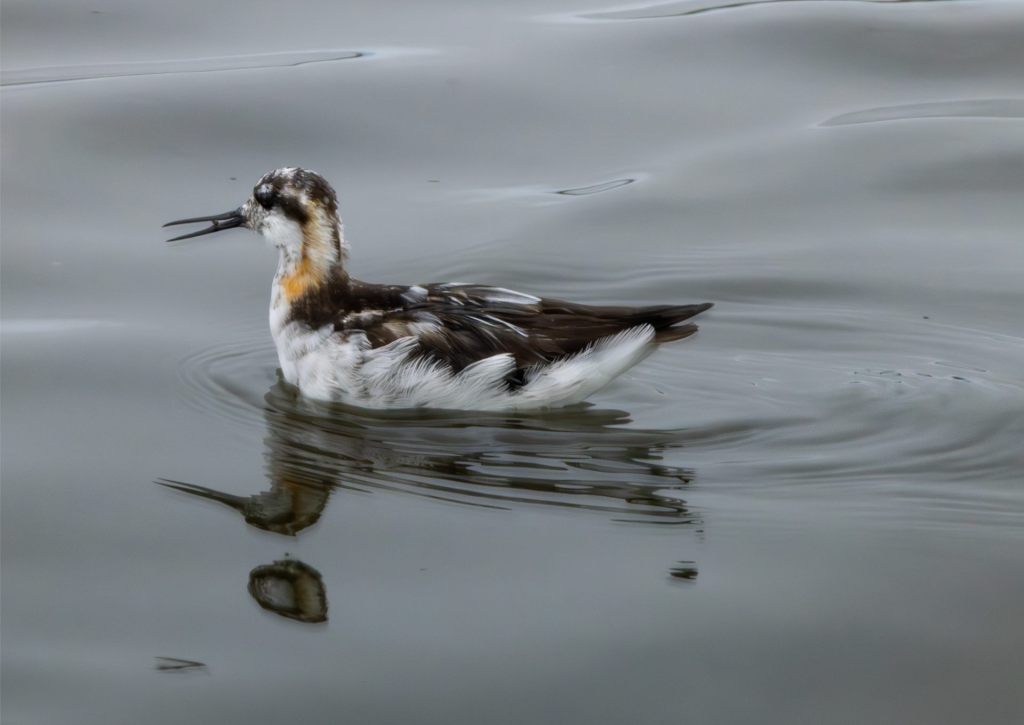
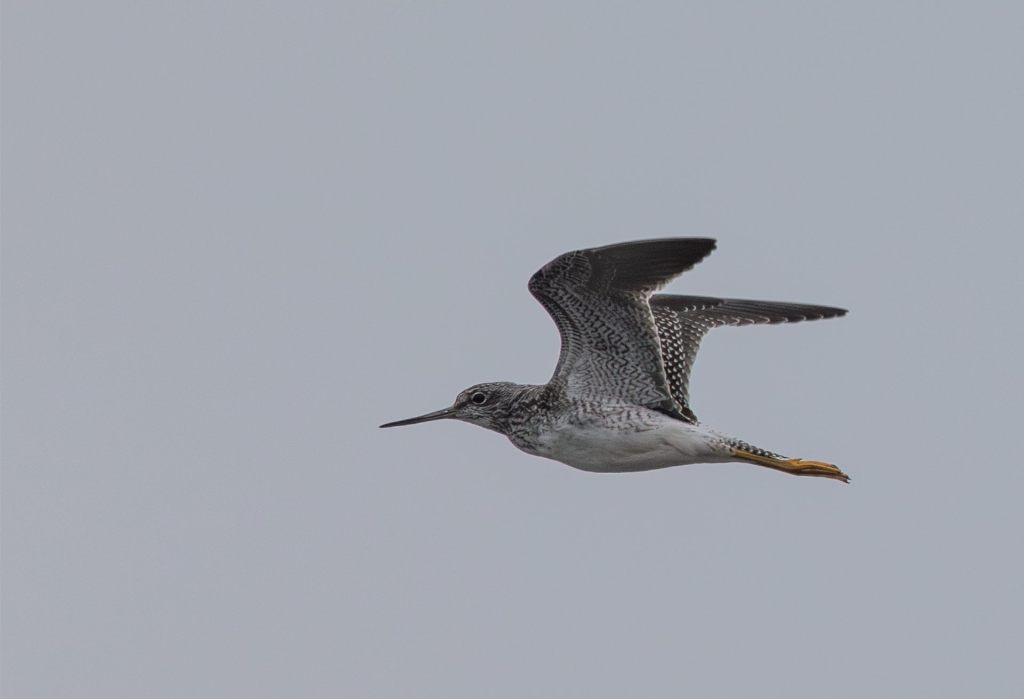
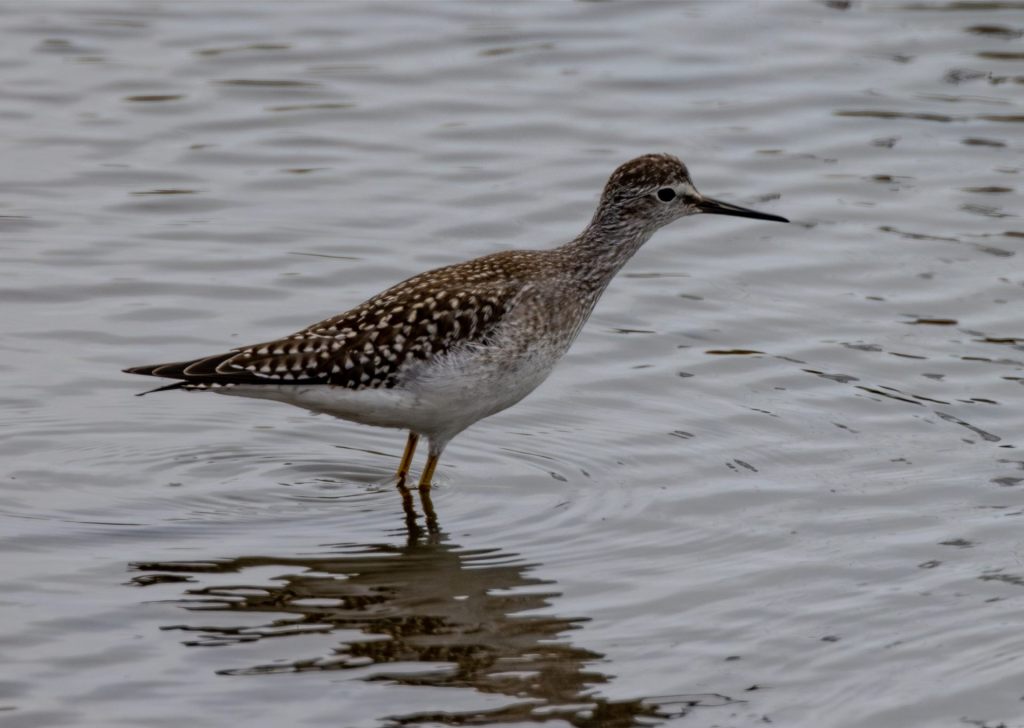
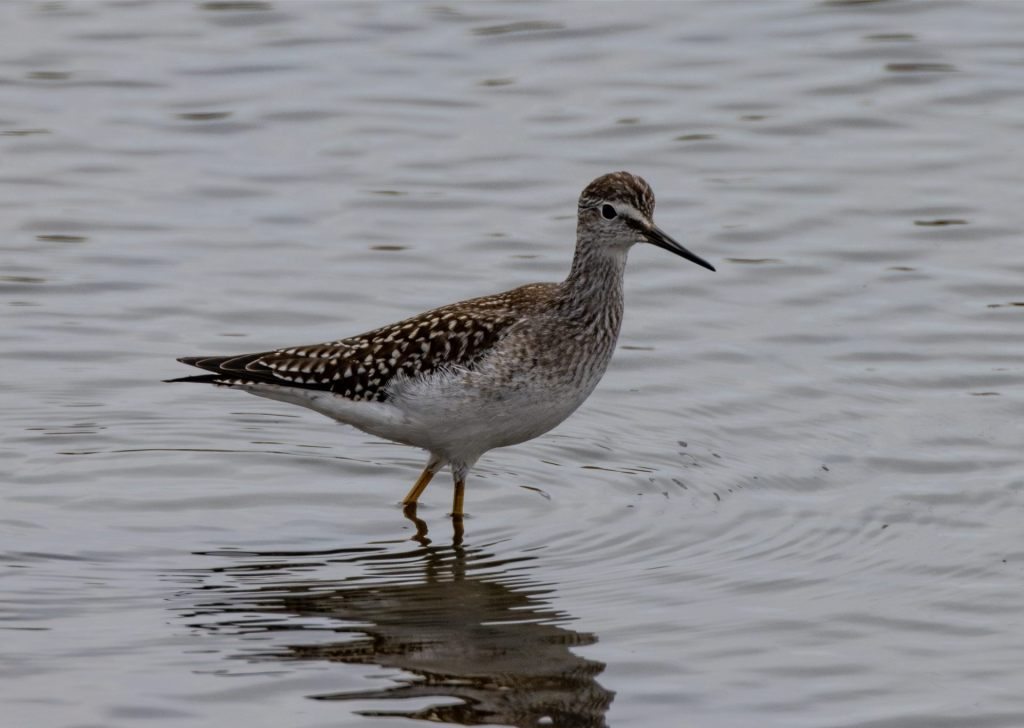
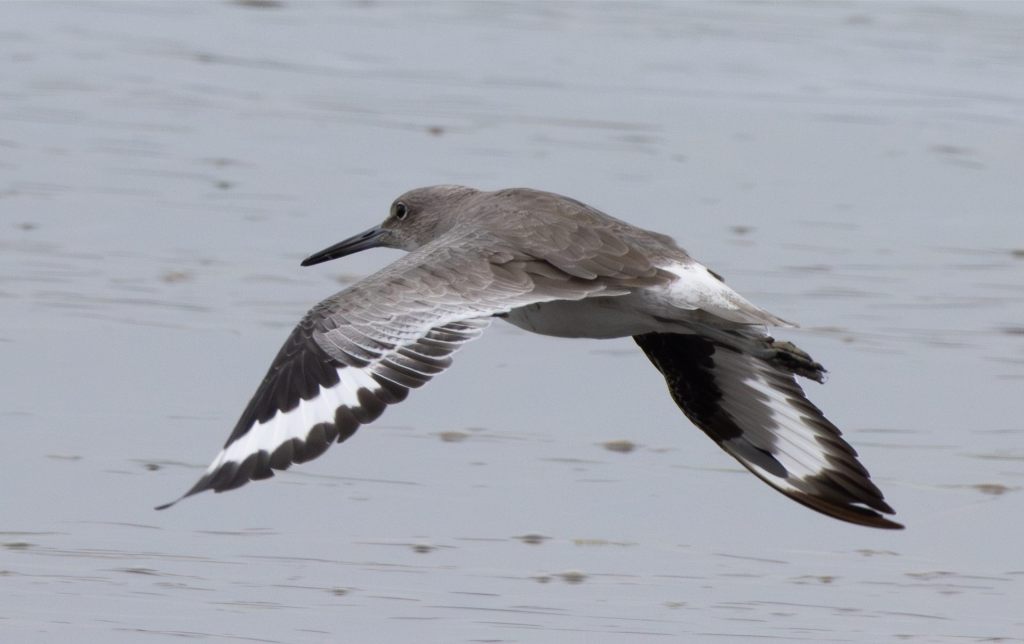
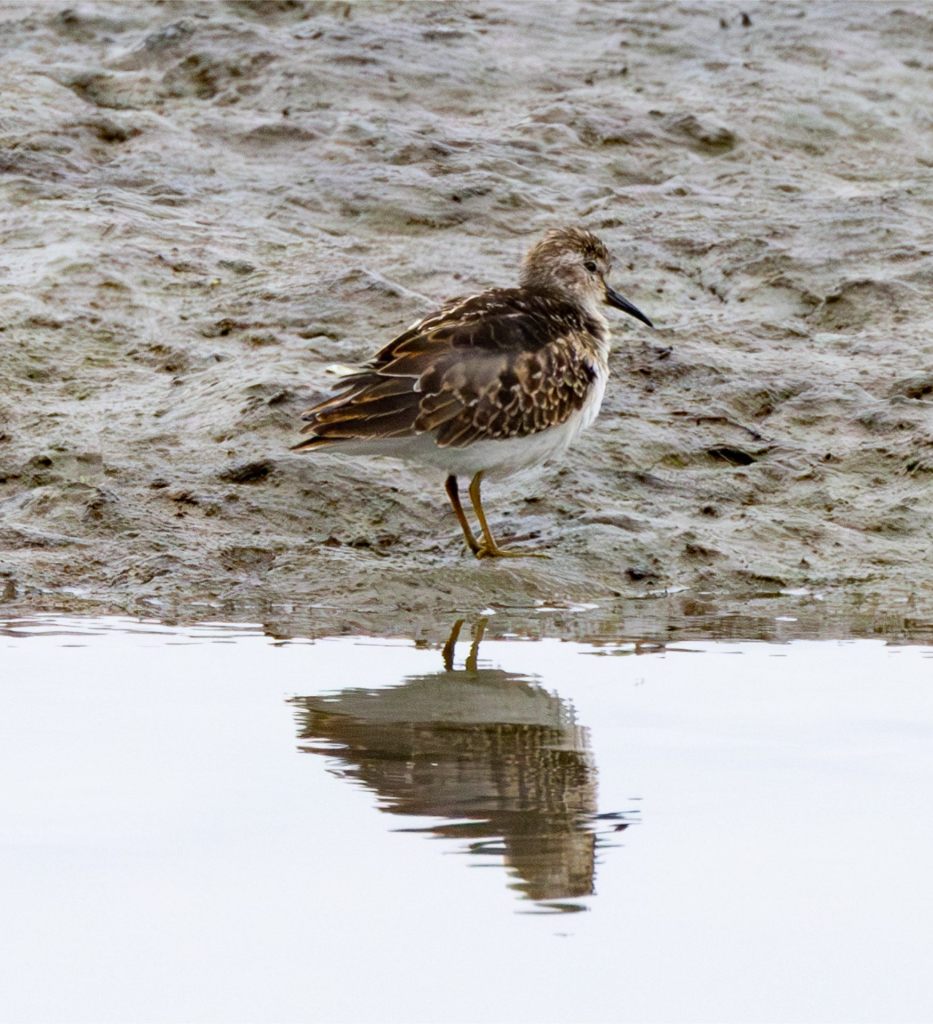
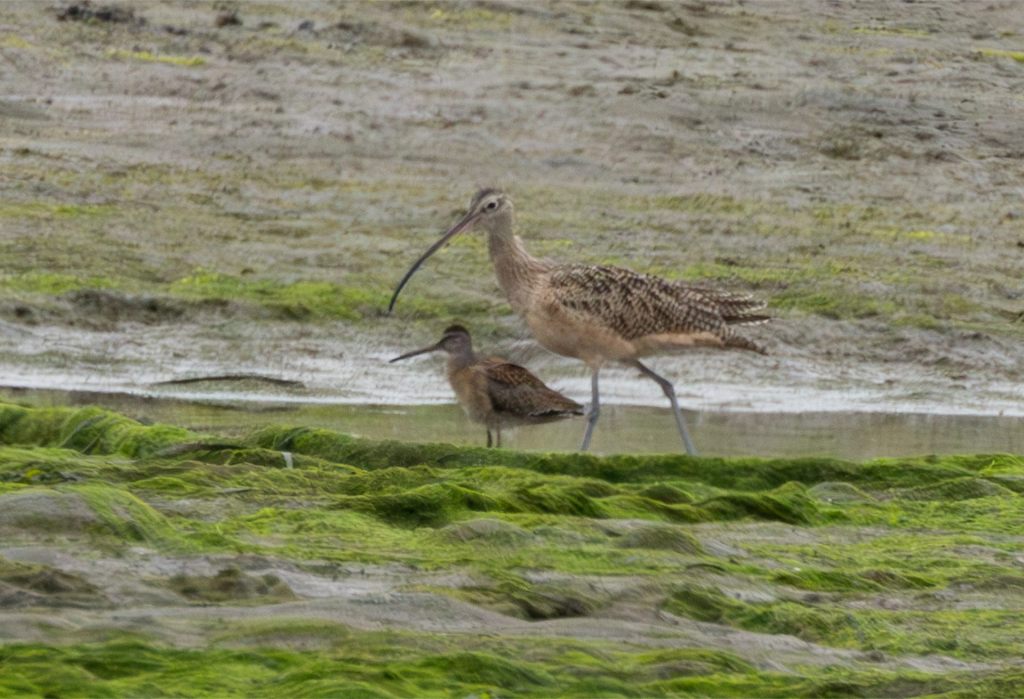
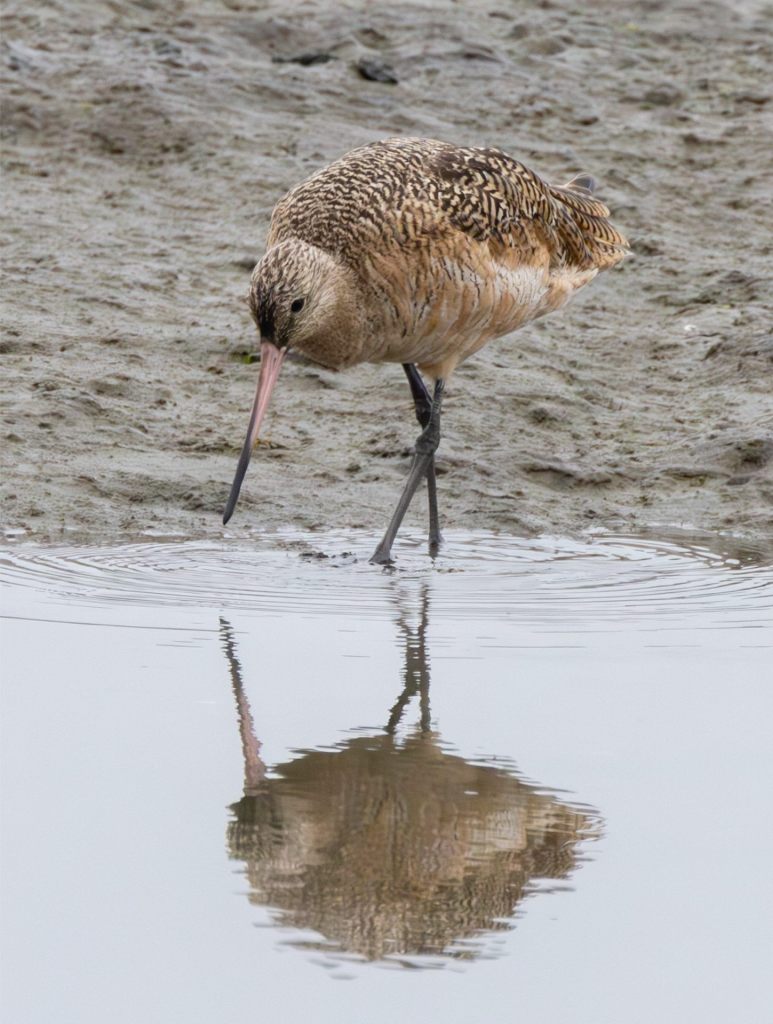
Semi-palmated Plovers run along the muddy shore and stop to probe for food.These birds measure about 6-7 inches long. They eat insects, spiders, worms and pretty much anything else that wiggles.Their much larger cousin the Killdeer is widespread throughout Humboldt and a familiar bird along the river. They both do the fake broken wing dance to draw potential predators away from their young.The beautiful wings of the Black-bellied Plover. Black-bellied Plover on the left and Whimbrel on the right. This is a Red-necked Phalarope, one of three species in the family, all of which exhibit gender role reversal with the females wearing brighter colors and initiating courtship while the males do most of the domestic duties of incubating the eggs and tending the young.Phalaropes float in shallow water and probe for food, sometimes spinning in circles to create a whirlpool that brings prey to the surface.A tiny catch.This Greater Yellowlegs shows off the colorful legs it was named for. These birds are widepsread in Humboldt all winter and occasionally appear on the river, although you might hear the loud plaintive call before you see one.Much less common is the Lesser Yellowlegs, a daintier version of its cousin.Juvenile Lesser Yellowlegs showing fresh sharp plumage.The Willet showing its striking black and white wings in flight. This bird is easy to see around the Bay all winter, but is easy to miss when its wings are closed.The tiny Least Sandpiper, one of the “peeps”, maxes out at just under 6 inches and sports the only green legs in the group.Juvenile Western Sandpipers are just a tad larger and have black legs and droopy black bill.Long-billed Curlew with Short-billed Dowitcher. Both of these species winter in Humboldt. The Curlew is North America’s largest sandpiper at up to 26 inches and uses its long curved bill to probe deep into the mud for food. The Dowitcher measures about 10-11 inches, and probes the mud, moving its bill up and down to look for food.Long-billed Curlew.Marbled Godwit. One of the most well known winter birds around Humboldt Bay, a large sandpiper with a long, bi-colored, slightly upturned bill.
Odds and Ends
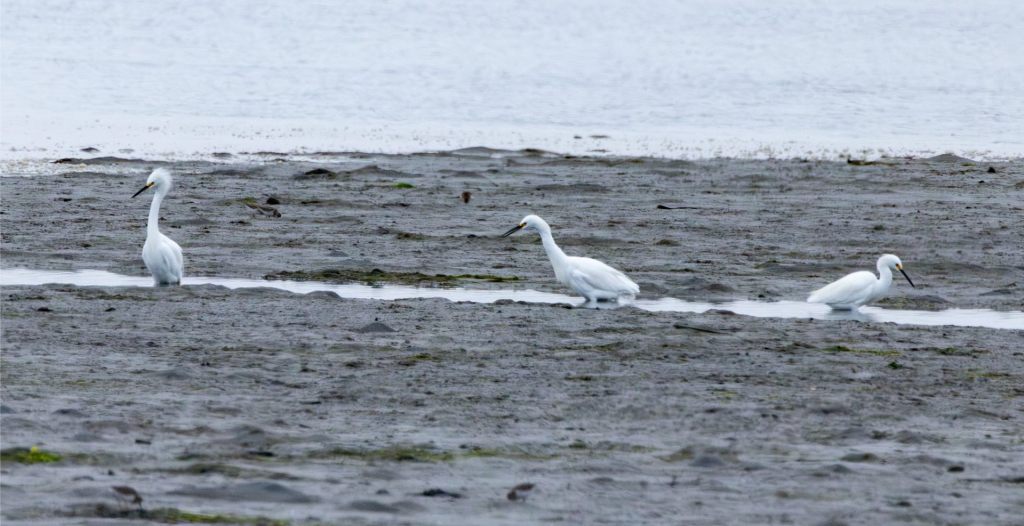
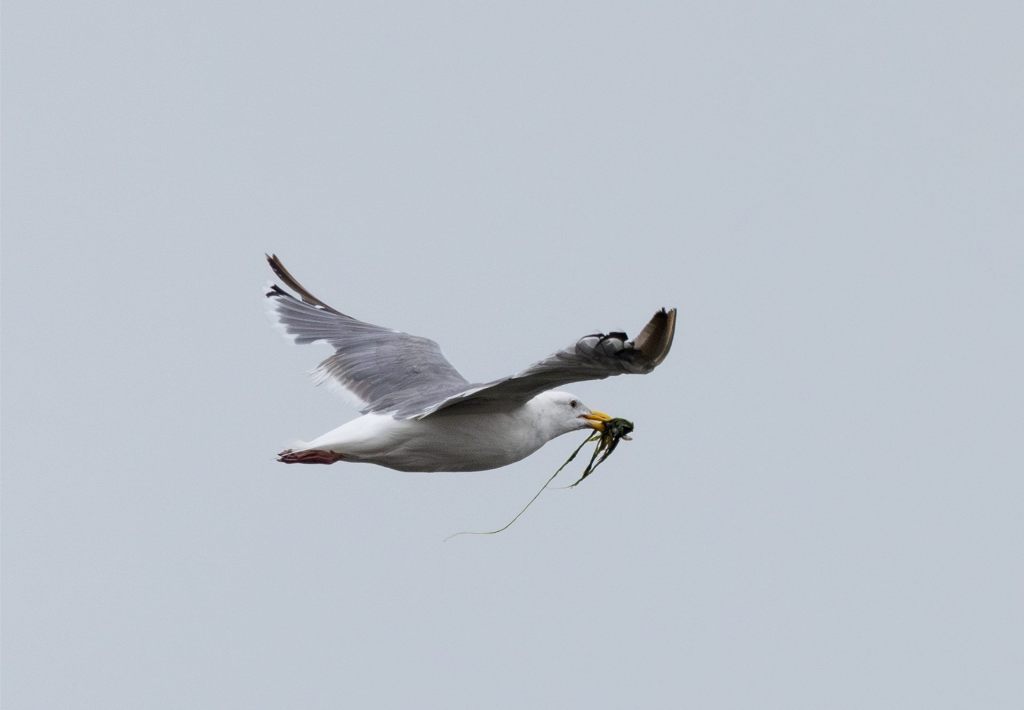
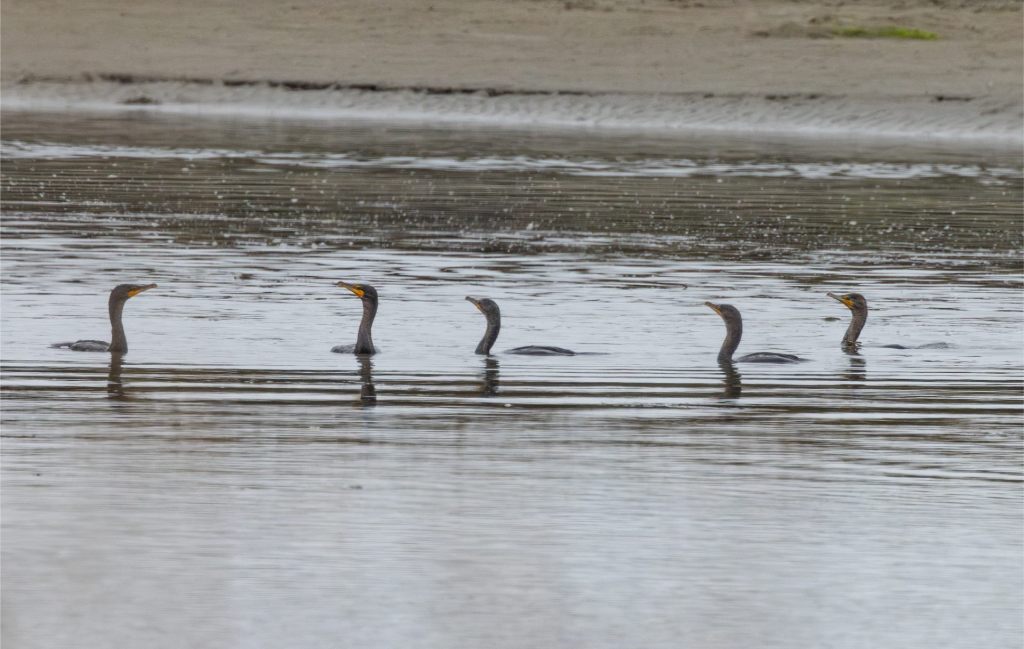
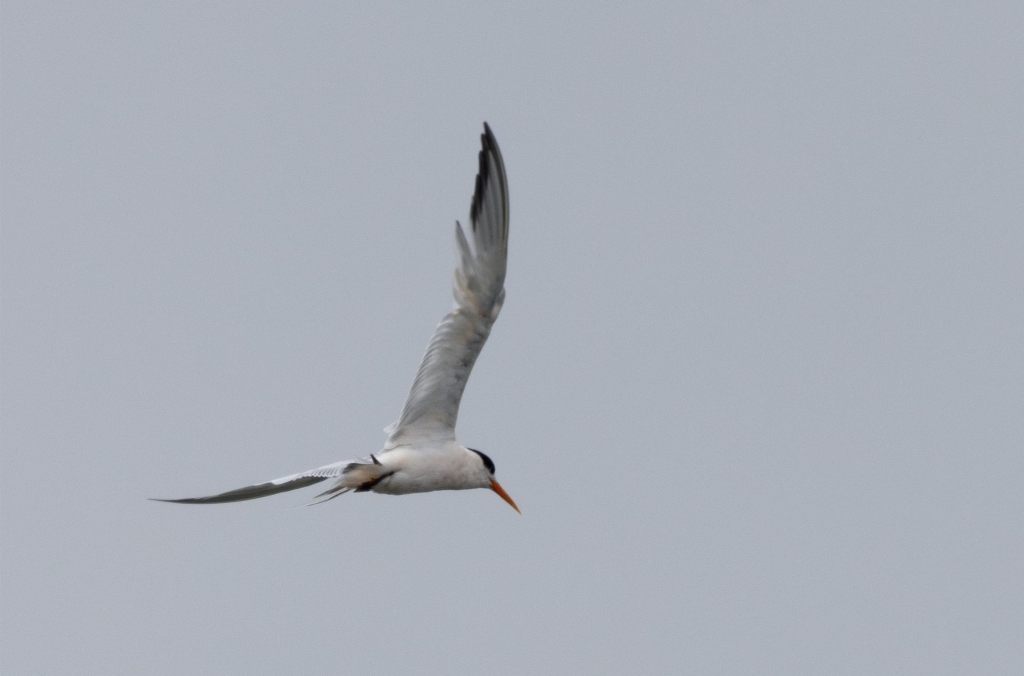
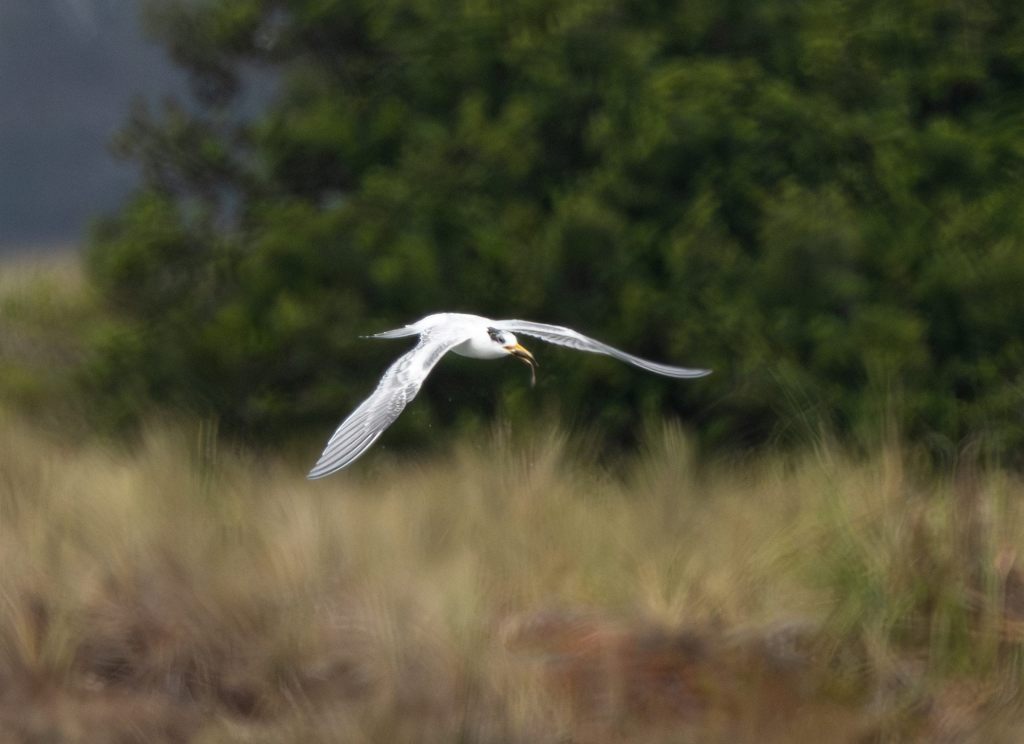
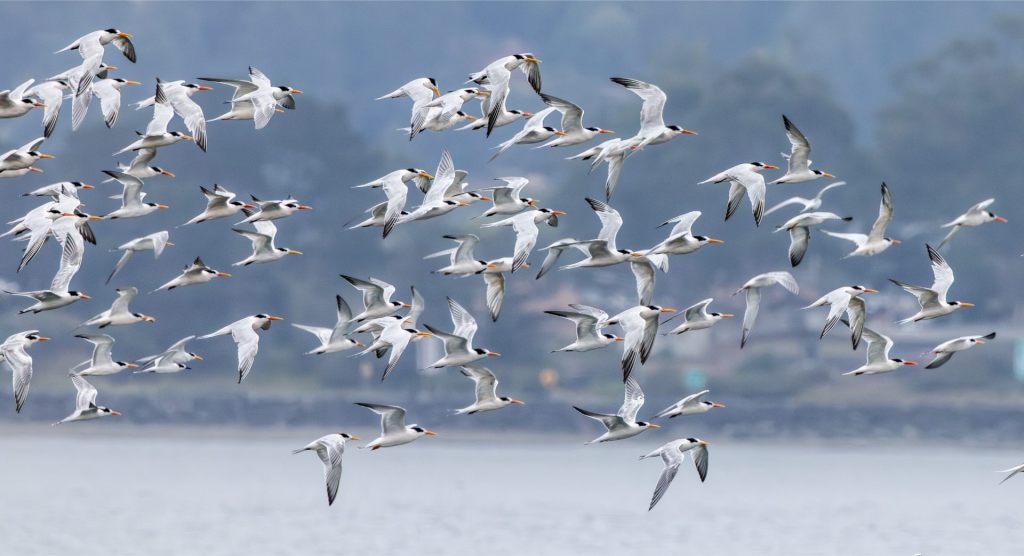
Snowy Egrets are much smaller than their “Great” cousins and much more active in their hunting habits,They stir up food by shaking their orange feet as they stride along muddy bottoms. A molting Western Gull with a small crab hidden in plant matter, probably looking for a private place to consume it away from competitionDouble-crested Cormorant water ballet. This species sometimes appears along the river in Southern Humboldt.This aptly named bird, the Elegant Tern, nests in colonies in Mexico and then disperses both north and south. Terns dive for fish, and this juvenile, told by the silver feathers on the back of its body and wings, has made a nice catch.During breeding season, the black on the tern’s head will fill in where the white looks like a balding patch.
The diversity of birdlife we get to enjoy in Humboldt is simply glorious and deserves to be cherished. Human encroachment, poisoning, and careless waste of resources endanger the existence of our wildlife kin. Last week we lost Robert Sutherland, a true warrior in the defense of the rights of non-human species. May we honor his lifetime of work on behalf of those without a voice in the game by pausing to really look and understand our undeniable connection.





 Free Range Photography
Leave a comment