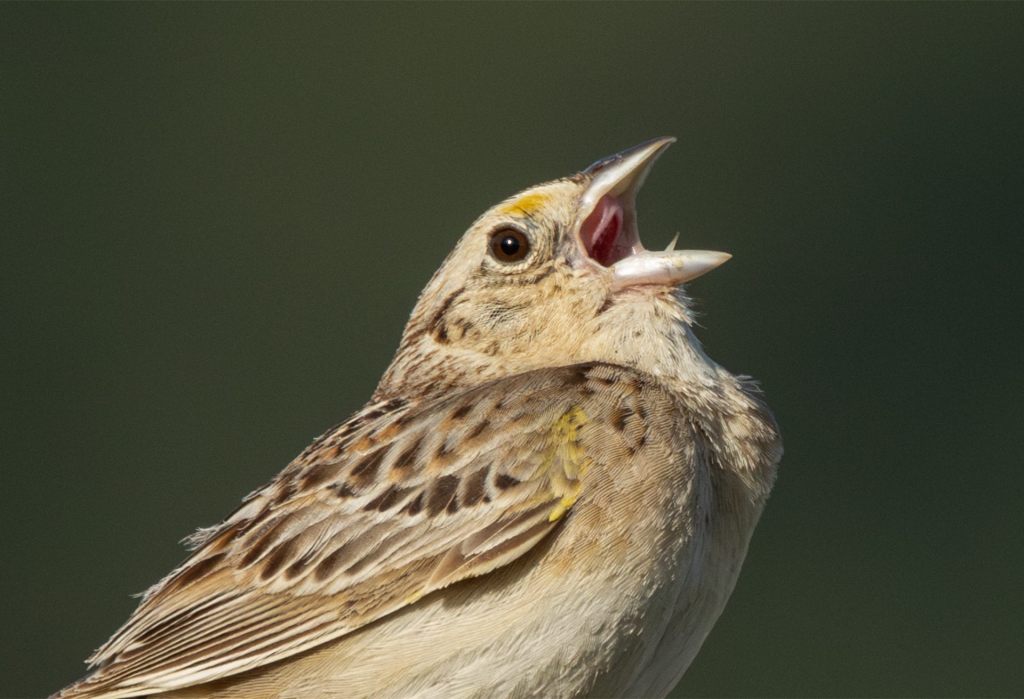
This small sparrow has probably travelled over a thousand miles by the time it arrives in our local community park where it will raise a family and then migrate back to Mexico for the winter. At first glimpse it appears drab, but upon closer examination it has fine detail in the coloration of the feathers and some snazzy yellow accents. The consensus seems to be that the bird is named for the buzzy sound of its song, although one of its favorite foods also happens to be grasshoppers, among other insects and seeds. Some people find the bird impossible to hear. I tried to amplify it in the video below, but unfortunately a lot of background noise got louder, too. You can still get an idea of the Grasshopper Sparrow’s song
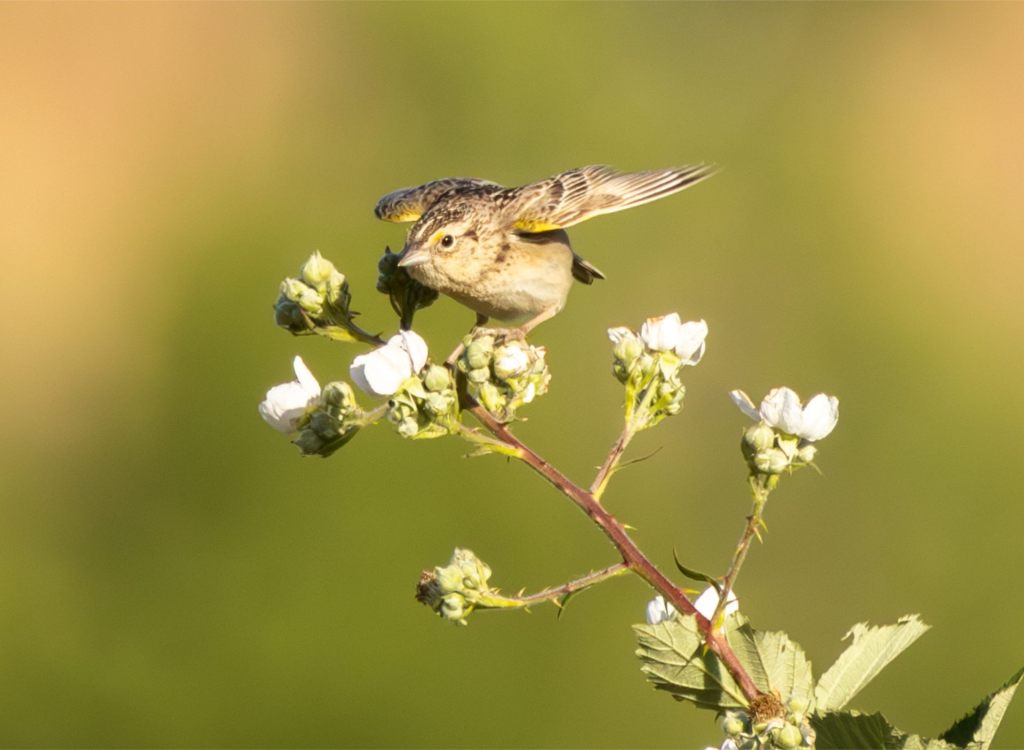
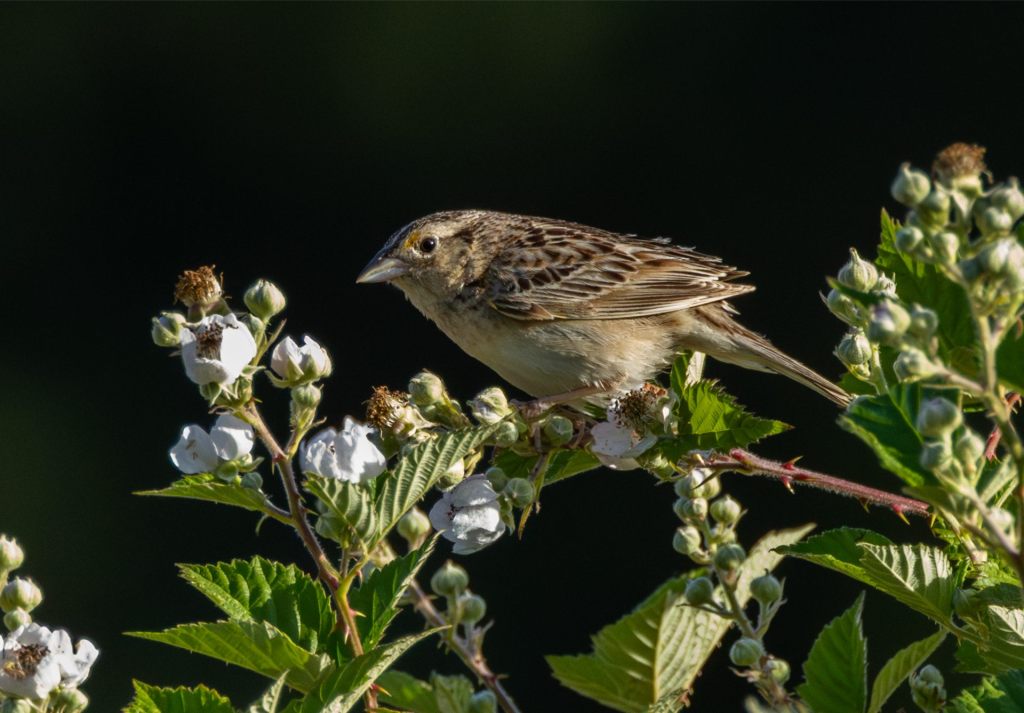
When you first hear that sound, you might not even think “bird”, but once you know it, it is unmistakable. Even if you can’t hear the song, if you are patient and persistent you have a good chance of spotting one and sometimes even two at the park, starting in early to mid May each year. They often perch along fencelines or at the top of berry bushes in more open areas. If you see a small brownish bird in such a place and it suddenly throws its head back as if to deliver something operatic, but instead you hear a dry buzz, or often enough, nothing at all, you have a Grasshopper Sparrow.
Like many songbirds all over North America, this bird’s habitat has been destroyed and encroached upon for decades. The Grasshopper Sparrow is listed as endangered at the federal level, and we are lucky to have a returning breeding population right here in our backyard. The small range in California, along the coast and in the San Joaquin Valley, is the westernmost area the bird inhabits, and this relative isolation makes the bird’s success even more impressive and worth preserving.



 Free Range Photography
Leave a comment